Every launch waits on design, and the usual fixes ("hire more," "work faster") rarely help. This guide breaks down the four structural causes of a design bottleneck in product teams and the fixes that address the actual constraint.
Why "design is slow" is usually a structural problem, and how to actually fix it.

TL;DR
"Design is the bottleneck" is usually a symptom, not the real problem. The causes are structural, not about how fast designers work.
There are four common causes: under-resourced design relative to engineering, design brought in too late, no design system, and slow approval chains.
Most teams have more than one cause active at once, which is why "hire more designers" often doesn't fix anything.
The fixes are structural too: a self-serve design system, embedding design early as a parallel workstream, streamlining approvals, and right-sizing capacity (including flexible capacity for spikes).
Diagnosing which cause applies to your team comes before picking a fix. Guessing wastes budget on the wrong solution.
If your team is dealing with a design bottleneck in your product team, the fix almost never starts with hiring. It starts with figuring out which of four structural causes is actually creating the queue, then addressing that cause directly. Teams that skip this step tend to throw headcount, tighter deadlines, or blame at a problem that structure created, and the queue reappears a few months later because nothing about the underlying process changed.
Every launch seems to wait on the same thing. Engineering is ready, the PM is ready, the product roadmap is set, and everyone is waiting on design. It happens often enough that "design is the bottleneck" has quietly become accepted wisdom in your team, usually said with a shrug. But here's the uncomfortable question that shrug skips: is design actually slow, or has your product team built a process that guarantees design becomes the bottleneck no matter how fast the designers work? Because in most companies, it's the second one, and that changes everything about how you fix it.
This guide is for PMs, CTOs, heads of product, and founders who are tired of design holding up launches and want to actually solve it. We'll reframe the problem (a design bottleneck in a product team is almost always a structural symptom, not a designer-speed problem), diagnose the real root causes, and lay out the fixes that work, most of which aren't "hire more designers" or "make designers work faster." By the end you'll be able to diagnose your specific bottleneck and fix the structure that's creating it, so design stops being the thing everyone waits on. Along the way, we'll show how these fixes play out in real product teams, including a few we've worked with directly.
Why "design is the bottleneck" is usually the wrong diagnosis
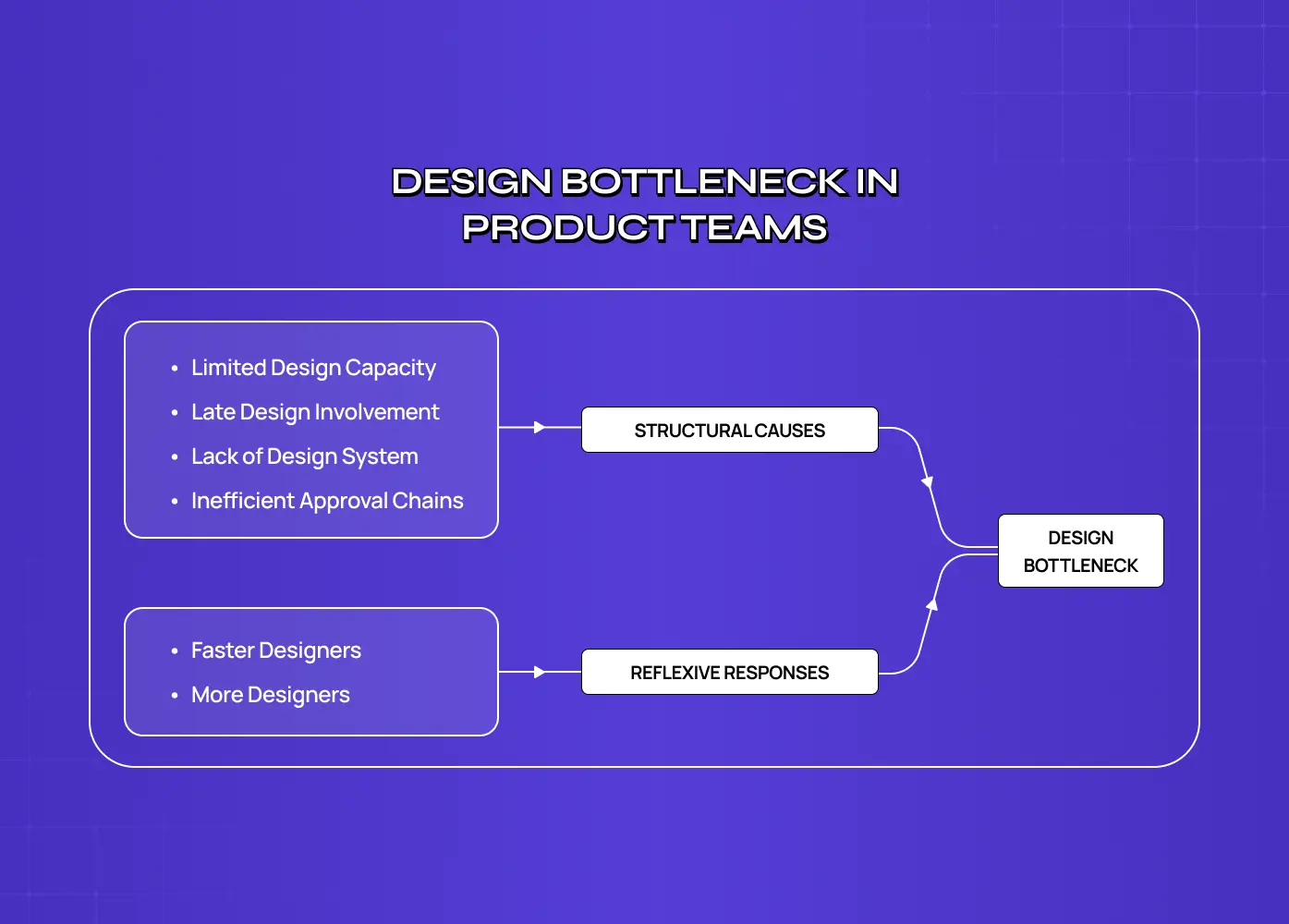
When design keeps holding up launches, the problem is rarely that designers are slow. It's that the product team's structure funnels too much work through too little design capacity, too late in the process, without the systems to move fast, and often without clear product design vs product management boundaries to begin with. This reframe matters because the wrong diagnosis leads straight to the wrong, and often expensive, fixes.
A bottleneck, by definition, is the narrow point where work backs up, and work backs up at design in most product teams for reasons that have nothing to do with how talented or hardworking the designers are. The pattern usually looks like this:
One or two designers are expected to serve a dozen engineers and multiple product lines.
Design is only pulled in once everything else is decided.
Every screen is built bespoke because there's no system.
Finished work then waits days in approval chains.
When two or more of these are true, design will be the bottleneck, and no amount of individual speed will fix it. The queue is structural.
This is why the reflexive responses, "the designers need to be faster" or even "let's just hire more designers," so often disappoint. If the real cause is late involvement or a missing design system, hiring another designer just adds capacity to a broken process. You get a slightly wider bottleneck, not a fixed one. To actually stop design being the bottleneck, you have to find which structural cause is creating the queue. There are four common ones.
The four real causes of a design bottleneck
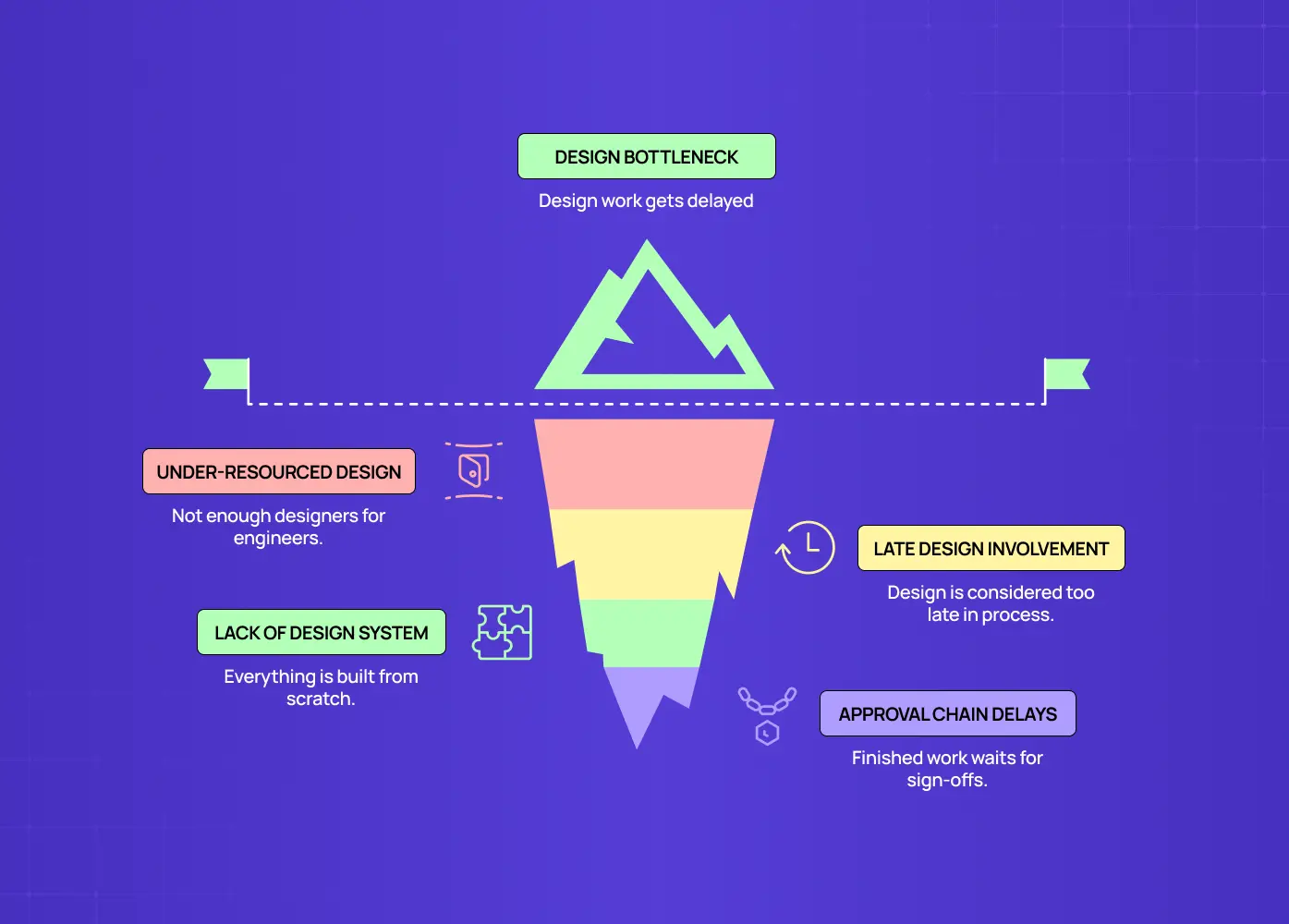
Design becomes a product-team bottleneck for four structural reasons:
It's under-resourced relative to engineering.
It's brought in too late.
There's no design system, so everything is built from scratch.
Finished work gets trapped in approval chains.
Most teams have more than one active at the same time. Diagnosing which apply to you is the whole game.
1. Design is under-resourced relative to engineering
This is the most common and most measurable cause. A healthy ratio is roughly one designer per six to ten engineers. Airbnb's VP of Design has cited about 1:6 to 1:8. Reality is often far worse: 71% of early- and growth-stage companies have fewer than one designer for every twenty developers, versus 40% for mature organizations, and extreme cases get absurd. AWS designers have referenced a 70:1 engineer-to-designer ratio, and PayPal at one point ran one designer for every two hundred developers (five designers covering sixty products and over a thousand engineers). When the math is that lopsided, a design queue isn't a performance problem, it's arithmetic. The designers could be world-class and work around the clock, and the work would still back up.
2. Design is brought in too late
When design is treated as the final step, a coat of paint applied after product and engineering have decided what to build, several things go wrong at once. Scope has usually already been locked without design's input by this point, and getting MVP UX scope wrong upstream all but guarantees rework downstream. All the design work, approvals, and revisions compress into a short window right before launch, which is exactly when there's no slack. Worse, late involvement causes late-stage discovery: design surfaces a problem (a flow that doesn't work, an edge case no one considered) after the expensive work is already done, forcing rework under deadline pressure. Design looks like the bottleneck, but the real cause is when it was engaged, not how fast it moved.
3. There's no design system, so everything is bespoke
If every screen, component, and pattern is designed and built from scratch each time, design has to touch everything, and the same decisions get remade endlessly. Without a shared system, there's no way for anyone but a designer to produce consistent UI, so all of it queues behind the design team, and the inconsistencies pile up into UX debt that makes every future screen slower to ship. The absence of a system turns routine work into custom work, and routine work is most of the volume.
4. Finished work gets trapped in approval chains
Sometimes design isn't slow to do the work, the work is slow to get through. When design output has to move across brand, product, legal, leadership, and other stakeholders for sign-off, it can wait far longer in review than it took to create. This is a bottleneck of waiting, not working, and it's often invisible because everyone's looking at the designers instead of the approval queue.
Notice that only the first of these is about capacity, and none is about designer talent. That's why the fixes look different from what most teams reach for.
Fix 1: Give teams a design system so they can self-serve
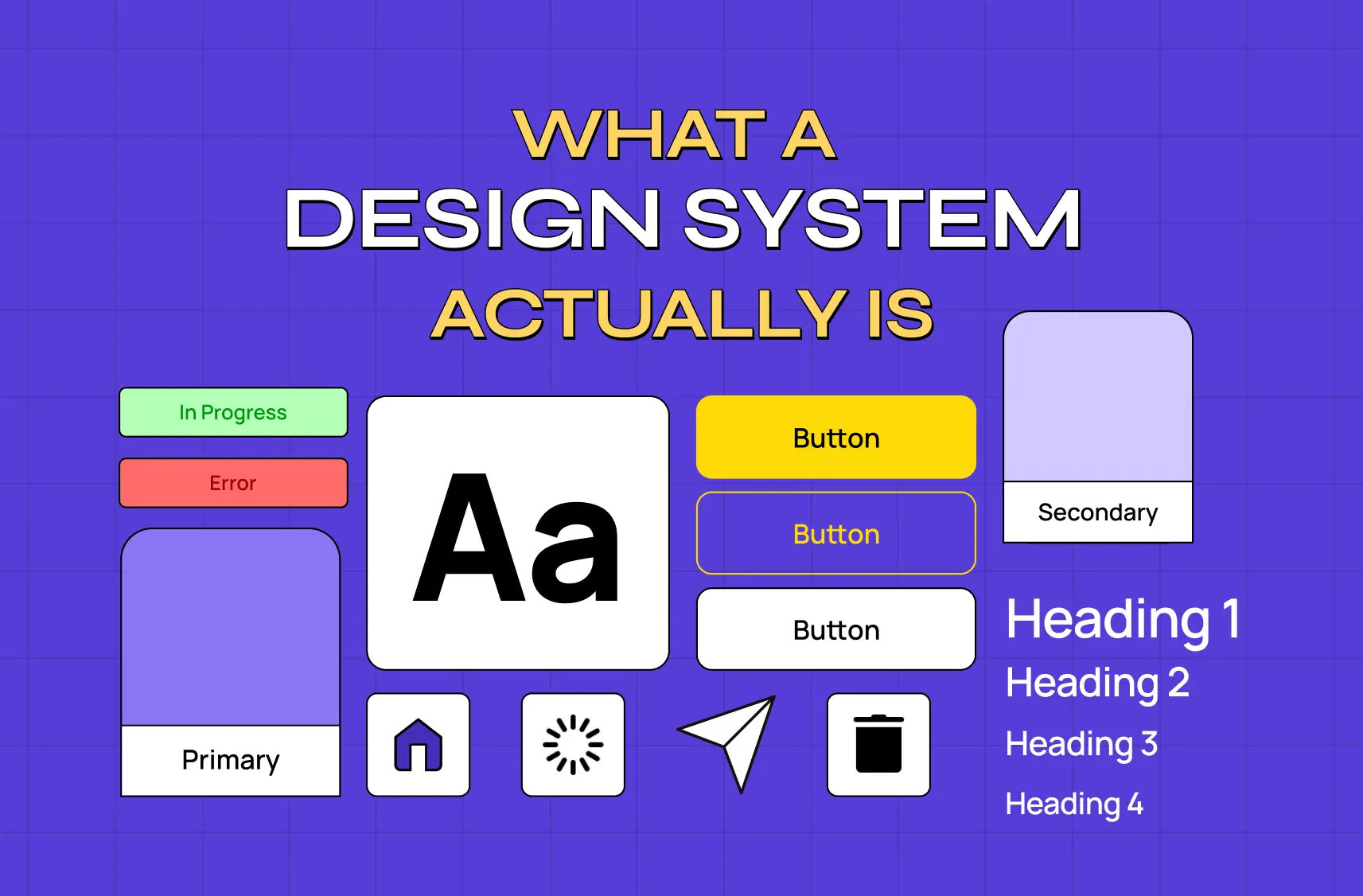
The highest-leverage fix for a design bottleneck is usually a design system, a shared library of components and patterns that lets product and engineering teams build consistent UI themselves, so routine work stops queuing behind designers. This is how the most constrained design teams break the queue without proportionally more hiring.
The logic is simple: if most of what queues behind design is routine (standard screens, common components, established patterns), a good design system lets other people handle that routine work correctly, freeing designers for the genuinely novel and high-judgment problems. The canonical example is PayPal, which, facing that brutal 1:200 ratio, synced its React component library to its design tool so design and engineering worked from identical components. As a result, product teams could complete about 90% of the design work themselves. Teams without that infrastructure sometimes turn to AI feature adoption in their design tooling as a faster stopgap, but it tends to help less than a real system since every output still routes back through a human reviewer. They didn't fix a headcount problem with headcount, they fixed it with a system.
We saw a version of this dynamic firsthand while building PathwaysX, an AI-driven B2B hiring platform. The product needed personality-based assessments, candidate scoring, and recruiter workflows shipping in parallel, across multiple screens that all had to feel like one coherent product. Building each screen from scratch would have meant every new feature routing back through design for basic UI decisions. Establishing a consistent component system early, alongside the AI-first UX design work, let the team extend the product without design becoming a gate for every new flow.
One caution: a design system only relieves the bottleneck if it's genuinely self-serve. Watch for:
Every change or addition still routing through a central design team.
No documented contribution path for engineers or PMs.
Components that exist but aren't actually adopted outside the design team's own work.
If any of these are true, the design system itself becomes the new bottleneck. Build the system so teams can use and extend it without a gatekeeper, and it multiplies your design capacity. Build it as another queue, and you've just moved the traffic jam.
Fix 2: Bring design in early, as a parallel workstream
Design stops being an end-of-line bottleneck when it runs as a parallel workstream that starts early, involved in shaping what gets built, not just decorating it after the fact, so work is spread across the timeline instead of compressed at the end. That only works if the ideation feeding it is actually productive: teams whose brainstorming stalls before design has a rough concept to react to just push the late-involvement problem one step earlier. Changing when design happens often does more than changing how much design capacity you have.
Instead of a linear hand-off (product decides, then engineering plans, then design paints it at the end), engage design from the start, in parallel with product and engineering thinking. Even rough, early concepts create alignment across teams and surface the hard problems while they're still cheap to solve, before the expensive build rather than after. That eliminates the two worst dynamics of late involvement:
End-of-timeline compression, where everything design-related stacks up at once right before launch.
Late-stage discovery, where problems surface only after the expensive work is done, forcing rework under deadline.
This mattered directly on Gini, an AI-powered health tracking platform pulling together DNA insights and food logging into one experience. The complexity wasn't just visual, it was in how the AI logic, data inputs, and user journey needed to line up from the start. Bringing UX strategy in alongside the early product and engineering decisions, rather than after the data model was locked, meant the interface didn't have to be retrofitted around technical constraints late in the build. Our UX strategy work on projects like this is built around exactly this kind of early, parallel involvement.
When design is a partner in shaping the work rather than a finishing station, the queue at the end largely dissolves, because the work didn't all arrive at the end.
Fix 3: Streamline the approval and review chain
If finished design work waits longer in review than it took to produce, the fix isn't more design capacity. It's a disciplined, streamlined approval process with fewer gates, clearer decision rights, and a faster review cadence. This addresses the bottleneck of waiting that no amount of designer speed can touch.
Audit how design work actually flows once it's done:
How many stakeholders must sign off before work ships?
How long does each individual gate take?
Are reviews scheduled and time-boxed, or do they happen whenever someone gets around to it?
Who actually has decision rights, versus who's just cc'd on the thread?
Then cut the chain down. Reduce the number of required approvers, clarify decision rights explicitly, and set a disciplined review cadence so work doesn't sit indefinitely. Often a single ambiguous or overloaded approval step is responsible for most of the delay attributed to "design," and every day it adds is a day added to your time to value. Fixing the review process can unblock launches faster than any hire, because you're removing wait time, not adding work time.
Fix 4: Right-size design capacity, including flexible capacity
When the honest diagnosis is genuine under-resourcing, a ratio so lopsided that even a great system and early involvement can't close the gap, the fix is to right-size capacity. That can mean hiring toward a healthier ratio, sometimes bringing in a design system specialist to own the self-serve library rather than spreading that responsibility thin across generalists, and using flexible capacity for spikes rather than permanently overhiring. Sometimes the answer really is more capacity; the skill is adding it wisely.
If you're running one designer per twenty or more engineers, structural fixes will help but won't fully solve a gap that severe. The arithmetic is against you. Move toward a healthier ratio, in the neighborhood of one designer per six to ten engineers, adjusted for your stage and how design-intensive your product is.
But capacity needs are rarely flat. A few common spike scenarios:
A redesign or major rebrand that needs a burst of dedicated design attention.
A big launch or fundraising milestone that compresses months of work into weeks.
A busy quarter that doesn't repeat, so a permanent hire would sit underused afterward.
For those, flexible capacity, an agency or contract team that scales up for the spike and down afterward, relieves the bottleneck without saddling you with fixed overhead you'll be over-resourced on later. This is close to how we work with product teams at Groto: a lean internal team owns the product and the system day to day, and we plug in as the flexible partner for surges, new product lines, or specialized work like SaaS UX design on a new module. The goal is to match capacity to demand, not to win a headcount trophy.
How to diagnose your team's real bottleneck
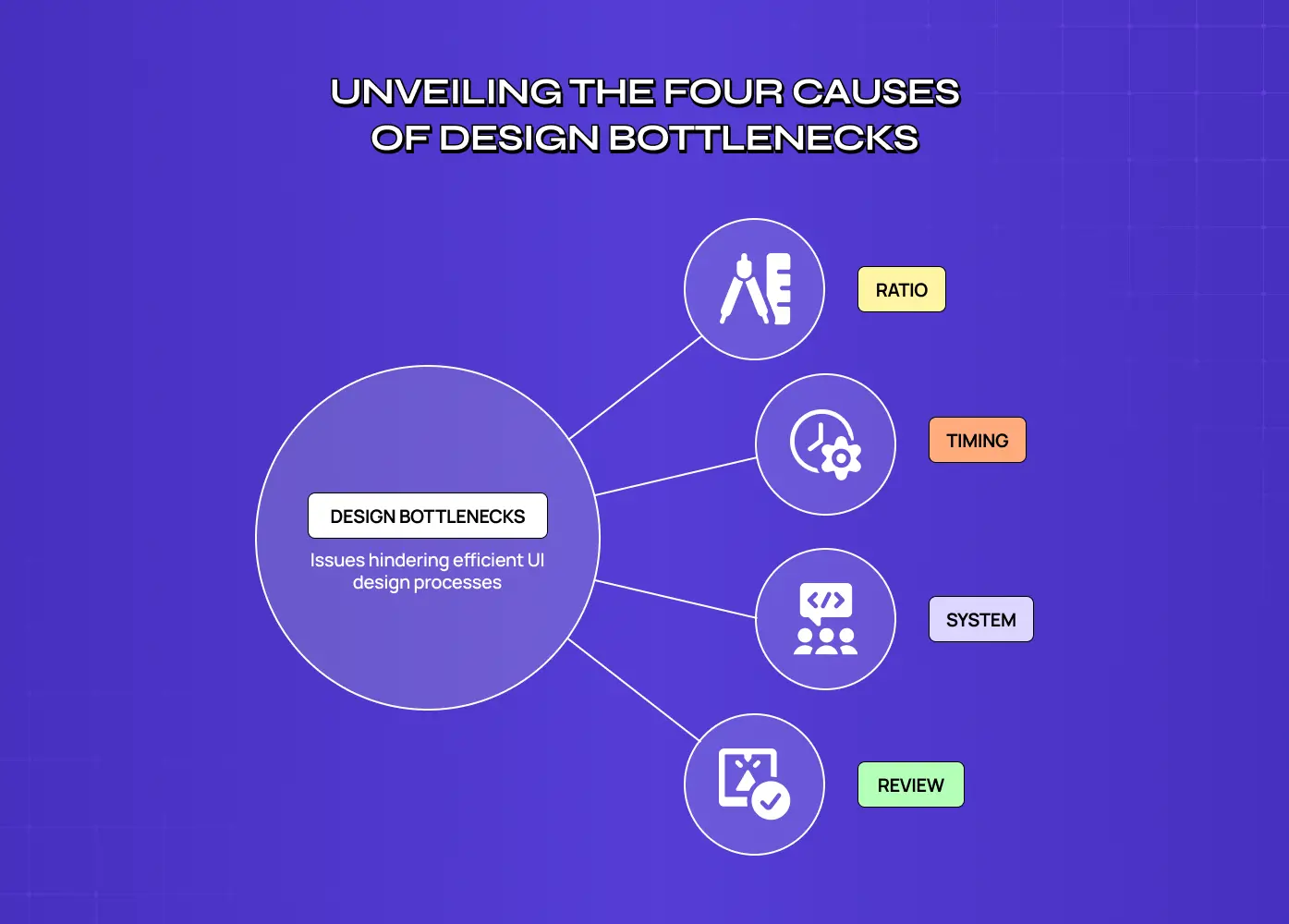
To fix your design bottleneck, first identify which of the four causes is actually creating the queue, because the right fix depends entirely on the real cause. Prescribing before diagnosing is how teams waste money on fixes that don't fit.
Run the quick diagnostic:
Ratio. How many engineers per designer? If it's well past 10:1, under-resourcing is a real factor.
Timing. Is design involved in shaping work, or only at the end? If it's end-of-line, late involvement is compressing your timeline.
System. Can non-designers produce consistent UI from a shared library, or does every screen route through design? No system means routine work is needlessly queuing.
Review. Once design finishes, how long until it's approved? If work waits days in sign-off, your bottleneck is the approval chain, not the designers.
Usually two or three of these light up at once, and the fixes stack: a design system plus earlier involvement plus a leaner review process compounds. Match your fixes to what the diagnostic reveals, rather than reaching for the default "hire more designers" that may not touch your actual constraint, and use a proper product design roadmap to sequence which fix goes first instead of trying to run all four at once.
Common mistakes when design is the bottleneck
The usual mistakes are all forms of treating the symptom instead of the cause:
Blaming designer speed when the cause is structural. This demoralizes the team and fixes nothing.
Defaulting to "hire more designers" without diagnosing. Adding capacity to a broken process widens the queue slightly instead of removing it.
Cutting design involvement to go faster. This feels efficient in the short term and reliably produces the late-stage rework and quality problems that slow you down more later.
Building a design system as a central-team gatekeeper with a weak contribution path, which turns the fix into the new bottleneck.
Fixing only one cause when several are active, such as solving the ratio while ignoring that design is still engaged too late.
Avoid these by diagnosing first and fixing the structure, not the people.
Conclusion
"Design is the bottleneck" is one of the most common complaints in product teams, and one of the most misdiagnosed. In the vast majority of cases, the designers aren't slow. The structure around them makes design the place work backs up. To recap:
Design capacity is too small for the engineering it serves.
Design is engaged too late in the process.
There's no system to handle routine work.
Finished work is trapped behind slow approvals.
The fix is structural too:
A self-serve design system so teams can build routine UI themselves.
Design brought in early as a parallel workstream.
A streamlined review chain.
Capacity right-sized, including flexible capacity for spikes, to match real demand.
Diagnose which causes are creating your queue, fix those, and design stops being the thing every launch waits on, not because the designers suddenly got faster, but because you stopped forcing all the work through a structure designed to jam.
If design keeps holding up your launches and you want to fix the structure, build a design system your teams can self-serve, embed design earlier, and add flexible capacity for the spikes without overhiring, book a discovery call with Groto. We help product teams unblock design with systems, embedded design partnership, and capacity that scales up and down with your roadmap. Let's stop design being the bottleneck.