
Thinking about hiring a design system specialist but not sure if it's worth the cost? This guide breaks down what the role actually involves, the concrete benefits for your product, and how to choose the right hiring model for your team.
Wondering if a design system specialist is worth the hire? Here's the real answer.

TL;DR
A design system specialist saves you money by preventing the slow bleed of inconsistent UI, duplicated components, and repeated design-to-dev handoffs. They build and maintain the shared library of components, patterns, and rules that every designer and engineer on your team pulls from, so your product looks and behaves the same way everywhere, ships faster, and scales without falling apart every time you add a new feature or a new person joins the team. If your product has more than a handful of screens, more than one designer, or plans to grow past its current size, the ROI usually shows up within a few months.
Quick summary of what's ahead:
What the role actually covers and how it differs from a product designer
The specific business benefits, from faster handoffs to lower long-term cost
How to tell if your team needs this hire right now
In-house vs. freelance vs. specialist studio, and which fits your situation
What it costs to hire one, with current salary data
Do You Actually Need One, or Is This Just a Fancy Title?
We get why people are skeptical. "Design system specialist" sounds like a title someone invented to justify a higher salary for doing what a regular product designer already does. We've heard versions of this on nearly every discovery call we've run, and it's a fair question to ask before you spend money on a role.
Here's the honest answer: if your product is small, if you have one designer and one or two engineers, and if your UI isn't changing much, you probably don't need a dedicated specialist yet. But the moment you have more than one person touching design or code, or you're building fast enough that screens start looking slightly different from each other, the cost of not having someone own consistency starts showing up everywhere. It shows up in longer QA cycles, in engineers rebuilding the same dropdown three different ways, and in a product that feels stitched together instead of designed.
That's the gap a design system specialist fills. Not because "consistency" sounds nice in a deck, but because inconsistency is expensive and it gets more expensive the longer you wait.
Where the cost of not having one usually shows up first:
Longer QA cycles spent catching visual inconsistencies instead of real bugs
Engineers rebuilding the same UI element multiple times across the codebase
Designers spending time on pixel decisions instead of user problems
A product that feels stitched together instead of intentionally designed
What Does a Design System Specialist Actually Do?
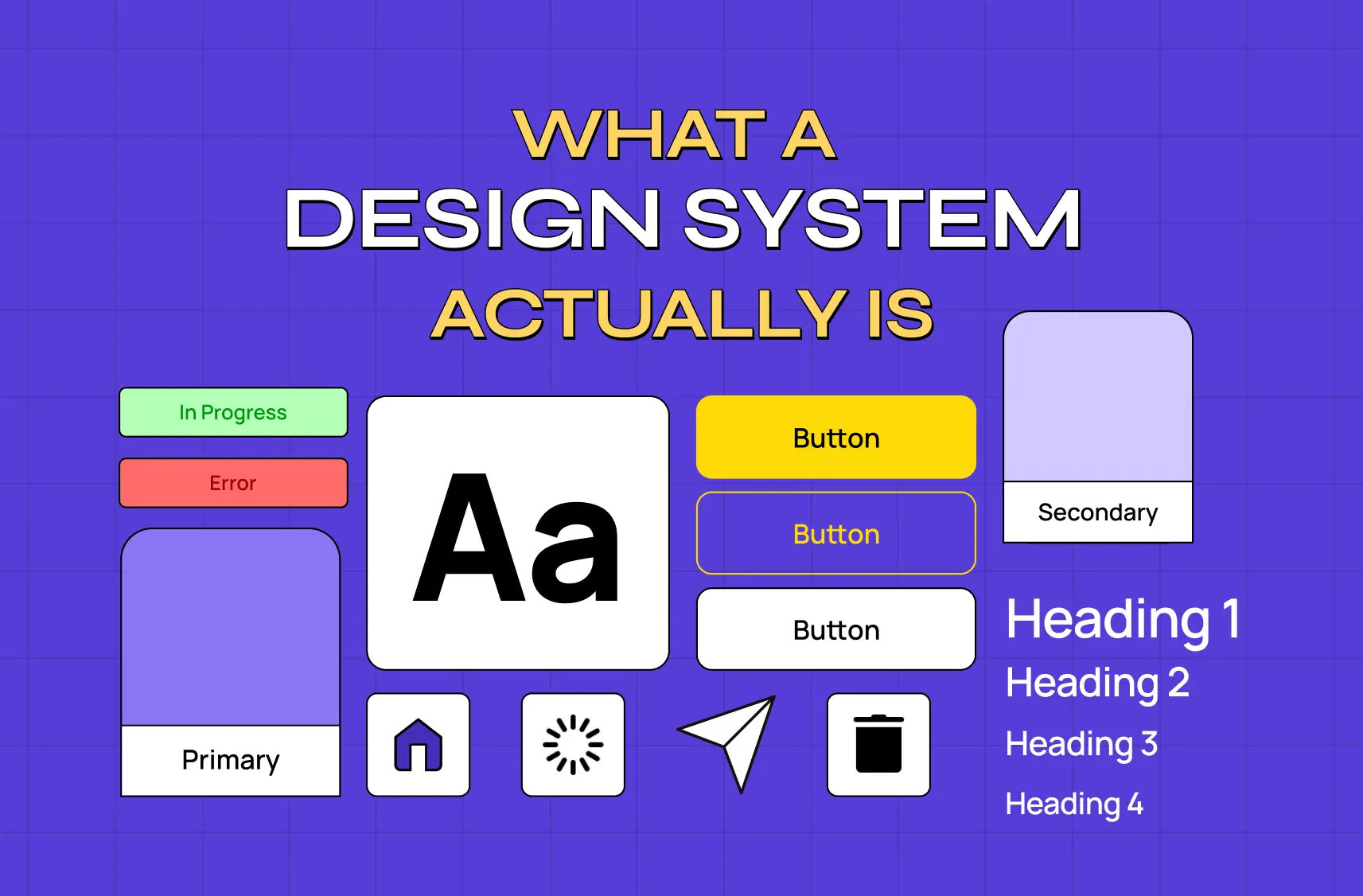
A design system specialist sits at the intersection of design and front-end development. Their job is to build, document, and maintain the design system your product runs on: the shared visual and functional language made up of buttons, forms, spacing rules, color tokens, typography scales, accessibility standards, and the coded components that bring all of it to life in your actual product.
They're different from a product designer, who's focused on solving a specific user problem on a specific screen.. A design system specialist is focused on making sure that whatever the product designer builds is made of consistent, reusable, already-tested pieces instead of one-off elements nobody else can reuse.
The quickest way to tell the two roles apart:
A product designer asks "what's the best way to solve this user's problem on this screen"
A design system specialist asks "what reusable piece should this screen be built from so every future screen benefits too"
A product designer's output is usually a flow or a screen
A design system specialist's output is usually a component, a token, or a documented rule
Typical design system specialist job description and responsibilities include:
Auditing existing UI to find inconsistencies and duplicate patterns
Designing and coding reusable, high-fidelity components (buttons, inputs, cards, modals, navigation)
Defining design tokens for color, spacing, typography, and elevation
Writing documentation so designers and engineers know how and when to use each component
Maintaining accessibility standards (contrast ratios, keyboard navigation, screen reader support) across every component
Working directly with engineering to keep the coded component library in sync with the design files
Governing how the system evolves as new features and edge cases come up
Quick naming note, since the terms genuinely overlap online: a design system specialist and a design systems engineer usually refer to the same hybrid design-and-code role, just with slightly different emphasis depending on the company. A systems designer in a general IT context is a different job entirely, focused on backend architecture and infrastructure. And if you searched for "systems designer" hoping to find game design roles, that's a separate discipline too, focused on game mechanics and rules rather than product UI. All three get lumped together in search results, but they're not interchangeable hires.
The Real Benefits of Hiring a Design System Specialist
This is the part that actually matters if you're the one signing off on the hire. Here's what changes when you bring in someone whose entire job is the system, not just the screens.
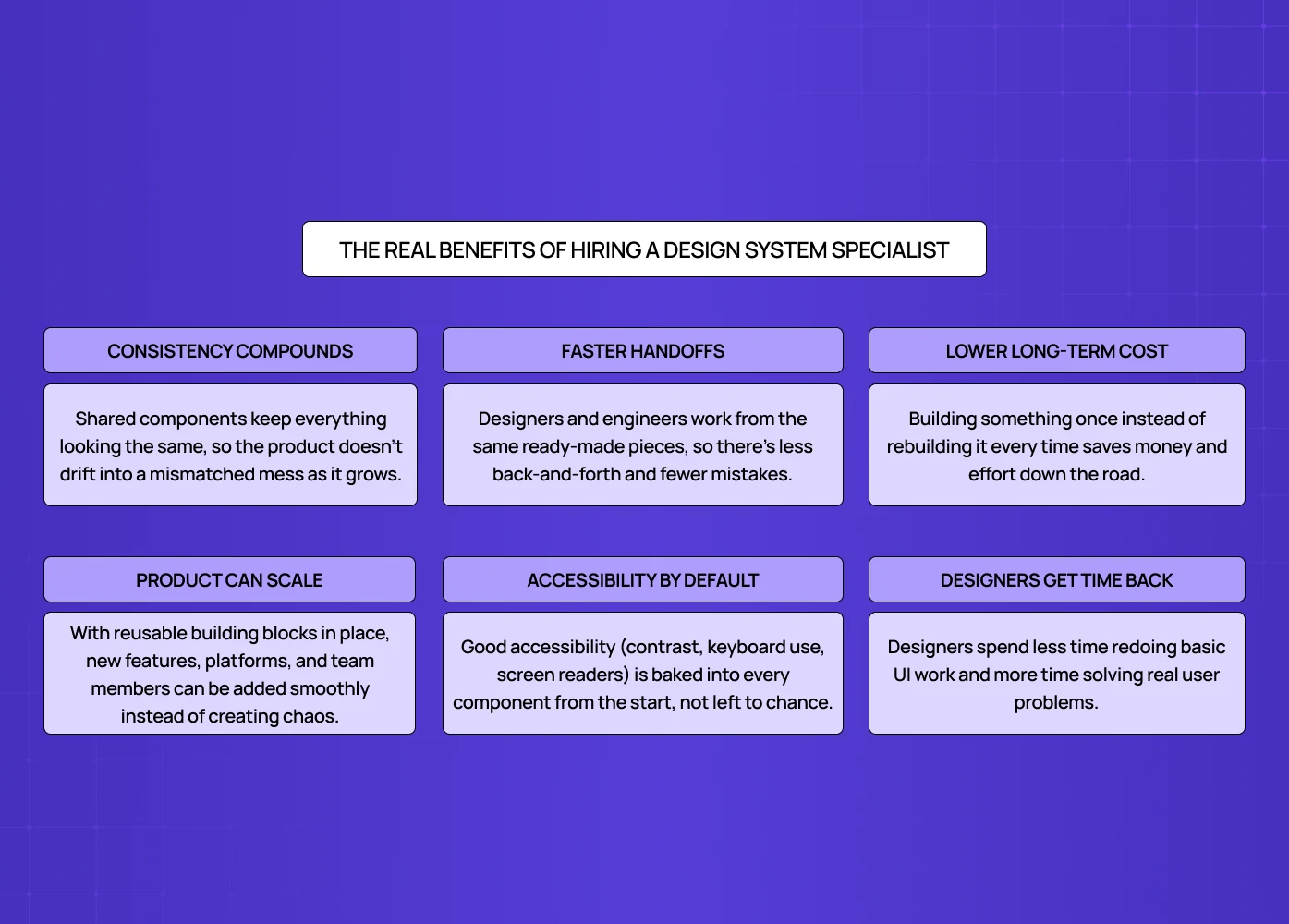
The six benefits covered below:
Consistency that compounds instead of erodes over time
Faster design-to-development handoff
Lower long-term cost, even though it looks like an added expense upfront
A product that can actually scale with your team
Accessibility and quality built in by default
Product designers freed up to focus on real user problems
1. Consistency That Compounds Instead of Erodes
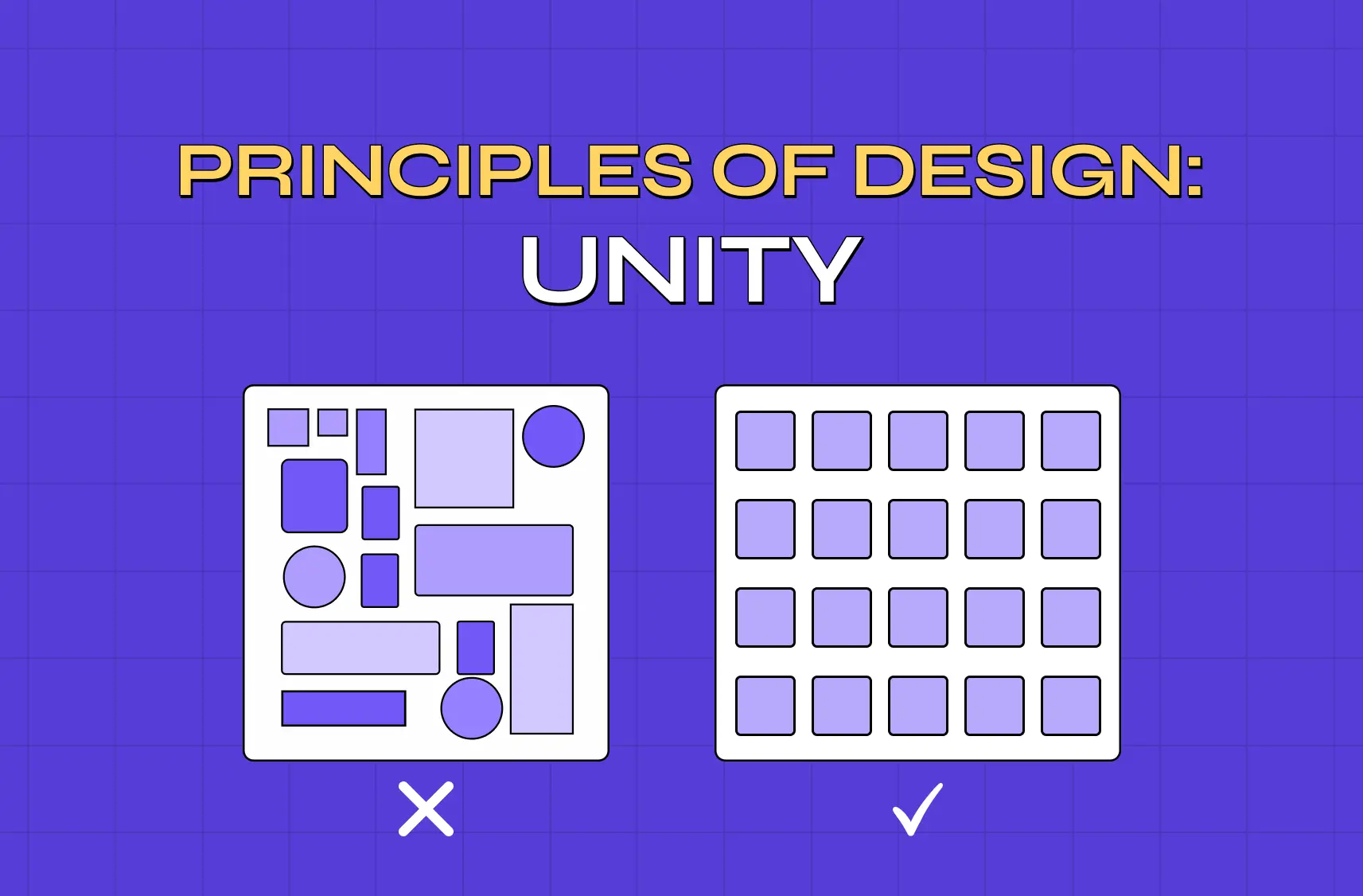
Every product without a system starts consistent and slowly drifts. A button here gets a slightly different border radius. A form there uses a different spacing scale. Six months in, your product looks like it was built by five different companies, because in a sense, it was, five different people made five different decisions with no shared reference point and no common set of design principles to build from.
A design system specialist stops that drift at the source, protecting the visual consistency that quietly erodes without it. Once components and tokens exist in one place, every new feature inherits consistency automatically instead of requiring someone to remember what the last person did.
What this looks like in practice:
One source of truth for every button, form field, and card style, instead of five slightly different versions
New features automatically match the rest of the product because they're built from the same components
Fewer "which version is correct" conversations between designers and engineers
A product that feels like it came from one team, even as that team grows
2. Faster Design-to-Development Handoff
This is usually the benefit that shows up fastest and is easiest to measure. Without a system, every handoff involves some version of "what padding did you use here" or "is this the same blue as the last screen." With a system, designers pull from a component library that engineers have already built and tested, so there's nothing to interpret or guess. Fewer questions, fewer rounds of QA, fewer bugs from mismatched implementation.
What changes once a system exists:
Engineers implement from pre-built, pre-tested components instead of interpreting a static design file
Designers spend less time annotating spacing and sizing on every single screen
QA catches fewer implementation mismatches because there's less room to guess
Sprint timelines get more predictable because the handoff bottleneck disappears
3. Lower Long-Term Cost, Even Though It Feels Like an Added Expense Upfront
This is the part that's hardest to sell internally, because hiring a specialist looks like a new cost, not a savings. But every hour your engineers spend rebuilding a dropdown that already exists somewhere else in your codebase is an hour you paid for twice. A design system specialist turns that repeated cost into a one-time investment. The payoff compounds with every new feature you ship after the system exists.
Where the savings actually come from:
Components get built once instead of rebuilt every time a new feature needs one
Less engineering time spent untangling inconsistent CSS and duplicated logic
Fewer design revisions caused by components that don't match across screens
Lower onboarding cost for new hires, since they're learning one documented system instead of reverse-engineering the whole product
4. Your Product Can Actually Scale
If you're planning to grow your team, add new product surfaces, or expand into new platforms, a growth-ready design system is what lets that growth happen without chaos. New designers and engineers can onboard against documented components instead of reverse-engineering old screens. New features get built faster because the building blocks already exist and follow proven product design best practices. Without a system, every new hire adds more inconsistency risk. With one, every new hire adds velocity.
Where scaling gets easier with a system in place:
Expanding to a new platform, like going from web to mobile, without starting the visual language from scratch
Growing your design or engineering team without every new hire introducing a slightly different interpretation of the product
Shipping new features faster because the components already exist and are already tested
Handling more product complexity without the UI becoming harder to maintain
5. Accessibility and Quality Are Built In, Not Bolted On
Accessibility is one of those things that's cheap to build in from the start and expensive to retrofit later. A design system specialist bakes contrast ratios, focus states, and keyboard navigation into every component once, so every screen that uses that component is accessible by default. Nobody has to remember to think about it screen by screen.
What gets covered automatically once it's built into the system:
Color contrast ratios that meet accessibility standards across every component
Keyboard navigation and visible focus states, instead of relying on individual engineers to add them
Screen reader support built into components rather than patched in after complaints
Consistent, testable accessibility instead of it depending on who built which screen
6. Your Product Designers Get Their Time Back
This is the benefit people underestimate. Without a system, product designers spend a meaningful chunk of their time rebuilding basic UI pieces instead of solving actual user problems. Give them a solid component library built in the right design tools and suddenly they're spending that time on the parts of the job that actually move the product forward: user research, flows, and the harder design problems that don't have an off-the-shelf answer.
What product designers get back once a system exists:
Less time spent recreating basic UI elements that already exist somewhere in the product
More time for user research and testing actual flows
Fewer low-value decisions about spacing, sizing, or color on every single screen
More energy for the design problems that genuinely need a human judgment call
Signs Your Team Actually Needs a Design System Specialist
Not every team needs to make this hire right now. Here's a practical checklist:
You have more than one designer or more than a couple of engineers touching the UI
You've noticed the same component built slightly differently in different parts of the product
Design handoff regularly involves back-and-forth about spacing, color, or component behavior
You're planning to launch on a new platform (web to mobile, for example) and want visual consistency across both
Your QA process regularly catches UI inconsistencies late
You're scaling your team and want new hires to ramp up faster
Accessibility compliance is becoming a requirement, not a nice-to-have
If three or more of these sound familiar, the ROI case for a specialist is probably already there, even if it doesn't feel urgent yet.
In-House vs. Freelance vs. Specialist Studio: Which Hiring Model Fits You
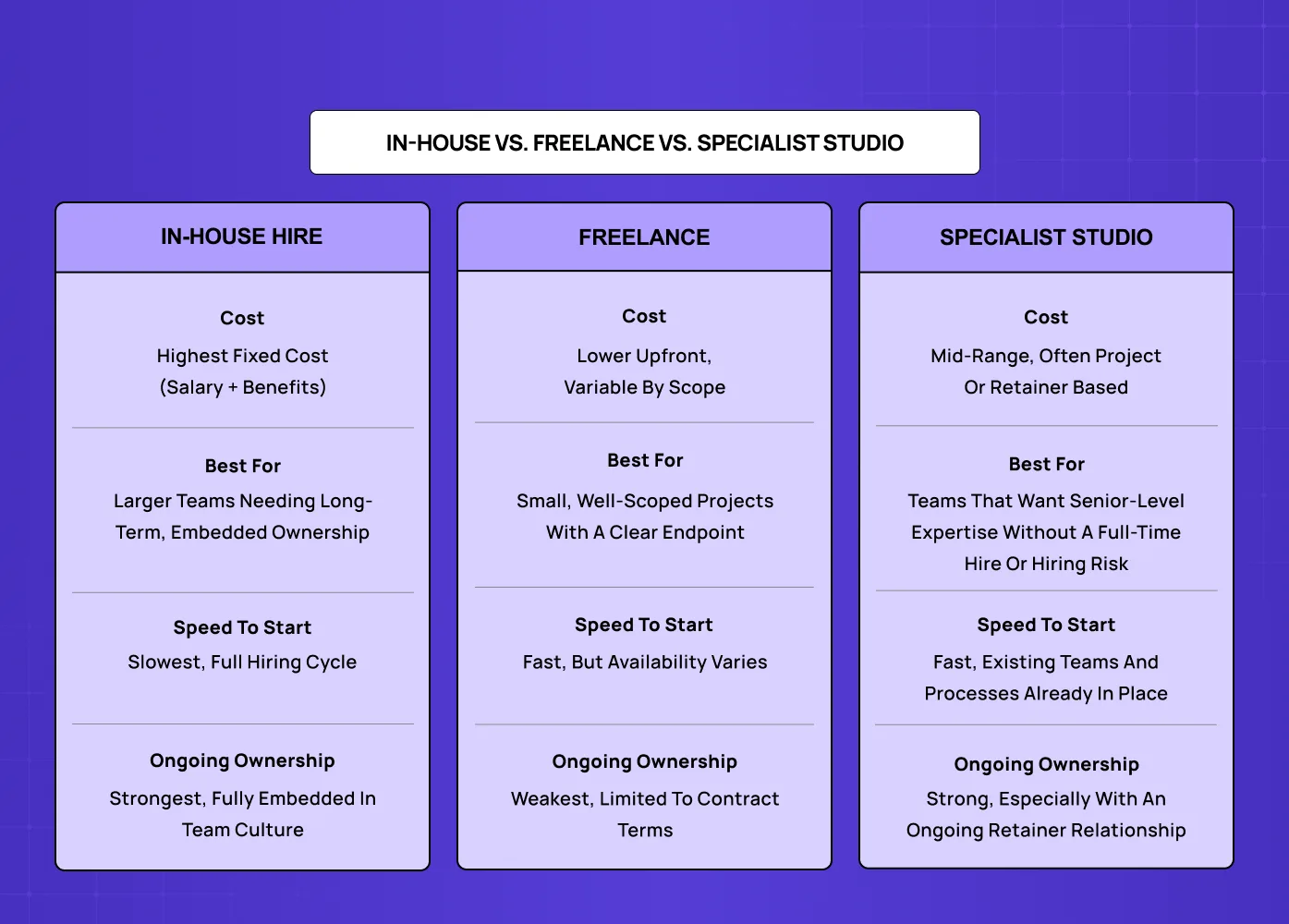
This is usually the next question once a team decides they need this role filled. Here's how the three main options compare.
Model | Best for | Cost | Speed to start | Ongoing ownership |
In-house hire | Larger teams needing long-term, embedded ownership | Highest fixed cost (salary + benefits) | Slowest, full hiring cycle | Strongest, fully embedded in team culture |
Freelancer | Small, well-scoped projects with a clear endpoint | Lower upfront, variable by scope | Fast, but availability varies | Weakest, limited to contract terms |
Specialist studio | Teams that want senior-level expertise without a full-time hire or hiring risk | Mid-range, often project or retainer based | Fast, existing teams and processes already in place | Strong, especially with an ongoing retainer relationship |
An in-house hire makes the most sense once you have enough ongoing design system work to keep one person consistently busy, usually at a size where you already have several designers and engineers. A freelancer works well for a narrowly scoped project, like auditing an existing system or building out one specific component library, but you take on more risk around consistency and continuity once the contract ends.
A specialist studio sits in between. You get senior-level expertise and an established process for how a design studio scopes and delivers work, without carrying the hiring risk, onboarding time, or fixed headcount cost of a full-time role.This is often the right fit for startups and mid-size product teams that need the work done well and don't want to spend three months interviewing.
Quick way to decide which fits you:
Choose an in-house hire if you have enough ongoing work to keep one person consistently busy and want the role fully embedded in your team
Choose a freelancer if you have one narrowly scoped project with a clear start and end date
Choose a specialist studio if you want senior expertise, an established process, and flexibility without the hiring risk or headcount commitment
What to Look for in a Design System Specialist's Portfolio
A strong design system specialist portfolio should show more than pretty component screenshots. Look for:
Evidence of the actual system in use across multiple real screens, not just an isolated component library page
Documentation samples, since a system nobody can read is a system nobody follows
Before-and-after context that shows what the product looked like before the system existed
Coded components, not just design files, if you need someone who can bridge design and development
Accessibility considerations mentioned explicitly, not just implied
Evidence they've worked with cross-functional teams, since a system built in isolation rarely survives contact with real engineering constraints
How Groto Approaches Design Systems
At Groto, we've built design systems for products across different stages, from early-stage startups needing their first component library to more established products cleaning up years of UI drift. The work always starts the same way: an audit of what already exists, followed by defining the tokens and components that will carry the product forward, and documentation that actually gets used instead of ignored. You can see examples of this kind of work across our project case studies, where consistency and scalability were the driving reason the client brought in outside expertise in the first place.
How this typically plays out on a project:
Auditing the existing product to identify inconsistencies and duplicated patterns before building anything new
Defining tokens and components based on what the product actually needs, not a generic template
Documenting the system in a way designers and engineers actually reference day to day
Handing off a system built to grow with the product instead of needing a rebuild in a year
What Does It Cost to Hire a Design System Specialist?
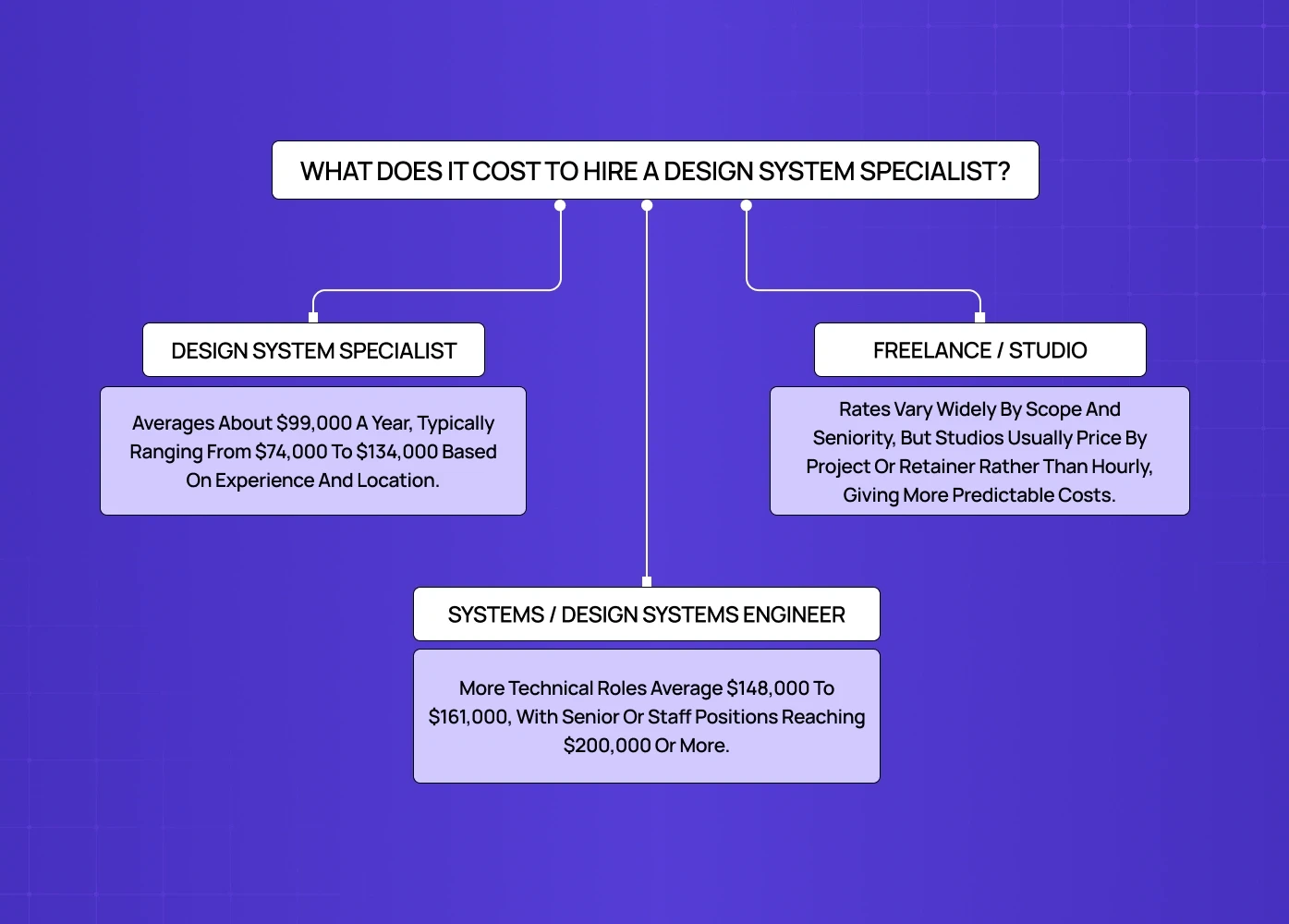
Salary data varies depending on whether you're looking at an in-house hire, a freelancer, or a specialist studio, and the numbers get further muddied by overlapping job titles. Here's a general picture based on current US compensation data:
Design system specialist roles average around $99,000 per year, with a typical range of $74,000 to $134,000 depending on experience and location
Systems designer and design systems engineer roles, which lean more technical, average higher, often landing between $148,000 and $161,000, with senior and staff-level roles reaching $200,000 or more
Freelance and contract rates vary widely by scope and seniority, and specialist studios typically price by project or retainer rather than an hourly rate, which can work out more predictably for teams that don't want an open-ended engagement
If you're budgeting for an in-house hire, plan around the $100K to $160K range depending on seniority and location. If you're comparing that against a freelance or studio engagement, weigh the fixed cost of a full-time salary against the flexibility of paying only for the scope of work you actually need right now.
Conclusion
A design system specialist's core value is preventing the slow, expensive drift that happens when nobody owns consistency across a growing product
The benefits show up as faster handoffs, lower long-term cost, easier scaling, built-in accessibility, and product designers freed up to focus on real user problems
You likely need this role once more than one person is touching your UI or you're preparing to scale your team or platforms
In-house hires make sense at scale, freelancers work for narrowly scoped projects, and specialist studios offer a middle ground of senior expertise without the hiring risk
A strong portfolio shows the system in real use, not just isolated component screenshots
Salaries for the role generally range from $99K to $160K depending on how technical the position is and where it sits in your organization