
A design philosophy is not a slogan or brand statement. It is a decision system that guides UX trade-offs, reduces redesign cycles, and helps digital products scale without losing clarity, trust, or usability.
A strong design philosophy is what keeps products coherent as they scale.
Most teams don’t fail because they lack talent.
They fail because they lack a decision system.
A design philosophy is that system.
Not a poster. Not a slogan. Not a Notion page nobody opens.
A real design philosophy is what determines:
how fast your product evolves
how often features need redesigning
how much design debt turns into engineering debt
how confident users feel when your product gets complex
If you’re building or scaling a digital product, your design philosophy is already shaping outcomes - whether you’ve defined it or not.
This guide explains what a design philosophy really is, why it matters now, how high-performing product teams use it, and how to create one that survives real trade-offs in SaaS, AI, B2B, and consumer products.
What Is a Design Philosophy (In Practice, Not Theory)
A design philosophy is a set of non-negotiable decision principles that guide how your product resolves trade-offs when things get hard.
It answers questions like:
Should clarity beat flexibility here?
Should speed beat completeness?
Should power users or first-time users win?
Should automation replace control, or support it?
Most teams already make these decisions - they just make them inconsistently.
A written design philosophy does three things:
Reduces decision fatigue across teams
Prevents re-litigation of the same debates every sprint
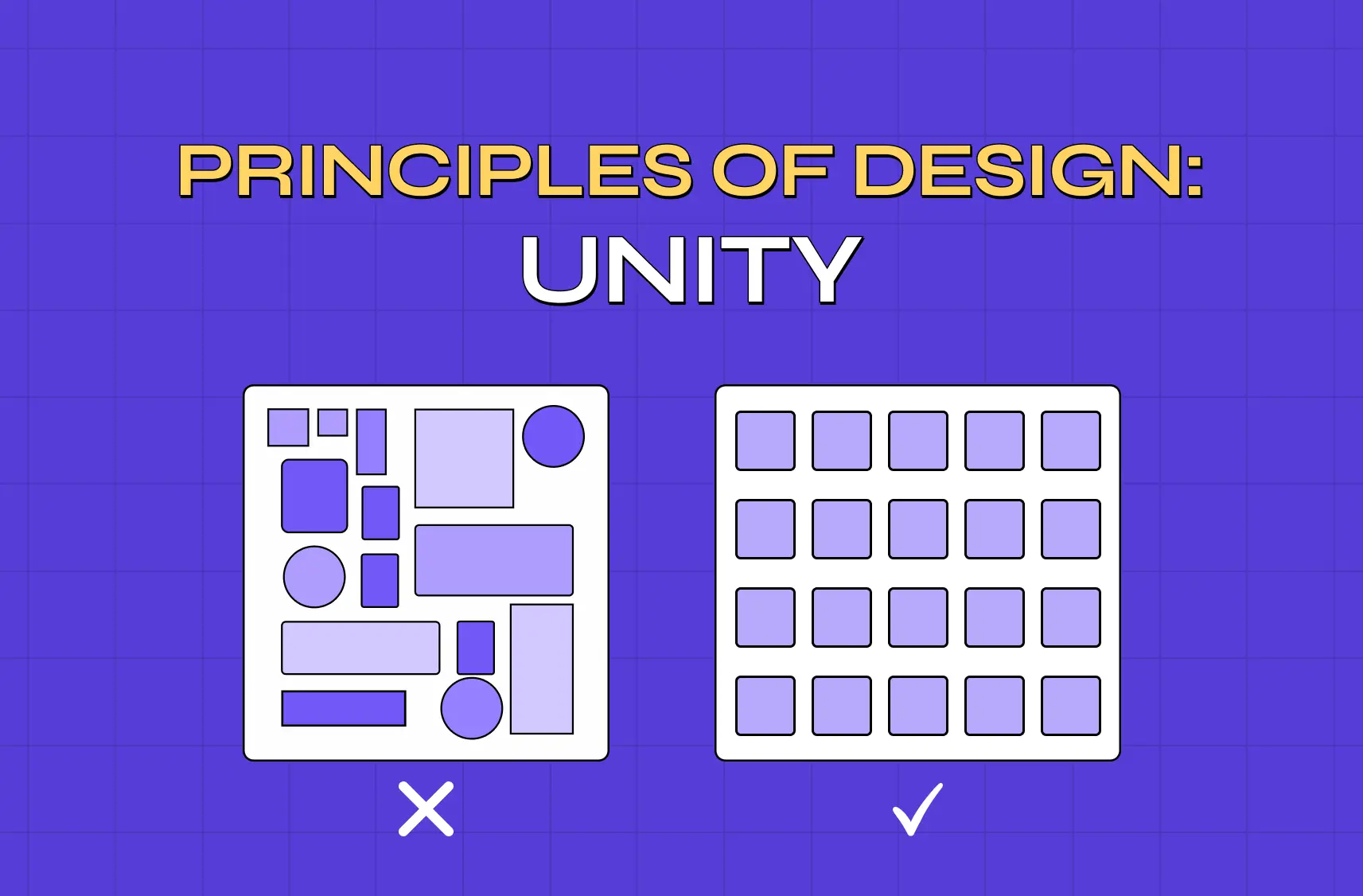
Keeps UX coherent as the product scales — the product-level expression of visual unity in design, where every part reinforces one coherent whole.
Without it, design becomes reactive. With it, design becomes compounding.
Why Design Philosophy Is a Business Decision (Not a Design Exercise)
Here’s the uncomfortable truth we see across audits:
Products without a clear design philosophy redesign the same flows repeatedly, ship features that feel disjointed, slow engineering velocity, and lose users during moments of uncertainty rather than functionality. This pattern plays out at the brand level too — and SaaS branding decisions that scale shows how brand coherence breaks down through the same accumulated inconsistency that a design philosophy is built to prevent.
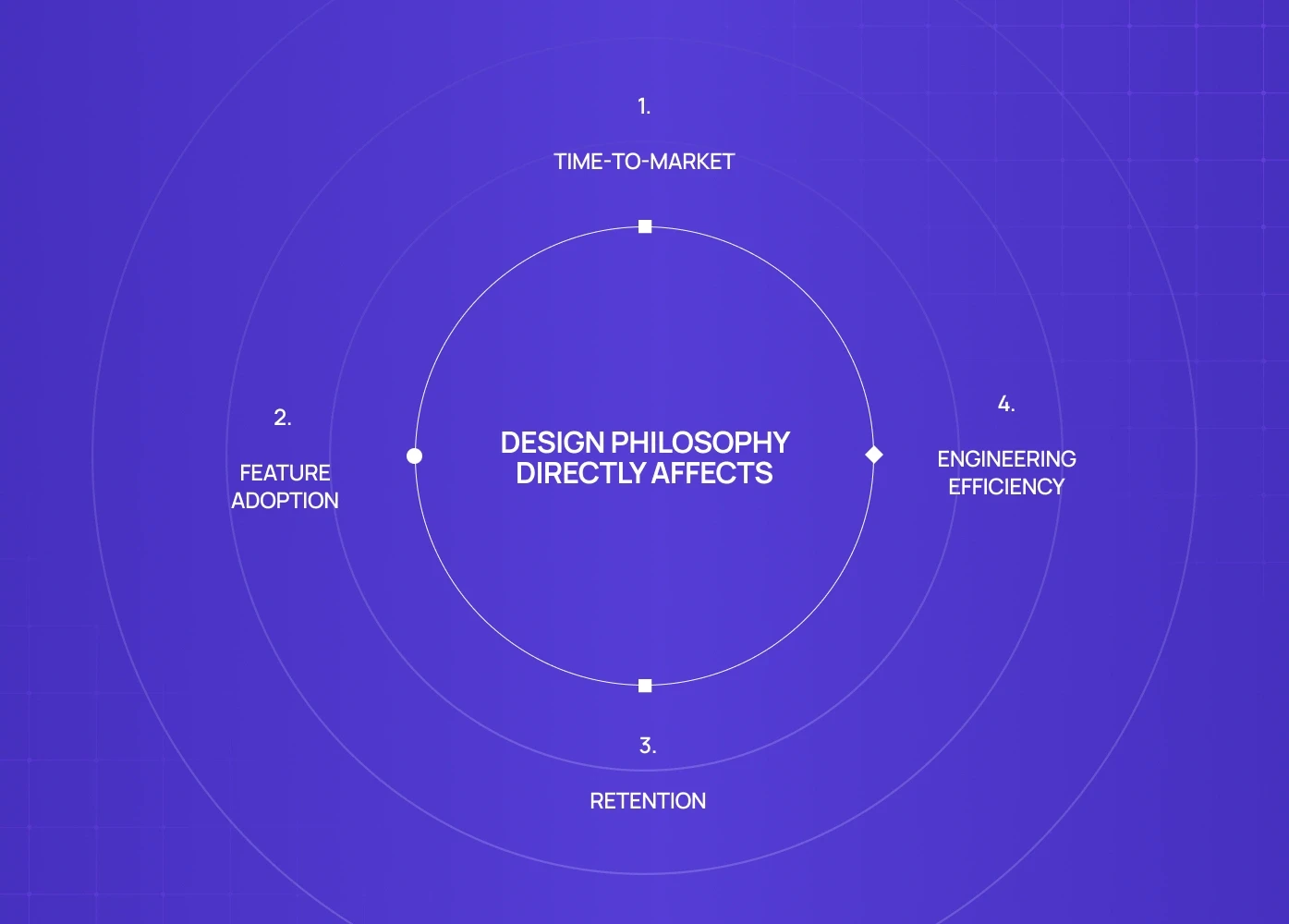
Design philosophy directly affects:
time-to-market
feature adoption
retention
engineering efficiency
At scale, philosophy replaces supervision.
It lets teams move faster without breaking coherence.
The Hidden Cost of Not Having One
When teams don’t define a design philosophy, they pay for it later in ways that rarely show up on dashboards immediately.
Common symptoms:
Stakeholders request redesigns without clear reasons
Designers optimize visuals instead of behavior
Engineers rebuild UI logic across features
Users say “it looks fine, but feels confusing”
In real products, this often translates to:
slower onboarding completion
higher support load
inconsistent decision confidence
increased rework during scaling
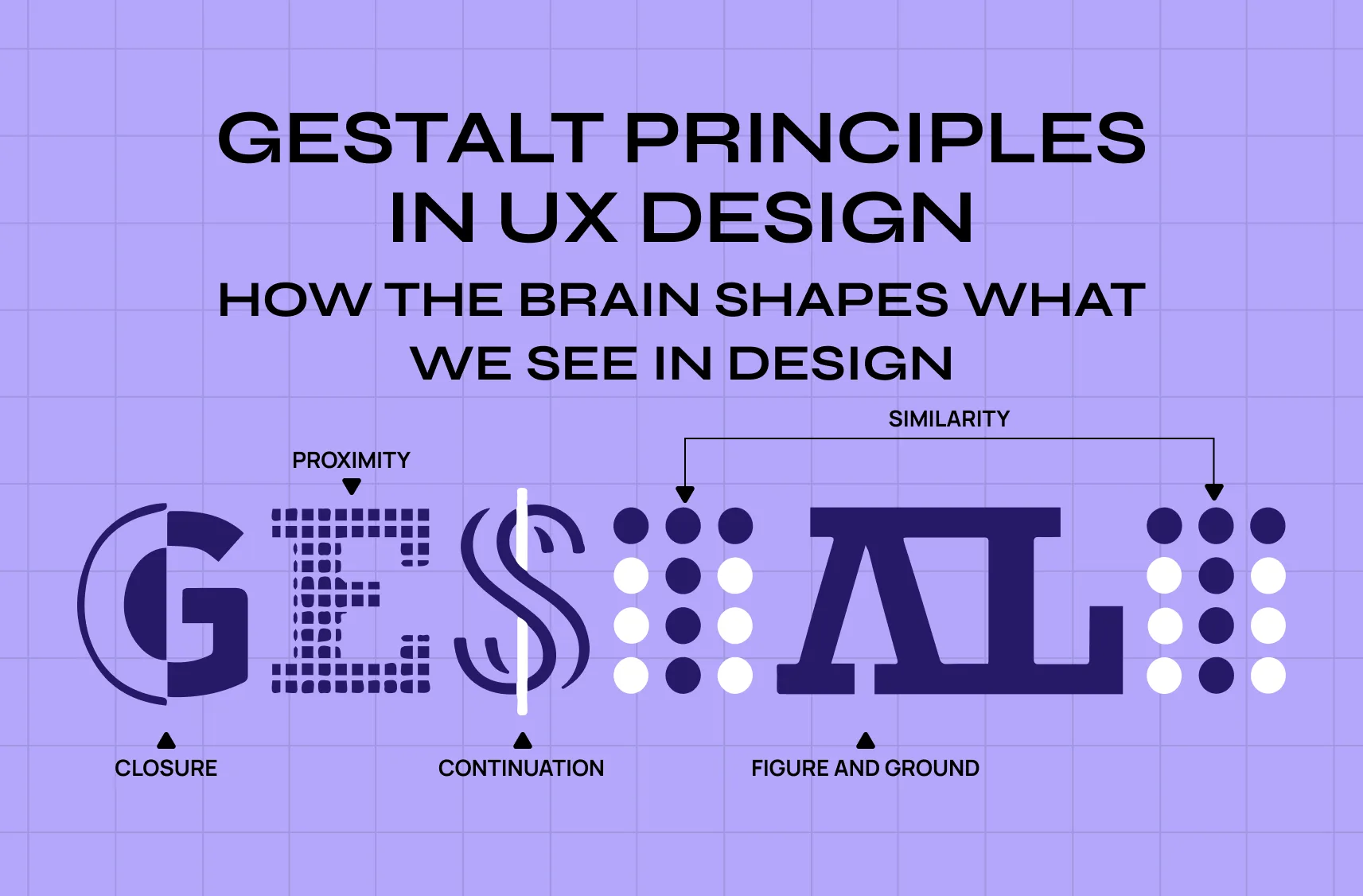
A design philosophy doesn't eliminate trade-offs. It makes them predictable and intentional — and when philosophy is grounded in how users actually perceive interfaces, Gestalt principles in UX design give teams a shared visual language for making those trade-offs consistently rather than case by case.
How Design Philosophy Shows Up in Real Products
Design philosophy isn’t something users read.
They feel it.
In complex B2B platforms
A strong philosophy determines:
how much data is shown upfront
when advanced options appear
how errors communicate severity
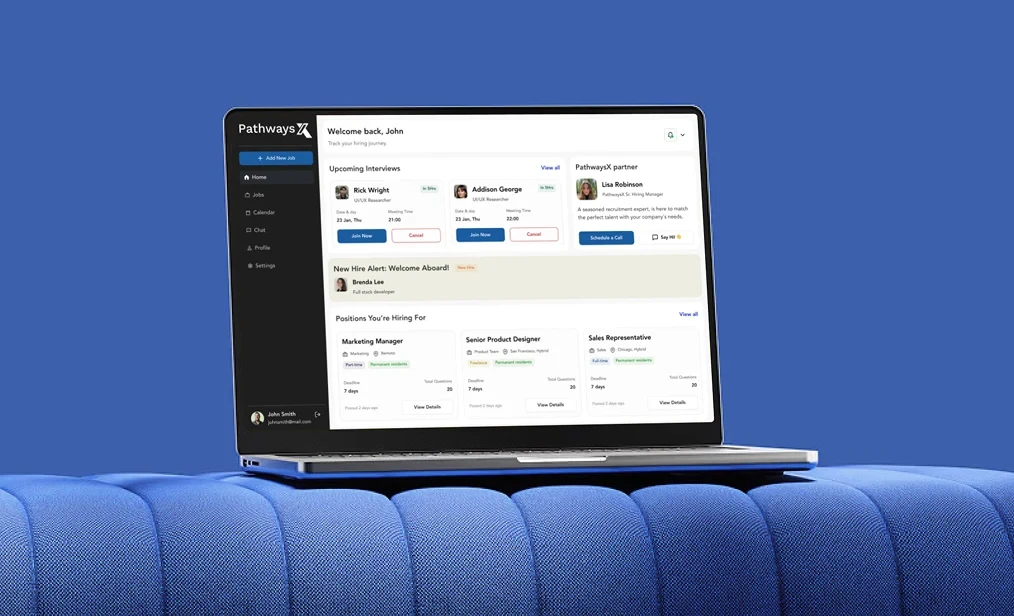
In platforms like PathwaysX, the challenge wasn’t missing features. It was decision overload. A consistent philosophy around progressive disclosure and role-based clarity helped stabilize UX as workflows scaled across recruiters, admins, and hiring managers.
In trust-sensitive consumer products
Philosophy dictates:
tone during errors
pacing of onboarding
how confidence is built before commitment
In health-tracking products like Gini, design philosophy shaped how reassurance, guidance, and feedback worked together, not how screens looked.
The takeaway: Great products don't just look consistent. They behave consistently under pressure — and that behavioral consistency is what separates a design philosophy from a style guide. It's also the foundation of brand experience design: the practice of ensuring every touchpoint, digital or otherwise, reinforces the same emotional impression because the same decision principles are operating underneath.
The 4 Types of Design Philosophies (And Their Trade-Offs)
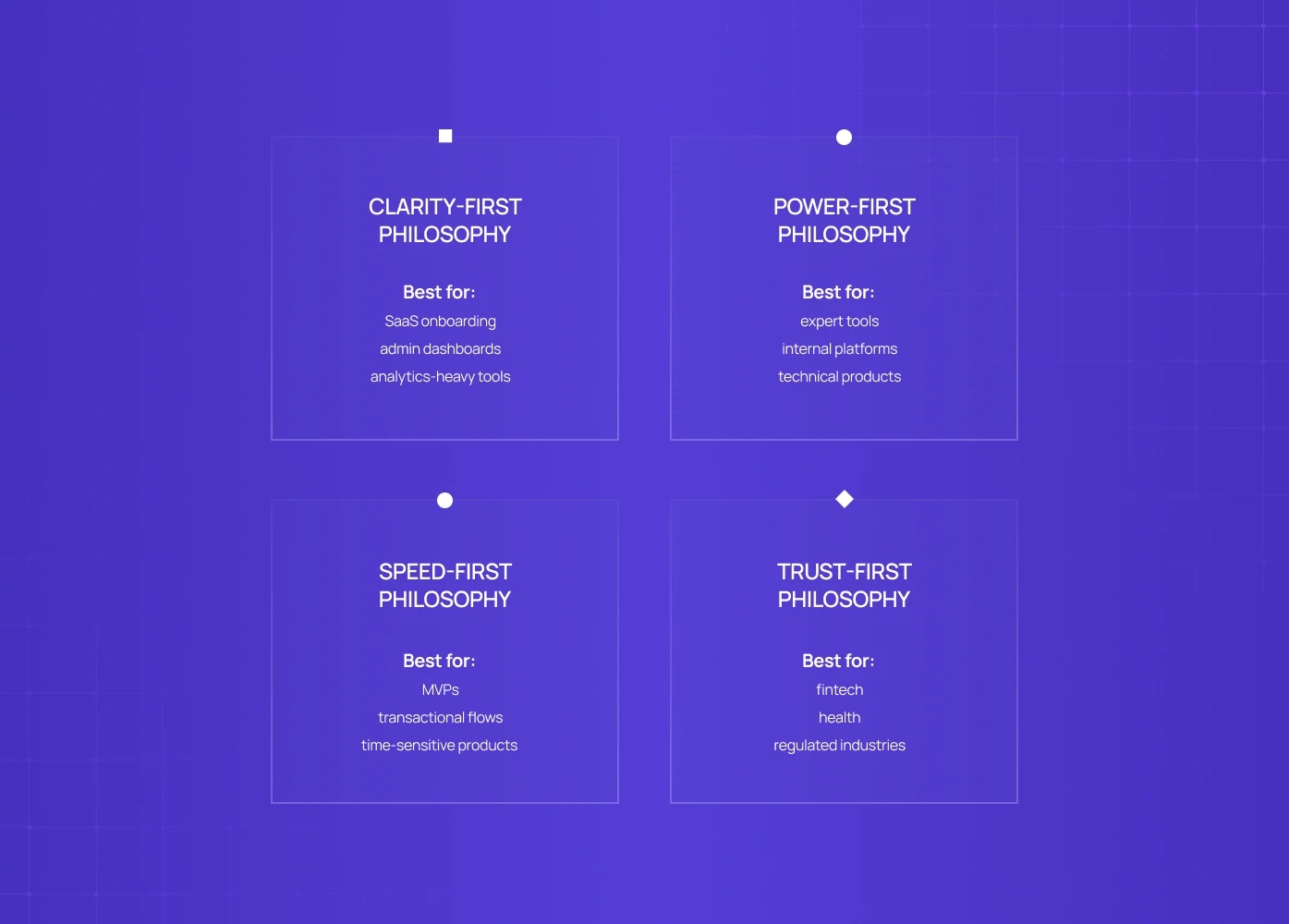
Most product design philosophies fall into one of these patterns, consciously or not.
1. Clarity-First Philosophy
Optimizes for:
Fast comprehension, reduced cognitive load, predictable behavior — products built on clarity-first thinking often extend that restraint into their visual layer, with a monochromatic visual system keeping color decisions disciplined so nothing competes with the content hierarchy. Risk: may feel restrictive to power users. Best for: SaaS onboarding, admin dashboards, analytics-heavy tools.
Risk:
may feel restrictive to power users
Best for:
admin dashboards
analytics-heavy tools
2. Power-First Philosophy
Optimizes for:
flexibility
depth
control
Risk:
overwhelms new users
slower activation
Best for:
expert tools
internal platforms
technical products
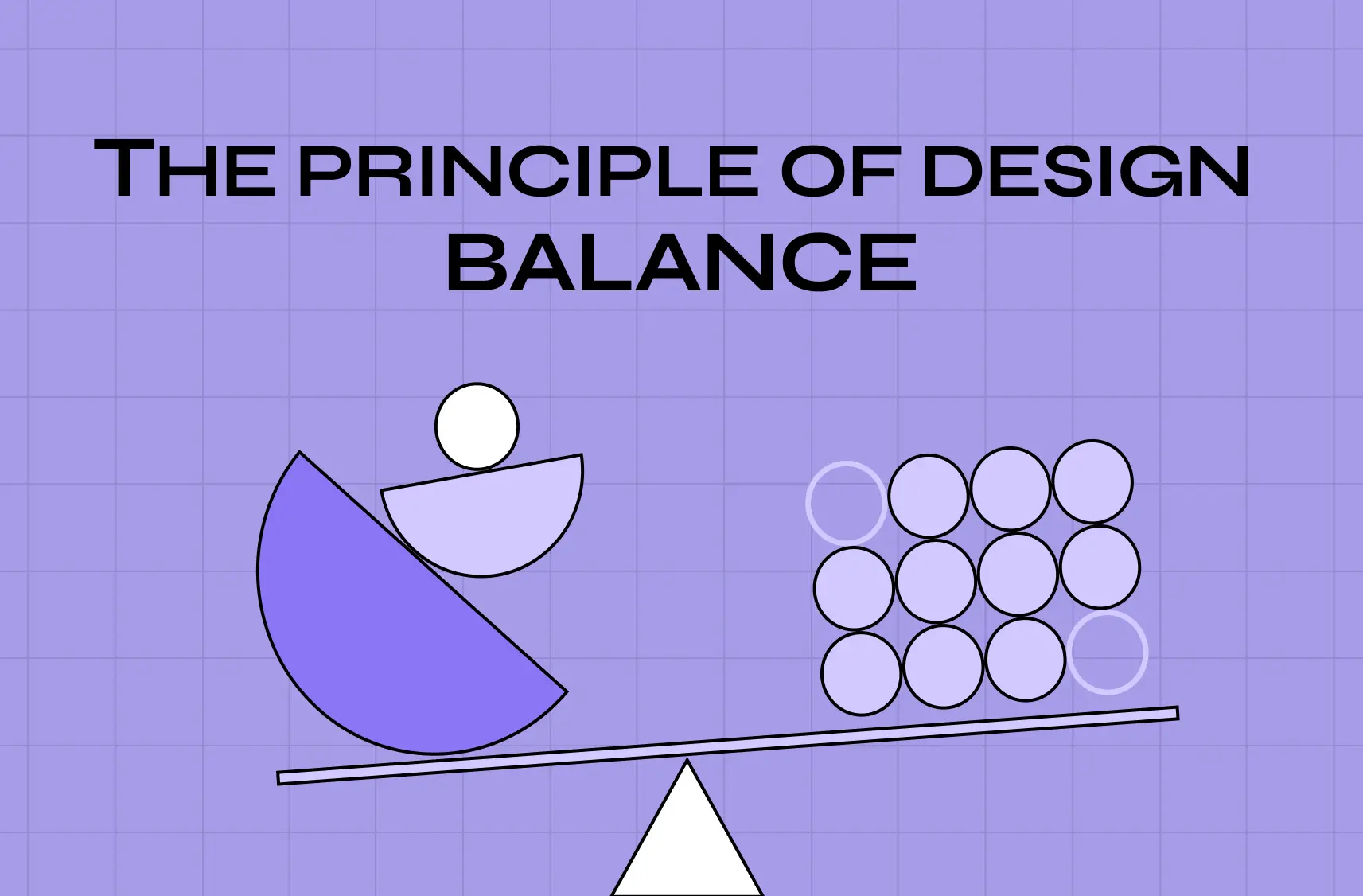
Philosophies like this one are essentially weighted decision tradeoffs, deliberately tipping the scale toward power at the cost of approachability rather than seeking an even split.
3. Speed-First Philosophy
Optimizes for:
rapid action
minimal steps
quick wins
Risk:
shallow understanding
brittle long-term usage
Best for:
MVPs
transactional flows
time-sensitive products
This philosophy lives almost entirely at the level of interaction-level interface decisions — button placement, step count, and friction points — rather than abstract strategy.
4. Trust-First Philosophy
Optimizes for: reassurance, transparency, decision confidence — the full strategic and visual implications of this approach are explored through design philosophy in regulated industries, where trust-first thinking shapes not just interface decisions but every brand touchpoint a user encounters before and after the product. Risk: slower flow progression. Best for: fintech, health, regulated industries.
Strong teams choose deliberately, not accidentally.
Where Most Design Philosophies Break Down
This is where theory usually collapses in practice.
Common failure points:
Principles are too vague to resolve conflict
Everything is labeled "user-first" with no prioritization — user-first design treated as a slogan, not a decision rule
Brand values override usability when stakes rise
No rule exists for what wins during trade-offs
A usable philosophy must:
Resolve disagreement, not inspire posters, prioritize users and moments explicitly, guide behavior, not aesthetics — though behavior and aesthetics aren't fully separable, which is why grounding philosophy in visual principles around hierarchy, contrast, and consistency gives teams the shared language to make both kinds of decisions from the same foundation.If it doesn’t help teams decide faster, it’s not a philosophy. It’s decoration.
How to Create a Design Philosophy That Actually Works
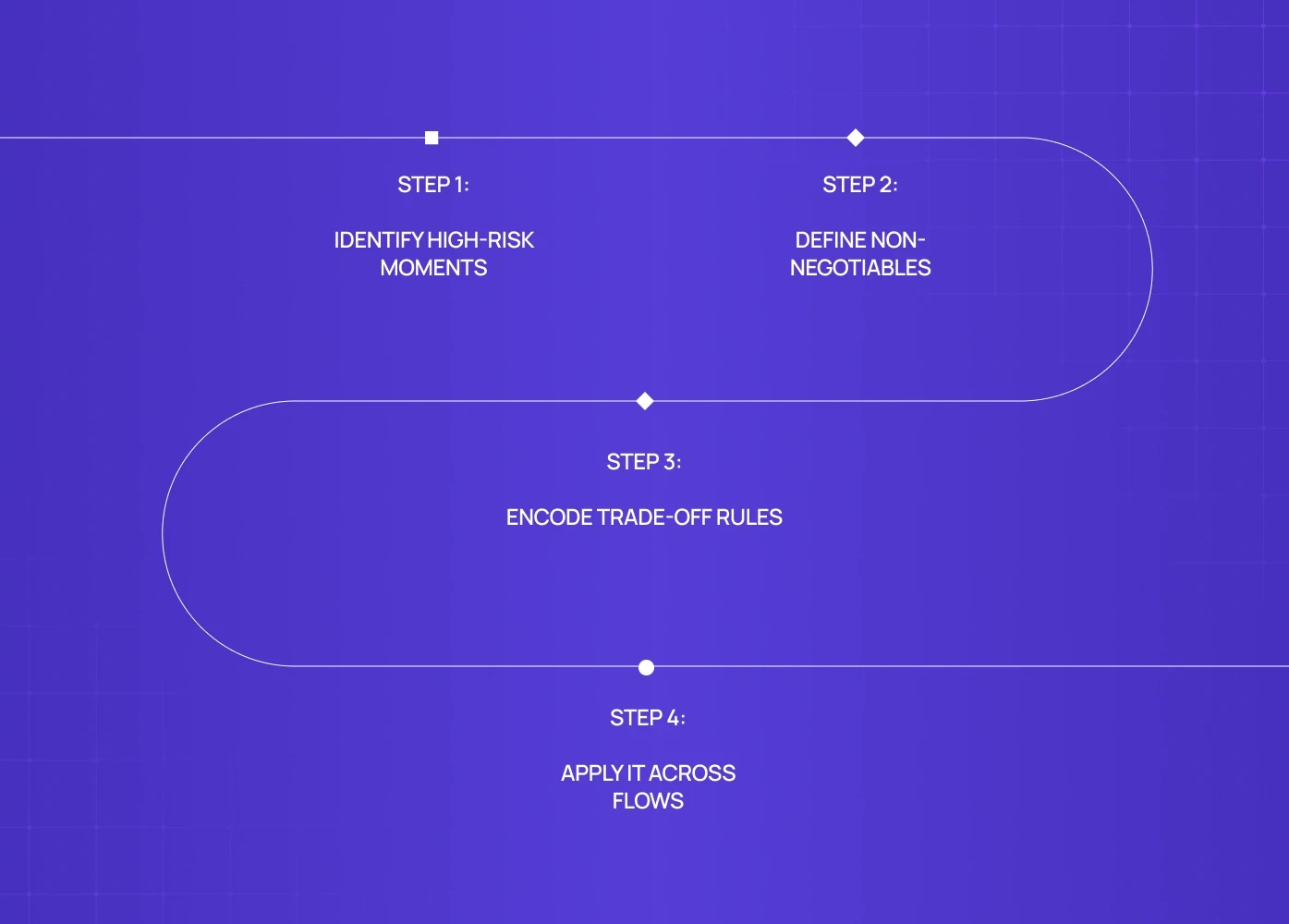
Here’s the framework we see succeed in real product environments.
Step 1: Identify High-Risk Moments
Map where users hesitate, abandon, or seek reassurance:
onboarding
configuration
irreversible actions
error states
These are exactly the moments where a restrained visual language — fewer competing visual elements, deliberate negative space — reduces noise precisely when users need clarity most.
Step 2: Define Non-Negotiables
For each moment, answer:
what must always be true for the user?
what do we optimize for, even under pressure?
Step 3: Encode Trade-Off Rules
Explicitly state:
what wins when goals conflict
what gets sacrificed first — this is where design strategy for product teams moves from abstract principle into a ruleset that survives real sprint trade-offs.
Step 4: Apply It Across Flows
Test philosophy against:
onboarding
dashboards
errors
edge cases — and encoding those tests into a design system as philosophy means the rules don't live in a document but in the components, tokens, and interaction patterns that every designer and engineer draws from.
If it breaks under complexity, refine it.
When Design Philosophy Becomes a Competitive Advantage
Design philosophy matters most when:
products scale beyond MVP
teams grow
features compound
user roles diversify
At this stage:
speed without coherence creates churn
flexibility without clarity creates friction
power without guidance creates avoidance
Teams that win don't redesign constantly. They design once and evolve confidently — and the ones that stay ahead often practice design beyond the obvious, anticipating futures rather than reacting to them.
Why Teams Bring Groto In at This Stage
Most teams don’t come to us asking for a design philosophy.
They come with symptoms: UX feels inconsistent, features ship slower, redesigns keep resurfacing, users hesitate at critical moments. For teams wanting a structured starting point, understanding UX audit cost helps scope the right diagnostic before committing to a full philosophy-led engagement.
Our role is not to invent abstract principles.
It’s to extract philosophy from real constraints:
user behavior
engineering reality
business goals
scaling pressure
That’s how philosophy turns into leverage, not documentation.
Conclusion: Philosophy Is How Products Stay Coherent Under Growth
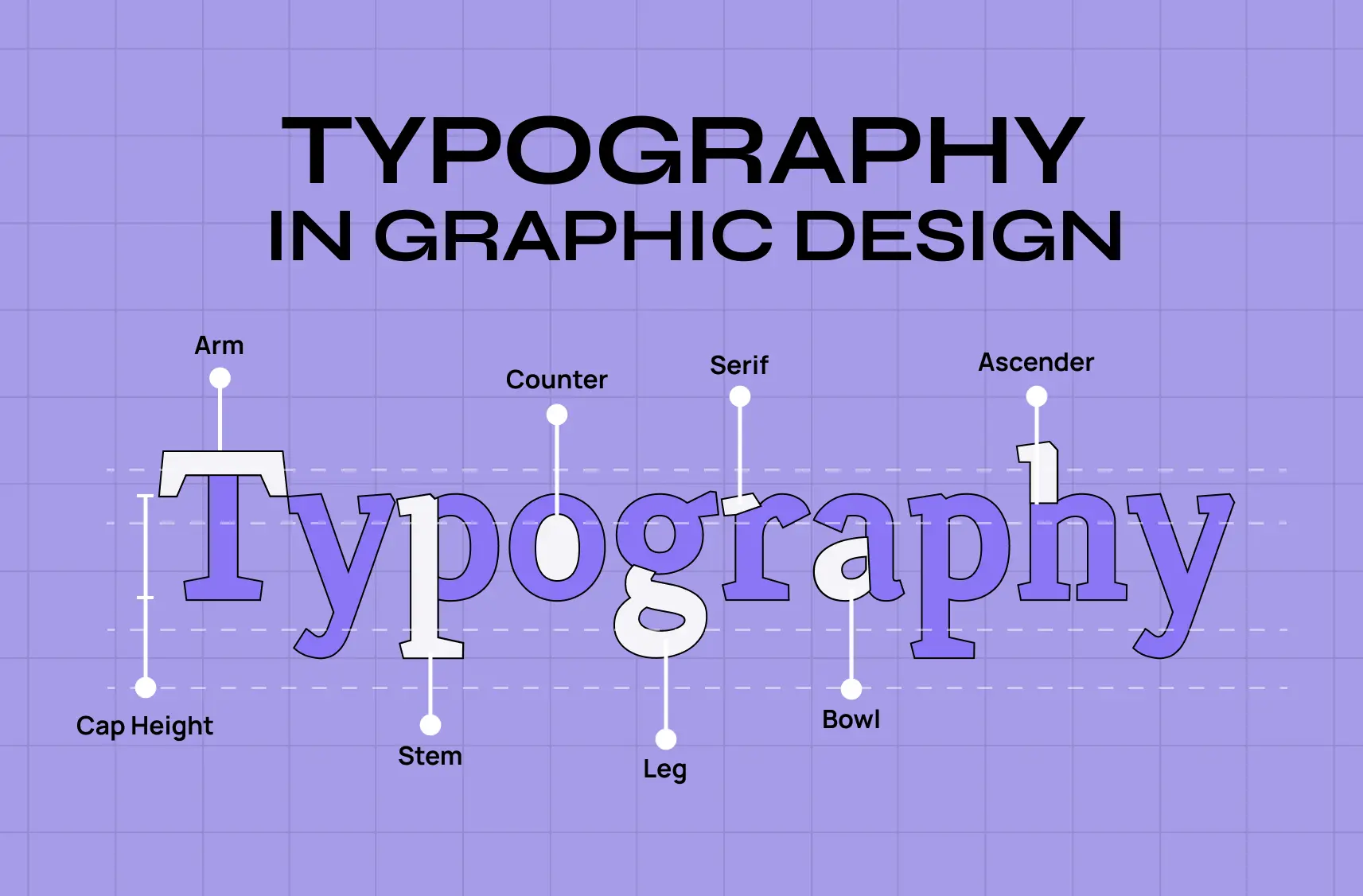
A design philosophy is not about taste — though it still governs how typography is applied and every other visual fundamental, consistently, under pressure.
It’s about how your product thinks when no one is watching.
If your product is growing and:
design decisions keep reopening
UX debt keeps compounding
teams struggle to move fast without breaking things
That’s usually not a tooling problem.
It’s a philosophy gap.
If you want help defining or operationalizing a design philosophy that actually survives scale, we can help.
Book a 20-minute call to explore how this applies to your product, where your philosophy is currently leaking, and whether formalizing it now will save you months of rework later.