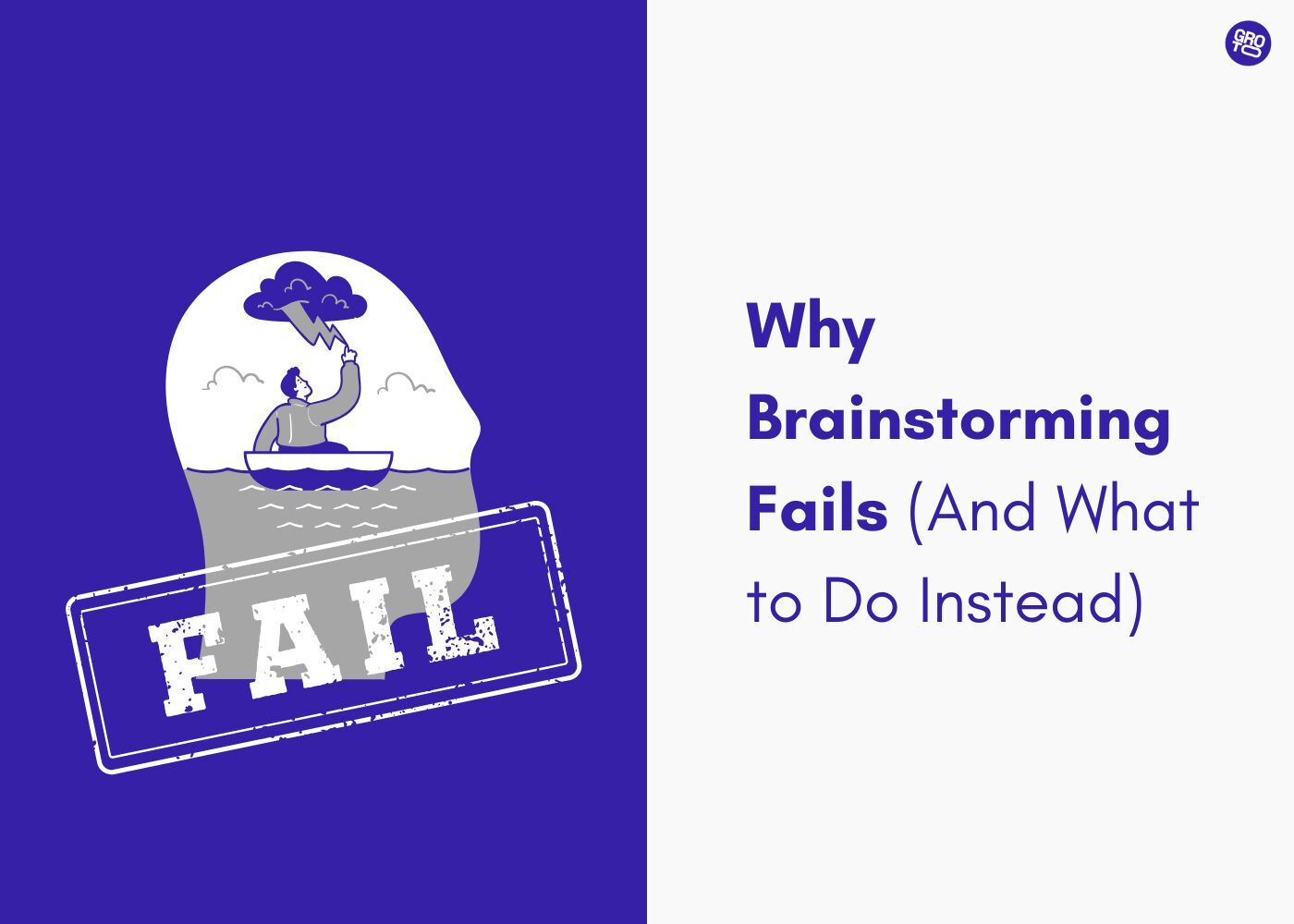
Two companies sell nearly identical products at the same price point. One builds a following. The other disappears quietly. That gap isn't marketing spend or product features — it's brand experience design. This guide breaks down exactly what that means and how to get it right.
Two brands. Same product. Same price. One wins. Here's the difference.
You've seen it happen. Two companies sell almost identical products at similar price points. One builds a cult following. The other quietly disappears.
That's brand experience design in its most practical form: the deliberate, end-to-end shaping of how people feel every time they encounter your brand — not just when they use your product, but when they hear your name, open your app, receive your invoice, or watch someone else talk about you online.
This guide breaks down what brand experience design actually means, why it's become a strategic priority rather than a creative preference, and what it takes to get it right — whether you're a founder trying to understand what your design partner is building, or a designer trying to make the case for why this work deserves a real budget.
What Is Brand Experience Design?
Brand experience design (often shortened to BX design) is the practice of intentionally designing every touchpoint a person has with a brand — across digital, physical, and human channels — so that each one reinforces the same emotional impression.
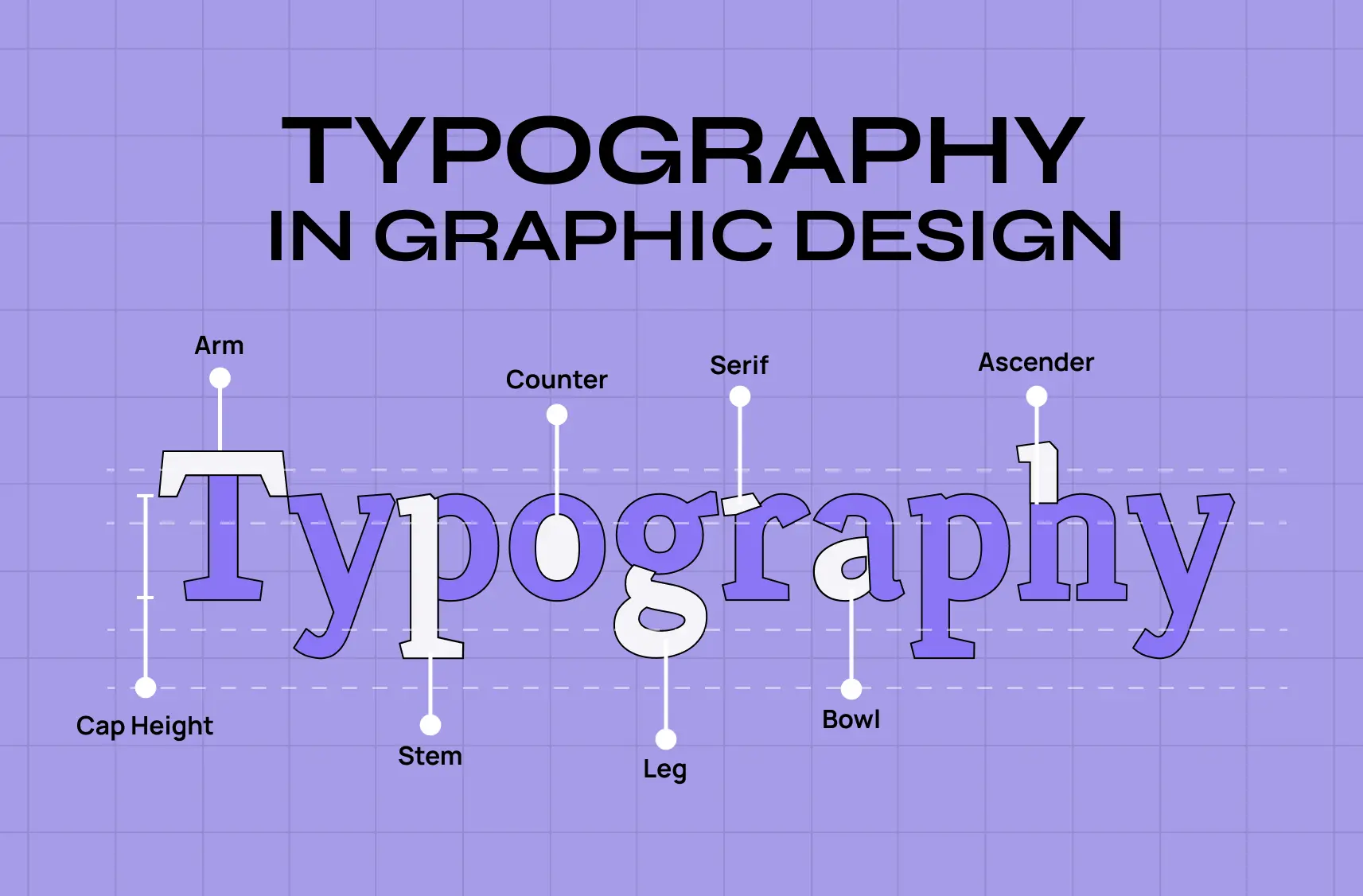
It's not the same as brand identity design, which focuses on how a brand looks: the logo, colour palette, typeface and typography, and visual language. It's also distinct from user experience design, which is concerned with how people interact with a specific product or interface.
A useful way to think about it: brand identity answers "Would someone recognise us?" Brand experience design answers "Would someone miss us if we were gone?"
BX vs. UX vs. CX: Where Each One Fits
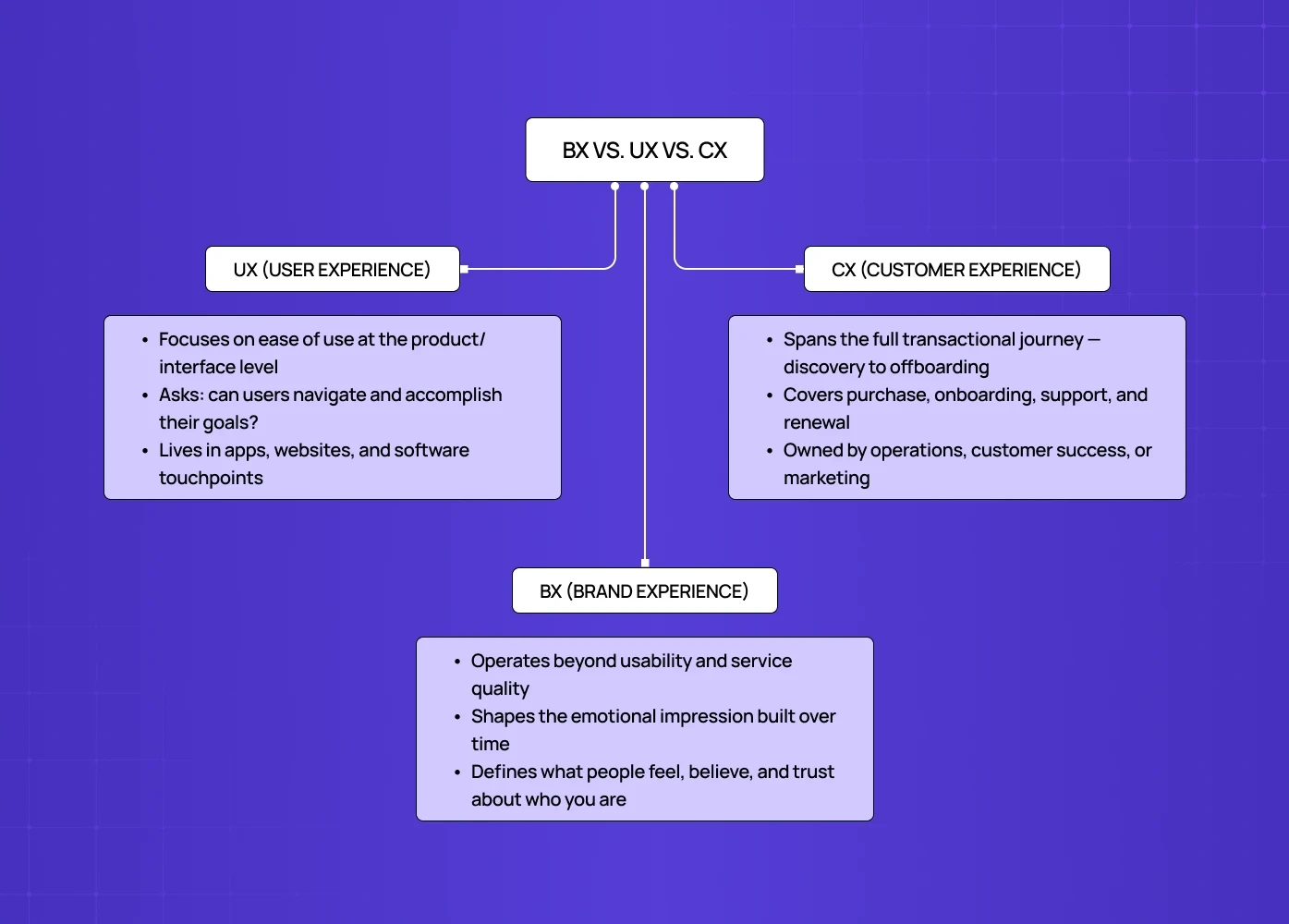
These three terms get used interchangeably. They shouldn't. Each has a distinct scope, and confusing them leads to real gaps in execution.
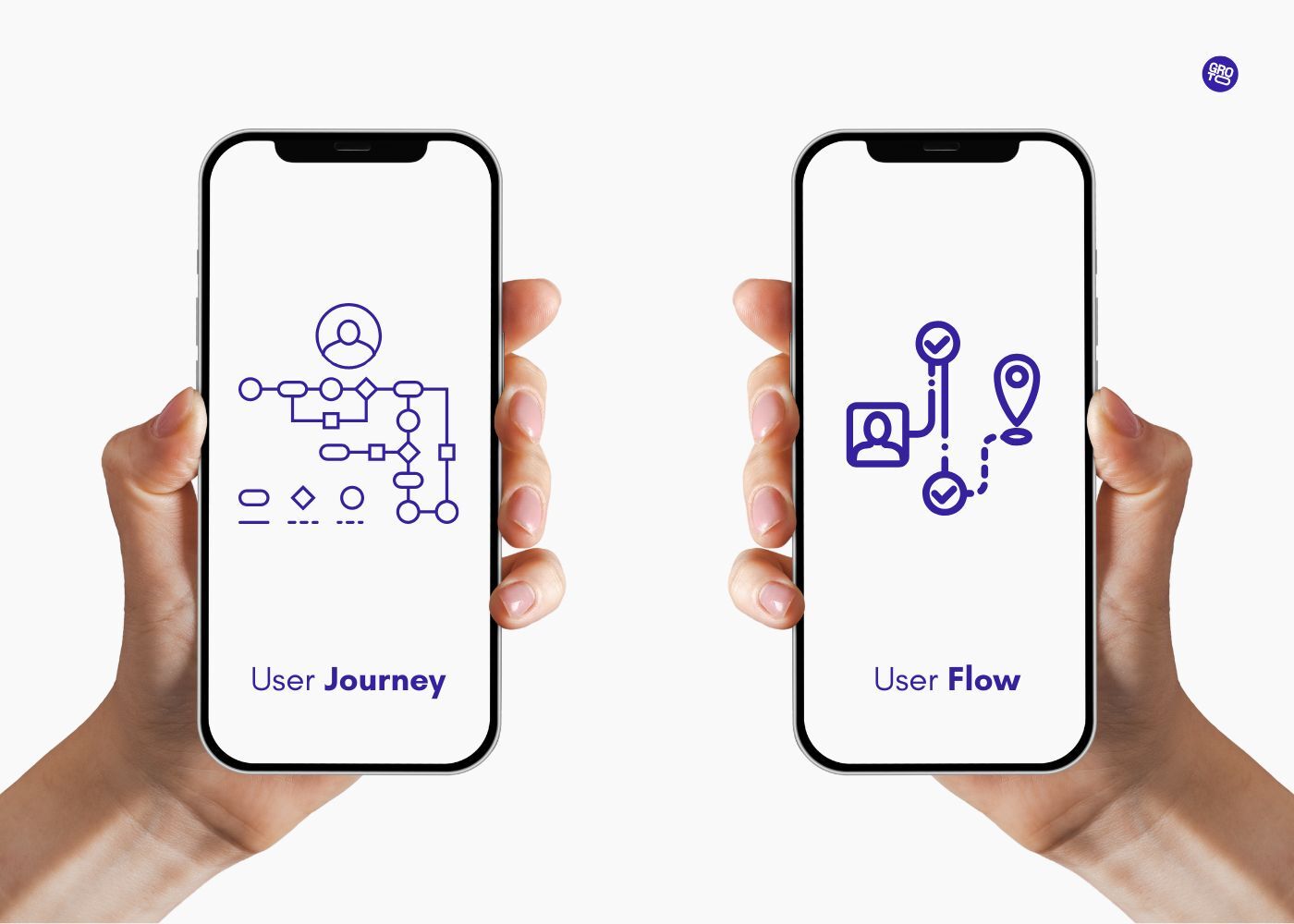
User experience (UX) operates at the product or interface level. It asks: can people use this thing easily? Is the flow logical? Do users accomplish what they came to do? UX lives primarily in your app, your website, your software — the touchpoints where a person is actively interacting with something you've built.
Customer experience (CX) covers the entire transactional relationship — discovery, purchase, onboarding, support, renewal, offboarding — and is often owned by operations, customer success, or marketing. For a deeper look at how UX and CX relate and where responsibilities typically diverge, understanding the difference between UX and CX maps the practical and organizational boundaries between the two.
Brand experience (BX) operates at a different layer entirely. It's not just about usability or service quality. It's about the emotional impression that accumulates over time across all of these interactions — the narrative someone carries about who you are, what you stand for, and whether they trust you.
UX (User Experience) | CX (Customer Experience) | BX (Brand Experience) | |
Scope | Product or interface | Full customer lifecycle | Every touchpoint, ever |
Primary question | Can people use this easily? | Is the customer journey smooth? | How does this brand make people feel? |
Owned by | Product/ design team | Operations / customer sucess | Everyone — or no one, if not deliberate |
Measured by | Task completion, drop-off rates | NPS, satisfaction scores, churn | Brand sentiment, loyalty, referral rate |
Risk if neglected | Users abandon the product | Customers churn after one bad interaction | Brand feels incoherent across touchpoints |
Why Brand Experience Design Has Become Non-Negotiable
A decade ago, a strong logo and a clean website were enough to signal credibility. Today, users are more sophisticated, attention is more fragmented, and the bar for "trustworthy" has risen sharply.
Channels multiplied faster than brand discipline. Most companies now operate across a website, an app, multiple social platforms, email sequences, physical touchpoints, and partner channels. Each one is an opportunity to either reinforce or contradict the brand. Without a deliberate brand experience design framework, most companies become inconsistent by accident.
Customers compare you to the best digital experiences they've ever had — not just direct competitors — which is why a distinctive, memorable palette like a black and orange website can do real work in a sea of sameness.
Trust is built in aggregate. No single touchpoint earns lasting loyalty. But each one either adds to or subtracts from the overall impression — a dynamic that becomes especially consequential when exploring brand trust in high-stakes industries, where accumulated dissonance carries real reputational cost. A beautiful product with a terrible support experience creates cognitive dissonance, and a functional product with warm, considered brand touchpoints creates attachment.
The business case is not abstract. Brands that consistently invest in design — across product, identity, and experience — outperform their peers on revenue growth and customer retention. We've seen this directly: clients who came to us with fragmented brand experiences left with 40-60% improvements in user flow metrics and measurable lift in overall brand perception. The clients Groto has worked with have collectively raised over $8M post-redesign. That doesn't happen from a logo refresh — even the sharpest work from top logo designers can't deliver it alone.
The Five Layers of Brand Experience Design
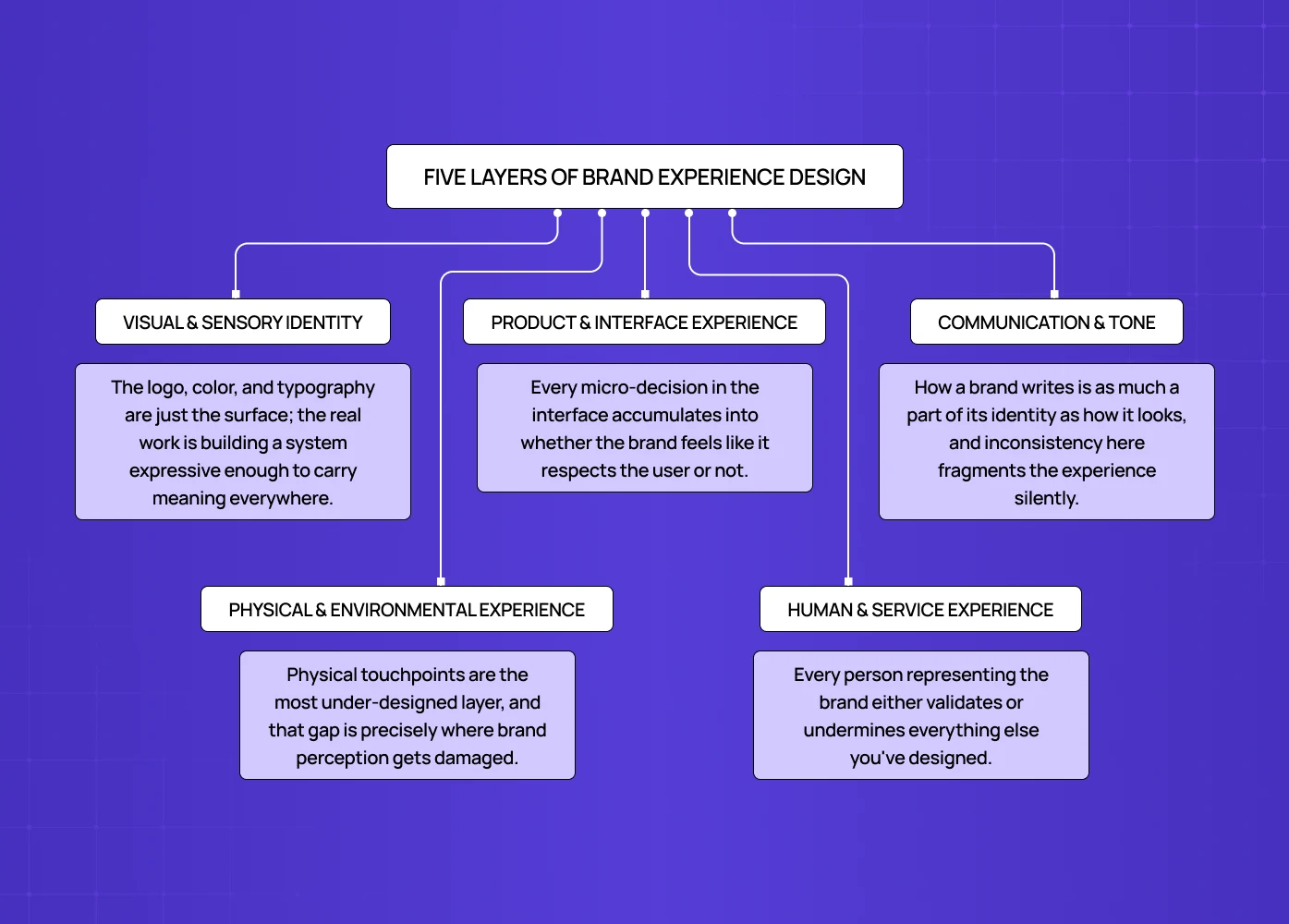
Brand experience design isn't a single deliverable. It's a system.
1. Visual and Sensory Identity
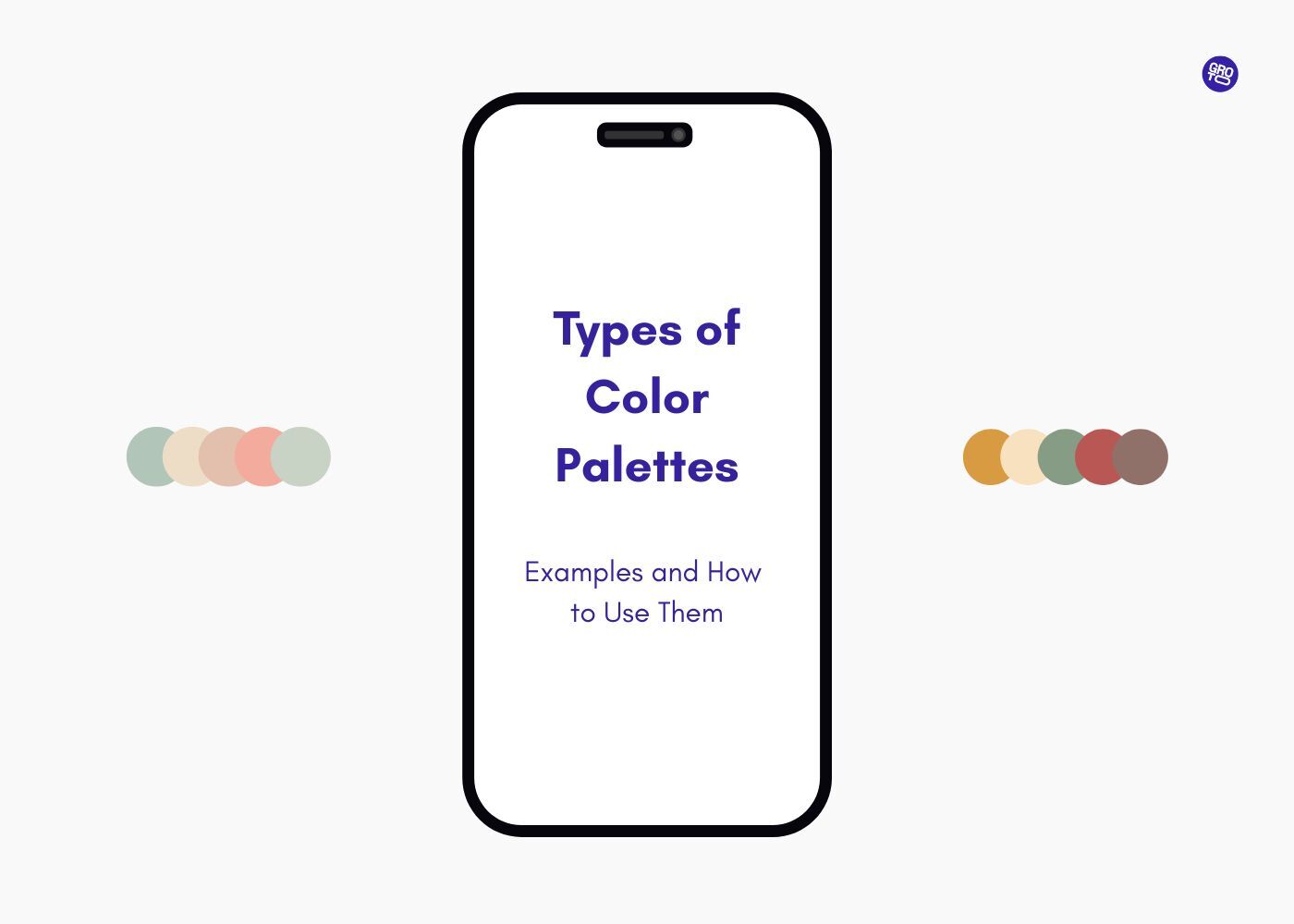
This is where most brand conversations start — and often where they stop too soon. Visual identity — logo, color, typography, motion — is the most immediately recognisable layer, but it's only the surface. Color in particular carries enormous perceptual weight — from the restrained coherence of monochromatic design to more complex multi-color systems — and how color palette choices shape brand perception covers the different palette structures that create distinct emotional registers across brand contexts.
The real work is ensuring that the visual system is expressive enough to carry meaning across formats — and that expressiveness is built on the foundational principles of visual design that govern how hierarchy, contrast, proportion, and rhythm work together to create coherence whether a brand appears on a billboard or a push notification.
Sensory identity includes things like notification sounds, haptic feedback, or packaging textures.
2. Product and Interface Experience
This is the UX layer — where users spend the most deliberate, focused time with your brand. How intuitive is the navigation? How does the product handle errors? What does the empty state say? For SaaS products specifically, SaaS branding and the product experience layer shows how these micro-decisions accumulate into brand perception — and why the interface is the brand in use, not a separate design concern.This is the layer where investment in design shows the clearest short-term returns — in drop-off rates, task completion, and conversion — and the core principles of digital product design govern how those interface decisions get made in ways that serve both usability and the broader brand impression simultaneously.
3. Communication and Tone
How a brand writes is as much a part of its brand experience as how it looks. The tone of a push notification, the warmth of a transactional email, the way an error message is worded — all of it signals something about the personality behind the brand.
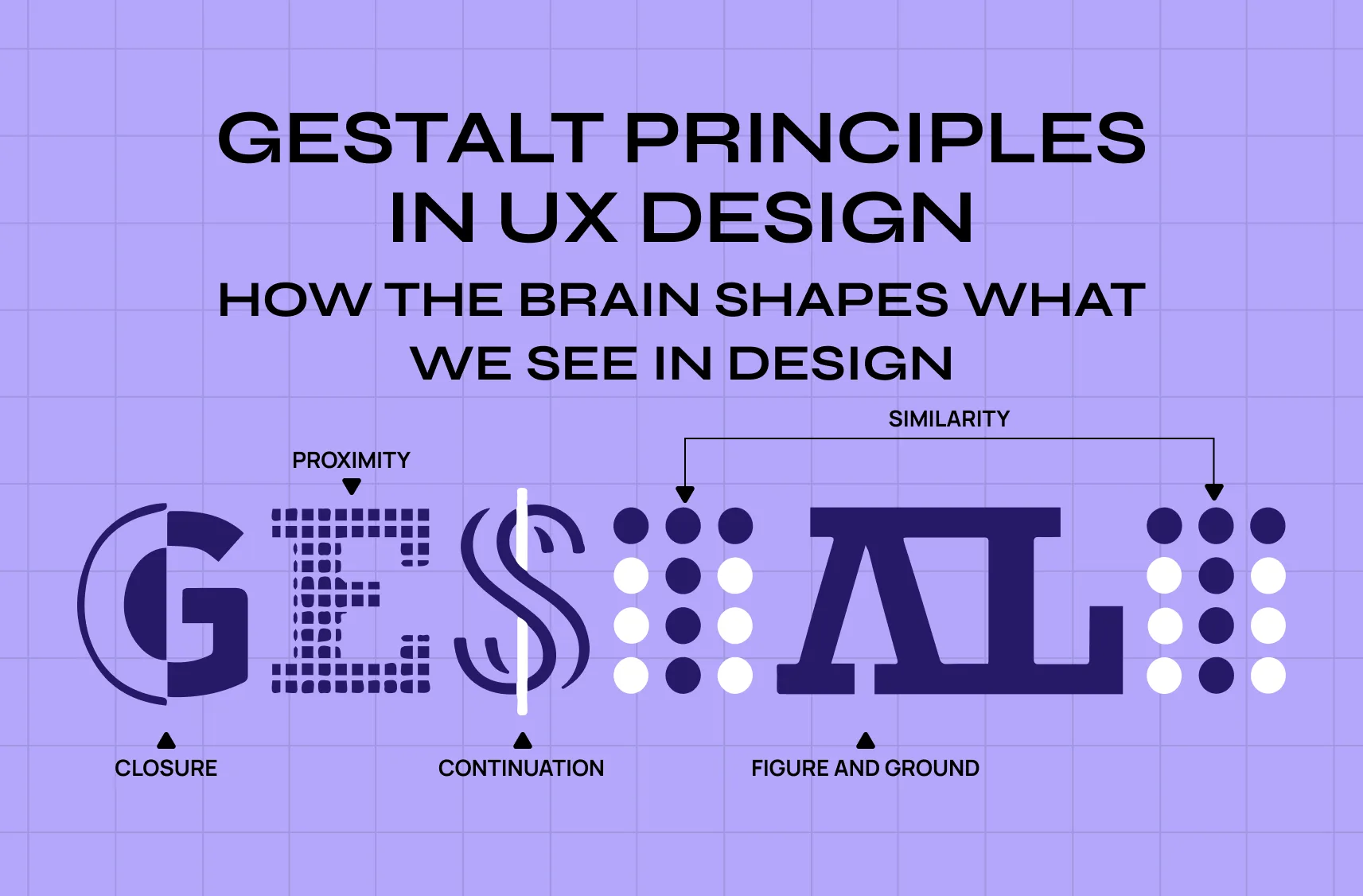
Tone consistency is especially critical at scale. When every team writes how they want to write, brand experience design fragments silently. Building a verbal identity with the same rigor as a visual system — rooted in gestalt thinking in brand systems, where grouping, proximity, and continuity apply as much to content structure as to visual layout — is one of the highest-leverage moves a brand can make, and one of the most commonly skipped.
4. Physical and Environmental Experience
For brands with any physical presence — retail, hospitality, events, offices — the environment is a significant part of the brand experience. Aesop is the clearest example: no two of their stores look identical, but every one creates the same emotional impression, often reinforced through minimal stroke identity systems on signage and packaging that read as considered rather than decorative. That's not interior design. That's brand experience design applied to physical space.
Even digital-first brands still have physical touchpoints: packaging, events, merchandise, offices. These touchpoints are often under-designed because they fall outside the "digital design" brief — and that gap is precisely where brand perception gets damaged.
5. Human and Service Experience
The most underestimated layer. Every person who represents your brand — in a support chat, a sales call, a social comment, or an email reply — is a live brand touchpoint. The quality of those interactions either validates or undermines everything else you've designed.
Brand experience design at this layer means translating brand values into human behaviour: how teams respond to criticism, how they handle complaints, how they make customers feel seen. This is where the brand becomes real in a way that no visual system can achieve on its own — though that human consistency is only possible when the design system foundations are solid enough to give every team member a shared reference for what the brand is, before they express it in person.
Want to see how brand experience design plays out across a real product — from early research to shipped interface? See How We Redesigned Camb.ai
Brand Experience Design Examples
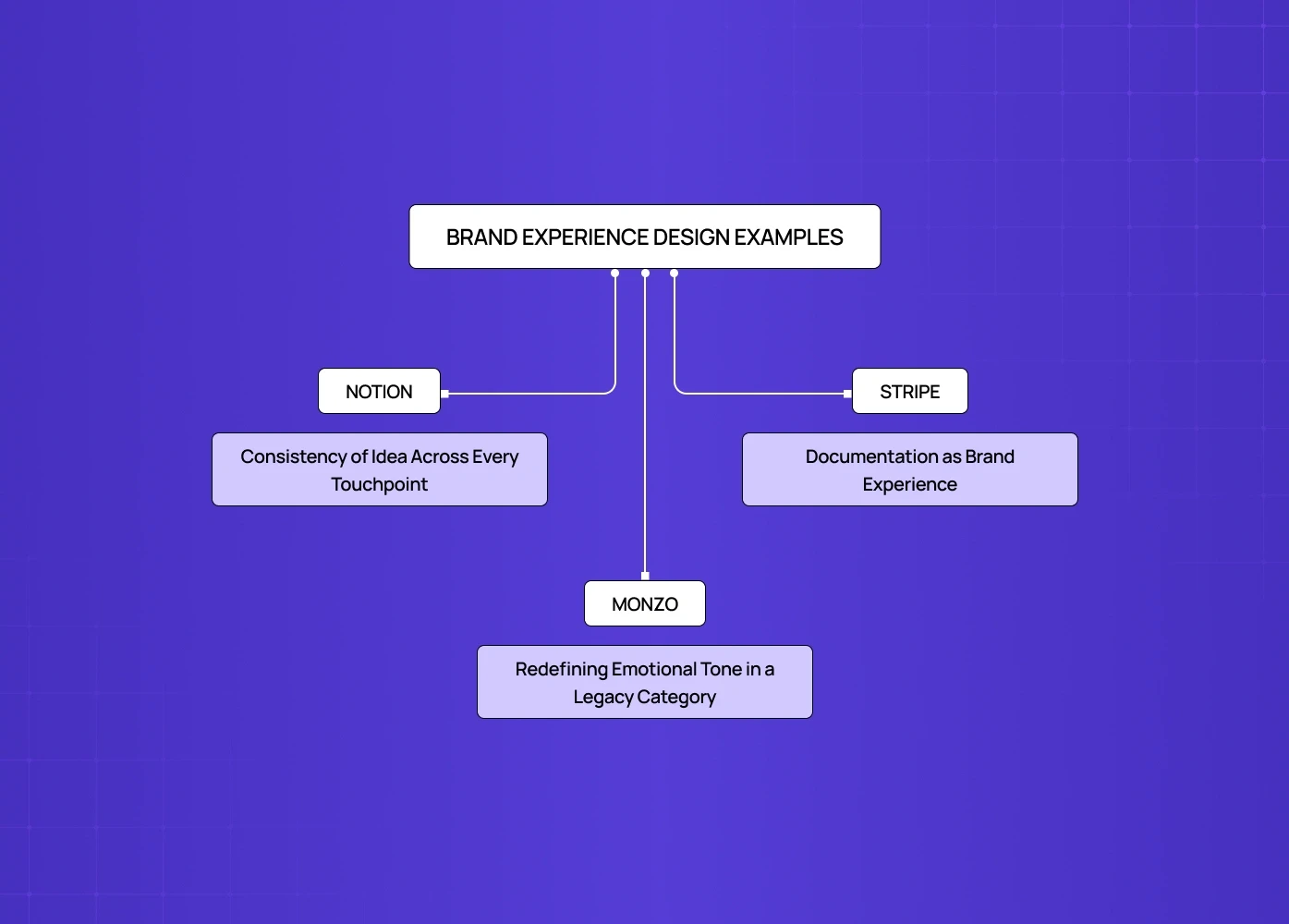
Notion — Consistency of Idea Across Every Touchpoint
Notion built its brand experience around one idea: a tool that gets out of your way. It shows up in the minimal UI, the calm empty states, the product documentation, the way they communicate updates — the kind of disciplined consistency that requires close collaboration between product teams and brand execution vendors responsible for the visual layer. Every touchpoint says the same thing without repeating itself. Not every screen looks the same — but every screen feels like it came from the same place.
Stripe — Documentation as Brand Experience
Stripe turned developer docs — the most neglected corner of most software brands — into a distinctive brand asset. The care put into something users "shouldn't" notice tells you everything about how they think — the same logic that explains why well-designed narrative data visuals inside a knowledge base often build more brand trust than a flashy marketing page.
Monzo — Redefining Emotional Tone in a Legacy Category
Monzo didn't out-shout the incumbents. They out-warmed them. Every notification, every error message — deliberate. That consistency extended to their visual layer too: a considered approach to color proportion in brand systems ensured their coral-and-white palette felt intentional rather than incidental. They didn't redesign a product. They redesigned how banking feels.
The pattern across all three: no touchpoint was too small to deserve attention. That's the mindset brand experience design requires.
How We Approach Brand Experience Design at Groto
Start with the emotional brief, not the aesthetic one. Before we open Figma, we ask: how do we want people to feel after interacting with this brand? Not "what should the logo look like" — but what's the emotional residue we're designing for? Trusted. Excited. Reassured. That emotional target shapes every subsequent decision — and it's why the strongest startup brand builders begin with feeling, not the logo, when a young company has one shot at a first impression.
Audit every touchpoint, not just the visible ones. Most brand experience audits start with the website and stop there. We map the full journey — from first impression (often a splash page, a social post, or a referral link) through to renewal or offboarding. The gaps between the "designed" touchpoints are usually where experience breaks down
Look for brand inconsistency, not just visual inconsistency - the same brand identity gap between how a brand looks and what it actually is. Two touchpoints can follow the same visual guidelines but create completely different emotional impressions if the tone, pace, or level of care differs. The question isn't whether the colors match — it's whether the brand holds visual and experiential unity and feels like the same entity across contexts.
Design the system, not just the artifact. A great homepage doesn't equal a great brand experience — what matters is whether the principles behind it are encoded into a design system that every future touchpoint can draw from. Building a design system for consistent brand experience covers how SaaS products specifically structure that infrastructure to maintain coherence as teams, features, and channels multiply.
Measure what matters to your stage. Early-stage brands — where most small business brand building happens — should track qualitative signals: are people using the brand's own language? Are customers referring others unprompted? Later-stage brands can layer in NPS, brand sentiment tracking, and CLV. The metrics evolve — the discipline doesn't.
For IndieFolio, we built not just an interface but an experience system: one that could scale as the platform grew without losing the premium, curated feel that defined the brand.
Common Mistakes That Undermine Brand Experience Design
Knowing what to do matters less than knowing what quietly breaks it.
Designing the launch, not the lifecycle. Brands pour resources into the initial identity and the launch campaign, then treat every subsequent touchpoint as an afterthought — while the ones that sustain coherence long-term are already designing what users don't expect yet, building brand experience infrastructure for interactions that haven't been invented yet. Brand experience erodes not from one bad decision but from accumulated inconsistency over time.
Siloing UX from brand. When product teams own UX and marketing teams own brand with no shared framework between them, the experience fractures — users notice even if they can't name it. Understanding where UX design ends and product design begins helps teams draw clearer boundaries around ownership so brand experience doesn't fall into the gap between disciplines.
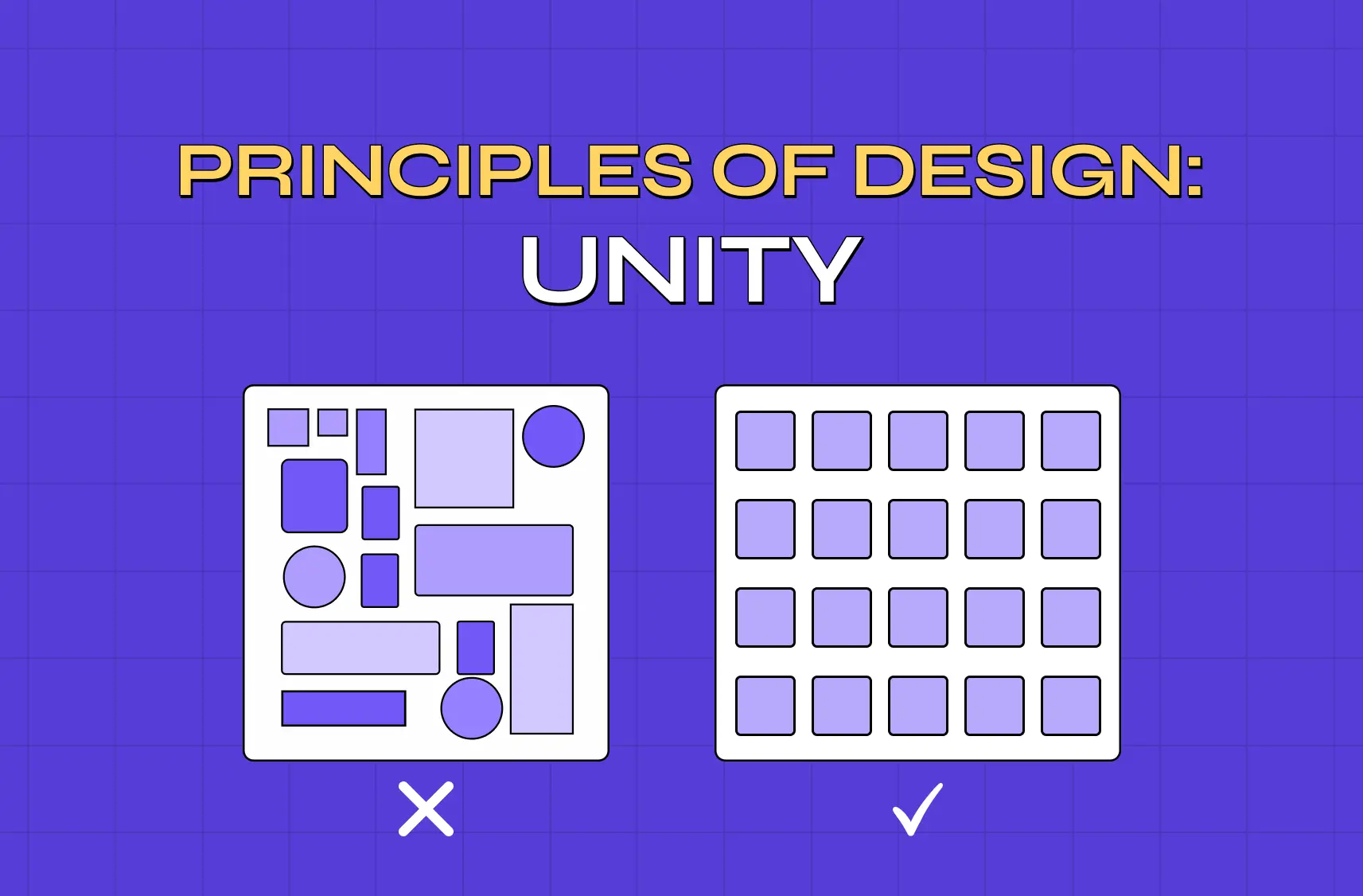
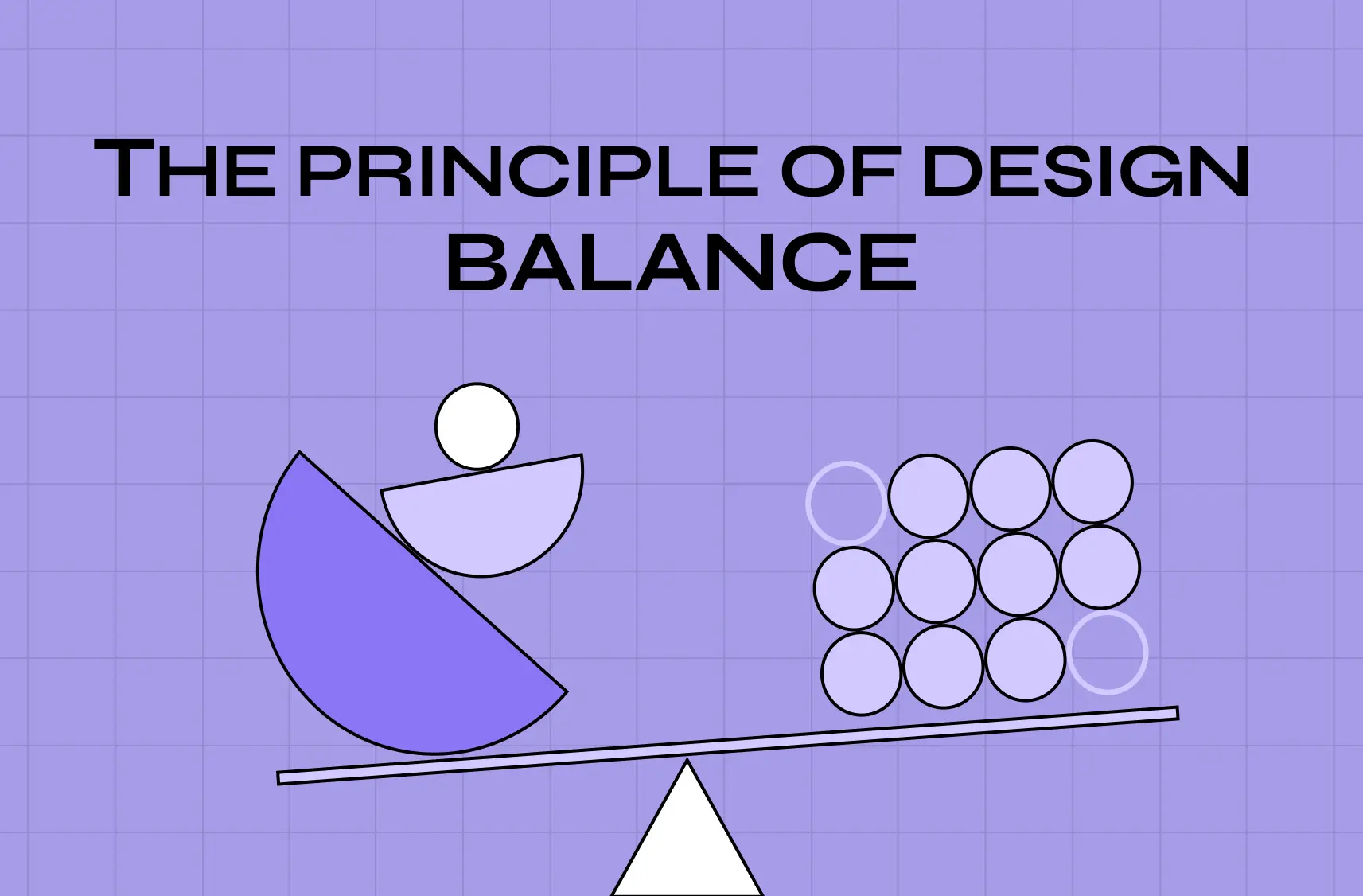
Scaling before the system is ready. Growing teams produce more touchpoints. If the brand experience design system isn't documented well enough for new team members to apply it consistently, scale becomes the enemy of coherence — including the loss of harmonized visual proportion, since balance decisions made by the original designer rarely transfer automatically to whoever builds the next touchpoint.
Mistaking visual polish for experience quality. A brand can look beautiful and feel hollow. Visual quality is necessary but not sufficient — the lesson a cosmetic rebrand eventually teaches. The emotional register has to hold across every layer — including the ones that aren't visually designed at all.
A Note for Designers: Selling Brand Experience Design to Clients
If you're a designer trying to get clients to invest at the brand experience level rather than just the "logo and website" level, the framing matters more than the portfolio.
Most clients don't struggle to see the value of looking good. They struggle to see the value of being consistent — and grounding that conversation in design principles gives designers a shared vocabulary to explain why consistency isn't just aesthetic preference but structural necessity. The ROI of brand experience design is cumulative and relational — it doesn't show up in a single deliverable. It shows up in whether customers come back, refer others, and choose you when a viable alternative exists.
The conversation that tends to land: "Right now, your brand is different things in different places. That inconsistency costs you trust, and trust costs you revenue. What we're building isn't just a visual system — it's the infrastructure that makes your brand feel like the same company at every single touchpoint, every single time."
That's a strategy conversation, not a design conversation. And it's the one that gets brand experience work funded.
Conclusion
Brand experience design is the practice of intentionally designing every touchpoint a person has with a brand so that each one reinforces the same emotional impression — and the agencies that operate at this level treat that intentionality as a strategic discipline, not a creative preference. Understanding what is a design philosophy and why it matters shows how the foundational decisions a brand makes about its values and voice become the rules that every design touchpoint is measured against.
What we've learned across 140+ projects is this: The brands that win long-term aren't those with the best product or the biggest budget — they're the ones that feel coherent across every touchpoint. That coherence is designed, and measuring the return on design investment gives you the frameworks and metrics to quantify that coherence in business terms, so the case for brand experience design doesn't have to rest on instinct alone.
That coherence is designed. It doesn't happen by default.
If you're working on a brand and feel the gap between how it looks and how it actually lands with people — that gap is worth closing. Understanding UX audit cost upfront helps you scope the investment before committing, so the decision is grounded in numbers, not guesswork. Book a Free UX Audit