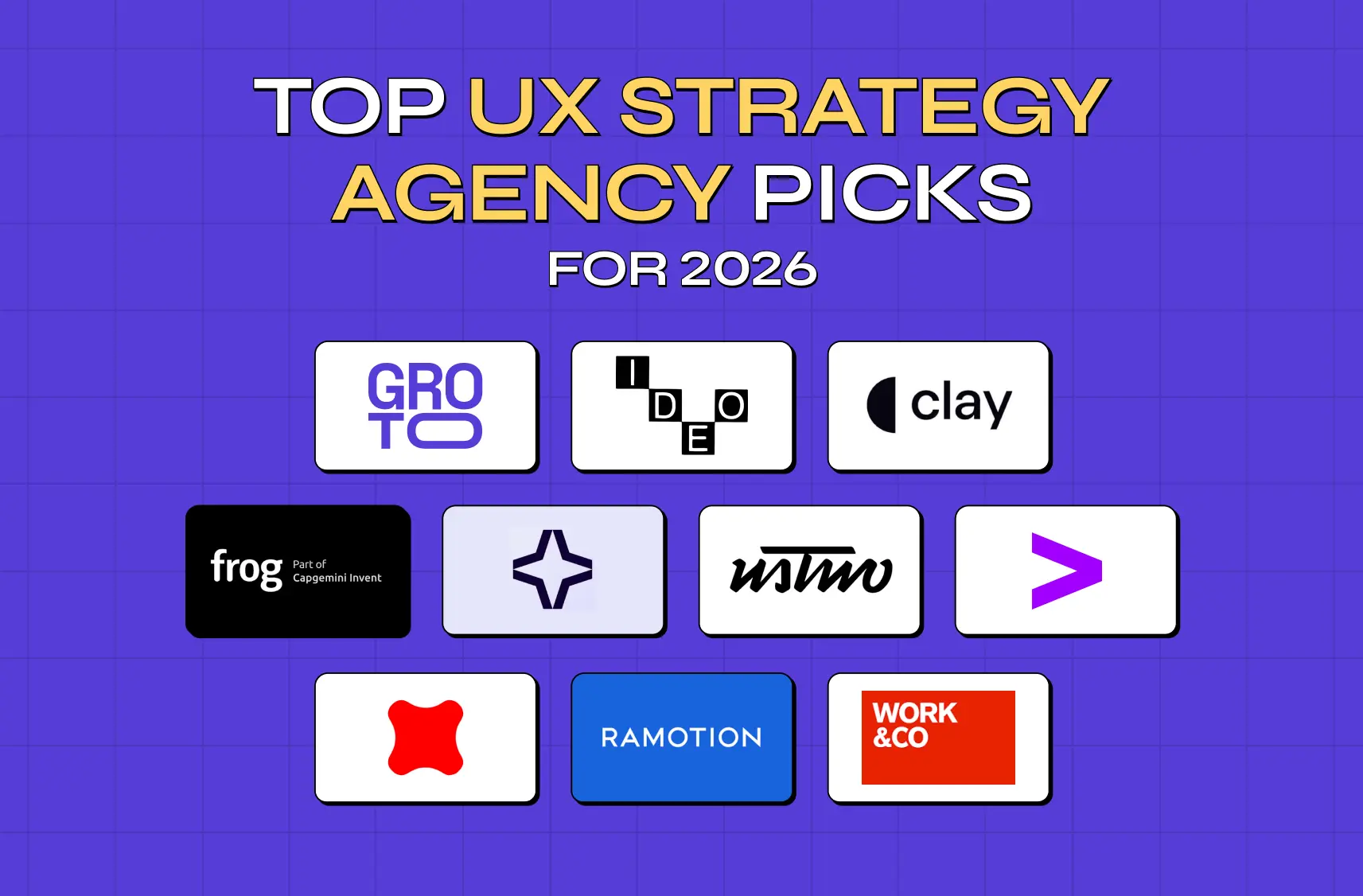
Top UX Strategy Agency Picks for 2026: 10 Providers Compared and Ranked

Top UX Strategy Agency Picks for 2026: 10 Providers Compared and Ranked

Compare the 10 best UX strategy agencies for 2026, ranked by delivery speed, pricing model, and fit for AI and agentic products. Find your match by stage and budget.

Top UX Strategy Agency Picks for 2026: 10 Providers Compared and Ranked

Top UX Strategy Agency Picks for 2026: 10 Providers Compared and Ranked

Compare the 10 best UX strategy agencies for 2026, ranked by delivery speed, pricing model, and fit for AI and agentic products. Find your match by stage and budget.

Choosing a UX strategy partner in 2026 means looking past portfolios and into process. This guide compares 10 leading agencies by delivery speed, pricing model, and how well each fits AI-native and agentic products at your stage.

Compare 10 top UX strategy agencies by speed, pricing, and product stage fit.

TL;DR

  • A top UX strategy agency ties research and experimentation directly to product metrics, not just deliverables you'll shelve.

  • In 2026, the strongest agencies also understand agentic interfaces, not only traditional screens and flows.

  • We compared 10 agencies on pricing model, delivery speed, and best-fit product stage, including Groto, IDEO, Clay, Frog, and MetaLab.

  • Budget 4 to 12 weeks for focused strategy work rather than open-ended, multi-quarter consulting engagements.

  • Pick based on your stage and constraints, not agency name recognition.

Your product roadmap is full, but adoption still lags. If that sounds familiar, you're not alone. Most UX strategy services still lean on theoretical frameworks when what teams actually need is creating effective UX strategy frameworks that ship inside sprint cycles, not sit in a slide deck.

This matters more in 2026 than it did even a year ago. Products now routinely include agentic features, AI systems that act on a user's behalf rather than just responding to clicks. A generic UX agency that builds beautiful static mockups often struggles the moment an AI model behaves unpredictably or a user needs to understand what an agent just did on their behalf. Finding a top UX strategy agency now means finding a partner who treats that complexity as the starting point, not an afterthought.

The business case for getting this right is not just a hunch. McKinsey's long-running research on design maturity found that companies scoring highest on its design index posted meaningfully faster revenue growth and stronger shareholder returns than their industry peers over a five-year period. Strategy that's disconnected from execution rarely produces that kind of outcome.

How We Selected These Agencies

We didn't rank agencies by portfolio polish or follower counts. Each name on this list met a consistent bar:

  • A visible track record of UX strategy work, not just execution or visual design

  • A process that includes discovery, prioritization, and measurement, not just workshops

  • Enough public information (case studies, client types, delivery model) to compare fairly

  • Relevance to at least one common product stage: early-stage, scale-up, or enterprise

We also looked at how each agency talks about AI and agentic products specifically, since that's where most 2026-era strategy frameworks start to show their age.

Which Top UX Strategy Agency Should You Trust in 2026

Top UX strategy agencies deliver strategy you can ship, not decks you'll shelve. The strongest ones understand that AI-native products, especially those with agentic features, need different scaffolding than a traditional SaaS dashboard.

Great UX strategy services start with your product's actual capabilities and constraints, not its theoretical potential. Agencies worth hiring ask about model accuracy, latency, and failure modes before a single user flow gets sketched.

What separates a strong agency in 2026:

  • Discovery rigor that includes AI and agent behavior mapping, not just user interviews

  • An experimentation culture that validates assumptions before features get built

  • Analytics integration that connects design decisions to business metrics

  • Direct experience with AI-enabled or agentic products, not only generic digital experiences

Quick Comparison: 10 UX Strategy Agencies at a Glance

Agency

Best For

Pricing Model

Delivery Speed

Groto

Lean, ROI-tied strategy for AI and agentic products

Sprint-based

Weeks, not quarters

IDEO

Organization-wide design transformation

Retainer/engagement-based

Months

Clay

Product-led brands needing polish plus strategy

Project-based

Weeks to months

Frog

Global scale and service ecosystems

Engagement-based

Months

MetaLab

Shipping strategy directly into product

Project or sprint-based

Weeks

ustwo

Embedded, long-term product ownership

Retainer

Ongoing

Fjord (Accenture Song)

Enterprise transformation with global delivery

Engagement-based

Months

Fantasy

Premium, brand-forward consumer products

Project-based

Weeks to months

Ramotion

Early-stage startups needing fast strategy sprints

Fixed-scope sprint

Weeks

Work & Co

Complex, engineering-heavy digital products

Project-based

Months

The 10 Best UX Strategy Agencies in 2026

1. Groto: Best for Lean, ROI-Tied UX Strategy Services
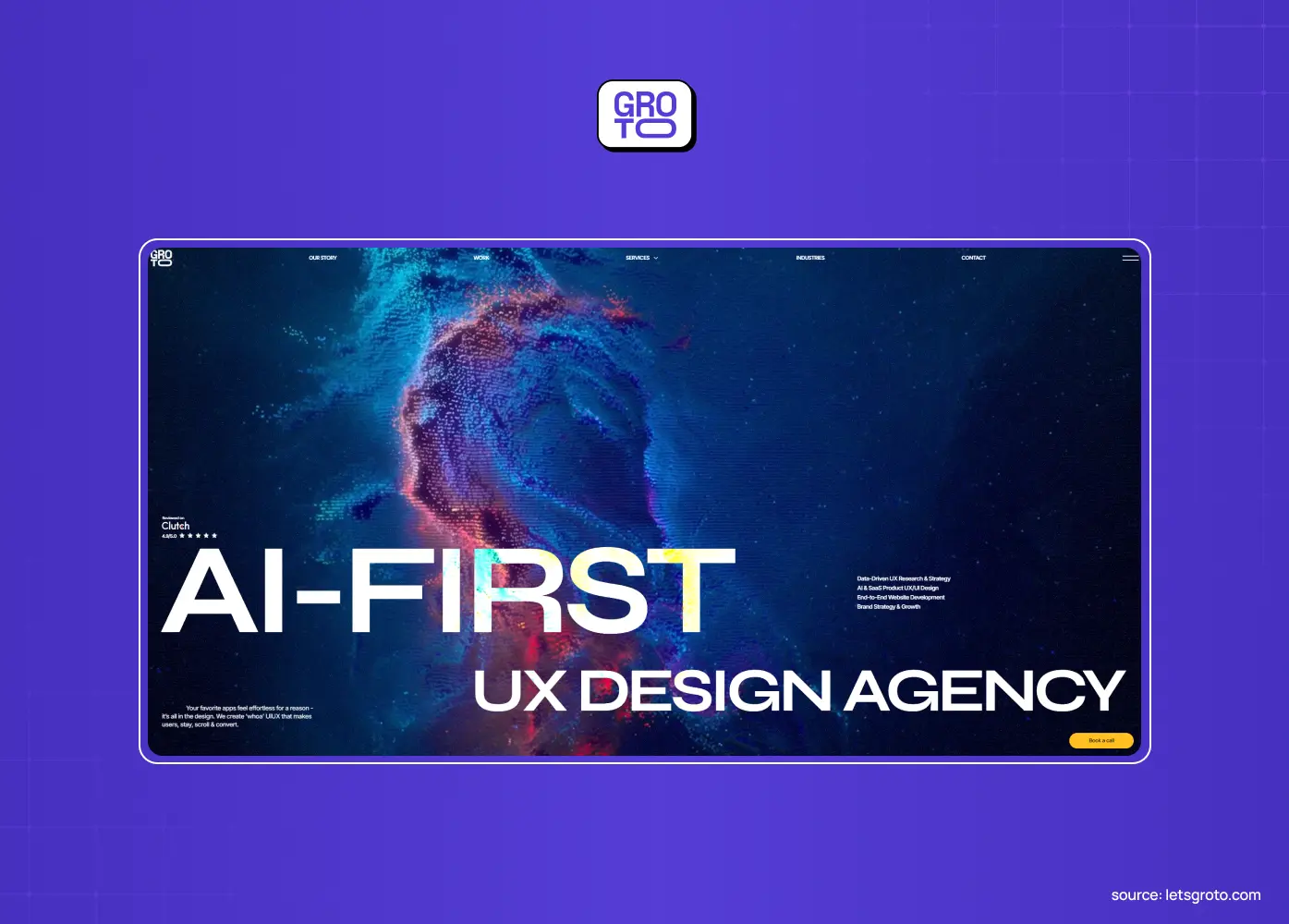
Groto's AI-first UX design agency homepage featuring bold typography, immersive futuristic visuals, and a modern dark interface focused on AI-driven product design.

At a glance: Best fit for AI and agentic product teams. Sprint-based pricing. Delivery in weeks, not quarters.

Groto meets AI product teams where they are. No six-month discovery phases, no theoretical frameworks left to gather dust. Just strategy you can ship within weeks.

Most UX strategy services produce research reports that sit in Notion forever. Groto's sprint model produces working prototypes that solve real problems while other agencies are still running workshops. Their Creative Director ranks in the global top 3% of UX designers, though what matters more day to day is a refusal to work without clear success metrics attached. Fortune 500 companies including Colgate and ABInBev have turned to Groto when internal teams hit walls with complex AI interfaces.

Groto's approach to shipping strategy into execution within weeks, not quarters, means you're validating features while competitors are still debating personas. Their ROI dashboards keep stakeholders aligned on what's actually moving the metrics that matter.

Want to know where your users are dropping off?

We’ll break down the exact moments users lose interest, and why.

Want to know where your users are dropping off?

We’ll break down the exact moments users lose interest, and why.

2. IDEO: Best for Organization-Wide Design Transformation
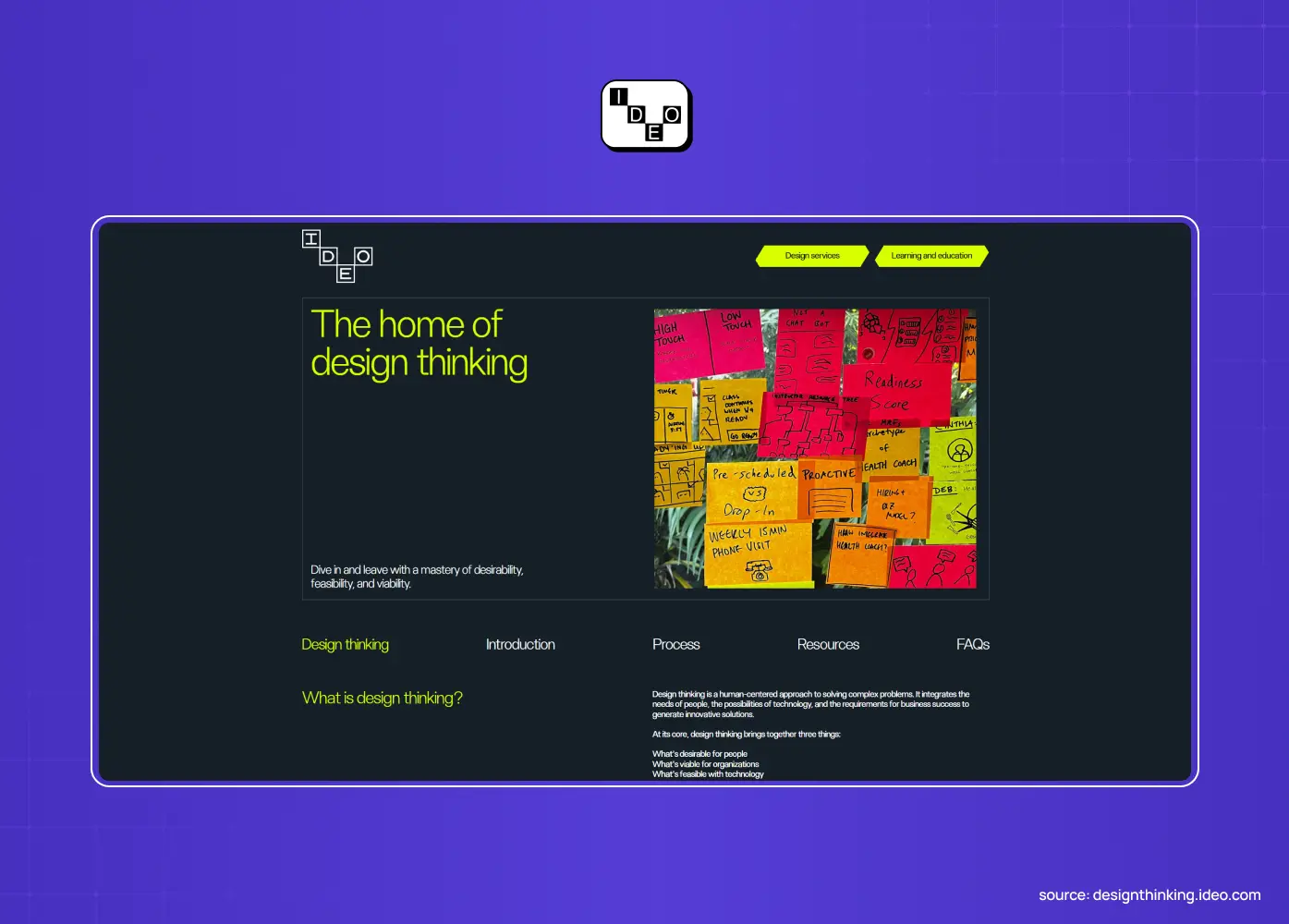
IDEO's design thinking resource page with a dark-themed interface, colorful sticky note imagery, and structured educational content for innovation and problem-solving.

At a glance: Best fit for large enterprises needing cultural change. Engagement-based pricing. Multi-month timelines.

IDEO works well for large companies needing cultural change alongside UX strategy, not just a single product update. Their process emphasizes cross-functional collaboration and long-term capability building.

IDEO's strength is complex, multi-stakeholder environments where design thinking needs to spread well beyond the product team. Their workshops and training programs help organizations adopt user-centered approaches systematically, rather than one team at a time.

The agency works best for enterprises with 12-plus month timelines and budgets for comprehensive transformation. IDEO's pace can feel slow for startup teams that need rapid iteration cycles.

3. Clay: Best for Product-Led Brands Needing Polish Plus Strategy
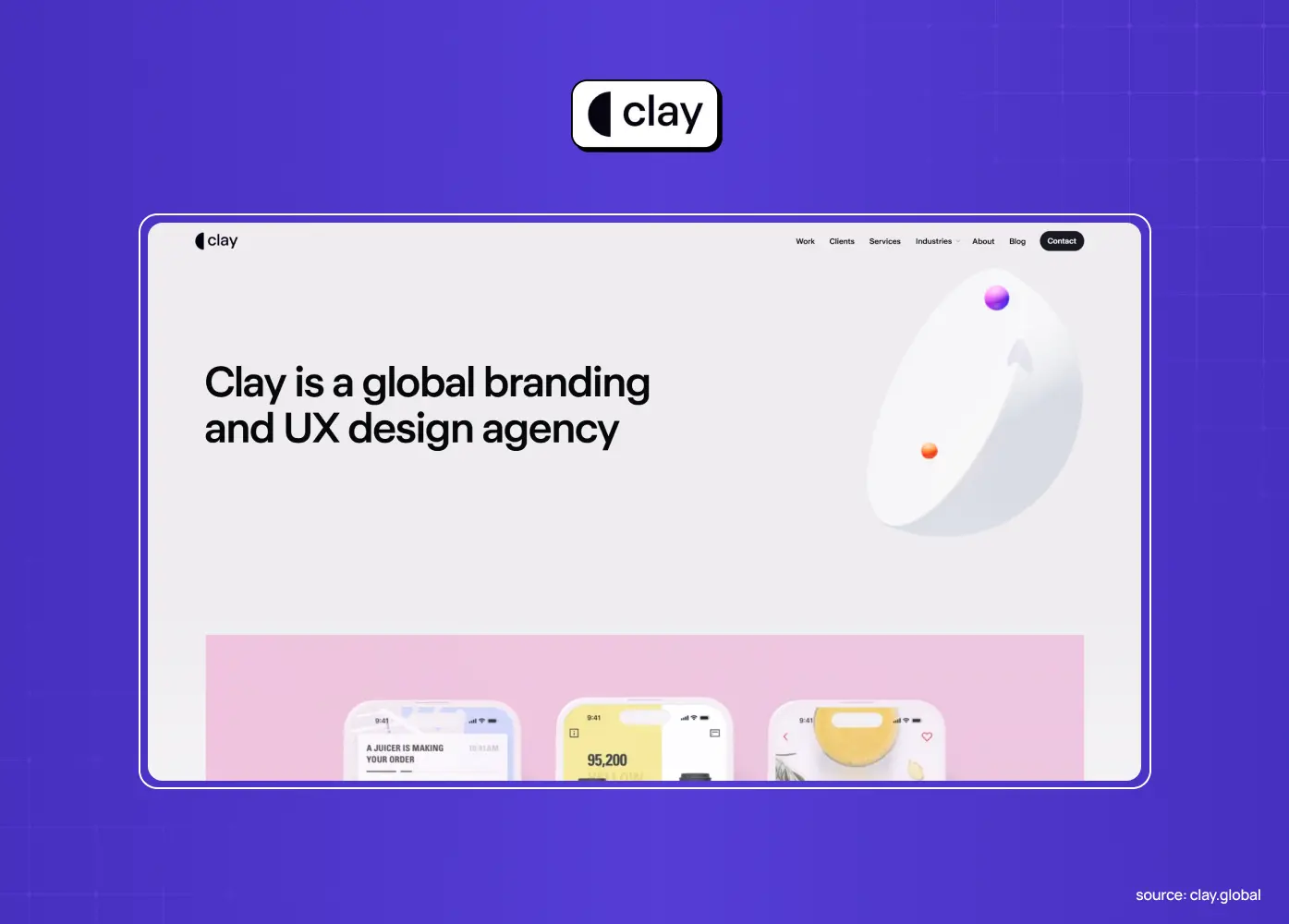
Clay's global branding and UX design agency homepage with a clean minimalist layout, soft 3D illustrations, and a strong focus on digital product design.

At a glance: Best fit for venture-backed, design-conscious companies. Project-based pricing. Weeks to months.

Clay combines brand identity with UX strategy for venture-backed companies that need sophisticated visual execution alongside strategic thinking.

Their approach works well for B2B SaaS companies targeting design-conscious users or premium market segments. Clay's engagements often fold in brand positioning and visual identity development alongside the UX planning itself.

Clay fits companies with established product-market fit that are looking to scale acquisition through stronger brand and experience design. Their work tends to lean more toward conversion optimization than fundamental product repositioning.

4. Frog: Best for Global Scale and Service Ecosystems

frog's premium agency website featuring cinematic black-themed visuals, immersive animations, and a sophisticated showcase of design and innovation.

At a glance: Best fit for multinational enterprises. Engagement-based pricing. Multi-month timelines.

Frog handles complex UX strategy for multinational companies with diverse user bases and regulatory requirements across markets. Their experience spans multiple compliance frameworks and geographies.

The agency excels at service design for companies with both digital and physical touchpoints. Frog's process includes extensive stakeholder mapping and organizational change planning.

Frog works best for enterprises managing complex user ecosystems across countries or business units. Their strategic depth can be more than a single-product startup needs.

5. MetaLab: Best for Shipping Strategy Directly Into Product
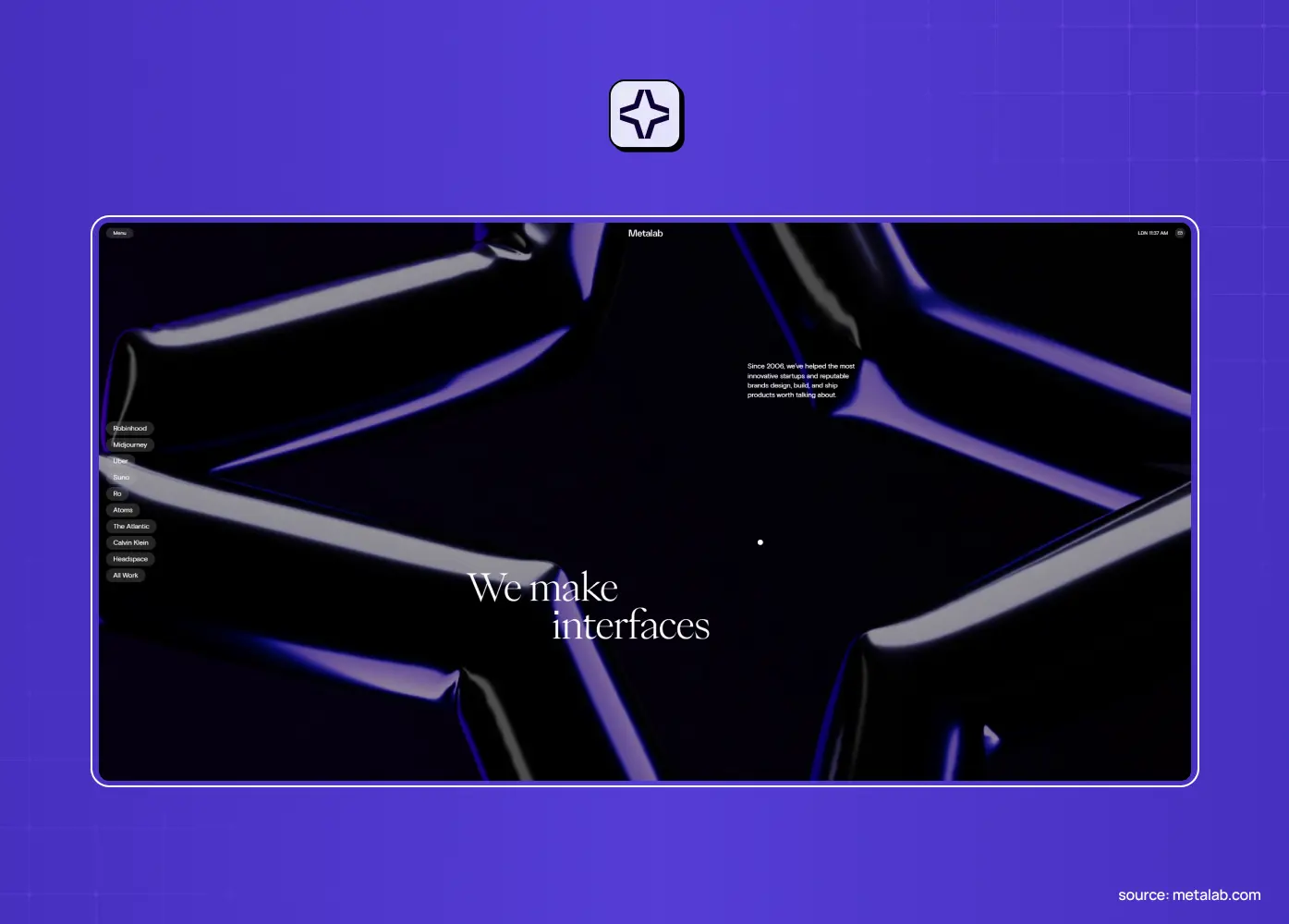
Metalab's modern digital agency homepage with abstract 3D visuals, elegant typography, and a dark aesthetic emphasizing interface design expertise.

At a glance: Best fit for growth-stage companies. Project or sprint-based pricing. Weeks.

MetaLab focuses on UX strategy that translates directly into shipped features, rather than sitting in a separate strategy phase. Their process leans on rapid prototyping and iterative validation over extensive upfront planning.

The agency works well for growth-stage companies that need strategic direction without a lengthy consulting engagement. MetaLab's team includes both strategists and designers who can execute the recommendations they make.

MetaLab fits companies with existing user bases looking to optimize conversion funnels or add new feature sets. Their approach may lack depth for companies that need a fundamental product repositioning.

6. ustwo: Best for Embedded, Long-Term Product Ownership
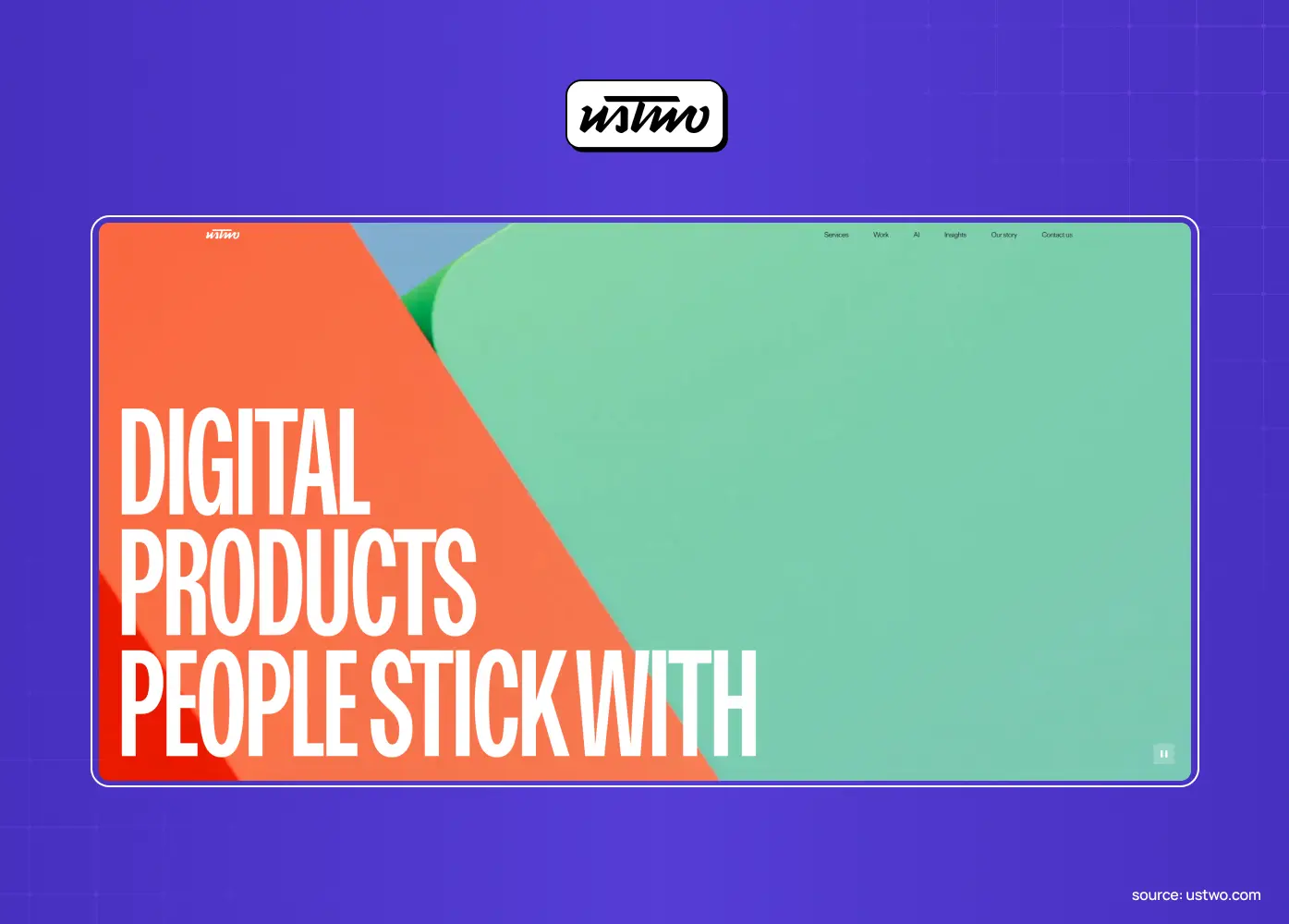
Vibrant landing page with oversized typography, colorful gradients, and a modern editorial layout focused on digital products.

At a glance: Best fit for teams wanting an extended product partner. Retainer pricing. Ongoing engagement.

ustwo tends to work as an embedded extension of a product team rather than a short-term consultancy. Their strategy work is usually paired with ongoing design and development support, so recommendations don't get handed off and forgotten.

This model suits teams that want continuity across multiple release cycles instead of a single strategy sprint. It's a heavier commitment than a fixed-scope engagement, so it fits best once a product already has some traction and a clear owner on the client side.

7. Fjord (Accenture Song): Best for Enterprise Transformation With Global Delivery
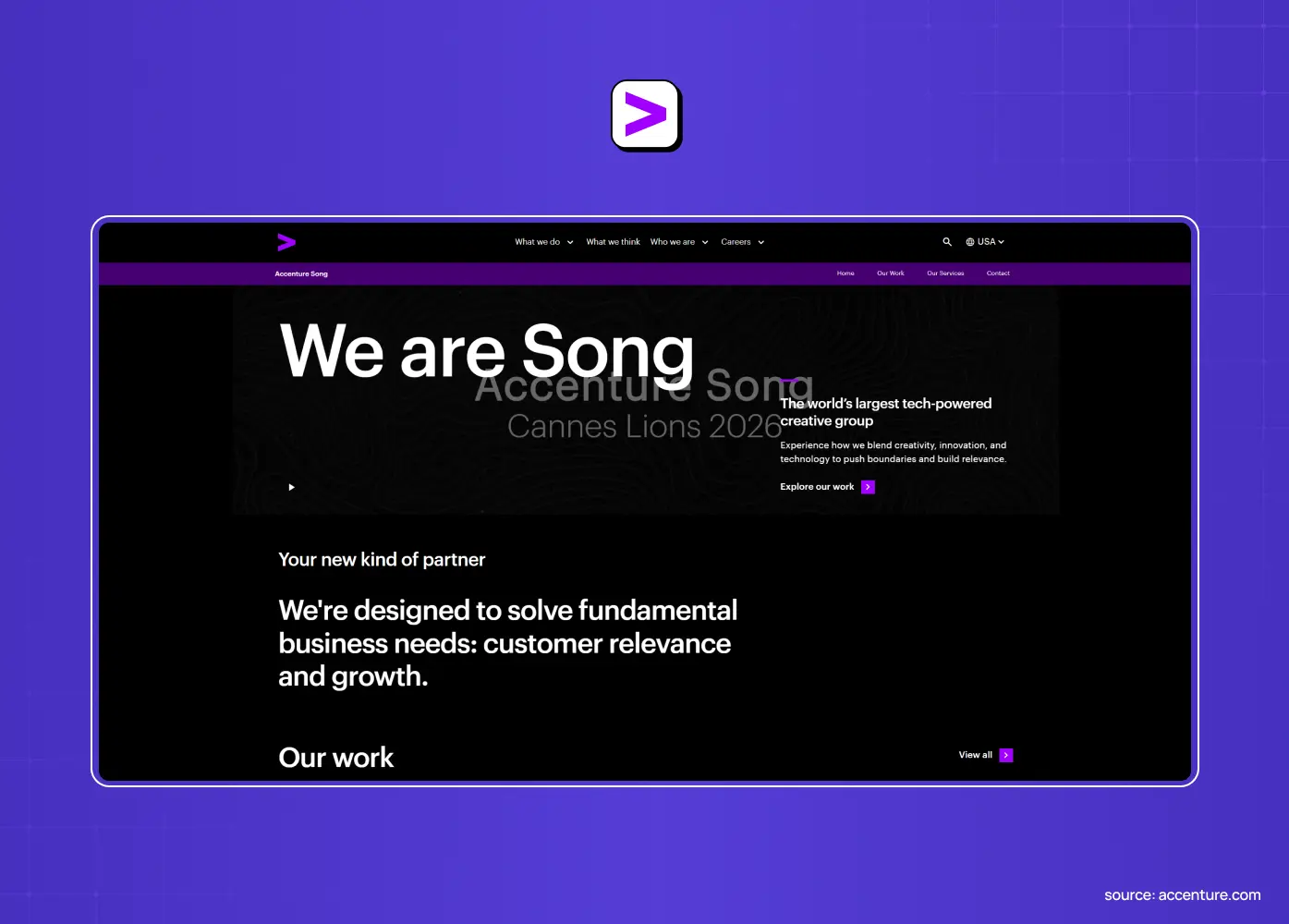
Accenture Song's enterprise digital transformation agency homepage featuring a dark interface, bold messaging, and business-focused design solutions.

At a glance: Best fit for large, regulated enterprises. Engagement-based pricing. Multi-month timelines.

As part of Accenture Song, Fjord brings global delivery scale to UX strategy work, which matters for enterprises coordinating design across regions, business units, and compliance requirements. Their strategy engagements often connect to broader digital transformation programs already underway inside the client organization.

This depth of resourcing is a strength for large enterprises and can be more infrastructure than an independent product team needs.

8. Fantasy: Best for Premium, Brand-Forward Consumer Products
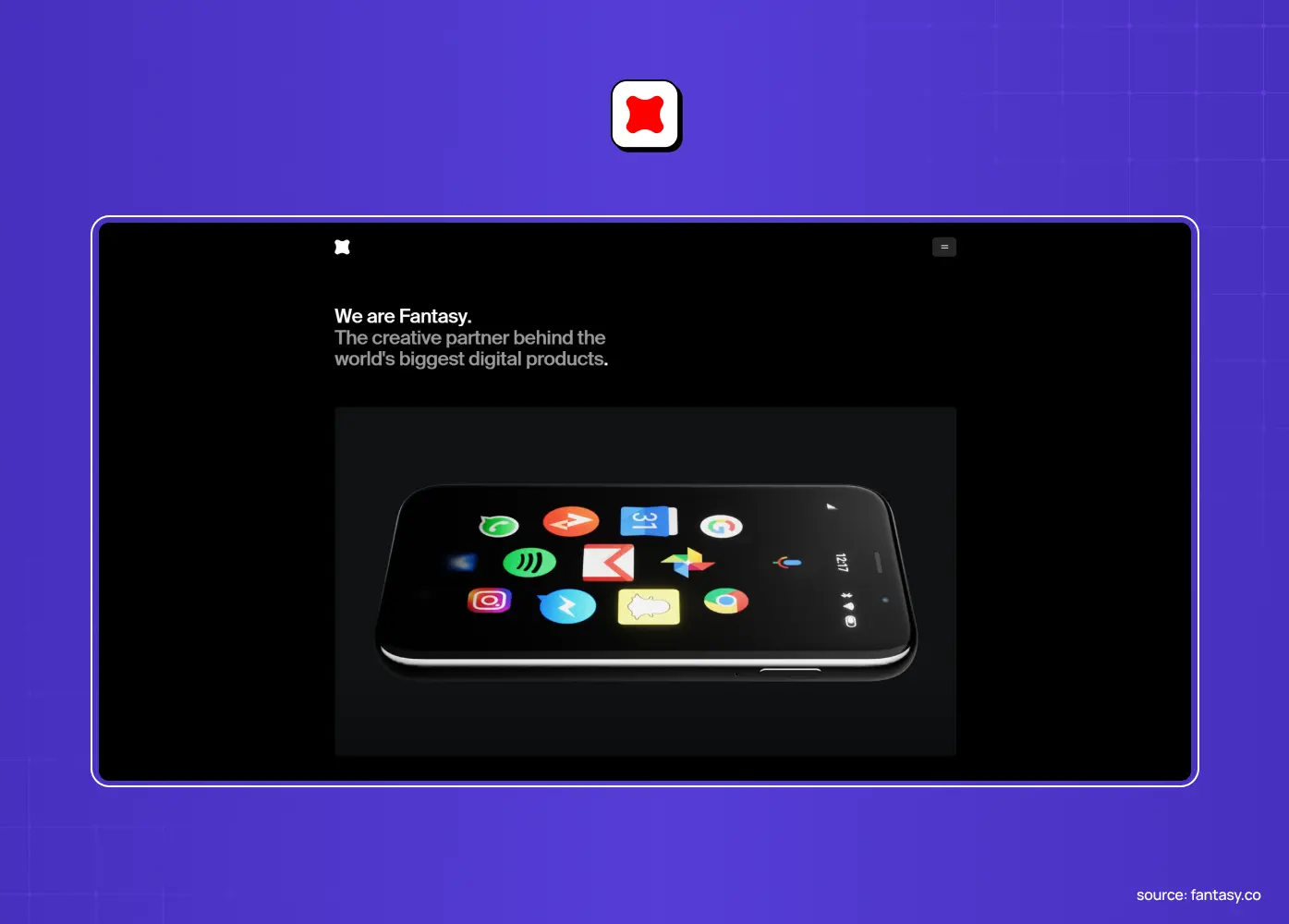
Fantasy's digital product design agency homepage showcasing a minimalist dark interface with interactive 3D product visuals and premium branding.

At a glance: Best fit for consumer brands prioritizing craft. Project-based pricing. Weeks to months.

Fantasy is known for pairing UX strategy with a high bar for visual and interaction craft, which suits consumer-facing products where brand perception and usability carry equal weight. Their strategy work tends to surface early in the process, informing both product decisions and the visual language that follows.

Companies earlier in validation, where speed matters more than polish, may find this approach more thorough than necessary at their stage.

9. Ramotion: Best for Early-Stage Startups Needing Fast Strategy Sprints
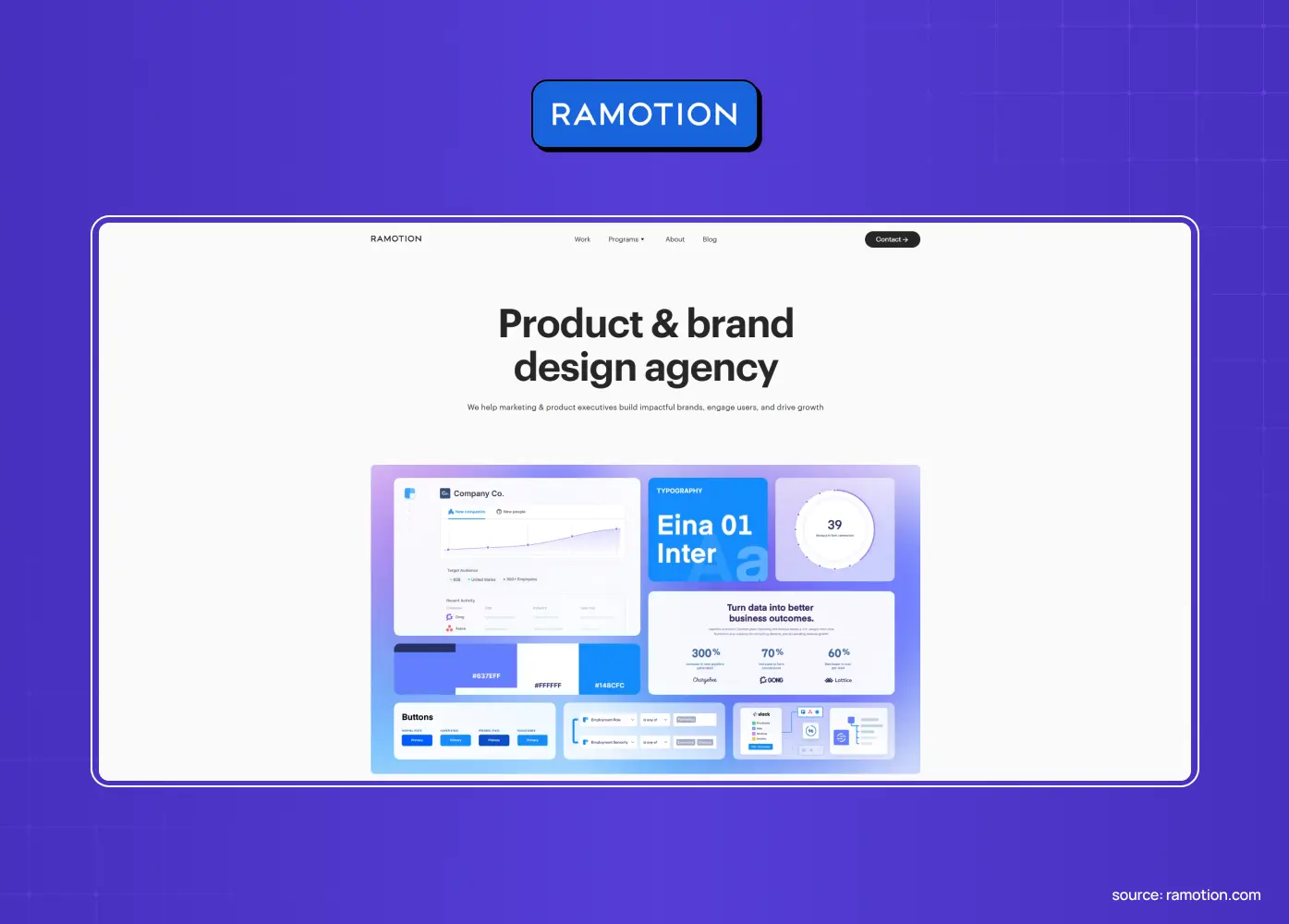
Ramotion's product and brand design agency website with a clean, spacious layout highlighting UI case studies and modern digital experiences.

At a glance: Best fit for pre-seed to Series A startups. Fixed-scope sprint pricing. Weeks.

Ramotion typically works with earlier-stage startups that need a compact, fixed-scope strategy sprint rather than an open-ended engagement. Their process tends to prioritize speed to a testable direction over exhaustive research phases.

This makes them a reasonable fit for founders validating a first version of a product, though scale-up and enterprise teams may need more depth than a fixed sprint provides.

10. Work & Co: Best for Complex, Engineering-Heavy Digital Products
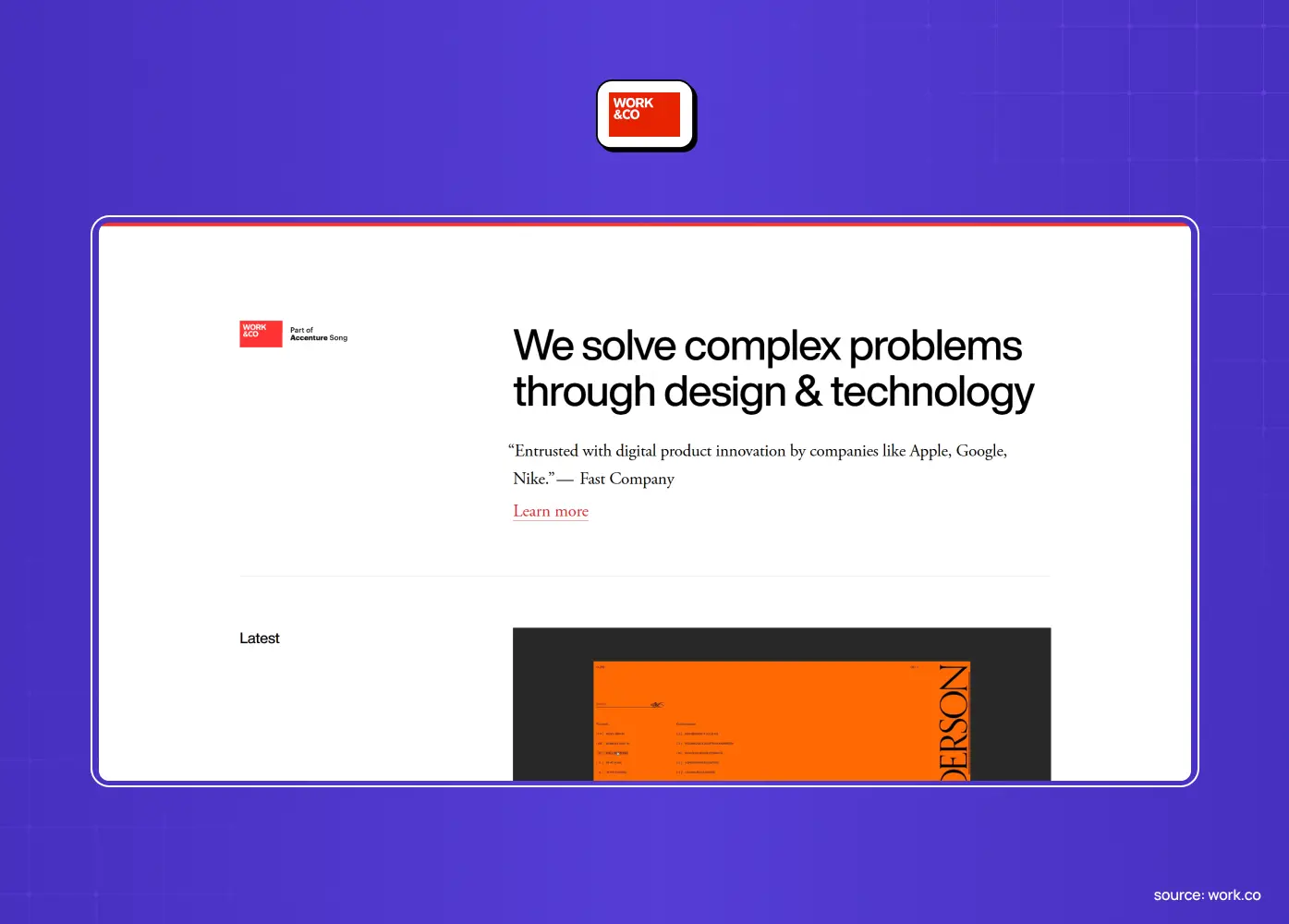
Work & Co's digital product design and technology agency homepage featuring refined typography, minimalist aesthetics, and enterprise-focused case studies.

At a glance: Best fit for products with significant technical complexity. Project-based pricing. Multi-month timelines.

Work & Co pairs UX strategy closely with engineering, which suits products where technical constraints shape what's actually feasible to design. Their strategy phase tends to involve engineering stakeholders earlier than agencies that treat design and build as separate tracks.

This is valuable for complex platforms but can be more coordination overhead than a simpler product needs.

How Do You Pick a UX Strategy Agency for Your Stage and Budget
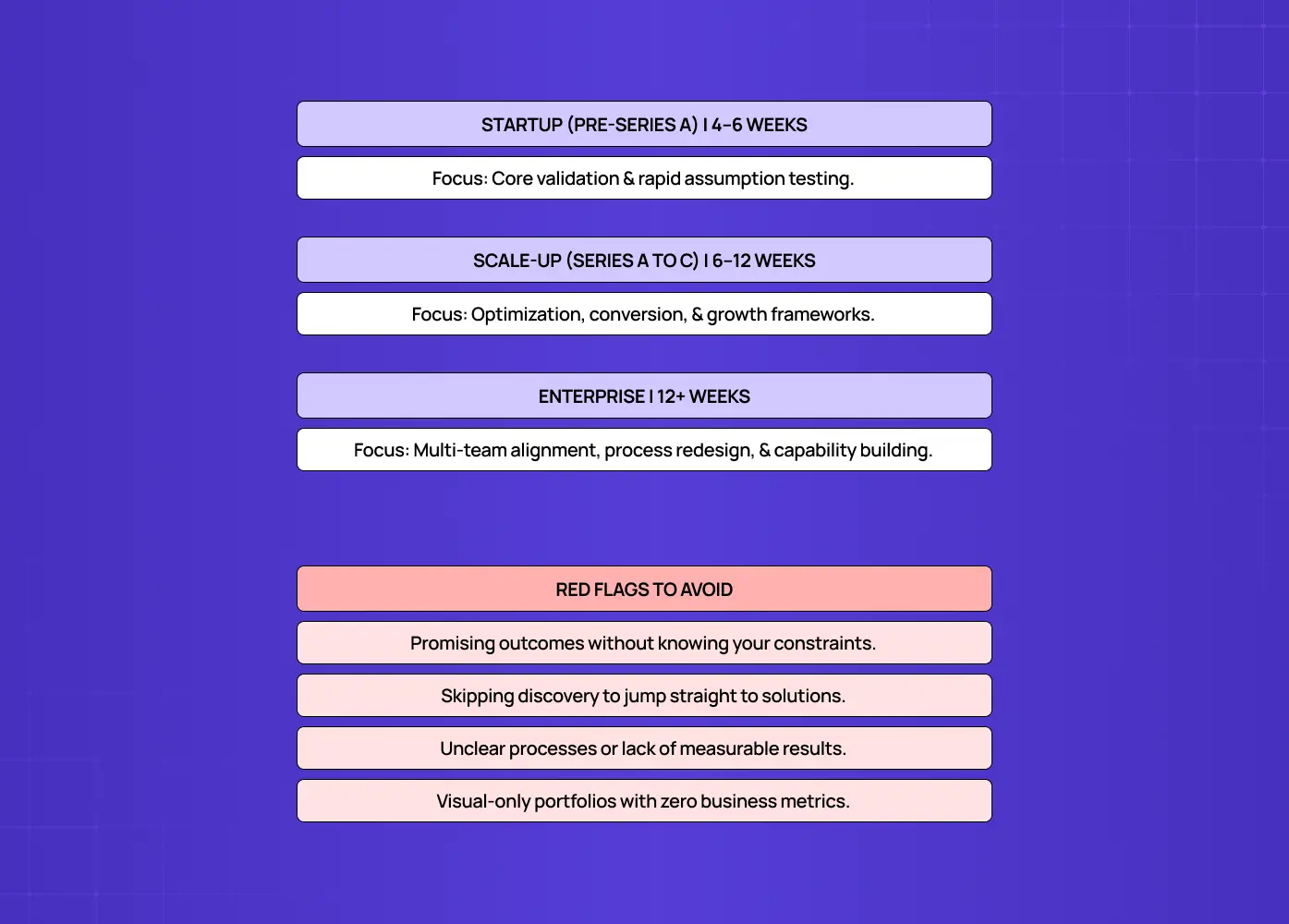
Engagement Models & Red Flags infographic summarizing engagement models for startups, scale-ups, and enterprises, alongside common red flags to consider when selecting a design partner.

Stage and fit matter more than agency name recognition. A startup team needs a different kind of UX strategy service than an enterprise product manager working across multiple stakeholder groups.

  • Startup stage (Pre-Series A): Look for validation-focused strategy that tests core assumptions quickly. Budget 4 to 6 weeks for work that includes user research, competitive analysis, and prototype testing. Avoid agencies pushing comprehensive transformation programs at this stage.

  • Scale-up stage (Series A to C): Look for optimization-focused strategy that improves existing product performance. Budget 6 to 12 weeks for conversion analysis, feature prioritization, and growth experimentation frameworks.

  • Enterprise stage: Look for organizational strategy that aligns multiple teams around user-centered approaches. Budget 12-plus weeks for stakeholder alignment, process redesign, and capability building.

Red flags to avoid when evaluating agencies:

  • Agencies that promise outcomes without first understanding your constraints

  • Teams that skip discovery entirely and jump straight to solutions

  • Agencies that can't explain their process in practical terms or show measurable client results

  • Portfolios full of visual work with no mention of the metrics that moved

Where a UX Strategy Agency Plugs Into Your Product Roadmap

UX strategy works best when it's built into product planning from the start, not bolted on after features are already defined. Good integrating UX strategy into product development cycles means strategic thinking informs what you prioritize, not just how you execute it.

  • Discovery phase: Strategists join opportunity assessment and feature scoping conversations early, shaping what gets built, not just how it looks.

  • Prioritization phase: Strategy insights help rank features by user impact and business value, and a good agency leaves you with a framework you can reuse, not a one-time recommendation.

  • Validation phase: Experiment design and success metrics get set before development starts, so you know what success looks like before you build toward it.

What UX Strategy Services Cost in 2026

UX strategy engagements typically run $25,000 to $150,000, depending on scope, timeline, and agency expertise. That range has held fairly steady, and sprint-based models still tend to deliver better value than open-ended consulting arrangements.

Pricing models worth knowing:

  • Sprint-based pricing for focused work with clear deliverables and timelines

  • Retainer models for ongoing strategic support through multiple product cycles

  • Outcome-linked pricing that ties agency compensation to measurable improvements in product metrics

What actually drives project cost:

  • Research depth, including user interviews, competitive analysis, and behavioral data

  • Stakeholder complexity, including multiple decision-makers and approval layers

  • Compliance requirements for regulated industries or accessibility standards

Budget for validation testing as part of the core scope, not an optional add-on. Agencies worth their fee build experimentation costs into the estimate up front.

How Groto Solves UX Strategy Challenges

Groto has delivered strategy and design for Fortune 500 companies and AI-native startups across multiple industries. Our Creative Director ranks in the global top 3% of UX designers, and our team has shipped more than 100 digital products.

Our approach pairs business-focused research with rapid prototyping, helping teams ship validated features in weeks instead of quarters. We focus on outcomes you can measure, like conversion lift and engagement, rather than aesthetic preference alone.

Have a project in mind? Let's talk through your idea and see what makes sense. Harpreet Singh, Founder at Groto Book a call 
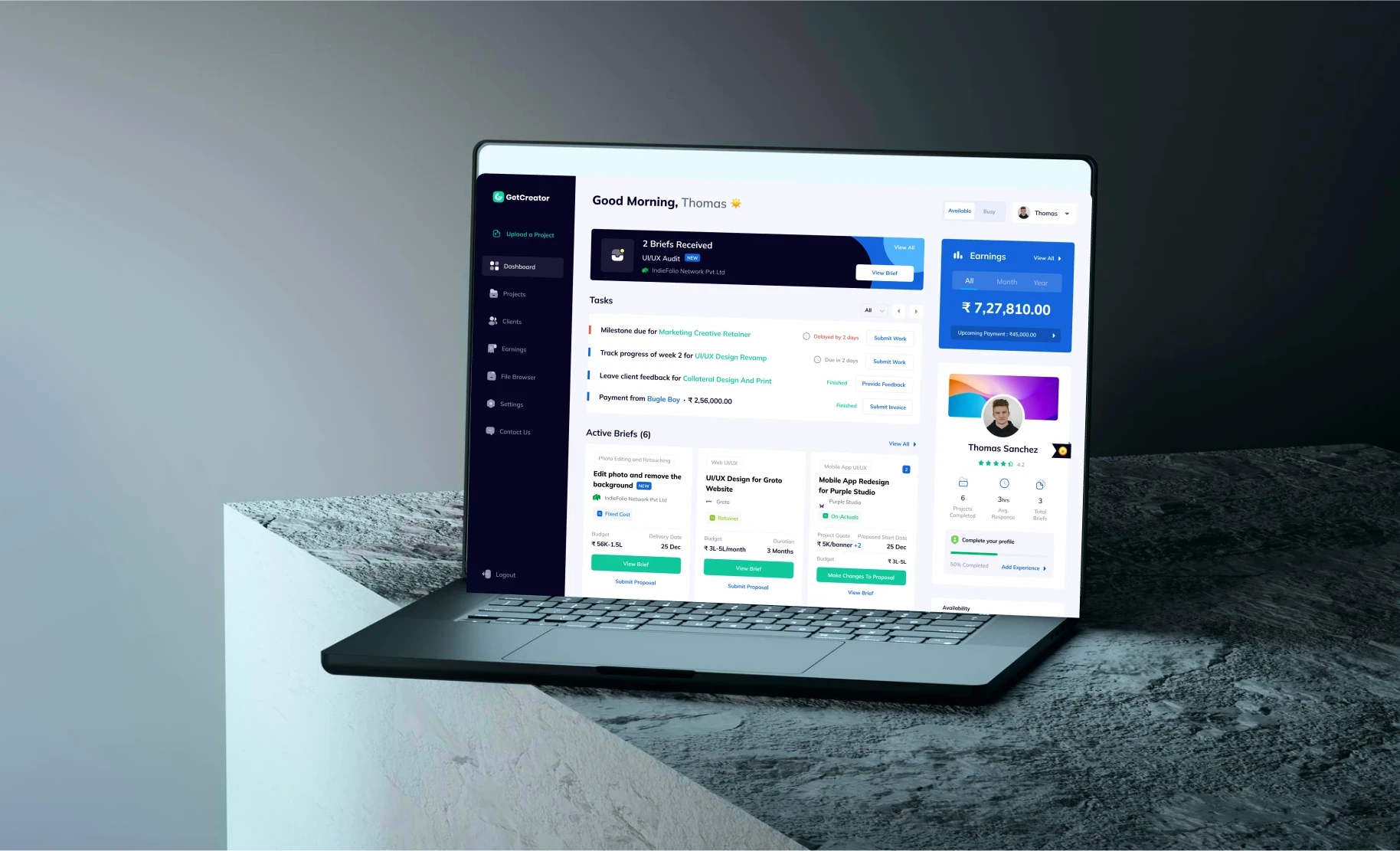
Choosing a UX strategy partner in 2026 means looking past portfolios and into process. This guide compares 10 leading agencies by delivery speed, pricing model, and how well each fits AI-native and agentic products at your stage.

Compare 10 top UX strategy agencies by speed, pricing, and product stage fit.

TL;DR

  • A top UX strategy agency ties research and experimentation directly to product metrics, not just deliverables you'll shelve.

  • In 2026, the strongest agencies also understand agentic interfaces, not only traditional screens and flows.

  • We compared 10 agencies on pricing model, delivery speed, and best-fit product stage, including Groto, IDEO, Clay, Frog, and MetaLab.

  • Budget 4 to 12 weeks for focused strategy work rather than open-ended, multi-quarter consulting engagements.

  • Pick based on your stage and constraints, not agency name recognition.

Your product roadmap is full, but adoption still lags. If that sounds familiar, you're not alone. Most UX strategy services still lean on theoretical frameworks when what teams actually need is creating effective UX strategy frameworks that ship inside sprint cycles, not sit in a slide deck.

This matters more in 2026 than it did even a year ago. Products now routinely include agentic features, AI systems that act on a user's behalf rather than just responding to clicks. A generic UX agency that builds beautiful static mockups often struggles the moment an AI model behaves unpredictably or a user needs to understand what an agent just did on their behalf. Finding a top UX strategy agency now means finding a partner who treats that complexity as the starting point, not an afterthought.

The business case for getting this right is not just a hunch. McKinsey's long-running research on design maturity found that companies scoring highest on its design index posted meaningfully faster revenue growth and stronger shareholder returns than their industry peers over a five-year period. Strategy that's disconnected from execution rarely produces that kind of outcome.

How We Selected These Agencies

We didn't rank agencies by portfolio polish or follower counts. Each name on this list met a consistent bar:

  • A visible track record of UX strategy work, not just execution or visual design

  • A process that includes discovery, prioritization, and measurement, not just workshops

  • Enough public information (case studies, client types, delivery model) to compare fairly

  • Relevance to at least one common product stage: early-stage, scale-up, or enterprise

We also looked at how each agency talks about AI and agentic products specifically, since that's where most 2026-era strategy frameworks start to show their age.

Which Top UX Strategy Agency Should You Trust in 2026

Top UX strategy agencies deliver strategy you can ship, not decks you'll shelve. The strongest ones understand that AI-native products, especially those with agentic features, need different scaffolding than a traditional SaaS dashboard.

Great UX strategy services start with your product's actual capabilities and constraints, not its theoretical potential. Agencies worth hiring ask about model accuracy, latency, and failure modes before a single user flow gets sketched.

What separates a strong agency in 2026:

  • Discovery rigor that includes AI and agent behavior mapping, not just user interviews

  • An experimentation culture that validates assumptions before features get built

  • Analytics integration that connects design decisions to business metrics

  • Direct experience with AI-enabled or agentic products, not only generic digital experiences

Quick Comparison: 10 UX Strategy Agencies at a Glance

Agency

Best For

Pricing Model

Delivery Speed

Groto

Lean, ROI-tied strategy for AI and agentic products

Sprint-based

Weeks, not quarters

IDEO

Organization-wide design transformation

Retainer/engagement-based

Months

Clay

Product-led brands needing polish plus strategy

Project-based

Weeks to months

Frog

Global scale and service ecosystems

Engagement-based

Months

MetaLab

Shipping strategy directly into product

Project or sprint-based

Weeks

ustwo

Embedded, long-term product ownership

Retainer

Ongoing

Fjord (Accenture Song)

Enterprise transformation with global delivery

Engagement-based

Months

Fantasy

Premium, brand-forward consumer products

Project-based

Weeks to months

Ramotion

Early-stage startups needing fast strategy sprints

Fixed-scope sprint

Weeks

Work & Co

Complex, engineering-heavy digital products

Project-based

Months

The 10 Best UX Strategy Agencies in 2026

1. Groto: Best for Lean, ROI-Tied UX Strategy Services

Groto's AI-first UX design agency homepage featuring bold typography, immersive futuristic visuals, and a modern dark interface focused on AI-driven product design.

At a glance: Best fit for AI and agentic product teams. Sprint-based pricing. Delivery in weeks, not quarters.

Groto meets AI product teams where they are. No six-month discovery phases, no theoretical frameworks left to gather dust. Just strategy you can ship within weeks.

Most UX strategy services produce research reports that sit in Notion forever. Groto's sprint model produces working prototypes that solve real problems while other agencies are still running workshops. Their Creative Director ranks in the global top 3% of UX designers, though what matters more day to day is a refusal to work without clear success metrics attached. Fortune 500 companies including Colgate and ABInBev have turned to Groto when internal teams hit walls with complex AI interfaces.

Groto's approach to shipping strategy into execution within weeks, not quarters, means you're validating features while competitors are still debating personas. Their ROI dashboards keep stakeholders aligned on what's actually moving the metrics that matter.

Want to know where your users are dropping off?

We’ll break down the exact moments users lose interest, and why.

2. IDEO: Best for Organization-Wide Design Transformation

IDEO's design thinking resource page with a dark-themed interface, colorful sticky note imagery, and structured educational content for innovation and problem-solving.

At a glance: Best fit for large enterprises needing cultural change. Engagement-based pricing. Multi-month timelines.

IDEO works well for large companies needing cultural change alongside UX strategy, not just a single product update. Their process emphasizes cross-functional collaboration and long-term capability building.

IDEO's strength is complex, multi-stakeholder environments where design thinking needs to spread well beyond the product team. Their workshops and training programs help organizations adopt user-centered approaches systematically, rather than one team at a time.

The agency works best for enterprises with 12-plus month timelines and budgets for comprehensive transformation. IDEO's pace can feel slow for startup teams that need rapid iteration cycles.

3. Clay: Best for Product-Led Brands Needing Polish Plus Strategy

Clay's global branding and UX design agency homepage with a clean minimalist layout, soft 3D illustrations, and a strong focus on digital product design.

At a glance: Best fit for venture-backed, design-conscious companies. Project-based pricing. Weeks to months.

Clay combines brand identity with UX strategy for venture-backed companies that need sophisticated visual execution alongside strategic thinking.

Their approach works well for B2B SaaS companies targeting design-conscious users or premium market segments. Clay's engagements often fold in brand positioning and visual identity development alongside the UX planning itself.

Clay fits companies with established product-market fit that are looking to scale acquisition through stronger brand and experience design. Their work tends to lean more toward conversion optimization than fundamental product repositioning.

4. Frog: Best for Global Scale and Service Ecosystems

frog's premium agency website featuring cinematic black-themed visuals, immersive animations, and a sophisticated showcase of design and innovation.

At a glance: Best fit for multinational enterprises. Engagement-based pricing. Multi-month timelines.

Frog handles complex UX strategy for multinational companies with diverse user bases and regulatory requirements across markets. Their experience spans multiple compliance frameworks and geographies.

The agency excels at service design for companies with both digital and physical touchpoints. Frog's process includes extensive stakeholder mapping and organizational change planning.

Frog works best for enterprises managing complex user ecosystems across countries or business units. Their strategic depth can be more than a single-product startup needs.

5. MetaLab: Best for Shipping Strategy Directly Into Product

Metalab's modern digital agency homepage with abstract 3D visuals, elegant typography, and a dark aesthetic emphasizing interface design expertise.

At a glance: Best fit for growth-stage companies. Project or sprint-based pricing. Weeks.

MetaLab focuses on UX strategy that translates directly into shipped features, rather than sitting in a separate strategy phase. Their process leans on rapid prototyping and iterative validation over extensive upfront planning.

The agency works well for growth-stage companies that need strategic direction without a lengthy consulting engagement. MetaLab's team includes both strategists and designers who can execute the recommendations they make.

MetaLab fits companies with existing user bases looking to optimize conversion funnels or add new feature sets. Their approach may lack depth for companies that need a fundamental product repositioning.

6. ustwo: Best for Embedded, Long-Term Product Ownership

Vibrant landing page with oversized typography, colorful gradients, and a modern editorial layout focused on digital products.

At a glance: Best fit for teams wanting an extended product partner. Retainer pricing. Ongoing engagement.

ustwo tends to work as an embedded extension of a product team rather than a short-term consultancy. Their strategy work is usually paired with ongoing design and development support, so recommendations don't get handed off and forgotten.

This model suits teams that want continuity across multiple release cycles instead of a single strategy sprint. It's a heavier commitment than a fixed-scope engagement, so it fits best once a product already has some traction and a clear owner on the client side.

7. Fjord (Accenture Song): Best for Enterprise Transformation With Global Delivery

Accenture Song's enterprise digital transformation agency homepage featuring a dark interface, bold messaging, and business-focused design solutions.

At a glance: Best fit for large, regulated enterprises. Engagement-based pricing. Multi-month timelines.

As part of Accenture Song, Fjord brings global delivery scale to UX strategy work, which matters for enterprises coordinating design across regions, business units, and compliance requirements. Their strategy engagements often connect to broader digital transformation programs already underway inside the client organization.

This depth of resourcing is a strength for large enterprises and can be more infrastructure than an independent product team needs.

8. Fantasy: Best for Premium, Brand-Forward Consumer Products

Fantasy's digital product design agency homepage showcasing a minimalist dark interface with interactive 3D product visuals and premium branding.

At a glance: Best fit for consumer brands prioritizing craft. Project-based pricing. Weeks to months.

Fantasy is known for pairing UX strategy with a high bar for visual and interaction craft, which suits consumer-facing products where brand perception and usability carry equal weight. Their strategy work tends to surface early in the process, informing both product decisions and the visual language that follows.

Companies earlier in validation, where speed matters more than polish, may find this approach more thorough than necessary at their stage.

9. Ramotion: Best for Early-Stage Startups Needing Fast Strategy Sprints

Ramotion's product and brand design agency website with a clean, spacious layout highlighting UI case studies and modern digital experiences.

At a glance: Best fit for pre-seed to Series A startups. Fixed-scope sprint pricing. Weeks.

Ramotion typically works with earlier-stage startups that need a compact, fixed-scope strategy sprint rather than an open-ended engagement. Their process tends to prioritize speed to a testable direction over exhaustive research phases.

This makes them a reasonable fit for founders validating a first version of a product, though scale-up and enterprise teams may need more depth than a fixed sprint provides.

10. Work & Co: Best for Complex, Engineering-Heavy Digital Products

Work & Co's digital product design and technology agency homepage featuring refined typography, minimalist aesthetics, and enterprise-focused case studies.

At a glance: Best fit for products with significant technical complexity. Project-based pricing. Multi-month timelines.

Work & Co pairs UX strategy closely with engineering, which suits products where technical constraints shape what's actually feasible to design. Their strategy phase tends to involve engineering stakeholders earlier than agencies that treat design and build as separate tracks.

This is valuable for complex platforms but can be more coordination overhead than a simpler product needs.

How Do You Pick a UX Strategy Agency for Your Stage and Budget

Engagement Models & Red Flags infographic summarizing engagement models for startups, scale-ups, and enterprises, alongside common red flags to consider when selecting a design partner.

Stage and fit matter more than agency name recognition. A startup team needs a different kind of UX strategy service than an enterprise product manager working across multiple stakeholder groups.

  • Startup stage (Pre-Series A): Look for validation-focused strategy that tests core assumptions quickly. Budget 4 to 6 weeks for work that includes user research, competitive analysis, and prototype testing. Avoid agencies pushing comprehensive transformation programs at this stage.

  • Scale-up stage (Series A to C): Look for optimization-focused strategy that improves existing product performance. Budget 6 to 12 weeks for conversion analysis, feature prioritization, and growth experimentation frameworks.

  • Enterprise stage: Look for organizational strategy that aligns multiple teams around user-centered approaches. Budget 12-plus weeks for stakeholder alignment, process redesign, and capability building.

Red flags to avoid when evaluating agencies:

  • Agencies that promise outcomes without first understanding your constraints

  • Teams that skip discovery entirely and jump straight to solutions

  • Agencies that can't explain their process in practical terms or show measurable client results

  • Portfolios full of visual work with no mention of the metrics that moved

Where a UX Strategy Agency Plugs Into Your Product Roadmap

UX strategy works best when it's built into product planning from the start, not bolted on after features are already defined. Good integrating UX strategy into product development cycles means strategic thinking informs what you prioritize, not just how you execute it.

  • Discovery phase: Strategists join opportunity assessment and feature scoping conversations early, shaping what gets built, not just how it looks.

  • Prioritization phase: Strategy insights help rank features by user impact and business value, and a good agency leaves you with a framework you can reuse, not a one-time recommendation.

  • Validation phase: Experiment design and success metrics get set before development starts, so you know what success looks like before you build toward it.

What UX Strategy Services Cost in 2026

UX strategy engagements typically run $25,000 to $150,000, depending on scope, timeline, and agency expertise. That range has held fairly steady, and sprint-based models still tend to deliver better value than open-ended consulting arrangements.

Pricing models worth knowing:

  • Sprint-based pricing for focused work with clear deliverables and timelines

  • Retainer models for ongoing strategic support through multiple product cycles

  • Outcome-linked pricing that ties agency compensation to measurable improvements in product metrics

What actually drives project cost:

  • Research depth, including user interviews, competitive analysis, and behavioral data

  • Stakeholder complexity, including multiple decision-makers and approval layers

  • Compliance requirements for regulated industries or accessibility standards

Budget for validation testing as part of the core scope, not an optional add-on. Agencies worth their fee build experimentation costs into the estimate up front.

How Groto Solves UX Strategy Challenges

Groto has delivered strategy and design for Fortune 500 companies and AI-native startups across multiple industries. Our Creative Director ranks in the global top 3% of UX designers, and our team has shipped more than 100 digital products.

Our approach pairs business-focused research with rapid prototyping, helping teams ship validated features in weeks instead of quarters. We focus on outcomes you can measure, like conversion lift and engagement, rather than aesthetic preference alone.

Have a project in mind? Let's talk through your idea and see what makes sense. Harpreet Singh, Founder at Groto Book a call 

Have a project in mind?

Let’s talk through your idea and see what makes sense.

Harpreet Singh

Founder at Groto

Have a project in mind?

Let’s talk through your idea and see what makes sense.

Harpreet Singh

Founder at Groto

FAQ

Everything you were going to ask (and a few things you didn’t know to)

What's the difference between UX strategy and product strategy?

UX strategy focuses on user experience decisions and design direction. Product strategy covers the broader business and technical decisions, like which features get built at all. UX strategy shapes how users interact with what's already been decided.

How long does a UX strategy engagement typically take?

Most engagements run 4 to 12 weeks for research, analysis, and recommendations. Simple optimization projects can wrap in 2 to 4 weeks, while enterprise transformation work can stretch to 3 to 6 months

Who should own UX strategy inside a company?

Ownership usually sits with product managers, design leads, or a head of user experience, depending on company size. The agencies worth hiring work directly with whoever can actually act on the recommendations.

Does UX strategy for agentic and AI products need a different approach than traditional UX?

Largely yes. Agentic features involve a system acting on a user's behalf, which raises new questions around trust, transparency, and failure recovery that a traditional flow-based strategy process doesn't usually cover. Look for agencies who ask about model behavior and failure modes as part of discovery, not as an afterthought.

Do we still need an agency if we already have in-house designers?

Often yes, as a complement rather than a replacement. Internal teams tend to focus on execution, while an outside strategy partner brings research rigor, an outside perspective, and frameworks the internal team can keep using after the engagement ends.

How do I evaluate a UX strategy agency's portfolio effectively?

Look for case studies that show measurable business outcomes, not just visual polish. A strong agency can walk you through their research methods, the strategic calls they made, and the results for companies at a similar stage or industry to yours.

What's the difference between UX strategy and product strategy?

UX strategy focuses on user experience decisions and design direction. Product strategy covers the broader business and technical decisions, like which features get built at all. UX strategy shapes how users interact with what's already been decided.

How long does a UX strategy engagement typically take?

Most engagements run 4 to 12 weeks for research, analysis, and recommendations. Simple optimization projects can wrap in 2 to 4 weeks, while enterprise transformation work can stretch to 3 to 6 months

Who should own UX strategy inside a company?

Ownership usually sits with product managers, design leads, or a head of user experience, depending on company size. The agencies worth hiring work directly with whoever can actually act on the recommendations.

Does UX strategy for agentic and AI products need a different approach than traditional UX?

Largely yes. Agentic features involve a system acting on a user's behalf, which raises new questions around trust, transparency, and failure recovery that a traditional flow-based strategy process doesn't usually cover. Look for agencies who ask about model behavior and failure modes as part of discovery, not as an afterthought.

Do we still need an agency if we already have in-house designers?

Often yes, as a complement rather than a replacement. Internal teams tend to focus on execution, while an outside strategy partner brings research rigor, an outside perspective, and frameworks the internal team can keep using after the engagement ends.

How do I evaluate a UX strategy agency's portfolio effectively?

Look for case studies that show measurable business outcomes, not just visual polish. A strong agency can walk you through their research methods, the strategic calls they made, and the results for companies at a similar stage or industry to yours.

More Articles

Extreme close-up black and white photograph of a human eye

Let’s bring your vision to life

Tell us what's on your mind? We'll hit you back in 24 hours. No fluff, no delays - just a solid vision to bring your idea to life.

Profile portrait of a man in a white shirt against a light background

Harpreet Singh

Founder and Creative Director

Get in Touch

Extreme close-up black and white photograph of a human eye

Let’s bring your vision to life

Tell us what's on your mind? We'll hit you back in 24 hours. No fluff, no delays - just a solid vision to bring your idea to life.

Profile portrait of a man in a white shirt against a light background

Harpreet Singh

Founder and Creative Director

Get in Touch

Extreme close-up black and white photograph of a human eye

Let’s bring your vision to life

Tell us what's on your mind? We'll hit you back in 24 hours. No fluff, no delays - just a solid vision to bring your idea to life.

Profile portrait of a man in a white shirt against a light background

Harpreet Singh

Founder and Creative Director

Get in Touch