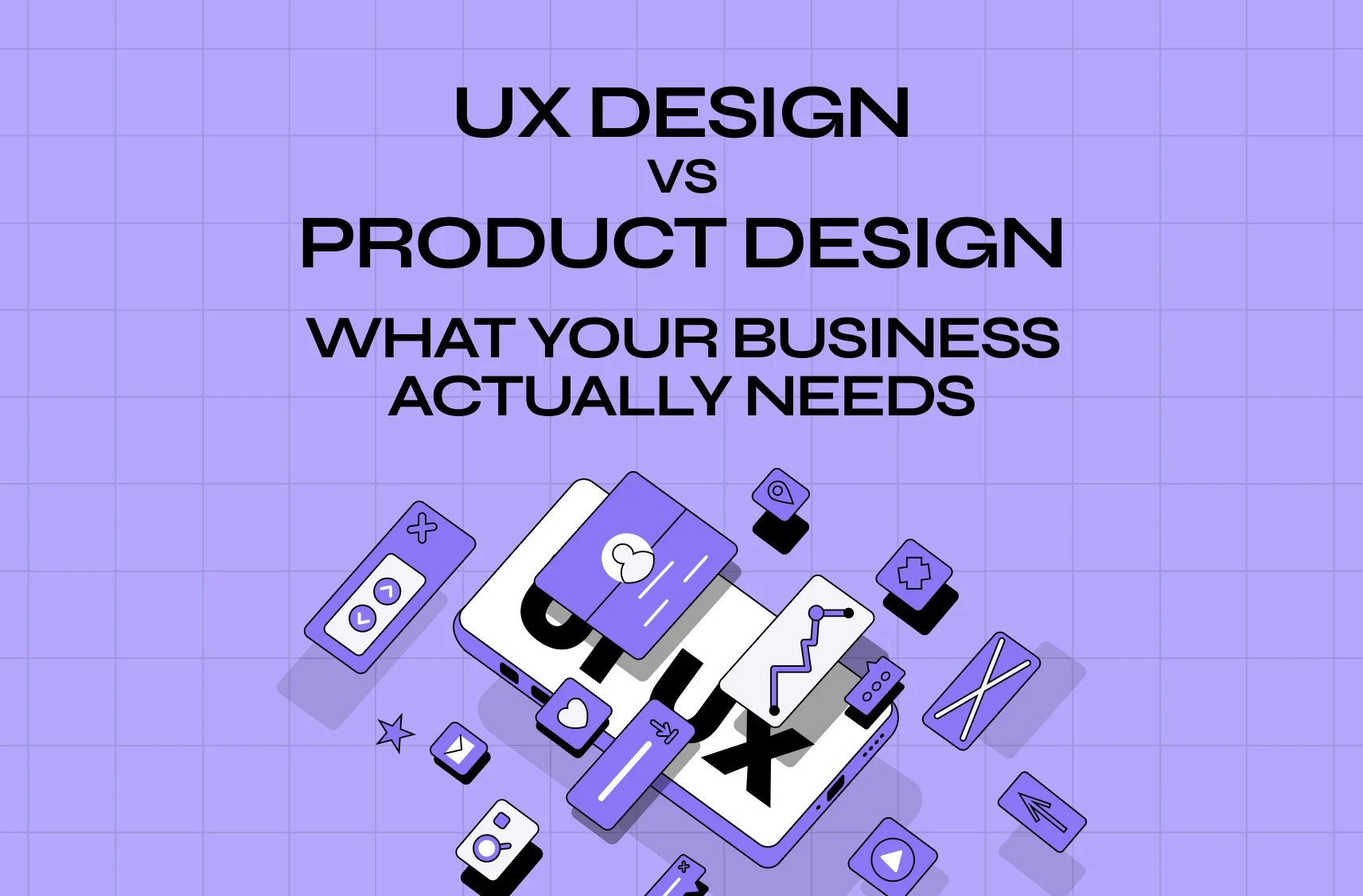
Many businesses confuse UX design and product design, treating them as interchangeable. This guide explains the real difference, when each matters, and how to choose the right investment to improve growth, retention, and scalability.
Choosing the right design focus impacts product success.
UX Design vs Product Design: The Decision That Impacts More Than UI
When leaders search for ux design vs product design, they are rarely asking a theoretical question.
They are asking:
Why are users not converting?
Why do features take too long to ship?
Why does the product feel inconsistent?
Why do redesigns keep happening?
This is not a design vocabulary issue.
It is a strategic resource allocation decision.
Investing in UX when product design is needed leads to local optimizations that do not scale.
Investing in product design when UX gaps exist creates strong systems with poor usability.
Understanding the difference between UX and product design allows businesses to align investment with outcomes.
The Difference Between UX and Product Design (From a Business Lens)
UX Design Focus
UX design centers on improving how users interact with specific experiences.
Typical areas include:
Flow optimization
Interaction clarity
Usability improvements
Navigation logic
Conversion touchpoints
Each represent a distinct specialisation, and UX disciplines behind product decisions breaks down all 12 of them so leaders understand exactly which expertise gap is costing them outcomes before deciding between UX and product design investment.
Business outcome:
Improved task completion
Reduced friction
Higher engagement
Better onboarding success
UX design is often tactical and experience-specific — and if the broader discipline still needs grounding, understanding what UI/UX design is clarifies what both roles draw from before they diverge.
Product Design Focus
Product design operates at a systems level — and where it intersects with roadmap decisions, product management meets UX strategy in ways that directly affect feature prioritization, engineering alignment, and business goal integration.
It combines:
UX architecture
Feature prioritization
Interaction models
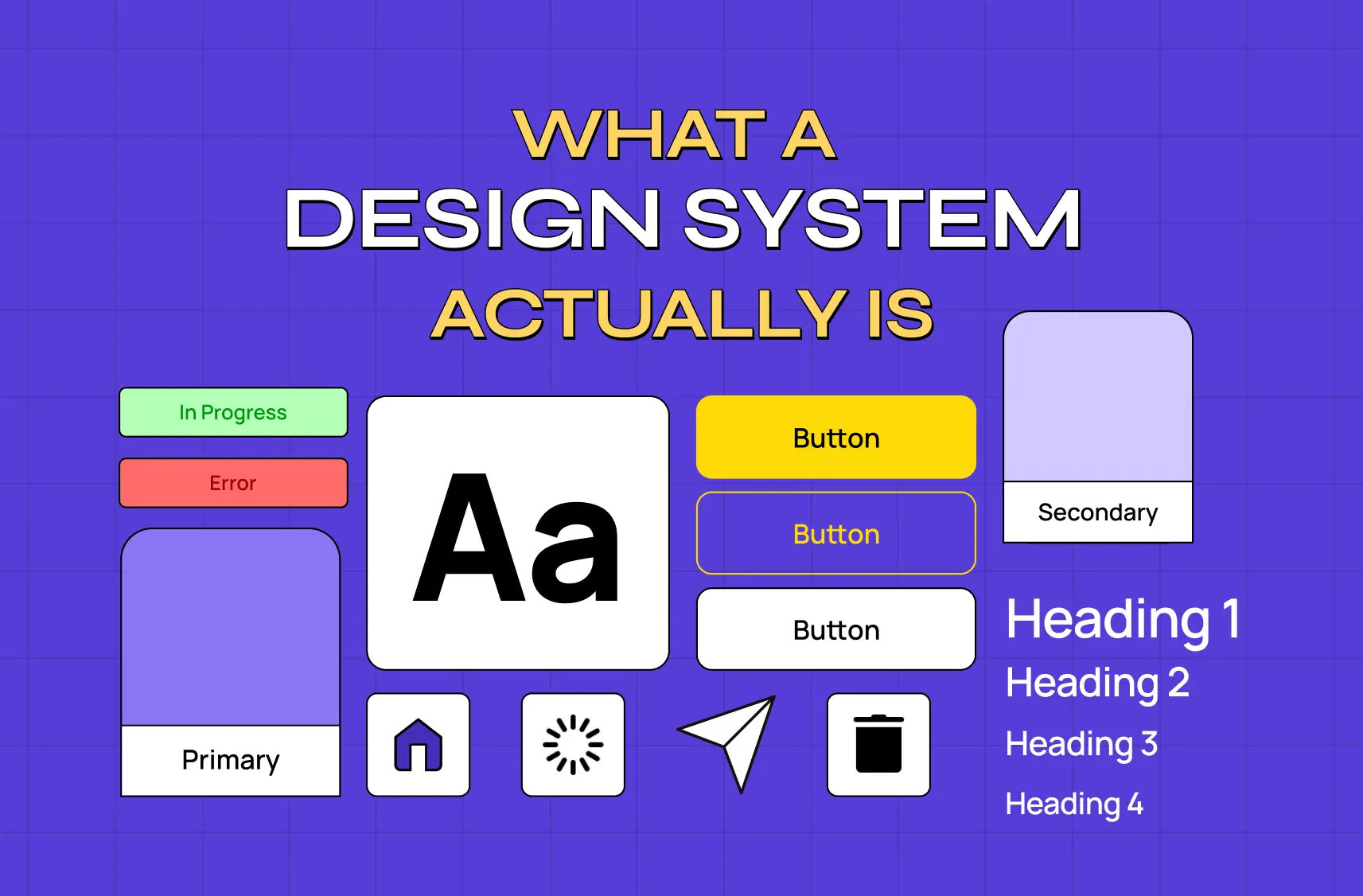
Design systems
Engineering alignment
Business goal integration
Business outcome:
Faster product evolution
Scalable user experience consistency
Reduced redesign cycles
Better long-term ROI
Product design is strategic and structural.
Why Businesses Confuse UX vs Product Design
Several factors create overlap:
Both improve user experience
Both influence interface decisions
Both involve research and testing
However, the key distinction lies in scope.
UX design improves the experience of using the product. Product design shapes what the product becomes — while an interaction design hire owns the behavior between the two.
This difference is critical when choosing between ux and product design investments.
UX vs Product Design for Business Outcomes
Business Challenge | UX Design Impact | Product Design Impact |
Low conversion | Optimize flows | Reframe product positioning |
Poor onboarding | Improve steps | Redesign activation logic |
Feature confusion | Clarify UI | Rework architecture |
Slow development | Minimal effect | Improves velocity |
Inconsistent UX | Fix screens | Build systems |
Businesses seeking incremental improvement often benefit from UX work.
Businesses seeking structural improvement require product design.
Which Design Is Better for Your Product?
The answer depends on stage and complexity.
Choose UX Design When
Product-market fit exists
Core architecture is stable
Issues are localized to flows
Conversion improvements are priority
Usability feedback dominates
This applies commonly to:
Mature SaaS platforms
Optimization phases
Conversion improvement initiatives
Choose Product Design When
Product direction is evolving
New features introduce complexity
Engineering velocity is slowing
Experience inconsistencies grow
Scalability is becoming a concern
This applies commonly to:
Scaling startups
Platform rebuild phases
Multi-role enterprise systems
The Hidden Cost of Choosing Incorrectly
This decision affects more than deliverables.
If UX Is Chosen When Product Design Is Needed
Technical debt increases
Experience fragmentation grows
Redesign cycles repeat
Feature velocity drops
If Product Design Is Chosen When UX Is Needed
Investment exceeds required scope
Local usability issues persist
Conversion improvements lag
Alignment prevents wasted budget and time.
A Practical Evaluation Framework
Leaders evaluating ux design or product design should ask:
Are problems localized or systemic?
Are we fixing flows or shaping direction?
Do we need usability gains or structural scalability?
Is engineering velocity affected?
Are users confused by interaction or product logic?
Answering these clarifies the correct path forward.
Why This Decision Matters More in 2026
Digital products are growing in complexity, and teams that are already designing for future complexity are better positioned to absorb the pressure of AI-driven feature sets, multi-device experiences, and accelerating competitive replication.
Factors increasing stakes:
AI-driven feature sets
Multi-device experiences
Data-heavy interfaces
Faster competitive replication
User expectations for seamless behavior — and increasingly, those expectations include accessible experiences by default, which is why understanding accessibility and UX overlap helps teams avoid treating accessibility as a separate workstream when it is already embedded in both UX and product design decisions.
Designing for AI agents specifically sits at the boundary between UX and product design decisions — interaction patterns for autonomous behavior are a UX concern, but the systems that support them are a product design problem, making this one of the clearest cases where both disciplines must work in lockstep.
Misalignment between UX and product design strategy compounds quickly in such environments.
Choosing correctly is no longer optional.
It directly impacts product sustainability.
Final
product design vs user experience is not about superiority.
It is about relevance to your current business challenge.
UX design enhances experience execution.
Product design shapes experience direction.
Organizations that align design investment with product maturity consistently outperform those treating design as a cosmetic layer.
Ready to Align Design Investment With Product Goals?
If you are evaluating whether your business needs UX optimization or a structured design strategy for product teams, an external perspective can provide clarity quickly.
We work with SaaS and digital product teams to:
Diagnose structural vs usability issues
Identify growth-impacting experience gaps
Map scalable design systems
Align design decisions with business outcomes
Book a 20-minute consultation to discuss where your product stands and what design focus will deliver the strongest return.