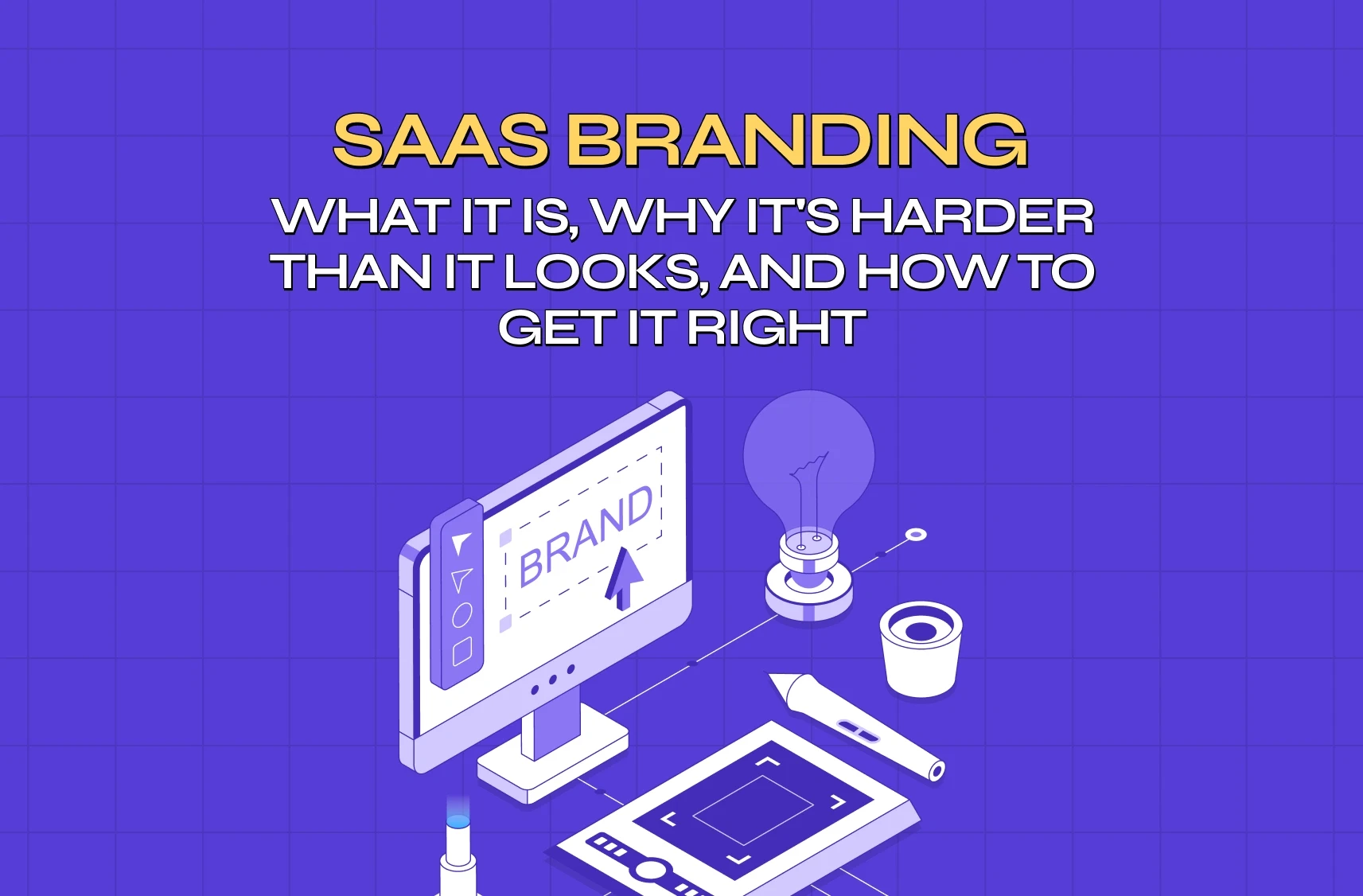
Notion feels like a creative tool. Salesforce feels like infrastructure. Both are productivity software — the difference isn't features or pricing. It's branding. This guide breaks down what SaaS branding actually involves, where most teams go wrong, and what it takes to build something people remember.
Same category. Same price. One brand wins. Here's why that gap exists.
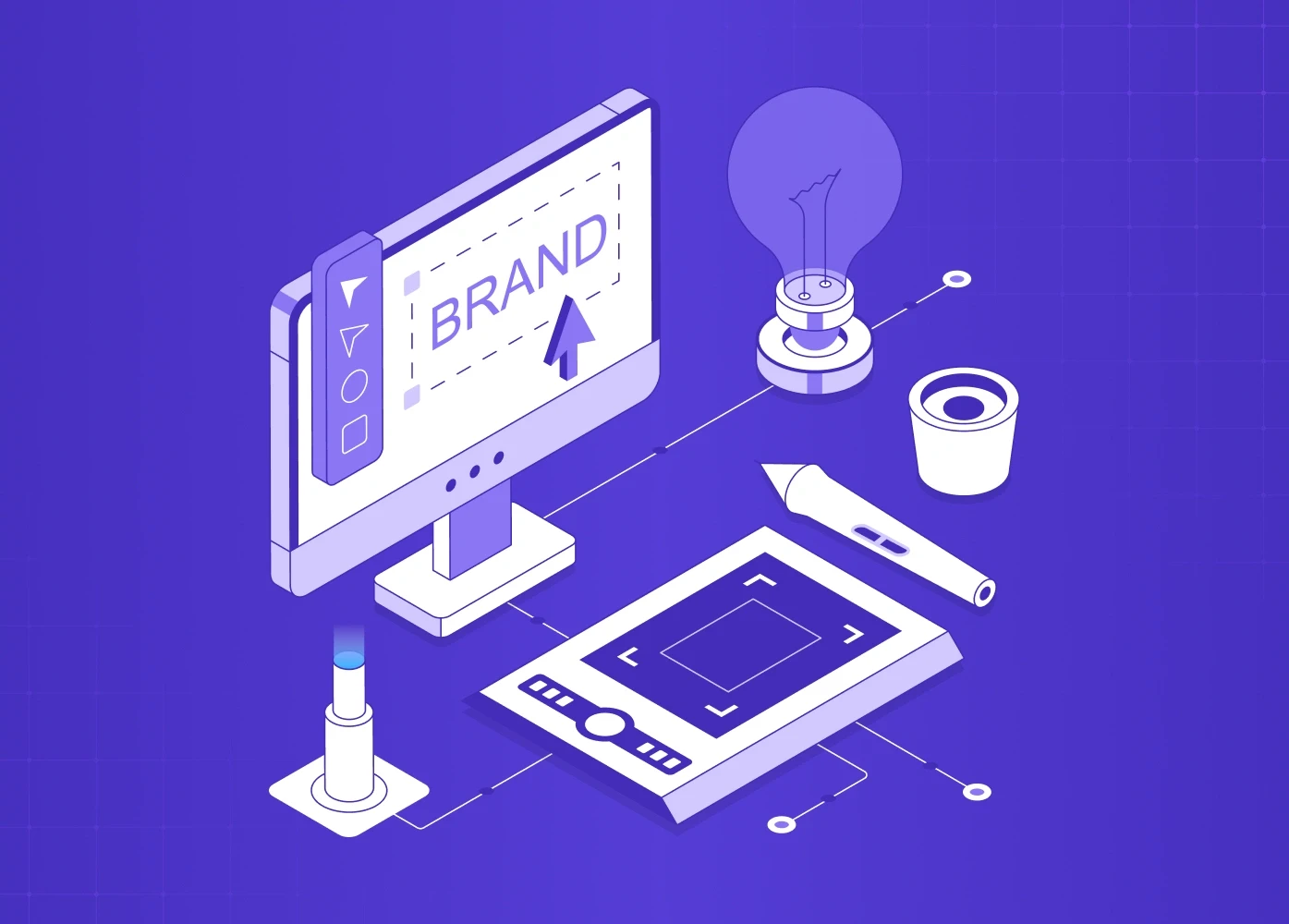
There are over 9,000 SaaS companies in the US alone. Most of them look the same. Same blue gradients. Same stock photos of smiling professionals. Same copy that begins with "the all-in-one platform for..."
That's not a design problem. It's a branding problem.
SaaS branding is what separates products people choose from products people settle for. It's the reason Notion feels like a creative tool and Salesforce feels like infrastructure — even when both are, technically, productivity software. Same category. Completely different emotional weight.
This guide breaks down what SaaS branding actually involves, where most teams go wrong, and what it takes to build a brand that people remember — and trust enough to keep paying for.
What Is SaaS Branding?
SaaS branding is the practice of shaping how your software company is perceived — across every touchpoint, not just the logo, even if a memorable mark from the right logo design firms is often where that perception starts. It defines what your product stands for, who it's for, how it communicates, and what users feel when they interact with it.
It's not a deliverable. It's a system.
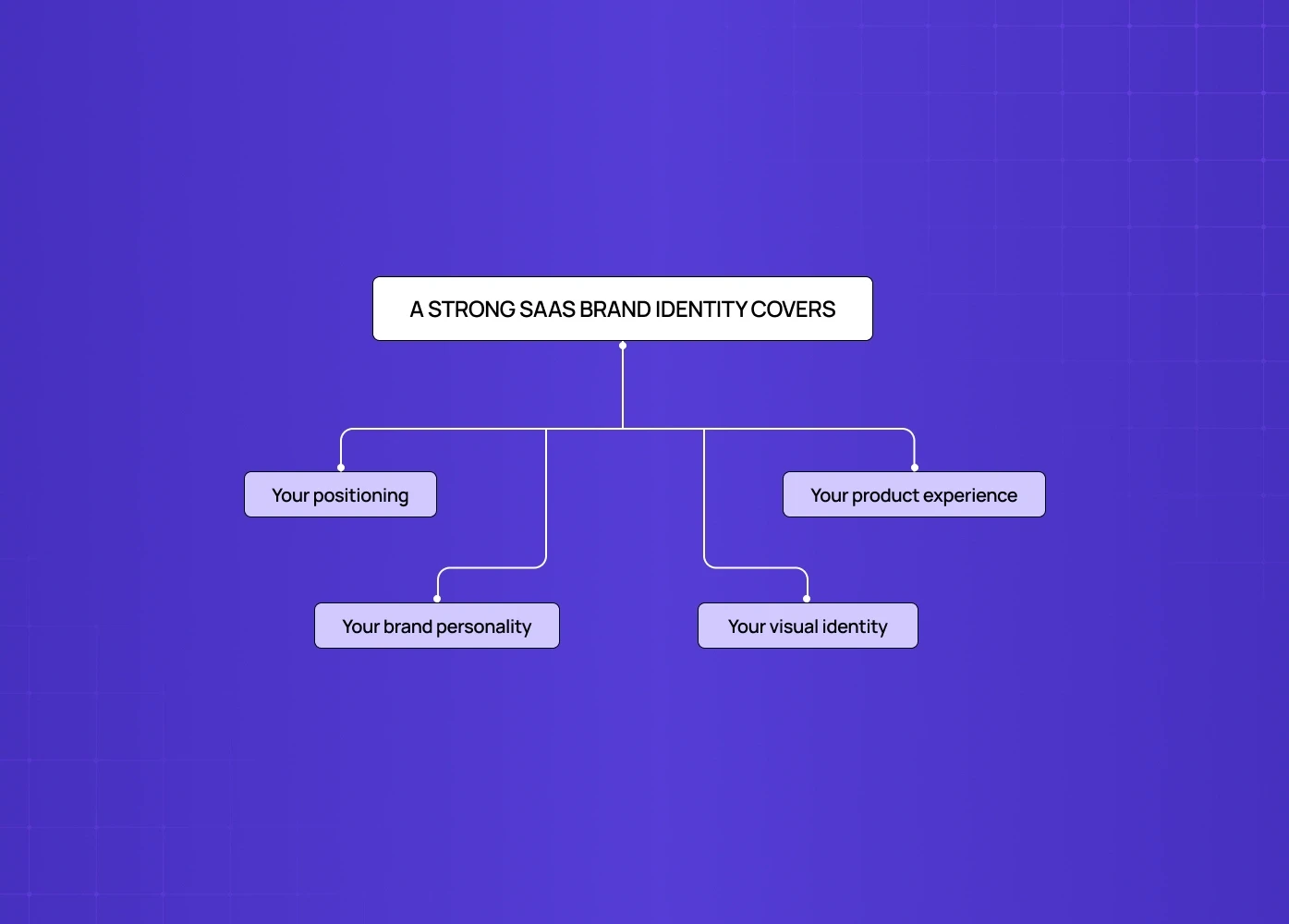
A strong SaaS brand identity covers:
Your positioning — why someone should choose you over a technically similar alternative
Your brand personality — the tone, language, and character that makes your communication feel consistent
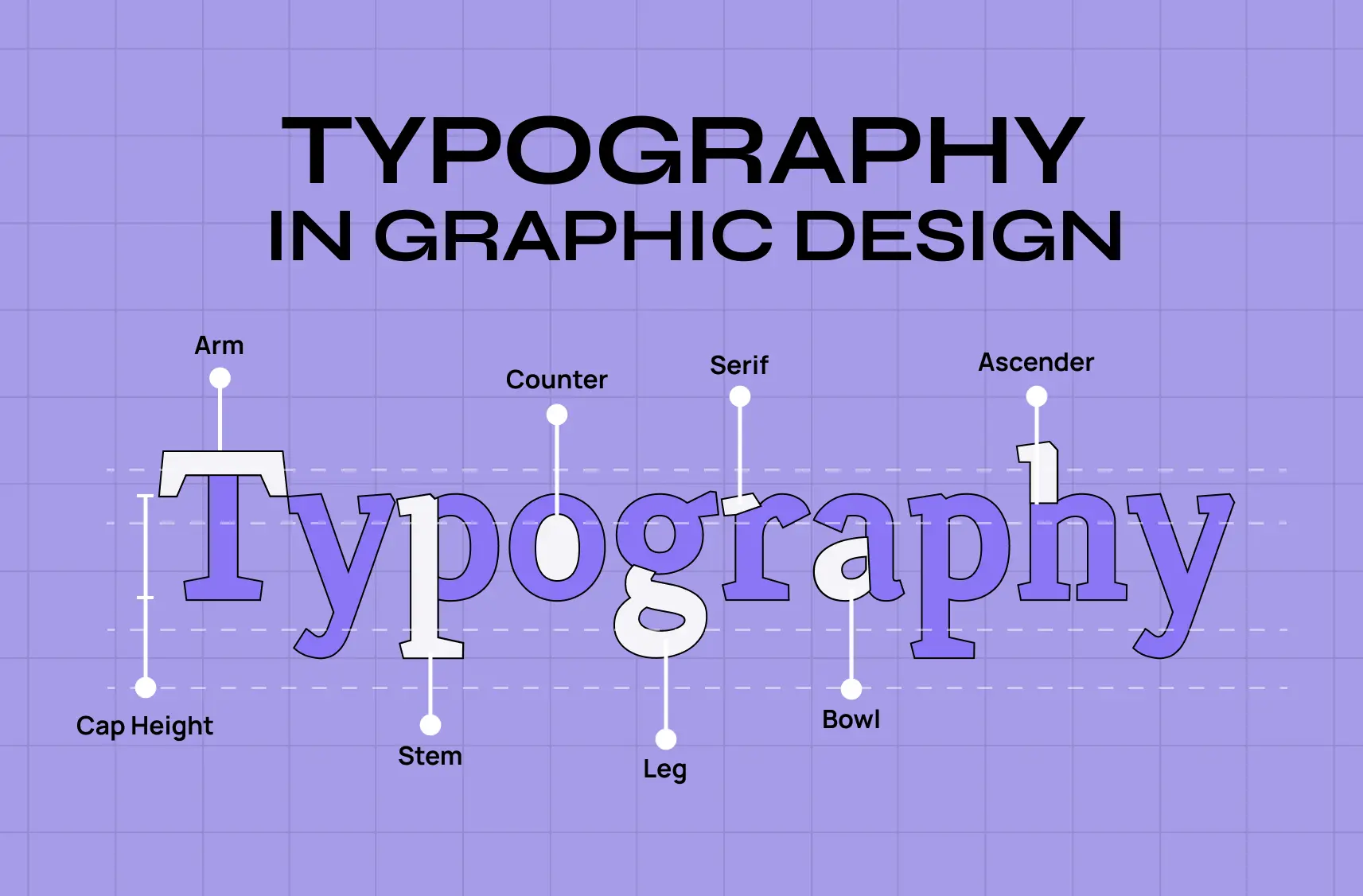
Your visual identity — colour, typography, layout logic, and the visual language of your product itself, which is one brand layer, not the brand in full
Your product experience — how users feel inside the product, not just on the marketing site
That last one is where most B2B SaaS branding conversations stop short. Branding gets handed to the marketing team, the product team builds the interface, and the experience fractures somewhere between the homepage promise and the actual dashboard. Users feel the gap even when they can't name it.
SaaS Branding vs. General Branding: What's Different
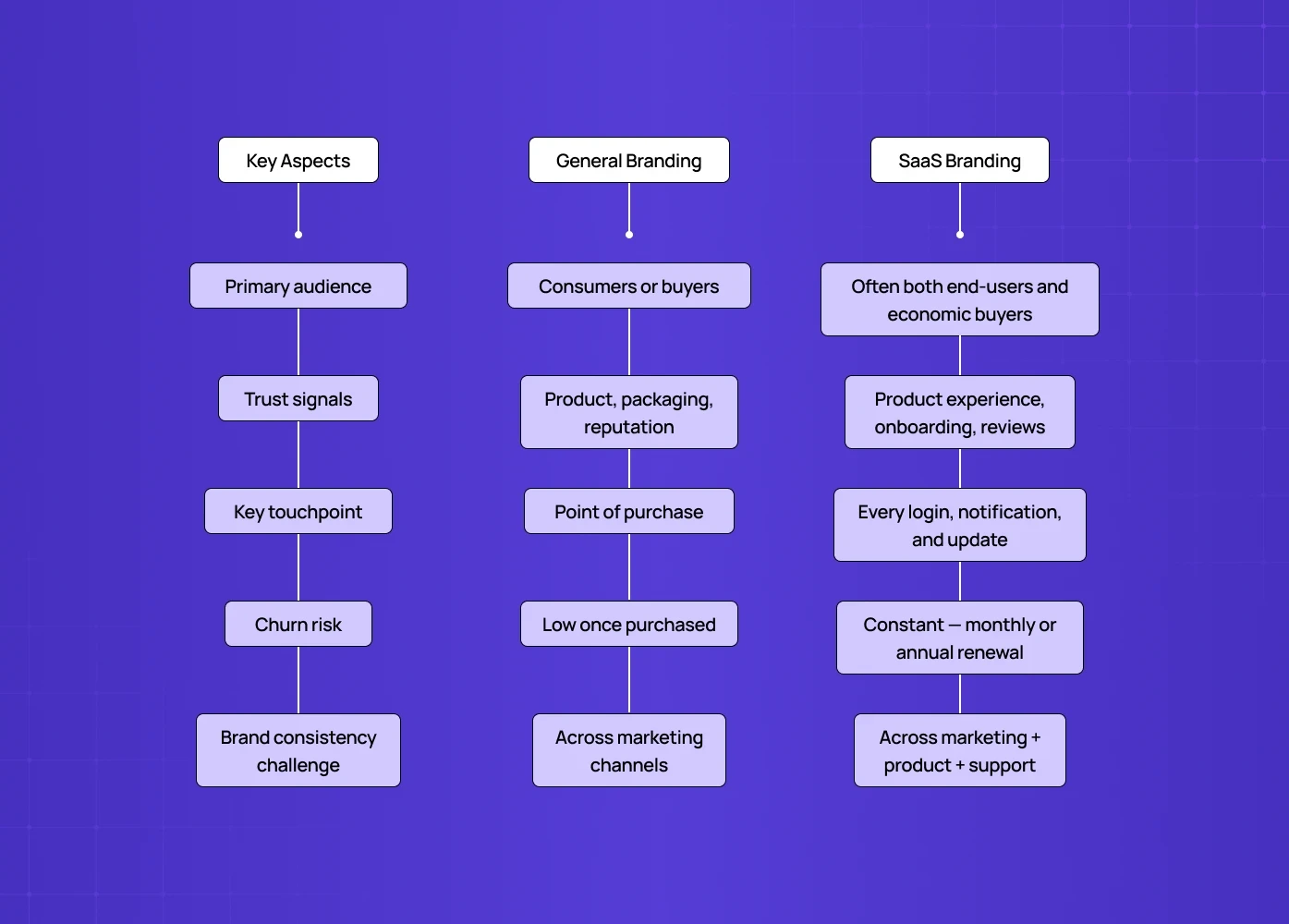
Key Aspects | General Branding | SaaS Branding |
Primary audience | Consumers or buyers | Often both end-users and economic buyers |
Trust signals | Product, packaging, reputation | Product experience, onboarding, reviews |
Key touchpoint | Point of purchase | Every login, notification, and update |
Churn risk | Low once purchased | Constant — monthly or annual renewal |
Brand consistency challenge | Across marketing channels | Across marketing + product + support |
The fundamental difference: In SaaS, users live inside your brand — every session is a brand experience, which is why the product design layer is not separate from the brand strategy. It is part of it. The SaaS UX and brand design guide covers how those two disciplines work together in practice, from information architecture through to the micro-interactions that reinforce or undermine the brand promise.
The Core Elements of a Strong SaaS Brand
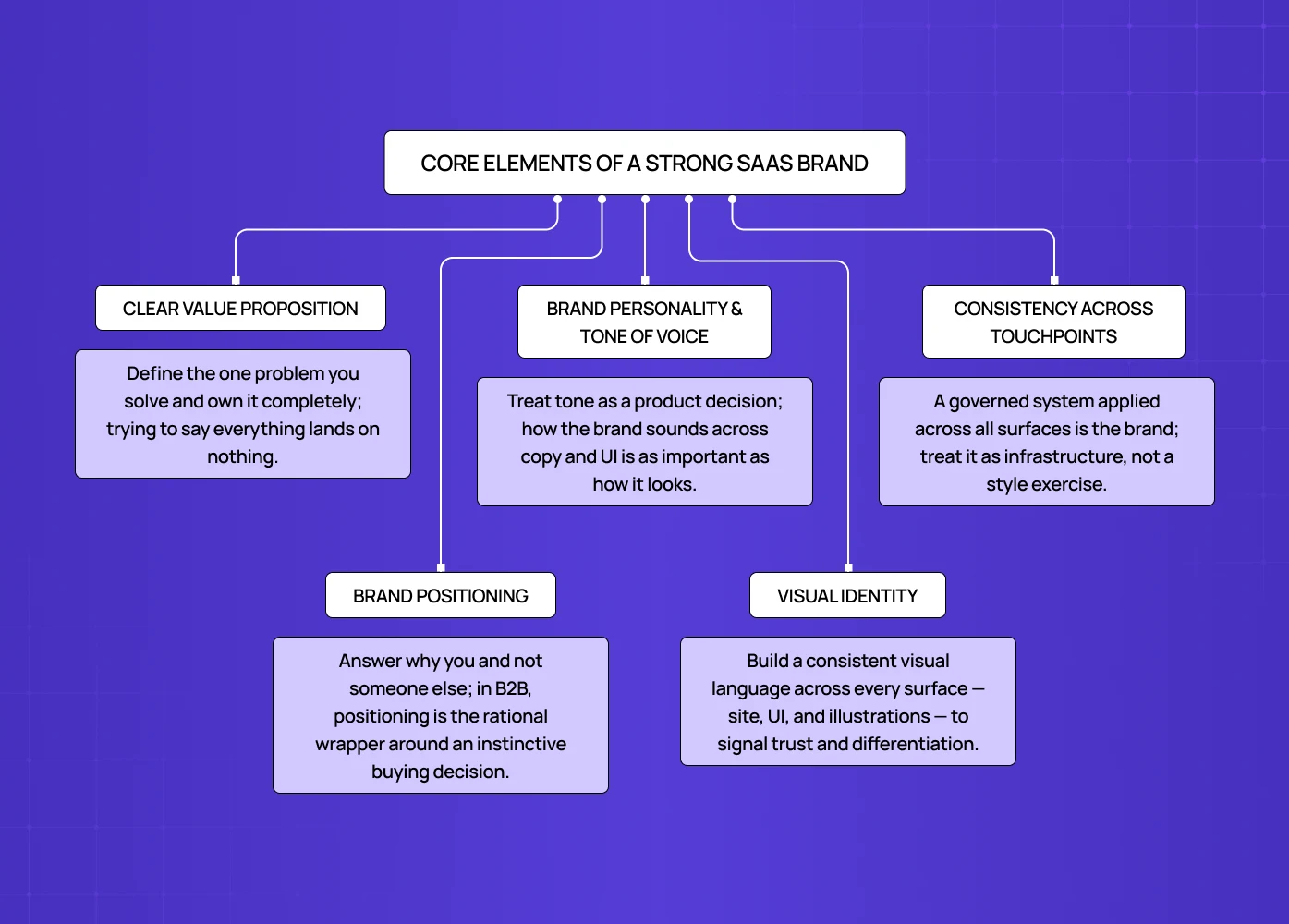
1. A Clear Value Proposition
Define the single problem you solve and for whom — before anything visual, the same first move that anchors any small business brand strategy.
The best SaaS branding examples say exactly one thing and own it completely: Notion's "the connected workspace," Figma's "where teams design together"
Most SaaS companies try to say five things and land on nothing
2. Brand Positioning
Answers the question no founder wants to answer directly: why you and not someone else? — which vertical SaaS brands answer most cleanly by owning one industry rather than competing on features across all of them.
For B2B SaaS branding in particular, positioning matters more than aesthetics — enterprise buyers make rational justifications for emotional decisions
Your brand positioning is the rational wrapper around what is often an instinctive preference
3. Brand Personality and Tone of Voice
Governs how the brand behaves in copy, UI microcopy, error states, and onboarding flows
Tone of voice is the most underinvested element of SaaS brand guidelines — most teams define it once in a document that gets ignored
The teams that get it right treat tone as a product decision, not a marketing one — the words inside the product are part of the brand, and the same discipline applies to colour: teams that need more visual range than a single accent can carry benefit from understanding a palette beyond one hue before those decisions get made inconsistently across product and marketing.
4. Visual Identity
SaaS visual identity covers the full visual language — marketing site, product UI, onboarding illustrations, empty states, loading screens, and notifications, often extended into data storytelling visuals for product education content and investor-facing materials where the same brand voice needs to carry through data-heavy formats.
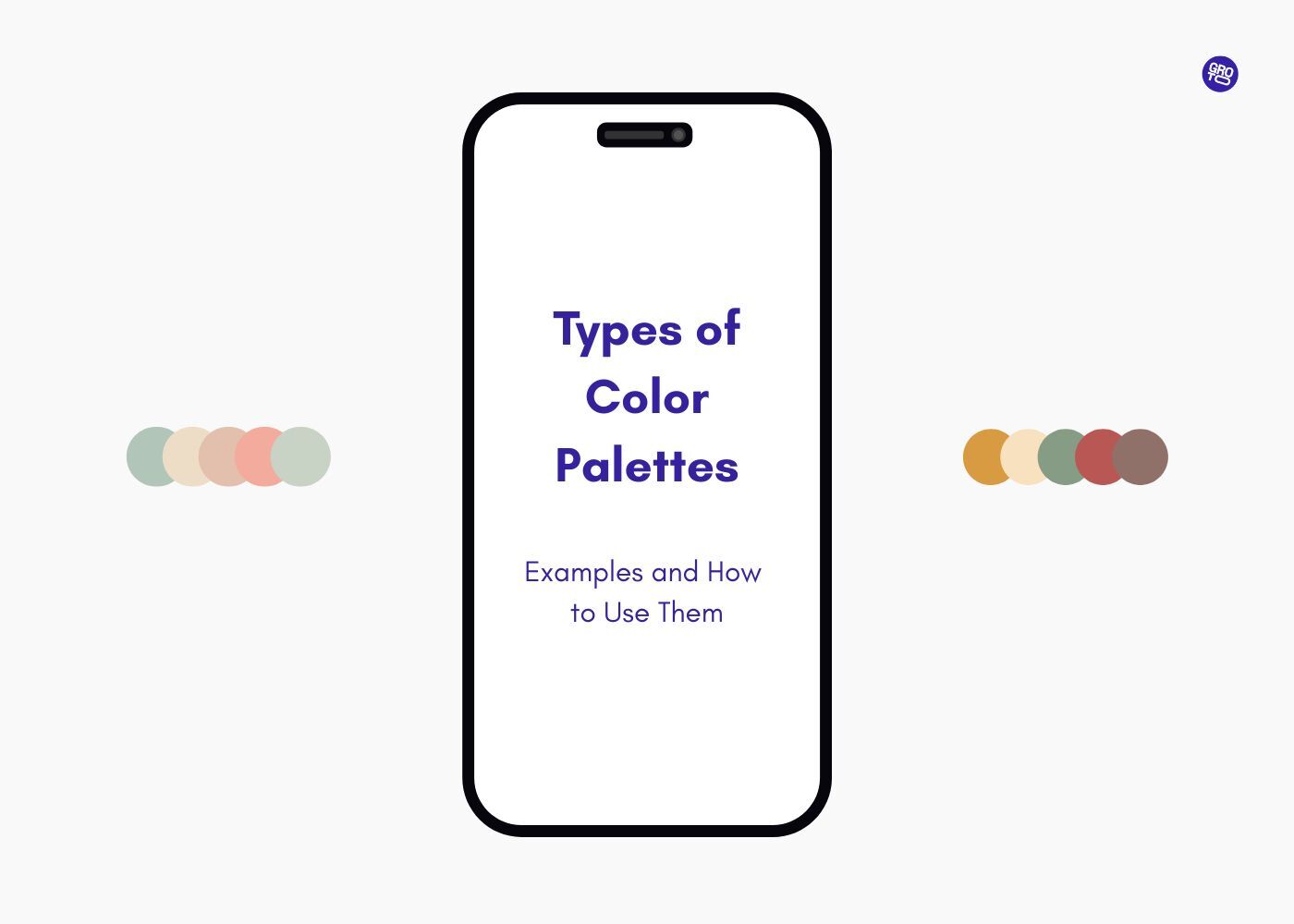
Colour is where coherence breaks down first — SaaS brand colour palette selection covers the six palette types and how each affects hierarchy, accessibility, and brand perception across all surfaces
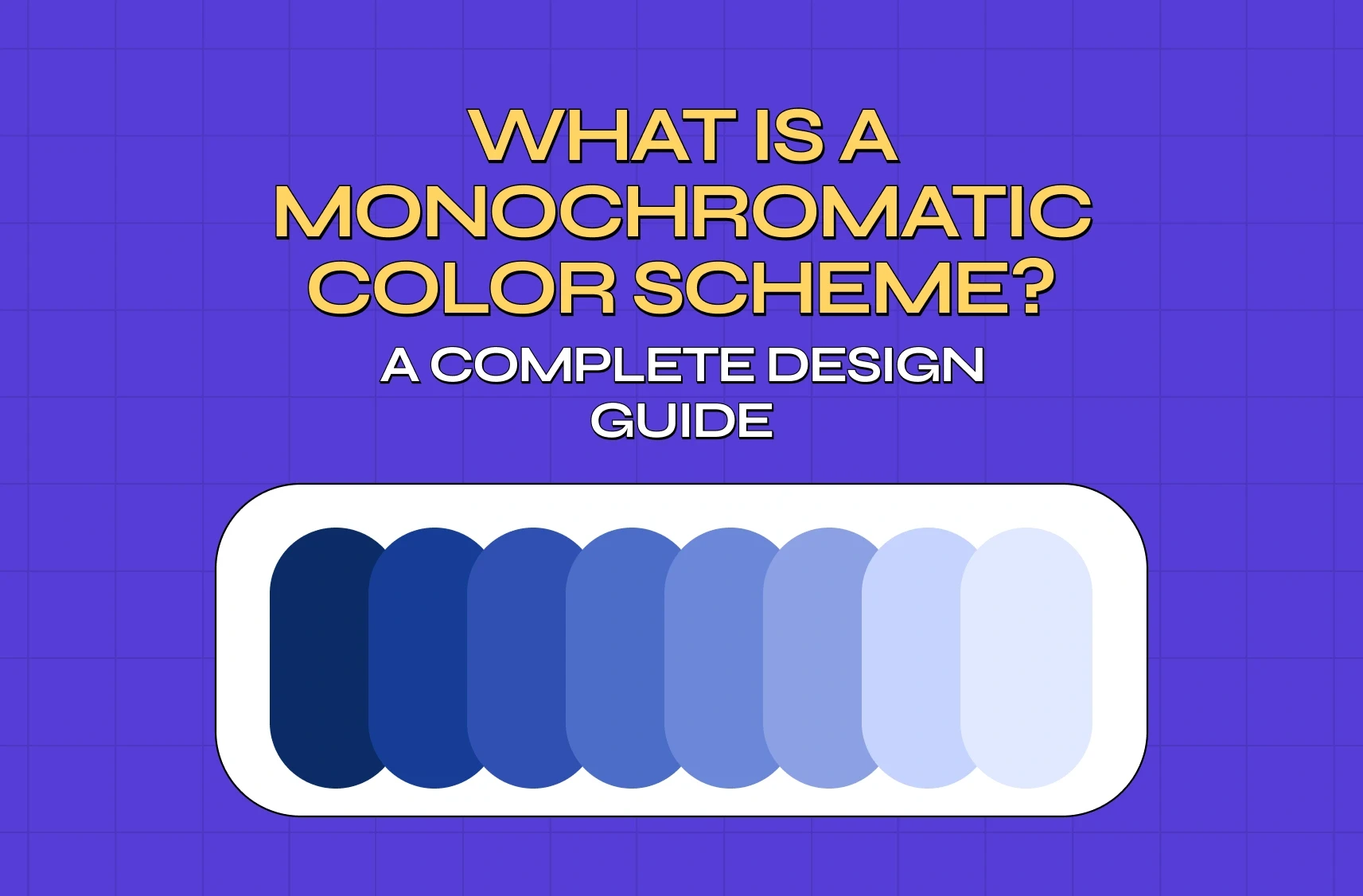
Teams that anchor their system around a monochromatic brand palette often find it easier to maintain consistency across marketing, product UI, and notifications because the single-hue constraint removes the decisions that cause drift.
For AI SaaS branding, visual identity has become a key differentiator — as AI features become table stakes, brand is what makes one product feel trustworthy and another feel experimental
This is brand experience in SaaS products at its most consequential — the deliberate shaping of every touchpoint so each reinforces the same emotional impression, from the marketing site to a processing screen
5. Consistency Across Every Touchpoint
A colour palette is not a brand — a governed system applied across all surfaces is
Teams that get this right treat it as infrastructure, not a style exercise
SaaS design systems for brand consistency shows how to build that component architecture so the brand scales without fracturing when new designers join or new features ship
SaaS Branding vs. SaaS Marketing
These two disciplines operate together but toward different ends.
Aspects | SaaS Branding | SaaS Marketing |
Goal | Build perception and emotional connection | Generate demand and convert it |
Timeline | Long-term — compounds over months and years | Short-term — optimised for immediate outcomes |
Measures success by | Brand awareness, sentiment, retention, word-of-mouth | Leads, conversions, CAC, revenue events |
Impact on acquisition | Reduces CAC over time as brand does the selling | Directly drives acquisition through campaigns |
What happens without it | Products are hard to differentiate — users churn faster | Pipeline dries up without active spend |
The mistake most early-stage SaaS teams make is investing heavily in marketing while treating brand as something to "do later" — and this shows up most painfully in go-to-market execution. SaaS GTM strategy and branding covers how to build brand thinking into the go-to-market plan from the start rather than retrofitting it after acquisition costs have already compounded.
Brand is what makes marketing more efficient, not less necessary.
Best SaaS Branding: What the Good Ones Have in Common
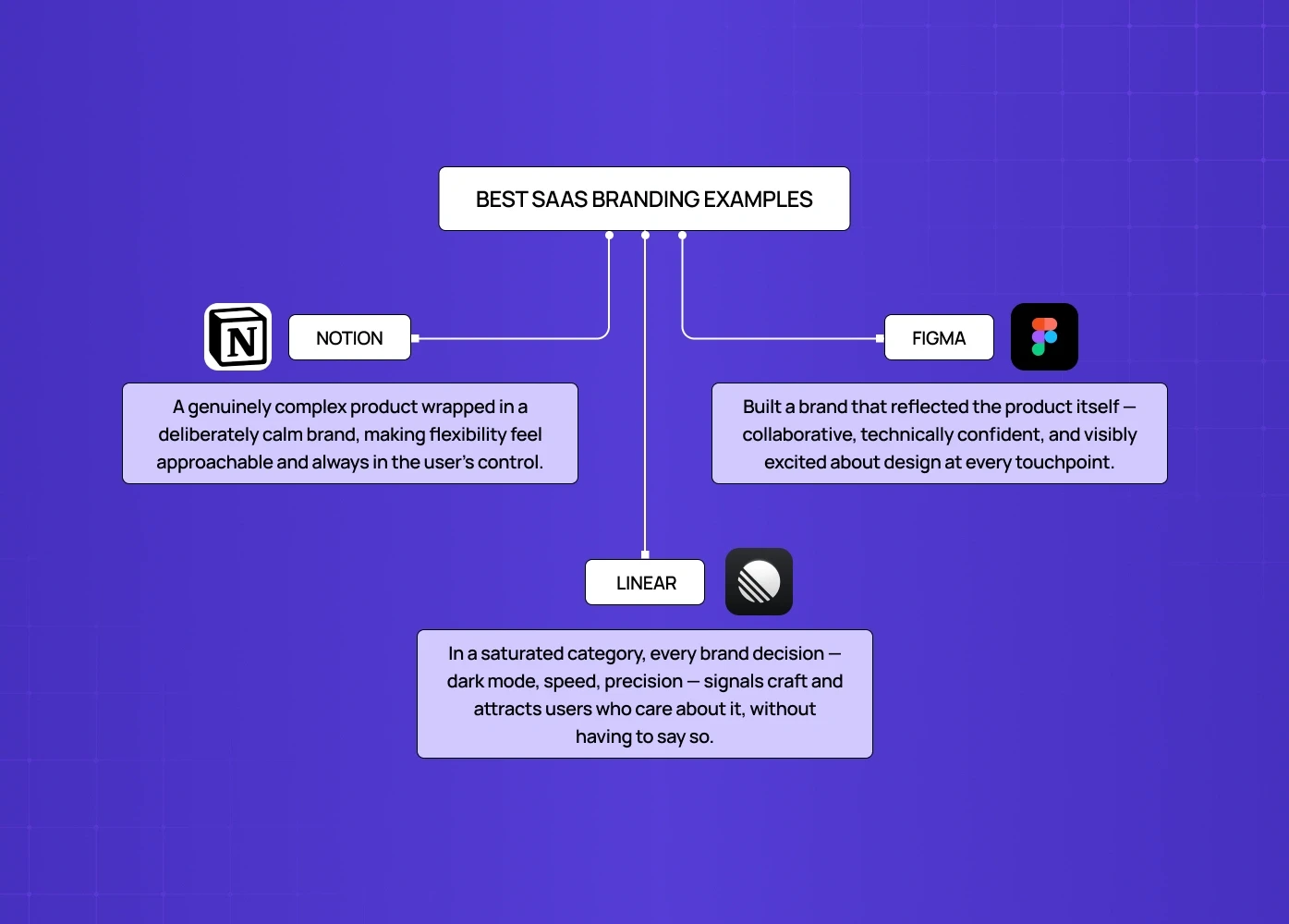
The best SaaS branding examples don't share a visual style. They share a discipline.
1. Notion
The product is genuinely complex — a flexible workspace that can be almost anything. The brand is deliberately simple and calm, doing the hard work of making complexity feel approachable — a restraint that extends to color, where applying a structured color ratio for SaaS brand palettes ensures dominant, secondary, and accent hues are weighted consistently enough that simplicity holds across the marketing site, the product UI, and every notification in between. Visual identity, tone, product UI, and marketing all reinforce the same message: this tool is in your control.
2. Figma
Built a brand that reflected its actual product character — collaborative, open, technically confident
The brand felt like it came from people who used the product themselves, not managed from outside it — a result that's hard to outsource entirely to brand visual execution teams without embedding them deeply enough in the product to absorb that authenticity.
Every touchpoint felt genuinely excited about design, which is exactly what the product enables
3. Linear
A project management tool in a saturated category that attracted a following before most people had used it
Dark mode by default. Fast, spare, precise — every brand decision signals the same thing, including its use of minimalist illustration systems that reinforce restraint rather than competing with the product's spare visual language.
Built for teams that care about craft, and the brand communicates that without having to say it
What connects them: the brand and the product feel like they came from the same conversation.
How We Approach SaaS Brand Design at Groto
At Groto, we don't treat SaaS branding as a marketing layer separate from the product. We treat it as a design problem — one that starts with research and ends with a system that governs how the brand behaves across every surface, and it's the lens we'd urge any founder scanning branding agencies for startups to apply.
Our process:
Start with positioning, not aesthetics — before opening Figma, define what emotional territory the brand should occupy. That emotional target is the design philosophy behind SaaS brands that separates teams making consistent decisions under pressure from those relitigating the same debates every sprint.
Build the brand and the product UI together. The brand style guide and the product design system should reference each other. Colour decisions made for the marketing site have implications for the product interface. We make those decisions once, not twice — which is part of why working with a best design subscription agency model can give SaaS teams the ongoing design continuity that one-off project engagements rarely sustain.
Test it in context. A brand that looks great in a Behance presentation but falls apart inside the actual product hasn't been designed — it's been styled. We validate brand decisions in the contexts where users will actually encounter them.
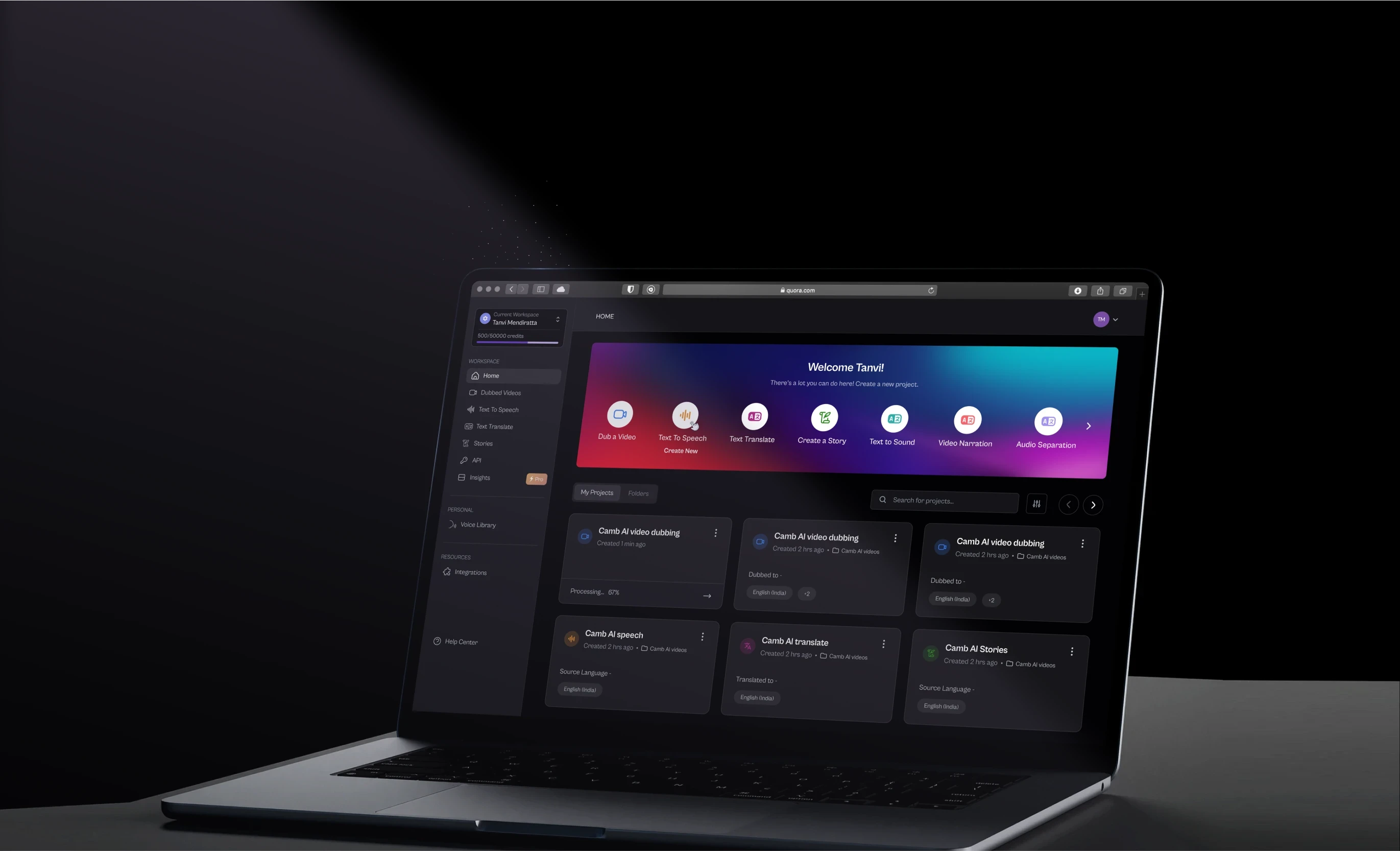
When we redesigned Camb.ai — an AI dubbing platform operating across 140+ languages — the brand challenge wasn't just visual. It was building trust in a category (AI content manipulation) where users arrive skeptical. Every brand decision, from the tone of the marketing copy to the design of the processing screen inside the product, was made with that trust challenge in mind.
For B2B SaaS branding specifically, we see the same pattern repeat: the brand needs to speak to two audiences simultaneously. The end-user needs to feel confident and capable. The economic buyer — the person who signs the contract — needs to feel that the vendor is credible, stable, and worth the procurement conversation.
Those two audiences have different trust signals. Getting B2B SaaS branding right means designing for both without feeling like you're trying to please everyone.
Common SaaS Branding Mistakes Worth Avoiding
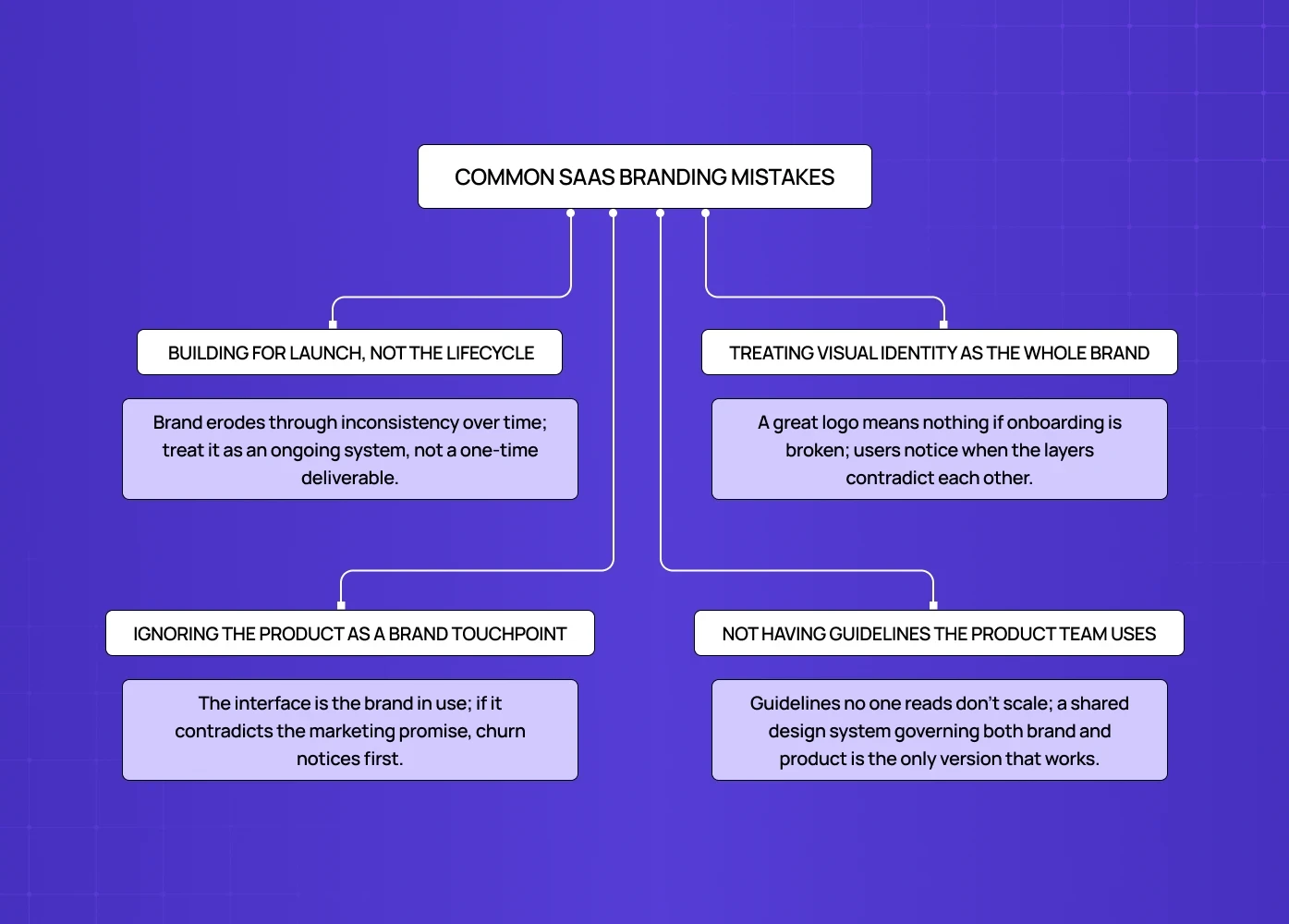
Building brand for the launch, not the lifecycle:
Most brand investment happens at launch, then stops
Brand erodes through accumulated inconsistency over time — not one bad decision, and by the time the drift becomes obvious, a full brand overhaul is often the only way to reset perception.
The best SaaS brands treat brand as an ongoing system, not a deliverable
Treating visual identity as the whole brand:
A well-designed logo on top of a broken onboarding flow is not a strong brand. Inconsistent tone, generic support emails, and poor UX undermine visual quality — a failure mode that becomes especially costly when examining SaaS branding for regulated products, where users arrive already skeptical and contradictions between the marketing promise and the product experience damage credibility faster than in most other categories. Users experience the brand holistically — they notice when the layers contradict each other.
Ignoring the product as a brand touchpoint:
The interface is the brand in use — if it contradicts the marketing site's promise, churn notices before the brand team does
Every session inside the product is a brand experience, not just the homepage
SaaS product design and brand alignment covers the specific design decisions that either reinforce or undermine the brand promise across every interaction
Not having brand guidelines the product team actually uses:
Guidelines that live in a PDF no one reads are not guidelines — they're documentation
A functioning brand-product system shared across brand and product is the only version that scales — one that encodes colour tokens, component behaviour, and interaction rules so the brand governs the product automatically rather than requiring manual enforcement.
SaaS brand guidelines only work when they govern the product, not just the marketing materials
Conclusion: Brand Is What Survives the Feature Wars
Competitors can copy your features and match your pricing — what they can't copy is how people feel about you, and that feeling compounds across hundreds of interactions most teams never think of as brand work
A loading screen, an error message, the tone of a support reply, the illustration on an empty state — none of these feel like branding decisions, but each one either adds to or subtracts from the overall impression
The SaaS companies building lasting businesses treat brand the way they treat engineering — as infrastructure that needs to be maintained, not decoration applied at launch and left alone
Brand and product have to tell the same story, built from the same brief — when they don't, users feel the gap even when they can't name it, and it shows up in churn before it shows up in any brand review
Start with positioning, not aesthetics — define what emotional territory the brand should occupy before opening Figma, because every visual and verbal decision downstream is easier when that's clear
A strong brand reduces acquisition cost, improves retention, and creates the conditions where word-of-mouth happens naturally — it makes marketing more efficient, not less necessary
Our clients have collectively raised $8M+ post-redesign — that doesn't happen from a logo refresh, it happens when the brand and the product tell the same story. If you need to make that case internally with numbers, ROI of SaaS brand investment gives you the metrics frameworks and ROI calculations to justify the investment before the next design conversation turns into a budget debate.
Building a SaaS product and want to get the brand layer right before it scales? We work with SaaS founders and product teams on brand strategy, visual identity, and product design — all from the same studio, on the same brief.