The gap between great SaaS products and mediocre ones often comes down to one thing: how clearly product management defines the problem before UX design begins. Here's the framework that changes how teams work together.
When product management and UX design misalign, great products don't ship — here's why.

Almost every SaaS product team has been here: the designer comes back with something completely different from what was expected. Feedback misses the design intent. The sprint runs over. The feature ships late — and within a week, users are already confused by the interface.
This isn't a talent problem. It's a process problem.
The relationship between product management and UX design is one of the biggest factors in how good a SaaS product actually turns out — and it breaks down more often than it should. According to McKinsey, companies that excel at design outperform industry benchmarks by 2:1 in revenue growth. The gap between design-led teams and the rest isn't about hiring better designers. It's about how well product management and UX design thinking connect before work even begins — the UI/UX strategy framework top agencies use to drive growth is the structural answer to that connection problem.
At Groto, we've worked with SaaS product teams across fintech, edtech, HR, and analytics platforms. The single pattern that predicts shipping quality more reliably than designer skill, tool choice, or sprint velocity is this: does product management know how to brief a designer?
TL;DR
Product management and UX design fail each other not because of skill gaps — but because of process gaps. When product management hands designers a vague brief, designers fill the gaps with assumptions. When there are no shared success criteria, design reviews become subjective. When engineering isn't looped in early, handoff creates a third round of costly negotiation.
The fix is a structured three-part brief — Intent, Constraints, and Success Criteria — written before any design work begins. Pair that with progressive design reviews at skeleton, direction, and final spec stages, and a habit of resolving disagreements with user evidence rather than seniority. Close the loop 30 days post-launch by measuring outcomes against the original brief.
Better collaboration between product management and UX design doesn't require restructuring your team. It requires better inputs upfront.
What Is Product Management — and How Does It Connect to UX Design?
Product Management as a Discipline
Product management is the function responsible for deciding what a product needs to do and why — the definition a requirements doc exists to capture. It sits at the intersection of business goals, user needs, and technical feasibility — and is responsible for making sure all three stay aligned throughout the product lifecycle.
In practice, product management involves:
Roadmap ownership — deciding which problems to solve, in what order, and why; the guide on how to build a product design roadmap covers what this looks like when design and PM ownership are properly connected
Discovery and research — understanding user problems through qualitative and quantitative inputs; for teams building AI-powered features, the guide on how to develop an AI-powered SaaS product covers the additional discovery complexity this introduces
Prioritisation — making trade-off decisions about what to build now, what to defer, and what to cut; for early-stage SaaS teams, the guide on MVP UX design for SaaS covers how these decisions shape initial product scope
Stakeholder alignment — communicating product direction to leadership, engineering, marketing, and design, including the SaaS go-to-market strategies that depend on PM and design being aligned before launch
Outcome accountability — measuring whether shipped features actually solve the problems they were built to address
Product management doesn't build the product — but it defines the conditions under which the product gets built well.
Where UX Design Fits In
UX design is the function that determines how the product does what product management has decided it needs to do — a distinction explored in depth in UX design vs. product design: what your business actually needs. It translates problem statements, user research, and constraints into:
Interaction flows and navigation structures
Visual systems and interface components
Tested, validated screen designs ready for engineering
These two disciplines are deeply dependent on each other — for the full scope of what the UX side involves, the complete guide to SaaS UX design is the right reference. When product management defines the what clearly — with evidence, constraints, and measurable outcomes — UX design can focus its creative energy in the right direction. When the what is vague or incomplete, designers fill the gaps with assumptions. Some are right. Many are not.
Why Getting This Right Matters
Revenue impact: McKinsey's Design Index shows design-mature companies grow revenue and shareholder returns twice as fast as industry peers — the business case for design-led leadership, especially in AI products where design decides trust.
ROI of UX: Forrester research puts the return on UX investment at up to $100 for every $1 spent — but only when design work is pointed in the right direction; the SaaS product design best practices that realise that return are worth understanding before briefing begins
Cost of fixing design late: IBM research shows that addressing a design problem post-launch costs 100x more than catching it during the design phase
When product management and UX design collaboration works, products ship faster, require fewer revisions, and actually solve user problems. When it doesn't, you get expensive rework, UX debt, and features that users quietly abandon.
The Three Most Common Ways Product Management and UX Design Collaboration Breaks Down
Most PM-designer friction traces back to three specific failure patterns — not personality clashes or skill gaps.
1. Outcomes Are Specified Without Intent
Product management specifies the output — a new dashboard view, a redesigned onboarding step — without explaining the underlying problem. The designer optimises for the stated output, not the actual user need.
The result: A visually updated version of the wrong thing.
Example: "Redesign the integration step" tells a designer what to build. "Users are dropping off at the integration step because they don't understand what they're connecting" tells a designer what to solve.
2. Constraints Are Assumed, Not Declared
Technical limits, timeline pressure, brand requirements, and scope boundaries live inside product management's awareness — but rarely get handed to the designer upfront. The designer works without this context and produces something that looks right but can't be built in the available sprint.
The result: A negotiation that should have happened before design began, now happening after it.
3. No One Agrees on What "Good" Looks Like
Without shared success criteria, design reviews become subjective. Product management evaluates against a mental picture; the designer defends craft choices. Both are applying legitimate but incompatible standards — which is why grounding both disciplines in a shared UX strategy is the structural fix, not just better communication.
The result: Circular feedback, frustrated teams, and designs that satisfy no one.
What Product Management Needs to Understand About UX Design
Good collaboration requires product management to have an accurate picture of what the design process involves — not to do design work, but to direct it correctly.
Design Is Not Visual Execution
A designer's job is to take a problem statement and constraints, then produce something better than what was imagined — something rooted in how actual users think and behave; the full picture of what product designers do in product design development gives PMs the context they need to brief correctly.
Showing up to a design review expecting to see a specific idea rendered on screen is a category error.
If the design looks exactly like the sketch product management had in mind, one of two things happened:
The problem was unusually well-understood from the start
The brief was under-specified, and the designer produced exactly what they were told — not what the user needs
UX Research Is Not Optional
When a designer asks to review session recordings or run user interviews before starting, that's not scope inflation. That's the difference between designing for a hypothetical user and designing for the actual user.
When we worked with Camb.ai on their AI dubbing platform — where users were struggling to find features and unlock the platform's full potential — our team began with a 3-day hands-on trial of the product itself. That direct experience surfaced friction points a written brief would never have captured. The redesign addressed real pain points, not assumed ones.
Similarly, on our work with PolicyBazaar — where users were getting lost in the home insurance journey and dropping off before completing sign-ups — the solution required understanding where and why users were losing confidence in the flow, not just redesigning the screens that looked problematic; a slow path to value is what drains that confidence before users ever complete.
Engineering Needs to Be in the Room Earlier
Product management teams that manage the design relationship without looping in engineering often get surprised at handoff. Developers surface constraints the design didn't account for — and now everyone has to go back.
The fix is structural: bring engineering into design reviews at the skeleton stage, not just at final handoff. Early engineering input costs an hour. Late engineering input costs a sprint — understanding the fundamentals of SaaS application development gives PMs the technical vocabulary to have this conversation with engineering before the design review, not during it.
The PM Design Brief: A Framework for Briefing Designers That Works
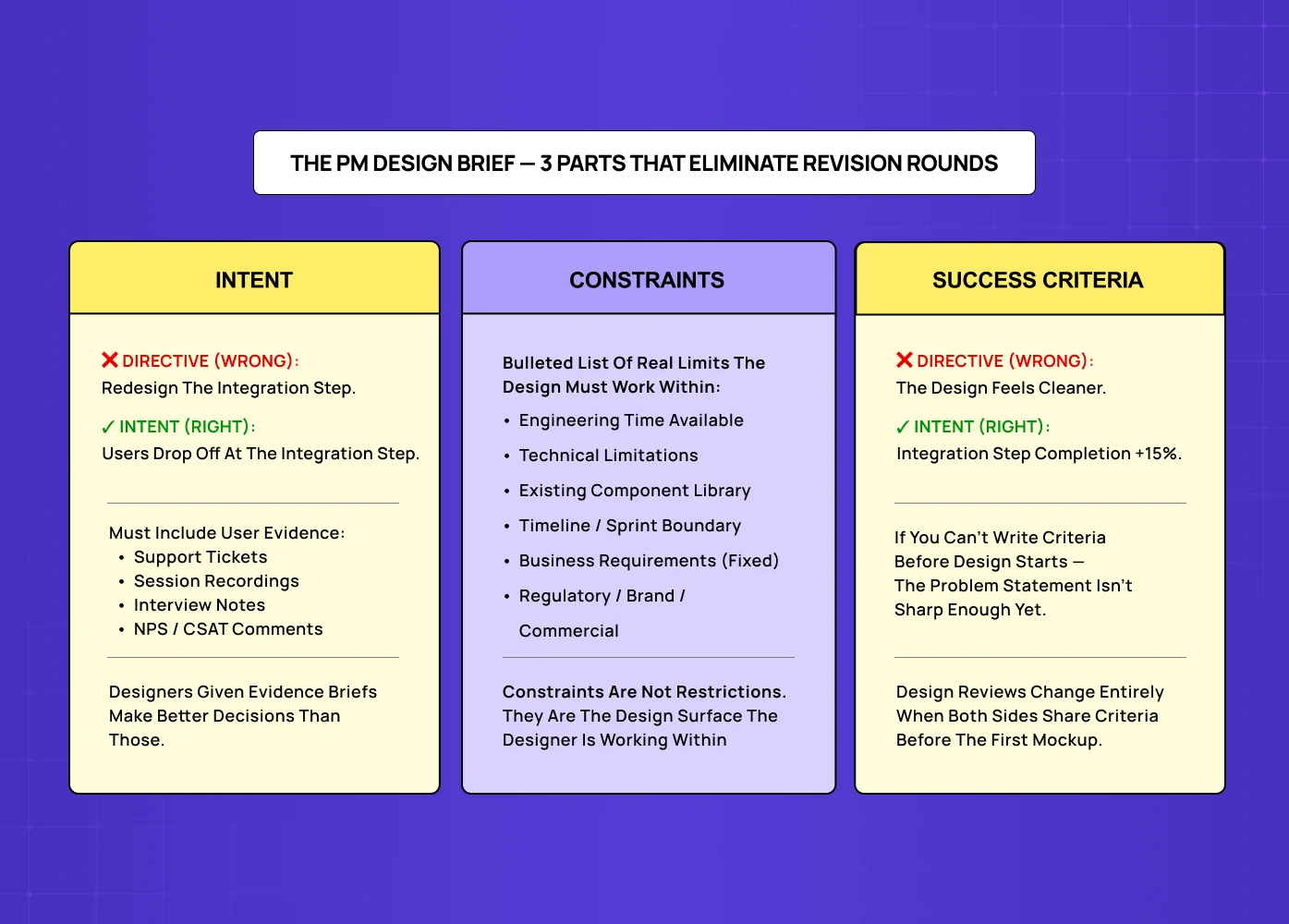
At Groto, we use a structured three-part format for design briefs. It takes about fifteen minutes to write and consistently eliminates one to two rounds of revision that most teams treat as a normal cost of doing business.
[Image: PM Design Brief Framework — Intent / Constraints / Success Criteria]
Part 1: Intent
What to write: One paragraph answering — what problem does this feature currently have, and what would change about user behaviour if you solved it?
This is a problem statement, not a feature description.
Directive (skips intent) | Intent Statement |
"Redesign the integration step" | "Users drop off at the integration step because they don't understand what they're connecting. If we solve this, we expect completion rates to increase." |
Include user evidence where possible: support tickets, session recordings, NPS comments, interview notes. Designers given evidence-backed briefs make better decisions than those handed conclusions.
Part 2: Constraints
What to write: A bulleted list of everything the design must work within.
Engineering time available for this sprint
Technical limitations (existing component library, backend constraints)
Timeline and release deadline
Fixed business requirements (regulatory, brand, commercial)
Constraints aren't creative restrictions — they define the surface the designer is working within. Declaring them upfront means design energy goes into solving the right problem in the right space, not producing work that can't ship.
Part 3: Success Criteria
What to write: Two or three measurable indicators that would confirm the design worked.
These should be behavioural, not aesthetic
"The percentage of users completing the integration step increases by at least 15%"
"The design feels cleaner"
If success criteria can't be written before design begins, that's a signal the problem statement isn't sharp enough yet. Return to Part 1.
When a designer receives a brief with all three parts, the design review conversation changes entirely. Instead of "this isn't what I pictured," the question becomes: "How does this solution address the drop-off evidence?" — a question that improves the design.
Design Reviews That Move the Product Forward
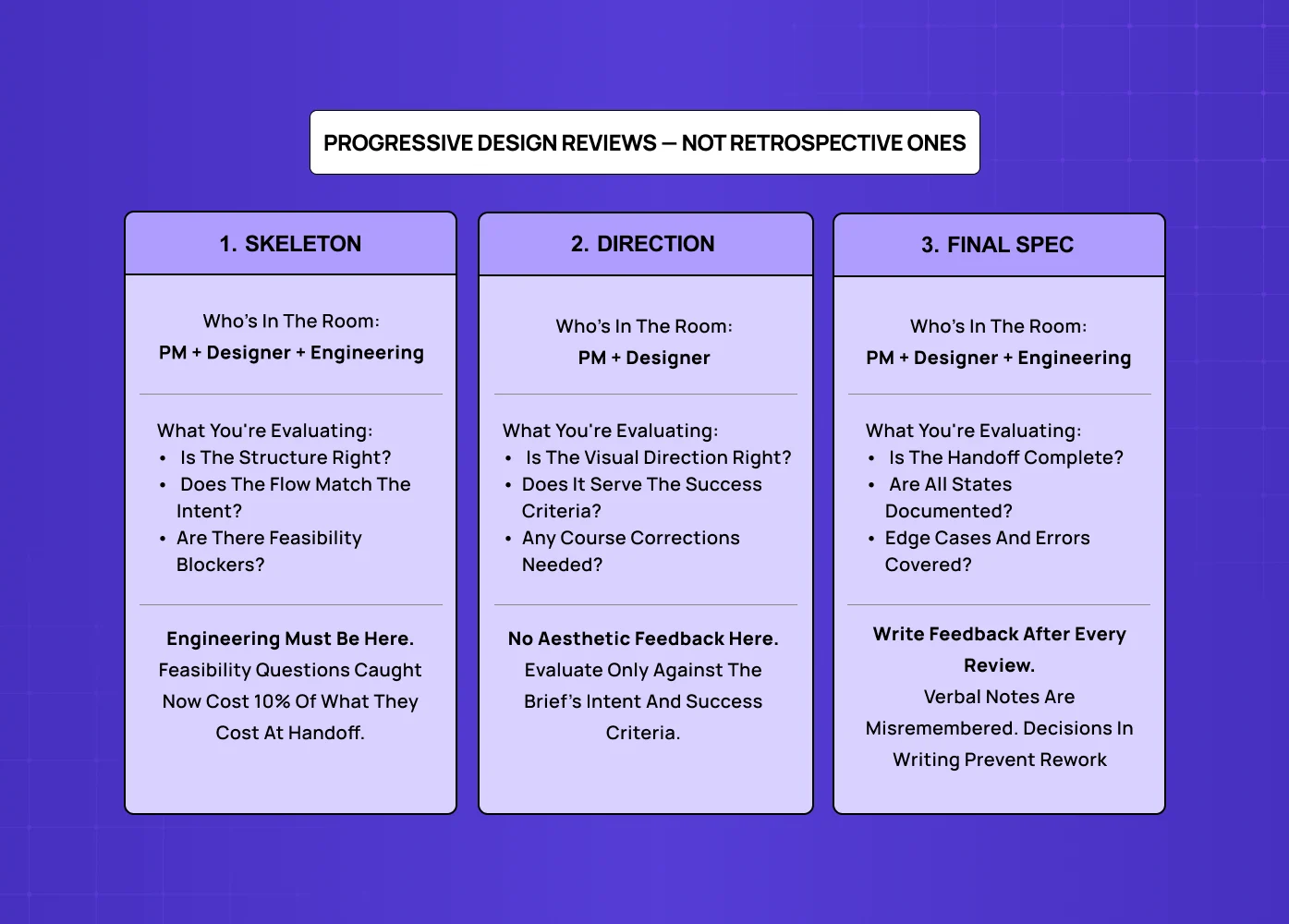
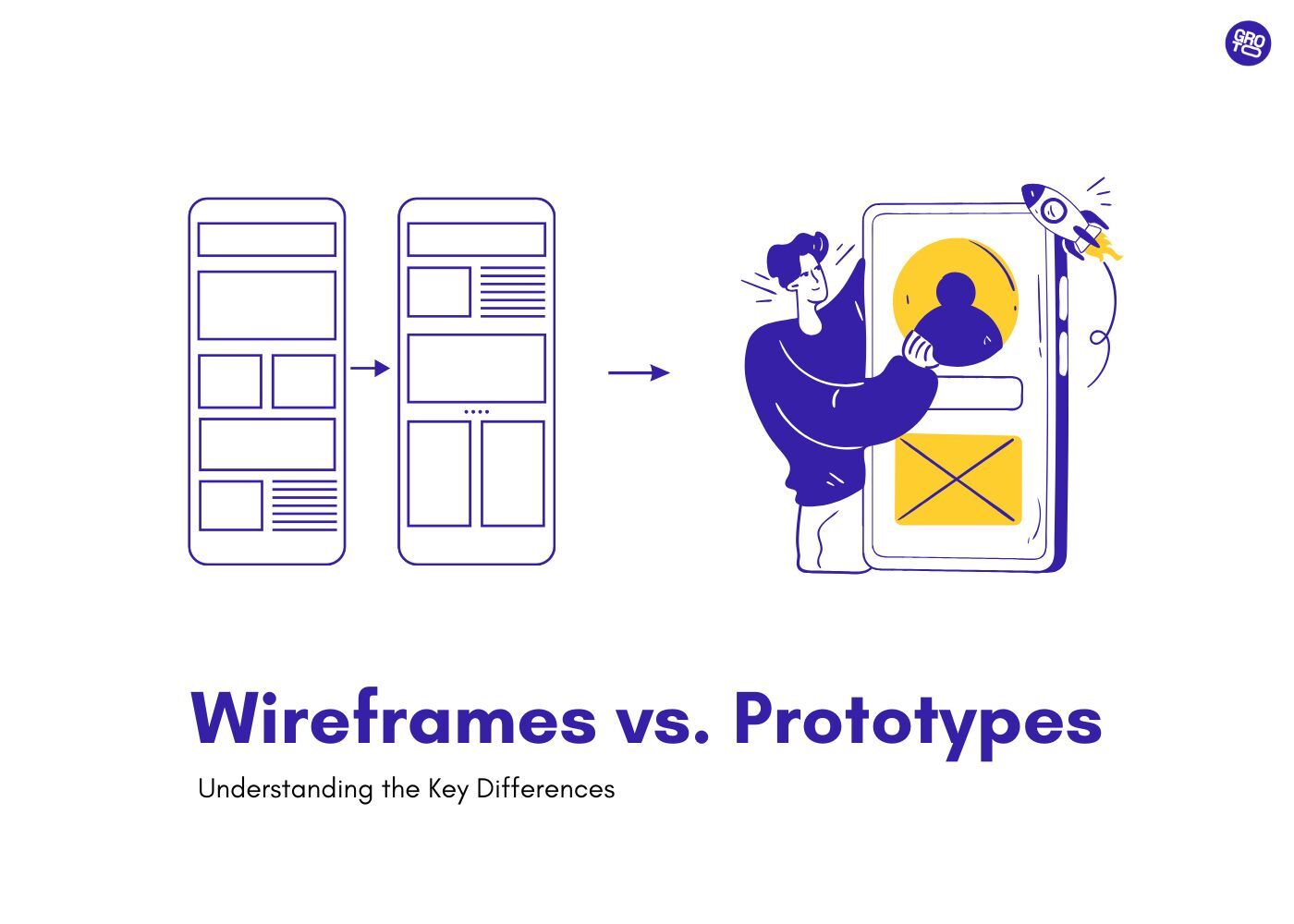
Most design reviews are retrospective: the designer presents finished work, product management reacts. The better format is progressive — reviews at three defined stages:
Stage | Who's in the Room | Question to Answer |
Skeleton / wireframe | PM + Designer + Engineering | Is the structure right? |
Direction / early visual | PM + Designer | Is the approach right? |
Final spec | PM + Designer + Engineering | Is the handoff complete? |
hy Progressive Reviews Work
Structural problems get caught before visual effort is invested
Engineering joins the skeleton review to flag feasibility issues before they become handoff blockers
Each stage has a limited, clearly defined scope — no one is reacting to colour choices when they should be evaluating flow
How to Evaluate Design in a Review
Evaluate against the success criteria in the brief — not aesthetic preference.
"Does this navigation structure reduce the cognitive load at the integration step?"
"Can we make the button more prominent?"
The first question improves the design. The second changes it — which is a different activity.
One practical habit: Document every review decision in writing immediately after the session. Verbal agreements get remembered differently by different people. A short written summary of what was decided and what's still open prevents the "I thought we agreed" conversation at the next review.
When Product Management and Designers Disagree
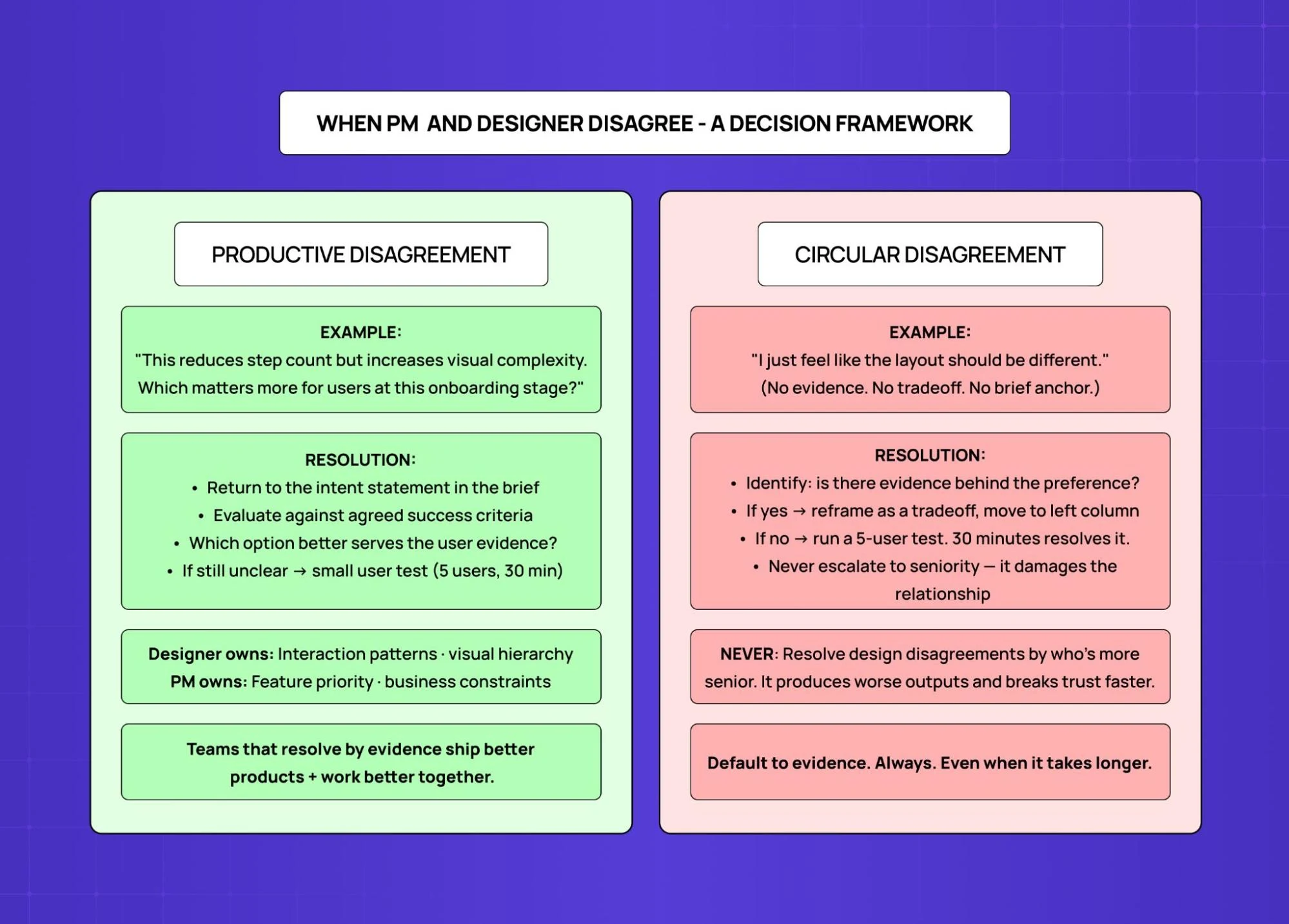
Disagreements between product management and designers aren't a sign something is broken — they're a sign both disciplines are engaged. The key is whether the disagreement is productive or circular.
Productive Disagreements (About Tradeoffs)
These can be resolved by returning to the brief.
Example: "This approach reduces the number of steps but increases visual complexity — which matters more for our users at this stage of onboarding?"
That question can be answered by:
Returning to the intent statement and success criteria
Running a small user test if the stakes are high enough
Circular Disagreements (About Preference)
These need evidence, not more debate.
Agree on a lightweight test: show both versions to five users in a 30-minute session
Teams that build the habit of resolving design disagreements with evidence ship better products — and maintain better working relationships
When a decision needs to be made without available evidence:
Default to the designer's judgement on interaction patterns and visual hierarchy
Default to product management's judgement on feature priority and business constraints
The one anti-pattern to avoid: Never resolve design disagreements by escalating to whoever is more senior. It produces worse outcomes and breaks trust faster than almost any other single habit in product-design collaboration.
The Feedback Loop That Compounds Over Time
Most teams skip this entirely — and it's one of the highest-value habits to build.
The 30-Day Post-Launch Review
After every significant feature ships, pull the data:
Activation rate for the new flow
Completion rate
Error rate and support tickets
Compare all of this against the success criteria from the original brief — for teams building out the full measurement layer, the guide on SaaS metrics covers the broader KPI framework these sit within.
If performance matches or exceeds criteria: document what worked. It's a pattern worth repeating on the next feature.
If it falls short: both the brief and the design are fair targets for retrospective analysis. Which assumption was wrong? Was the intent statement sharp enough? Did the constraints change during build?
This loop creates a shared design knowledge base over time. It also recalibrates product management's understanding of what good briefs produce — which makes the next brief better. Teams that build this habit ship features that measurably improve with each cycle. Teams that skip it restart from the same baseline every sprint.
Conclusion
Product management and UX design done well is one of the highest-leverage investments a SaaS team makes in product quality. Getting it right doesn't require restructuring the team or hiring more senior designers. It requires better inputs upfront — and a shared language for evaluating outcomes.
Key takeaways:
Product management defines the what and why — UX design defines the how. The quality of that handoff determines almost everything
The PM Design Brief — Intent, Constraints, Success Criteria — takes fifteen minutes to write and eliminates multiple revision rounds
Run progressive design reviews at skeleton, direction, and final spec stages — not just at the finished mockup
Evaluate design against success criteria, not aesthetic preference
Productive disagreements return to the brief; circular ones need a user test to resolve — never seniority
The 30-day post-launch review is where product management and UX design collaboration compounds over time
If your SaaS team is working through a redesign, a new onboarding flow, or a product area that needs a sharper brief before design begins — our discovery call is the right place to start.