Top 10 Web Design Agencies in 2026 (Compared by Price, Team Size and Best-Fit Client)

Top 10 Web Design Agencies in 2026 (Compared by Price, Team Size and Best-Fit Client)

Most lists of top web design agencies are paid directories or agencies ranking themselves. Compare 10 on price, team size and best-fit client, with one honest limitation each.

Top 10 Web Design Agencies in 2026 (Compared by Price, Team Size and Best-Fit Client)

Top 10 Web Design Agencies in 2026 (Compared by Price, Team Size and Best-Fit Client)

Most lists of top web design agencies are paid directories or agencies ranking themselves. Compare 10 on price, team size and best-fit client, with one honest limitation each.

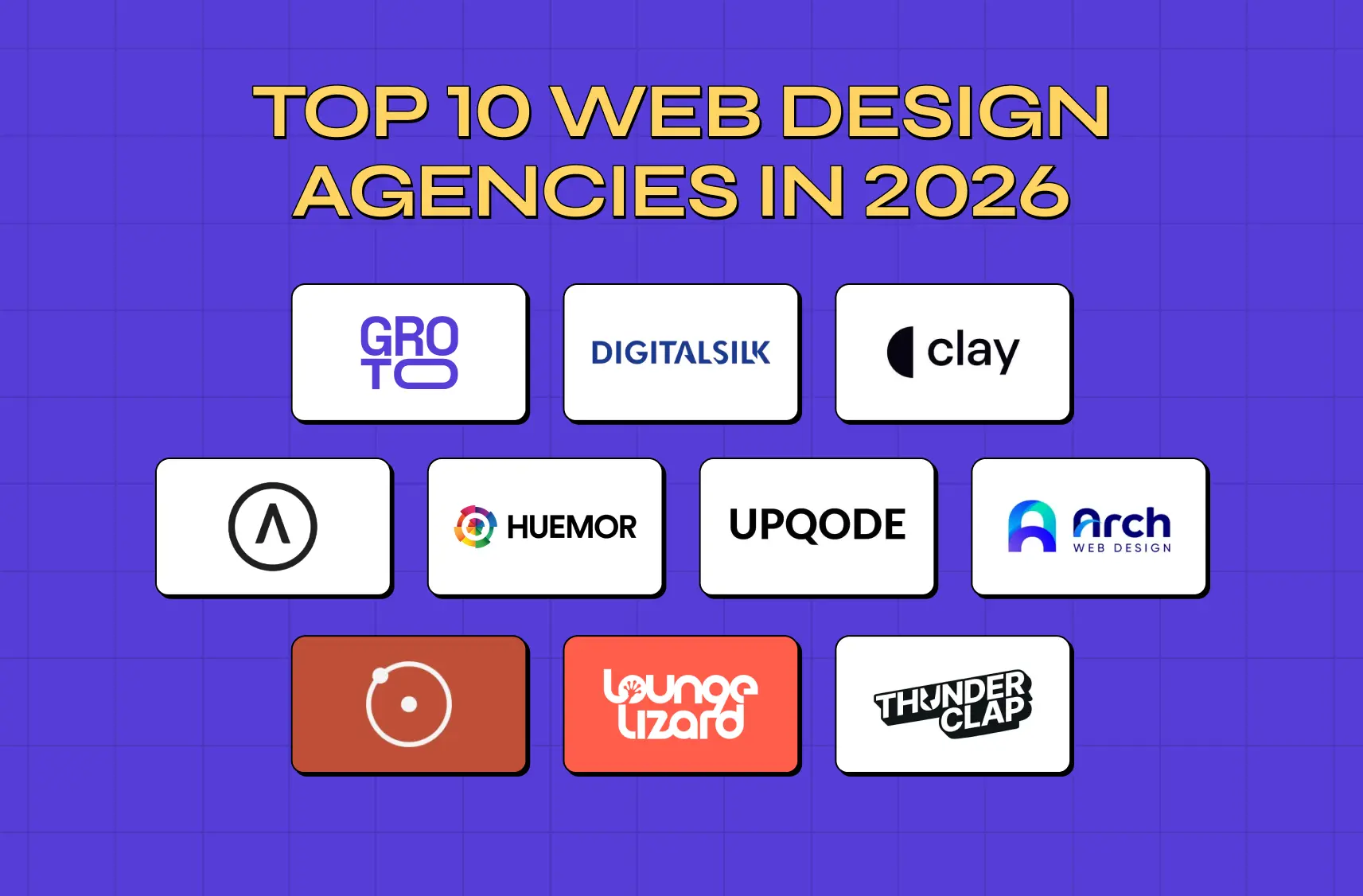
Most lists of top web design agencies are paid directories or agencies putting themselves at number one. This guide compares 10 agencies on price, team size and best-fit client, shows the criteria we used, and gives you an honest limitation for every single one.

Ten web design agencies, compared honestly. Including what each one gets wrong.

Most lists you'll find for this search are one of two things. They're directories that rank whoever pays for placement, or they're agencies putting themselves at number one and hoping you don't notice.

We're an agency, and we've put ourselves on this list. So let's get that out of the way first: Groto is entry number one, we're upfront about why, and every other agency here is judged on the same six criteria with the same fields filled in. We've also written an honest limitation for each of them, including ours. If a list can't tell you who an agency is wrong for, it isn't telling you much.

We looked at roughly 40 agencies working with US clients, checked published client work, pricing transparency, team size, and what happens after a site launches. Ten made it. You'll leave this page with a shortlist of three, a realistic idea of what your project costs, and the questions that separate a real partner from a good pitch deck.

TL;DR

  • Best for SaaS and AI products: Groto

  • Best for enterprise budgets: Digital Silk

  • Best for brand-led, high-craft work: Clay

  • Best for nonprofits: UPQODE

  • Best for content-driven marketing sites: Orbit Media

How we picked these agencies

Six things, applied the same way to all ten.

  • Verified client work. Named clients we could confirm, not a logo wall.

  • Pricing transparency. Agencies that publish a starting point, or will give you one on a first call, rank above those that won't.

  • Industry fit. Depth in a sector beats a portfolio that covers everything shallowly.

  • A real process. Discovery and research, a documented strategy step, design, then testing and handover. If you want the standard we hold this against, Figma's UX Strategy Report explainer is a good reference point.

  • Engineering awareness. Whether the design team understands what gets built, or throws files over a wall.

  • Post-launch support. What happens in month two, and what it costs.

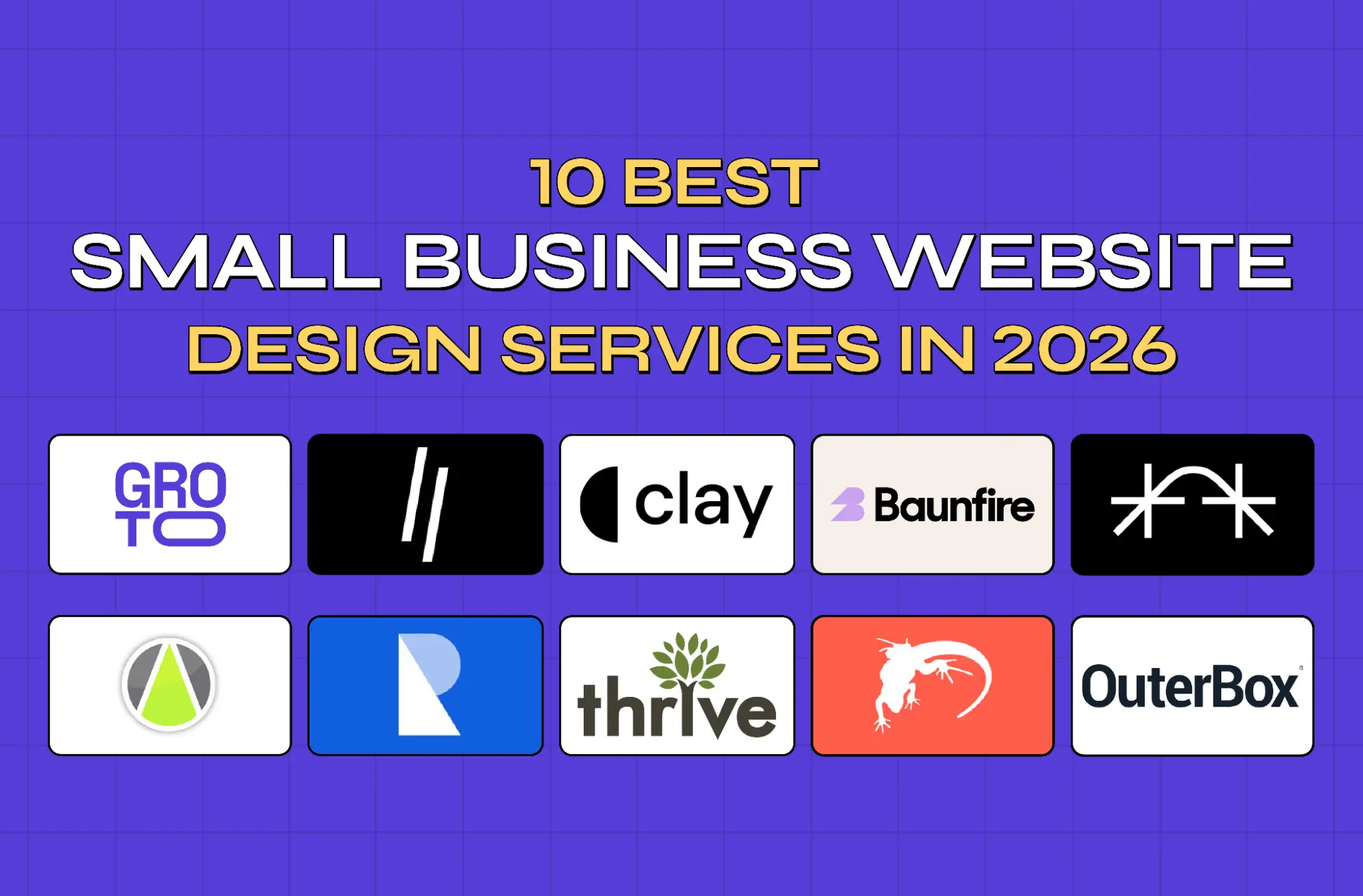
The 10 agencies at a glance

Agency

Best for

Team size

Typical starting price

Location

Groto

SaaS and AI products, Seed to Series B

Under 50

Project-based, free audit first

India

Digital Silk

Enterprise builds

100–249

$150/hr band

New York

Clay

Brand-led flagship sites

50–99

Premium, six figures

San Francisco

Baunfire

Mid-market product marketing sites

50–99

$150/hr band

San Jose, CA

Huemor

B2B companies with complex offerings

50–99

$150/hr band

New York

UPQODE

Nonprofits and mission-driven orgs

50–99

$75/hr band

Nashville, TN

Arch Web Design

Early-stage SaaS

Under 50

$150/hr band

San Diego

Orbit Media

Content and SEO-led marketing sites

51–200

$150/hr band

Chicago

Lounge Lizard

Interactive and campaign work

50–99

Mid-market

New York

The ThunderClap

Webflow builds, fast turnarounds

Under 50

Lower mid-market

Bangalore, India

Rates are starting bands, not quotes. What you actually pay depends on scope, and we cover that below. If location matters to you, we've also covered the DC market separately, including one DC-based web design studio worth knowing.

The top 10 web design agencies in 2026

1. Groto
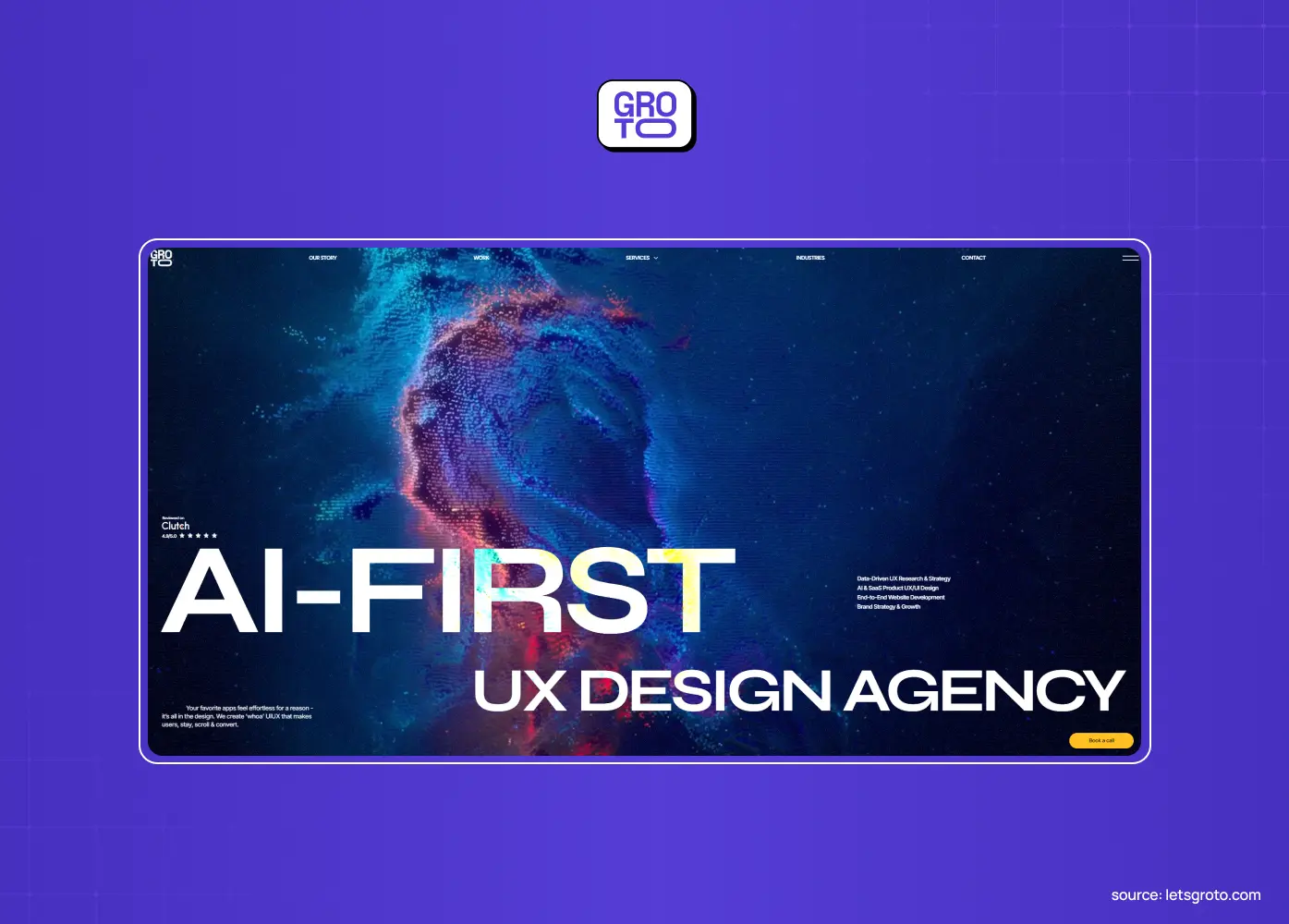
An AI-first product and web design studio built around SaaS and AI companies.

An AI-first product and web design studio built around SaaS and AI companies.

Best for: Seed to Series B founders who need product thinking, not just a marketing site.
Team size: Under 50.
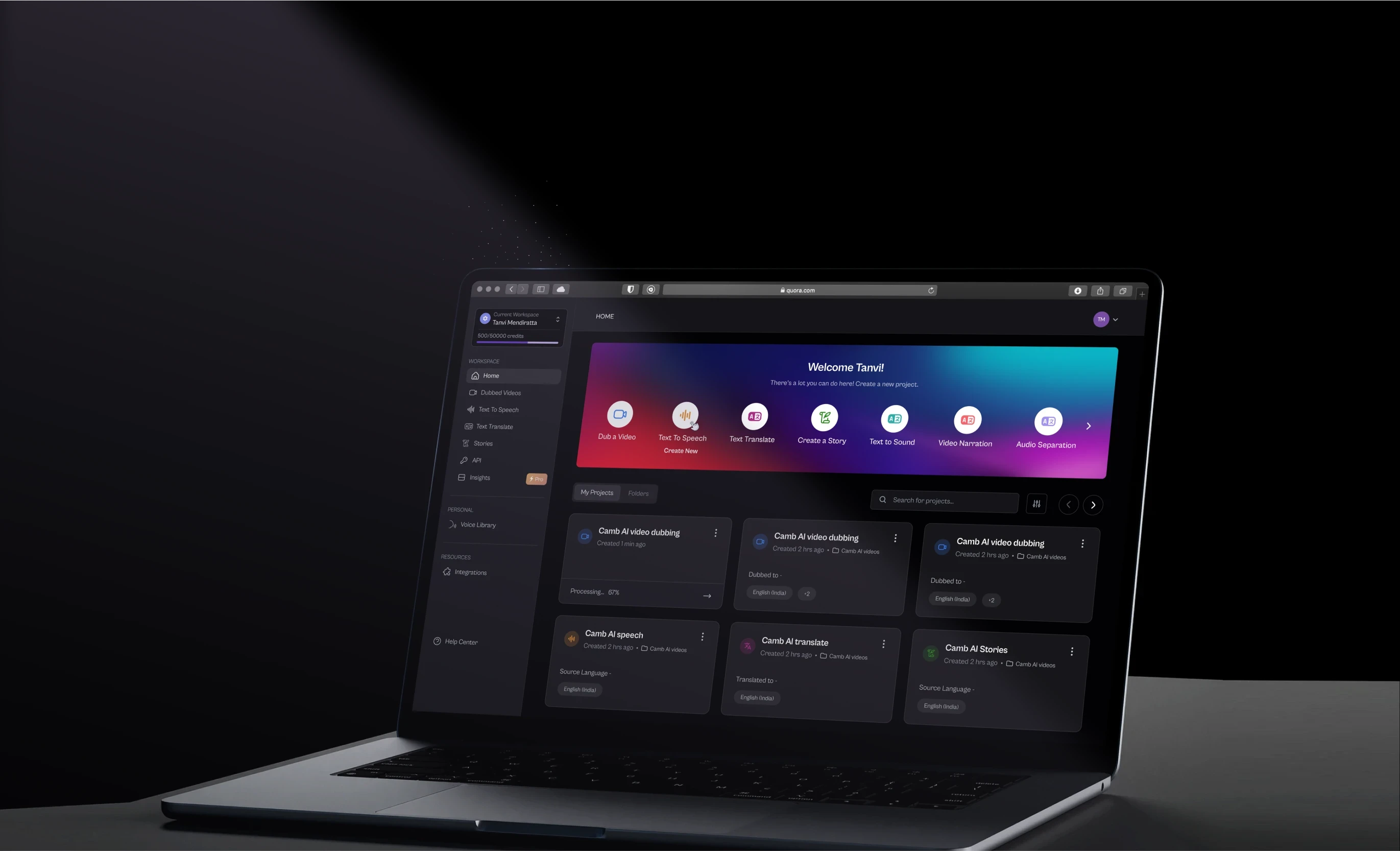
Notable clients: Camb.ai, PolicyBazaar, and collaborations with Fortune 500 companies like Colgate, Suzuki Corporation, and ABInBev.
Proof points: Four-step process: discovery and research, UX strategy, visual design and prototype, then usability testing and handover.
Why we're on this list: We work on the product and the site together, which matters when your website is largely a promise about software.
Watch out for: We run lean by design, so senior designers stay close to your project instead of it getting passed down an account hierarchy. Worth factoring in if you're weighing us against larger agencies.

Want to know where your users are dropping off?

We’ll break down the exact moments users lose interest, and why.

Want to know where your users are dropping off?

We’ll break down the exact moments users lose interest, and why.

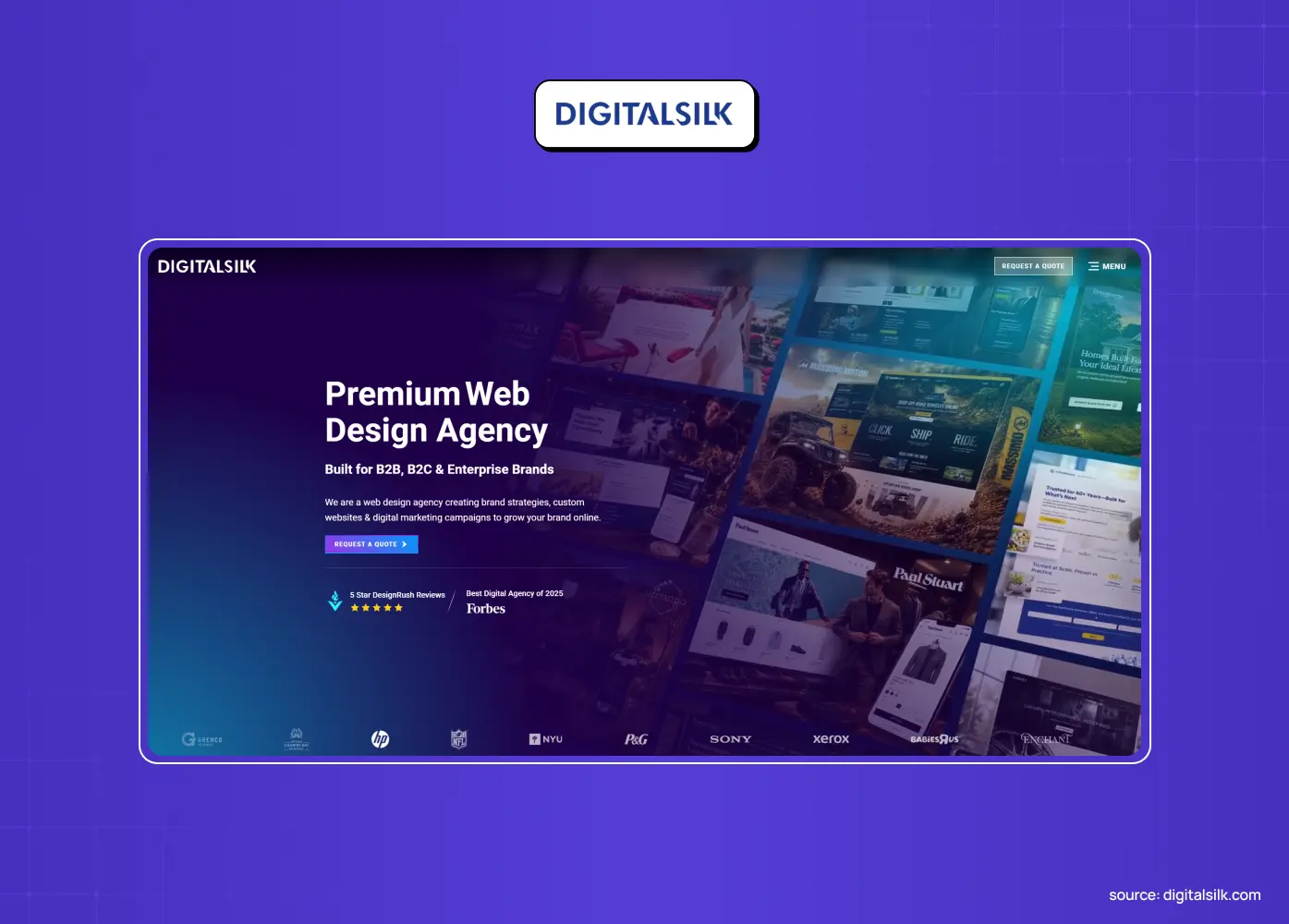
2. Digital Silk

A large New York agency built for enterprise scope and enterprise procurement.

A large New York agency built for enterprise scope and enterprise procurement.

Best for: Companies with complex requirements, multiple stakeholders and a real budget.
Team size: 100–249.
Notable clients: IBM, AT&T, NASA, Microsoft.
Why they're on this list: Very few agencies can absorb an enterprise project without buckling. Digital Silk can, and they have the process and account management to match.
Watch out for: That structure costs money and time. A seed-stage company will feel like the smallest account in the building.

3. Clay
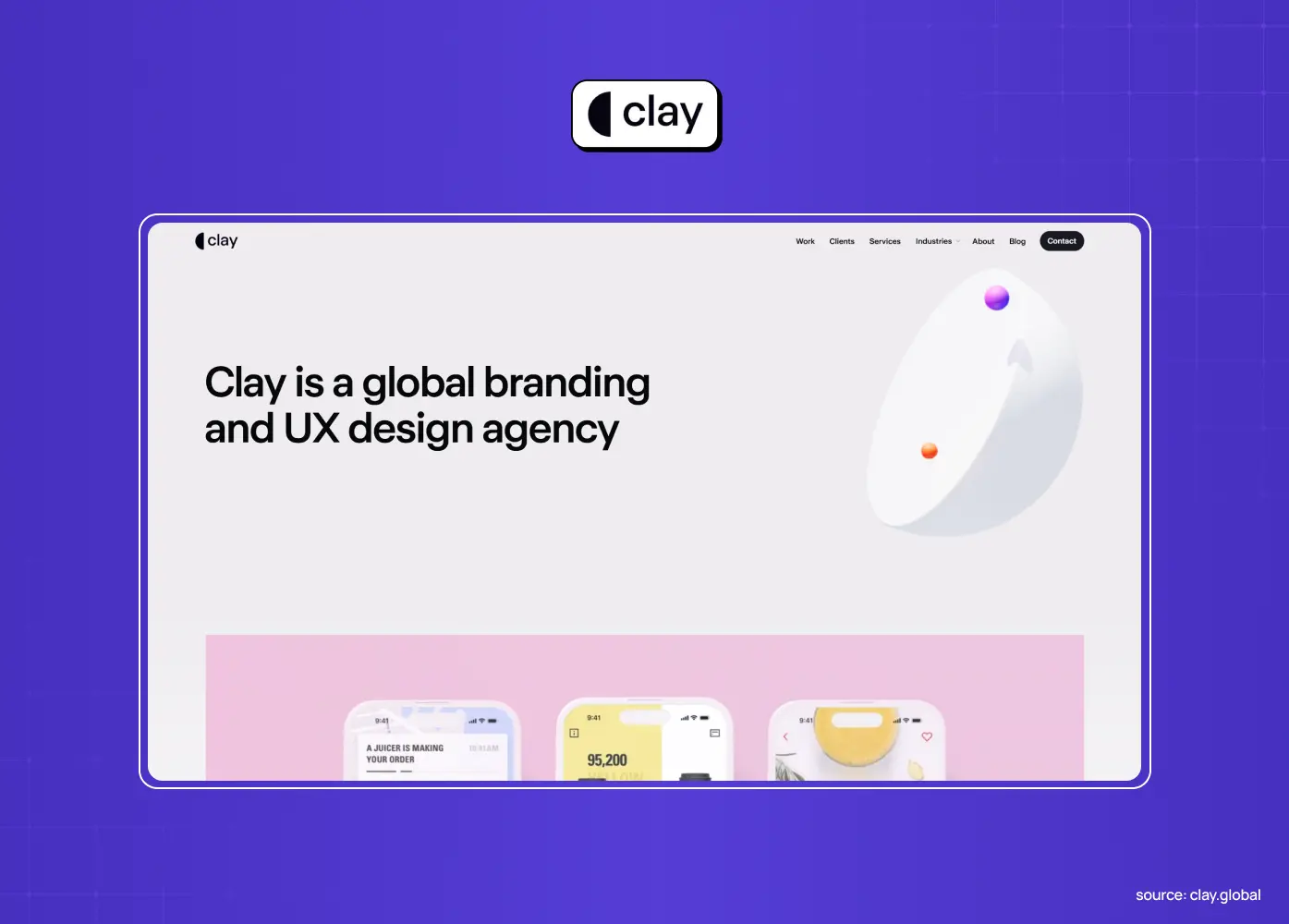
A San Francisco studio known for high-craft, brand-led sites that get talked about.

A San Francisco studio known for high-craft, brand-led sites that get talked about.

Best for: Companies where the website is the brand statement.
Team size: 50–99.
Notable clients: Meta, Google, Coca-Cola, Amazon.
Why they're on this list: The visual and interaction work is close to the ceiling of what's being made right now, and it holds up commercially rather than just winning awards.
Watch out for: Premium pricing, and a process that assumes you want a flagship. If you need a fast, conversion-focused site next quarter, this is over-specified.

4. Baunfire

A San Jose agency with a people-first design philosophy and a strong tech client base.

A San Jose agency with a people-first design philosophy and a strong tech client base.

Best for: Mid-market tech companies rebuilding a marketing site.
Team size: 50–99.
Why they're on this list: They balance visual quality with performance in a way that a lot of design-led shops don't, and they're used to working alongside in-house marketing teams.
Watch out for: Less depth in product and app UI than in marketing sites. If your project is really a web app, ask hard questions.

5. Huemor
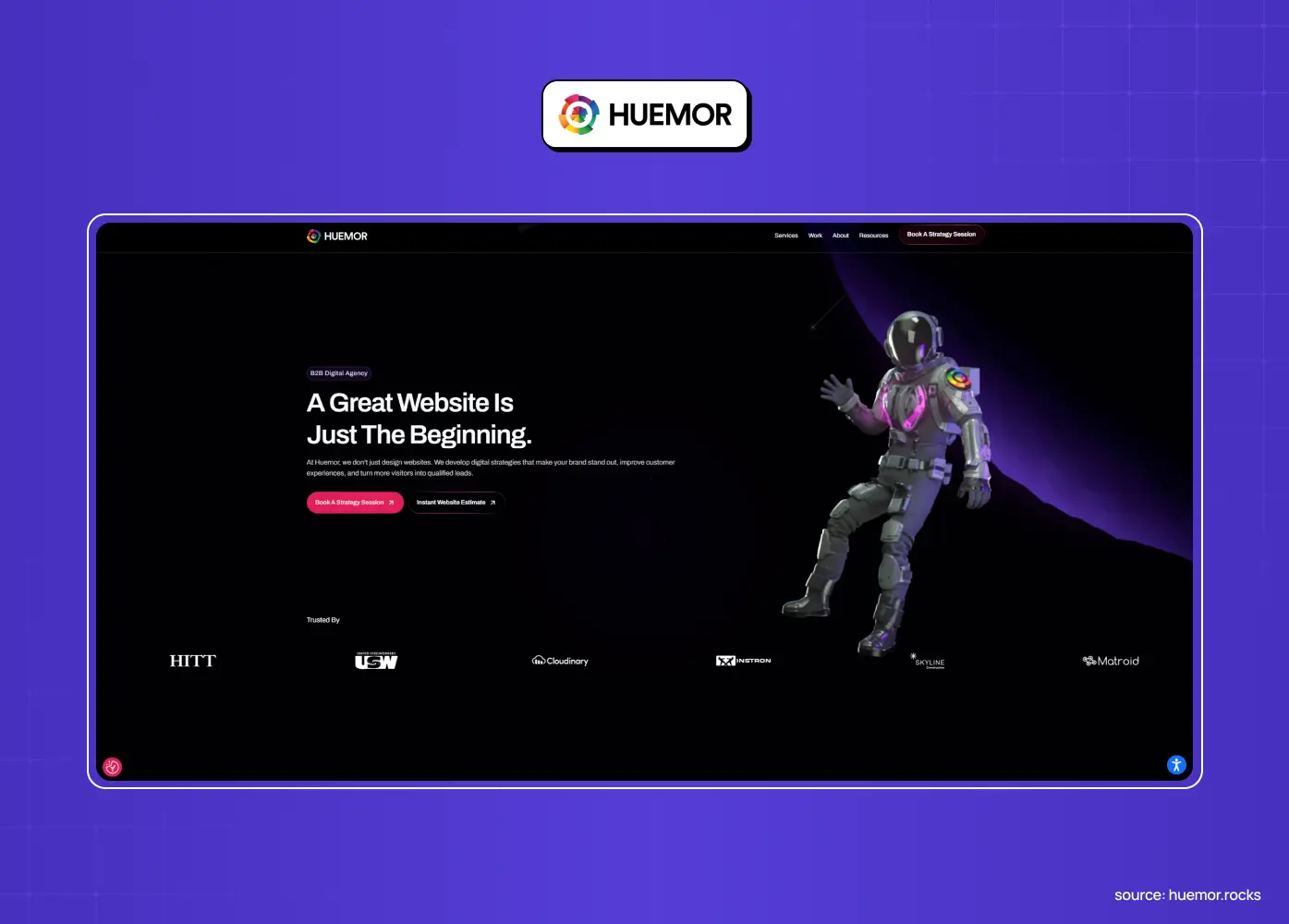
A New York agency, founded in 2011, that specialises in B2B companies with something complicated to explain.

A New York agency, founded in 2011, that specialises in B2B companies with something complicated to explain.

Best for: B2B businesses whose product doesn't fit in a headline.
Team size: 50–99.
Why they're on this list: They're good at the hardest part of B2B web design, which is turning a complex offering into a site a buyer can follow. The collaborative process suits teams who want to be involved.
Watch out for: That collaboration needs your time. If you want to hand off a brief and disappear for eight weeks, this isn't the fit.

6. UPQODE
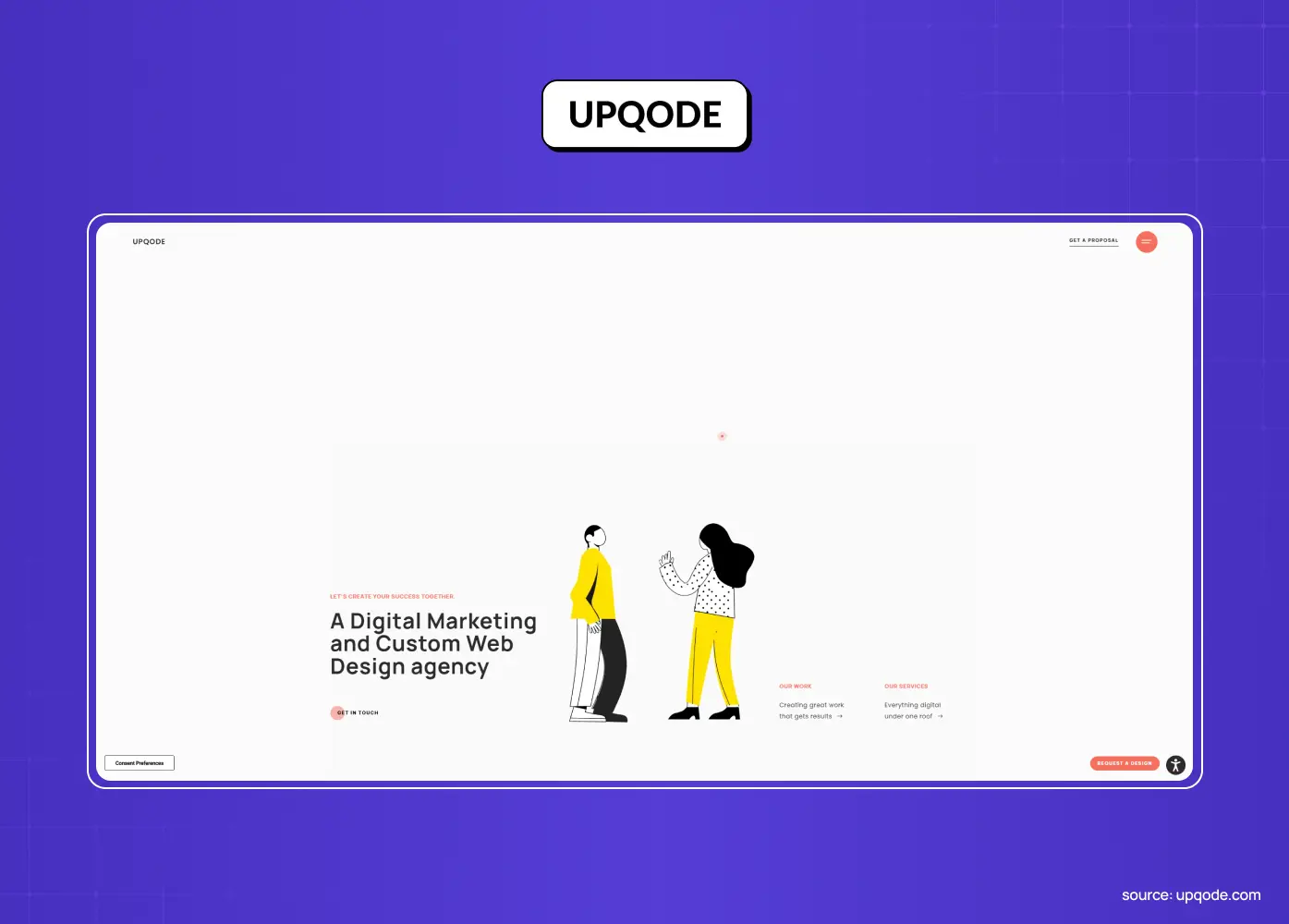
A Nashville agency with a genuine specialism in nonprofit and mission-driven work.

A Nashville agency with a genuine specialism in nonprofit and mission-driven work.

Best for: Nonprofits, associations and foundations.
Team size: 50–99.
Why they're on this list: They understand donation flows, volunteer sign-ups and the constraints of a board-approved budget. That's a real specialism, not a service page.
Watch out for: The nonprofit focus cuts both ways. A venture-backed SaaS company will find the pattern library and the pacing built for a different world.

7. Arch Web Design

A small San Diego team focused on SaaS.

A small San Diego team focused on SaaS.

Best for: Early-stage SaaS companies who want a site built around a trial or demo funnel.
Team size: Under 50.
Why they're on this list: They understand SaaS business models, which means they design for activation and signup rather than for a brochure.
Watch out for: Small team, limited capacity. Check their availability before you fall in love with the portfolio.

8. Orbit Media
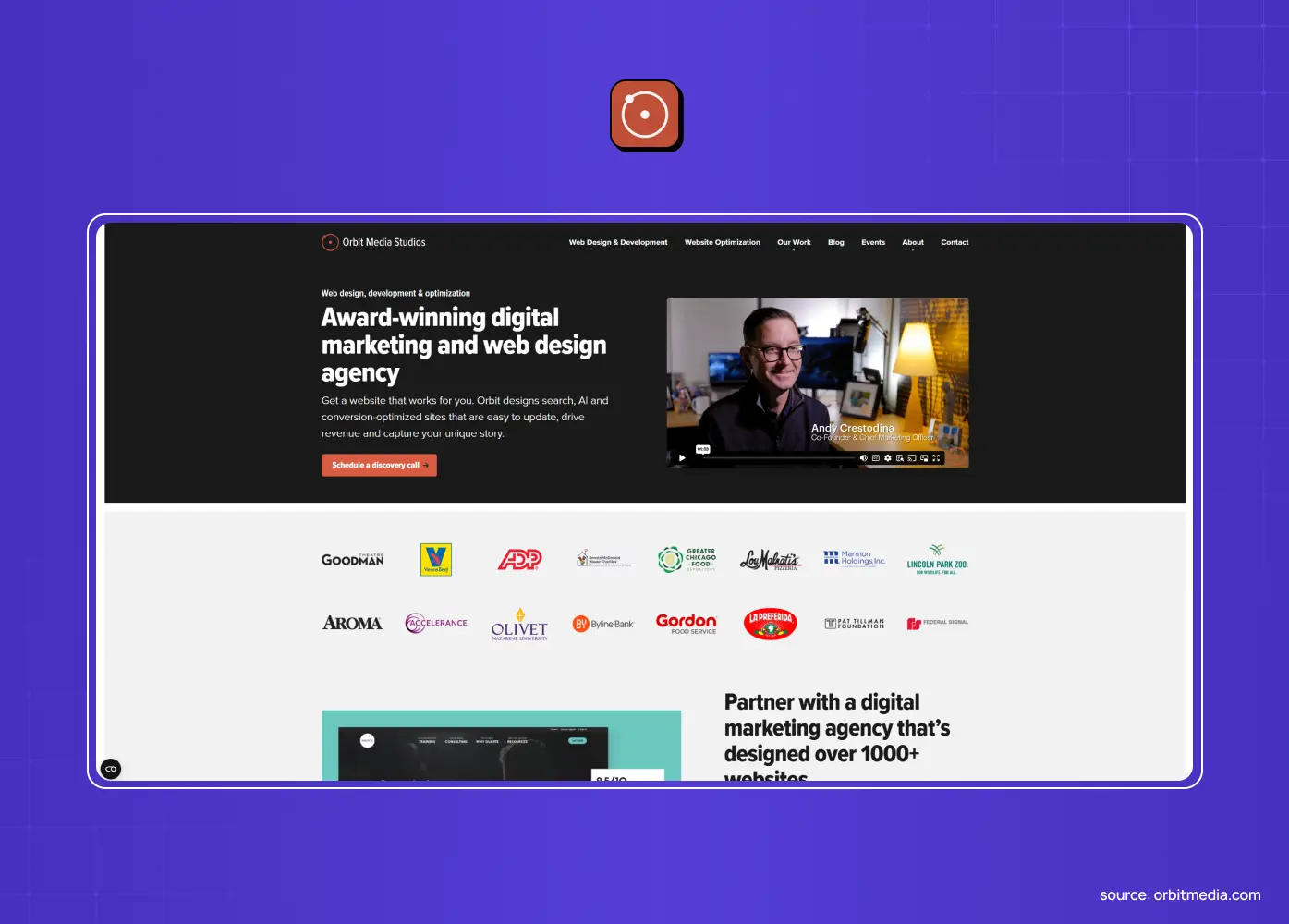
A Chicago agency operating since 2001, with over 1,000 sites built and B Corp certification.

A Chicago agency operating since 2001, with over 1,000 sites built and B Corp certification.

Best for: Content-led companies where organic search drives the pipeline.
Team size: 51–200.
Why they're on this list: Their process starts with keyword research and user interviews, so the site architecture reflects how people actually search. Two decades of consistency is its own signal.
Watch out for: The work is strategic rather than visually adventurous. If you want a site that turns heads, look at Clay or Baunfire.

9. Lounge Lizard
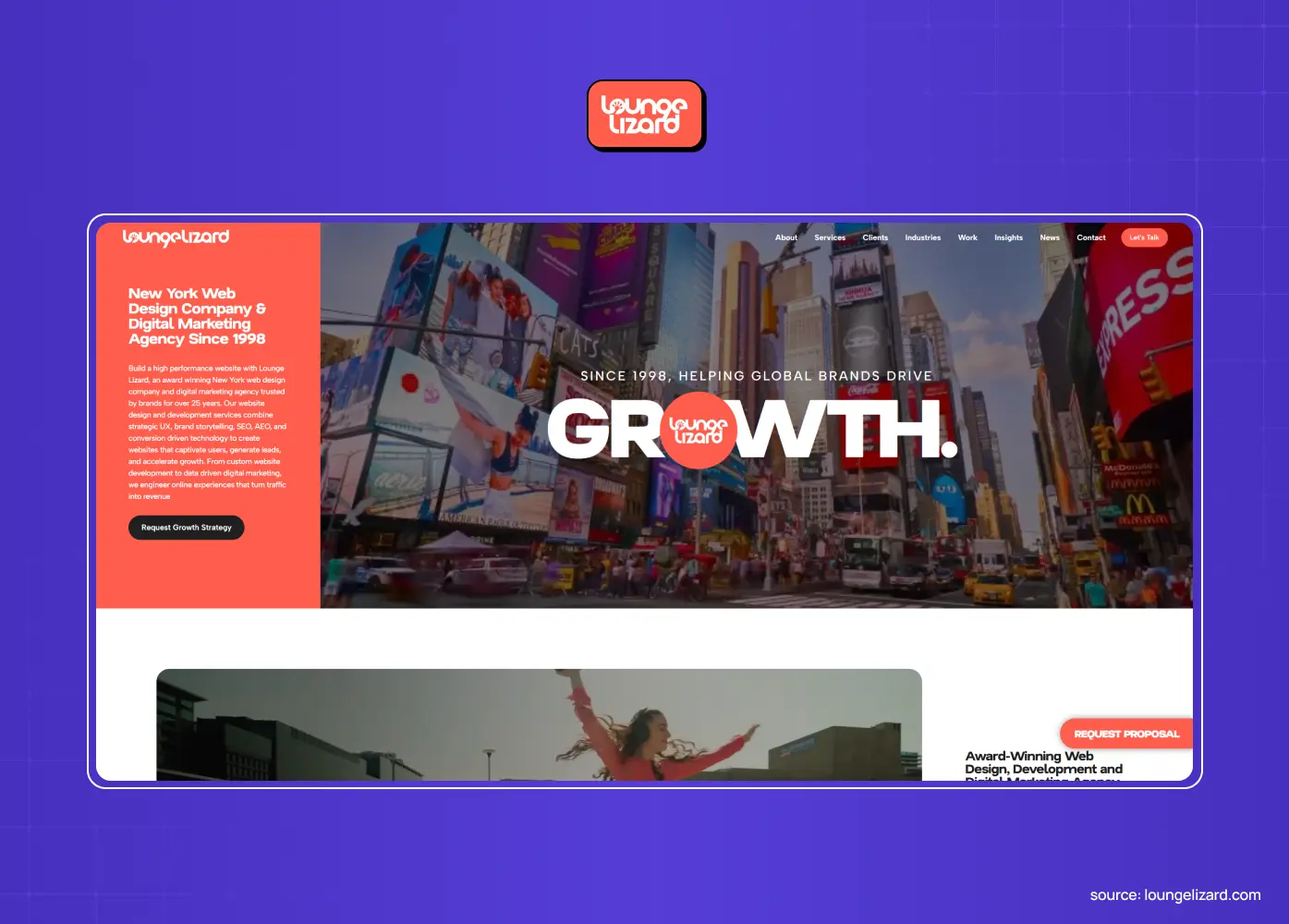
A New York agency that's been building since 1998, with a focus on interactive experiences.

A New York agency that's been building since 1998, with a focus on interactive experiences.

Best for: Brands that want motion, interaction and campaign-level work.
Team size: 50–99.
Why they're on this list: Longevity in this industry is rare, and they've kept the interactive work current rather than coasting.
Watch out for: A broad service list across many industries. Ask for case studies in your specific sector before you commit.

10. The ThunderClap

A Bangalore studio specialising in Webflow, working with SaaS, AI, healthcare and real estate clients.

A Bangalore studio specialising in Webflow, working with SaaS, AI, healthcare and real estate clients.

Best for: Companies who want a Webflow site they can edit themselves, built quickly.
Team size: Under 50.
Proof points: Webby and CSS Design Awards recognition, plus 30 days of free post-launch support.
Why they're on this list: Webflow specialism plus copywriting and SEO in-house means fewer handoffs, and the post-launch window is more generous than most.
Watch out for: Webflow is a deliberate constraint. If your site needs a custom backend or unusual integrations, you'll hit the platform's edges.

What web design agencies cost in 2026

Ignore anyone quoting a single number. Here's what the bands actually look like.

Engagement

Typical US range

Hourly rate

$75–$250

Landing page

$3,000–$12,000

Marketing site (10–20 pages)

$15,000–$60,000

Web app UI

$30,000–$120,000+

Monthly retainer

$4,000–$20,000

Four things push the number up: custom illustration or motion, CMS work beyond a standard template, integrations with your product or CRM, and stakeholder count. That last one is underrated. Every additional approver adds a review round, and review rounds are where budgets go.

Two pricing models turn up in most proposals. Fixed price protects you when the scope is genuinely settled, and punishes you when it isn't, because every change becomes a negotiation. Time and materials suits projects where discovery might change the plan, but it needs a cap and a weekly burn report or it drifts. Ask which model the quote uses. If the proposal doesn't say, that's your first question.

Agency, freelancer, in-house or AI builder?

Four options, and three of them are wrong for you right now.

  • A DIY AI builder is genuinely good enough for a pre-revenue landing page. It stops being good enough the moment your site has to explain something specific or convert a considered purchase.

  • A freelancer works when the scope is clear and small. Risk is concentration: one person, one calendar, one illness away from a stalled project.

  • In-house makes sense once you have continuous design work, which for most companies is somewhere after Series A. Before that you're paying a salary for a project — which is why earlier-stage teams lean on an interim design team instead of hiring too soon.

  • An agency buys you a team and a process for a fixed window. If you're weighing cost, outsourced web design partners often deliver the same quality at a lower rate, but you'll want to check timezone overlap and how they handle handover.

How to shortlist three agencies in a week

  1. Match by project type first. Marketing site, product UI, or rebrand. Cut anyone whose recent work isn't the same shape as yours. If you're B2B specifically, our top B2B web design agencies list goes deeper on that segment, and if the job is really product UI rather than a marketing site, start with our best UX design agencies in the US shortlist instead.

  2. Pick exactly three. Five is not more thorough, it's just slower, and you'll compare on price because that's the only field you can line up.

  3. Send all three an identical brief. Same goals, same constraints, same deadline. Include your business goal, your two or three must-have pages, your rough budget band and your hard date. Withholding the budget doesn't get you a better price, it gets you three proposals you can't compare. The differences in what comes back will tell you more than any call.

  4. Compare the questions they ask you. The agency that pushes back on your brief is usually the one worth hiring.

If you'd like a read on your current site before you write that brief, we offer free UX audits and 3-day trials, and there's no pitch attached.

The questions that reveal a real partner

  • Who's actually doing the work, and will I meet them before signing?

  • Who owns the design files and the site after launch?

  • What does month two cost, and what's included?

  • What happens if we're not happy at the halfway point?

  • Can you show me a project that went wrong and what you did about it?

The first one matters most, and you want names rather than roles. Since we're on this list, our own answer is that you work directly with our creative director, who ranks in the top 3% of UX designers globally. If an agency won't tell you who does the work, assume it isn't the person in the meeting.

If you're hiring for an AI product, the brief gets harder and the wrong answers cost more. We've written a longer set of questions to settle before you sign in that case.

Red flags

A quote with no discovery step. A portfolio with no named clients. Reluctance to put ownership of the files in writing. Case studies that show a finished screen but no before, no problem and no result. And any agency that agrees to your timeline without asking a single question about scope.

One more, quieter than the rest: a proposal where the people in the pitch aren't named anywhere in the delivery plan. Senior people win the work, junior people do it, and there's nothing wrong with that as long as it's stated. It's the not stating it that should worry you.

So which one should you pick?

Nobody picks well from a list on its own, including this one. A list narrows the field. The brief decides it.

So take three names from the table, send all three the same brief on the same day, and give them the same deadline. Then judge them on what comes back at you rather than on the proposal that looks best. The agency that questions your timeline, challenges your scope, or tells you that one of the things you asked for is a bad idea is almost always the one worth hiring. The one that agrees with everything has read your brief as an order form.

And whoever you choose, get three things in writing before you sign: who does the work, who owns the files afterwards, and what month two costs. Every expensive surprise we've watched a client walk into started with one of those three being left vague.

Connect with Groto and start your journey toward digital excellence today!
Most lists of top web design agencies are paid directories or agencies putting themselves at number one. This guide compares 10 agencies on price, team size and best-fit client, shows the criteria we used, and gives you an honest limitation for every single one.

Ten web design agencies, compared honestly. Including what each one gets wrong.

Most lists you'll find for this search are one of two things. They're directories that rank whoever pays for placement, or they're agencies putting themselves at number one and hoping you don't notice.

We're an agency, and we've put ourselves on this list. So let's get that out of the way first: Groto is entry number one, we're upfront about why, and every other agency here is judged on the same six criteria with the same fields filled in. We've also written an honest limitation for each of them, including ours. If a list can't tell you who an agency is wrong for, it isn't telling you much.

We looked at roughly 40 agencies working with US clients, checked published client work, pricing transparency, team size, and what happens after a site launches. Ten made it. You'll leave this page with a shortlist of three, a realistic idea of what your project costs, and the questions that separate a real partner from a good pitch deck.

TL;DR

  • Best for SaaS and AI products: Groto

  • Best for enterprise budgets: Digital Silk

  • Best for brand-led, high-craft work: Clay

  • Best for nonprofits: UPQODE

  • Best for content-driven marketing sites: Orbit Media

How we picked these agencies

Six things, applied the same way to all ten.

  • Verified client work. Named clients we could confirm, not a logo wall.

  • Pricing transparency. Agencies that publish a starting point, or will give you one on a first call, rank above those that won't.

  • Industry fit. Depth in a sector beats a portfolio that covers everything shallowly.

  • A real process. Discovery and research, a documented strategy step, design, then testing and handover. If you want the standard we hold this against, Figma's UX Strategy Report explainer is a good reference point.

  • Engineering awareness. Whether the design team understands what gets built, or throws files over a wall.

  • Post-launch support. What happens in month two, and what it costs.

The 10 agencies at a glance

Agency

Best for

Team size

Typical starting price

Location

Groto

SaaS and AI products, Seed to Series B

Under 50

Project-based, free audit first

India

Digital Silk

Enterprise builds

100–249

$150/hr band

New York

Clay

Brand-led flagship sites

50–99

Premium, six figures

San Francisco

Baunfire

Mid-market product marketing sites

50–99

$150/hr band

San Jose, CA

Huemor

B2B companies with complex offerings

50–99

$150/hr band

New York

UPQODE

Nonprofits and mission-driven orgs

50–99

$75/hr band

Nashville, TN

Arch Web Design

Early-stage SaaS

Under 50

$150/hr band

San Diego

Orbit Media

Content and SEO-led marketing sites

51–200

$150/hr band

Chicago

Lounge Lizard

Interactive and campaign work

50–99

Mid-market

New York

The ThunderClap

Webflow builds, fast turnarounds

Under 50

Lower mid-market

Bangalore, India

Rates are starting bands, not quotes. What you actually pay depends on scope, and we cover that below. If location matters to you, we've also covered the DC market separately, including one DC-based web design studio worth knowing.

The top 10 web design agencies in 2026

1. Groto

An AI-first product and web design studio built around SaaS and AI companies.

An AI-first product and web design studio built around SaaS and AI companies.

Best for: Seed to Series B founders who need product thinking, not just a marketing site.
Team size: Under 50.
Notable clients: Camb.ai, PolicyBazaar, and collaborations with Fortune 500 companies like Colgate, Suzuki Corporation, and ABInBev.
Proof points: Four-step process: discovery and research, UX strategy, visual design and prototype, then usability testing and handover.
Why we're on this list: We work on the product and the site together, which matters when your website is largely a promise about software.
Watch out for: We run lean by design, so senior designers stay close to your project instead of it getting passed down an account hierarchy. Worth factoring in if you're weighing us against larger agencies.

Want to know where your users are dropping off?

We’ll break down the exact moments users lose interest, and why.

2. Digital Silk

A large New York agency built for enterprise scope and enterprise procurement.

A large New York agency built for enterprise scope and enterprise procurement.

Best for: Companies with complex requirements, multiple stakeholders and a real budget.
Team size: 100–249.
Notable clients: IBM, AT&T, NASA, Microsoft.
Why they're on this list: Very few agencies can absorb an enterprise project without buckling. Digital Silk can, and they have the process and account management to match.
Watch out for: That structure costs money and time. A seed-stage company will feel like the smallest account in the building.

3. Clay

A San Francisco studio known for high-craft, brand-led sites that get talked about.

A San Francisco studio known for high-craft, brand-led sites that get talked about.

Best for: Companies where the website is the brand statement.
Team size: 50–99.
Notable clients: Meta, Google, Coca-Cola, Amazon.
Why they're on this list: The visual and interaction work is close to the ceiling of what's being made right now, and it holds up commercially rather than just winning awards.
Watch out for: Premium pricing, and a process that assumes you want a flagship. If you need a fast, conversion-focused site next quarter, this is over-specified.

4. Baunfire

A San Jose agency with a people-first design philosophy and a strong tech client base.

A San Jose agency with a people-first design philosophy and a strong tech client base.

Best for: Mid-market tech companies rebuilding a marketing site.
Team size: 50–99.
Why they're on this list: They balance visual quality with performance in a way that a lot of design-led shops don't, and they're used to working alongside in-house marketing teams.
Watch out for: Less depth in product and app UI than in marketing sites. If your project is really a web app, ask hard questions.

5. Huemor

A New York agency, founded in 2011, that specialises in B2B companies with something complicated to explain.

A New York agency, founded in 2011, that specialises in B2B companies with something complicated to explain.

Best for: B2B businesses whose product doesn't fit in a headline.
Team size: 50–99.
Why they're on this list: They're good at the hardest part of B2B web design, which is turning a complex offering into a site a buyer can follow. The collaborative process suits teams who want to be involved.
Watch out for: That collaboration needs your time. If you want to hand off a brief and disappear for eight weeks, this isn't the fit.

6. UPQODE

A Nashville agency with a genuine specialism in nonprofit and mission-driven work.

A Nashville agency with a genuine specialism in nonprofit and mission-driven work.

Best for: Nonprofits, associations and foundations.
Team size: 50–99.
Why they're on this list: They understand donation flows, volunteer sign-ups and the constraints of a board-approved budget. That's a real specialism, not a service page.
Watch out for: The nonprofit focus cuts both ways. A venture-backed SaaS company will find the pattern library and the pacing built for a different world.

7. Arch Web Design

A small San Diego team focused on SaaS.

A small San Diego team focused on SaaS.

Best for: Early-stage SaaS companies who want a site built around a trial or demo funnel.
Team size: Under 50.
Why they're on this list: They understand SaaS business models, which means they design for activation and signup rather than for a brochure.
Watch out for: Small team, limited capacity. Check their availability before you fall in love with the portfolio.

8. Orbit Media

A Chicago agency operating since 2001, with over 1,000 sites built and B Corp certification.

A Chicago agency operating since 2001, with over 1,000 sites built and B Corp certification.

Best for: Content-led companies where organic search drives the pipeline.
Team size: 51–200.
Why they're on this list: Their process starts with keyword research and user interviews, so the site architecture reflects how people actually search. Two decades of consistency is its own signal.
Watch out for: The work is strategic rather than visually adventurous. If you want a site that turns heads, look at Clay or Baunfire.

9. Lounge Lizard

A New York agency that's been building since 1998, with a focus on interactive experiences.

A New York agency that's been building since 1998, with a focus on interactive experiences.

Best for: Brands that want motion, interaction and campaign-level work.
Team size: 50–99.
Why they're on this list: Longevity in this industry is rare, and they've kept the interactive work current rather than coasting.
Watch out for: A broad service list across many industries. Ask for case studies in your specific sector before you commit.

10. The ThunderClap

A Bangalore studio specialising in Webflow, working with SaaS, AI, healthcare and real estate clients.

A Bangalore studio specialising in Webflow, working with SaaS, AI, healthcare and real estate clients.

Best for: Companies who want a Webflow site they can edit themselves, built quickly.
Team size: Under 50.
Proof points: Webby and CSS Design Awards recognition, plus 30 days of free post-launch support.
Why they're on this list: Webflow specialism plus copywriting and SEO in-house means fewer handoffs, and the post-launch window is more generous than most.
Watch out for: Webflow is a deliberate constraint. If your site needs a custom backend or unusual integrations, you'll hit the platform's edges.

What web design agencies cost in 2026

Ignore anyone quoting a single number. Here's what the bands actually look like.

Engagement

Typical US range

Hourly rate

$75–$250

Landing page

$3,000–$12,000

Marketing site (10–20 pages)

$15,000–$60,000

Web app UI

$30,000–$120,000+

Monthly retainer

$4,000–$20,000

Four things push the number up: custom illustration or motion, CMS work beyond a standard template, integrations with your product or CRM, and stakeholder count. That last one is underrated. Every additional approver adds a review round, and review rounds are where budgets go.

Two pricing models turn up in most proposals. Fixed price protects you when the scope is genuinely settled, and punishes you when it isn't, because every change becomes a negotiation. Time and materials suits projects where discovery might change the plan, but it needs a cap and a weekly burn report or it drifts. Ask which model the quote uses. If the proposal doesn't say, that's your first question.

Agency, freelancer, in-house or AI builder?

Four options, and three of them are wrong for you right now.

  • A DIY AI builder is genuinely good enough for a pre-revenue landing page. It stops being good enough the moment your site has to explain something specific or convert a considered purchase.

  • A freelancer works when the scope is clear and small. Risk is concentration: one person, one calendar, one illness away from a stalled project.

  • In-house makes sense once you have continuous design work, which for most companies is somewhere after Series A. Before that you're paying a salary for a project — which is why earlier-stage teams lean on an interim design team instead of hiring too soon.

  • An agency buys you a team and a process for a fixed window. If you're weighing cost, outsourced web design partners often deliver the same quality at a lower rate, but you'll want to check timezone overlap and how they handle handover.

How to shortlist three agencies in a week

  1. Match by project type first. Marketing site, product UI, or rebrand. Cut anyone whose recent work isn't the same shape as yours. If you're B2B specifically, our top B2B web design agencies list goes deeper on that segment, and if the job is really product UI rather than a marketing site, start with our best UX design agencies in the US shortlist instead.

  2. Pick exactly three. Five is not more thorough, it's just slower, and you'll compare on price because that's the only field you can line up.

  3. Send all three an identical brief. Same goals, same constraints, same deadline. Include your business goal, your two or three must-have pages, your rough budget band and your hard date. Withholding the budget doesn't get you a better price, it gets you three proposals you can't compare. The differences in what comes back will tell you more than any call.

  4. Compare the questions they ask you. The agency that pushes back on your brief is usually the one worth hiring.

If you'd like a read on your current site before you write that brief, we offer free UX audits and 3-day trials, and there's no pitch attached.

The questions that reveal a real partner

  • Who's actually doing the work, and will I meet them before signing?

  • Who owns the design files and the site after launch?

  • What does month two cost, and what's included?

  • What happens if we're not happy at the halfway point?

  • Can you show me a project that went wrong and what you did about it?

The first one matters most, and you want names rather than roles. Since we're on this list, our own answer is that you work directly with our creative director, who ranks in the top 3% of UX designers globally. If an agency won't tell you who does the work, assume it isn't the person in the meeting.

If you're hiring for an AI product, the brief gets harder and the wrong answers cost more. We've written a longer set of questions to settle before you sign in that case.

Red flags

A quote with no discovery step. A portfolio with no named clients. Reluctance to put ownership of the files in writing. Case studies that show a finished screen but no before, no problem and no result. And any agency that agrees to your timeline without asking a single question about scope.

One more, quieter than the rest: a proposal where the people in the pitch aren't named anywhere in the delivery plan. Senior people win the work, junior people do it, and there's nothing wrong with that as long as it's stated. It's the not stating it that should worry you.

So which one should you pick?

Nobody picks well from a list on its own, including this one. A list narrows the field. The brief decides it.

So take three names from the table, send all three the same brief on the same day, and give them the same deadline. Then judge them on what comes back at you rather than on the proposal that looks best. The agency that questions your timeline, challenges your scope, or tells you that one of the things you asked for is a bad idea is almost always the one worth hiring. The one that agrees with everything has read your brief as an order form.

And whoever you choose, get three things in writing before you sign: who does the work, who owns the files afterwards, and what month two costs. Every expensive surprise we've watched a client walk into started with one of those three being left vague.

Connect with Groto and start your journey toward digital excellence today!

Have a project in mind?

Let’s talk through your idea and see what makes sense.

Harpreet Singh

Harpreet Singh

Founder at Groto

Have a project in mind?

Let’s talk through your idea and see what makes sense.

Harpreet Singh

Harpreet Singh

Founder at Groto

FAQ

Everything you were going to ask (and a few things you didn’t know to)

How do I check that an agency's case studies are actually their work?

Ask who on the current team worked on it, and ask for a client reference from that specific project. Agencies buy portfolios, absorb teams, and inherit work. A good agency answers this in one sentence.

Does hiring a local agency still matter, or is remote fine now?

Remote is fine for most projects. Local matters when you need frequent in-person workshops, or when your buyers are regional and local market knowledge is part of the value. Otherwise, prioritise timezone overlap over postcode.

What's included in a web design quote, and what gets billed as extra?

Design and build are usually in. Copywriting, photography, illustration, CMS training, third-party integrations and post-launch fixes are often out. Ask for the exclusions list in writing before you sign, not after.

Who owns the design files and the website after launch?

You should, and it should say so in the contract. Watch for agencies who keep source files or host on an account you can't access. That's how a project becomes a subscription.

How long should a web design project take in 2026?

Two to three weeks for discovery, three to five for design, three to four for build and QA. A marketing site is typically eight to twelve weeks end to end. Anything promised in three weeks is a template.

What's the difference between a web design agency and a product design agency?

A web design agency builds the site that sells your product. A product design agency designs the product itself. Some studios do both, which is worth having if your website's job is largely to explain software.

How do I check that an agency's case studies are actually their work?

Ask who on the current team worked on it, and ask for a client reference from that specific project. Agencies buy portfolios, absorb teams, and inherit work. A good agency answers this in one sentence.

Does hiring a local agency still matter, or is remote fine now?

Remote is fine for most projects. Local matters when you need frequent in-person workshops, or when your buyers are regional and local market knowledge is part of the value. Otherwise, prioritise timezone overlap over postcode.

What's included in a web design quote, and what gets billed as extra?

Design and build are usually in. Copywriting, photography, illustration, CMS training, third-party integrations and post-launch fixes are often out. Ask for the exclusions list in writing before you sign, not after.

Who owns the design files and the website after launch?

You should, and it should say so in the contract. Watch for agencies who keep source files or host on an account you can't access. That's how a project becomes a subscription.

How long should a web design project take in 2026?

Two to three weeks for discovery, three to five for design, three to four for build and QA. A marketing site is typically eight to twelve weeks end to end. Anything promised in three weeks is a template.

What's the difference between a web design agency and a product design agency?

A web design agency builds the site that sells your product. A product design agency designs the product itself. Some studios do both, which is worth having if your website's job is largely to explain software.

More Articles

Extreme close-up black and white photograph of a human eye

Let’s bring your vision to life

Tell us what's on your mind? We'll hit you back in 24 hours. No fluff, no delays - just a solid vision to bring your idea to life.

Profile portrait of a man in a white shirt against a light background

Harpreet Singh

Founder and Creative Director

Get in Touch

Extreme close-up black and white photograph of a human eye

Let’s bring your vision to life

Tell us what's on your mind? We'll hit you back in 24 hours. No fluff, no delays - just a solid vision to bring your idea to life.

Profile portrait of a man in a white shirt against a light background

Harpreet Singh

Founder and Creative Director

Get in Touch

Extreme close-up black and white photograph of a human eye

Let’s bring your vision to life

Tell us what's on your mind? We'll hit you back in 24 hours. No fluff, no delays - just a solid vision to bring your idea to life.

Profile portrait of a man in a white shirt against a light background

Harpreet Singh

Founder and Creative Director

Get in Touch