
Unlimited design requests for a flat fee sounds simple, until you're picking between nine lookalike providers. This guide breaks down real 2026 pricing, honest trade-offs, and exactly when a subscription beats hiring an agency, freelancer, or in-house designer.
Real pricing, honest pros and cons, and 9 subscriptions ranked for 2026.

"Graphic design subscription services" is one of the most common search terms among growing teams stuck between two bad options: a freelancer who's booked out, or a full-time hire they're not ready to commit to. If that's why you landed here, you're likely comparing your options before locking anything in. This guide walks through exactly how the model works, which providers are worth your shortlist in 2026, and how to tell if a subscription is actually the right fit for what you're building.
TL;DR
Graphic design subscription services give you unlimited design requests and revisions for one flat monthly fee, no hiring, no per-project invoices.
Most plans run $250 to $5,000 a month, with the competitive range sitting between $500 and $2,000.
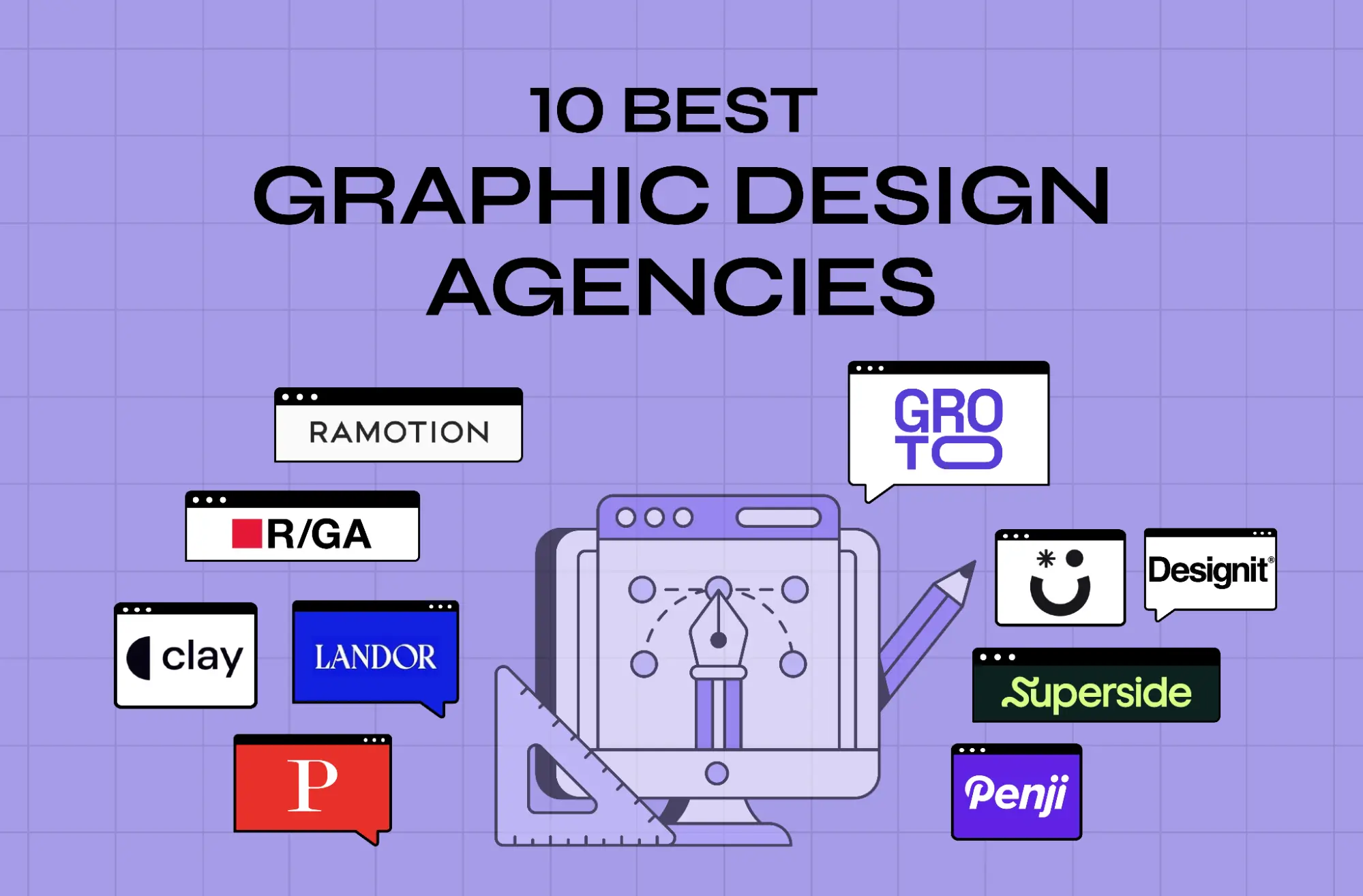
Design Pickle, Grotto, Penji, ManyPixels, Superside, Kimp, Awesomic, Cueball Creatives, and Designity are the strongest options for 2026.
These services are built for high-volume marketing graphics, not strategic product or UX design, so match the tool to the job before you subscribe.
Hiring a full-time designer costs six figures a year. Commissioning a freelancer for every social post, ad, and one-pager means a pile of invoices and a lot of chasing. For a growing company that needs a steady stream of on-brand graphics, neither model quite fits, which is exactly why graphic design subscription services exploded. Pay one flat monthly fee, submit as many requests as you want, and get professional graphic design back without hiring anyone or negotiating a single project quote.
But "unlimited design for a flat fee" is a crowded, noisy market, and most of the "best of" lists you'll find are written by the very services they rank. This guide is different: a neutral look at how these subscriptions actually work, the nin best providers for 2026 with real pricing, and, crucially, an honest framework for when a subscription is the right call versus when you'd be better served by a design agency or freelancer. Let's find the model that actually fits your needs.
How graphic design subscription services work
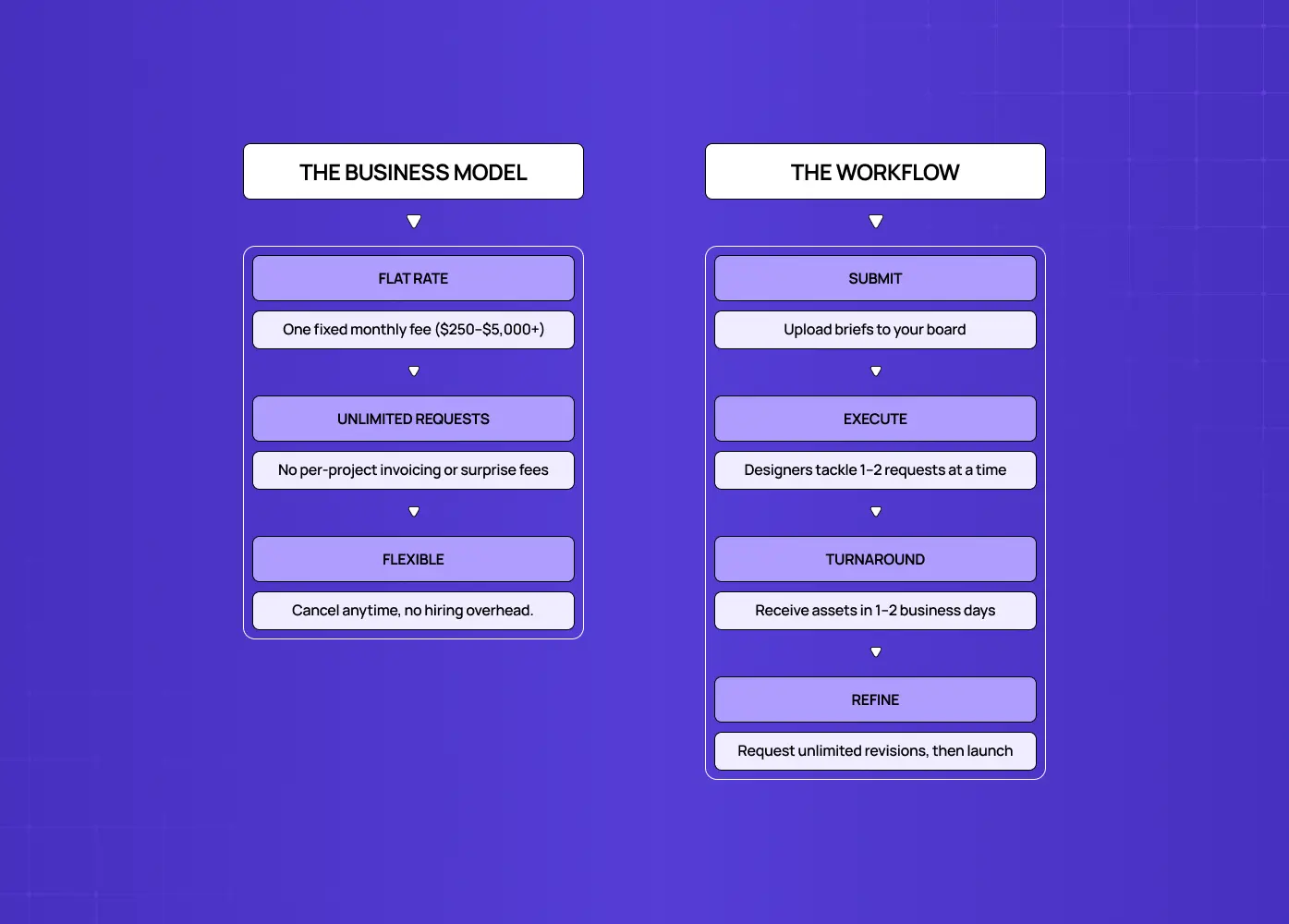
A graphic design subscription service gives you unlimited design requests and revisions for a fixed monthly fee, instead of charging per project.
You submit a design brief through an online portal or shared board.
A designer or team picks it up from your queue, usually working one or two requests at a time.
You get files back, typically within one to two business days for straightforward work.
You request revisions until it's right, then move to the next item in your queue.
You can request as much as you want and cancel most plans anytime.
The economics are the appeal: predictable costs, no per-project invoicing, no surprise fees, and no hiring overhead. Most services run $250 to $5,000 per month, with the competitive middle landing between $500 and $2,000, depending on scope (graphics only vs. graphics plus video and web), turnaround speed, and designer seniority. If you're weighing that against project-based quotes, it helps to understand how design pricing works first. It's a model built for volume: steady, ongoing marketing design, which is the key to understanding both its strengths and its limits.
Why the unlimited design model took off
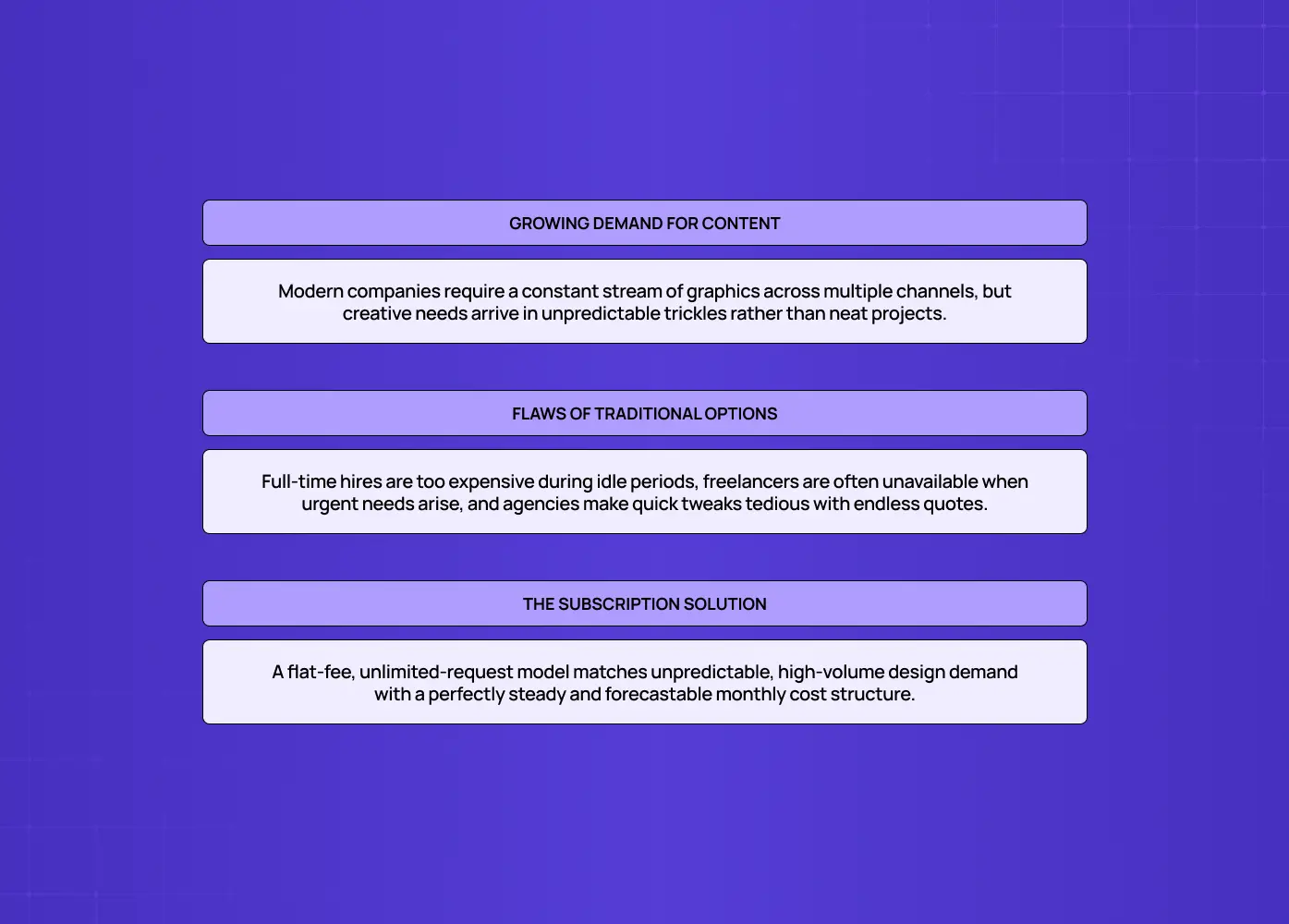
The subscription model didn't appear by accident, it solved a specific, widely felt pain. Growing companies produce more visual content than ever: every channel, campaign, and product update needs graphics, and demand arrives in an unpredictable trickle rather than tidy projects. The traditional options each broke down under that reality.
Full-time hires: expensive, and they sit idle between busy stretches — where an interim creative team gives you capacity only for the stretch you need it.
Freelancers: great until you need one at 5pm on a Friday and they're booked.
A traditional graphic design agency bills per project, so a quick banner tweak turns into a scoped, quoted, invoiced ordeal.
The flat-fee, unlimited-request model matched the actual shape of modern design demand: steady, varied, and hard to forecast, with a cost structure that's equally steady and easy to forecast. That alignment is why the category grew so fast, and why it now spans everything from scrappy startups to enterprise creative teams. Understanding that origin also clarifies its boundary: it was built to industrialize marketing throughput, not to replace the strategic design partners who shape products and brands.
Who these services are (and aren't) for
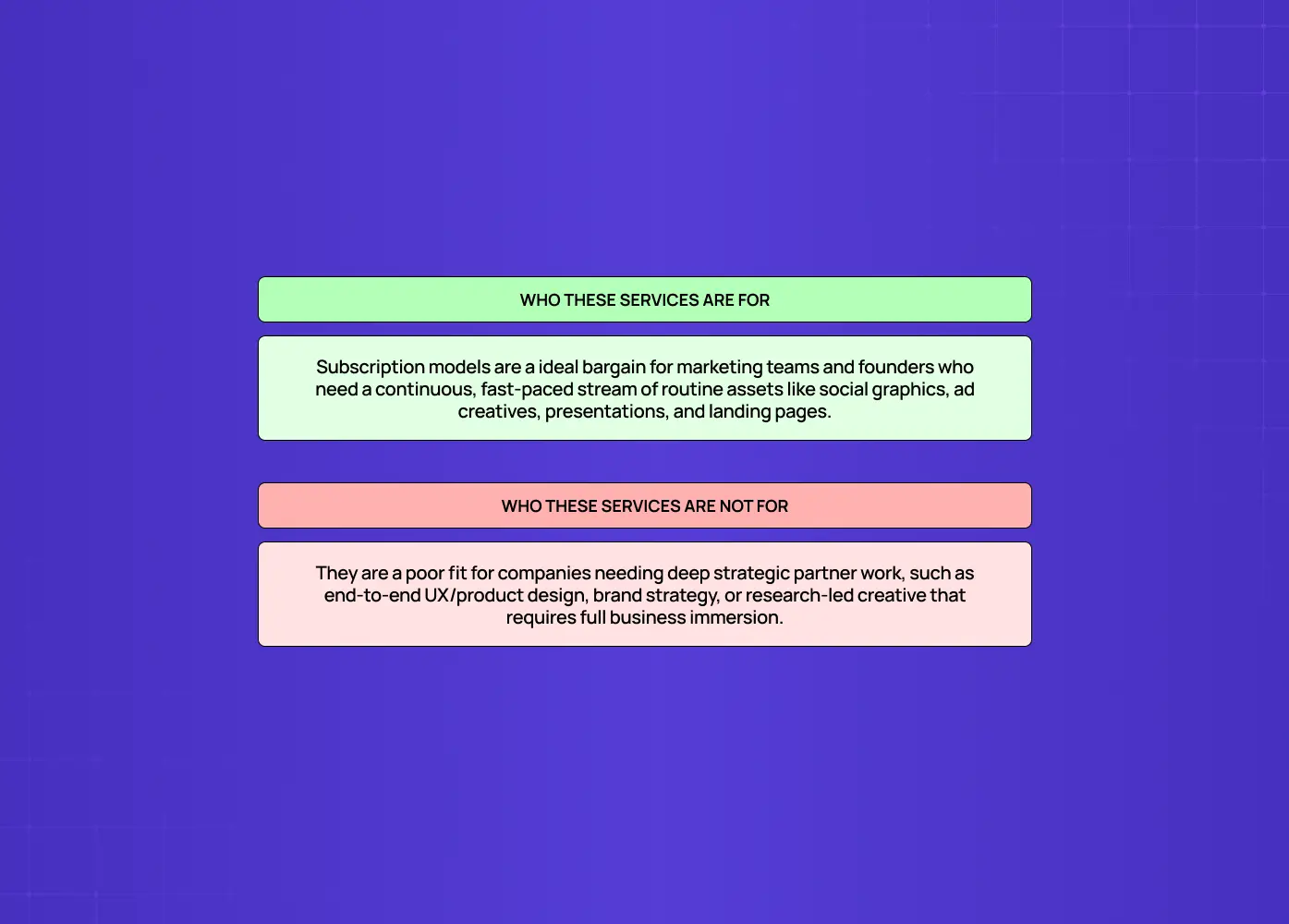
Subscriptions shine when you have a continuous flow of relatively well-defined design tasks, from social graphics to infographics:
Social graphics
Ad creative
Presentations
Email banners
Simple landing pages
Marketing collateral
If that's your reality, a marketing team or founder shipping assets every week, the flat fee is a bargain.
They're a weaker fit when the work is strategic, complex, or deeply product-focused:
End-to-end product or UX design
In-depth brand strategy
Research-led design work that needs a partner immersed in your business
That's not a knock on the services, it's a different job. For end-to-end product work, a dedicated product design subscription is the better match. We'll come back to this distinction in the decision framework below. It's the most important call you'll make.
The 9 best graphic design subscription services for 2026
Pricing is "starting at" and current as of 2026, always confirm on each provider's site, as plans change often.
1. Design Pickle: Best for high-volume static graphics
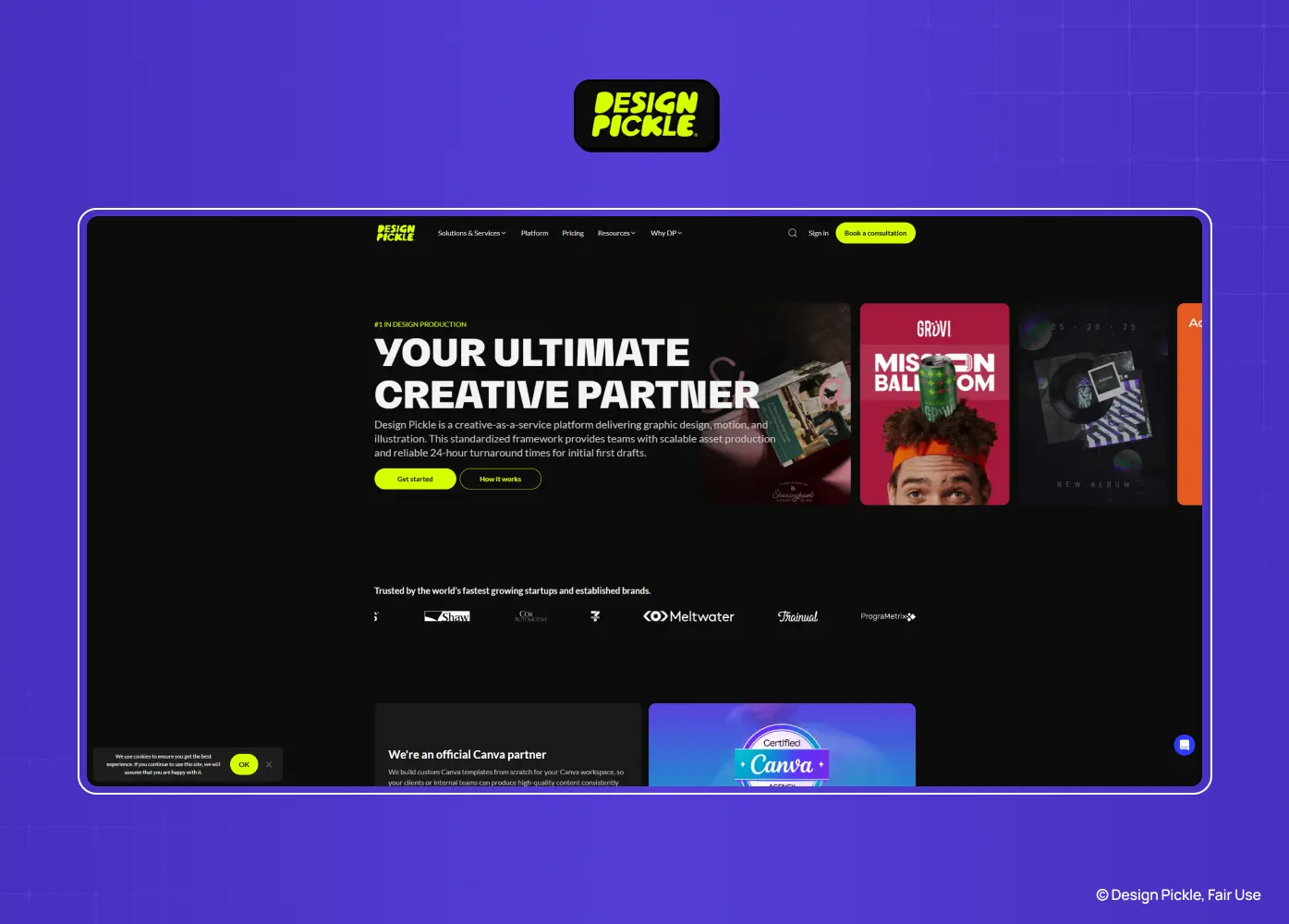
The category's most established name. Founded in 2015 and headquartered in Scottsdale, Design Pickle has completed over 3 million creative requests and serves everyone from small teams to enterprises.
Pricing: Starts around $499/month, scaling to roughly $1,695/month for more capacity and capability
Best for: Businesses needing a reliable, high volume of static marketing graphics
2. Groto: Best for SaaS and AI teams that want strategic design, not just graphics
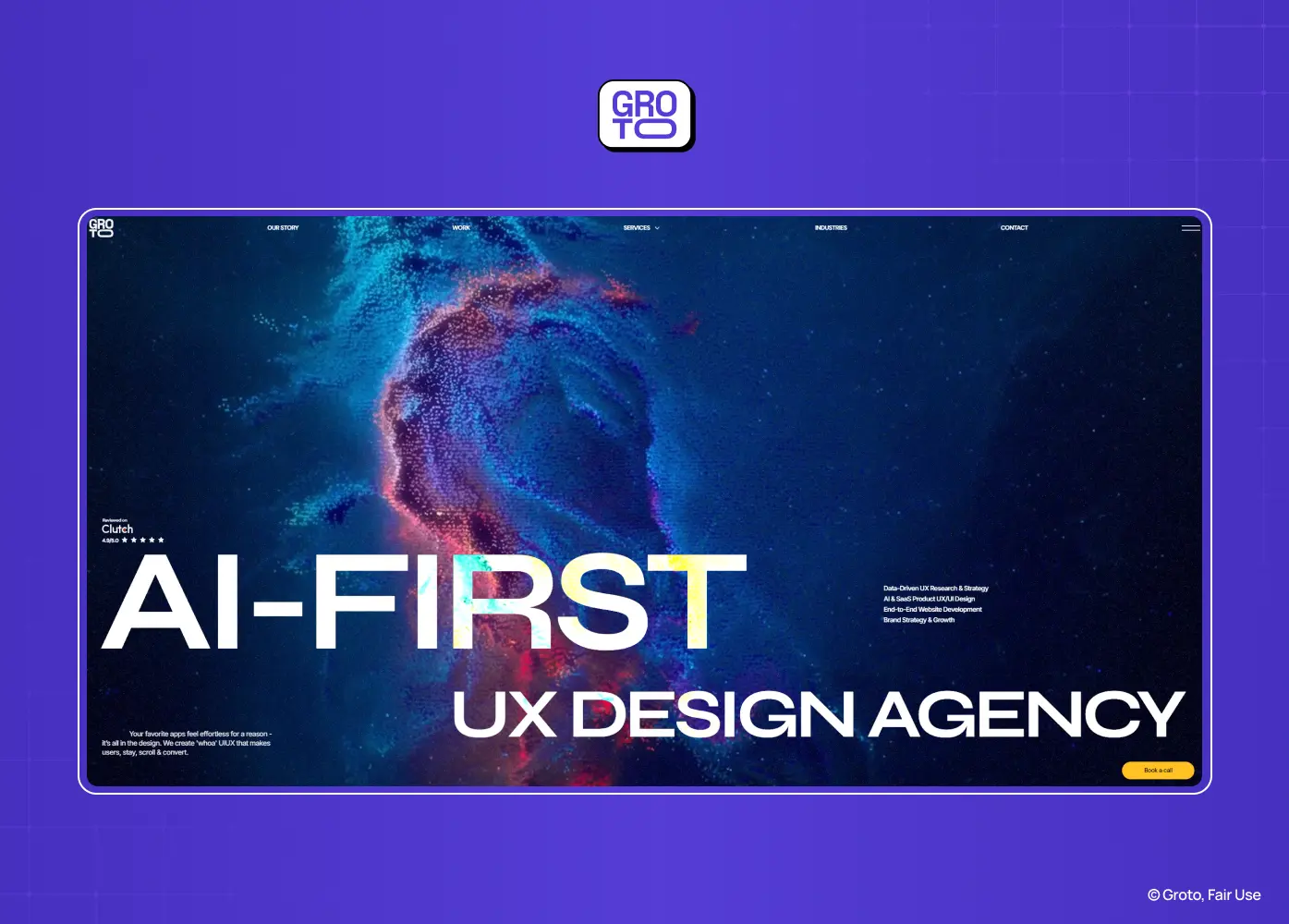
Groto pairs you with a dedicated, pre-vetted designer trained across UX, UI, brand, and marketing design, backed by PM support and the flexibility to switch between design types inside one plan. It runs more like an embedded team member than a request queue, with a 7-day free trial before you commit to anything.
Pricing: Starts at $2,399/month for the Starter plan (2 hrs/day, 5 days/week), scaling to $5,999/month for a full-time embedded designer
Best for: SaaS and AI product teams who need both marketing graphics and strategic UX/UI support from one flexible plan, not just high-volume graphics output
3. Penji: Best for budget-conscious startups
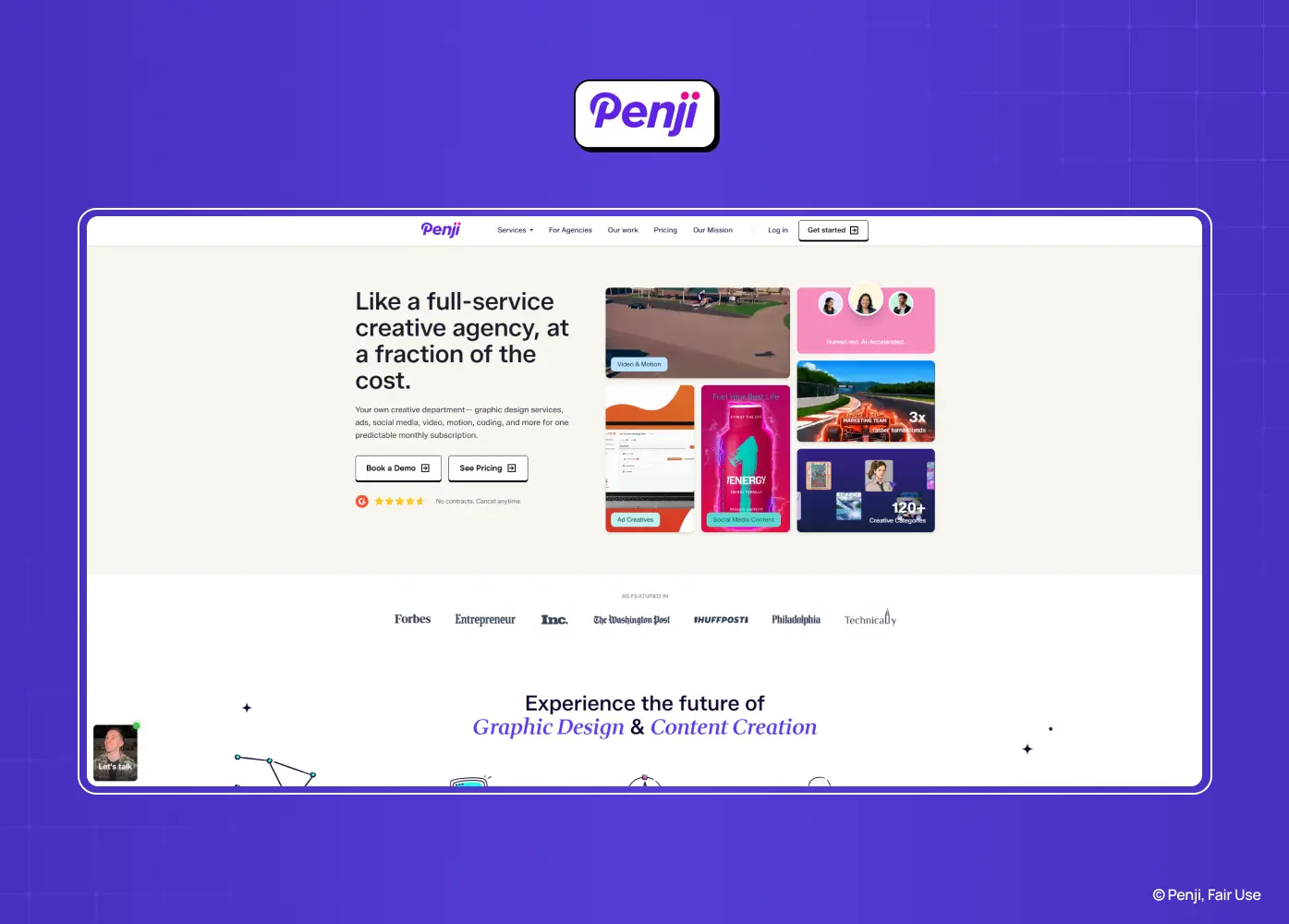
Penji Graphic Design Services help startups create high-quality branding, social media graphics, marketing materials, and other creative assets without the overhead of hiring an in-house design team.
Rating: 4.8 on Trustpilot across thousands of projects
Best for: Startups and small businesses that want quality design on a tighter budget
4. ManyPixels: Best for agencies managing multiple brands
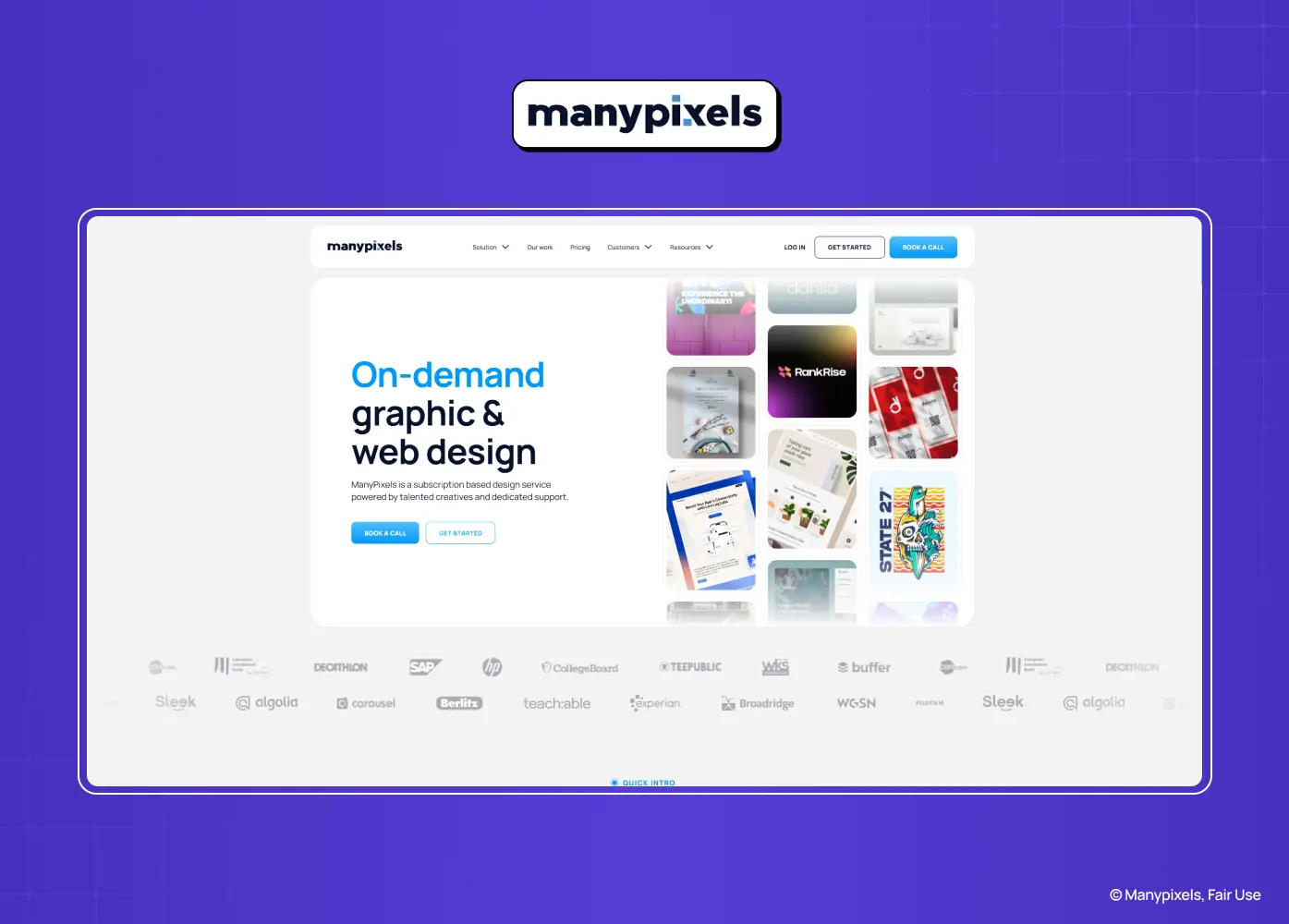
ManyPixels' Advanced plan includes a dedicated project manager, which is uncommon at this price point, plus access to logo design, branding, web design, UI/UX, social, ads, print, presentations, and motion graphics on higher tiers.
Pricing: Starts around $699/month
Best for: Agencies and teams juggling several client or product brands at once
5. Superside: Best for enterprise and mixed media
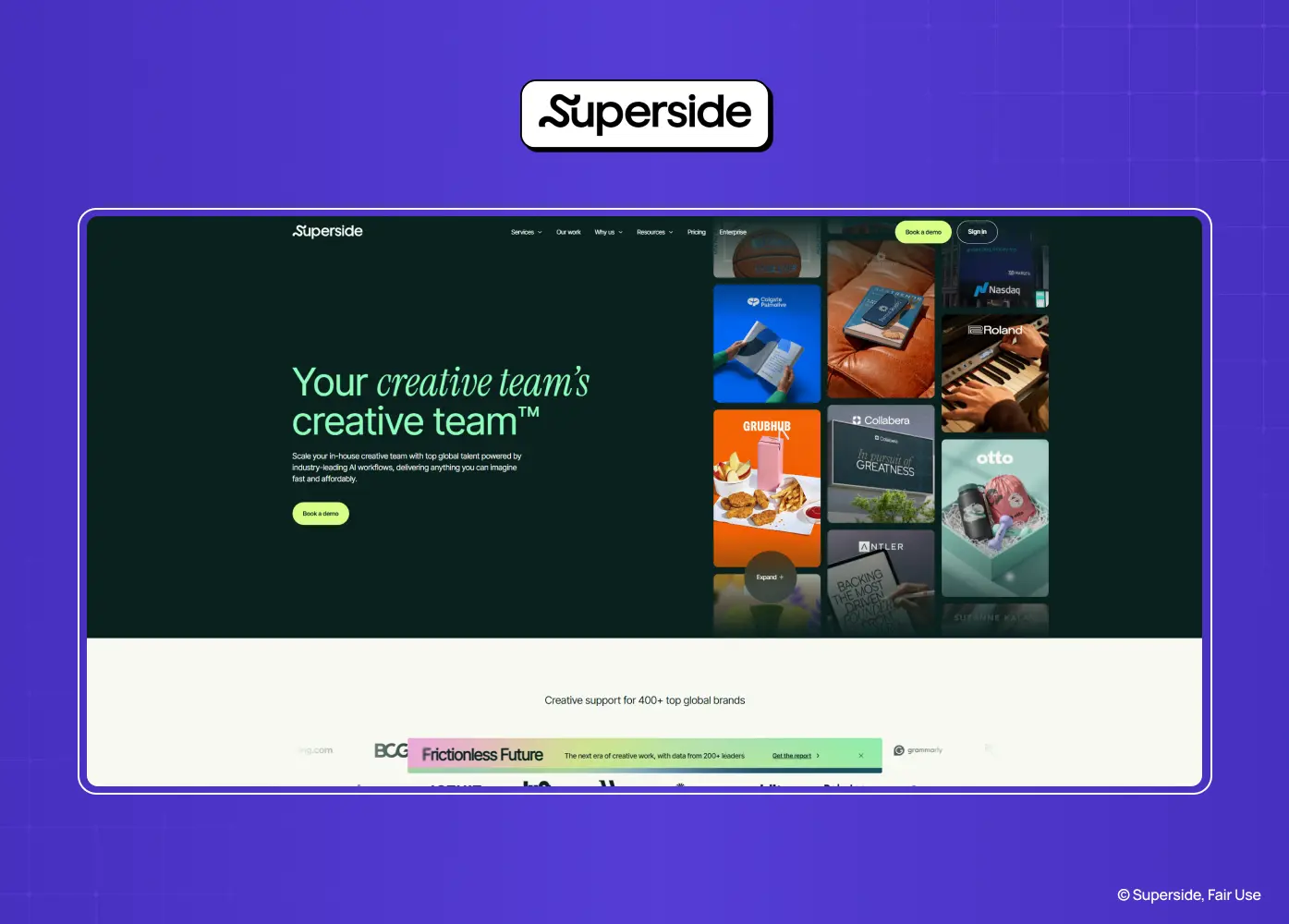
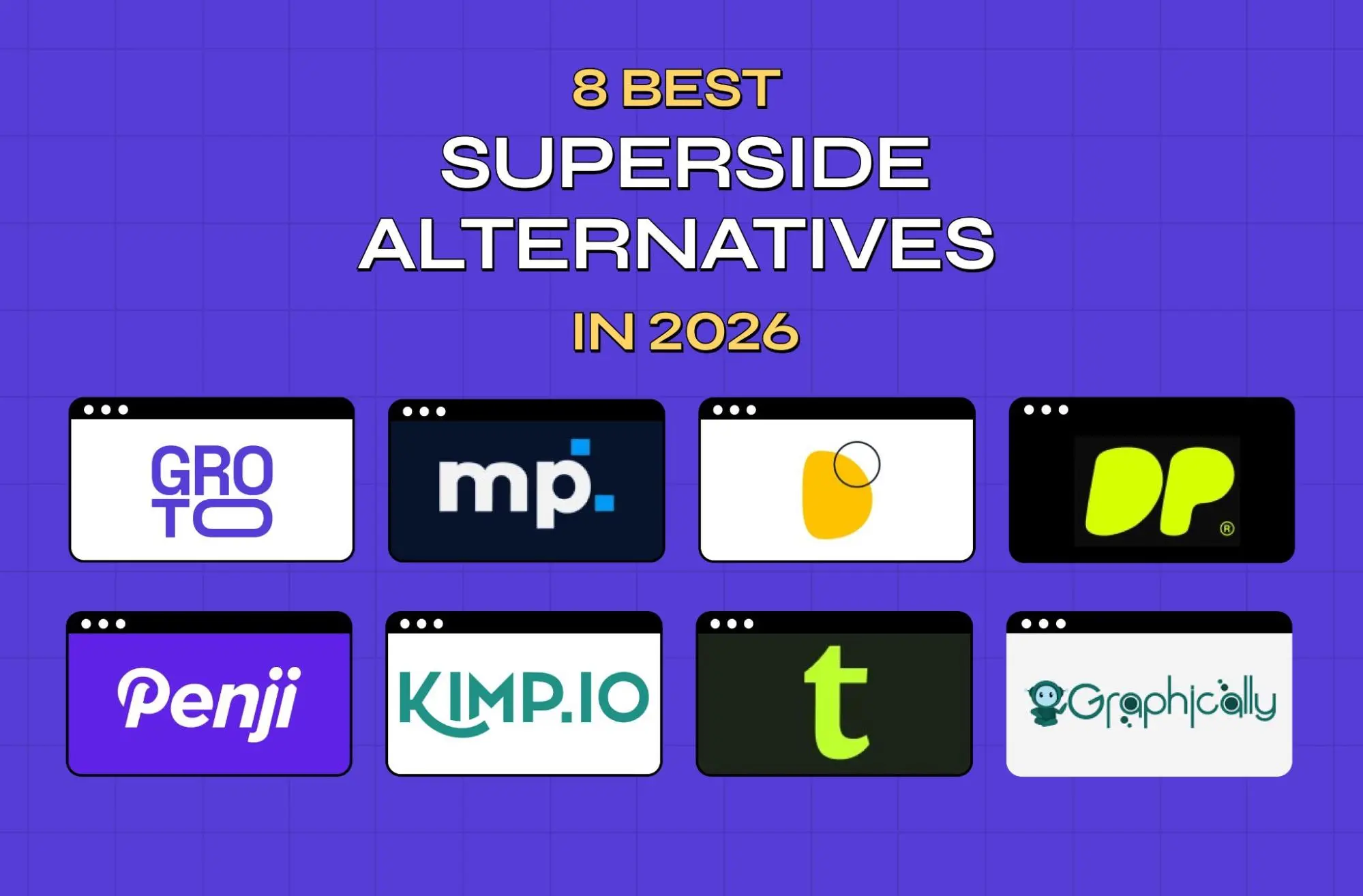
Superside targets larger organizations with its All-in-One Graphics plan and a broad scope spanning presentation, packaging, merchandise, web, and AI-enhanced design. It's positioned as a premium, scalable creative partner, though it's worth weighing the Superside alternatives before committing at that tier.
Pricing: From about $599/month
Best for: Enterprises needing wide-ranging, higher-end creative output
6. Kimp: Best for design and video together
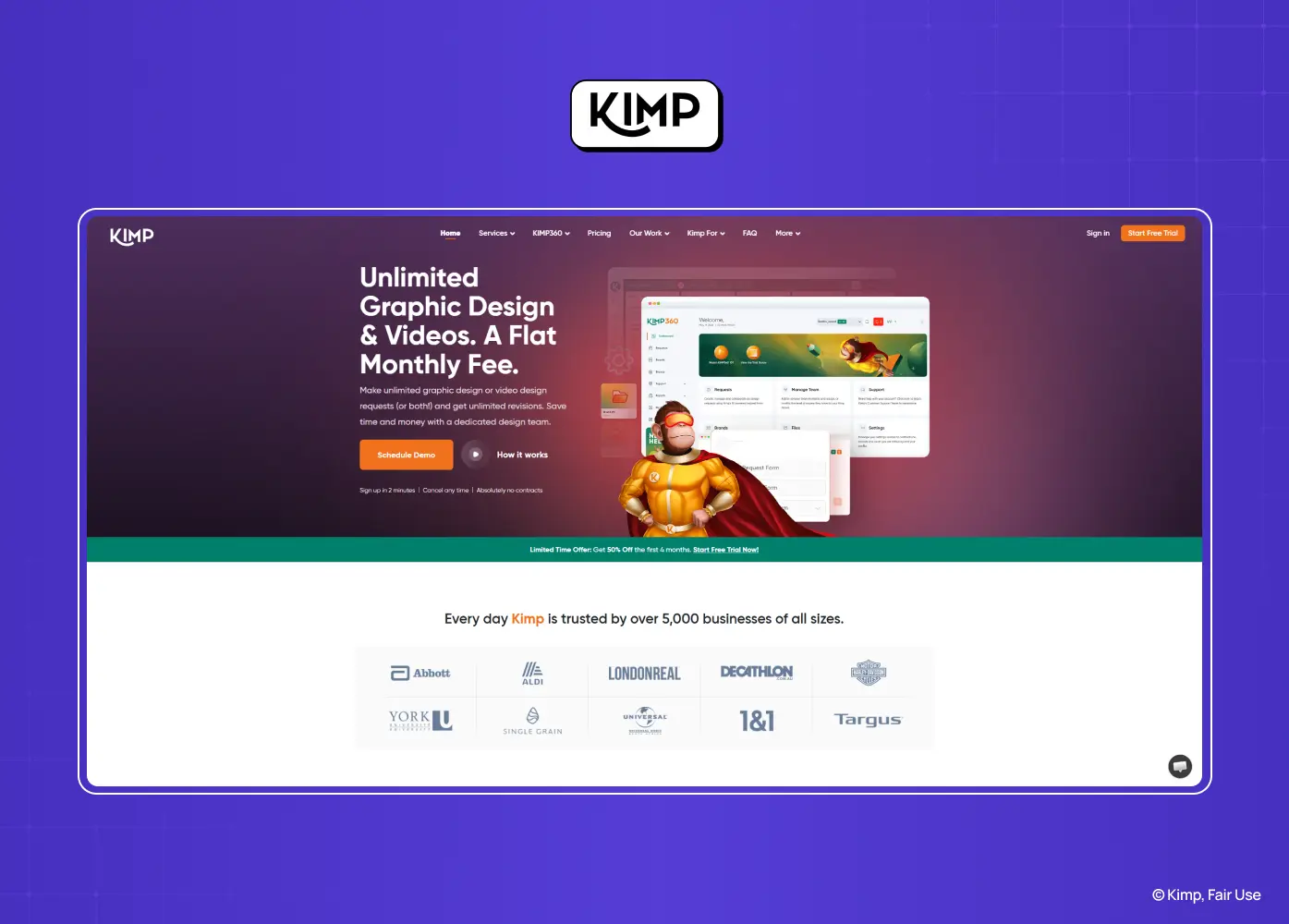
Kimp is a fuss-free hub for unlimited graphic design and video, with flat monthly fees, no complicated contracts, and easy cancellation.
Turnaround: Quick on simple projects
Best for: Brands that want graphics and video bundled in one subscription
7. Awesomic: Best for a matched-designer relationship
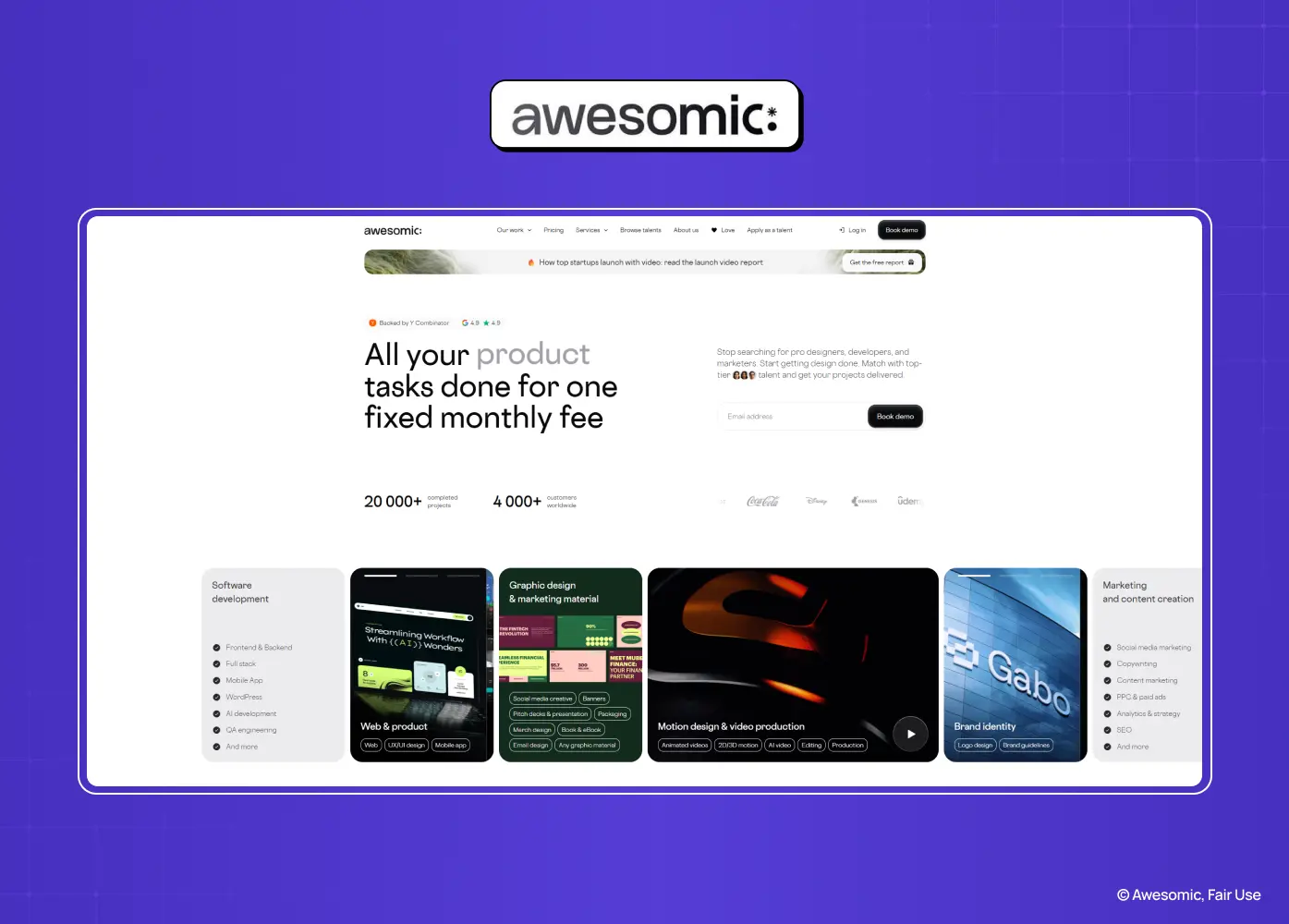
Awesomic pairs you with a matched designer through an app-driven workflow, giving startups a more personal, consistent point of contact than a rotating queue.
Best for: Startups that value continuity with a single designer
8. Cueball Creatives: Best for a curated, reviewed experience
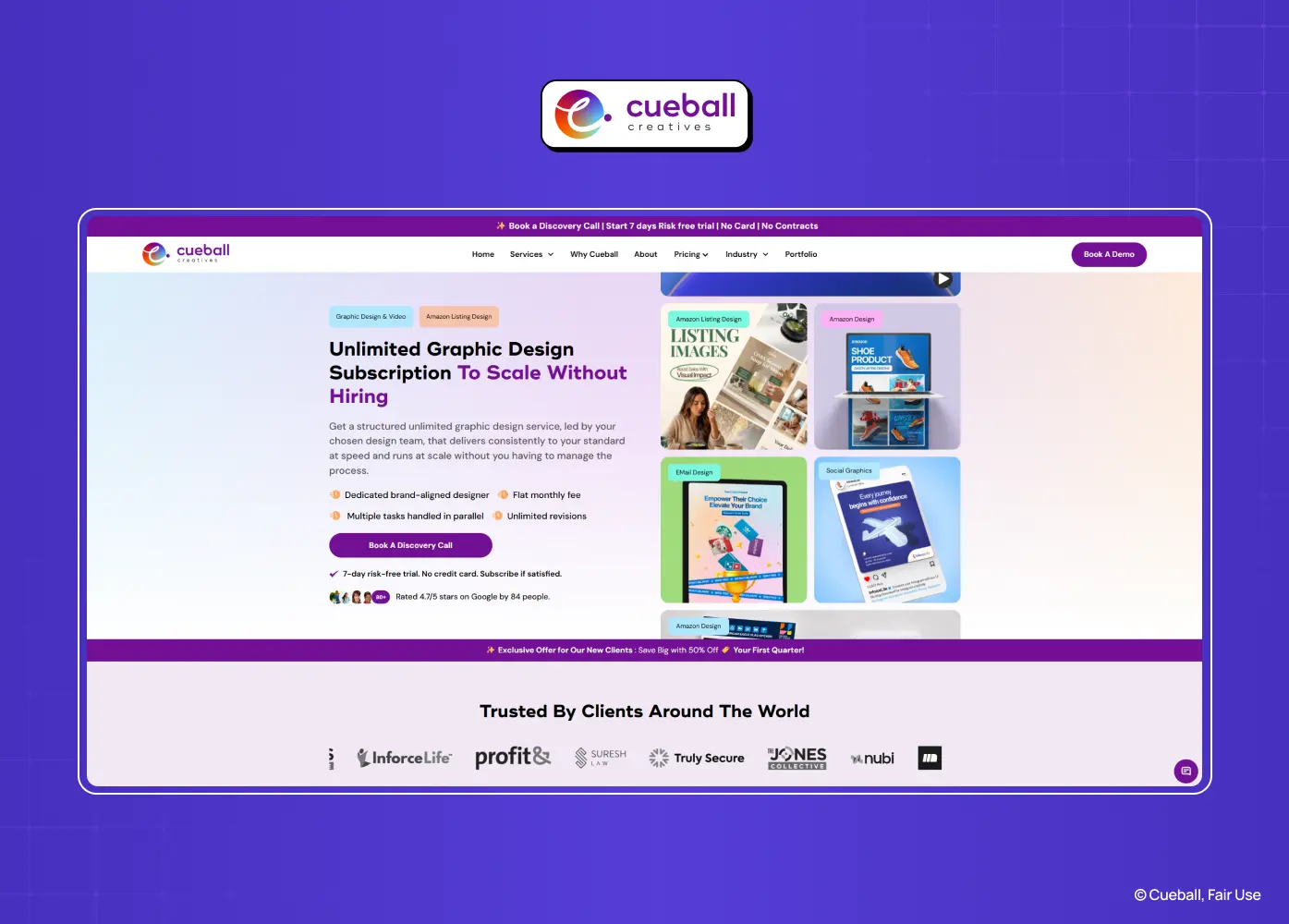
Frequently ranked at the top of independent reviews, Cueball Creatives positions itself on quality and a vetted design experience for brands that want dependable output.
Best for: Brands prioritizing consistent quality and a polished process
9. Designity: Best for scaling brands wanting creative direction
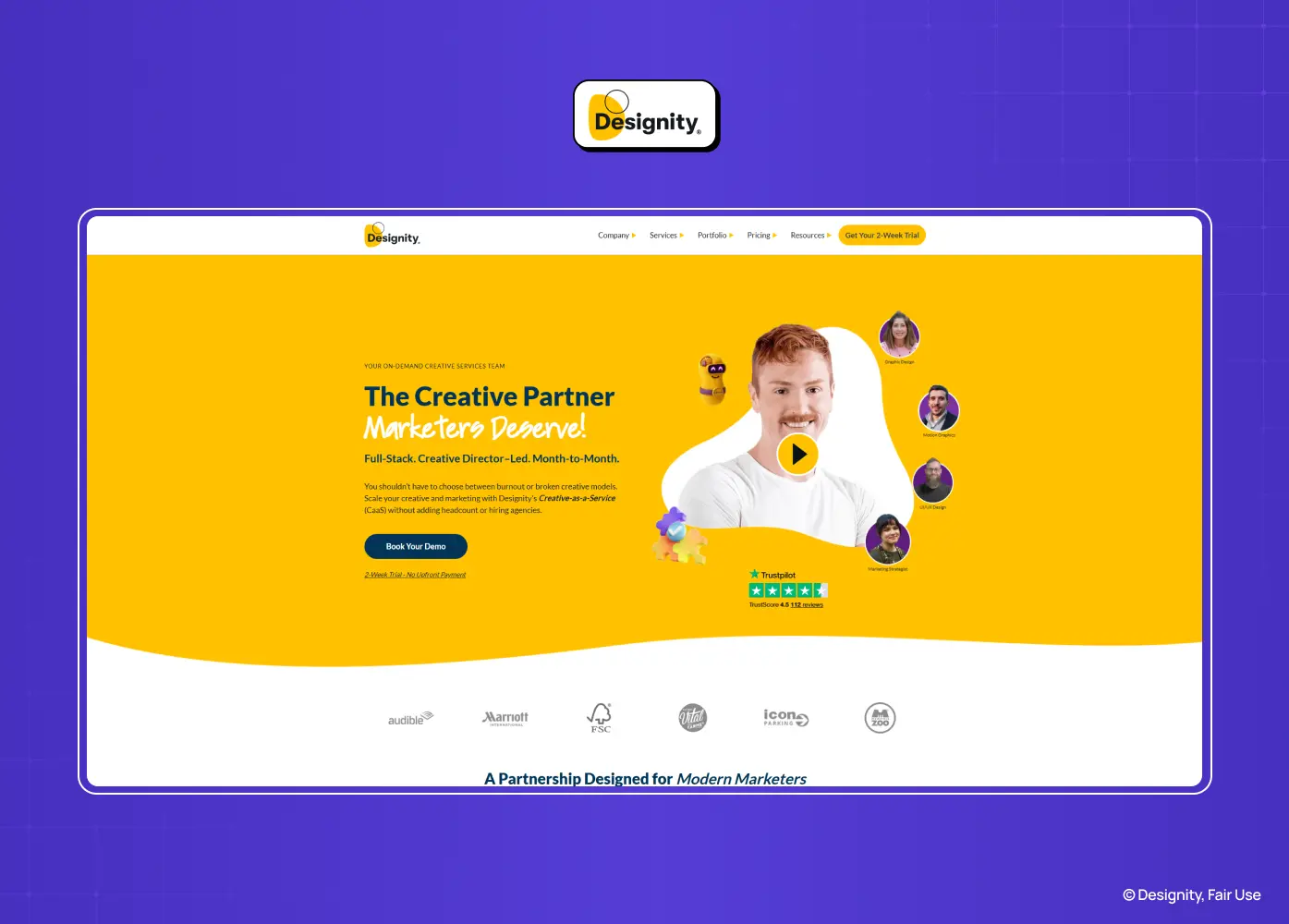
Designity blends unlimited design with a creative-director layer, aiming to give scaling brands more strategic oversight than a pure production queue.
Best for: Growing brands that want art direction alongside execution
How to choose the right subscription for you
With the field narrowed, weigh these factors to zero in on the best design subscription agency for your team.
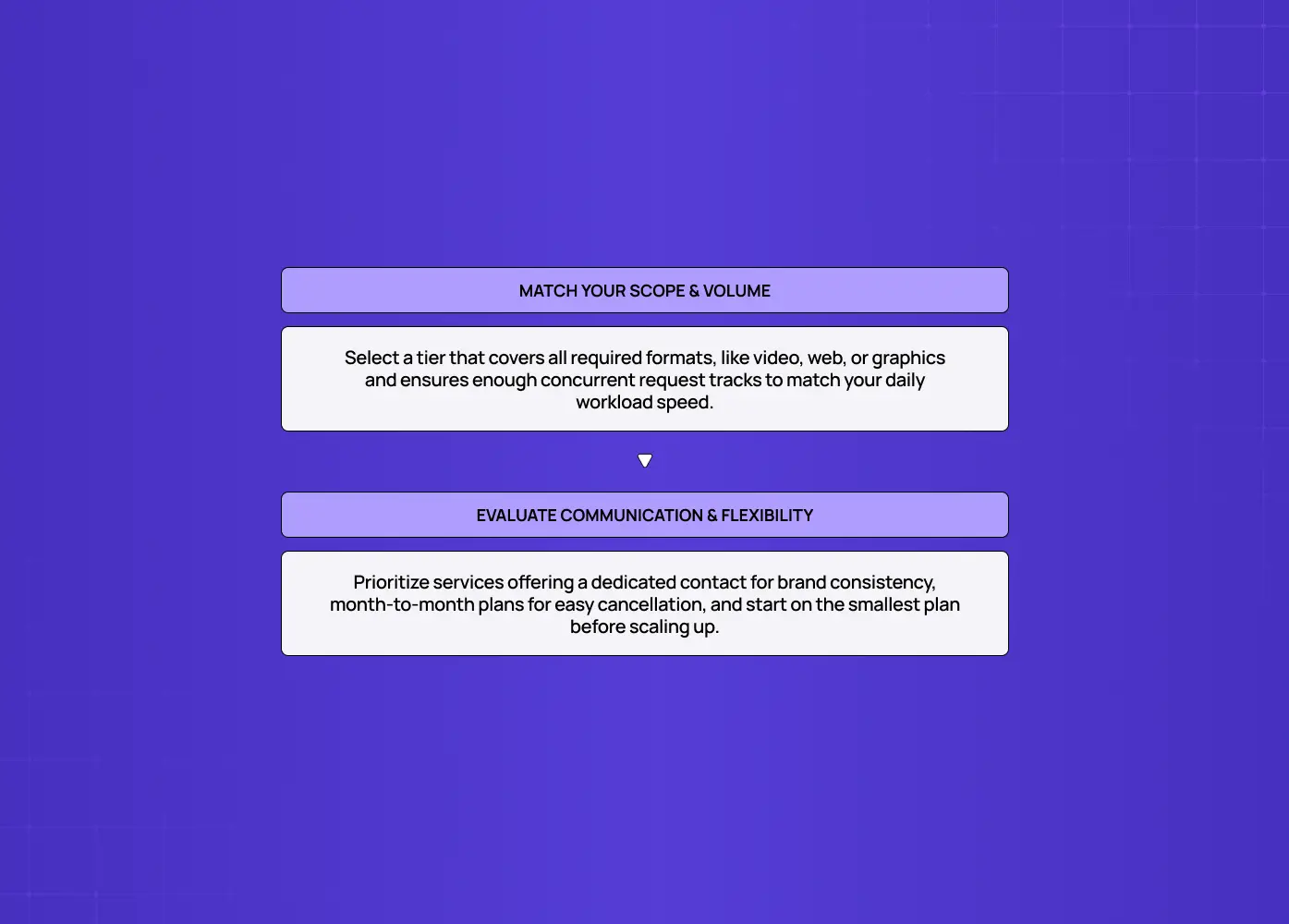
Scope: Decide if you need graphics only, or also video, web, and UI/UX. Match the plan to the widest thing you'll actually request.
Turnaround: If you ship daily, prioritize services with fast, guaranteed turnaround and possibly two concurrent request tracks.
Volume and concurrency: Most plans work one or two requests at a time, so if several things are always in flight, you may need multiple tracks or a higher tier.
Communication and continuity: A dedicated PM or matched designer produces more on-brand, consistent work than a rotating queue.
Trial and flexibility: Favor month-to-month plans with easy cancellation so you can test fit without lock-in, and run each provider through a simple vetting checklist before you sign.
Start with the smallest plan that covers your real needs and scale up only once you're consistently maxing it out.
Subscription vs. agency vs. freelancer vs. in-house
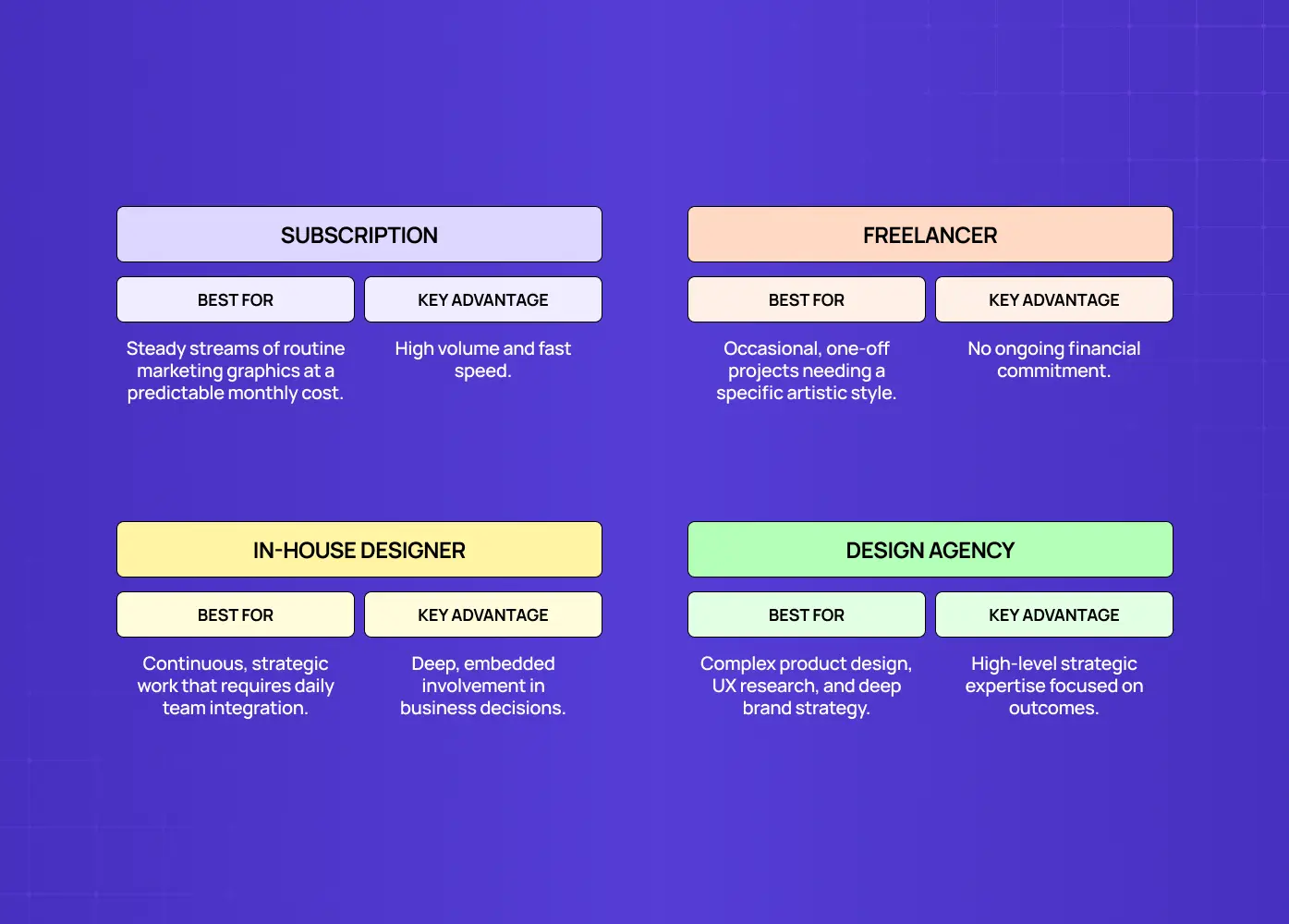
Here's the honest framework the vendor listicles skip.
Subscription: Best for a steady stream of well-defined marketing graphics at a predictable cost.
Freelancer: Suits occasional, one-off projects where you want a specific person's style and don't need constant availability.
In-house designer: Makes sense once you have enough continuous, strategic work to justify a full-time salary and want design embedded in daily decisions. If you're torn on that call, the trade-offs of an agency versus an in-house designer are worth thinking through.
Design agency or product design partner: The right call when the work is complex and strategic, product and UX design, research-led decisions, brand strategy, where you need a team immersed in your business and accountable to outcomes.
The trap is using the wrong tool for the job: routing product and UX design through an unlimited-graphics queue, or paying agency rates for a batch of social posts. Subscriptions are optimized for volume and speed on defined tasks; design partners are optimized for depth and strategy on hard problems. Most growing companies eventually use a mix: a subscription for marketing throughput, and a design partner for the product itself.
How to get the most out of a design subscription
Signing up is the easy part; extracting real value takes a little discipline. The single biggest lever is brief quality. Because most communication is asynchronous, a vague request ("make us a nice banner") burns a revision cycle while the designer guesses at what you meant.
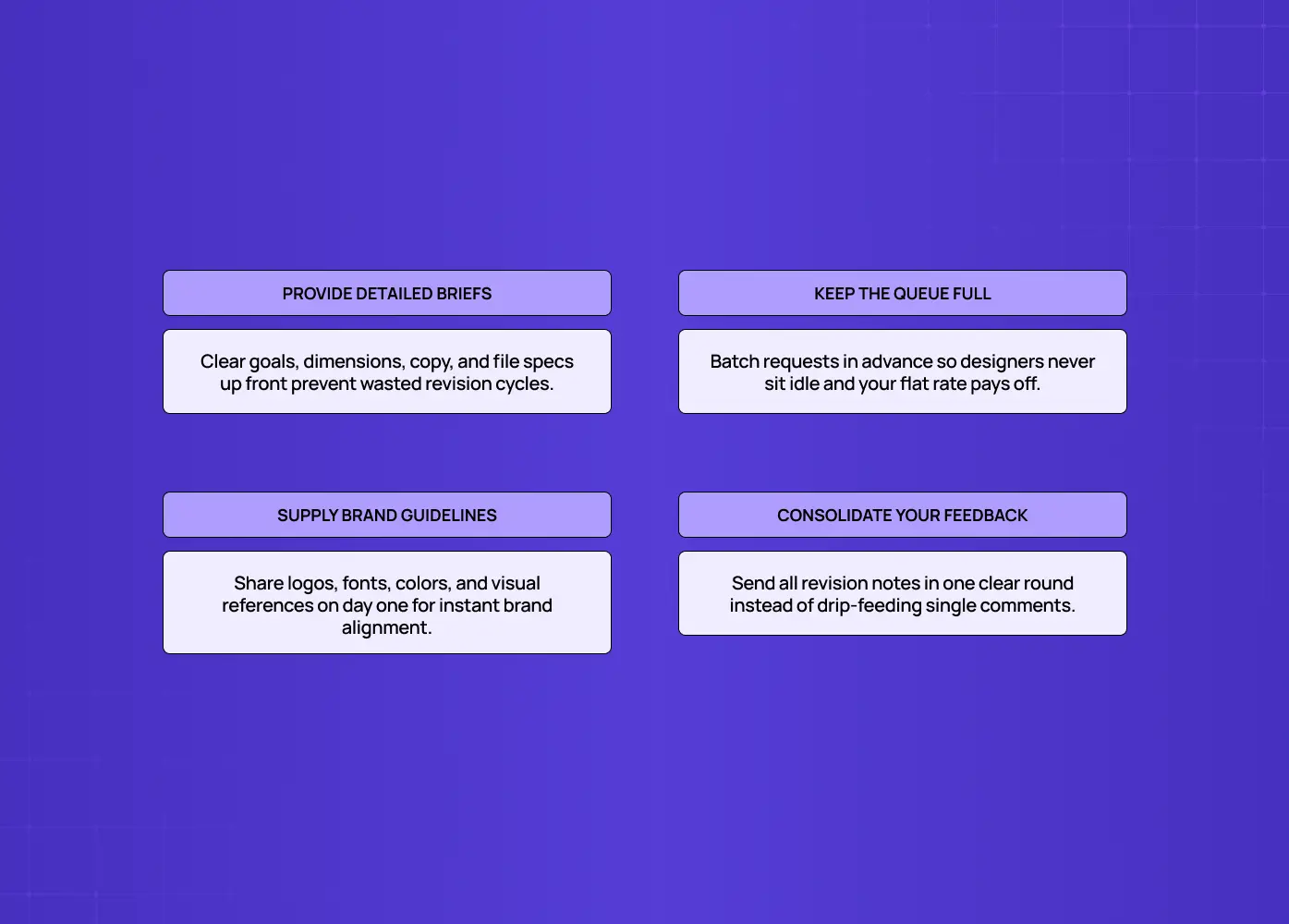
Brief quality: Spell out the goal, dimensions, copy, brand assets, references, and file formats up front; a detailed design brief keeps the designer from guessing.
Queue management: Batch your upcoming needs so the designer always has something to pull, rather than leaving the subscription idle between sporadic requests. These plans reward steady utilization: the flat fee only pays off if you're consistently feeding work in.
Brand guidelines: Share logos, typography, colors, tone, and examples of work you love on day one, especially with a rotating queue.
Feedback consolidation: Gather all your notes into a single, clear round instead of drip-feeding revisions one comment at a time.
Do these four things and a mid-tier subscription will outperform a premium one used carelessly.
Common mistakes to avoid with design subscriptions
A few predictable errors turn a good deal into a frustrating one.
Using it for the wrong work: routing complex product, UX, or strategic branding through a production queue built for marketing graphics.
Underutilizing the plan: paying a flat monthly fee and only submitting a handful of requests, which means overpaying per asset.
Skipping onboarding: not sharing brand guidelines and references, so early designs feel generic.
Expecting true parallelism: submitting many urgent requests at once when most plans work one or two at a time.
Never reassessing fit: staying on a plan that no longer matches your volume instead of reviewing usage quarterly.
Avoid these and the model does exactly what it promises.
The pros and cons at a glance
Pros:
Predictable flat-fee costs
Unlimited requests and revisions
Fast turnaround
Effortless scaling up or down
Zero hiring overhead
Cons:
Work is typically handled one or two requests at a time
Communication is largely asynchronous
Quality and consistency can vary with a rotating queue
Not built for complex, strategic, or product-level design
Weigh these against how your design needs actually behave week to week, and the right choice usually becomes obvious.
Conclusion
Graphic design subscription services solve one problem well: a steady flow of professional marketing design without hiring costs or freelance friction.
For high-volume, well-defined creative, they're one of the best deals in business today.
Match the tool to the job: a subscription for marketing throughput, a true design partner for strategic, product-level work.
If your design needs go beyond marketing graphics, if you're building a product and need research-led UX and product design, that's where a discovery call with Groto comes in. We're not an unlimited-graphics queue. We're a product design partner for teams who need depth, strategy, and design that ships. Book a call and let's figure out what your product actually needs.