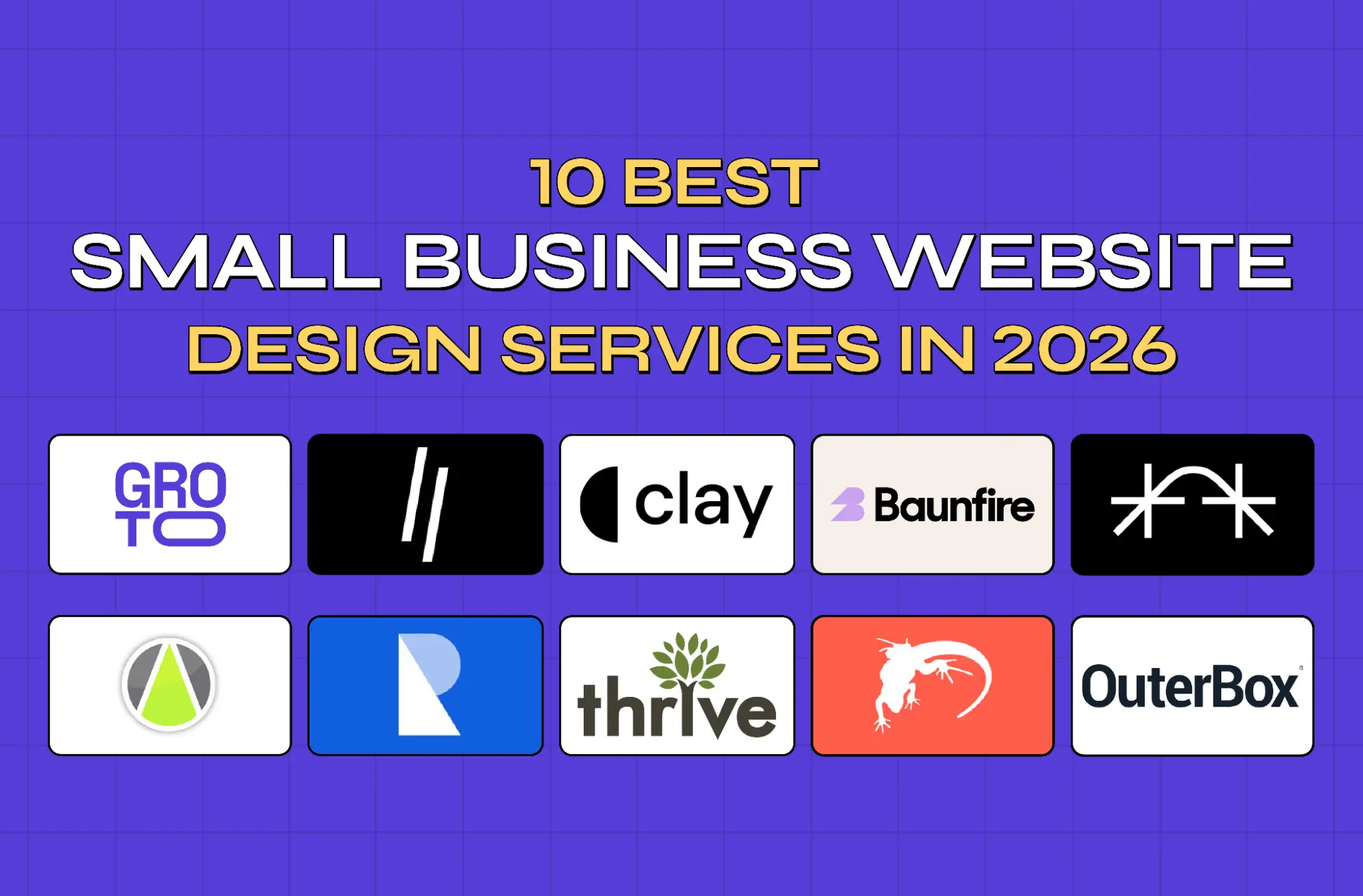
Your website is your most commercially leveraged digital asset. This guide ranks the 10 best small business website design services of 2026, covering what each agency does best, what it costs, how long it takes, what to watch out for, and how to choose the one that fits your actual goal.
10 agencies that build websites designed to convert, rank, and scale in 2026.
TL;DR
Your website is your most scalable commercial asset. A poorly designed one is quietly costing you customers every day.
The best agencies do not just make websites look good. They make them convert, rank, and scale.
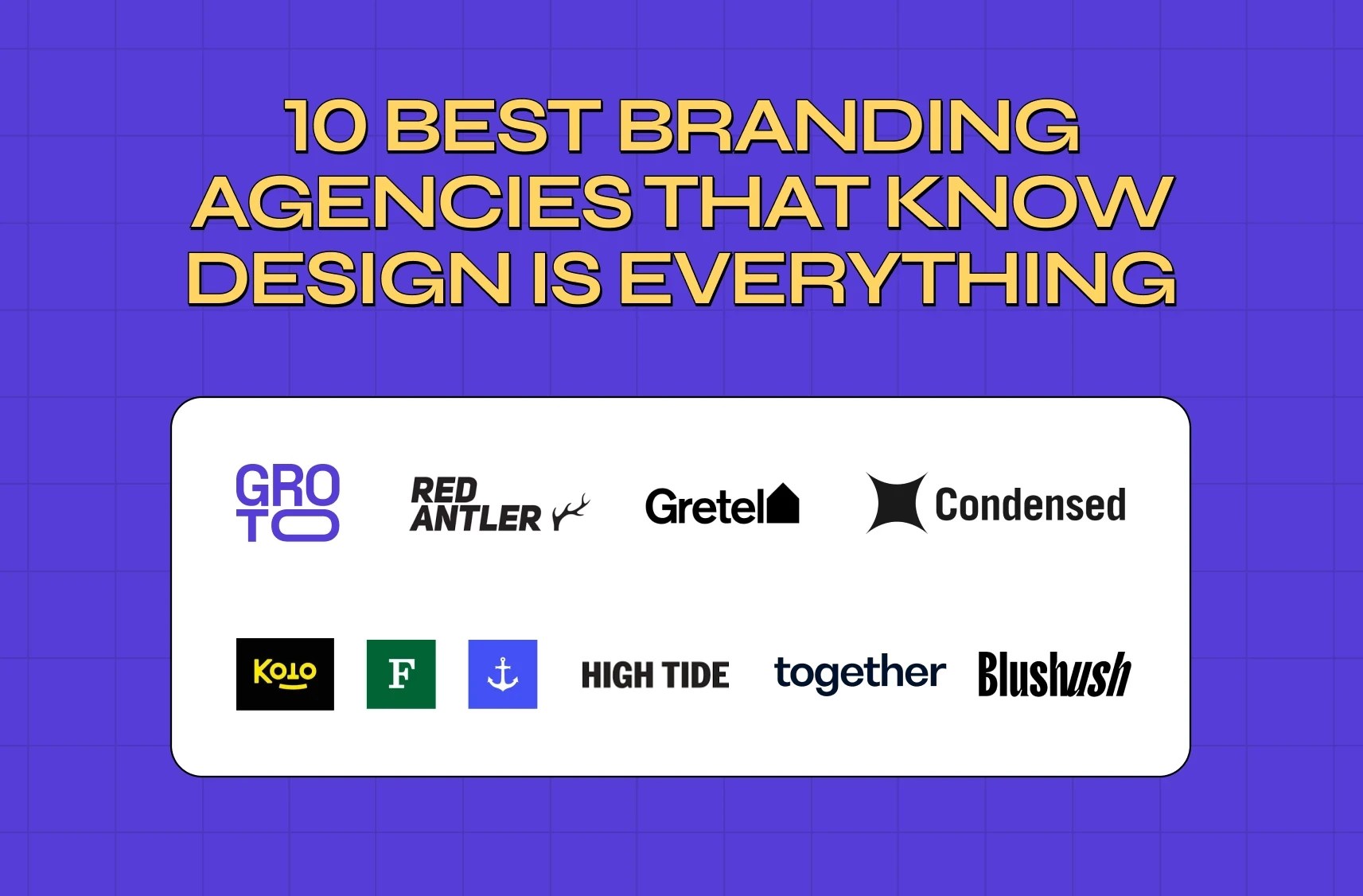
We have ranked 10 agencies that consistently deliver design-led, commercially focused websites for small businesses.
In 2026, a well-built site also needs to perform in AI-powered search environments, not just on Google.
Groto leads this list for businesses that need design rooted in UX strategy, brand clarity, and real conversion outcomes.
If you are short on time, jump straight to the comparison table below.
Why Choosing the Right Agency Matters More Than Choosing the Right Template
Most small business owners spend more time picking a font than they do picking a design partner. That is a mistake with real commercial consequences.
According to Stanford Web Credibility Research, 75% of consumers judge a company's credibility based on its website design alone. Your site is not just a marketing asset. It is your most visible signal of whether you can be trusted. And that trust judgment happens fast. Your homepage has roughly 3 seconds to communicate who you are, what you do, and why a visitor should stay — which is why studying strong homepage design examples before you brief anyone pays off. If the design fails that test, no amount of good copy or paid ads will fix it downstream.
There is also a 2026-specific shift that most agency comparison articles are not yet addressing: AI search readiness. Platforms like ChatGPT, Perplexity, and Google's AI Overviews now surface business recommendations directly in search results, without users ever clicking a link. Whether your website gets cited in those AI-generated answers depends on your website structure, how clearly it communicates your value proposition, and whether it includes the right schema and entity signals for AI systems to understand. An agency that builds you a well-designed website but ignores these signals is building for 2022, not 2026. Understanding the modern web design principles that define the current standard helps you evaluate any agency brief.
The agencies on this list were evaluated on six criteria: design quality, UX and conversion thinking, portfolio breadth, communication, long-term scalability, and built-for-search fundamentals including AI search readiness. Each one brings something distinct to the table. Here is how they stack up.
How We Built This List
Groto is the author of this article and appears first on this list. We have included ourselves because this list reflects our own standard of work, and we have positioned the remaining nine agencies on their independent merits.
Each agency was evaluated against the same six criteria: live portfolio quality, documented UX and conversion process, client references and Clutch ratings, project scope documentation, post-launch support policies, and SEO and AI search fundamentals. No agency paid for placement. The rest of the list was selected because these agencies represent genuinely strong, differentiated options for small businesses at different stages and with different primary goals.
Agency vs. Freelancer: Which Is the Right Call?
Before shortlisting agencies, most small business owners are still working through a more fundamental question: should you hire an agency at all, or work with a freelancer?
Both are legitimate options depending on what your site needs to do. Here is an honest comparison. For a deeper breakdown of how agencies price their work, see our web design agency pricing guide.
Factor | Freelancer | Boutique Agency | Full-Service Agency |
Typical cost | $1,500 to $8,000 | $5,000 to $25,000 | $15,000 to $60,000+ |
Accountability | Variable | Structured | Structured |
Design quality ceiling | Depends on individual | Consistently high | Consistently high |
Communication overhead | Low | Medium | Medium to high |
Post-launch support | Often ad hoc | Defined in contract | Defined in contract |
IP and file ownership | Varies widely | You own everything | You own everything |
For businesses investing above $5,000 in a site that needs to convert, rank, and scale, an agency offers better structure, accountability, and long-term value than a freelancer — and for teams not ready to hire in-house, an interim design studio delivers that structure without a permanent headcount. Freelancers can be excellent for one-off projects or early builds on a tight budget — as can an AI site builder for a first version. But if your website is your primary commercial asset, a single point of failure is a real risk.
The 10 Best Small Business Website Design Services in 2026
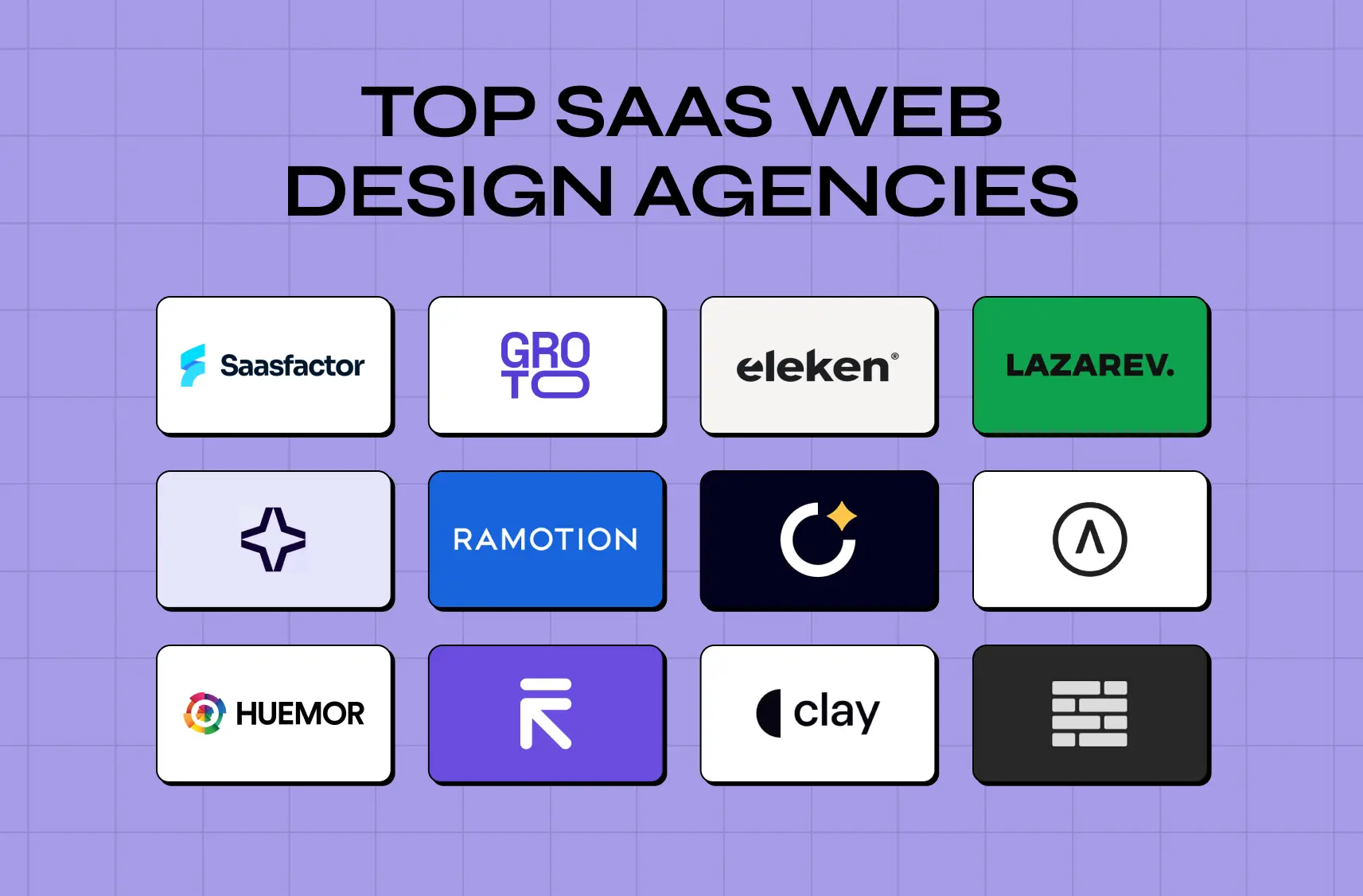
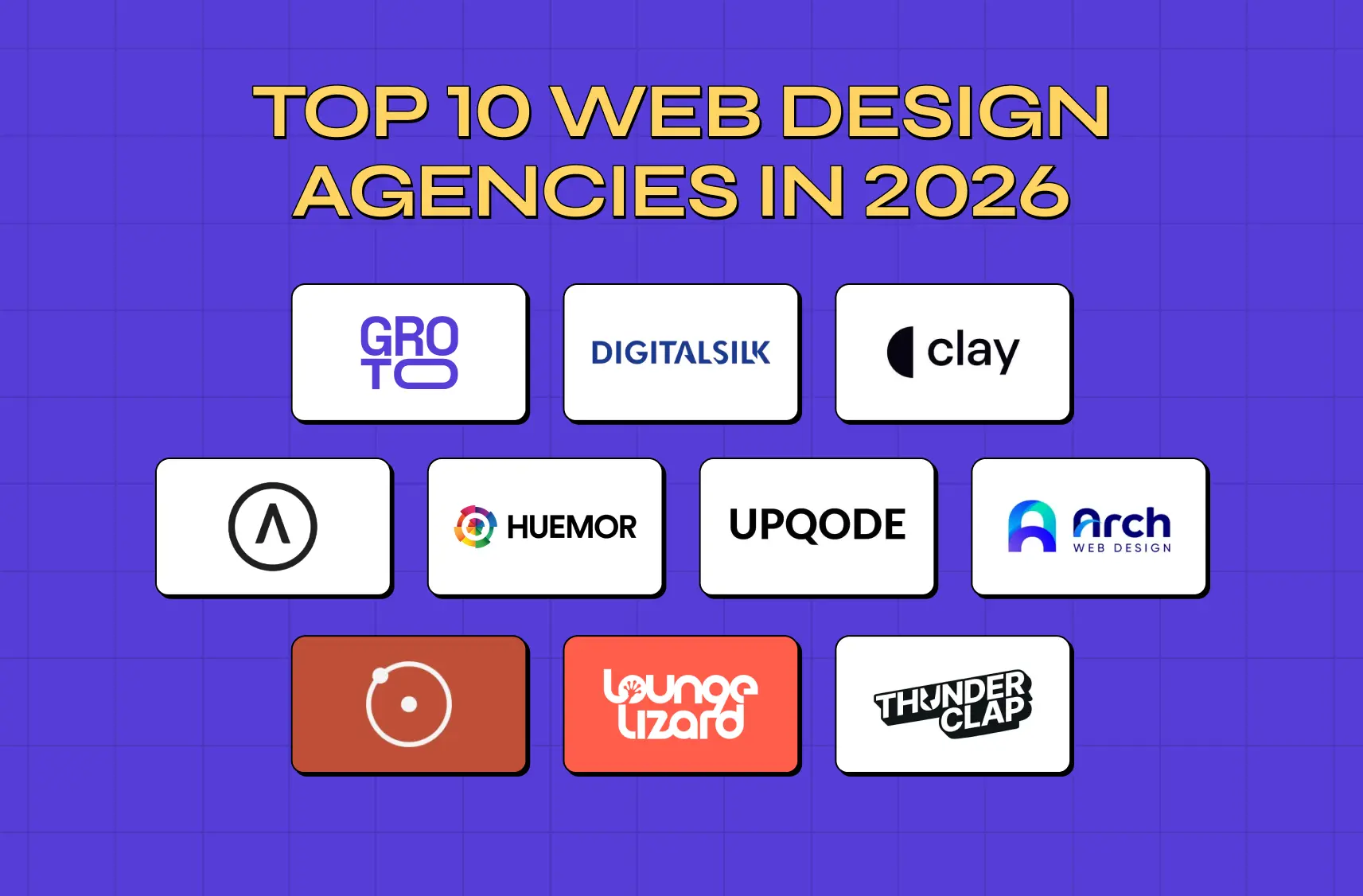
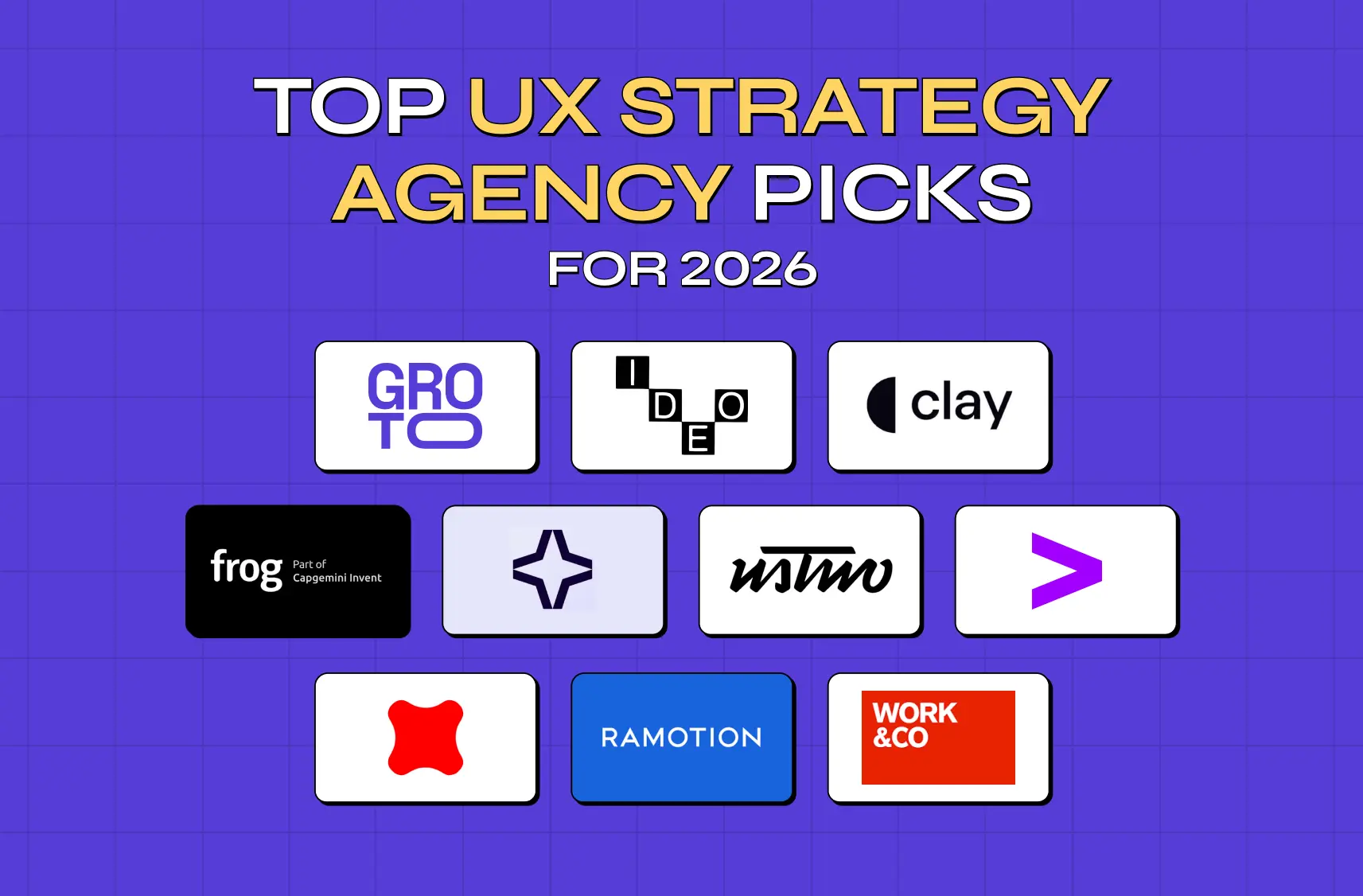
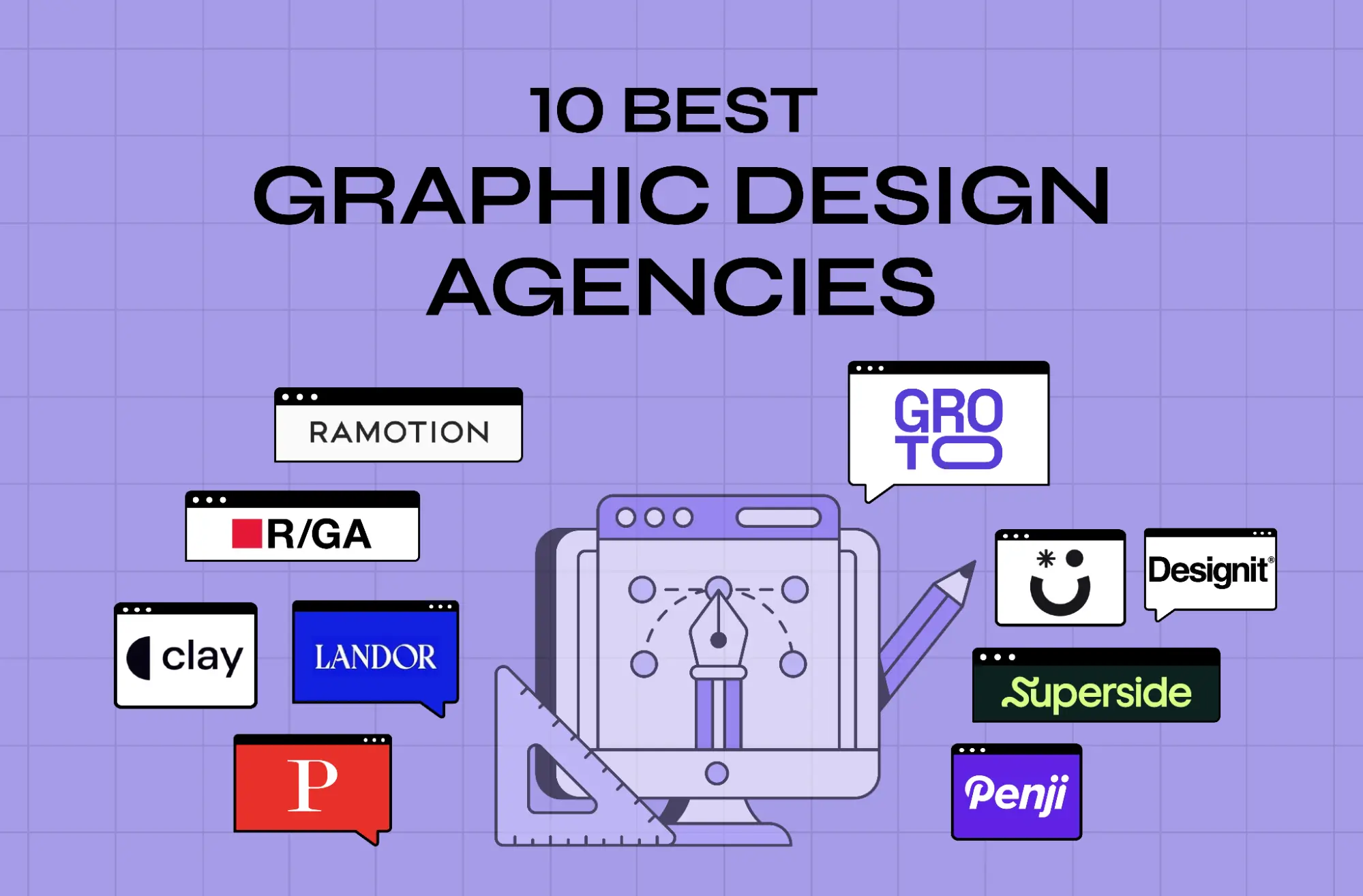
Agency | Best For | Key Strength | Starting Price |
Groto | UX-led web and product design | Conversion-focused custom design | Custom pricin |
Parallel HQ | SaaS and AI startups | Product design + web, startup-native | $8,000+ |
Clay Agency | Brand-forward businesses | Premium visual identity | $15,000+ |
Baunfire | B2B marketing sites | Conversion-led landing pages | $20,000+ |
Locomotive | Content-heavy brands | Webflow + CMS expertise | $10,000+ |
Straight North | Lead generation focus | Data-driven, conversion-first design | $1,500/month |
Ramotion | Brand + web combined | Logo to launch packages | $12,000+ |
Thrive Internet Marketing Agency | SEO-driven lead gen | Web design integrated with full SEO | $1,500/month+ |
Lounge Lizard | Brand-forward full-service builds | 25+ years, brand-to-web delivery | $25,000+ |
OuterBox | Ecommerce and performance sites | SEO-first ecommerce web design | $10,000+ |
1. Groto
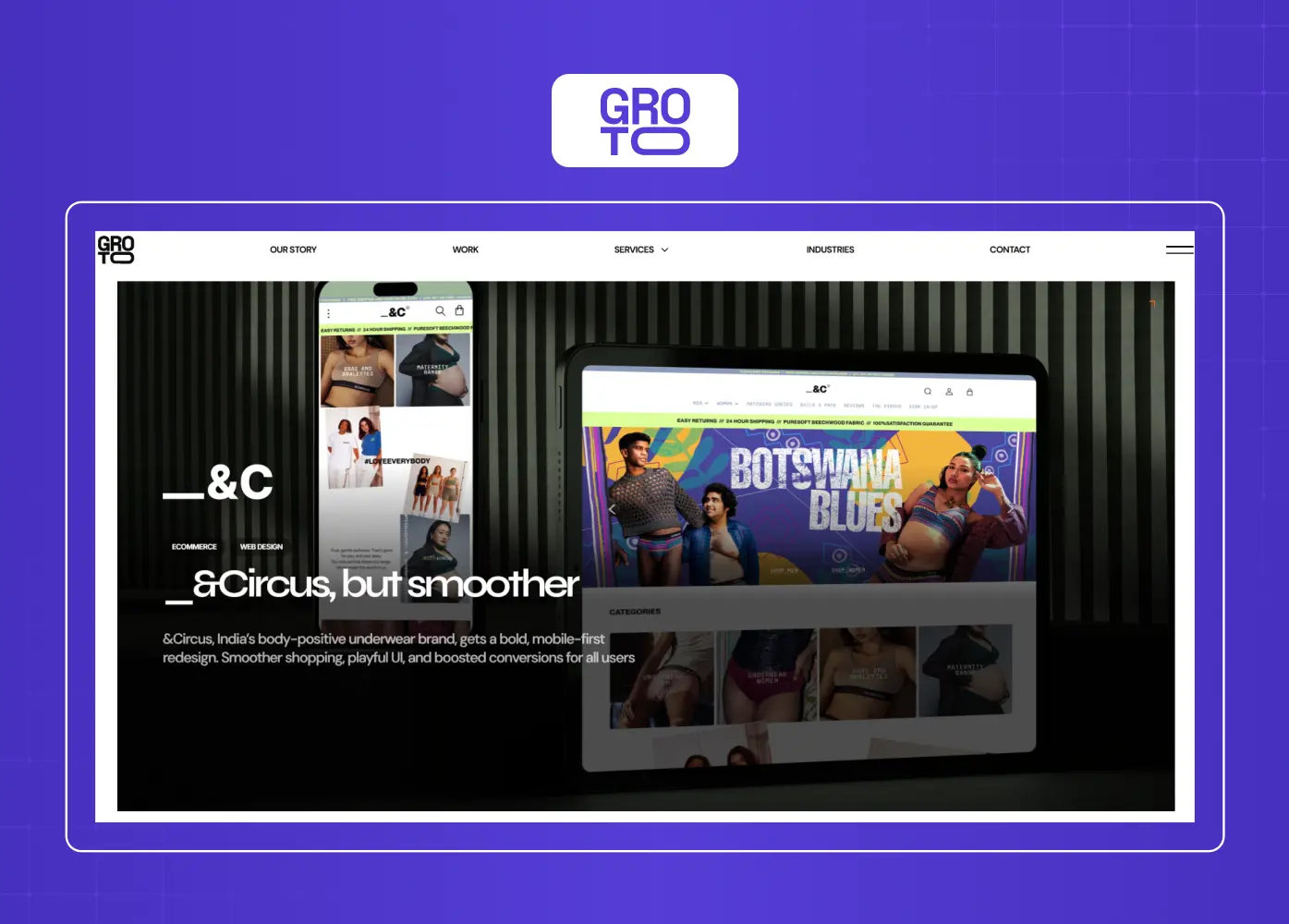
Best for: Small businesses, startups, and growth-stage brands that want bespoke web design with commercial intent.
At Groto, we do not design websites to win awards. We design them to win customers.
Every project starts with a clear commercial brief: what does this website need to do? From there, our process moves through UX strategy, wireframing, visual design, and delivery, all under one roof, with no handoffs between a "strategy team" and a "creative team."
What sets Groto apart:
Conversion-first design thinking. Every layout decision is tied to a business outcome, which is what separates interface design services from decoration. We do not place a CTA where it looks nice. We place it where it converts. Research from HubSpot indicates that SEO-aligned, conversion-focused design can generate up to 67% more leads per month compared to sites built without these fundamentals in mind. That is the standard we hold every project to.
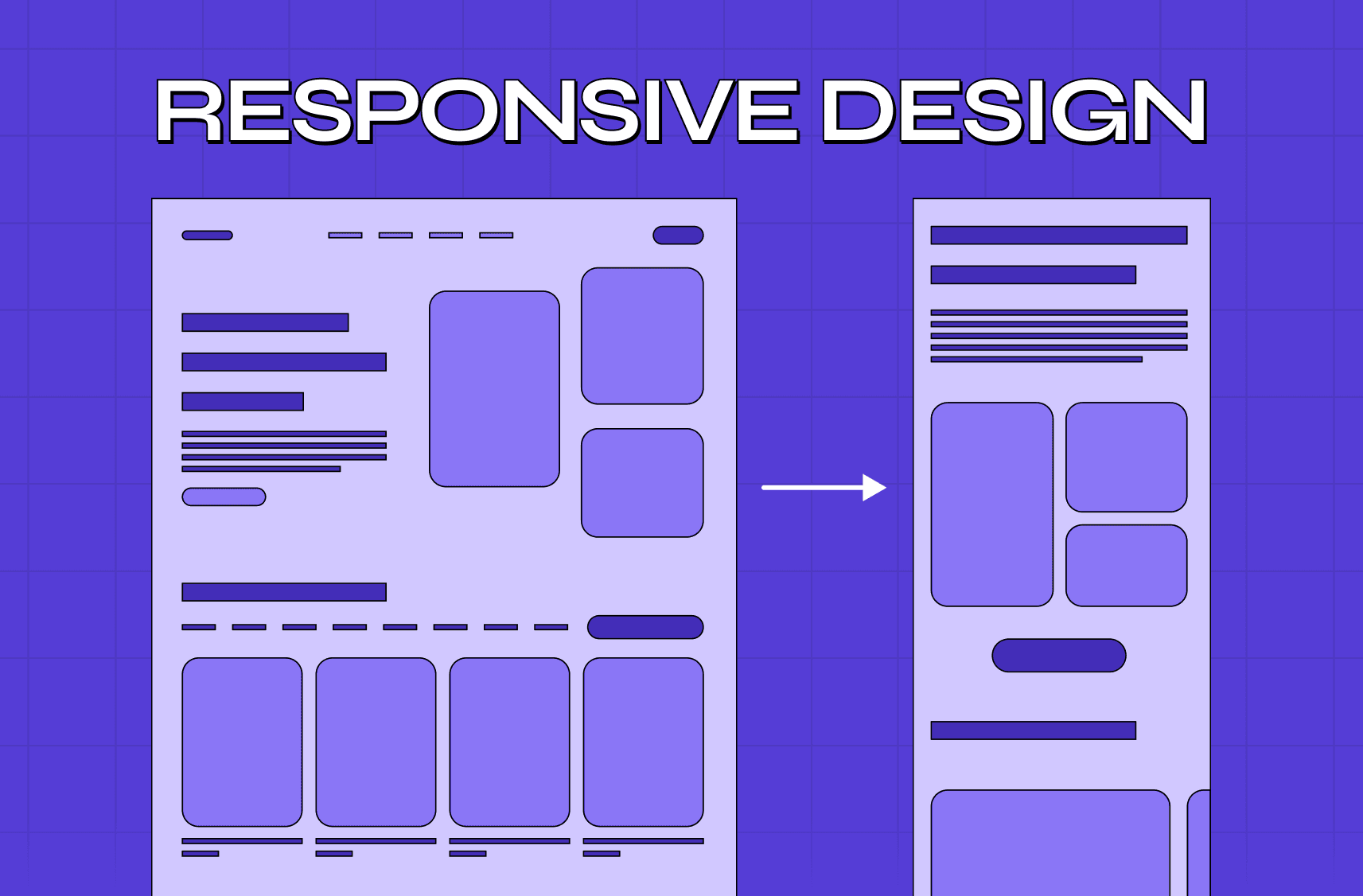
Mobile-first from the ground up. With over 60% of global web traffic now arriving from mobile devices, the mobile experience cannot be an afterthought. See how responsive web design services approach this from the ground up. We build mobile-first by default, designing specifically for how people actually browse, not just shrinking a desktop layout.
Real case studies, not stock screenshots. Our portfolio spans AI platforms, ecommerce, fintech, edtech, and SaaS. Every project is documented with context and outcomes, not just visuals.
Design systems that scale. We build with the next three years in mind. The sites we deliver can grow with your business without needing a full rebuild every 18 months.
Built for AI search from day one. Every site we deliver is structured for both traditional SEO and AI search visibility: clean heading architecture, schema markup, and entity-clear copy that platforms like ChatGPT and Perplexity can parse and cite.
Groto in action: When &Circus, India's body-positive underwear brand, came to us for a redesign, conversion was the central brief. We restructured the entire shopping experience: cleaner product pages, a bolder mobile UI, and a checkout flow that removed friction at every step. The result was a measurably smoother path to purchase and stronger overall conversions.
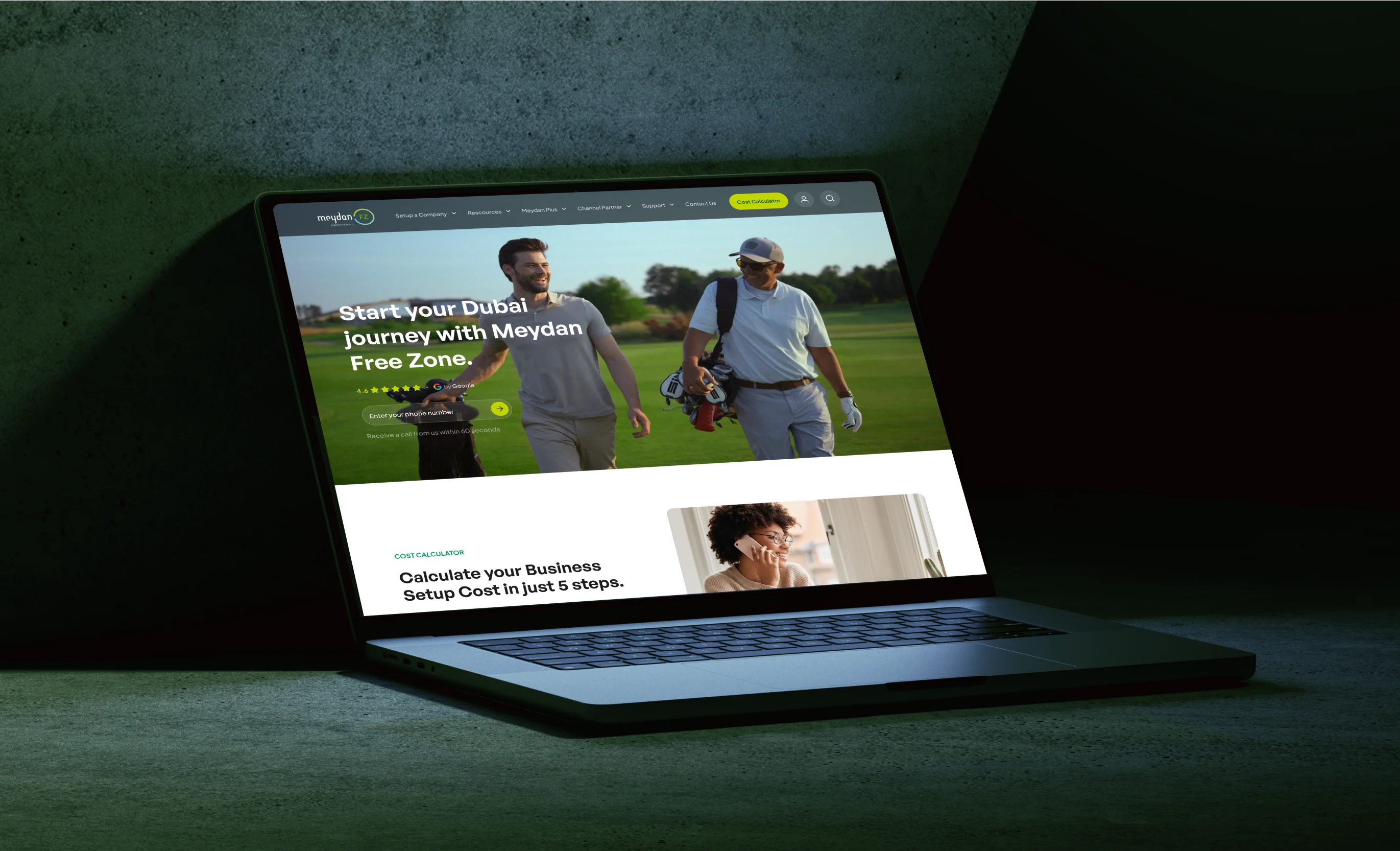
For Meydan FZ, a Dubai-based freezone authority, we tackled a site with a serious scroll problem. Heatmap data showed that nearly 62% of users were not making it past the second section. After our redesign, the hero section led with a sharp value statement, unambiguous navigation, and a cost calculator that became the most-used feature on the site.
For Camb.ai, a real-time AI dubbing platform serving 140+ languages, we rebuilt the product experience to reduce cognitive load and surface the platform's core value faster. The result was a cleaner, more intuitive UI that improved engagement for a globally diverse user base.
If your website does not reflect the quality of what you actually offer, that gap is costing you business right now.
2. Parallel HQ
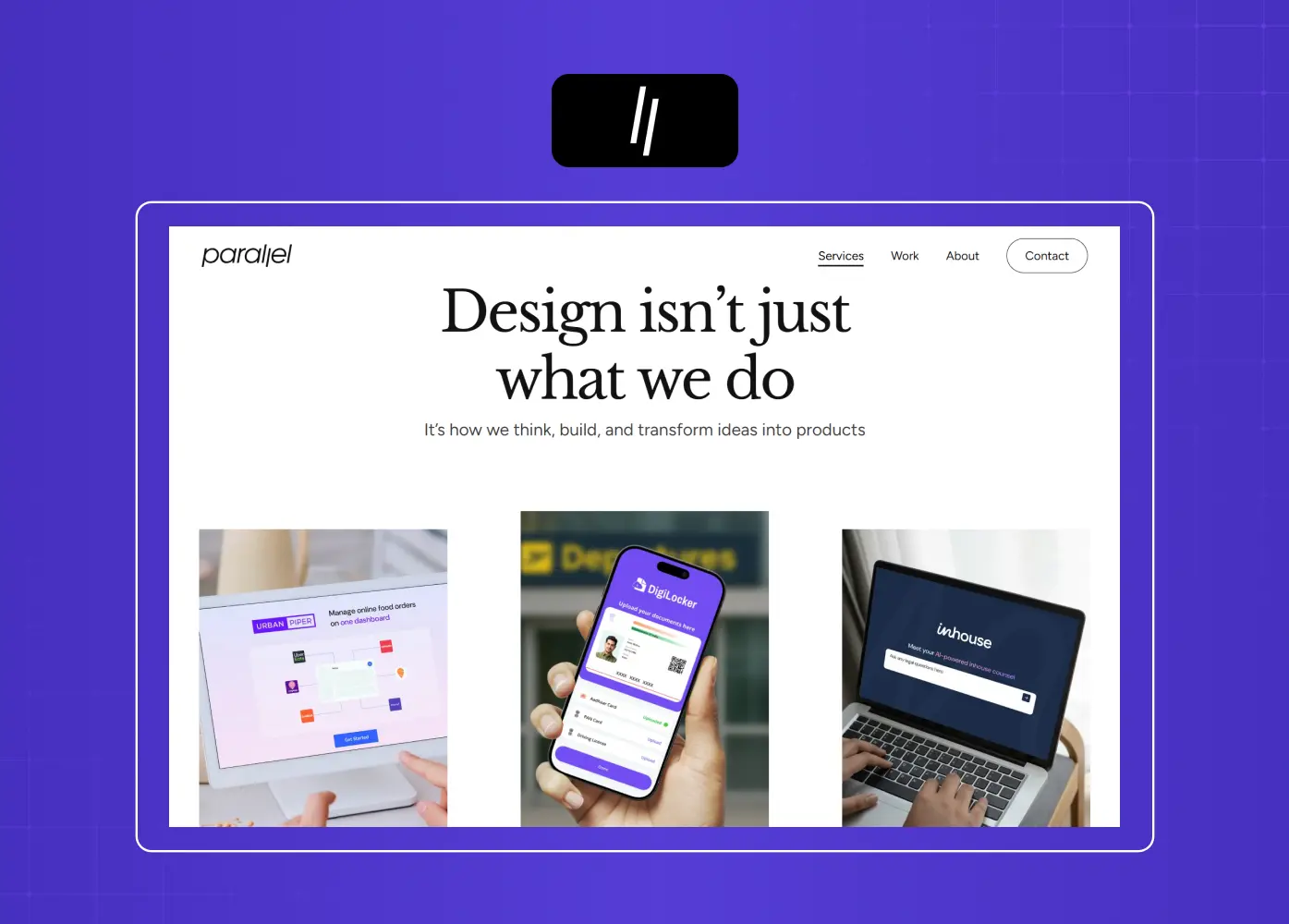
Best for: Early-stage SaaS and AI startups that need design grounded in product thinking.
Parallel HQ builds websites that function as growth tools rather than brochures. Their strength is in understanding SaaS user flows and translating complex products into clean, conversion-focused web experiences. For a standard 5 to 8 page site, expect a delivery window of roughly 6 to 10 weeks. Complex builds typically run 12 to 20 weeks.
What they do well:
Integrated design and development process with no departmental handoffs
Strong mobile-first design discipline across all deliverables
Genuine CRO thinking baked into the delivery process
SEO foundations included as a standard part of most engagements
Worth noting: Their core focus is SaaS and AI startups. If your business is service-based, local, or ecommerce-focused, their expertise may not map as directly to your needs. AI search readiness is not a documented part of their standard delivery process.
3. Clay Agency
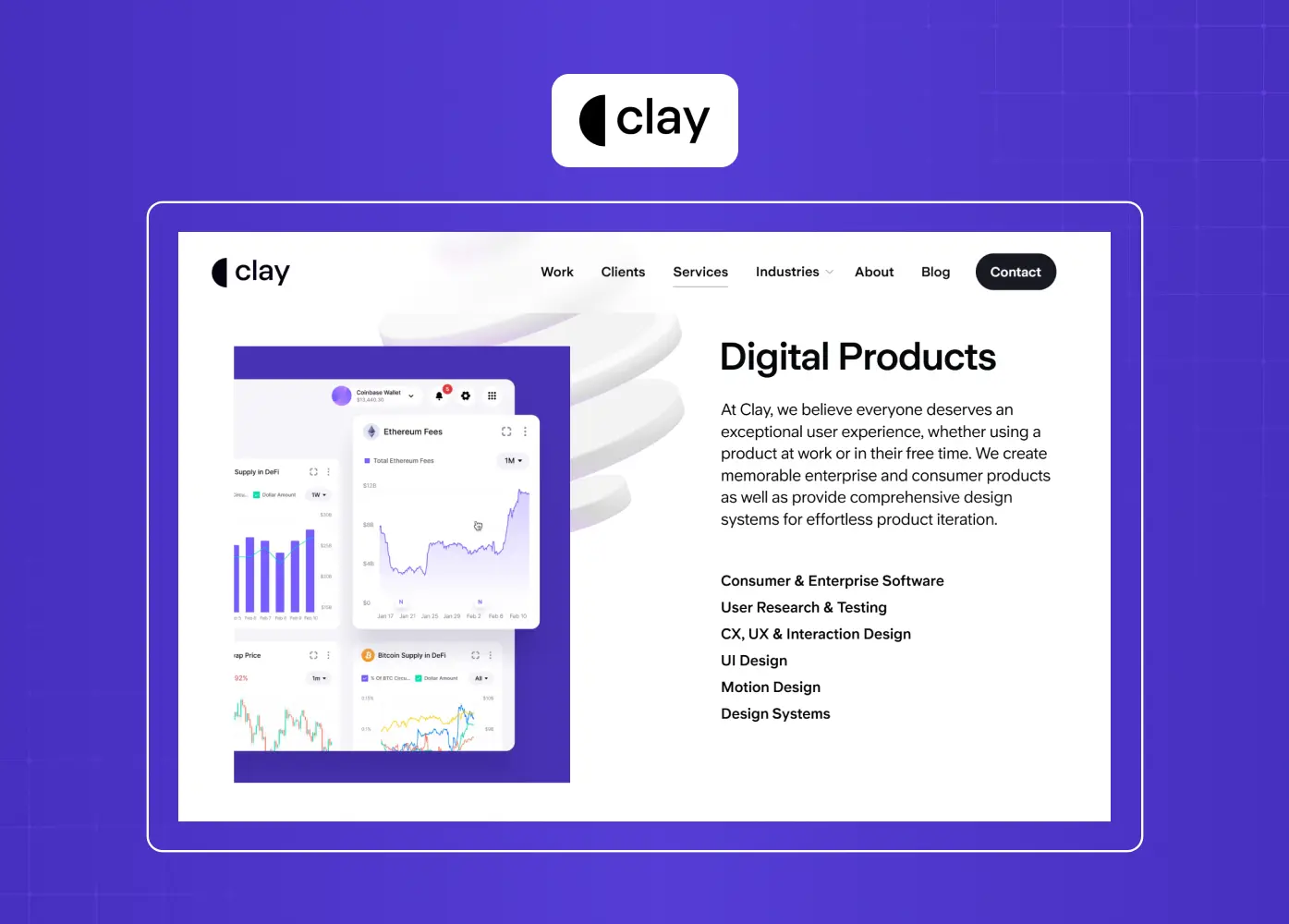
Best for: Businesses where visual brand identity is a primary competitive differentiator.
Clay produces some of the most visually distinctive work in the industry. Their strength is taking a brand identity and translating it into a web experience that feels considered at every pixel.
What they do well:
Premium visual design with strong motion and interaction elements
Brand identity work that carries consistently from logo through to every web touchpoint
A strong portfolio spanning tech, fintech, and product-led companies
Worth noting: Clay's focus skews toward visual craft. If conversion rate optimization, lead generation metrics, and search performance are your primary goals, you may need to layer in additional support. AI search readiness and technical SEO are not a stated focus of their delivery.
4. Baunfire
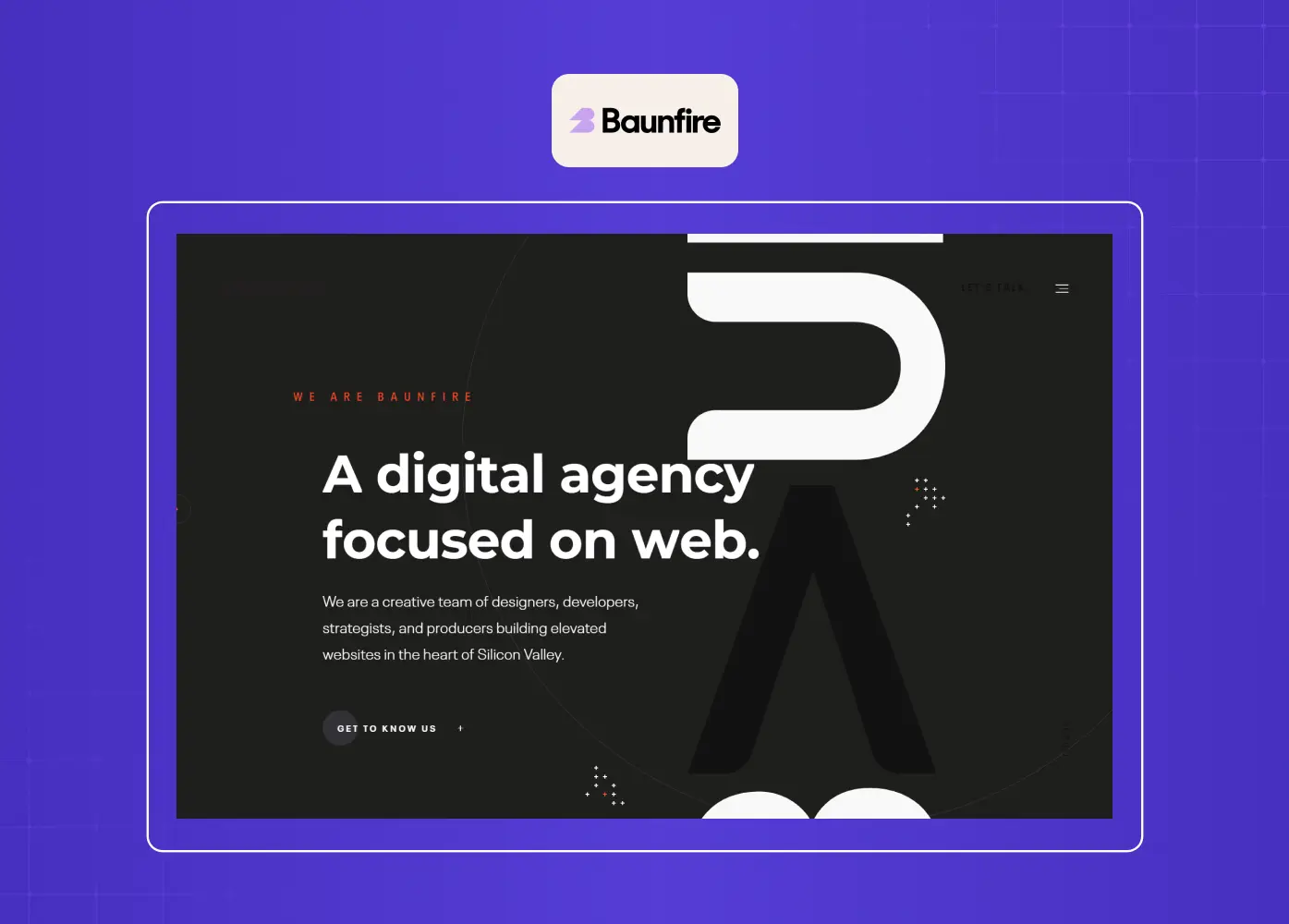
Best for: B2B companies that need marketing sites built specifically to support a sales motion.
Baunfire specializes in conversion-led landing pages and marketing sites for B2B businesses. Their process is structured around a single question: does this page move a prospect closer to a decision?
What they do well:
Landing page design with clear, hierarchy-driven CTA placement
Deep understanding of B2B buyer psychology and enterprise sales cycles
Experience with complex brand guidelines at an enterprise level
Page speed and technical SEO included as part of their build process
Worth noting: Baunfire's sweet spot is marketing site work. If you need a full ecommerce build or a complex product platform, they are not the right fit. AI search optimization is not a named deliverable in their standard scope.
5. Locomotive
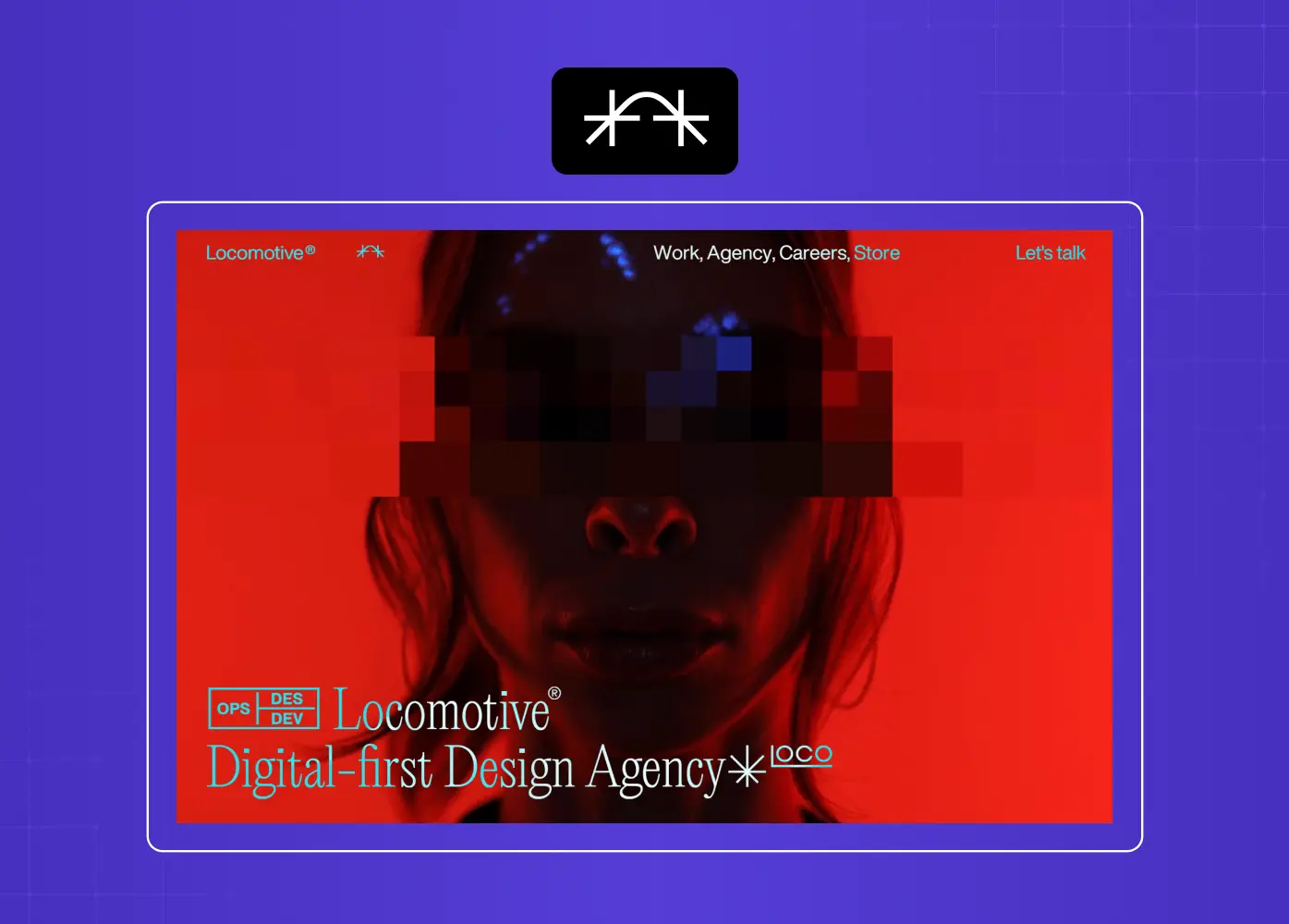
Best for: Content-heavy small businesses that need strong CMS architecture alongside great design.
Locomotive is a Webflow-native agency with genuine technical depth. They are excellent at building sites where the design and the content management system work together seamlessly, which matters enormously for teams that publish content regularly.
What they do well:
Webflow builds with clean, scalable CMS architecture
Strong experience with editorial and content-heavy site structures
Reliable post-launch handoff so your team can manage the site independently
SEO-ready site structure comes naturally from their Webflow-native approach
Worth noting: If you are not on or moving to Webflow, Locomotive is a less natural fit. Their specialization is a strength and a constraint depending on your platform requirements.
6. Straight North
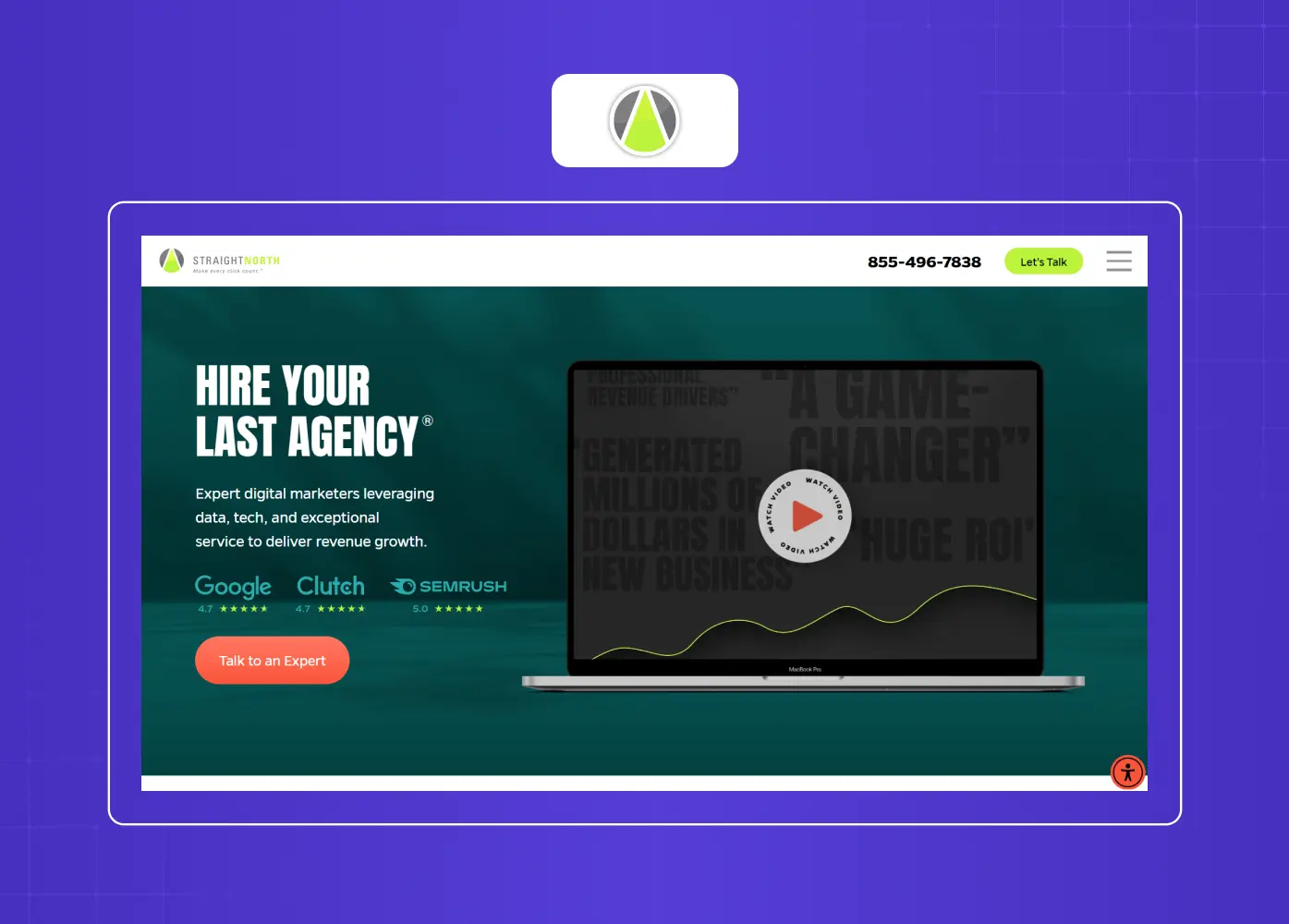
Best for: Small businesses where the primary goal is generating qualified local or national leads through organic search.
Straight North sits at the intersection of web design and SEO delivery. Their process is built around driving measurable lead generation outcomes, making them a strong choice for service businesses that depend on consistent inbound enquiries. They are the strongest option on this list for businesses where search performance is the primary success metric.
What they do well:
Conversion-focused design tied directly to lead generation KPIs
Validated lead reporting so you can trace which design decisions are actually producing results
Deep track record across professional services, healthcare, and B2B
SEO and technical search fundamentals, including page speed, structured data, and mobile performance, are central to every engagement
Worth noting: Straight North's retainer-based model suits businesses ready to invest consistently over time. For one-off projects, the engagement model may feel heavier than necessary.
7. Ramotion
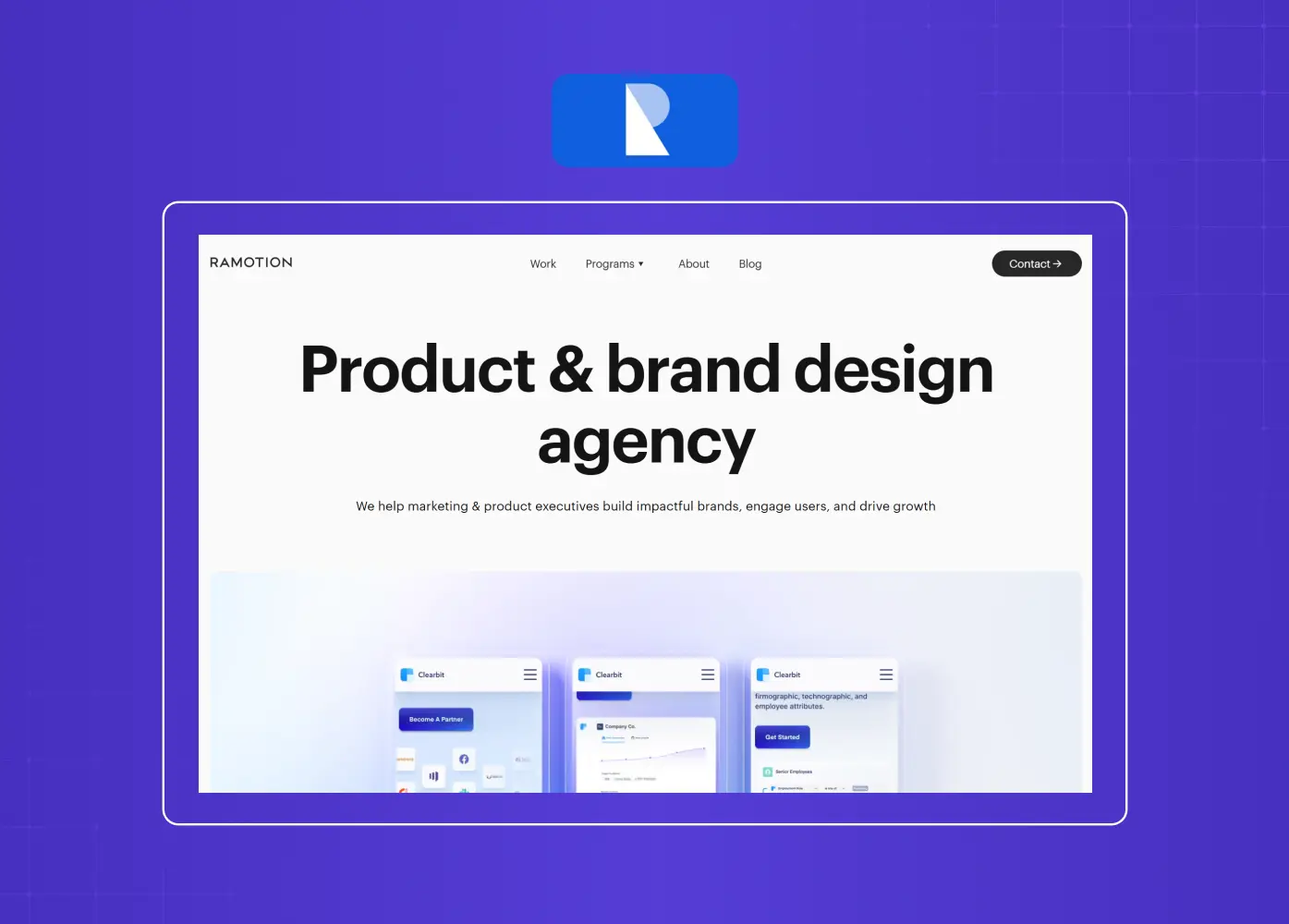
Best for: Small businesses that want brand identity and web design delivered as a unified package.
Ramotion offers logo-to-launch engagements covering brand identity, visual system, and website in a single cohesive process. This makes them a strong fit for businesses building or rebuilding their brand from scratch alongside their website.
What they do well:
Logo, visual identity, and web design under one roof with consistent creative direction
Visual language that carries coherently across every brand touchpoint
Experience with both tech startups and consumer-facing brands
Worth noting: Because Ramotion covers branding and web together, timelines and budgets tend to run higher. If you already have a strong brand identity, the full brand package may not be necessary. AI search readiness and technical SEO are not a primary focus of their work.
8. Thrive Internet Marketing Agency
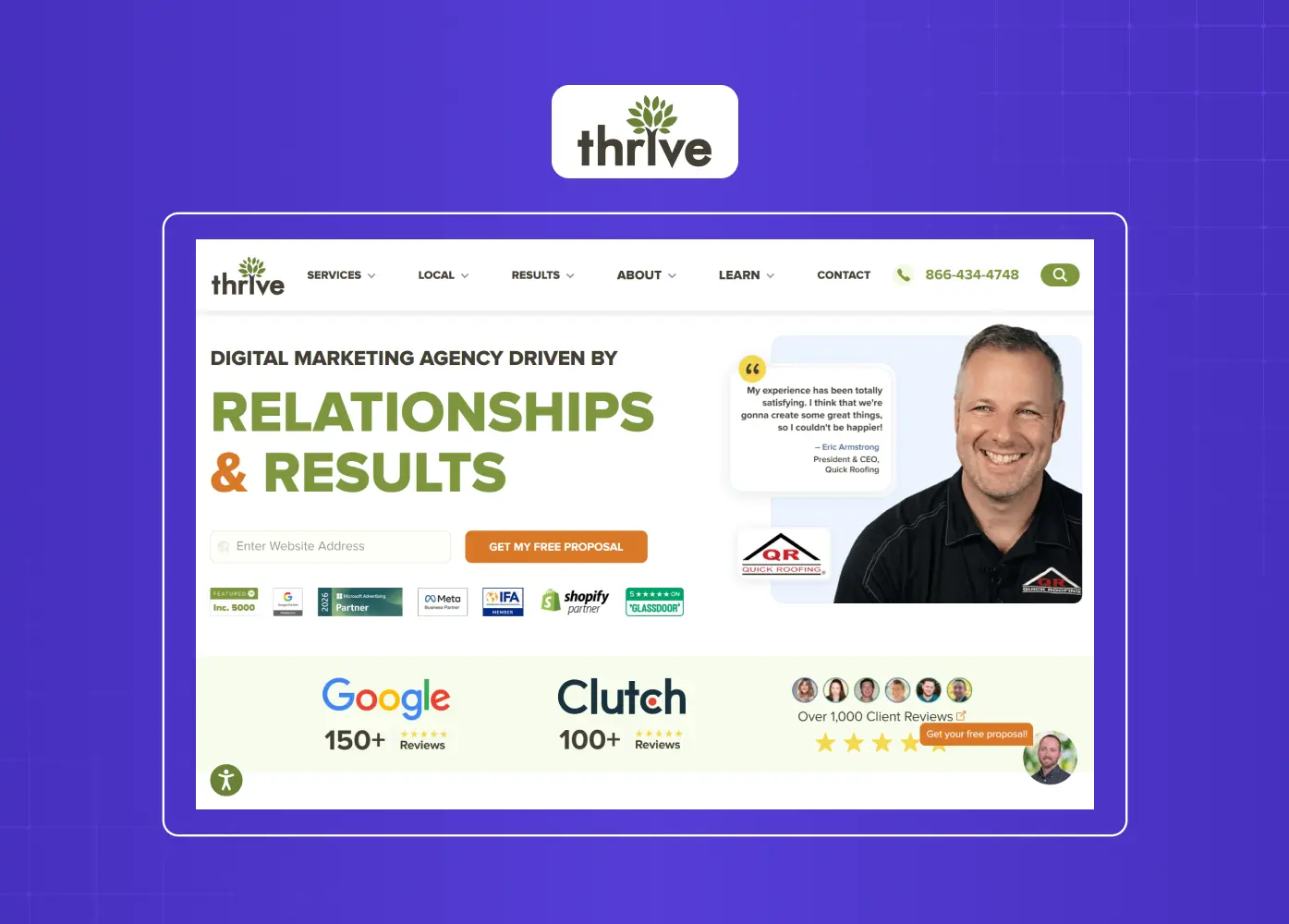
Best for: Small businesses that want web design tightly integrated with ongoing SEO and lead generation.
Thrive Internet Marketing Agency, founded in 2005 and consistently ranked on the Inc. 5000 list, takes a strategy-first approach to web design. Their differentiator is that SEO is not an add-on to their web design process; it is embedded from the first strategy session through to post-launch. For small businesses where organic search is a core growth channel, this integration removes a lot of the friction that typically arises when design and SEO are handled by separate teams.
What they do well:
SEO-integrated web design from strategy through to launch, covering keyword architecture, heading structure, and metadata
Conversion-focused layouts paired with ongoing performance tracking via their proprietary Thrive Score tool
WordPress-first builds with clean, maintainable code and a broad plugin ecosystem
Strong track record across professional services, healthcare, ecommerce, and local business categories
Post-launch SEO retainer options for businesses that want to compound their organic growth after launch
Worth noting: Thrive is not a pure design boutique. Their strength is the integration of design and performance marketing. If your primary brief is visual brand craft or product UX, a more design-focused agency may serve you better. Their model also works best when clients are committed to ongoing engagement rather than a one-time build.
9. Lounge Lizard
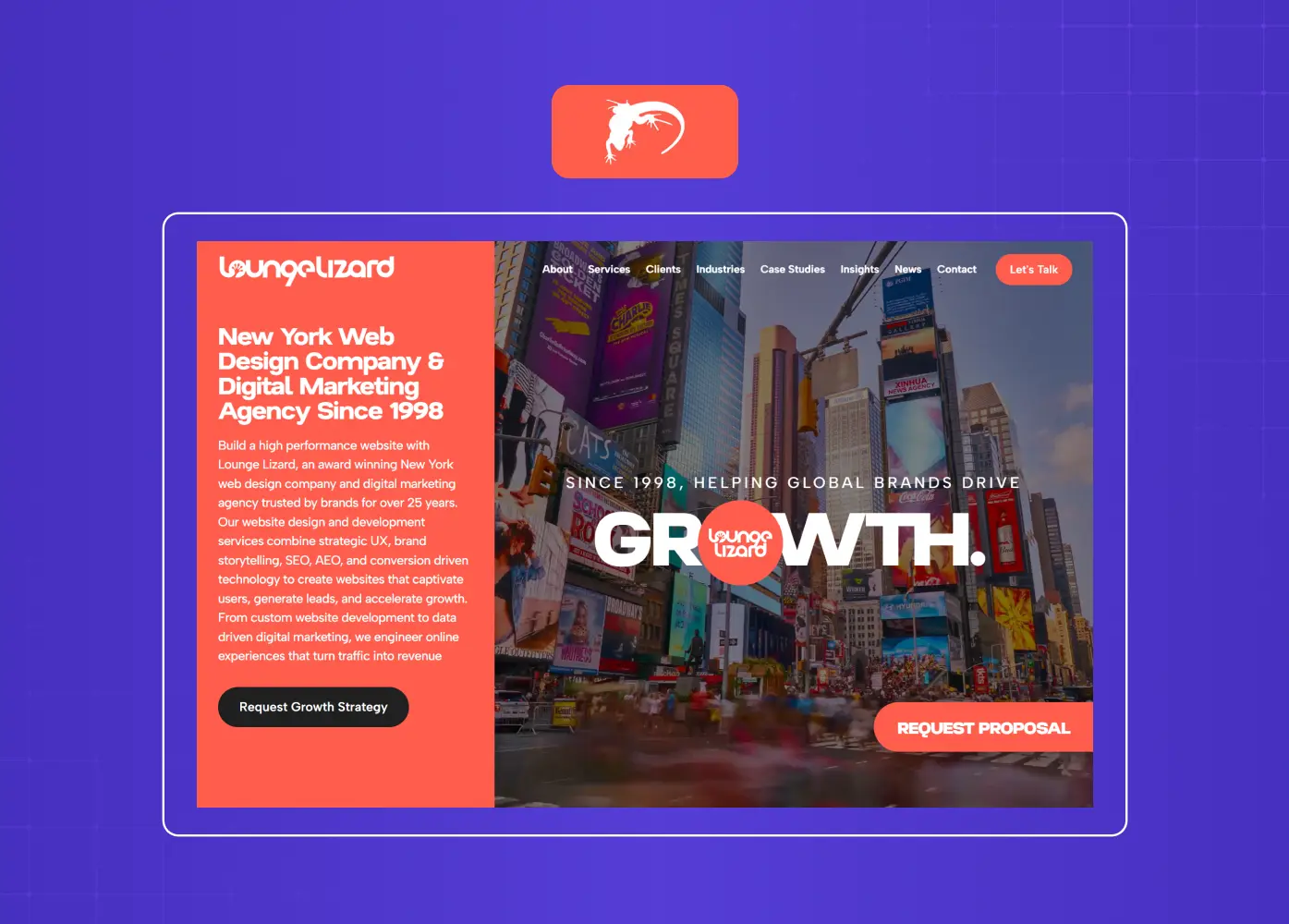
Best for: Established small businesses and growing brands that want full-service brand strategy, web design, and digital marketing delivered under one roof.
Lounge Lizard has been building websites and running digital marketing since 1998, making them one of the longest-standing agencies on this list. Their founder is a judge for the Webby Awards and a Forbes contributor on digital marketing, which shapes an agency culture that takes both visual quality and commercial performance seriously. They operate across 10 offices in the US and have positioned themselves as an agency that delivers enterprise-level strategic thinking at a scale that works for ambitious smaller brands.
What they do well:
Full-service delivery combining brand strategy, UI/UX, web design, development, and SEO
AI-driven search visibility is now part of their stated delivery, which is increasingly rare at this agency tier
Strong visual design with a clear emphasis on brand storytelling alongside conversion
Dedicated project managers who stay on the account from kickoff through launch, reducing the communication overhead common in larger agencies
Broad industry experience spanning healthcare, legal, finance, ecommerce, and entertainment
Worth noting: Lounge Lizard's minimum project size starts at $25,000, which places them above the entry range for some small businesses. Their comprehensive brand strategy process also means timelines run longer than boutique-only design shops. If you need a quick-turnaround build, they are not the right fit.
10. OuterBox
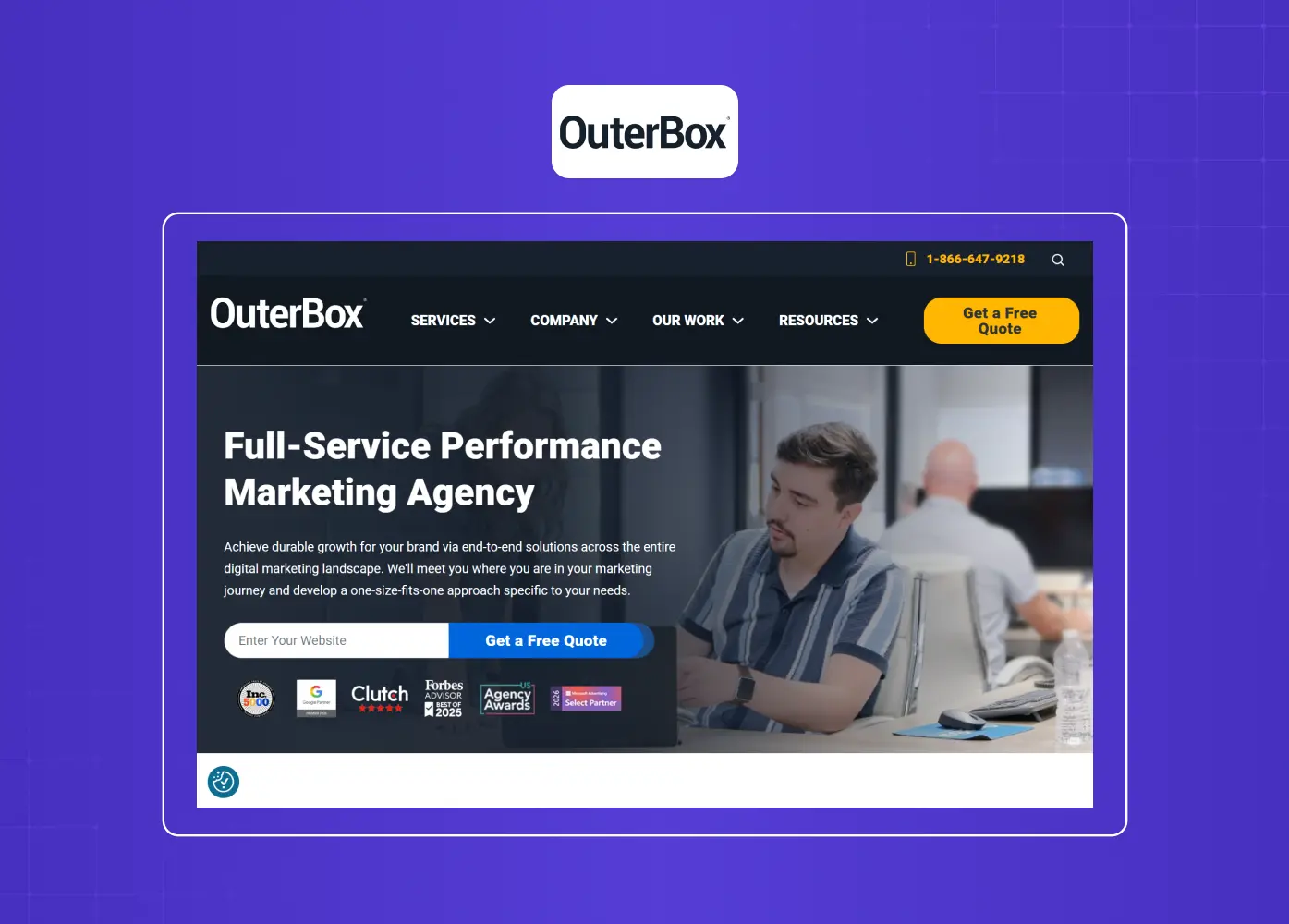
Best for: Small businesses in ecommerce or high-SKU retail that need a web design partner with deep performance marketing integration.
OuterBox was founded in 2004 and has built a reputation specifically around ecommerce web design and SEO performance. With a US-based team of nearly 300 and a track record that includes a 244% organic traffic lift for one client and a 1,225% lift for another, they operate at a level of technical and commercial rigor that most design-focused agencies cannot match for ecommerce specifically. For small businesses selling products online, their combination of ecommerce UX, platform expertise, and integrated SEO is hard to replicate elsewhere.
What they do well:
Ecommerce UX design with deep expertise across Shopify, BigCommerce, WooCommerce, Magento, and custom builds
SEO and GEO (Generative Engine Optimization) built into the design process from day one, not bolted on after launch
CRO thinking applied to the full funnel: category pages, product detail pages, checkout flow, and post-purchase experience
Transparent project scoping with most projects falling in the $10,000 to $50,000 range and timelines of 10 to 20 weeks
Ongoing post-launch support structured as an extension of your marketing team, not a separate retainer
Worth noting: OuterBox's ecommerce depth is their defining strength and their primary constraint. If your site is a service business, lead generation focused, or not product-driven, another agency on this list will be a more natural fit. Their size and scale also means they serve clients across the spectrum from small business to enterprise, so it is worth asking directly how they prioritize smaller accounts.
How to Choose the Right Agency for Your Small Business
The right agency depends on what your website actually needs to do. Here is a practical framework for making the decision. For a more detailed checklist, see our guide on how to choose the right web design agency.
Define the primary goal first. A lead generation website, an ecommerce store, and a brand awareness site have fundamentally different design requirements. Know which one you are building before shortlisting anyone.
Ask about process, not just portfolio. A strong portfolio tells you what an agency has delivered. A clear process tells you whether they can deliver it for you, on your timeline, within your budget, without scope creep.
Check who will actually do the work — the single biggest risk in web design outsourcing. Many agencies present a senior team during the pitch and assign junior designers after signing. Ask directly: who will be designing my website, and can I speak with them before we start?
Evaluate post-launch support carefully. A website is not finished at launch. Content updates, bug fixes, performance experiments, and new page additions are all ongoing needs. Confirm post-launch support is defined in the contract, not left as an open conversation.
Look at references from similar-stage businesses. A reference from a Series B company with a 40-person marketing team tells you very little about how an agency handles a 5-person small business. Ask specifically for references from companies at a comparable stage and budget.
Red Flags to Watch For Before You Sign
Most buyers focus on what an agency promises. Experienced buyers also know what to watch for. If you want to improve what you already have while you evaluate agencies, these web design tips are a useful starting point. These are the warning signs that consistently appear in problematic agency engagements:
The agency retains ownership of your domain, source files, or CMS credentials at project end. You should own everything.
The portfolio looks polished but contains no named clients, no project context, and no documented outcomes.
No written scope of work is provided before a deposit is requested.
Post-launch support is not defined anywhere in the contract, leaving you exposed when issues arise after launch.
The senior team presented the pitch but you are never introduced to the designer doing the actual work.
Pricing is quoted as all-inclusive with no line-item breakdown of what is and is not covered.
Questions to Ask Any Agency Before You Sign
Having criteria is useful. Having the actual words is more useful. Before committing to any agency on this list, ask these questions directly:
Who will be designing my website, and can I meet them before we start?
Do I own the domain, all source files, and the CMS login at the end of the project?
What does post-launch support include, and what does it cost?
How do you measure whether the website is working after it goes live?
Can you share two references from businesses at a similar size and stage to mine?
What is your process if the first design direction misses the brief?
Which platform will you build on, and can I migrate it later if needed?
Does your delivery include SEO fundamentals and schema markup for AI search visibility?
What to Prepare Before You Reach Out
Agencies produce better proposals when clients arrive with a clear brief. The quality of your brief often predicts the quality of what comes out the other side. Before contacting any agency on this list, prepare the following:
Your target audience in one sentence
Your primary conversion goal: lead form, purchase, phone call, or booking
Your existing brand assets, or a clear note that you need branding built from scratch
Three websites you admire and one sentence on why for each
Your timeline and any hard launch deadline
Your realistic budget range
What Does Website Design for Small Business Actually Cost in 2026?
The average cost of website design for small business varies significantly depending on scope, platform, and agency tier. Here is an honest breakdown that includes timeline, since that is the question most buyers ask immediately after pricing:
Type | What You Get | Typical Cost (USD) | Typical Timeline |
DIY website builder | Template-based, limited customization | $0 to $500/year | Days |
Freelancer | Single designer, variable quality and accountability | $1,500 to $8,000 | 2 to 6 weeks |
Boutique design agency | Custom design, structured delivery process | $5,000 to $25,000 | 6 to 10 weeks |
Full-service agency | Strategy, UX, design, development, and SEO | $15,000 to $60,000+ | 10 to 20 weeks |
For most growing small businesses, the $5,000 to $20,000 range is where the best small business website design services deliver genuine commercial value. For a full breakdown of what drives those numbers, see our website redesign cost guide. Cheap upfront almost always means expensive later. A site that cannot scale, does not rank, or fails to convert is not a bargain. It is two investments where one would have done.
Conclusion
The agency you choose is not just a design decision. It is a commercial one.
Groto leads this list for small businesses that want conversion-focused, design-led websites with UX thinking and search fundamentals built in from day one.
Parallel HQ is the strongest alternative for SaaS and AI-native businesses.
Clay excels at brand-forward visual work where identity is the primary differentiator.
Baunfire is the right choice for B2B companies building sites to support a sales motion.
Locomotive is best for Webflow-native, content-heavy builds where CMS architecture matters as much as design.
Straight North leads on SEO and data-driven lead generation design.
Ramotion is the pick for businesses that want brand identity and web design delivered together from scratch.
Thrive is the strongest option for businesses that want web design and SEO strategy tightly integrated from day one.
Lounge Lizard suits established businesses that want brand strategy, design, and digital marketing handled under one roof.
OuterBox is the right choice for ecommerce businesses that need performance-first design with deep platform expertise.
Before shortlisting anyone, define your primary goal, prepare a brief, and use the questions above to qualify every conversation.
In 2026, a well-designed site also needs to be readable by AI search platforms. That is now part of the brief, not a bonus feature.
Ready to see what Groto can build for your business? Let's talk.