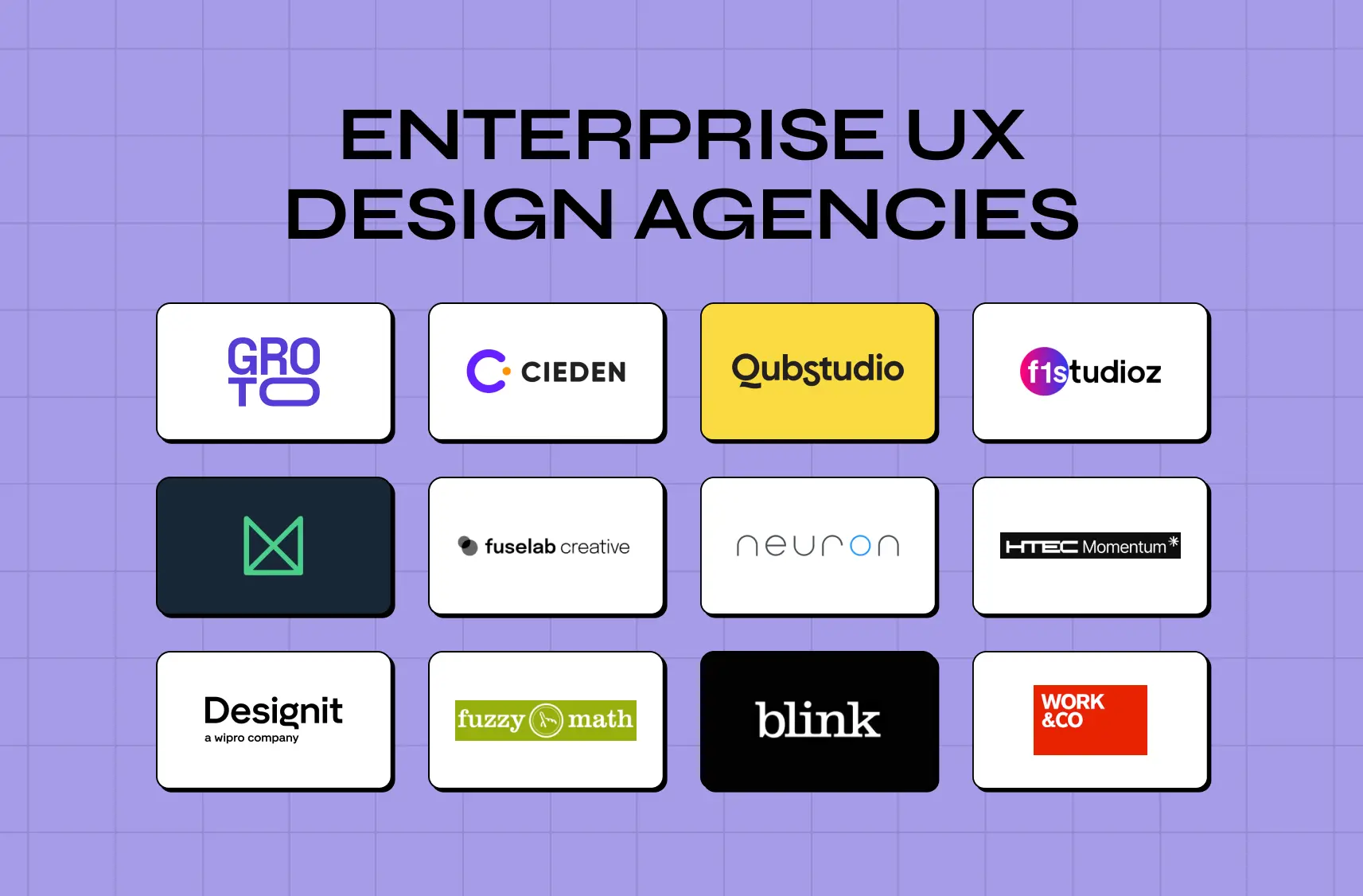
Enterprise UX agency lists mix ten-thousand-dollar studios with million-dollar consultancies in one ranking, which helps nobody. These twelve are sorted into three tiers by buyer, so you can skip the two tiers that are not yours and compare inside the one that is.
Three tiers, twelve agencies. Find your tier, then compare inside it.
TL;DR
Three tiers, not one ranking. Studios serving B2B SaaS and AI products, specialists in complex internal platforms, and global consultancies running transformation programmes. They do not compete with each other and they do not cost within an order of magnitude of each other.
Published minimums across the first two tiers run $5,000 to $50,000. The third tier publishes nothing and starts around a quarter of a million.
Whether a firm publishes a number at all is the fastest tier signal you have.
A focused engagement runs three to six months, a platform programme six to eighteen. Most schedules slip on approvals rather than on design hours.
The test that predicts fit better than any portfolio: can the agency answer a security questionnaire without going quiet for two weeks.
Every list for this phrase puts a $10,000 studio and a $1,000,000 consultancy in the same ranking and asks you to compare them. You cannot. They sell to different buyers, through different processes, against different problems.
So this page sorts twelve agencies into three tiers by who they are actually built for. Find your tier in the first two minutes, ignore the other two, and compare inside the one that is yours.
One thing to settle before you read any of it. An enterprise engagement is rarely a set of screens. It is research, an information architecture that survives three more product lines, a component system with rules attached, and a handover an internal team can pick up without you. What a UX agency delivers sets those roles and deliverables out in full, and it is a useful list to hold every proposal against.
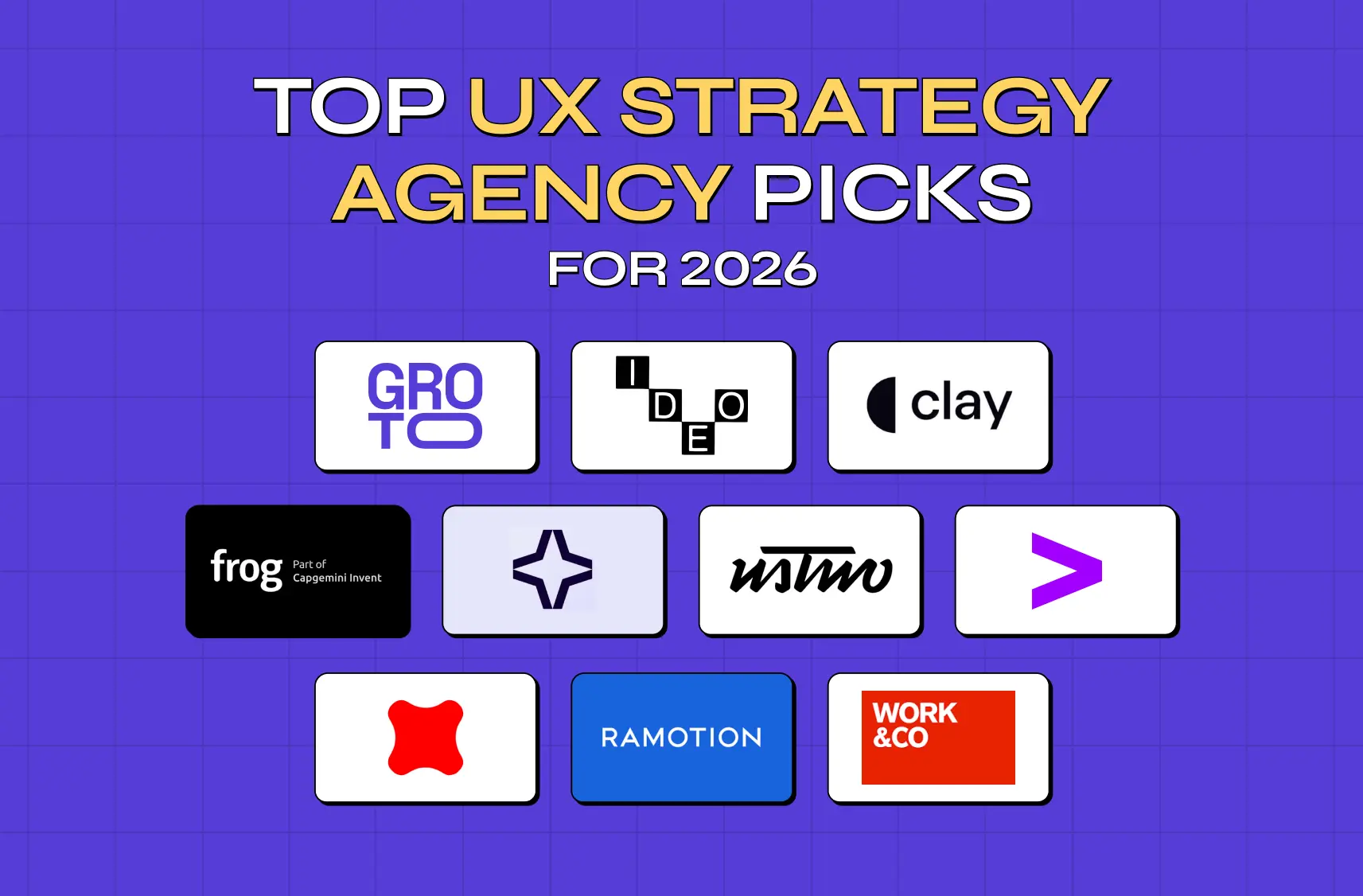
Groto is our own studio and sits in Tier A. The tiers are grouped by buyer type rather than by merit, and inside each tier the agencies are listed alphabetically, so the numbers below are addresses rather than scores.
The 12 Enterprise UX Design Agencies at a Glance
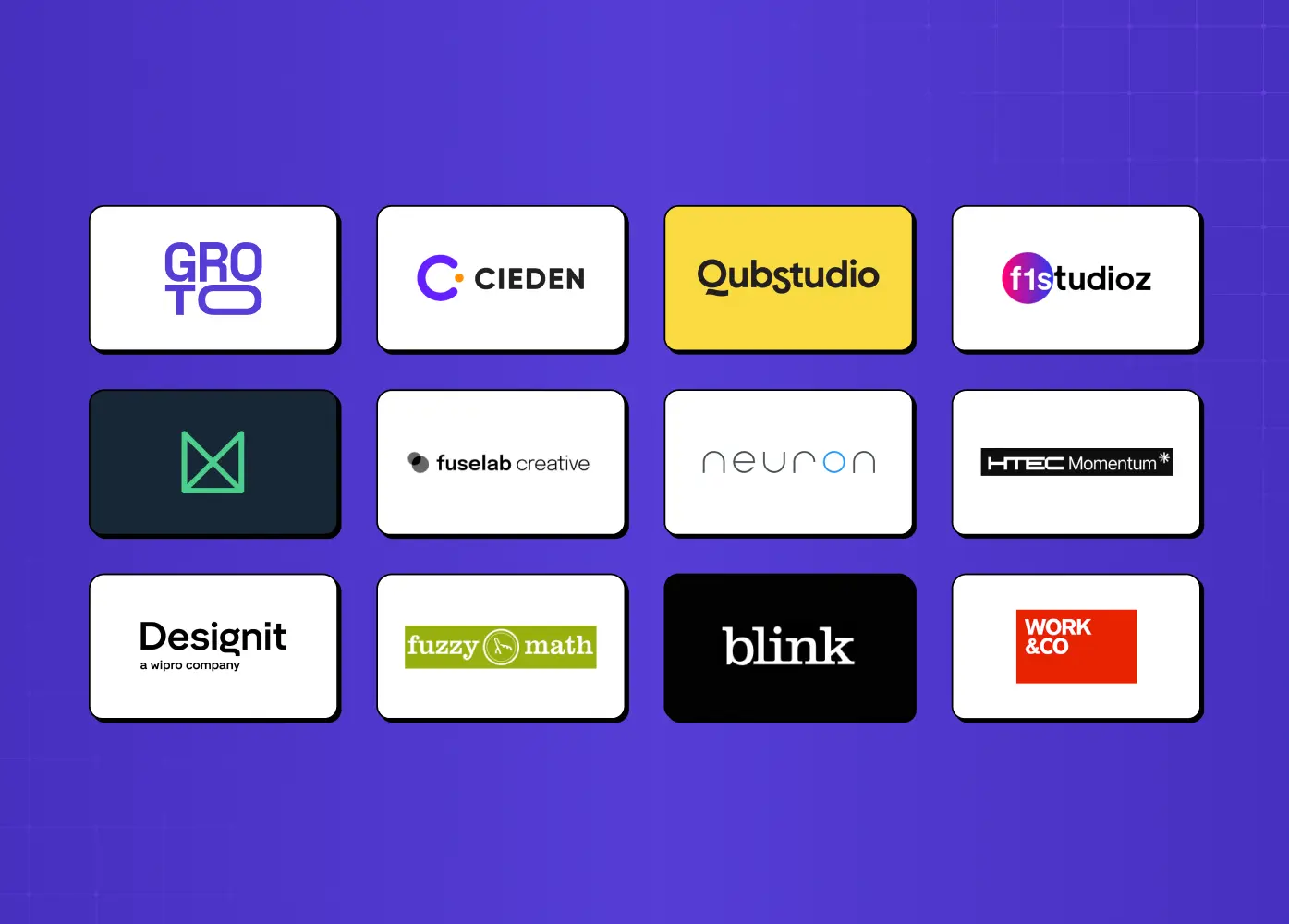
Agency | Tier | HQ | Published minimum | Best for |
Cieden | A | Toronto and Lviv | $10,000+ | Fintech and regulated workflows |
Groto | A | Delhi, remote-first | $5,000+ | AI and SaaS platforms crossing into enterprise |
Qubstudio | A | Lviv | $10,000+ | Long-running product partnerships |
UX Studio | A | Budapest | $10,000+ | Research-led product work |
F1Studioz | B | Bengaluru | Not published | Enterprise SaaS at delivery scale |
Fuselab Creative | B | McLean, VA | $25,000+ | Data platforms and public-sector-adjacent work |
Fuzzy Math | B | Chicago | $25,000+ | Internal tools and enterprise software |
Momentum Design Lab | B | Palo Alto | $25,000+ | Design bought together with engineering |
Neuron | B | San Francisco | $25,000+ | B2B platforms and fintech |
Blink UX | C | Seattle | Not published | Research-heavy enterprise and government work |
Designit (Wipro) | C | Global | Not published | Transformation inside large organisations |
Work & Co | C | Brooklyn, NY | Not published | Flagship consumer-facing enterprise products |
Read the minimum column first. The gap between $5,000 and a tier that will not quote at all is the real structure of this market, and it tells you more in ten seconds than any ranking.
What Makes UX "Enterprise" (and When You Don't Need an Enterprise Agency)
Most definitions of enterprise UX describe the software: lots of roles, dense data, a design system, compliance. True, but useless, because it describes the symptom rather than the moment you cross over.
The crossing is commercial, and it arrives in four signals. You will recognise them because each one arrives as an email rather than as a design problem.
The buyer stops being the user. Someone signs the contract who will never open the product. Your interface now has two audiences with opposite needs, and the one who pays mostly wants reporting, control and evidence that their team is using what they bought.
Somebody asks for a permission matrix. Not a settings page, a matrix. Who can see what, who can approve what, who can export what, and what an auditor sees afterwards. Role-based access control changes the shape of almost every screen you have already built.
The first security questionnaire lands. Three hundred rows of spreadsheet asking about data residency, encryption, subprocessors and incident response. This is the single clearest marker that you are now selling into enterprise, and it is usually the first time design decisions get vetoed by someone outside the product team.
They ask for SSO and SCIM. Single sign-on and automated user provisioning sound like engineering tickets. They are not. They change onboarding, invitation flows, role assignment and offboarding, which are four of the flows you probably designed for self-serve signup.
Dense tables and design systems follow from these, rather than the other way round. If none of the four has happened to you yet, you very probably do not need an enterprise agency, and hiring one means paying for governance you have no use for. A product studio will serve you better and cost less.
Where this does get genuinely hard is at the interface itself: permissions and audit trails have to be legible to the person using them, and enterprise SaaS dashboards are where most teams discover their consumer patterns do not survive real data. A filter set that felt elegant at fifty rows becomes unusable at fifty thousand, and no amount of visual polish fixes it. The same is true of empty states, which stop being a nice touch and start being the screen an administrator sees on day one of a rollout.
If two or three of the four signals have landed and you cannot tell which one is doing the damage, do not buy a programme to find out. A UX audit of the area that is failing costs a fraction of one, answers the question in weeks, and doubles as the cheapest way to see whether an agency understands your domain before you commit to anything larger.
How We Chose and Tiered These Agencies
Four rules.
Named enterprise work in the last two years. Not an enterprise-sounding services page. Actual multi-role platforms, regulated products or internal tools, named publicly.
A published headquarters and a verifiable practice. Firms whose presence is a landing page were left out.
Enterprise as a core practice rather than a line item. Development shops that list UX at a tenth of revenue did not qualify, however good the engineering.
Tiered by buyer, not scored by quality. We do not rank agencies against each other. Any agency ranking its competitors on quality is marking its own homework, and three of the four pages competing with this one do exactly that while putting themselves first.
None of these rules test general competence, because that is a separate question and it applies whether or not the work is enterprise. The capability side is covered in our UX agency skills checklist, which is the right thing to run alongside this page rather than inside it.
Two firms that appear on our other lists are deliberately absent, and it is worth saying why, because exclusions tell you more about a list's method than inclusions do. Clay leads with brand and web rather than platform work, which is a genuine strength and the wrong one here. Eleken is built for startup SaaS and sells capacity by the month, which it does well, but that is a different purchase from an enterprise programme; if a subscription model is what you actually want, our Eleken alternatives comparison is the better page. Both firms are strong and neither belongs in an enterprise comparison, which is exactly the kind of judgment a flat ranking makes impossible.
Tier A: For B2B SaaS and AI Products Selling Into Enterprise
For Series A to D teams whose product has crossed the line described above. The buyer is a VP of Product or a CTO, budgets are real but finite, and speed still matters.
1. Cieden

HQ: Toronto, with a team in Lviv. Minimum: $10,000+.
Cieden works heavily in fintech and regulated workflows, which is the part of this market where getting a flow wrong is a compliance finding rather than a conversion dip. The practice is research-led and used to designing against rules written by someone else.
Named clients: Mastercard and Lendflow.
Best for: regulated products where the rulebook is the constraint.
Not right for: teams needing full US-hours overlap with no coordination effort.
2. Groto
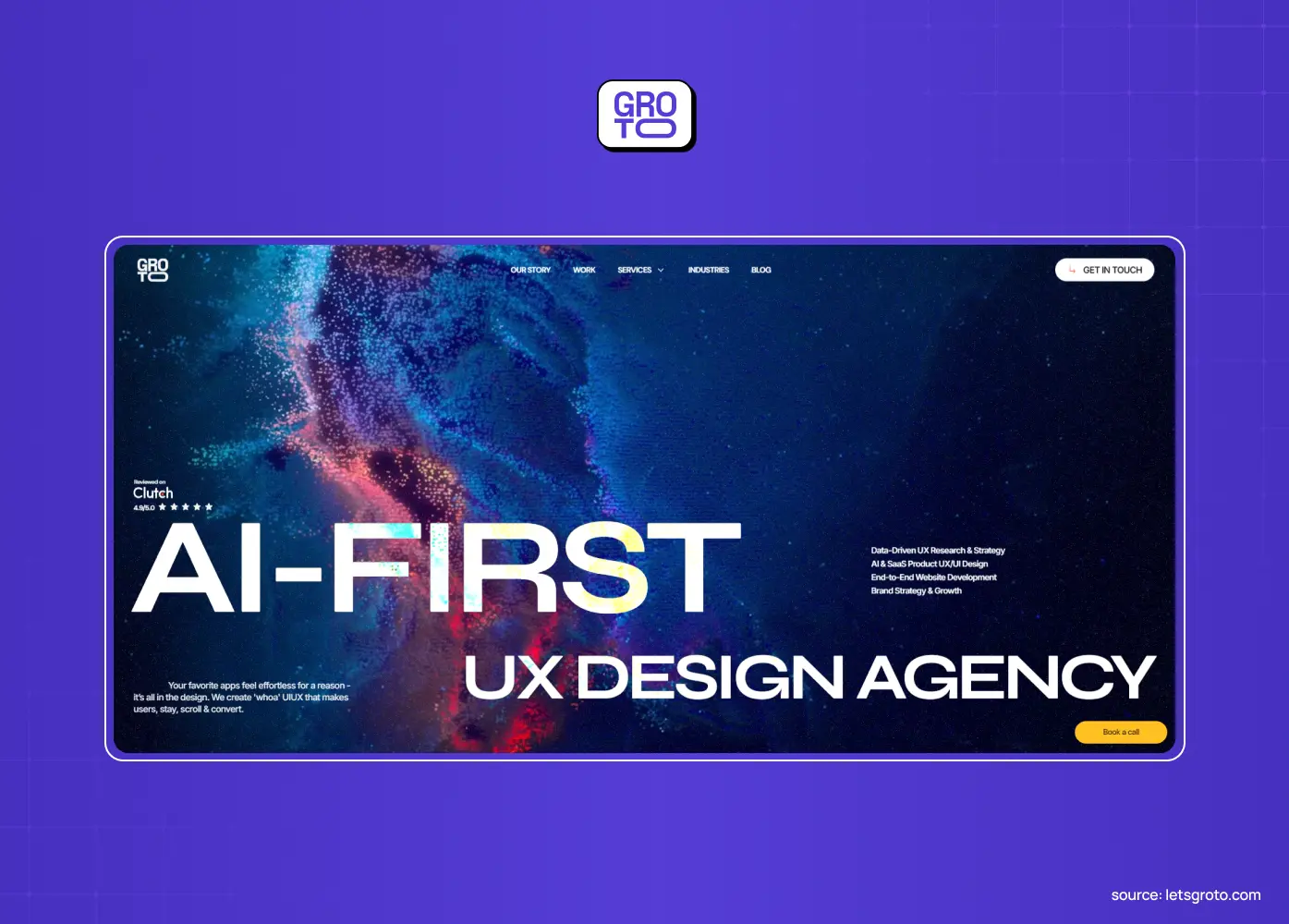
HQ: Delhi, remote-first. Founded: 2021. Minimum: $5,000+.
We are an AI-first product design studio. Our enterprise work sits at the crossing point described above: a product built for self-serve that now has to satisfy a security review and an admin who never opens it. Product UX, the component system and the marketing site sit with one team.
We are the youngest firm on this list and the smallest outside Tier A. The minimum reflects how we prefer to start rather than the size of work we take: usually one flow or a permissions model first, then a programme scoped from what that showed.
Named clients: Muir.AI, PolicyBazaar and Camb.ai.
Best for: AI and SaaS platforms where design, an enterprise component system and the website have to move together.
Not right for: transformation programmes inside a Fortune 500, which belong in Tier C.
3. Qubstudio

HQ: Lviv. Minimum: $10,000+.
One of the longer-running studios in this bracket, built around staying with a product for years rather than delivering a redesign and moving on. On an enterprise platform that continuity compounds, because year two is when the early decisions get stress-tested.
Best for: long partnerships on a product that keeps growing.
Not right for: a single fixed-scope redesign with a hard stop.
4. UX Studio

HQ: Budapest. Minimum: $10,000+.
Research sits at the centre of this practice rather than at the front of the process, and the client list runs well outside typical B2B software. If the blocker is that nobody can agree on what users actually need, this is the shape of team that settles it.
Named clients: Netflix, the UN World Food Programme and Finshape.
Best for: products where the research question is the hard part.
Not right for: teams that already have research and need delivery capacity.
Comparing inside this tier is harder than comparing across tiers, because craft is fairly even and portfolios start to look alike. The difference that shows up later is method: how a studio gets from research to a decision, and whether that is written down or improvised per project. Knowing the UX strategy frameworks agencies work from gives you the vocabulary to ask about it properly.
Tier B: Enterprise Product Specialists
For complex internal tools, multi-role platforms and regulated industries. The buyer is often a product or IT leader inside a large organisation, procurement is involved from the start, and the work is the software itself rather than the brand around it.
5. F1Studioz

HQ: Bengaluru. Minimum: not published.
F1Studioz positions itself specifically around enterprise and SaaS UX at delivery scale, with a bench large enough to staff several workstreams at once. It is one of the few firms that ranks for this keyword with its own homepage rather than a listicle, which tells you where its demand comes from.
Best for: enterprise SaaS needing sustained delivery capacity.
Not right for: a small scoped engagement where you want the founders on the work.
6. Fuselab Creative

HQ: McLean, Virginia. Minimum: $25,000+.
Fuselab works on data-heavy platforms and public-sector-adjacent products, which carry accessibility and reporting obligations most commercial SaaS never meets. It also publishes its own comparison of this market, so you can read a competing view of the same landscape.
Named clients: the Fiserv Small Business Index and Aircraft Bluebook.
Best for: dashboards, data platforms and work with public-sector requirements.
Not right for: consumer-facing brand work.
7. Fuzzy Math

HQ: Chicago. Minimum: $25,000+.
Fuzzy Math has spent its life on enterprise software rather than drifting into it, and the client list is the unglamorous end of the market, which is the right signal. Insurance, procurement and internal tools are where enterprise UX actually lives.
Named clients: GE, SAP Fieldglass, Microsoft and Availity.
Best for: internal tools and enterprise software nobody markets.
Not right for: visually ambitious consumer surfaces.
8. Momentum Design Lab

HQ: Palo Alto. Minimum: $25,000+.
Momentum works with large product organisations and has been part of HTEC Group since 2021, which puts design next to substantial engineering capacity. That matters when the question is coordinated design and build rather than design alone, and it is worth checking if you want a standalone design team.
Named clients: Qualcomm, HP, Sony and Verizon.
Best for: programmes where design and engineering should be bought together.
Not right for: teams with their own engineering who need design only.
9. Neuron
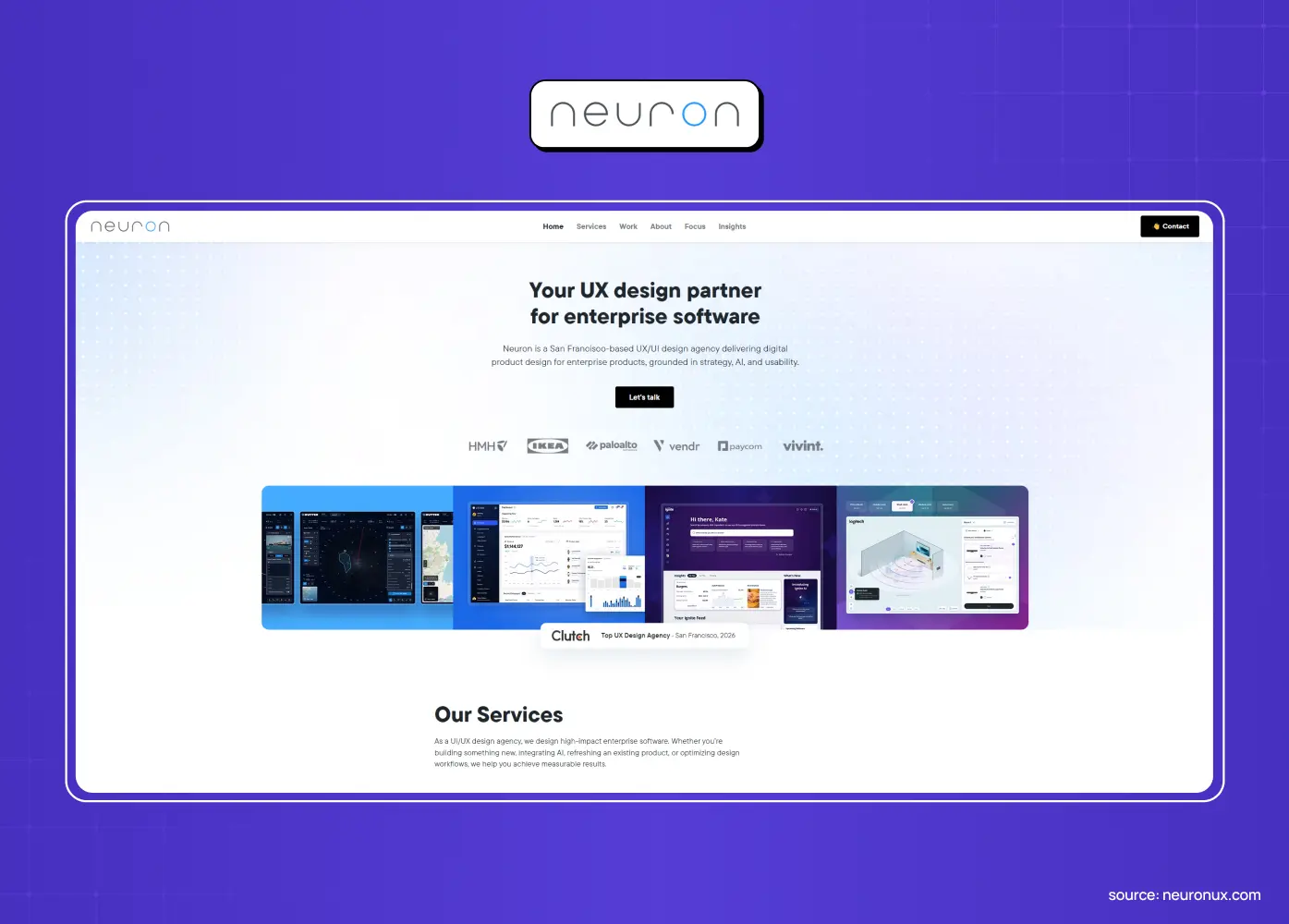
HQ: San Francisco. Minimum: $25,000+.
Neuron works on B2B platforms and fintech across manufacturing, payroll and infrastructure. It appears on more of the competing lists for this keyword than any other firm, which is a reasonable proxy for how consistently it shows up in this kind of work.
Named clients: Ford, Paycom, Cisco and Vendr.
Best for: B2B platforms with real operational complexity.
Not right for: budgets that cannot clear the minimum comfortably.
For a wider view of this bracket outside the enterprise frame, our US UX agencies comparison covers more of the market.
Tier C: Global Enterprise Consultancies
For Fortune 500 transformation programmes. The buyer is usually a CMO, a CIO or a transformation lead, engagements start with a discovery phase, and the deliverable is as often an operating model as an interface. None of these publish a minimum, which is not evasion. It is how the tier sells.
If you are weighing this tier against the top of Tier B, the honest question is whether you are buying design or buying organisational cover. Both are legitimate purchases and only one of them is about the interface. Our breakdown of Ramotion-tier studios goes deeper on what the premium end actually delivers.
10. Blink UX

HQ: Seattle. Minimum: not published.
Blink is the most research-weighted firm in this tier, with a practice built around behavioural research and usability work at enterprise and government scale. If your programme will be defended with evidence rather than with a vision deck, that emphasis matters.
Best for: enterprise and government programmes where research is the deliverable.
Not right for: fast execution on an already-defined scope.
11. Designit (Wipro)

HQ: Global, part of Wipro. Minimum: not published.
Designit operates as the design arm of a very large technology services group, which means design arrives attached to implementation capacity and an existing master services agreement in many large organisations. That last point is worth more than it sounds, because it can remove months of vendor onboarding.
Best for: transformation inside organisations that already buy from Wipro.
Not right for: teams wanting a small senior unit rather than a programme.
12. Work & Co

HQ: Brooklyn, New York. Minimum: not published.
Work & Co builds flagship digital products for very large brands, and the work is usually customer-facing at a scale where a single flow is seen by millions. It appears on more competing lists than any other Tier C firm.
Best for: flagship products where the interface is the brand.
Not right for: anyone under about $250,000.
One category sits outside all three tiers. If the thing you are buying is a mobile or field-facing tool rather than a platform, an app-native agency will understand offline states, device constraints and glove-friendly targets in a way a platform studio generally will not, whatever tier it sits in.
How Much Does an Enterprise UX Design Agency Cost in 2026?
Minimums by tier
Tier | Published minimum | What it buys |
A. B2B SaaS and AI | $5,000 to $10,000 | A scoped first engagement: one flow, a permissions model, an audit |
B. Enterprise specialists | $25,000+ | A real workstream with research and testing in it |
C. Global consultancies | Not published, typically $250,000+ | A programme, usually opening with a discovery phase |
The jump between tiers is not gradual. There is almost nothing between the top of Tier B and the floor of Tier C, which is why a buyer in the gap tends to get two quotes an order of magnitude apart and conclude that one of them is wrong. Neither is. See full pricing for how we price our own work inside Tier A.
Cost and timeline by engagement
Engagement | Typical range | Timeline |
UX audit of one platform area | $15,000 to $50,000 | 3 to 6 weeks |
Focused product redesign | $75,000 to $250,000 | 3 to 6 months |
Design system build with governance | $50,000 to $200,000 | 3 to 9 months |
Full platform programme | $250,000 to $1,000,000+ | 6 to 18 months |
These cover design only, not engineering, and the spread inside each row is wider than the row above it suggests.
Most of the work in getting one of these approved happens before the quote arrives. Enterprise finance teams do not sign off on better usability, they sign off on a number that connects to something they already measure, usually support cost, licence expansion or time to onboard a new account. Our breakdown of UX design ROI sets out which metrics survive contact with a CFO and which ones get politely ignored. Build that case first, because the agency cannot build it for you.
Four things move a quote more than anything else.
Research depth. A quote with interviews, synthesis and usability testing costs more than one that starts in Figma. Both are legitimate. Only one tells you whether you are building the right thing.
Whether a design system is in scope. More expensive in the first engagement, cheaper in every engagement after, which is the argument you make internally.
How many people sign off. The most underpriced variable in this market. Four approvers and one approver are different projects at identical scope, and this is what actually stretches the timelines above.
How much is bespoke. A workflow no pattern covers costs more than one that can inherit, and bespoke design work is worth scoping deliberately rather than discovering in month three.
Security, Compliance and Procurement: What Enterprise Buyers Will Ask Your Agency
This is the part that decides enterprise engagements and the part the competing pages skip. Design quality rarely kills these deals. Vendor onboarding does, and it runs four to eight weeks, so start it in parallel with shortlisting rather than after.
Five things procurement will want, and that you should ask for before you shortlist.
SOC 2 Type II or ISO 27001. Ask whether the agency holds a current report and will share it under NDA. A firm that has never been asked has never worked at your scale.
A data processing agreement and NDA, including subprocessors. Design work now routinely passes through AI tooling, which means prompts, screenshots and research recordings may leave the agency's own systems. Ask which subprocessors touch your data and get the answer in writing.
WCAG 2.2 AA conformance, and how it was tested. Not whether they care about accessibility. Whether they can produce a conformance report, who performs the testing, and whether assistive technology was used rather than only an automated scanner. For public sector and large regulated buyers this is a gate.
EU AI Act obligations if your product has AI features. Article 50 transparency duties mean certain AI interactions have to be disclosed to the user, which is an interface requirement before it is a legal one. Our breakdown of AI Act UX compliance covers what that means on screen.
MSA and SOW terms, specifically on IP. Check that intellectual property assignment covers the design system and the research, not only the final files. Check subcontractor disclosure, because a named senior team that quietly becomes a subcontracted one is the most common complaint in this market. And read the termination clause, because a programme you cannot stop cleanly is worse than one that costs more.
Enterprise UX for AI Products
AI features inside enterprise software are a different design problem from AI features in a consumer app, and no competing page on this keyword covers it beyond a single FAQ line.
Three things change.
Permissions have to extend to AI actions. If an assistant can draft, approve or send on a user's behalf, your permission matrix now has to describe what the model may do as well as what the person may do. Most teams discover this after an admin asks whether the AI can see salary data.
Everything needs an audit trail. An enterprise buyer will ask who did what and when, and "the model decided" is not an answer that survives a compliance review. The interface has to show which actions were automated, which were confirmed, and by whom, and it has to keep showing it months later.
Output needs to be correctable, not just explainable. Explaining a model's reasoning is useful. Letting the user disagree with it, correct it, and have the correction persist is what makes the feature usable in a workflow where being wrong has consequences.
The questions worth asking any agency here are concrete. Show me a shipped AI feature inside a product with roles and permissions. Show me what the user sees when the model is unsure. Show me what the audit log looks like. A good answer will be specific and slightly weary, because anyone who has built this has fought about it.
If AI capability is the main thing you are buying rather than one feature among many, our comparison of AI UX agencies covers that market on its own terms.
Worth saying plainly: almost every agency on every list for this keyword now describes itself as AI-capable, and most mean they use AI tooling internally rather than that they have designed an AI feature a compliance team has signed off. Those are different claims.
The tell is whether they can name the feature, the objection it had to survive, and who raised it. A team that has shipped one will have a story about a security lead or a legal reviewer who made them change the interface, and they will tell it without being prompted. A team that has not will talk about their process. Ask which claim is being made, because the AI-native agency choice is a genuine fork rather than a marketing distinction.
How to Choose: Match the Tier to Your Situation
By company stage and buyer
Series A to C, buyer is your VP of Product. Tier A. You need speed and a team that will scope small before scoping big.
Large organisation, buyer is a product or IT leader, procurement is involved. Tier B. These firms expect a security review and will not be surprised by one.
Fortune 500, buyer is a CIO, CMO or transformation lead. Tier C. Budget, governance and an existing vendor relationship matter more than hourly rate.
You are not sure yet. Go back to the four signals above. If fewer than two have happened, you do not need any of these tiers.
By problem
Design requests are queueing faster than they ship. That is a design bottleneck rather than a design quality problem, and it is solved with capacity rather than with a redesign. Buying a programme to fix a throughput problem is the most expensive mistake in this list.
If throughput really is the issue, the honest answer is that none of the twelve firms above is the cheapest way to solve it. An enterprise studio is built to answer hard questions slowly, and you would be paying that premium to get routine work done faster, which is the wrong instrument. Subscription design services exist precisely for this, selling a queue rather than a project, and our Superside alternatives comparison covers that market. The trade-off is that subscription models are poor at work needing deep product context, so they suit marketing surfaces and routine interface work far better than a permissions model or a migration.
Multi-role platform where permissions are the design problem. Tier B, and ask to see permission matrix work specifically rather than a settings screen.
Twelve teams shipping inconsistent interfaces. This is a design system problem before it is a design problem, and a system only holds if governance ships alongside it. Without that, you get a component library that quietly goes stale in eighteen months.
A mobile or field-facing enterprise tool. Frontline software carries its own constraints, offline states and glove-friendly targets among them, and a platform studio will not always have met them.
Replacing something that cannot go down. A legacy replacement is its own discipline. You are rarely given a clean start, so the real skill is sequencing a migration while both systems run in parallel, and an agency with no migration experience will underestimate it by months.
Agency, In-House Team or Both?
The honest version for enterprise: an agency wins when you need capability immediately and the work is bounded, in-house wins when the roadmap is continuous and domain knowledge is the hard part, and most large organisations end up running both.
The pattern that works is an agency establishing the foundation, the design system and the first validated flows, then an internal team maintaining and extending it. The full cost comparison, including what an in-house hire actually carries in year one, is in agency vs in-house design.
What that comparison usually misses at enterprise scale is the handover. A design system built by an agency and inherited by a team that was not in the room decays faster than one built more slowly in-house, so write the handover into the statement of work rather than treating it as the last two weeks. Name the people who will receive it, and have them in reviews from the start rather than at the end.
There is a third option people forget. If the gap is leadership rather than capacity, an interim embedded designer covers a search without committing you to a programme you did not scope.
What to Bring to the First Call
Your permission matrix, or the fact that you do not have one yet. Either answer is useful.
The last security questionnaire you were sent, so the agency can tell you honestly whether they can clear it.
One workflow that is currently failing, with numbers if you have them: drop-off, support tickets, time on task.
The names of everyone who will need to approve the work. This is the single best predictor of your timeline and almost nobody brings it.
On the agency side, the questions that separate a real partner from a good pitch are in our list of first-meeting questions.
Expect to be asked things in return. A good agency will want to know who owns the roadmap, what happened to the last redesign, and which internal team will inherit the work. If nobody asks you that in the first call, the proposal you get back will be priced on guesses.
The portfolio conversation deserves its own pass, because an enterprise portfolio is read differently from a consumer one: you are looking for roles, permissions and real data rather than for craft. Our guide to how to evaluate a UX portfolio covers what to ask to see.
Conclusion
Work out your tier before you look at a single portfolio. Four signals decide it: whether the buyer is separate from the user, whether anyone has asked for a permission matrix, whether a security questionnaire has landed, and whether SSO and SCIM are on the table.
Then compare only inside that tier, on published minimum first and sector evidence second. Send procurement in parallel. Ask every shortlisted firm for one product with real roles and real data in it.
Two names is the right number to take into a final round. One leaves you with nothing to compare against and no room to negotiate, and four means nobody gets a proper briefing, so the proposals come back too vague to choose between. When you reach that stage, choosing a design agency has the longer evaluation checklist, including the questions worth asking the references rather than the agency.
That is a week's work in total, and it beats any ranked list, including this one, because it filters on your constraints rather than ours. The firms above are a starting set, not an answer.
If you are building an AI or SaaS platform that has just crossed into enterprise and want product design, the component system and the website handled by one team, that is the work Groto does. The first call is a scoping conversation, not a pitch.