Vertical SaaS: What It Is, Why Design Defines It, and How to Build for a Niche That Actually Sticks

Vertical SaaS: What It Is, Why Design Defines It, and How to Build for a Niche That Actually Sticks

Vertical SaaS is industry-specific software that goes deep instead of wide. Here is what it is, how it differs from horizontal tools, and why design defines it.

Vertical SaaS: What It Is, Why Design Defines It, and How to Build for a Niche That Actually Sticks

Vertical SaaS: What It Is, Why Design Defines It, and How to Build for a Niche That Actually Sticks

Vertical SaaS is industry-specific software that goes deep instead of wide. Here is what it is, how it differs from horizontal tools, and why design defines it.

Most software tries to serve everyone. Vertical SaaS does the opposite. It picks one industry, learns it deeply, and builds around it. Here is what that means for product design, user experience, and the future of niche software.

What vertical SaaS is and why design is the deciding factor.

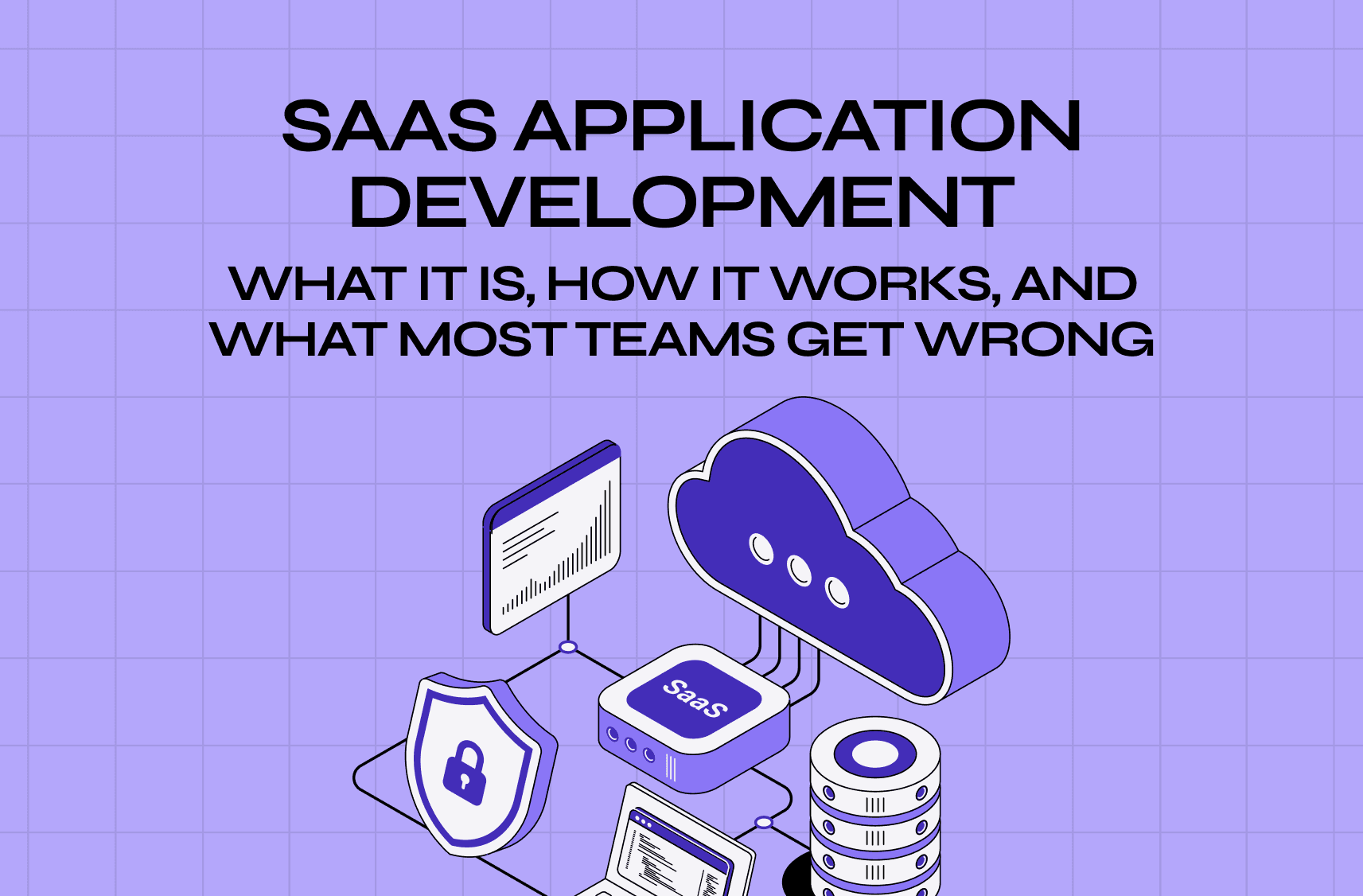
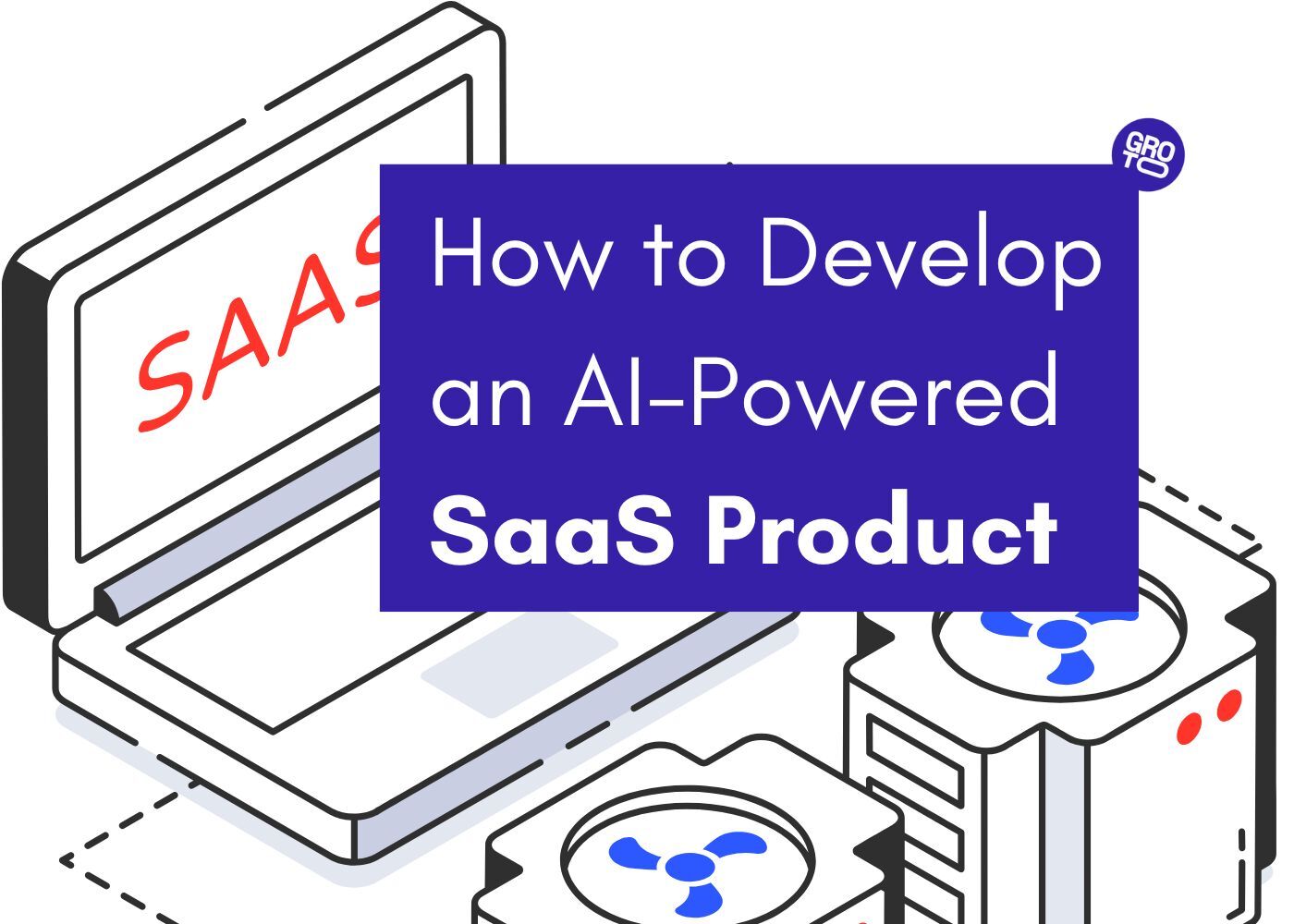
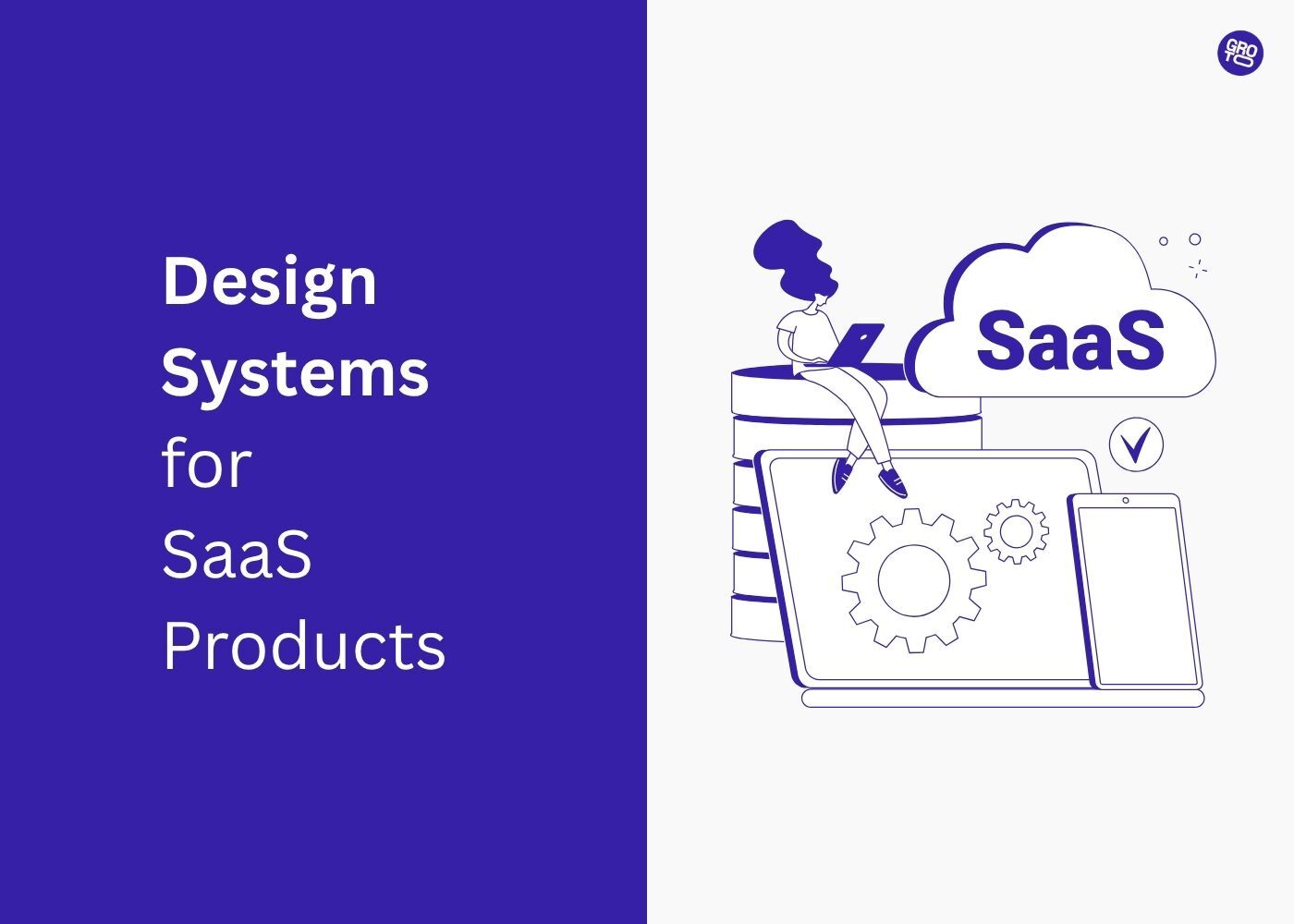
Isometric illustration of a SaaS ecosystem featuring cloud infrastructure, security, databases, and connected applications.

TL;DR

Vertical SaaS is industry-specific software built to serve one niche deeply rather than many industries broadly. Unlike horizontal platforms that stretch across use cases, vertical SaaS products win by going all-in on a single sector. The real design challenge is reflecting that depth in the interface itself. Niche users have niche workflows, niche compliance needs, and almost zero patience for generic UX. This blog covers what vertical SaaS is, how it differs from horizontal SaaS, what the best vertical SaaS examples get right from a design lens, and where AI is shifting the playbook.

Most software tries to work for everyone. The logic makes sense on paper: wider audience, bigger market, faster growth. But that logic has a ceiling, and a growing class of companies is hitting it hard from the other direction.

Rather than going wide, they go deep. They pick one industry, learn it inside out, and build software that works exactly the way that industry works. No generic SaaS dashboard design that forces every user type to adapt. Just tools that feel native to the job.

That is the core promise of vertical SaaS. And from a design perspective, it is one of the most demanding and most rewarding briefs you can take on.

The global SaaS market was valued at $273 billion in 2023 and is projected to reach $1.228 trillion by 2032. The generative AI market is expected to grow from $25.86 billion in 2024 to over $1 trillion by 2034, and building an AI-powered SaaS product for a specific vertical is one of the highest-leverage positions in that shift. These are not horizontal numbers. They are the rising tide that vertical SaaS is quietly positioned to benefit from most. 

What Is Vertical SaaS?

Vertical SaaS refers to software built specifically for the workflows, compliance requirements, and operational patterns of a single industry or niche. A platform built for law firms, one designed for restaurant chains, or a tool serving pharmaceutical companies exclusively are all vertical SaaS products. The "vertical" refers to a column of one market, as opposed to a horizontal slice across many.

The defining characteristic is not just what the software does. It is how deeply it does it for one type of user. A general project management tool can be used by a construction company, but a platform like Procore is built around how construction projects actually run: scheduling dependencies, field collaboration, safety compliance, budget control tied to physical progress. That depth starts at the SaaS application development stage, not the design phase.

The UX playbook that takes you from MVP traction to Series A growth

Identify the UX mistakes silently killing your activation rate and the exact fixes to improve conversions without a full product redesign.

No Spam. Free Lifetime

The UX playbook that takes you from MVP traction to Series A growth

Identify the UX mistakes silently killing your activation rate and the exact fixes to improve conversions without a full product redesign.

No Spam. Free Lifetime

Vertical SaaS vs Horizontal SaaS: A Design Perspective

The vertical SaaS vs horizontal SaaS debate is often framed around market size and go-to-market strategy. But from a SaaS UX design standpoint, it is a fundamentally different problem.

Horizontal SaaS design priorities:

  • Flexibility across use cases

  • Generic component libraries that do not confuse any one user type

  • Customization through settings, not structure

  • Onboarding that works for a project manager at a startup and a logistics team at an enterprise

Vertical SaaS design priorities:

  • Deep familiarity with a specific user's mental model

  • Terminology, workflows, and labels that match how professionals in that industry actually think

  • Compliance and regulatory constraints baked into the interface, not bolted on

  • Role-based experiences that reflect real hierarchy within the vertical

When we worked on LearnSphere's edtech platform, the design could not be built like a general productivity tool. The role-based architecture for admins, teachers, and students had to reflect how schools actually operate: different permissions, different dashboards, different task flows, all tied to an academic cycle that a generic SaaS product would never anticipate. That industry-native thinking is what separates a good vertical SaaS design from a repurposed horizontal one.

How vertical SaaS is sold is inseparable from how it is built. The SaaS go-to-market strategy for a niche product looks nothing like a horizontal one: industry conferences and professional associations are the primary acquisition channels, not broad ad campaigns, and word-of-mouth travels faster because the community is smaller and more connected. Word-of-mouth travels faster in a tight-knit niche because the community is smaller and more connected. A single reference customer from a well-known name in the vertical is worth more than dozens of generic testimonials -- which is why SaaS branding carries more weight in a niche market than in a horizontal one where volume absorbs weak signals. Sales cycles are longer, but win rates are higher because the alternative, a horizontal tool that does not fit the workflow, is a visible and frustrating reality for the buyer. This GTM reality has a direct design implication: every touchpoint a niche user has with the product carries more weight than in a horizontal tool. The design cannot afford to feel generic at any point. 

Why Vertical SaaS Products Win on Design (and Lose on Design)
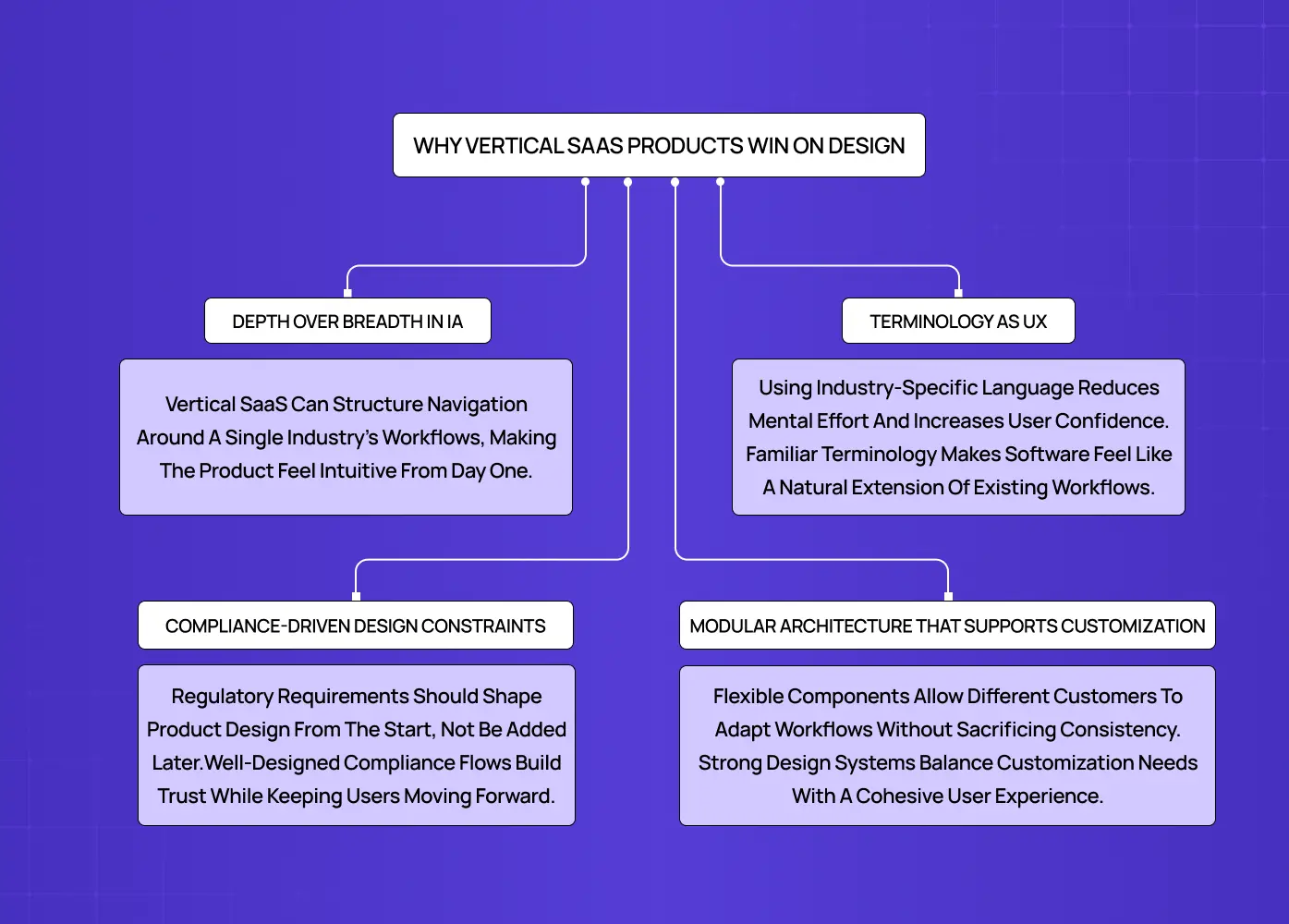
Diagram explaining how industry-specific workflows, terminology, compliance, and modular systems create better user experiences.

Niche software has a distinct advantage: it can be deeply, precisely useful. But that advantage only holds if the design actually delivers on the niche promise. Here is what makes the difference.

Depth Over Breadth in Information Architecture

Horizontal SaaS products often rely on flat navigation because they serve too many workflows to prioritize any one. Vertical SaaS products can afford a more opinionated structure. When your user is always a healthcare administrator, or always a PR manager, or always a construction site lead, the navigation can mirror their daily reality -- and that is where SaaS product design for a niche diverges most visibly from generic software patterns.

For our work on Barista, a PR-first AI platform, the information architecture was rebuilt around how PR teams actually move through their day: 

  • client assignments

  • workflow stages

  • content collaboration, and 

  • output delivery. 

The result was an interface that felt familiar from session one, not because it was simple, but because it matched the mental model of the exact user it was built for.

Onboarding is where this principle is tested most visibly. Vertical SaaS users are typically experts in their field, not beginners learning software. The onboarding experience has to validate their domain expertise while introducing the tool, without ever making a 20-year construction project manager feel like they are starting from scratch. The best vertical SaaS onboarding feels like the software is learning the user's context, not the other way around. Starting with the user's terminology, their workflow stage, and their role establishes trust before the first task is assigned. 

Terminology as UX

Generic SaaS products use generic language. "Items," "records," "assets." Vertical SaaS products can use the actual vocabulary of an industry. 

  • A legal tech product should say "matter," not "project." 

  • A restaurant POS should say "covers," not "entries." 

This is not cosmetic. It is cognitive load reduction. Every time a user has to translate between their industry vocabulary and the software's language, friction accumulates.

There is a useful test for this. If you replaced every industry-specific label in your product with a generic equivalent and the interface still made sense, the terminology was cosmetic. Real vertical SaaS terminology is structural. It is load-bearing. "Matter" in a legal tool is not a synonym for "project." It carries a specific set of expectations about billing, case history, and client relationship that the word "project" does not. When the terminology is right, users do not notice it. When it is wrong, every interaction carries a small tax. That tax accumulates. 

Compliance-Driven Design Constraints

Many verticals have regulatory requirements that directly shape interface decisions. 

  • Banking app design makes this concrete: financial services need audit trails baked into every data action, not surfaced only when something goes wrong.

  • Healthcare platforms need consent flows, and healthcare branding has to signal trust and regulatory seriousness before a user ever reaches the interface.

  • EdTech products serving minors need specific access controls. 

These are not optional features that can be added later. They are structural. The best vertical SaaS designs treat compliance as a design constraint from day one, not a legal checkbox at the end.

When we redesigned PolicyBazaar's insurance shopping experience, the compliance requirements around disclosure and consent were not just legal requirements. They were interaction design decisions: when to surface information, how to sequence disclosures, what needed to be acknowledged before proceeding. Getting that right required understanding the regulatory layer as deeply as the user layer.

Modular Architecture That Supports Customization Without Chaos

Vertical SaaS companies serve an industry, but within that industry, every customer has slightly different needs. A mid-size law firm and a large enterprise firm both use legal tech, but their workflows differ significantly. The best vertical SaaS products build modular systems: components that can be configured without breaking the broader structure.

From a design systems perspective, this means building components that are flexible enough to be configured but opinionated enough to maintain consistency. The visual language should not fall apart when a power user or enterprise customer needs a different flow.

The Business Case for Going Vertical

The design argument for vertical SaaS is well-established. The business argument is equally strong, and for anyone evaluating whether to build in a niche, it deserves equal attention.

Lower churn, higher switching costs

When software is embedded in an industry's daily workflow, switching is expensive. Users do not just lose a tool; they lose configurations, terminology, integrations, and trained muscle memory built around that product.

Premium pricing power

Compliance-heavy industries pay for software that handles regulatory requirements correctly. A legal firm or healthcare provider will pay significantly more for a tool that understands their workflow than for a generic alternative they have to bend to fit.

Lower CAC through tight-knit networks

Niche professional communities are small and well-connected. A strong reference customer in a vertical travels faster and farther than any ad campaign. Industry conferences, peer referrals, and association networks are primary acquisition channels in a way they simply are not for horizontal SaaS.

Capital efficiency

Vertical SaaS companies tend to spend less on sales and marketing relative to revenue, achieve stronger margins, and build more defensible businesses over time. The tradeoff is a smaller TAM and slower headline growth, but the unit economics frequently outperform.

The SaaS metrics bear this out. Public vertical SaaS companies spend on average 35% less on SG&A than horizontal peers and are more profitable by an average of 30 points on an EBITDA margin basis. The tradeoff is a revenue multiple that runs about 1.5x lower than horizontal counterparts, because public markets price in TAM size. For founders who understand their industry deeply, that tradeoff is usually worth it. The business is more efficient, more defensible, and more profitable. It just does not look like a rocket ship on paper. 

Top Vertical SaaS Examples and What Their Design Gets Right

Procore (Construction)
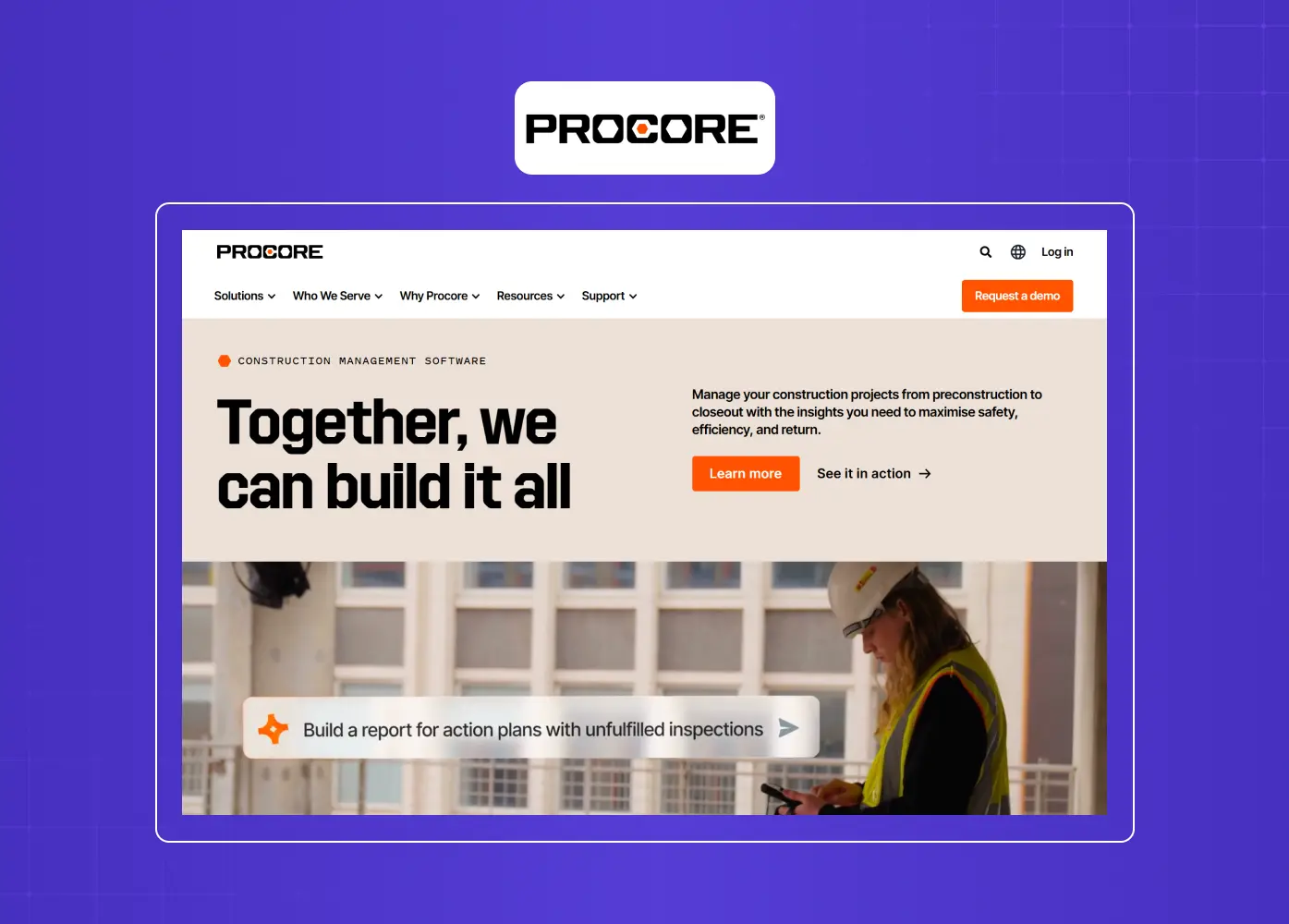
Homepage of Procore showcasing construction management software with bold typography, clear messaging, and industry-focused visuals.

Procore is one of the most cited vertical SaaS companies for good reason. Its design reflects how construction projects are actually managed: not as a linear task list, but as a network of dependencies, subcontractors, timelines, and compliance checkpoints. The field collaboration tools work on mobile because construction workers are not at desks. The budget views tie back to physical progress because that is how construction finance works.

Veeva Systems (Life Sciences)
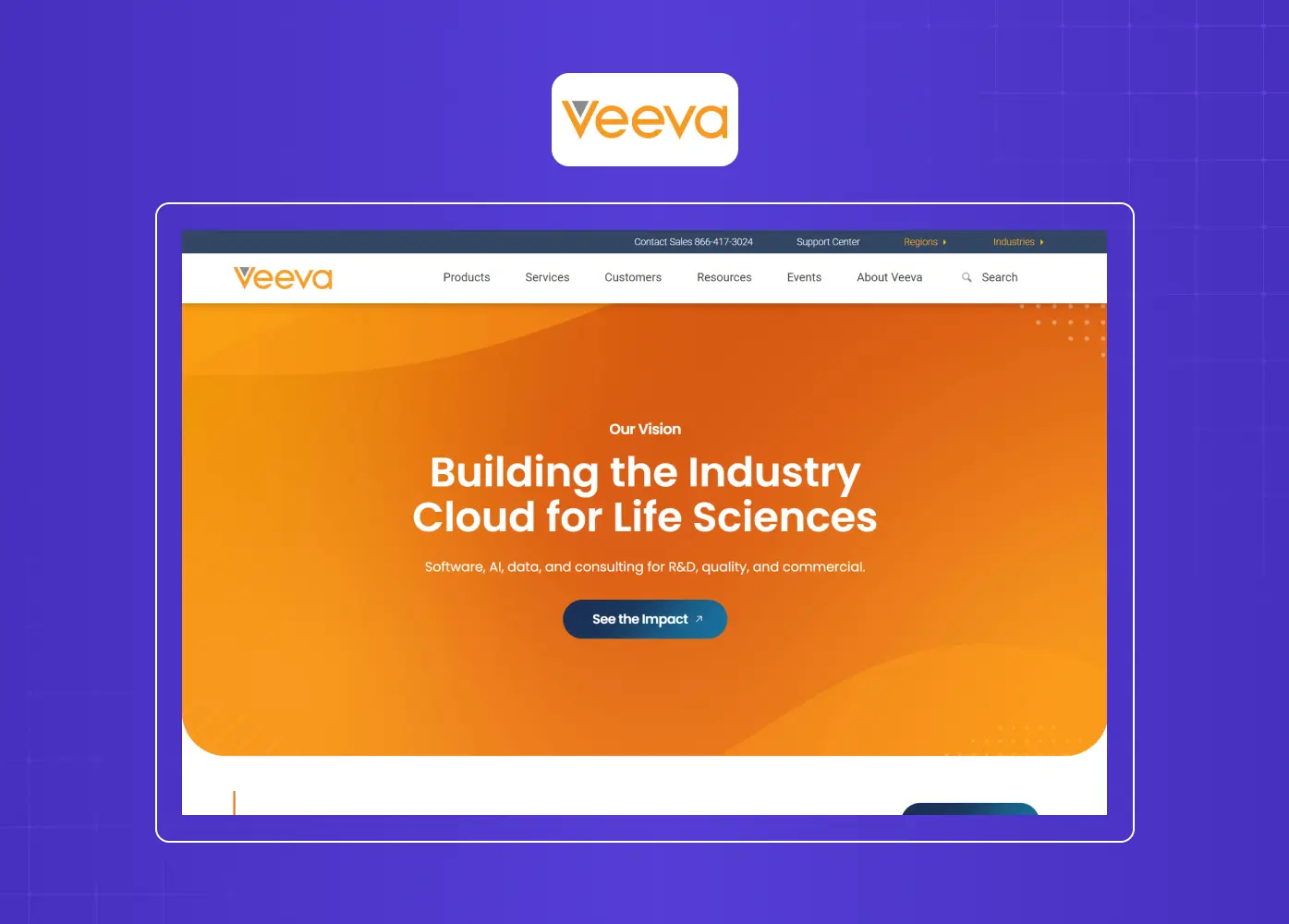
Homepage of Veeva highlighting its life sciences cloud platform with a clean layout, strong branding, and focused value proposition.

Veeva serves pharmaceutical and biotech companies, where regulatory compliance is not a feature, it is the entire product. The design of Veeva reflects the strict data integrity requirements of the life sciences industry. Document control, audit trails, and approval workflows are not buried in settings. They are front and center, because for this user, they always are.

Toast (Restaurants)

Homepage of Toast featuring restaurant-focused POS software with warm imagery, prominent CTAs, and industry-specific messaging.

Toast is built exclusively for restaurants. The POS design reflects the physical reality of a busy kitchen: large touch targets, fast order entry, visual clarity under pressure. The back-of-house management tools use restaurant metrics, not generic business analytics. Staff scheduling, table management, and inventory all connect because in a restaurant, they always do.

Pathways (AI-Powered Hiring)
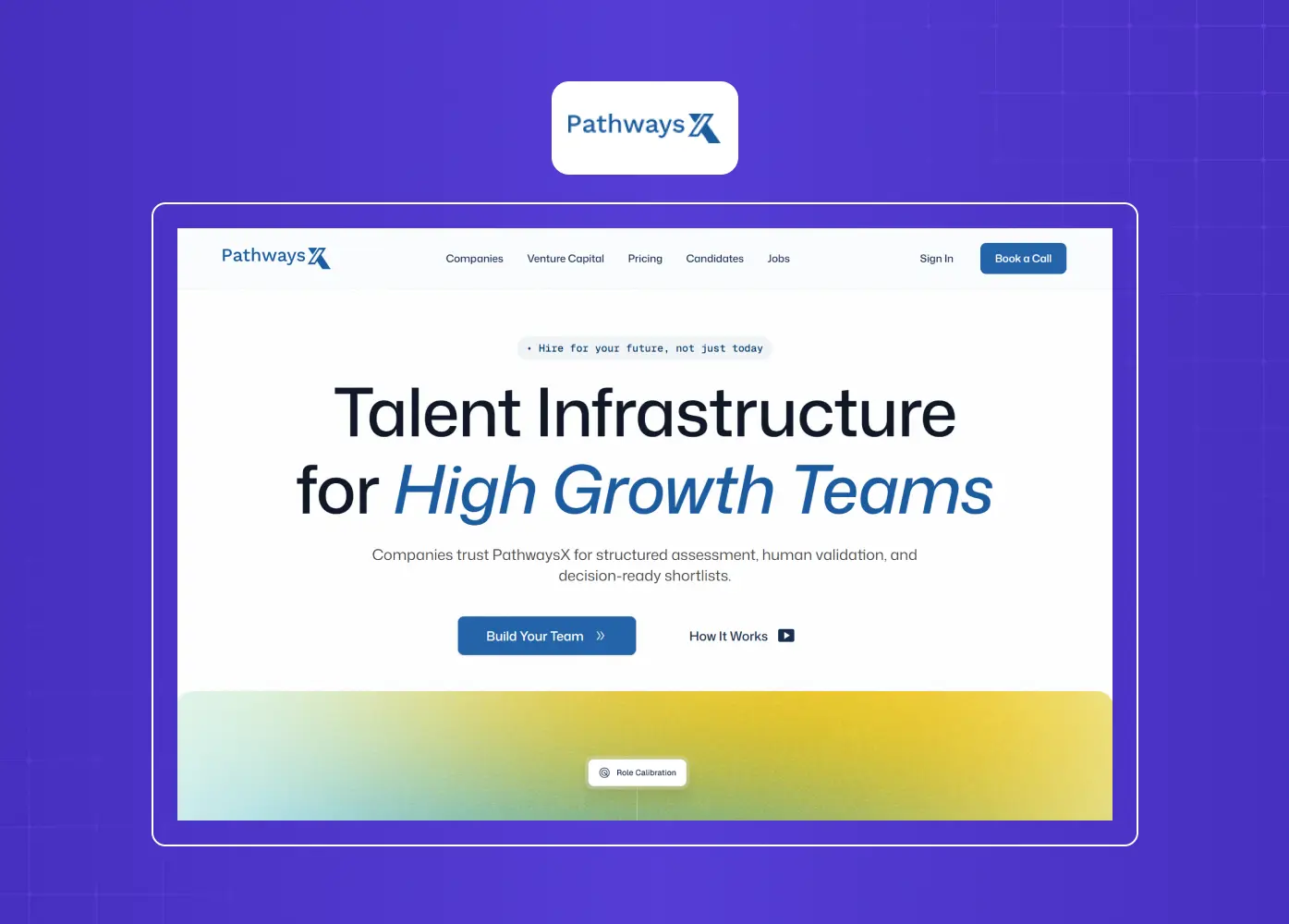
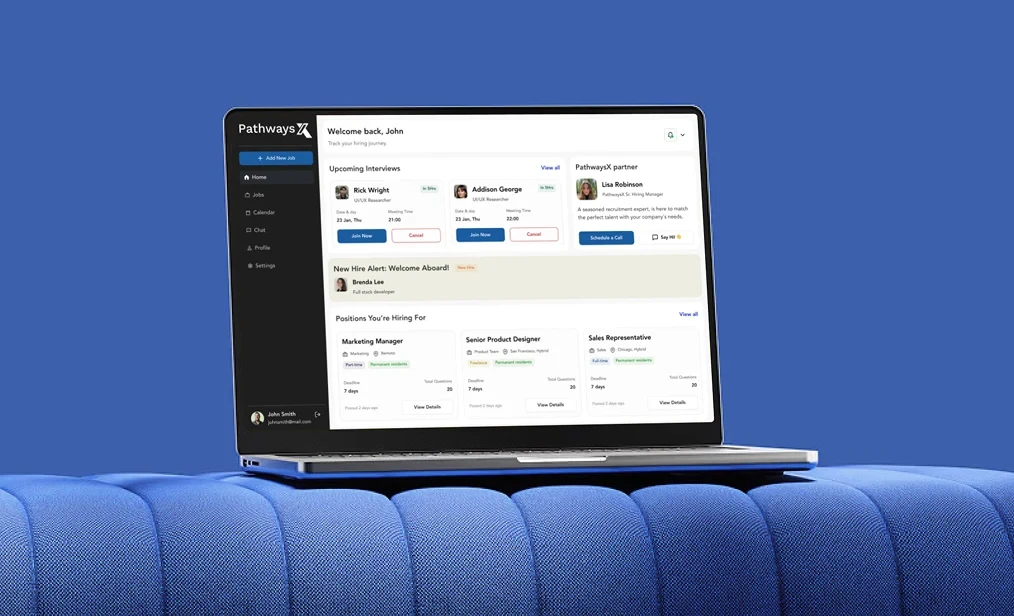
Homepage of PathwaysX emphasizing talent infrastructure for high-growth teams with modern typography and a minimalist interface.

When we built Pathways from scratch, the brief was not "a hiring tool." It was a tool for a specific type of company running personality-based, AI-driven assessments. The interface had to guide candidates through an unfamiliar process (AI assessment) while giving hiring managers the analytical clarity to make decisions quickly. That dual-user design challenge required understanding the hiring workflow deeply before touching a single wireframe.

Vertical SaaS extends well beyond these four. Real estate platforms like Zillow and Opendoor own the property transaction workflow. Legal practice management tools like Clio replace generic project tracking with matter management, billing, and trust accounting. Fitness and wellness platforms like Mindbody handle class scheduling, memberships, and instructor payroll in one place. Hospitality software like Cloudbeds manages reservations, channel distribution, and front-desk operations for independent hotels. Home services platforms like Housecall Pro run the entire field operations workflow for contractors. Automotive dealership software like DealerTrack handles financing, compliance, and inventory specific to how car sales actually work. In each case, the product wins because it knows the industry's operational logic better than any horizontal alternative could.

How AI Is Reshaping Vertical SaaS Design

Vertical SaaS AI is becoming one of the most interesting design problems in the industry. Generative AI gives vertical SaaS products an enormous advantage: they sit on proprietary, industry-specific data that horizontal platforms simply do not have. A legal AI trained on a specific firm's case history. An agricultural platform using local crop and weather data. A healthcare tool trained on specific patient population patterns. E-commerce AI personalization works the same way: when the model trains only on one retailer's buyer behavior, the output is structurally more useful than any general recommendation engine.

But AI in vertical SaaS also creates new design challenges:

  • Trust and explainability. In regulated industries, users need to understand why the system made a recommendation. An AI output in a healthcare platform carries far more accountability than a generic recommendation engine. The UX has to reflect that.

  • Workflow integration vs. workflow replacement. The best vertical SaaS AI tools augment existing workflows rather than create parallel ones. If an AI feature forces the user to leave their primary workflow to access insights, it will not be used.

  • Progressive disclosure of complexity. AI features in niche tools often have significant technical depth. The design challenge is surfacing the right level of complexity for the right user, without overwhelming or oversimplifying.

We saw this firsthand with Gini's health tracking platform. Integrating AI-powered food logging and DNA insights into a single hub required careful decisions about when to show data, how to explain AI-generated outputs, and how to give users control without making them data scientists.

What Makes Vertical SaaS Design Hard (and Worth Getting Right)
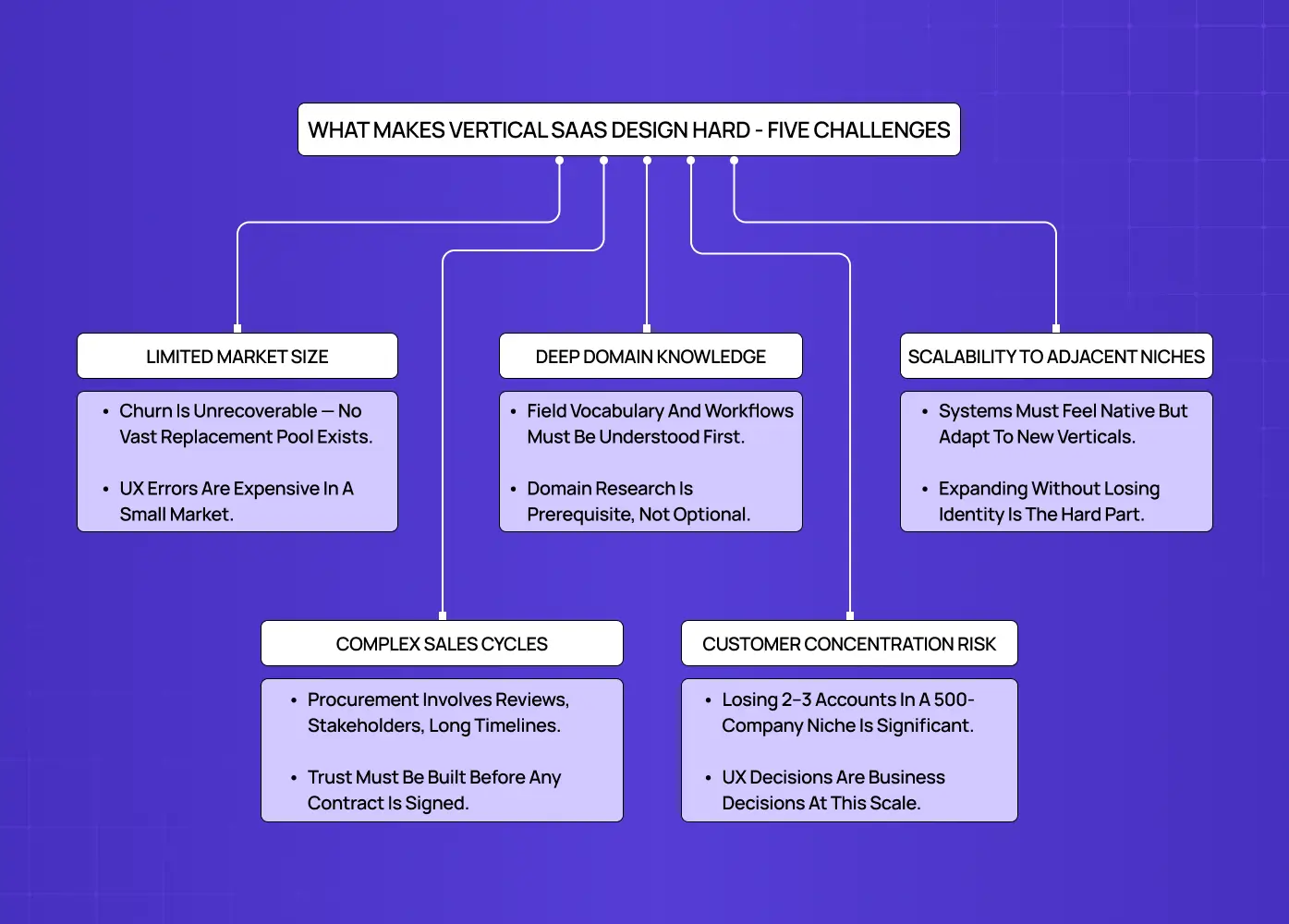
Diagram outlining five key challenges in vertical SaaS design, including limited markets, domain expertise, scalability, sales cycles, and customer concentration risks.

The challenges of vertical SaaS are not separate from its design implications. They are the design implications.

  • Limited market size means every user counts. Churn in a niche market is not recoverable the way it might be in a horizontal tool with millions of potential customers. UX errors are expensive.

  • Deep domain knowledge required means designers cannot work from assumptions. Research in vertical SaaS is not optional. Understanding the user's actual workflow, the vocabulary of the field, and the operational constraints is prerequisite work before any wireframe -- a principle that applies from MVP UX design through to full-scale product.

  • Scalability to adjacent niches requires design systems that are both specific enough to feel native to the original vertical and flexible enough to be adapted as the product expands. Building that without losing the original product's identity is one of the harder design challenges in SaaS.

  • Longer, more complex sales cycles. Selling to a hospital, a law firm, or a construction enterprise is structurally different from a self-serve horizontal tool. Procurement involves multiple stakeholders, compliance reviews, and longer evaluation windows. The product has to earn trust before a single contract is signed.


  • Customer concentration risk. In a 500-company niche, losing two or three enterprise accounts is a materially different event than churn in a horizontal market with millions of potential customers. This makes every retention decision, including every UX decision, higher stakes.

Conclusion

Most software tries to serve everyone. Vertical SaaS does the opposite. It picks one industry, learns it deeply, and builds around it. Here is what that means for product design, user experience, and the future of niche software.

What vertical SaaS is and why design is the deciding factor.

Isometric illustration of a SaaS ecosystem featuring cloud infrastructure, security, databases, and connected applications.

TL;DR

Vertical SaaS is industry-specific software built to serve one niche deeply rather than many industries broadly. Unlike horizontal platforms that stretch across use cases, vertical SaaS products win by going all-in on a single sector. The real design challenge is reflecting that depth in the interface itself. Niche users have niche workflows, niche compliance needs, and almost zero patience for generic UX. This blog covers what vertical SaaS is, how it differs from horizontal SaaS, what the best vertical SaaS examples get right from a design lens, and where AI is shifting the playbook.

Most software tries to work for everyone. The logic makes sense on paper: wider audience, bigger market, faster growth. But that logic has a ceiling, and a growing class of companies is hitting it hard from the other direction.

Rather than going wide, they go deep. They pick one industry, learn it inside out, and build software that works exactly the way that industry works. No generic SaaS dashboard design that forces every user type to adapt. Just tools that feel native to the job.

That is the core promise of vertical SaaS. And from a design perspective, it is one of the most demanding and most rewarding briefs you can take on.

The global SaaS market was valued at $273 billion in 2023 and is projected to reach $1.228 trillion by 2032. The generative AI market is expected to grow from $25.86 billion in 2024 to over $1 trillion by 2034, and building an AI-powered SaaS product for a specific vertical is one of the highest-leverage positions in that shift. These are not horizontal numbers. They are the rising tide that vertical SaaS is quietly positioned to benefit from most. 

What Is Vertical SaaS?

Vertical SaaS refers to software built specifically for the workflows, compliance requirements, and operational patterns of a single industry or niche. A platform built for law firms, one designed for restaurant chains, or a tool serving pharmaceutical companies exclusively are all vertical SaaS products. The "vertical" refers to a column of one market, as opposed to a horizontal slice across many.

The defining characteristic is not just what the software does. It is how deeply it does it for one type of user. A general project management tool can be used by a construction company, but a platform like Procore is built around how construction projects actually run: scheduling dependencies, field collaboration, safety compliance, budget control tied to physical progress. That depth starts at the SaaS application development stage, not the design phase.

The UX playbook that takes you from MVP traction to Series A growth

Identify the UX mistakes silently killing your activation rate and the exact fixes to improve conversions without a full product redesign.

No Spam. Free Lifetime

Vertical SaaS vs Horizontal SaaS: A Design Perspective

The vertical SaaS vs horizontal SaaS debate is often framed around market size and go-to-market strategy. But from a SaaS UX design standpoint, it is a fundamentally different problem.

Horizontal SaaS design priorities:

  • Flexibility across use cases

  • Generic component libraries that do not confuse any one user type

  • Customization through settings, not structure

  • Onboarding that works for a project manager at a startup and a logistics team at an enterprise

Vertical SaaS design priorities:

  • Deep familiarity with a specific user's mental model

  • Terminology, workflows, and labels that match how professionals in that industry actually think

  • Compliance and regulatory constraints baked into the interface, not bolted on

  • Role-based experiences that reflect real hierarchy within the vertical

When we worked on LearnSphere's edtech platform, the design could not be built like a general productivity tool. The role-based architecture for admins, teachers, and students had to reflect how schools actually operate: different permissions, different dashboards, different task flows, all tied to an academic cycle that a generic SaaS product would never anticipate. That industry-native thinking is what separates a good vertical SaaS design from a repurposed horizontal one.

How vertical SaaS is sold is inseparable from how it is built. The SaaS go-to-market strategy for a niche product looks nothing like a horizontal one: industry conferences and professional associations are the primary acquisition channels, not broad ad campaigns, and word-of-mouth travels faster because the community is smaller and more connected. Word-of-mouth travels faster in a tight-knit niche because the community is smaller and more connected. A single reference customer from a well-known name in the vertical is worth more than dozens of generic testimonials -- which is why SaaS branding carries more weight in a niche market than in a horizontal one where volume absorbs weak signals. Sales cycles are longer, but win rates are higher because the alternative, a horizontal tool that does not fit the workflow, is a visible and frustrating reality for the buyer. This GTM reality has a direct design implication: every touchpoint a niche user has with the product carries more weight than in a horizontal tool. The design cannot afford to feel generic at any point. 

Why Vertical SaaS Products Win on Design (and Lose on Design)

Diagram explaining how industry-specific workflows, terminology, compliance, and modular systems create better user experiences.

Niche software has a distinct advantage: it can be deeply, precisely useful. But that advantage only holds if the design actually delivers on the niche promise. Here is what makes the difference.

Depth Over Breadth in Information Architecture

Horizontal SaaS products often rely on flat navigation because they serve too many workflows to prioritize any one. Vertical SaaS products can afford a more opinionated structure. When your user is always a healthcare administrator, or always a PR manager, or always a construction site lead, the navigation can mirror their daily reality -- and that is where SaaS product design for a niche diverges most visibly from generic software patterns.

For our work on Barista, a PR-first AI platform, the information architecture was rebuilt around how PR teams actually move through their day: 

  • client assignments

  • workflow stages

  • content collaboration, and 

  • output delivery. 

The result was an interface that felt familiar from session one, not because it was simple, but because it matched the mental model of the exact user it was built for.

Onboarding is where this principle is tested most visibly. Vertical SaaS users are typically experts in their field, not beginners learning software. The onboarding experience has to validate their domain expertise while introducing the tool, without ever making a 20-year construction project manager feel like they are starting from scratch. The best vertical SaaS onboarding feels like the software is learning the user's context, not the other way around. Starting with the user's terminology, their workflow stage, and their role establishes trust before the first task is assigned. 

Terminology as UX

Generic SaaS products use generic language. "Items," "records," "assets." Vertical SaaS products can use the actual vocabulary of an industry. 

  • A legal tech product should say "matter," not "project." 

  • A restaurant POS should say "covers," not "entries." 

This is not cosmetic. It is cognitive load reduction. Every time a user has to translate between their industry vocabulary and the software's language, friction accumulates.

There is a useful test for this. If you replaced every industry-specific label in your product with a generic equivalent and the interface still made sense, the terminology was cosmetic. Real vertical SaaS terminology is structural. It is load-bearing. "Matter" in a legal tool is not a synonym for "project." It carries a specific set of expectations about billing, case history, and client relationship that the word "project" does not. When the terminology is right, users do not notice it. When it is wrong, every interaction carries a small tax. That tax accumulates. 

Compliance-Driven Design Constraints

Many verticals have regulatory requirements that directly shape interface decisions. 

  • Banking app design makes this concrete: financial services need audit trails baked into every data action, not surfaced only when something goes wrong.

  • Healthcare platforms need consent flows, and healthcare branding has to signal trust and regulatory seriousness before a user ever reaches the interface.

  • EdTech products serving minors need specific access controls. 

These are not optional features that can be added later. They are structural. The best vertical SaaS designs treat compliance as a design constraint from day one, not a legal checkbox at the end.

When we redesigned PolicyBazaar's insurance shopping experience, the compliance requirements around disclosure and consent were not just legal requirements. They were interaction design decisions: when to surface information, how to sequence disclosures, what needed to be acknowledged before proceeding. Getting that right required understanding the regulatory layer as deeply as the user layer.

Modular Architecture That Supports Customization Without Chaos

Vertical SaaS companies serve an industry, but within that industry, every customer has slightly different needs. A mid-size law firm and a large enterprise firm both use legal tech, but their workflows differ significantly. The best vertical SaaS products build modular systems: components that can be configured without breaking the broader structure.

From a design systems perspective, this means building components that are flexible enough to be configured but opinionated enough to maintain consistency. The visual language should not fall apart when a power user or enterprise customer needs a different flow.

The Business Case for Going Vertical

The design argument for vertical SaaS is well-established. The business argument is equally strong, and for anyone evaluating whether to build in a niche, it deserves equal attention.

Lower churn, higher switching costs

When software is embedded in an industry's daily workflow, switching is expensive. Users do not just lose a tool; they lose configurations, terminology, integrations, and trained muscle memory built around that product.

Premium pricing power

Compliance-heavy industries pay for software that handles regulatory requirements correctly. A legal firm or healthcare provider will pay significantly more for a tool that understands their workflow than for a generic alternative they have to bend to fit.

Lower CAC through tight-knit networks

Niche professional communities are small and well-connected. A strong reference customer in a vertical travels faster and farther than any ad campaign. Industry conferences, peer referrals, and association networks are primary acquisition channels in a way they simply are not for horizontal SaaS.

Capital efficiency

Vertical SaaS companies tend to spend less on sales and marketing relative to revenue, achieve stronger margins, and build more defensible businesses over time. The tradeoff is a smaller TAM and slower headline growth, but the unit economics frequently outperform.

The SaaS metrics bear this out. Public vertical SaaS companies spend on average 35% less on SG&A than horizontal peers and are more profitable by an average of 30 points on an EBITDA margin basis. The tradeoff is a revenue multiple that runs about 1.5x lower than horizontal counterparts, because public markets price in TAM size. For founders who understand their industry deeply, that tradeoff is usually worth it. The business is more efficient, more defensible, and more profitable. It just does not look like a rocket ship on paper. 

Top Vertical SaaS Examples and What Their Design Gets Right

Procore (Construction)

Homepage of Procore showcasing construction management software with bold typography, clear messaging, and industry-focused visuals.

Procore is one of the most cited vertical SaaS companies for good reason. Its design reflects how construction projects are actually managed: not as a linear task list, but as a network of dependencies, subcontractors, timelines, and compliance checkpoints. The field collaboration tools work on mobile because construction workers are not at desks. The budget views tie back to physical progress because that is how construction finance works.

Veeva Systems (Life Sciences)

Homepage of Veeva highlighting its life sciences cloud platform with a clean layout, strong branding, and focused value proposition.

Veeva serves pharmaceutical and biotech companies, where regulatory compliance is not a feature, it is the entire product. The design of Veeva reflects the strict data integrity requirements of the life sciences industry. Document control, audit trails, and approval workflows are not buried in settings. They are front and center, because for this user, they always are.

Toast (Restaurants)

Homepage of Toast featuring restaurant-focused POS software with warm imagery, prominent CTAs, and industry-specific messaging.

Toast is built exclusively for restaurants. The POS design reflects the physical reality of a busy kitchen: large touch targets, fast order entry, visual clarity under pressure. The back-of-house management tools use restaurant metrics, not generic business analytics. Staff scheduling, table management, and inventory all connect because in a restaurant, they always do.

Pathways (AI-Powered Hiring)

Homepage of PathwaysX emphasizing talent infrastructure for high-growth teams with modern typography and a minimalist interface.

When we built Pathways from scratch, the brief was not "a hiring tool." It was a tool for a specific type of company running personality-based, AI-driven assessments. The interface had to guide candidates through an unfamiliar process (AI assessment) while giving hiring managers the analytical clarity to make decisions quickly. That dual-user design challenge required understanding the hiring workflow deeply before touching a single wireframe.

Vertical SaaS extends well beyond these four. Real estate platforms like Zillow and Opendoor own the property transaction workflow. Legal practice management tools like Clio replace generic project tracking with matter management, billing, and trust accounting. Fitness and wellness platforms like Mindbody handle class scheduling, memberships, and instructor payroll in one place. Hospitality software like Cloudbeds manages reservations, channel distribution, and front-desk operations for independent hotels. Home services platforms like Housecall Pro run the entire field operations workflow for contractors. Automotive dealership software like DealerTrack handles financing, compliance, and inventory specific to how car sales actually work. In each case, the product wins because it knows the industry's operational logic better than any horizontal alternative could.

How AI Is Reshaping Vertical SaaS Design

Vertical SaaS AI is becoming one of the most interesting design problems in the industry. Generative AI gives vertical SaaS products an enormous advantage: they sit on proprietary, industry-specific data that horizontal platforms simply do not have. A legal AI trained on a specific firm's case history. An agricultural platform using local crop and weather data. A healthcare tool trained on specific patient population patterns. E-commerce AI personalization works the same way: when the model trains only on one retailer's buyer behavior, the output is structurally more useful than any general recommendation engine.

But AI in vertical SaaS also creates new design challenges:

  • Trust and explainability. In regulated industries, users need to understand why the system made a recommendation. An AI output in a healthcare platform carries far more accountability than a generic recommendation engine. The UX has to reflect that.

  • Workflow integration vs. workflow replacement. The best vertical SaaS AI tools augment existing workflows rather than create parallel ones. If an AI feature forces the user to leave their primary workflow to access insights, it will not be used.

  • Progressive disclosure of complexity. AI features in niche tools often have significant technical depth. The design challenge is surfacing the right level of complexity for the right user, without overwhelming or oversimplifying.

We saw this firsthand with Gini's health tracking platform. Integrating AI-powered food logging and DNA insights into a single hub required careful decisions about when to show data, how to explain AI-generated outputs, and how to give users control without making them data scientists.

What Makes Vertical SaaS Design Hard (and Worth Getting Right)

Diagram outlining five key challenges in vertical SaaS design, including limited markets, domain expertise, scalability, sales cycles, and customer concentration risks.

The challenges of vertical SaaS are not separate from its design implications. They are the design implications.

  • Limited market size means every user counts. Churn in a niche market is not recoverable the way it might be in a horizontal tool with millions of potential customers. UX errors are expensive.

  • Deep domain knowledge required means designers cannot work from assumptions. Research in vertical SaaS is not optional. Understanding the user's actual workflow, the vocabulary of the field, and the operational constraints is prerequisite work before any wireframe -- a principle that applies from MVP UX design through to full-scale product.

  • Scalability to adjacent niches requires design systems that are both specific enough to feel native to the original vertical and flexible enough to be adapted as the product expands. Building that without losing the original product's identity is one of the harder design challenges in SaaS.

  • Longer, more complex sales cycles. Selling to a hospital, a law firm, or a construction enterprise is structurally different from a self-serve horizontal tool. Procurement involves multiple stakeholders, compliance reviews, and longer evaluation windows. The product has to earn trust before a single contract is signed.

  • Customer concentration risk. In a 500-company niche, losing two or three enterprise accounts is a materially different event than churn in a horizontal market with millions of potential customers. This makes every retention decision, including every UX decision, higher stakes.

Conclusion

Have a project in mind?

Let’s talk through your idea and see what makes sense.

Harpreet Singh

Founder at Groto

Have a project in mind?

Let’s talk through your idea and see what makes sense.

Harpreet Singh

Founder at Groto

FAQ

Everything you were going to ask (and a few things you didn’t know to)

What are the top niches in vertical SaaS?

Some of the highest-growth niches include construction tech, legal practice management, restaurant and hospitality operations, healthcare administration, agritech, real estate, and financial services compliance. These industries share a common trait: they have complex, regulation-heavy workflows that generic software handles poorly, which makes them ideal candidates for purpose-built platforms.

What SaaS is in high demand right now?

Industry-specific platforms in healthcare, legal, and financial services are seeing strong demand, largely because compliance requirements in these sectors make horizontal tools insufficient. AI-powered vertical tools are also gaining ground fast, particularly in workflows involving document processing, decision support, and predictive analytics where domain-specific data gives them a clear edge over general-purpose alternatives.

Is SaaS being replaced by AI?

Not replaced, but meaningfully restructured. AI is shifting the value layer of SaaS products from feature sets to intelligence. The platforms that will survive this shift are those with proprietary, industry-specific data, which is precisely where vertical SaaS has a structural advantage. Rather than being displaced, well-designed vertical SaaS products are absorbing AI capabilities and becoming more defensible because of it.

What is the rule of 40 for SaaS?

The rule of 40 is a financial health benchmark for SaaS companies that states a company's revenue growth rate and profit margin should add up to at least 40. A company growing at 30% with a 10% profit margin meets the threshold. It is used by investors to evaluate whether a SaaS business is scaling efficiently, and it applies to vertical SaaS companies the same way it does to horizontal ones, though the smaller addressable markets in vertical SaaS mean growth rates are often compensated by stronger margins.

What is the 3 3 2 2 2 rule in SaaS?

The 3 3 2 2 2 rule is a revenue growth benchmark used to evaluate early-stage SaaS companies. It suggests that a high-performing SaaS business should triple revenue in years one and two, then double it in years three, four, and five. For vertical SaaS companies, hitting these benchmarks often looks different because the total addressable market is smaller, but the higher retention rates and lower churn that come with deep industry fit frequently make the unit economics more favorable over time.

Why are SaaS multiples so high?

SaaS multiples are high because investors price in the compounding value of recurring revenue, high gross margins, and scalability without proportional cost increases. For vertical SaaS specifically, multiples are further supported by strong net revenue retention, since customers in a niche have fewer alternatives and tend to expand usage over time rather than churn. The combination of defensibility, switching costs, and embedded workflows makes vertical SaaS businesses particularly attractive from a valuation standpoint.

What are the top niches in vertical SaaS?

Some of the highest-growth niches include construction tech, legal practice management, restaurant and hospitality operations, healthcare administration, agritech, real estate, and financial services compliance. These industries share a common trait: they have complex, regulation-heavy workflows that generic software handles poorly, which makes them ideal candidates for purpose-built platforms.

What SaaS is in high demand right now?

Industry-specific platforms in healthcare, legal, and financial services are seeing strong demand, largely because compliance requirements in these sectors make horizontal tools insufficient. AI-powered vertical tools are also gaining ground fast, particularly in workflows involving document processing, decision support, and predictive analytics where domain-specific data gives them a clear edge over general-purpose alternatives.

Is SaaS being replaced by AI?

Not replaced, but meaningfully restructured. AI is shifting the value layer of SaaS products from feature sets to intelligence. The platforms that will survive this shift are those with proprietary, industry-specific data, which is precisely where vertical SaaS has a structural advantage. Rather than being displaced, well-designed vertical SaaS products are absorbing AI capabilities and becoming more defensible because of it.

What is the rule of 40 for SaaS?

The rule of 40 is a financial health benchmark for SaaS companies that states a company's revenue growth rate and profit margin should add up to at least 40. A company growing at 30% with a 10% profit margin meets the threshold. It is used by investors to evaluate whether a SaaS business is scaling efficiently, and it applies to vertical SaaS companies the same way it does to horizontal ones, though the smaller addressable markets in vertical SaaS mean growth rates are often compensated by stronger margins.

What is the 3 3 2 2 2 rule in SaaS?

The 3 3 2 2 2 rule is a revenue growth benchmark used to evaluate early-stage SaaS companies. It suggests that a high-performing SaaS business should triple revenue in years one and two, then double it in years three, four, and five. For vertical SaaS companies, hitting these benchmarks often looks different because the total addressable market is smaller, but the higher retention rates and lower churn that come with deep industry fit frequently make the unit economics more favorable over time.

Why are SaaS multiples so high?

SaaS multiples are high because investors price in the compounding value of recurring revenue, high gross margins, and scalability without proportional cost increases. For vertical SaaS specifically, multiples are further supported by strong net revenue retention, since customers in a niche have fewer alternatives and tend to expand usage over time rather than churn. The combination of defensibility, switching costs, and embedded workflows makes vertical SaaS businesses particularly attractive from a valuation standpoint.

More Articles

Extreme close-up black and white photograph of a human eye

Let’s bring your vision to life

Tell us what's on your mind? We'll hit you back in 24 hours. No fluff, no delays - just a solid vision to bring your idea to life.

Profile portrait of a man in a white shirt against a light background

Harpreet Singh

Founder and Creative Director

Get in Touch

Extreme close-up black and white photograph of a human eye

Let’s bring your vision to life

Tell us what's on your mind? We'll hit you back in 24 hours. No fluff, no delays - just a solid vision to bring your idea to life.

Profile portrait of a man in a white shirt against a light background

Harpreet Singh

Founder and Creative Director

Get in Touch

Extreme close-up black and white photograph of a human eye

Let’s bring your vision to life

Tell us what's on your mind? We'll hit you back in 24 hours. No fluff, no delays - just a solid vision to bring your idea to life.

Profile portrait of a man in a white shirt against a light background

Harpreet Singh

Founder and Creative Director

Get in Touch