Choosing between an AI website builder and hiring an agency isn't just about cost or speed. It's about what your website needs to do. This guide breaks down real numbers, trade-offs, and the smart hybrid path in between.
AI builder or design agency? Here's how to actually decide for your website.
Deciding between an AI website builder and hiring an agency is one of the most common calls founders and small business owners have to make in 2026. It sounds like a simple cost comparison at first. It isn't. The real question is what your website needs to do for your business, and that changes the answer completely.
TL;DR
AI website builders win on cost and speed: live in under 30 minutes for $0 to $30 a month.
Agencies win on design quality, SEO, conversion, and scalability: $5,000 to $50,000+ over 6 to 8 weeks.
Use an AI builder to validate an idea, launch a brochure site, or work with a tight budget.
Hire an agency once your website has to rank, convert, integrate, or represent a brand people take seriously.
The hybrid path (AI to start, a professional to refine) is often the smartest move, especially for SaaS founders.
You can now describe a website to an AI, wait 30 minutes, and have a live, functional site for free. Or you can hire an agency, wait six to eight weeks, and pay somewhere between $5,000 and $50,000. On the surface, that's not a close call. Until you ask what the website is actually for. A weekend side project and a company's primary sales engine have very different needs, and the "cheaper and faster" option isn't automatically the right one.
This guide compares an AI website builder vs hiring an agency honestly, covering real costs, speed, design quality, SEO, and long-term scalability, and, more usefully, tells you exactly when each makes sense. We'll also cover the hybrid path that's become the smart move for a lot of founders. No vendor spin, just a clear way to decide how to build the site your business actually needs. Let's get into it.
The short verdict
Here's the honest one-liner: use an AI website builder when you need a simple site live fast and cheap; hire an agency when the website has a real job to do.
Choose an AI builder if: you're validating an idea, putting up a one-page brochure, or working on a shoestring budget. AI builders are genuinely great here.
Choose an agency if: the site needs to rank in search, convert visitors into customers, integrate with your tools, scale, and represent a brand people will judge you by.
Match the choice to the stakes.
Factor | AI website builder | Hiring an agency |
Cost | $0–$30/month | $5,000–$50,000+ build + retainer |
Time to launch | Under 30 minutes | ~6–8 weeks |
Design | Templated, limited customization | Custom, brand-specific |
SEO / conversion | Basic | Strategically optimized |
Scales & integrates? | Limited | Built for it |
Best for | Validating, brochure, tight budget | Sites with a real business job |
What is an AI website builder?
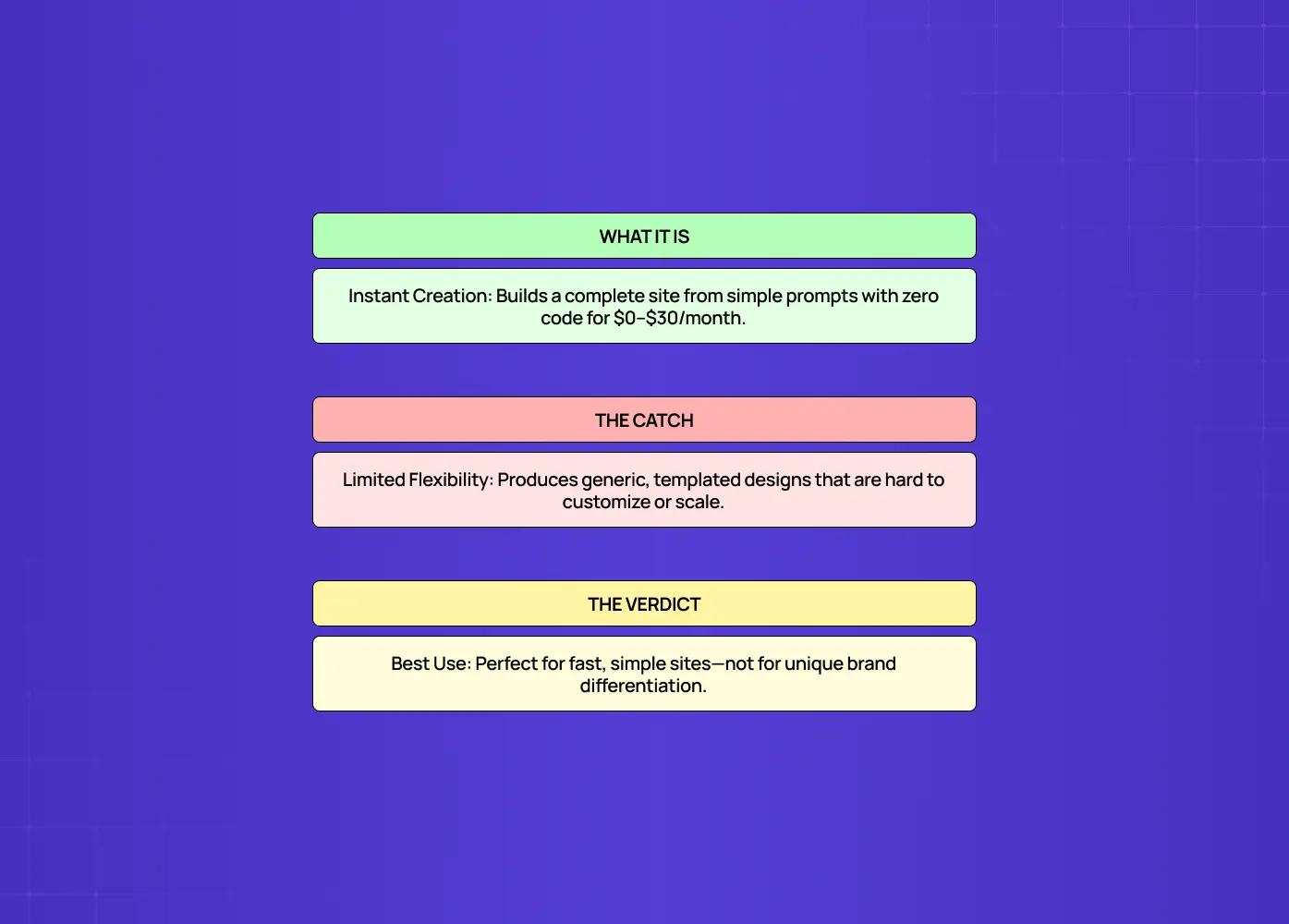
An AI website builder generates a functional website for you from a prompt or a few questions, using AI to assemble layouts, copy, and images from templates. No coding or designer required. The best AI web design tools get you online in minutes for $0–$30 a month, which is a genuine breakthrough for anyone who just needs a website, now, cheaply.
The trade-offs come from how they work:
Design tends to look templated, recognizable and hard to make truly distinctive.
Customization is limited to what the tool allows.
Many builders cap how much you can edit with AI after launch, so you can hit a wall when your needs grow.
For a simple, get-it-live use case, none of that matters much. For a site meant to differentiate you, it matters a lot, which is why platform choice deserves its own look, starting with Framer vs Webflow.
What does hiring an agency get you?
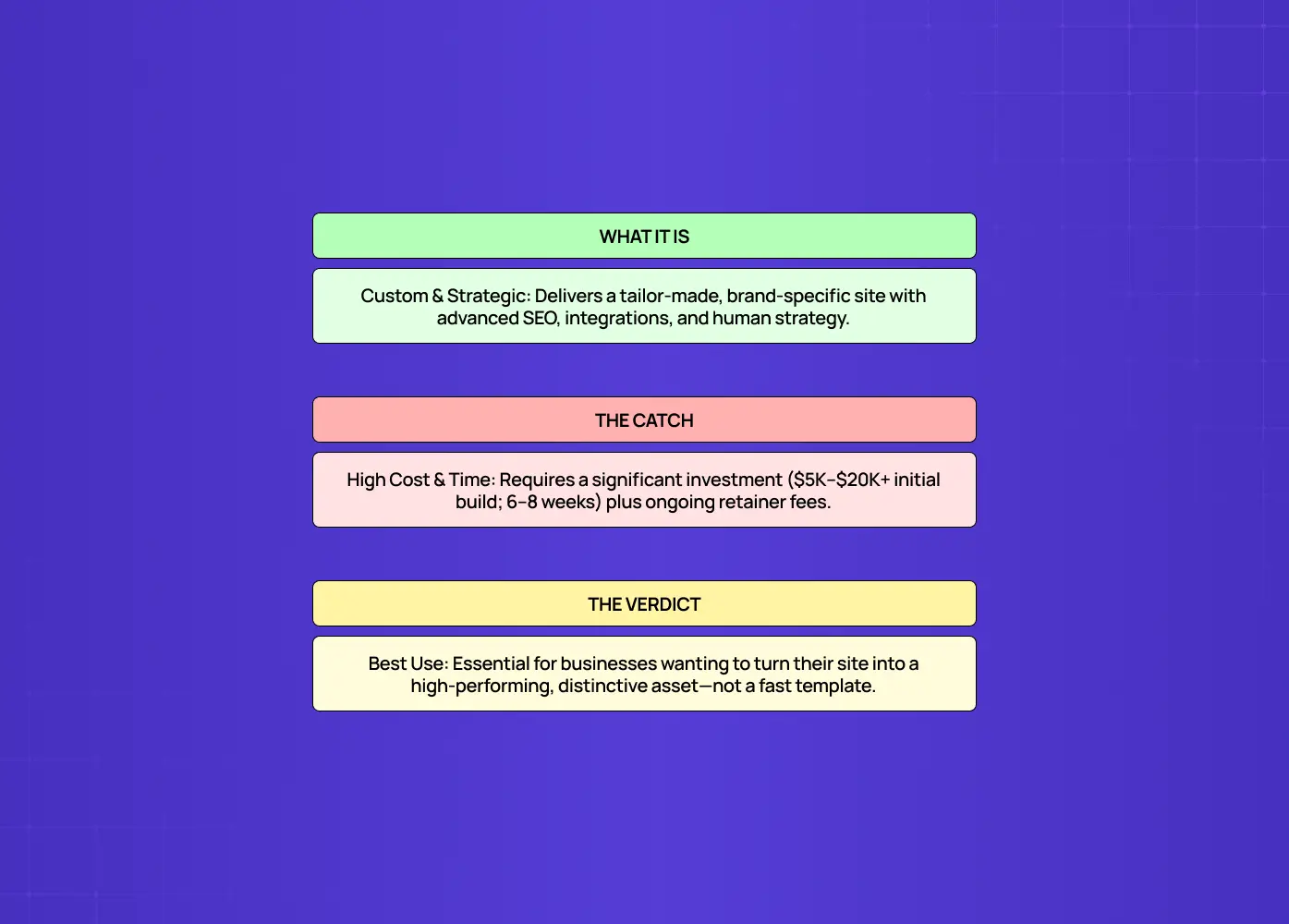
Hiring an agency gets you human strategy and a custom-built site designed around your specific brand, goals, and users, not a template. A good agency brings:
Strategic thinking about who the site is for and what it needs to achieve.
Brand-specific design that helps you stand out.
Technical depth to handle SEO, conversion optimization, integrations, scaling, and responsive web design services that hold up across every device.
In short, an agency can build essentially anything you can describe, tuned to your business rather than a generic pattern.
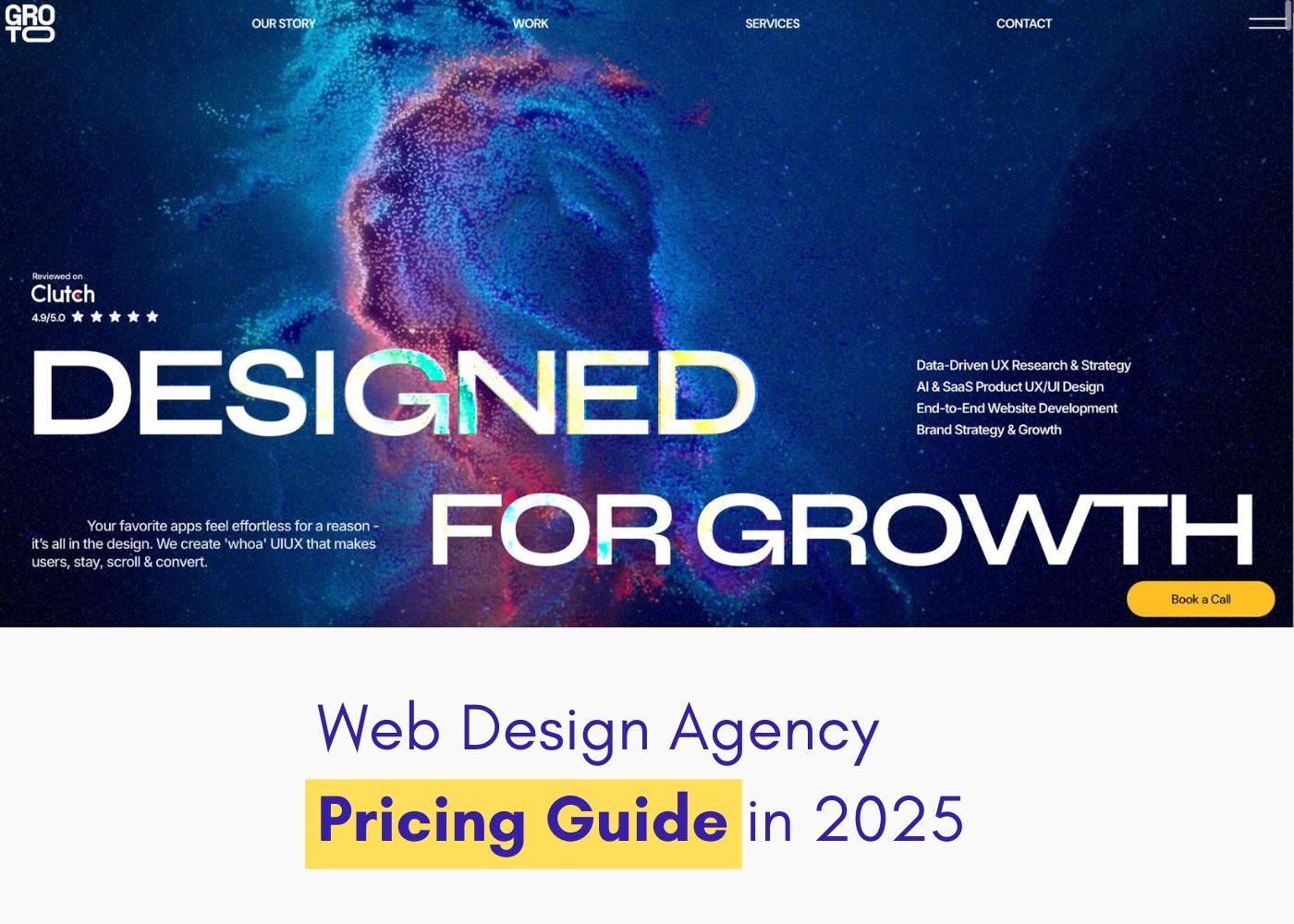
That capability costs more and takes longer: web design agency pricing typically runs $5,000–$20,000+ for the initial build (climbing to $50K+ for complex projects) over roughly six to eight weeks, often plus a monthly retainer of $1,000–$5,000 for ongoing work. You're not just paying for pages, you're paying for the judgment, craft, and accountability that turn a website into a business asset.
Head-to-head: the factors that matter
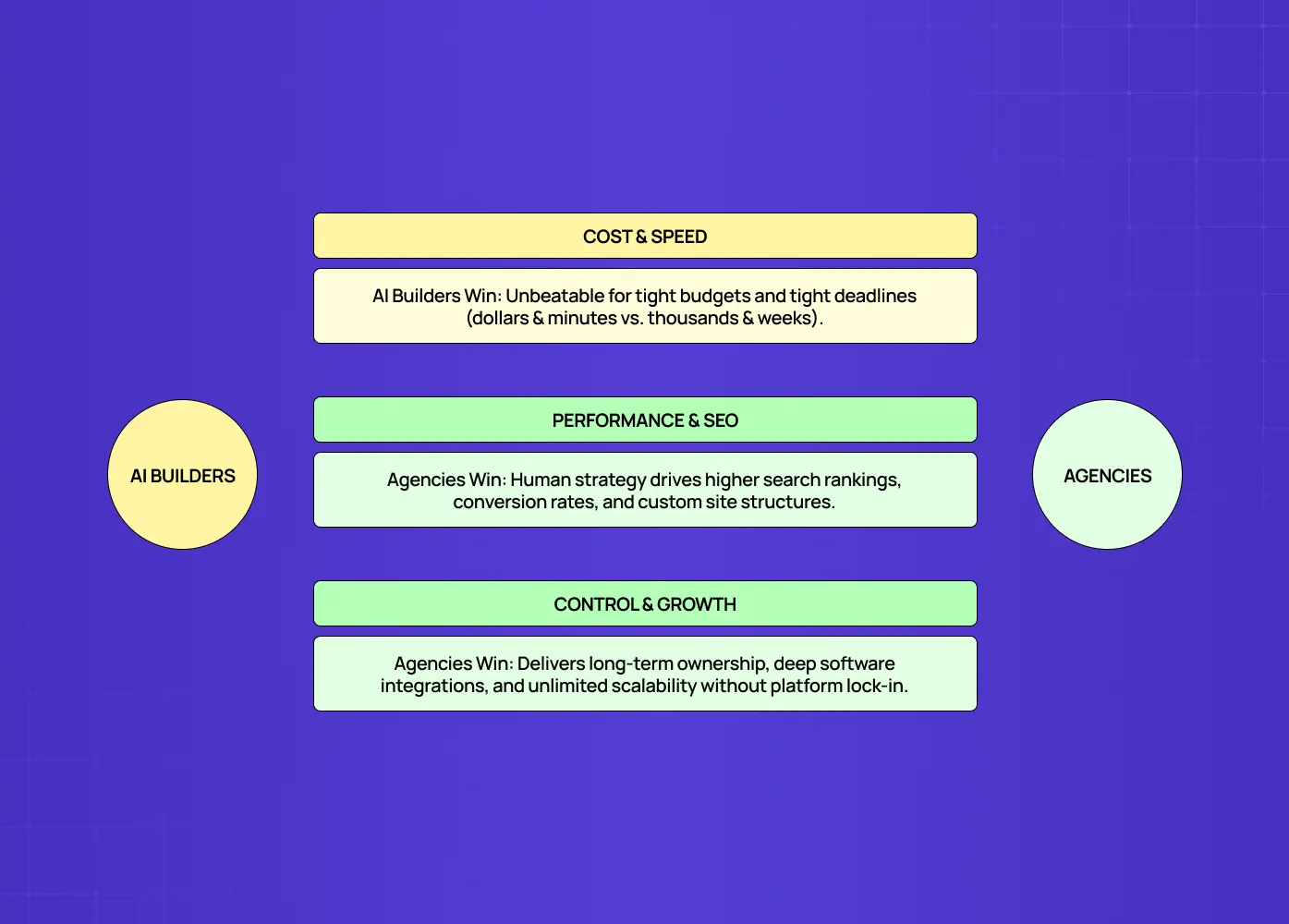
Cost. AI builders win decisively on price, dollars a month versus thousands up front. If budget is the binding constraint, it's not close.
Speed. AI builders again, minutes versus weeks. For urgent, simple needs, that's a real advantage.
SEO and conversion. Agencies win. Ranking in search and turning visitors into customers takes strategy and optimization that go well beyond what a generated template delivers out of the box, starting with a deliberate website structure no builder will plan for you.
Scalability and integrations. Agencies win. As your needs grow (custom functionality, connecting to your stack, handling traffic) AI builders tend to hit limits a custom build is designed to avoid.
Ownership and flexibility. Agencies generally win on long-term control; AI builders can lock you into their platform and their editing constraints.
The pattern is clear: AI builders dominate on cost and speed, agencies dominate on everything that makes a website perform over time.
The pros and cons
AI website builder
Pros: speed, very low cost, no technical skill required, live today for almost nothing.
Cons: templated design, limited customization, weaker SEO and conversion, capped post-launch AI edits, limits on scaling.
It's the right tool when "good enough, now, cheap" is genuinely good enough.
Hiring an agency
Pros: custom brand-specific design, strategic thinking, strong SEO and conversion, integrations, scalability, expert support.
Cons: higher cost, longer timeline.
It's the right tool when the website is a serious business asset that has to earn its keep.
The real cost picture (including freelancers)
Price is usually the deciding factor, so it's worth seeing the full landscape rather than just the two extremes. There's a middle option many people forget: freelancers. It changes the math.
Option | Typical cost | Timeline |
AI website builder | $0–$30/month | Under 30 minutes |
Freelance web developer | $1,500–$5,000 build + $100–$300/mo | A few weeks |
Web design agency | $5,000–$20,000+ build (up to $50K+) + $1,000–$5,000/mo | ~6–8 weeks |
A freelancer sits between the AI builder and the agency: more custom and capable than a template, cheaper and more personal than an agency, but with less strategic depth, capacity, and accountability than a full team. A no-code website design agency occupies similar ground with more capacity behind it.
The key insight: don't compare only the build price, factor in ongoing maintenance, the website redesign cost you'll face when you outgrow the first build, and, crucially, the cost of a site that underperforms. A cheap site that converts poorly is often the most expensive option of all once you count the customers it fails to win.
When to choose which
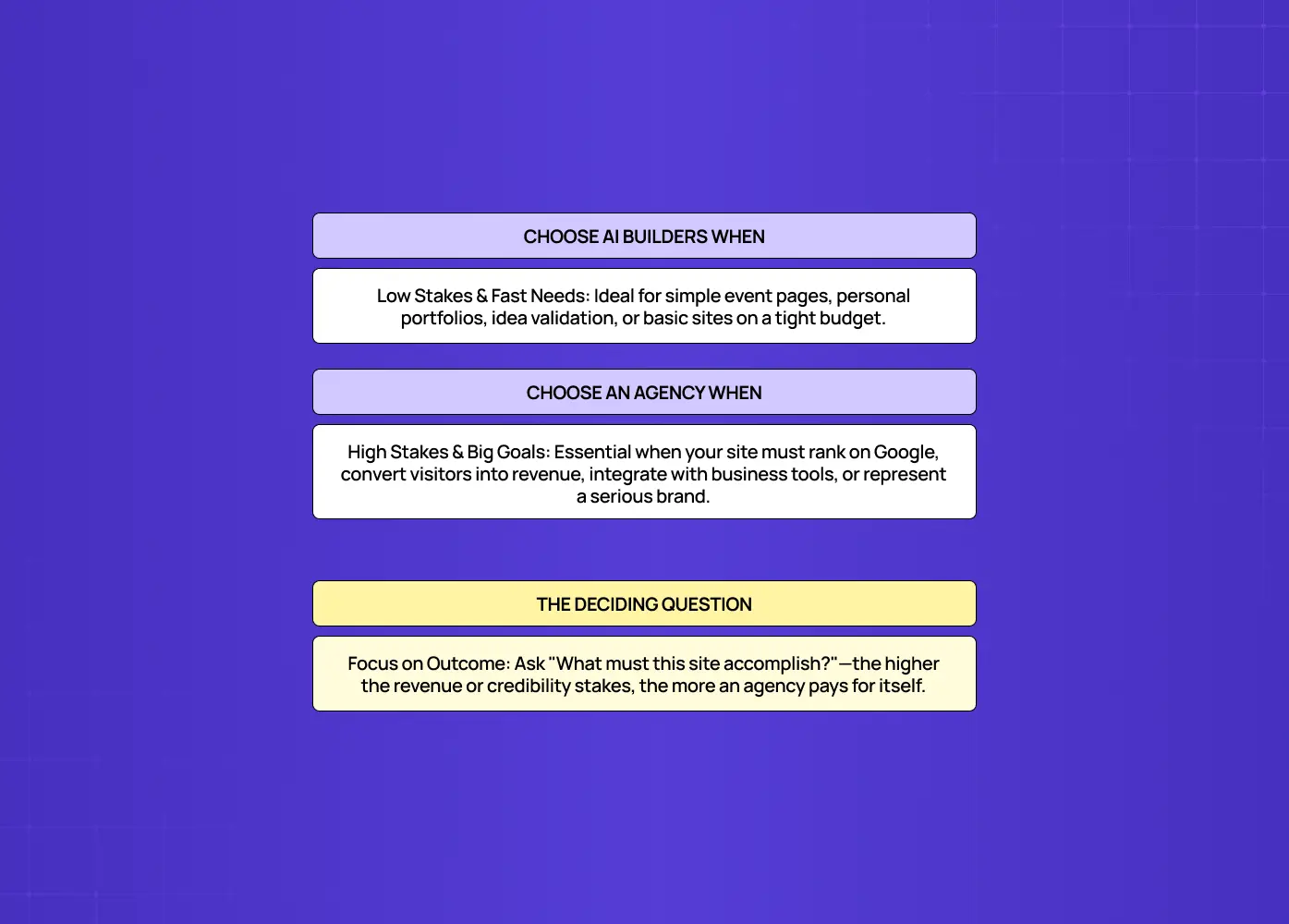
Use an AI website builder when:
You need to validate an idea before investing further.
You're putting up a one-page brochure or a personal/portfolio site.
You're launching an event or landing page.
You need a basic presence on a tight budget.
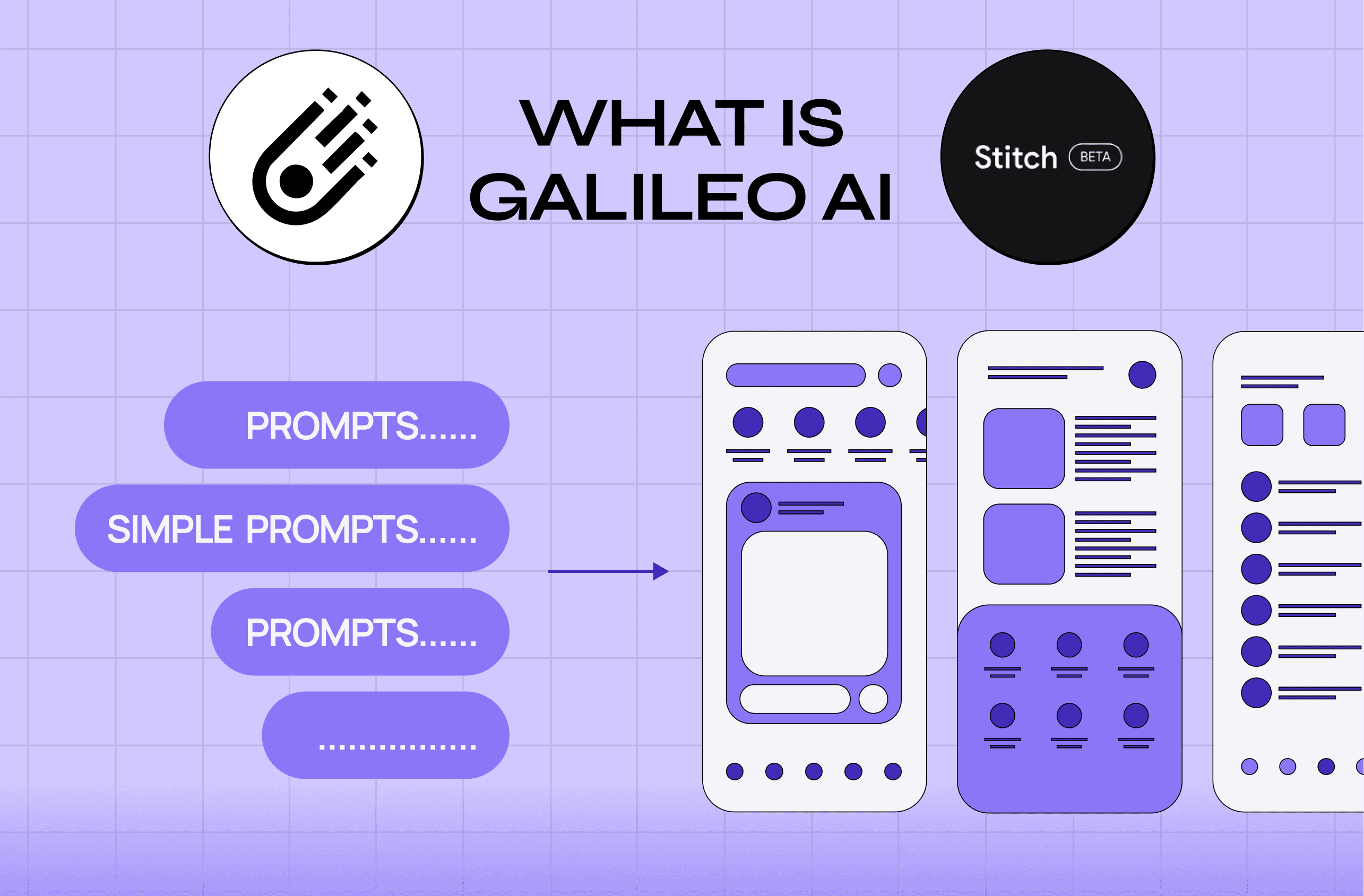
In these cases the speed and price are exactly right, and the limitations don't bite. Tools like Google Stitch cover this territory well.
Hire an agency when:
The site needs to rank in search.
It needs to drive real website conversion, not just visits.
It needs to integrate with your business tools.
It needs to scale with your growth.
It needs to represent a brand that customers, investors, or partners will judge you by.
For a company's primary sales-and-credibility engine, the cost of a mediocre site, in lost conversions and weak first impressions, dwarfs the cost of building it well. If that's your situation, choosing a web design agency is the next decision, and it's a harder one than it looks.
The deciding question isn't "what's cheapest?" It's "what does this website need to accomplish?" If you already have a site and aren't sure how far short it falls, self-audit your website first. The higher the stakes and the more the site must perform, the more an agency pays for itself.
The hybrid approach: the smart middle path
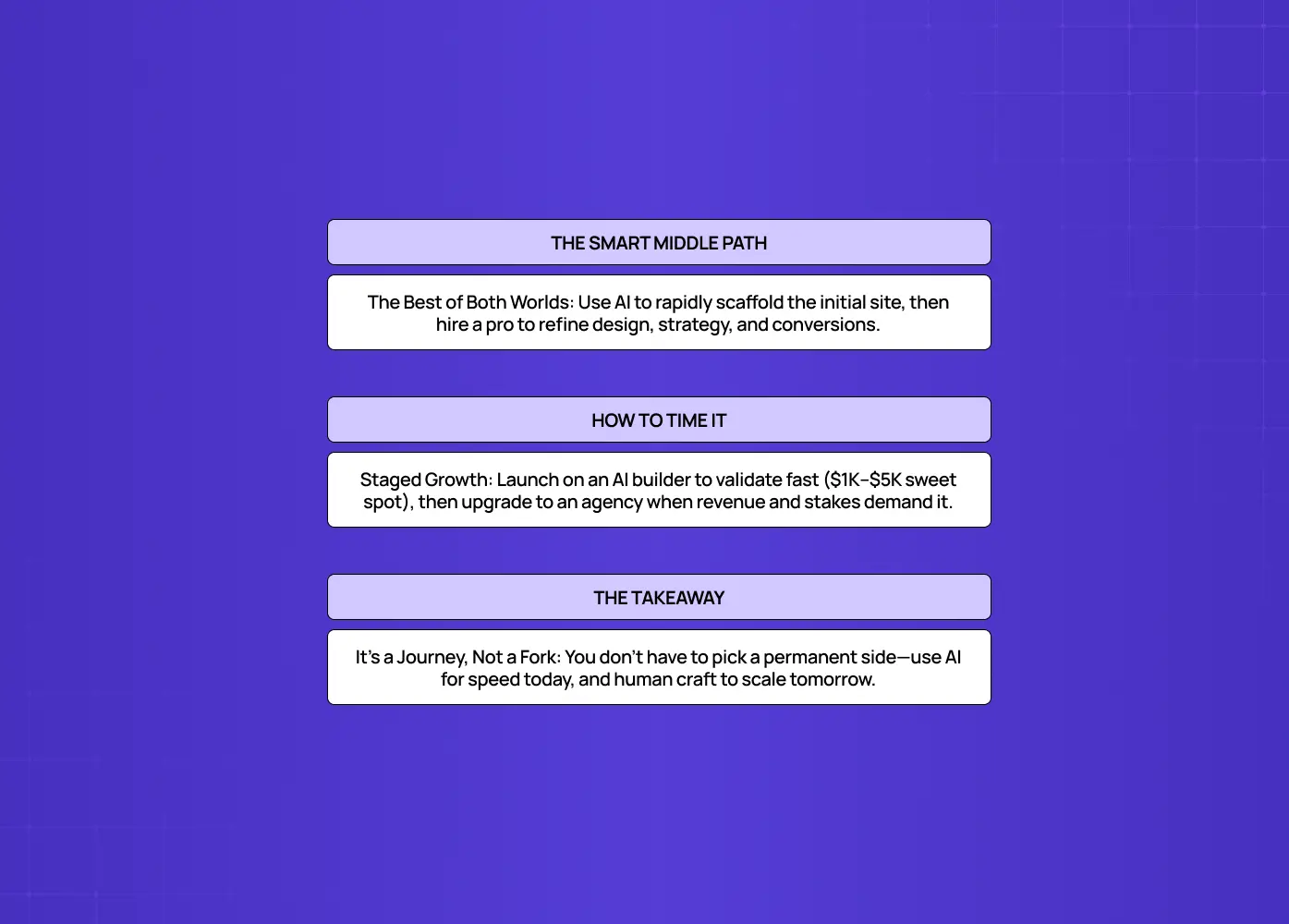
For a large group of founders, especially SaaS builders working in the roughly $1K–$5K range, the best answer isn't strictly one or the other. The hybrid approach hits the sweet spot: use AI to generate a fast first version, then bring in a professional to refine it into something strategic, on-brand, and built to convert. You get the speed and cost savings of AI on the initial scaffolding, plus the human judgment, design craft, and optimization that make the site actually work.
This mirrors how modern design partners operate, using AI to move faster while keeping experienced designers in charge of strategy and quality. If you're weighing whether those designers should sit inside your company, the agency vs in-house designers trade-off runs on the same logic. It's also a sensible sequence over time: start on an AI builder to validate and get to market, then graduate to a professionally built site once the business (and the stakes) justify it. The two options aren't a permanent fork in the road; for many companies they're stages of the same journey.
Mistakes to avoid either way
Over-building too early. Paying for a full agency site to validate an idea that hasn't proven demand yet. If you don't know whether anyone wants the thing, an AI builder or a simple landing page is the smarter first spend.
Under-building too late. Running a real, revenue-critical business on a templated AI site long after it's become the bottleneck, quietly losing conversions and credibility to save a few thousand dollars. This costs far more than over-building, and what bad design costs is usually invisible until you measure it.
Choosing on price alone rather than on what the site must accomplish.
Ignoring ongoing costs and being surprised later, since website maintenance, hosting, and retainers all continue long after launch.
Underestimating SEO, then wondering why a fast, cheap site gets no traffic.
Platform lock-in, where an AI builder's constraints make it painful to move or extend when you outgrow it.
The way to avoid all of these is the same: start from the job the website needs to do and the stage your business is at, then pick the option (AI, freelancer, agency, or hybrid) that fits that, not the one that's simply cheapest or flashiest.
Will AI website builders replace agencies?
It's the natural question, and the honest answer is: they'll replace some of what agencies used to do, but not agencies themselves. AI builders have already taken over the low end, the simple brochure sites and quick presences that never really needed a designer in the first place. That's a good thing; it frees that work from expensive, slow processes. But as AI builders absorb the simple end, the value of an agency shifts up toward exactly what AI can't yet do well: strategy, differentiation, conversion optimization, complex functionality, and the brand craft that makes a serious company look serious. The future of AI in web design is that split widening, not one side winning.
In other words, the bar for "worth hiring an agency" rises, and agencies increasingly focus on the sites that genuinely need human judgment. The smart operators on both sides are converging on the hybrid model, AI handling the fast, generative production, humans owning the strategy and refinement. So rather than a replacement, expect a division of labor: AI for the commodity layer, professionals for the work where design decisions actually move the business. For you as a buyer, that's good news, it means more good options at every budget, as long as you match the option to the job.
Conclusion
The decision comes down to what your website is for.
If you need something simple, live, and cheap, to validate, to exist, to get started, an AI builder is a genuinely great tool.
If your site has to rank, convert, integrate, scale, and represent a brand people take seriously, an agency's strategy and craft are worth the investment.
For many, the smartest path is hybrid: AI to start, a professional to make it perform.
If your website has a real job to do, and you want it designed to convert, rank, and represent you properly, look at what small business website design actually involves, then book a discovery call with Groto. We build sites and products that work as hard as your business does, blending AI speed with senior design craft. Let's figure out what yours actually needs.