Designing for AI isn't standard UX with an "AI" label added on. This guide ranks the top UX agencies specializing in AI in 2026 by one hard filter: have they actually shipped production AI, not just concept work?
The one filter that actually separates real AI UX specialists from the rest.
TL;DR
AI products are non-deterministic, so the right design partner has to be judged on shipped production AI, not portfolio polish or a page that mentions "AI."
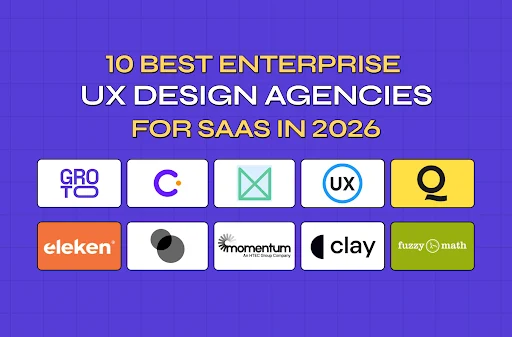
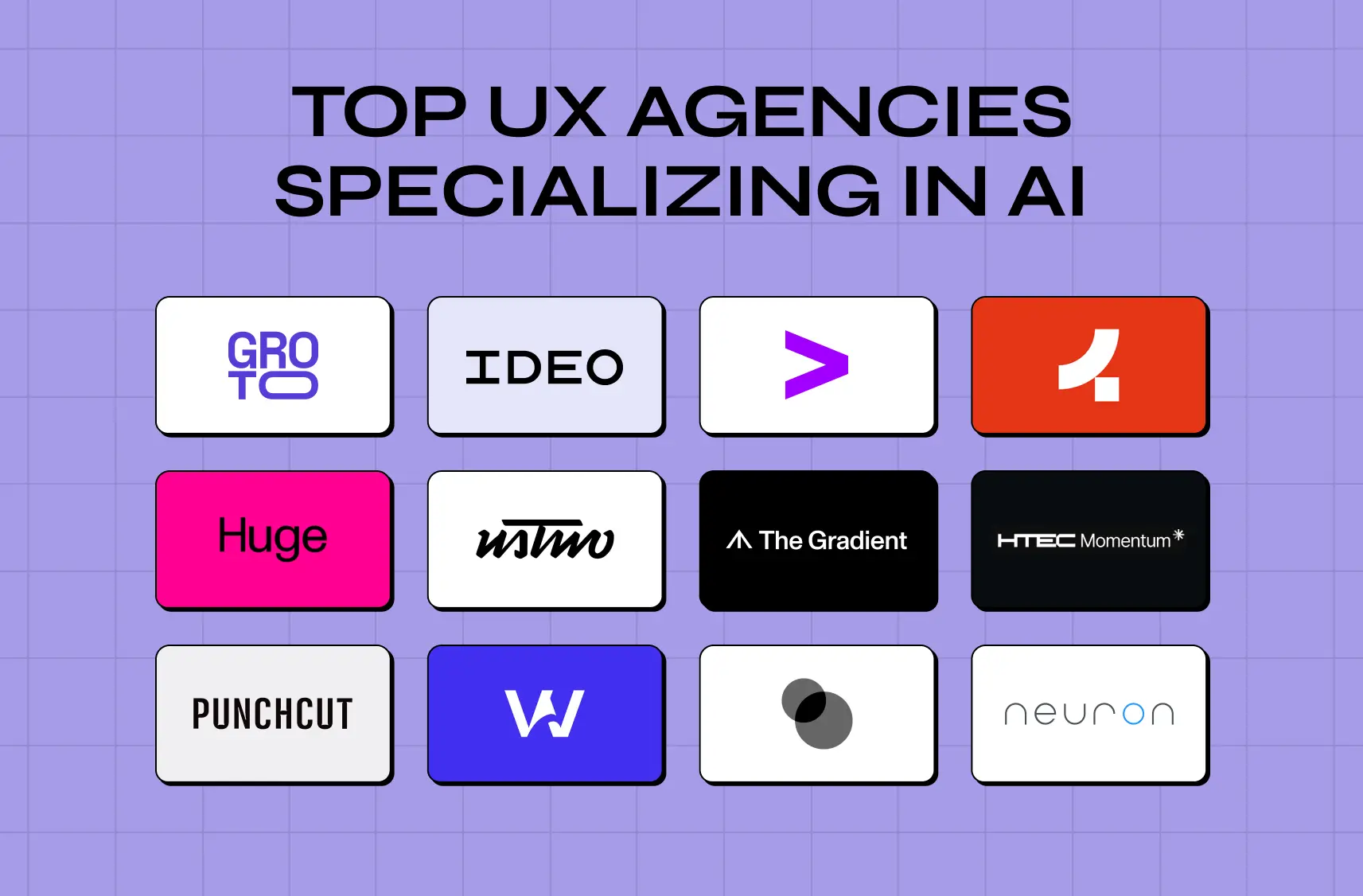
This list of the top UX agencies specializing in AI spans three tiers: enterprise firms, mid-size specialist studios, and small focused shops.
Budgets typically start around $25,000–$30,000 for smaller scopes and exceed $100,000 for enterprise systems; timelines run in months, not weeks.
One filter cuts through the noise fast: ask to see a live product where the model's output shaped what a real user saw or decided.
Jump to the comparison table if you want the tier-by-tier view first, or the ranked list for the full picture.
Designing an AI product is not the same as designing conventional software, and hiring a design agency that treats it as such is one of the most expensive mistakes an AI team can make. If you're evaluating the top UX agencies specializing in AI, you're likely already past the point of wanting a general design shop with an "AI" page bolted on. You want a partner who has actually shipped something where the model's behavior shapes the experience, whether that's a copilot, a recommendation engine, or a dashboard built around outputs that vary, the kind of work that's well past what an AI website builder can improvise for you. This guide ranks the agencies worth knowing in 2026 and, more importantly, gives you the one question that separates the real specialists from everyone else claiming the label.
AI products are non-deterministic: outputs vary, carry uncertainty, are sometimes wrong, and have to be made trustworthy, and that demands design experience most general agencies simply don't have. So if you're looking for an AI-specialist UX agency, this is fundamentally an AI vs traditional design agency decision: the goal isn't to find a great design shop that also "does AI"; it's to find one that has actually shipped AI products where the model's behavior shapes the experience.
This guide leads with the filter that matters most before it gets to the list itself, because a ranking is only useful if you know how to read it. Below you'll find:
The one criterion that separates real AI UX specialists from agencies with an "AI" page
A ranked list of agencies worth knowing, from boutique specialists to large enterprise firms
A side-by-side comparison table by tier, budget, and best-fit stage
Realistic budget and timeline expectations
How to choose the right fit for your product
Whether Groto ends up being your partner or not, you'll leave knowing how to evaluate any AI UX agency properly.
The one filter that matters: shipped production AI
The sharpest way to evaluate a UX agency specializing in AI is to ask whether it has shipped a production AI system where the model's outputs directly affect what a user sees or decides. Not a concept deck, not a demo, but a live product. This single filter cuts the field dramatically, because in 2026 nearly every agency claims AI capability while far fewer have designed the hard parts for real.
The hard parts only show up in production:
How does the interface communicate confidence and uncertainty when the model isn't sure?
How does it handle streaming output, errors, and the moments the AI is wrong?
How do users correct it, and how does that correction build trust?
How does the experience hold up on messy real inputs, not clean demo cases?
An agency that has shipped production AI has been forced to answer these questions; an agency that has only made concept work has not. This is really the difference between real AI-driven UX practices and a label. When you evaluate any agency below, or any not on this list, ask to see a production AI product they designed, and probe how they handled non-determinism, trust, and correction. The answer tells you almost everything.
Two more practical filters:
Budget: AI UX engagements typically start around $25,000–$30,000 for smaller scopes and exceed $100,000 for enterprise systems with complex workflows.
Timeline: Expect months, not weeks, once model-output UI iteration is factored in. Any agency promising enterprise AI UX in two weeks for a few thousand dollars hasn't done it before.
How Groto approaches this filter: we designed PathwaysX, an AI-powered B2B hiring platform, from the ground up, including personality-based assessments, model-driven candidate matching, and an interface built around what happens when the AI's recommendation isn't a sure thing. We've done the same for Gini, turning AI-generated health insights into a product people trust enough to act on daily. This is the kind of work our AI-first UX design practice is built around: designing for how the model actually behaves, not a static happy-path mockup.
The top UX agencies specializing in AI in 2026
Here are the agencies worth knowing, from AI-focused specialists to large enterprise firms. Each entry names what the agency does best, a proof point, and one honest trade-off, so this reads as a buying guide rather than a promotional list. If you want the wider field before narrowing to AI specialists, our roundup of the best UX design agencies covers that broader comparison. The right choice depends on your product, stage, and how AI-intensive the work is, covered in the how to choose section below.
1. Groto
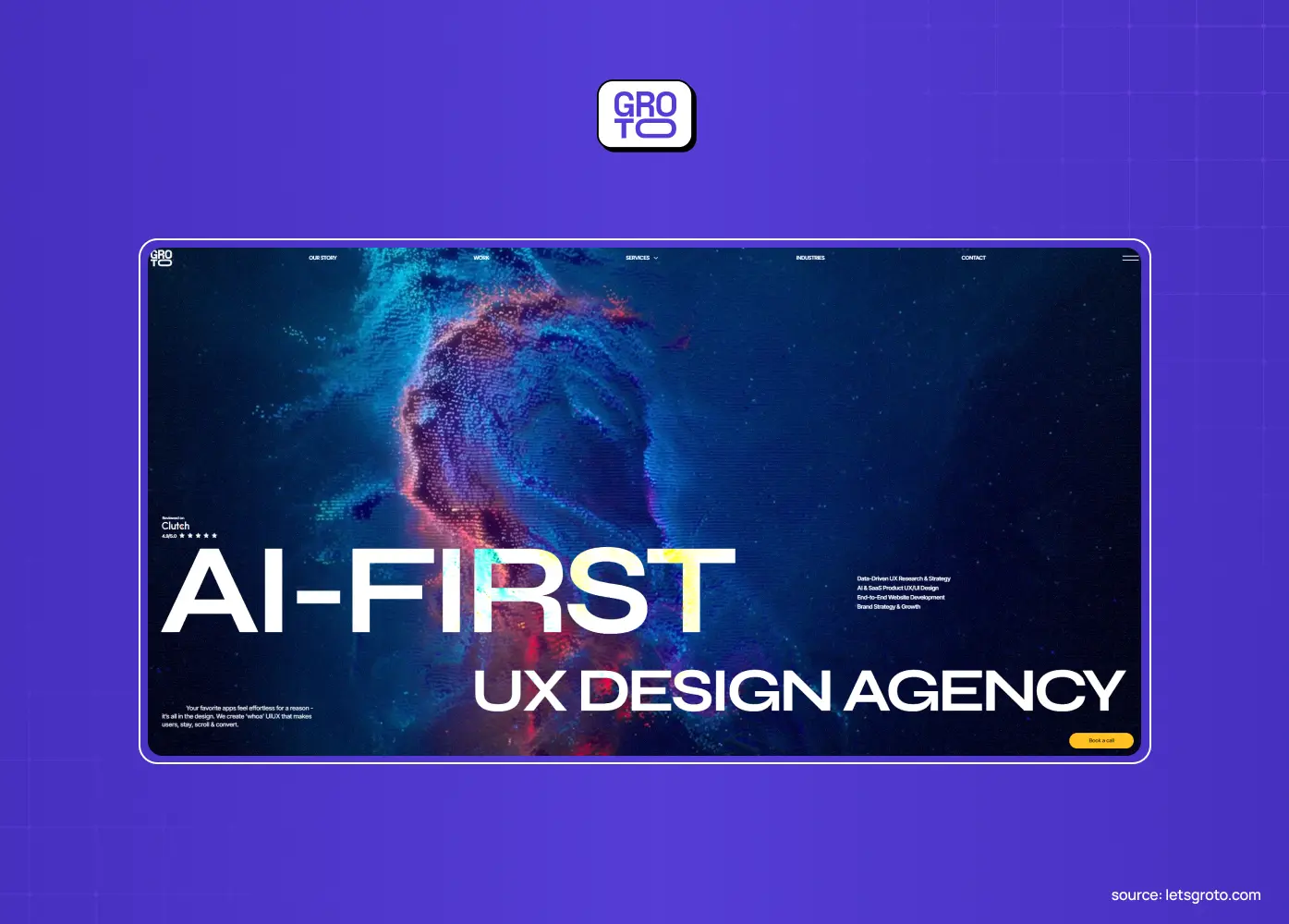
Best for: Funding-stage to growth SaaS/AI companies that need a specialist partner to make an AI feature trusted and adopted, not just visually polished.
Specialty: Non-deterministic UX, including confidence and uncertainty states, correction and human-in-the-loop flows, and streaming and generative interfaces, built through our AI-first UX design and SaaS UX design practices.
Notable Clients: Colgate, ABInBev, and KPMG, Maruti Suzuki, Cipla, Nicotex
Why teams choose Groto: design and build run as one tight loop, so the prototype reflects real model behavior instead of a best-case demo, and you get senior, AI-specific design judgment without an enterprise-firm price tag or timeline.
2. Punchcut
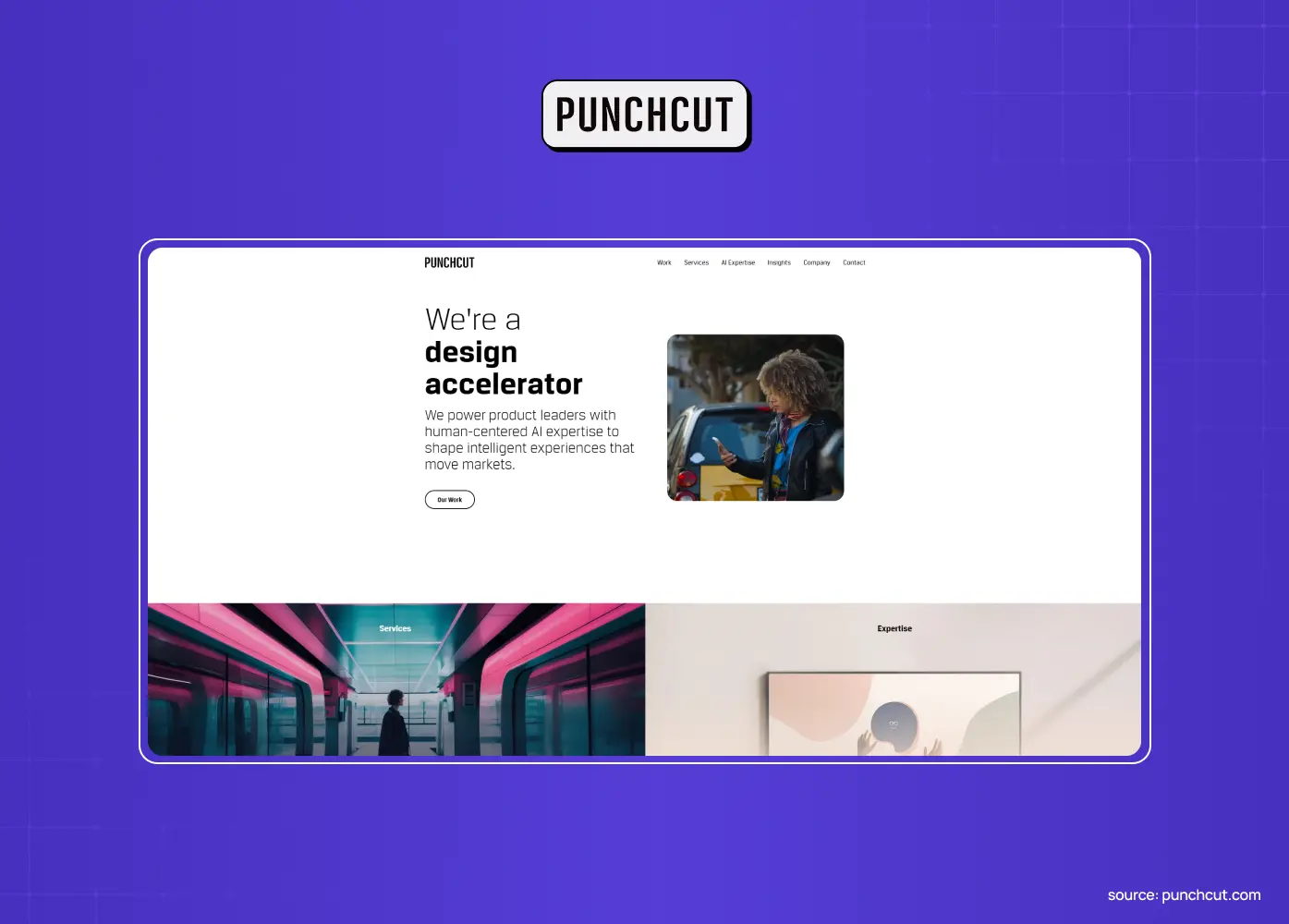
Best for: Large, funded companies building copilots, multimodal products, or autonomous systems that need a fast path from strategy to launch.
Specialty: Punchcut has focused on human-machine interaction design since 2002, with a Design Accelerator model built to ship production-ready AI products in 6 to 12 weeks.
Notable clients: Google, Amazon, Ford, Samsung, LG.
Watch out: It's a focused innovation studio, not a full-service marketing shop, so teams needing broader brand or media work should look elsewhere on this list.
3. IDEO
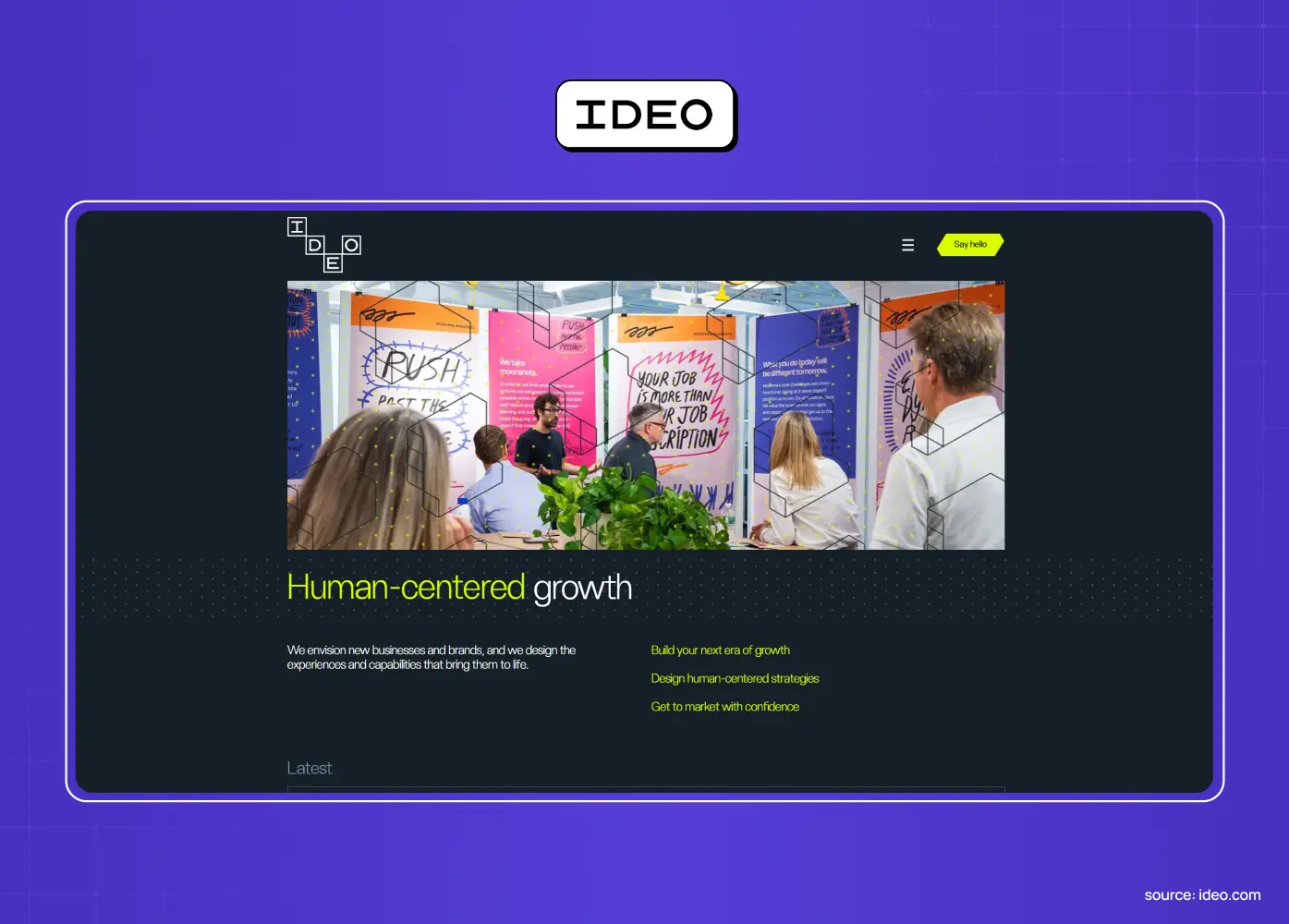
Best for: Enterprises tackling ambiguous, strategy-level AI problems where framing the right problem matters as much as the interface.
Specialty: IDEO brings human-centered problem framing and design thinking, applied to AI-driven service and systems design at scale.
Notable clients: Long-standing work with Apple, Ford, and Steelcase, among others.
Watch out: Strategic breadth outweighs deep AI engineering, so teams needing agent-behavior design or a shipped product on a tight clock often pair IDEO's strategy work with a specialist.
4. Huge
Best for: Global brands investing in AI-driven personalization and customer engagement at scale.
Specialty: Huge connects behavioral data to creative execution across marketing, commerce, and content for large, multi-team engagements.
Notable clients: Google, McDonald's, Toyota.
Watch out: Built for brand and marketing problems more than novel product invention, so startups designing agents or multimodal interfaces from scratch usually fit better with a specialist.
5. Accenture Song
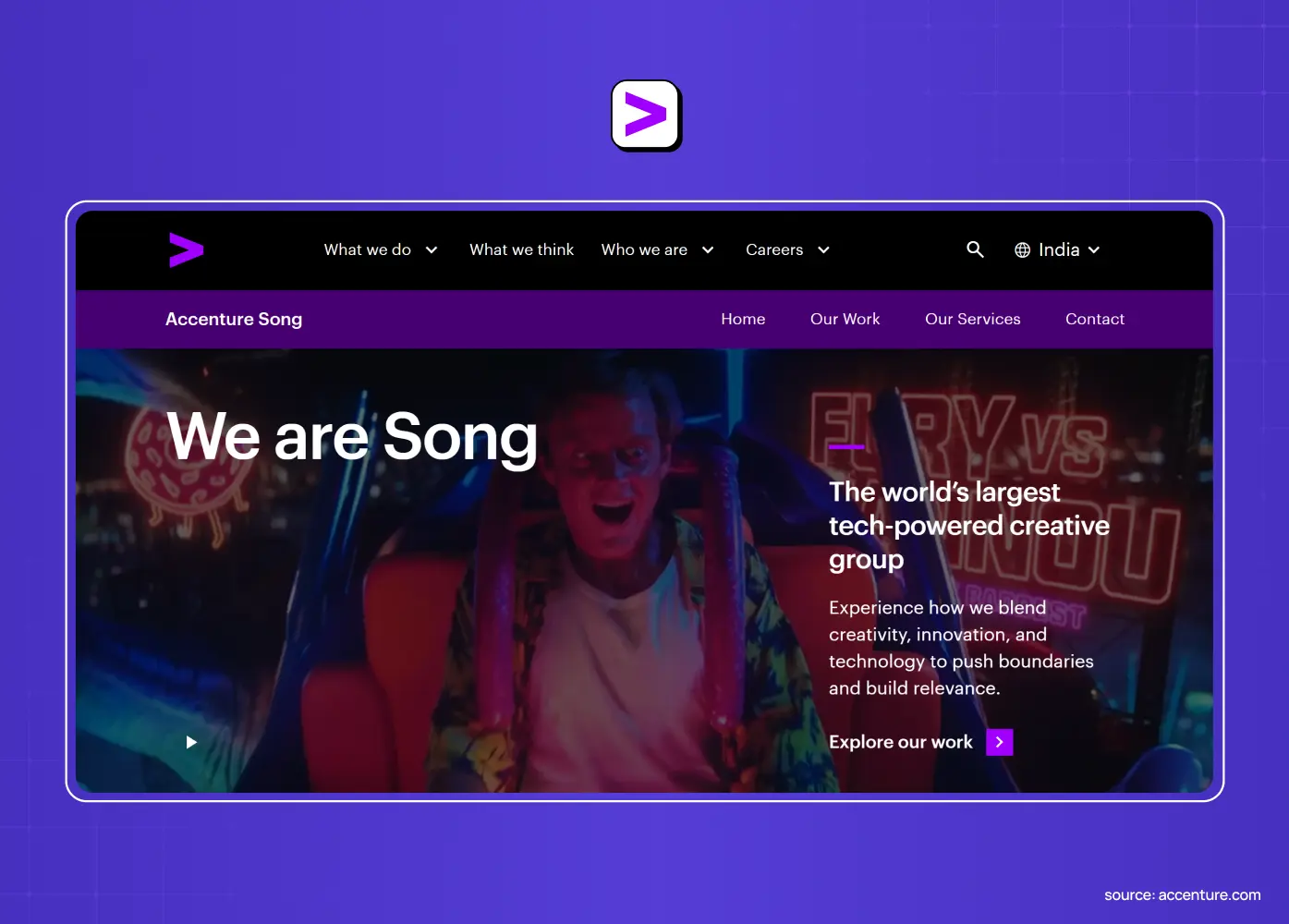
Best for: Large enterprises operationalizing AI across customer experience, commerce, and marketing at a global scale.
Specialty: Accenture Song brings enterprise-grade implementation muscle, systems integration, and global delivery for AI work embedded within bigger transformation programs.
Notable clients: Fortune 500 companies across industries.
Watch out: Engagements are large and processes are heavy, so companies wanting senior designers in the room every week tend to prefer focused studios.
6. The Gradient
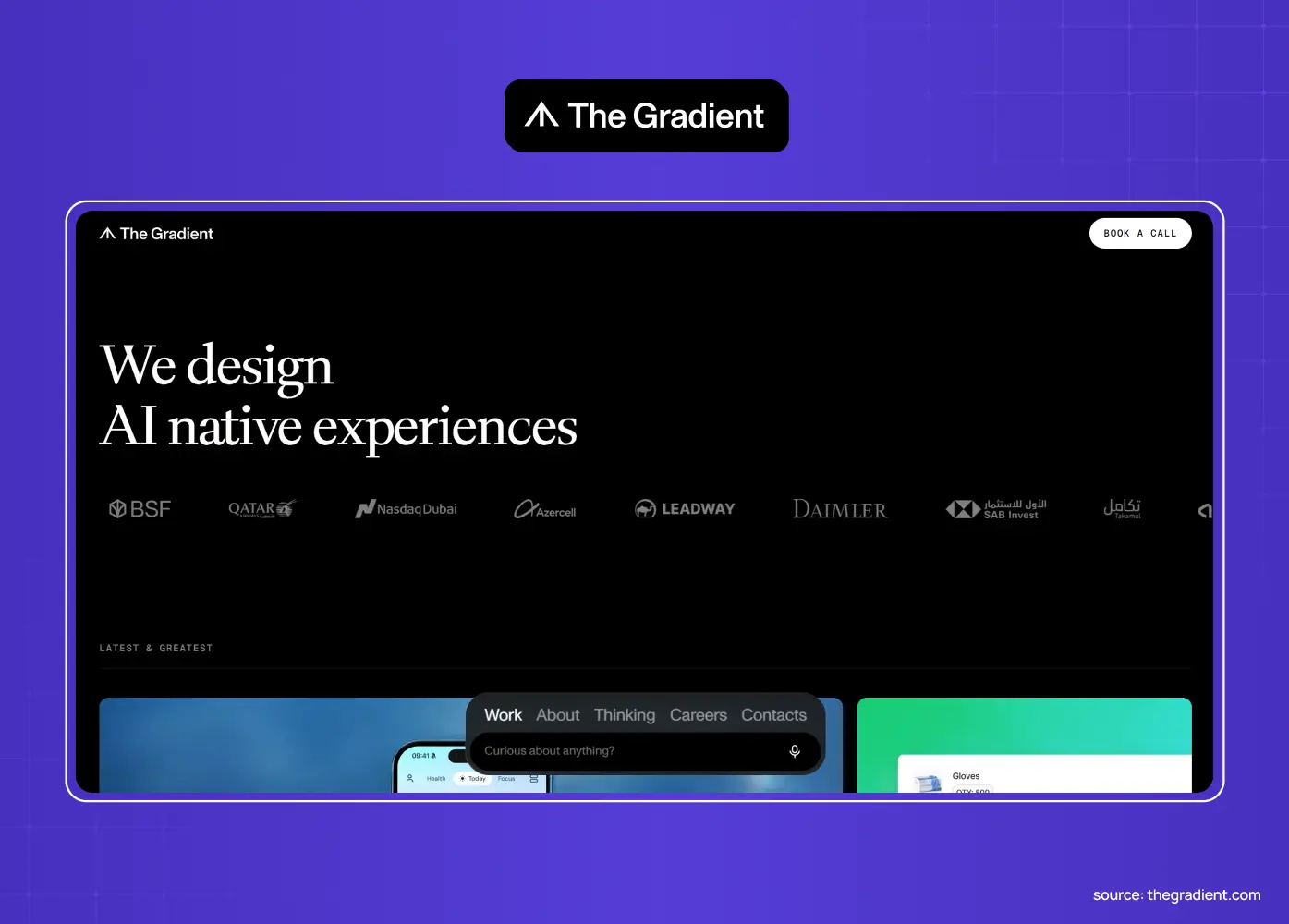
Best for: Startups and scale-ups launching AI-native digital products that need to pressure-test concepts with real users early.
Specialty: The Gradient runs small, multidisciplinary teams combining behavioral science, market insight, and rapid AI prototyping.
Notable clients: Fintech, healthcare, and edtech product companies reaching millions of users.
Watch out: The boutique model that makes it fast also caps its bandwidth, so enterprises needing large embedded teams or heavy compliance support will outgrow it.
7. Ustwo
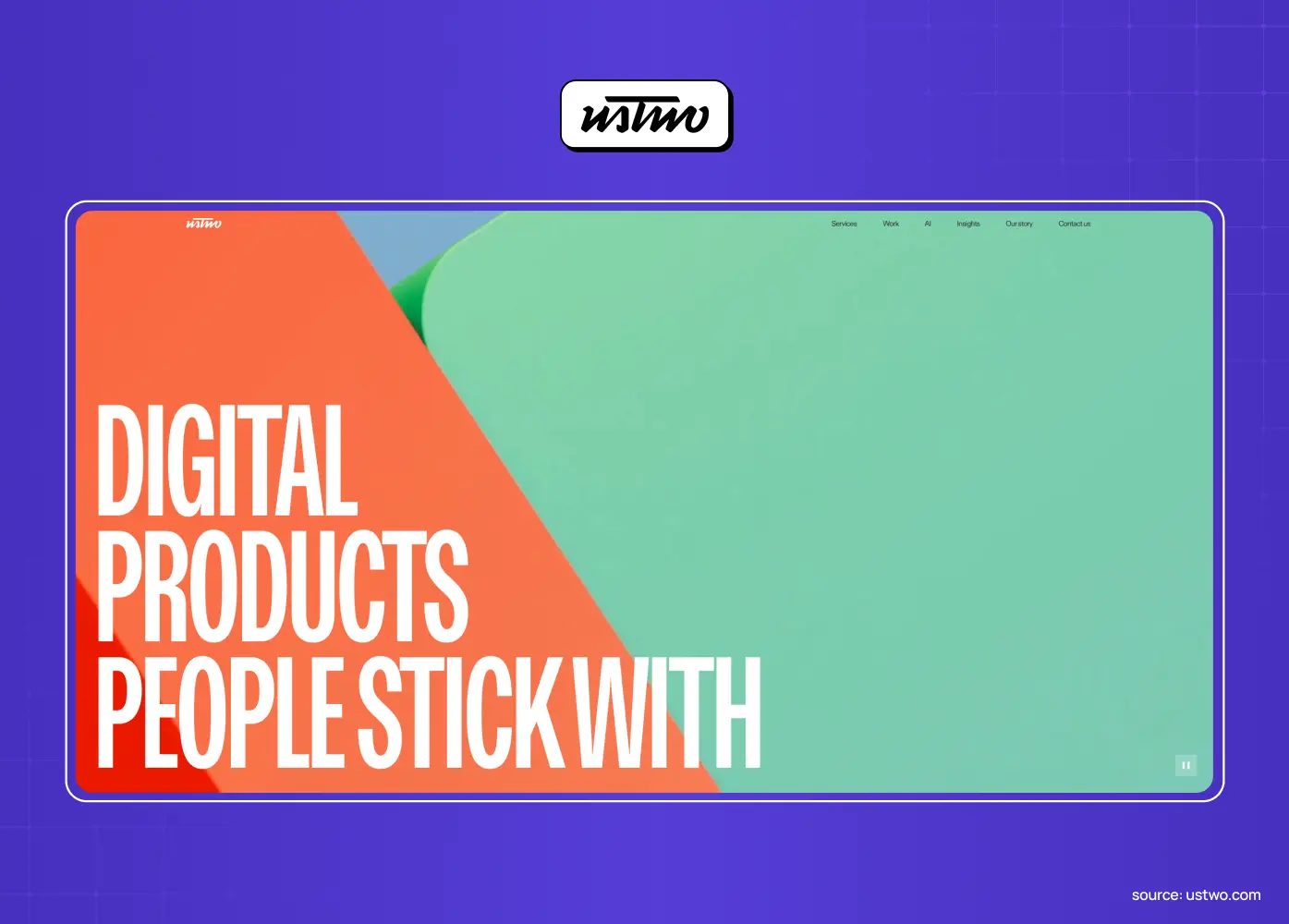
Best for: Companies that want high design craft applied to an AI product from a studio with a deep product pedigree.
Specialty: ustwo offers product and interaction design craft, human-centered design, and technical depth built over 20 years.
Notable clients: Global brands and products used by millions, including the award-winning Monument Valley franchise.
Watch out: A generalist product studio first, so teams need to confirm AI-specific, production-shipped work rather than assume it from craft alone.
8. Fuselab Creative
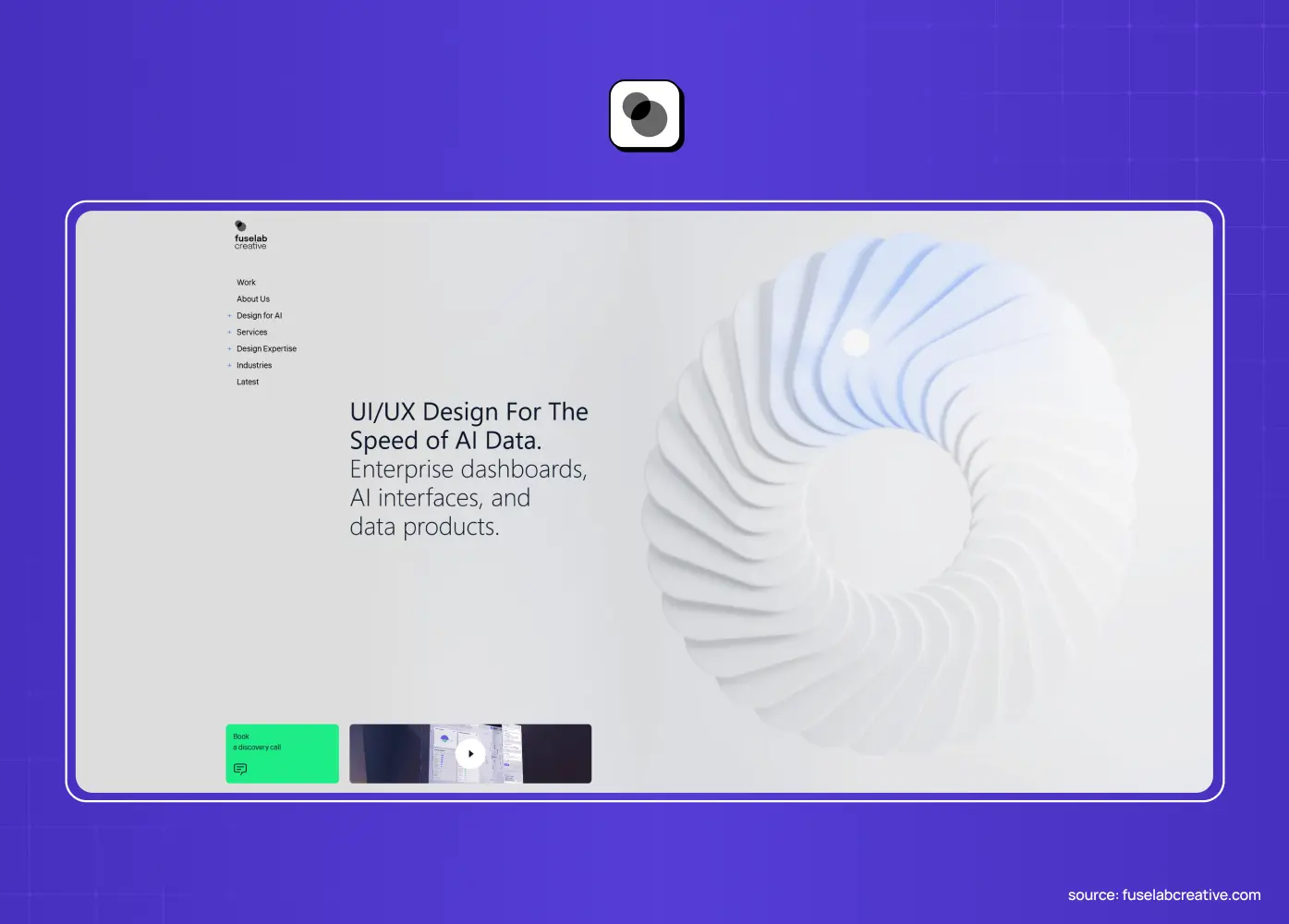
Best for: AI startups and enterprises in regulated or data-heavy environments (healthcare, government, fintech) where compliance shapes the interface as much as the model does.
Specialty: Fuselab Creative focuses on dashboard design, data visualization, and AI interfaces for enterprise and regulated industries.
Notable clients: NASA, Fiserv, Uber, NIH, and the California Department of Health Care Services.
Watch out: Regulated-industry depth is a strength for compliance-heavy products, but means less experience with consumer-facing, growth-driven AI apps.
9. Neuron
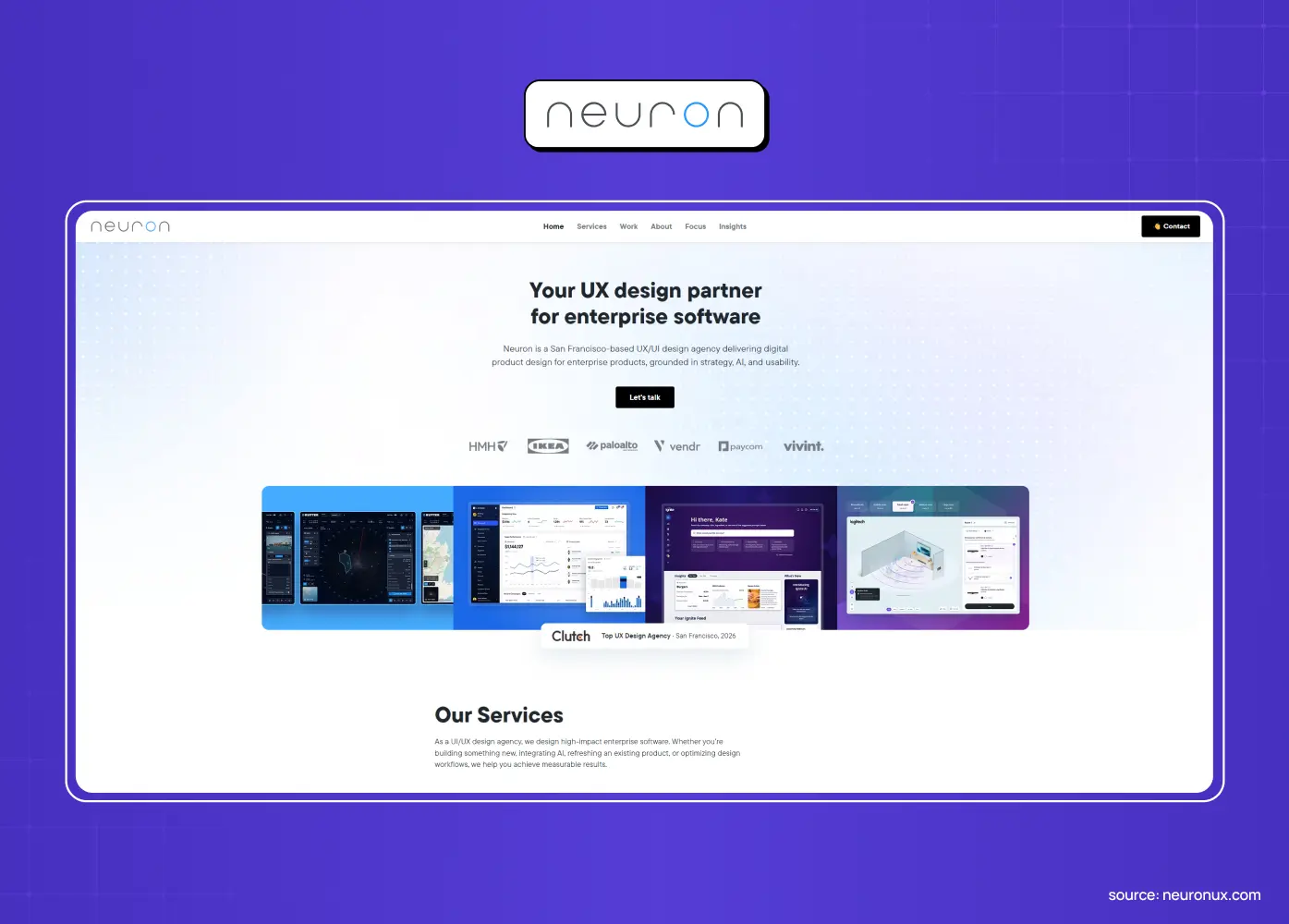
Best for: B2B and SaaS companies embedding AI into complex enterprise software where usability inside a large organization matters more than visual branding.
Specialty: Neuron offers DesignOps and human-centric AI interface design for dense, data-heavy enterprise products.
Notable clients: Vendr, Paycom, HMH, Vivint.
Watch out: Process-driven rather than visually adventurous, so pair with a brand-focused partner if strong visual identity is also a priority.
10. Momentum Design Lab
Best for: Teams that want proven production AI experience in a mid-to-smaller studio format, without losing enterprise-grade process.
Specialty: Momentum Design Lab works on product design and strategy for systems that "amplify human decision-making," spanning fintech, healthcare, and SaaS.
Notable clients: Enterprise clients including IATA, with a long-running #1 UX agency ranking on Clutch.
Watch out: Project sizes and timelines vary widely, so confirm scope and pricing structure upfront, since engagements have ranged from $10,000 to well over $250,000.
11. Onething Design
Best for: Teams whose need is concentrated on AI interface work and who want a lean, dedicated team rather than a sprawling redesign.
Specialty: Onething Design is built around Agentic Experience Design (AXD), designing systems where AI agents perform tasks on a user's behalf, alongside broader UX/UI and brand work.
Notable clients: Royal Enfield, Murphi.ai, and enterprise product teams across fintech and mobility.
Watch out: Broader end-to-end offering (branding, CX strategy) means AI-specific work is one part of a wider practice, not the sole focus.
12. Wavespace
Best for: Teams that want design and build under one roof for a contained AI product scope.
Specialty: Wavespace combines AI UI/UX design and development, from AI voice agents to AI content and healthcare apps.
Notable clients: Kodezi, Dragonfly AI, and 500+ companies across 22+ countries since 2019.
Watch out: A younger, high-volume shop, so ask specifically for production AI case studies rather than concept-stage portfolio pieces.
Comparison table
Tier | Agencies | Best for | Typical budget |
Enterprise | Punchcut, IDEO, Huge, Accenture Song | Large, complex, well-funded programs needing a full team and process maturity | $100,000+ |
Specialist studio | Groto, The Gradient, ustwo, Fuselab Creative, Momentum Design Lab | Funded-stage to growth SaaS/AI companies wanting senior, AI-specific judgment and faster iteration | $25,000–$100,000 |
Focused specialist | Neuron, Onething Design, Wavespace | A narrow model-output UI problem rather than a full product redesign | $15,000–$50,000 |
How to choose the right AI UX agency for you
Match the agency to your product's stage, budget, and how AI-intensive the work is, and in every case, verify shipped production AI. The "best" agency is the one that fits your situation, not the one with the biggest logo.
A few guidelines:
Large, complex, well-funded program? The Tier 1 firms (Punchcut, IDEO, Huge, Accenture Song) are built for that, at enterprise cost and timeline, alongside the broader field of enterprise UX design agencies worth comparing them against.
Funded-stage or growth SaaS/AI company? A specialist studio (Groto, The Gradient, ustwo, Fuselab, Momentum) usually delivers better value: deep AI-specific design judgment, senior attention, and faster iteration without enterprise overhead.
Narrow model-output UI problem, not a full product? A smaller focused specialist (Neuron, Onething, Wavespace) can be the most efficient fit.
Whichever tier you're in, run the same due diligence, essentially the same set of AI UX partner questions regardless of who's on your shortlist:
Ask for a production AI product they designed, not a concept.
Probe specifically how they handled non-determinism, uncertainty, trust, and correction.
Confirm budget and timeline are realistic for AI iteration.
Check whether design and engineering work as one loop. This matters more for AI than for conventional software, because prototypes have to reflect real model behavior.
This kind of due diligence is exactly what a solid UX strategy engagement front-loads before any screen gets designed, since it's cheaper to catch a mismatch at the discovery stage than after a redesign has shipped. Do this evaluation properly, and you'll choose on evidence rather than on who ranked themselves first.
Conclusion
The top UX agencies specializing in AI in 2026 span enterprise powerhouses (Punchcut, IDEO, Huge, Accenture Song), specialist studios (Groto, The Gradient, ustwo, Fuselab Creative, Momentum Design Lab), and focused shops (Neuron, Onething Design, Wavespace). If AI isn't the deciding factor for your product, our broader list of top product design agencies is the better starting point.
The right one for you depends on your stage, budget, and how AI-intensive the work is, not on which agency ranks itself first.
The filter that matters more than any ranking: has the agency actually shipped production AI where the model shapes the experience, and can it show you how it designed for uncertainty, trust, and correction?
Use that filter, match the tier to your situation, and you'll hire a partner that makes your AI product trusted and adopted, not just attractive.
If you're building an AI or SaaS product and want a design partner that specializes in exactly this, book a discovery call with Groto. We'll talk honestly about whether we're the right fit for your product, and if we're not, we'll help you figure out who is.