
Users who reach their aha moment fast retain far better than those who don't. This guide breaks down what genuinely moves SaaS activation, from engineering the first-session win to killing the tactics that only look like progress.
The onboarding levers that actually shorten time to value and lift SaaS activation.

TL;DR
Time to value (TTV) is how fast a new user reaches their first real "aha moment," and it is the single biggest lever on activation.
Users who hit that moment within the first hour retain 4 to 5x better at Day 7 than users who take 24 hours or more.
Every 1% increase in activation rate correlates with roughly 2% lower churn, so cutting time to value pays off directly in retention and revenue.
The levers that actually move activation: engineering the aha moment early, guiding to value instead of touring features, in-app guidance, personalization, friction removal, and timely nudges.
Long product tours, feature dumps, generic nurture emails, and cosmetic polish do not move activation, even though they look like onboarding work.
Cutting time to value is fundamentally a product and UX design problem, not something you fix by installing a tool.
Time to value in SaaS, often shortened to TTV, is the gap between the moment someone signs up and the moment they experience your product's real, tangible benefit for the first time. It has become one of the most discussed SaaS metrics, and for good reason: it sits directly upstream of activation, retention, and revenue. This guide looks specifically at time to value SaaS teams should be optimizing for right now, and more importantly, at what genuinely moves the needle on activation versus what only looks like progress.
Here's the stat that should reframe how you think about onboarding: users who reach their "aha moment" within the first hour of signing up retain 4 to 5x better at Day 7 than users who take 24 hours or more. Speed to value isn't a nice to have, it's the single biggest lever on whether a new signup becomes a paying, retained customer or a number in your churn report. And yet most teams try to move activation with the wrong things: longer product tours, more feature callouts, another nurture email. They optimize everything except the one thing that matters, which is how fast a user experiences real value.
This guide covers what time to value means and how it relates to activation, the 2026 benchmarks so you know where you stand, the evidence-backed levers that genuinely improve activation (and the popular tactics that don't), and why cutting time to value is fundamentally a product-design problem. If your activation rate is stuck, this is where the real gains are.
What is time to value (and how it relates to activation)?
Time to value (TTV) is the time it takes a new user to reach the point where they experience your product's core value for the first time, the "aha moment." Activation is the event and rate of reaching that moment. They're two sides of the same coin:
Time to value is the duration: how long it takes a user to reach that first real benefit.
Activation is the event and the rate: whether a user reaches it, and what share of users do.
Cut the time, and more users make it, because every extra minute, step, or moment of confusion between signup and value is a chance for them to give up.
That's the mental model shift that matters: onboarding isn't about showing users your product, it's about getting them to value as fast as possible. Everything in this guide follows from that. The goal isn't a comprehensive tour, it's the shortest possible path from "just signed up" to "oh, I get it, this is useful."
Why time to value is the SaaS retention battleground
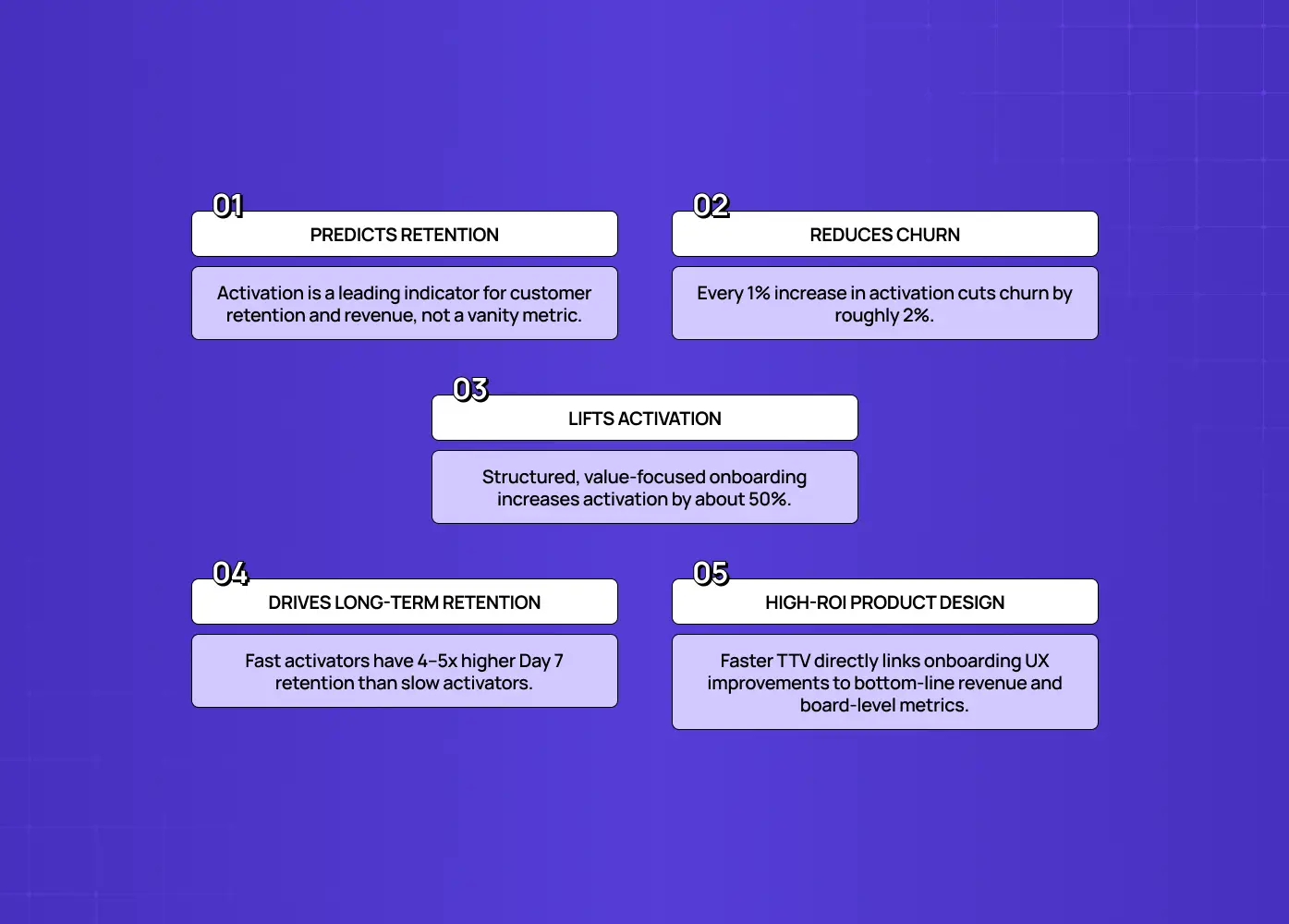
Time to value matters because activation is a leading indicator of retention and revenue, the same link that runs through UI/UX design for SaaS products, from onboarding to retention. Small activation gains compound into large churn reductions. The data makes the case clearly:
Every 1% increase in activation rate correlates with roughly 2% lower churn. Activation isn't a top-of-funnel vanity metric, it's one of the earliest reliable predictors of whether you keep a customer.
Structured onboarding that speeds users to value has been shown to lift activation by around 50%.
The Day 7 retention gap between fast and slow activators (4 to 5x) shows the effect is durable, not fleeting.
For a founder or PM, this is where design work has some of its clearest ROI. Reducing time to value doesn't just make onboarding feel nicer, it moves activation, which moves retention, which moves revenue. It's one of the few product-design investments you can tie almost directly to the numbers your board cares about.
Where you stand: 2026 time-to-value benchmarks
To know whether your time to value is a problem, compare it to the 2026 norms. The overall SaaS median has fallen to about 4.2 days, and self-serve products are measured in minutes, not days:
Under 5 minutes to first value: excellent. Products like Figma, Linear, and Canva land here.
5 to 20 minutes: typical and acceptable for most self-serve SaaS.
20 to 60 minutes: too long. You lose a meaningful fraction of signups in this window.
Average B2B SaaS activation rate: around 37.5%, with top-quartile products at 40% or higher.
If your activation is in the low 30s, or your self-serve TTV runs into the tens of minutes, you have real, capturable upside, and the levers below are how you capture it.
What actually moves activation (the evidence-backed levers)
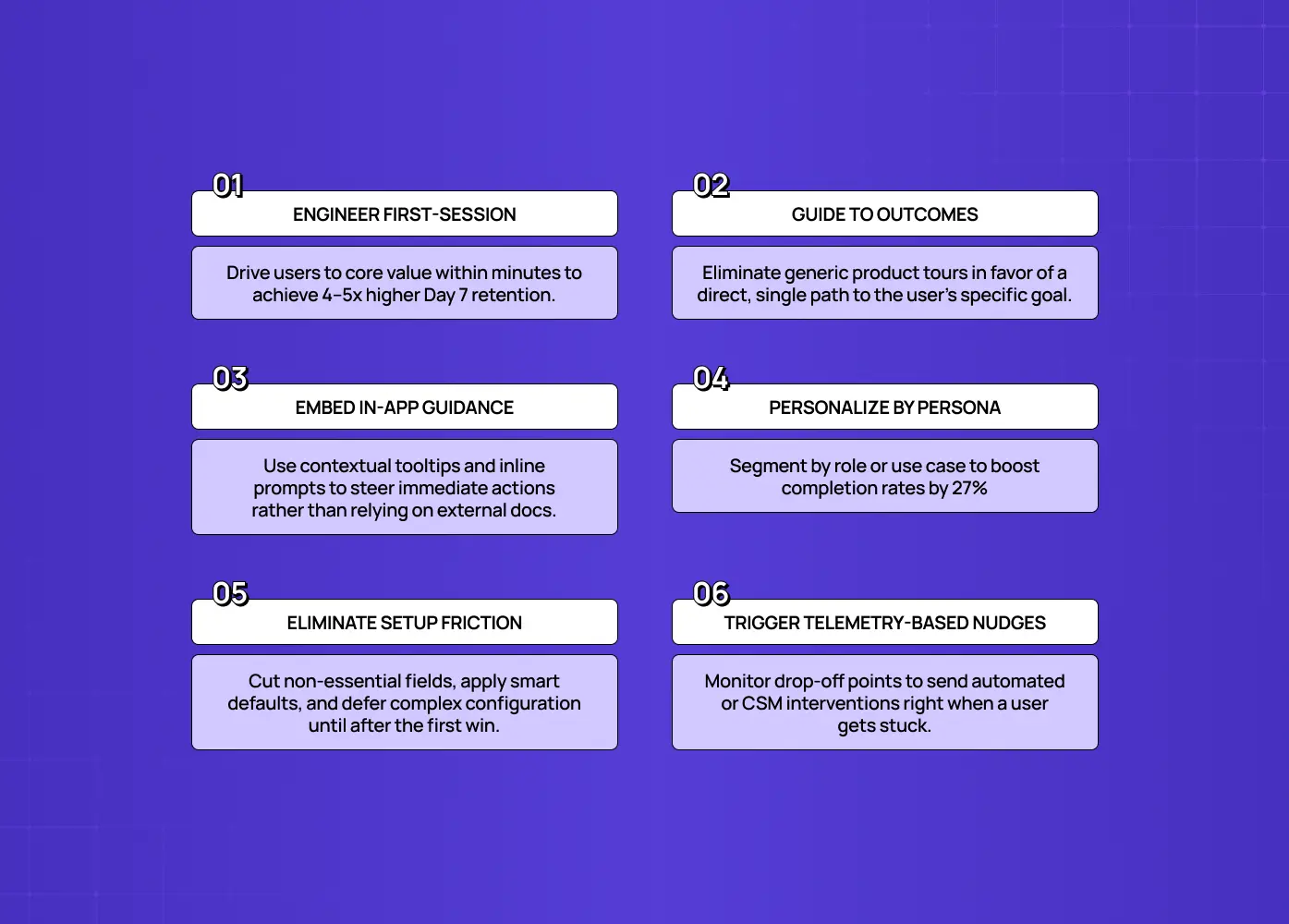
The tactics that genuinely move activation all do the same thing: they get users to real value faster and more reliably. Here are the ones the data supports.
1. Engineer the aha moment into the first session
This is the single most consequential onboarding goal. Design the flow so a new user experiences core value in their first session, ideally within the first few minutes, because reaching it in the first hour drives 4 to 5x higher Day 7 retention.
Identify the specific action that most reliably separates users who stick around from those who don't.
Make the entire onboarding sequence a straight line toward that action, and cut anything that doesn't serve it.
2. Guide to value, not a product tour
Onboarding should guide users to their solution, not walk them through every feature. Feature tours feel productive but delay value.
Replace the multi-step walkthrough with a single, focused user flow to the outcome the user came for.
Cut the tour, keep the path.
3. Provide in-app guidance in the first session
Of all activation levers, in-app guidance during the first session has the highest measured leverage.
Use contextual, in-the-moment help: tooltips, inline prompts, AI-assisted walkthroughs, and a guided first task.
Keep guidance tied to the user's next action rather than a general feature explanation, since it consistently beats documentation, emails, or a separate help center for getting users to value fast, part of the broader shift toward integrating AI into SaaS UX.
This is exactly the kind of decision that belongs in the interface itself rather than in a help doc, which is why teams working on SaaS UX design usually treat in-app guidance as a core screen, not an afterthought layered on top.
4. Personalize the path by persona
One-size-fits-all onboarding underperforms.
Flows that branch based on the user's role, use case, or goal complete at 27% higher rates than generic flows.
Personalization paired with video has been shown to lift activation by as much as 41 percentage points over baseline.
Ask who the user is, or infer it, then route them to their fastest path to value.
5. Ruthlessly remove friction on the path to value
Every field, step, and decision between signup and the aha moment is a leak.
Cut setup steps and use smart defaults wherever possible, drawing on the kind of micro UX design patterns that remove friction without a full redesign.
Defer non-essential configuration until after the user has already seen value.
Eliminate anything that isn't strictly required to reach first value. Reducing friction is reducing time to value.
6. Use activation telemetry to trigger timely nudges
Instrument where users are in their activation journey, not just whether they've signed up.
Trigger automated or CSM nudges when someone stalls before reaching value.
This is the second-highest-leverage lever after in-app guidance. Catching a stuck user at the right moment recovers activations you'd otherwise lose.
The through-line: none of these are gimmicks. Each one shortens or de-risks the journey from signup to value, which is the only thing that reliably moves activation.
What doesn't move activation (the popular myths)
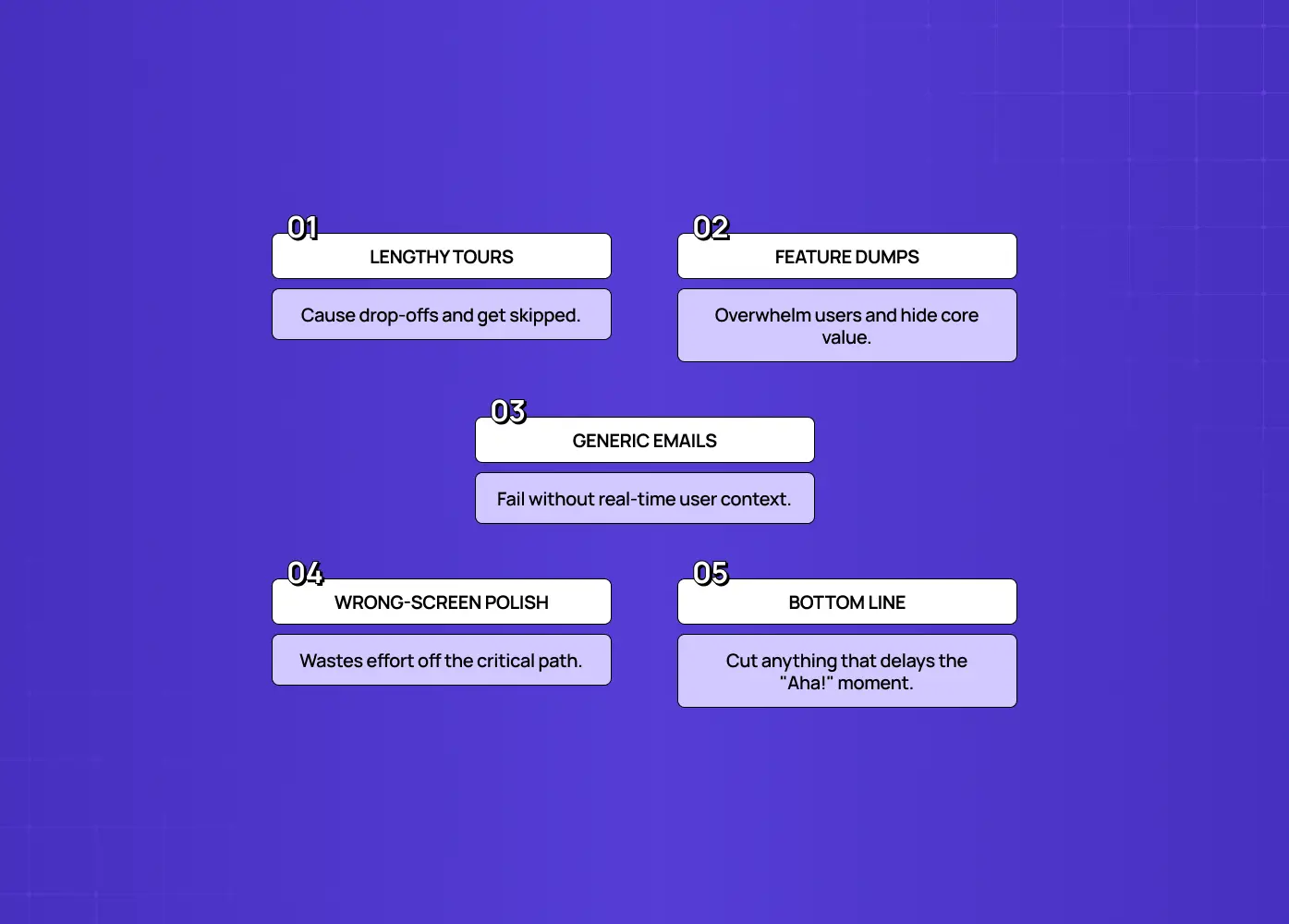
Just as important is knowing what to stop doing. Several popular "onboarding" tactics feel productive but don't move activation:
Long product tours. A multi-step walkthrough of features the user hasn't asked about, which delays value and often gets skipped entirely.
Feature dumps. Cramming everything into onboarding on the theory that more exposure helps, when it actually raises cognitive load and buries the one thing the user needs.
Generic nurture emails. Sent regardless of where a user is in their journey, these rarely drive first-session activation.
Cosmetic polish on the wrong screens. Beautifying pages that aren't on the critical path to value burns design effort without moving the metric.
The pattern: anything that adds steps, information, or delay between signup and value works against activation, even when it looks like helpful onboarding. When you audit your onboarding, be as ruthless about cutting these as you are about adding the levers above.
How to measure time to value and activation
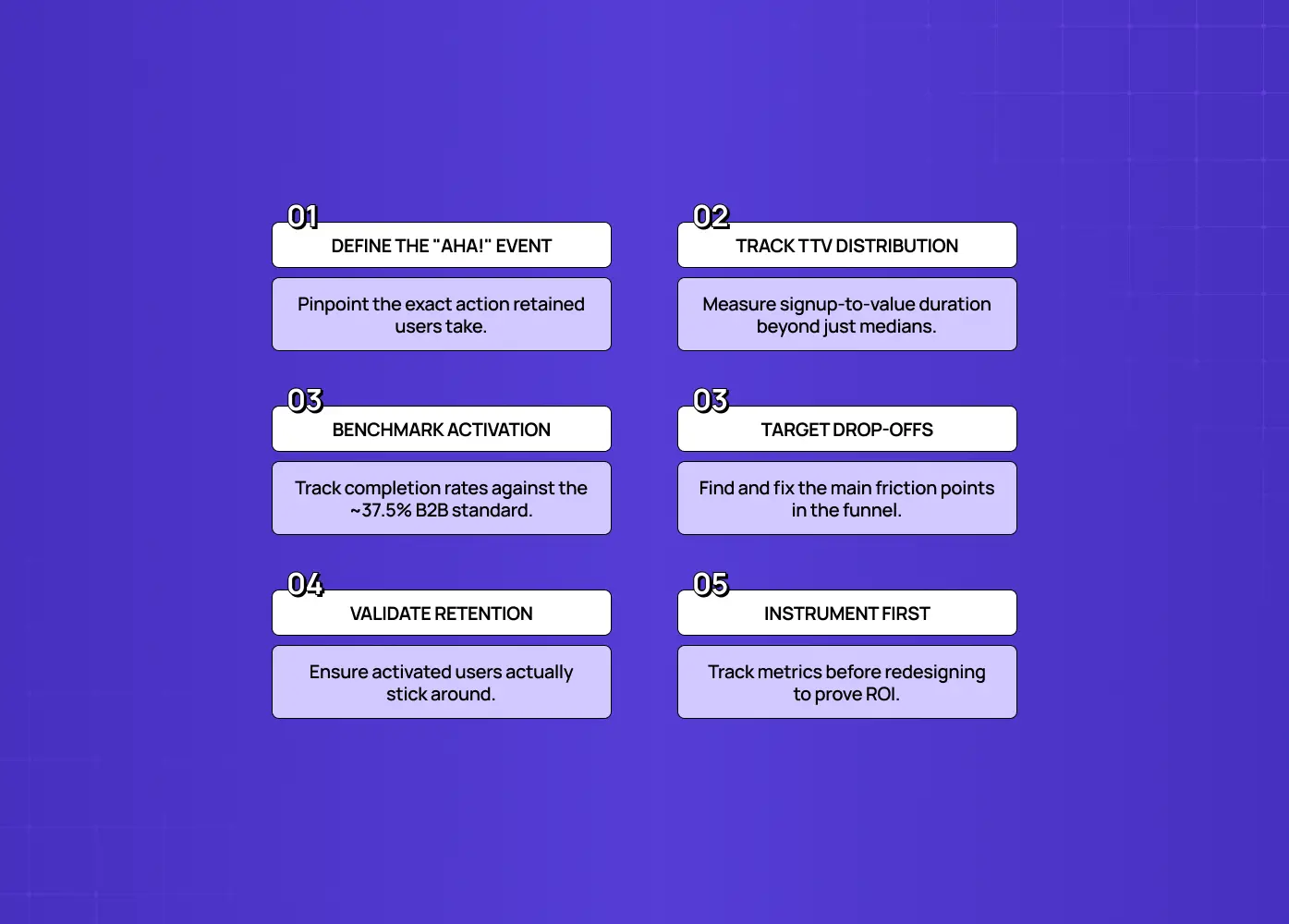
You can't cut time to value without measuring it correctly, using the same rigor as other UX metrics for SaaS, and measuring it starts with defining your aha moment precisely, then tracking how fast and how many users reach it.
Define the aha moment as a specific event. Not "the user is engaged," but a concrete action that reliably separates users who retain from those who churn: sent first message, created first project, connected first integration, whatever fits your product. Analyze your data, paired with a structured empathy mapping exercise, to see what retained users did early that churned users didn't.
Measure time to value against that event. Track the elapsed time from signup to that action, and watch the full distribution, since medians hide the long tail where users are stalling.
Measure activation rate. This is the share of new users who reach the aha moment within a sensible window. Compare it to the roughly 37.5% B2B benchmark to gauge your position.
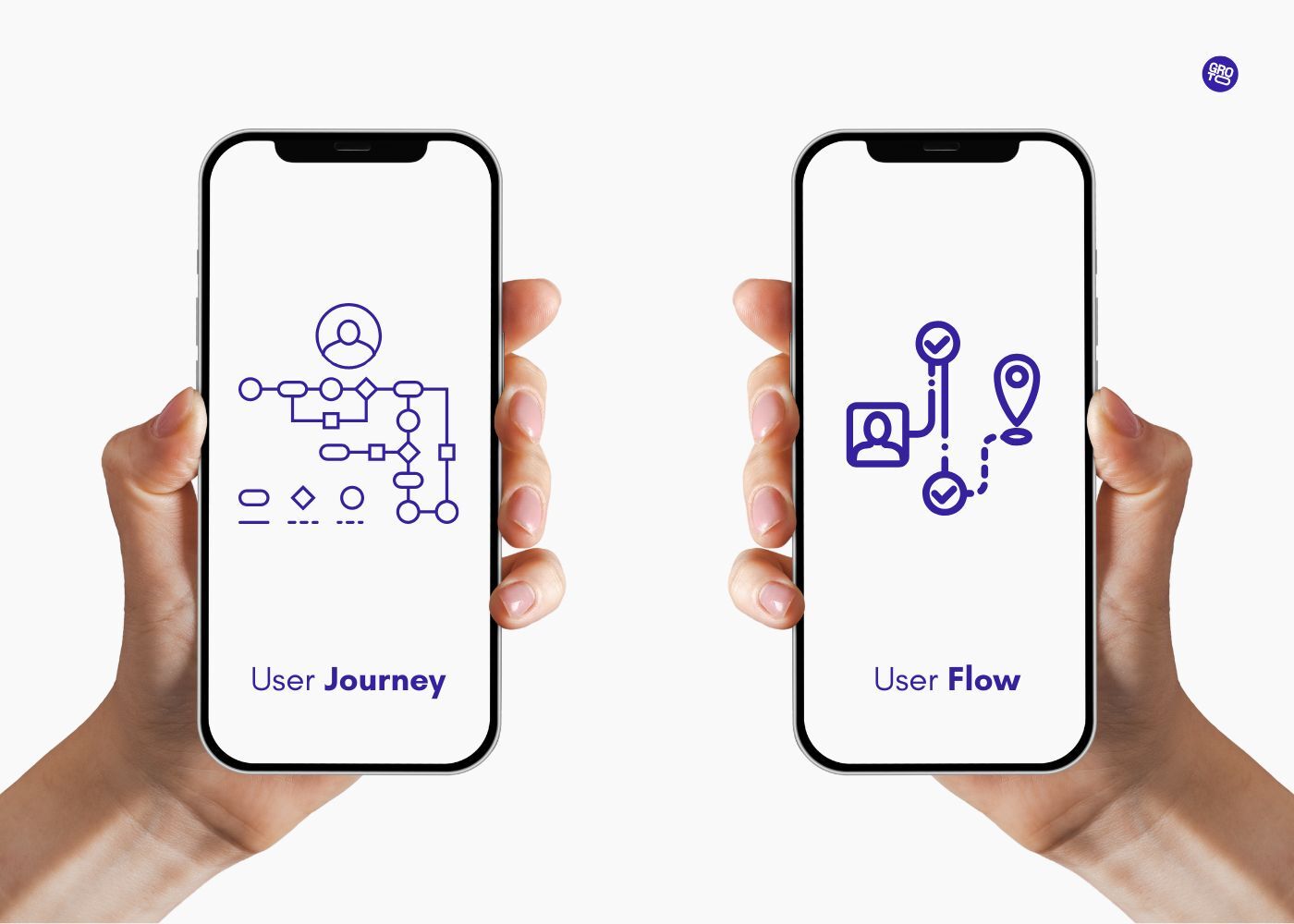
Find the drop-off points. Map the steps between signup and value, understanding the difference between a user journey and a user flow as you do, and see where users leak. Those specific steps are your improvement targets, and usually a couple of them account for most of the loss.
Watch the retention link. Track whether activated users retain better (they should, dramatically), which confirms you've defined the right aha moment and justifies the investment.
Instrument this before you start changing anything, so you can prove which changes actually moved the metric rather than guessing. If this kind of instrumentation and aha-moment definition work isn't already in place, it's usually the first thing a UX strategy engagement should establish, well before any redesign work starts.
How to run a time-to-value improvement
The most effective way to cut time to value is a focused, iterative loop, not a giant onboarding rebuild:
Start where the data points: the single step between signup and value with the largest drop-off, or the slowest segment of your TTV distribution.
Fix that one thing: remove the friction, add in-context guidance, or personalize the route.
Ship it, and measure the change in activation, ideally through structured A/B testing rather than a before-and-after guess.
Move to the next biggest leak, and repeat.
This beats a big-bang onboarding overhaul because it delivers wins fast, isolates what actually works, and compounds over time. A few high-leverage fixes to the path to value, using the levers above, typically move activation more than a wholesale redesign that changes everything at once and teaches you nothing about cause and effect. Treat onboarding as a living funnel you continuously tune, not a project you finish once and forget.
Cutting time to value is a design problem
Ultimately, time to value is a product-design problem. It's determined by how the path from signup to value is designed, not by which onboarding tool you install. Teams often reach for a widget: a checklist, a tour builder, a nudge engine, and treat activation as something you bolt on. But the biggest gains come from designing the product's first-run experience around the fastest route to value:
What the very first screen asks of the user.
How much setup is required before anything useful happens.
How quickly the user does something meaningful.
How the aha moment itself is staged and surfaced.
Those are core design decisions embedded early in SaaS application development, and no onboarding tool fixes a first-run experience that's fundamentally routed the long way around.
This is why activation is a design-led metric. The levers that work, engineering the aha moment, guiding to value, personalizing the path, and removing friction, are all experience-design decisions. Get the design right and the tools amplify it. Get it wrong, and no tool saves you — design becomes the bottleneck to activation that no widget can clear. If your time to value is too long, the highest-leverage move isn't buying software, it's redesigning the path.
Conclusion
Cutting time to value is the highest-ROI onboarding work you can do, because activation is where retention and revenue are quietly decided.
Every point of activation is worth roughly two points of churn, and getting users to value in the first session multiplies their long-term retention, though sustaining it still depends on the kind of narrative UX journeys that boost retention once users are past that first moment.
The moves that work: engineer the aha moment early, guide users to value instead of touring features, provide in-app guidance, personalize the path, and strip out friction.
The moves to ignore: long tours, feature dumps, and cosmetic polish that only feel like progress.
Above all, treat it as the design problem it is. The fastest path from signup to value is something you design, not something you install.
If your activation is stuck and you want to find and remove what's slowing users down before they reach value, book a discovery call with Groto. We start with a focused audit of your path to value and the highest-impact fixes to move activation. It's a low-risk first step toward onboarding that actually converts signups into retained users. Let's cut your time to value.