
Full software rewrites fail 70 to 88% of the time, mostly for organizational reasons. This guide shows you how to modernize a legacy product incrementally instead, delivering value continuously, keeping production running, and staying able to roll back at every step.
Modernize your legacy product incrementally, without betting two years on a risky rewrite.
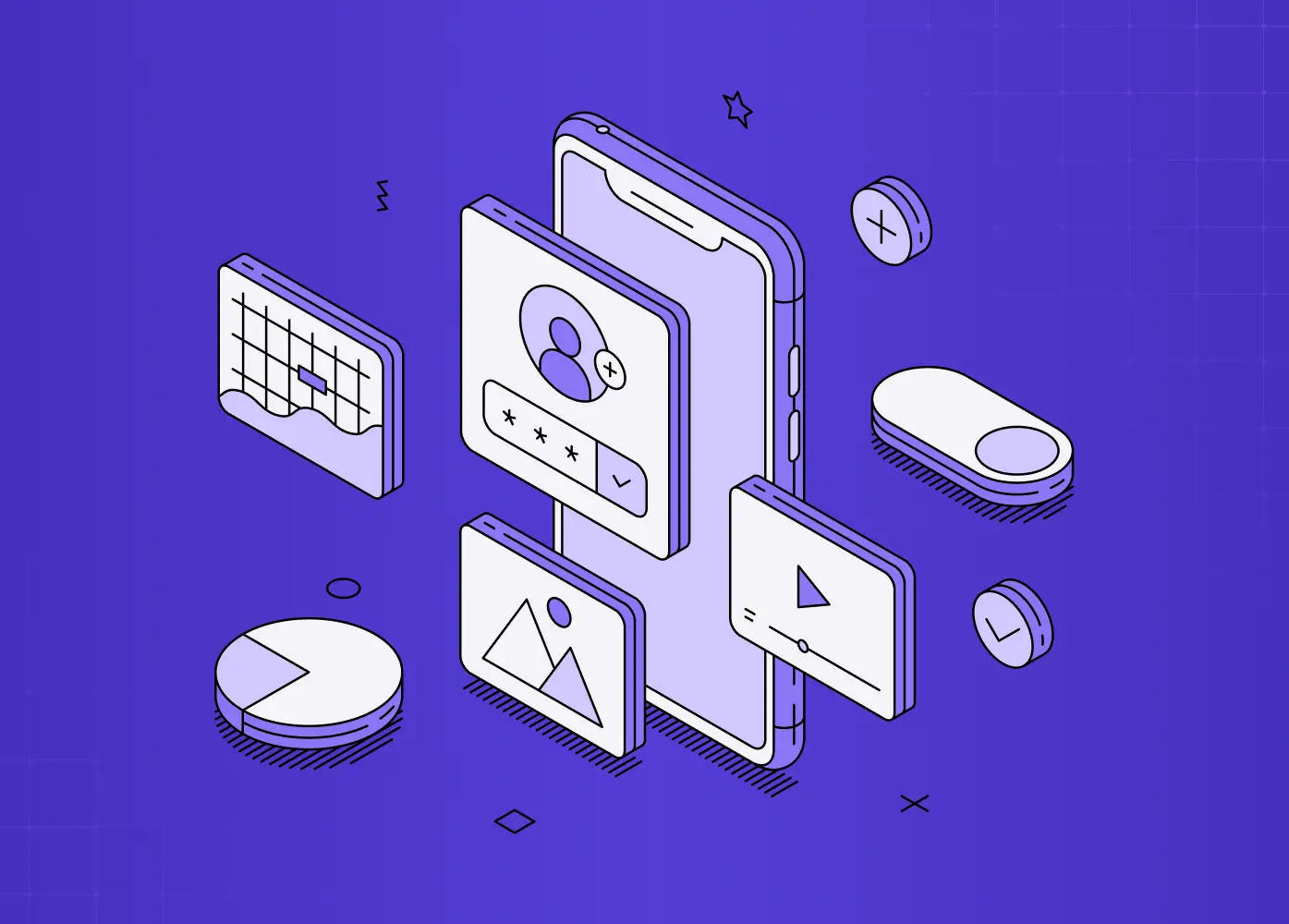
Legacy software modernization is the process of updating an older product, one that still works but has become slow to change, expensive to maintain, or dated in how it looks and feels, so it can keep pace with the business running on top of it. For most teams, that means finding a path between two extremes: living with a system that's quietly holding the product back, or committing years and a large budget to rebuilding it from scratch. Neither is a real strategy on its own. The useful question is narrower: when to redesign, which parts, and in what order. The goal of this guide is to show you the middle path that actually works: modernizing incrementally, safely, and in a way that starts paying off almost immediately.
TL;DR
Full "big bang" rewrites fail 70 to 88% of the time, mostly for organizational reasons, not technical ones.
Incremental modernization (the strangler fig pattern) replaces a legacy system piece by piece while it keeps running, so you never lose the ability to roll back.
A phased approach typically reaches positive ROI in 12 to 14 months, compared to 36 to 48 months for a full rewrite.
The fastest, lowest-risk win is often modernizing the user-facing experience first, since that's what customers actually notice, while the backend is strangled and replaced behind it at a safer pace.
This guide covers the warning signs, why rewrites fail, your realistic modernization options, a step-by-step playbook, common mistakes, and how to build the internal case for going incremental.
Your product works. It makes money. But it's slow to change, painful to maintain, and it looks and feels a decade old. In vertical SaaS categories this is close to universal, since the incumbent everyone complains about is usually the one that stopped modernizing years ago and kept winning anyway. Every conversation about fixing it eventually lands on the same tempting, terrifying idea: let's just rewrite the whole thing. Before you commit two years and a fortune to that plan, consider one number: full rewrites fail somewhere between 70% and 88% of the time, and usually for organizational reasons, not technical ones. The "big bang" rewrite is one of the most reliable ways to burn budget, stall your roadmap, and end up worse off than when you started.
The good news is that you don't have to choose between "live with the legacy" and "bet the company on a rewrite." Legacy software modernization can be done incrementally, delivering value along the way, keeping your product running the entire time, and letting you roll back if something goes wrong. This guide explains why rewrites fail, how the incremental approach works, your realistic options, and a practical playbook for modernizing a legacy product without a two-year rewrite. Let's get you a modern product without the disaster.
Signs your product needs modernization
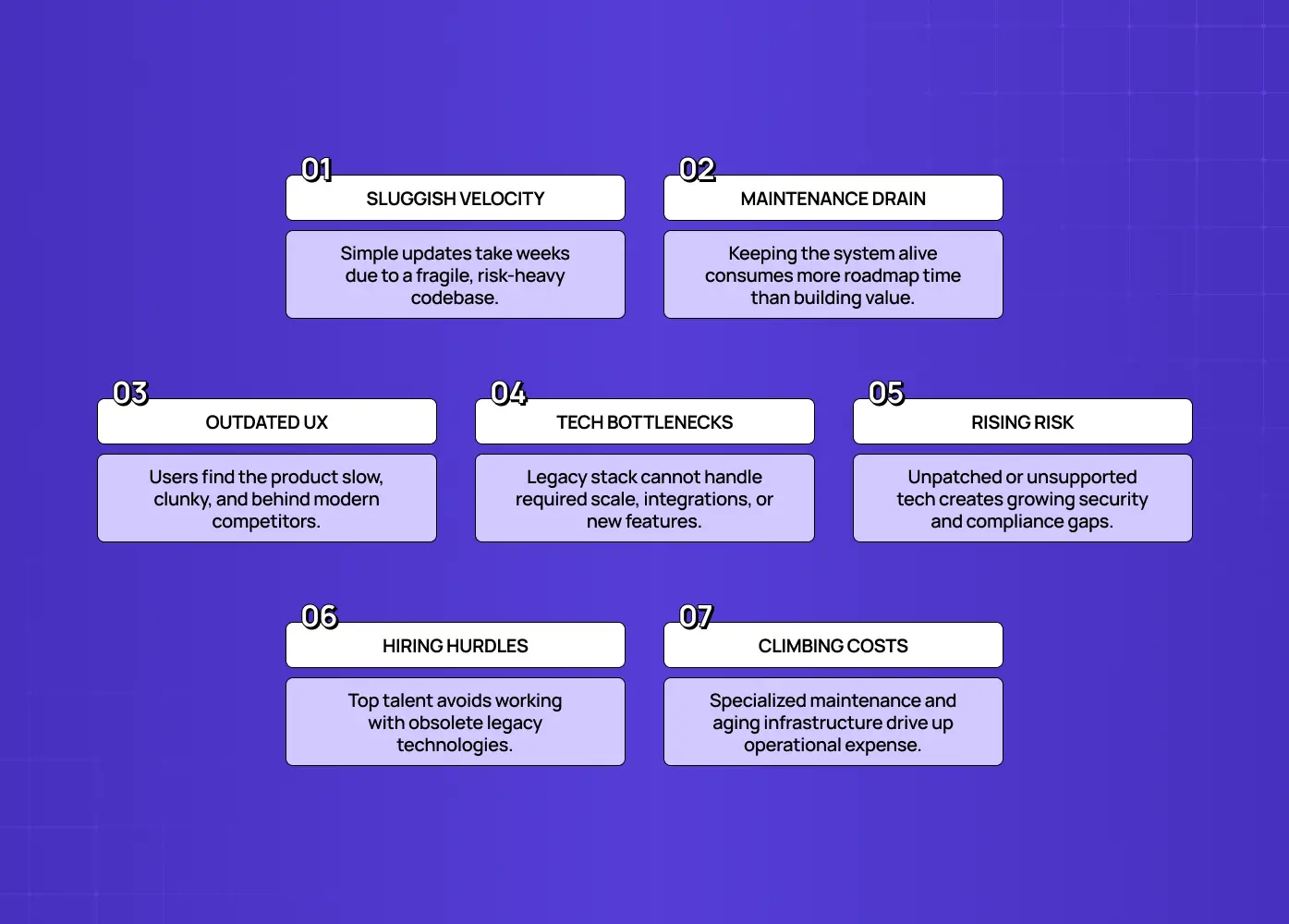
How do you know it's time? A few signals recur, and one or two of these on their own is normal. It's when several show up together that modernization moves from "nice to have" to a real business priority. They overlap closely with the SaaS website redesign signs teams already track on the marketing side, which is often where the symptoms surface first.
Changes take forever. Small features that should take days take weeks because the codebase is fragile and every change risks breaking something else.
Maintenance eats your roadmap. Your team spends more time keeping the lights on than building new value.
The experience feels dated. Users complain it's clunky, slow, or hard to use, and it compares poorly to modern competitors. Most of it traces back to a handful of recurring bad UX design examples rather than anything exotic, which is what makes it fixable.
You're facing technical constraints. The old stack can't support the features, integrations, or scale you need. In 2026 that constraint is most often AI, since integrating AI into SaaS needs data access and interface patterns older systems were never designed to provide.
Security and compliance risk is rising, often from unsupported or unpatched technology.
Hiring is hard because nobody wants to work on the old stack.
Costs keep climbing as old infrastructure and specialized maintenance get more expensive over time.
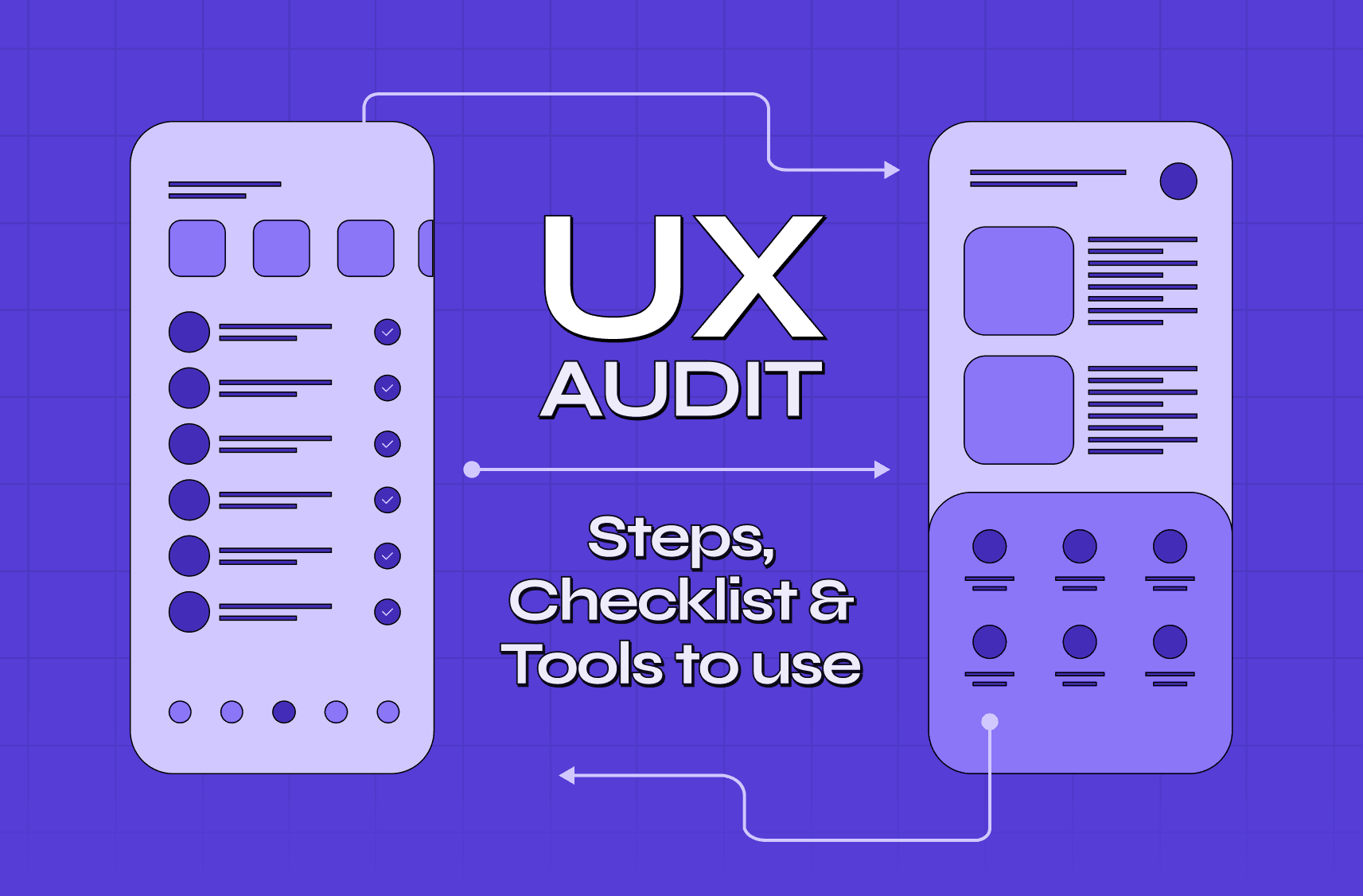
The question then isn't whether to modernize, but how, and that's where avoiding the big-bang trap matters most. A structured UX audit is what turns this symptom list into a ranked, costed set of fixes rather than a vague sense that things are getting worse.
Why the big-bang rewrite is a trap
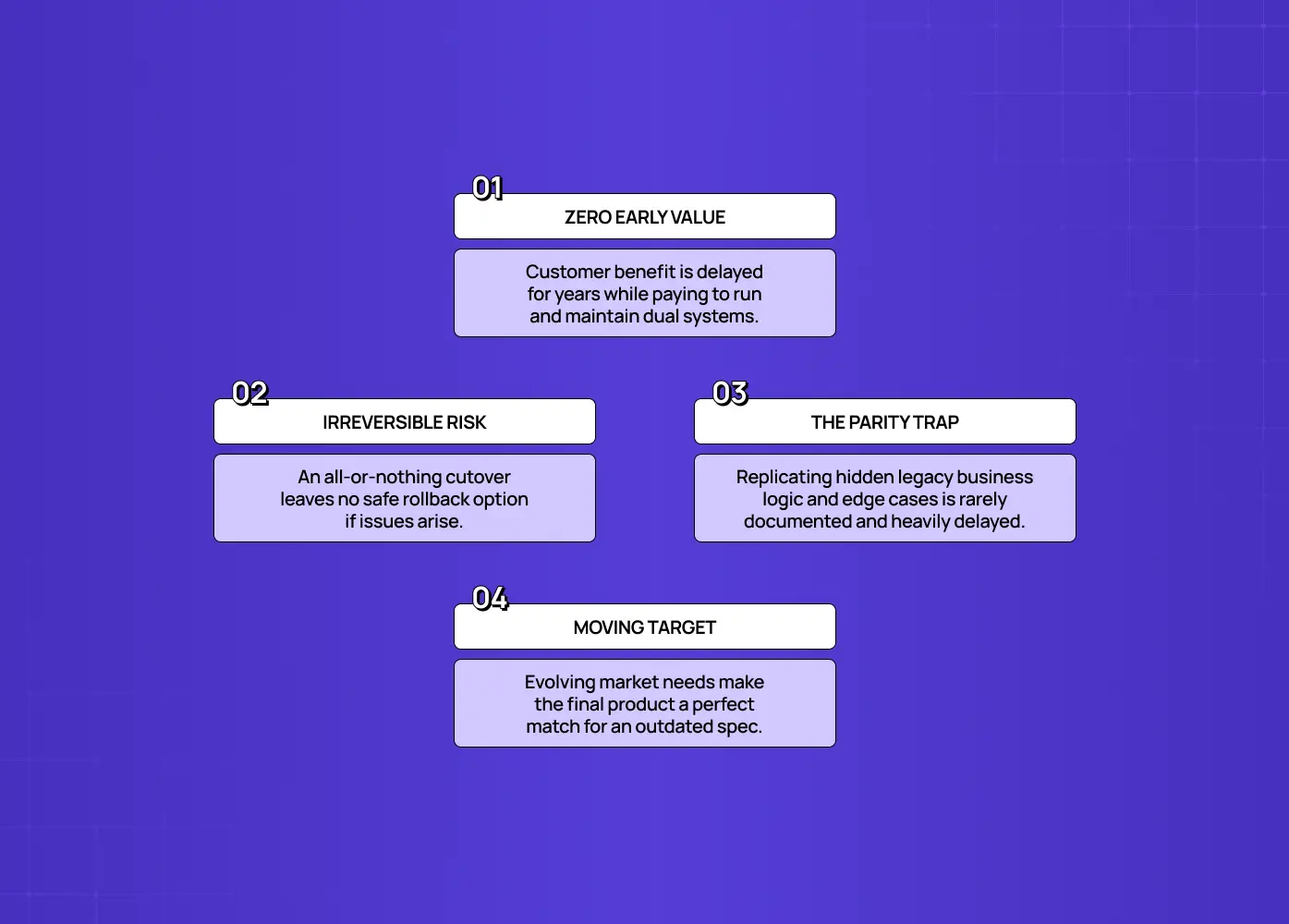
The instinct to rewrite is understandable. A clean slate feels like freedom. But the full "big-bang" rewrite fails so often for structural reasons worth understanding:
It delivers no value until it's done. You spend a year or two rebuilding before customers see a single benefit, while the old system still needs maintaining, so you're paying for two products and shipping improvements to neither.
It's an all-or-nothing bet with no rollback. You replace a deeply embedded system in one irreversible cutover, with no way to isolate risk or retreat if the new version underperforms.
It runs into the parity trap. Your "old" system has years of accumulated edge cases, fixes, and business logic baked in, and reproducing all of it exactly is far harder than it looks. Teams routinely discover the legacy system did more than anyone documented.
The business keeps moving. By the time the rewrite ships, requirements have changed, and you've built a perfect version of a two-year-old spec.
Add the massive upfront cost with distant returns, and it's no surprise most rewrites collapse under their own weight. At the other end of the scale, the cost to redesign a single product surface is a far easier number to approve, and it pays back inside the same budget year.
The better way: incremental modernization
The alternative is to modernize incrementally, replacing the legacy system piece by piece while it keeps running. The best-known version of this is the strangler fig pattern, named after a vine that grows around a tree and gradually replaces it without killing it in one blow. In software terms: you build new functionality alongside the old system, place a routing layer in front of it, and redirect specific requests to the new components over time, until eventually the legacy system can be quietly decommissioned.
The advantages are exactly the opposite of the big-bang's weaknesses:
Risk is distributed across small, reversible steps instead of concentrated in one irreversible cutover.
Value ships continuously. Each modernized piece improves the product now, not in two years.
Rollback is safe. If a new component underperforms, the routing layer sends traffic back to the legacy system immediately, something that's impossible once a full rewrite has gone live and the old system is gone.
The numbers back it up: a phased approach typically reaches positive ROI in around 12 to 14 months, versus 36 to 48 months for a rewrite, all while keeping the production system running the whole time. Those figures only hold up if you actually track them, which is where the standard methods for calculating the ROI of UX design come in. You modernize and keep shipping.
Your modernization options (the menu)
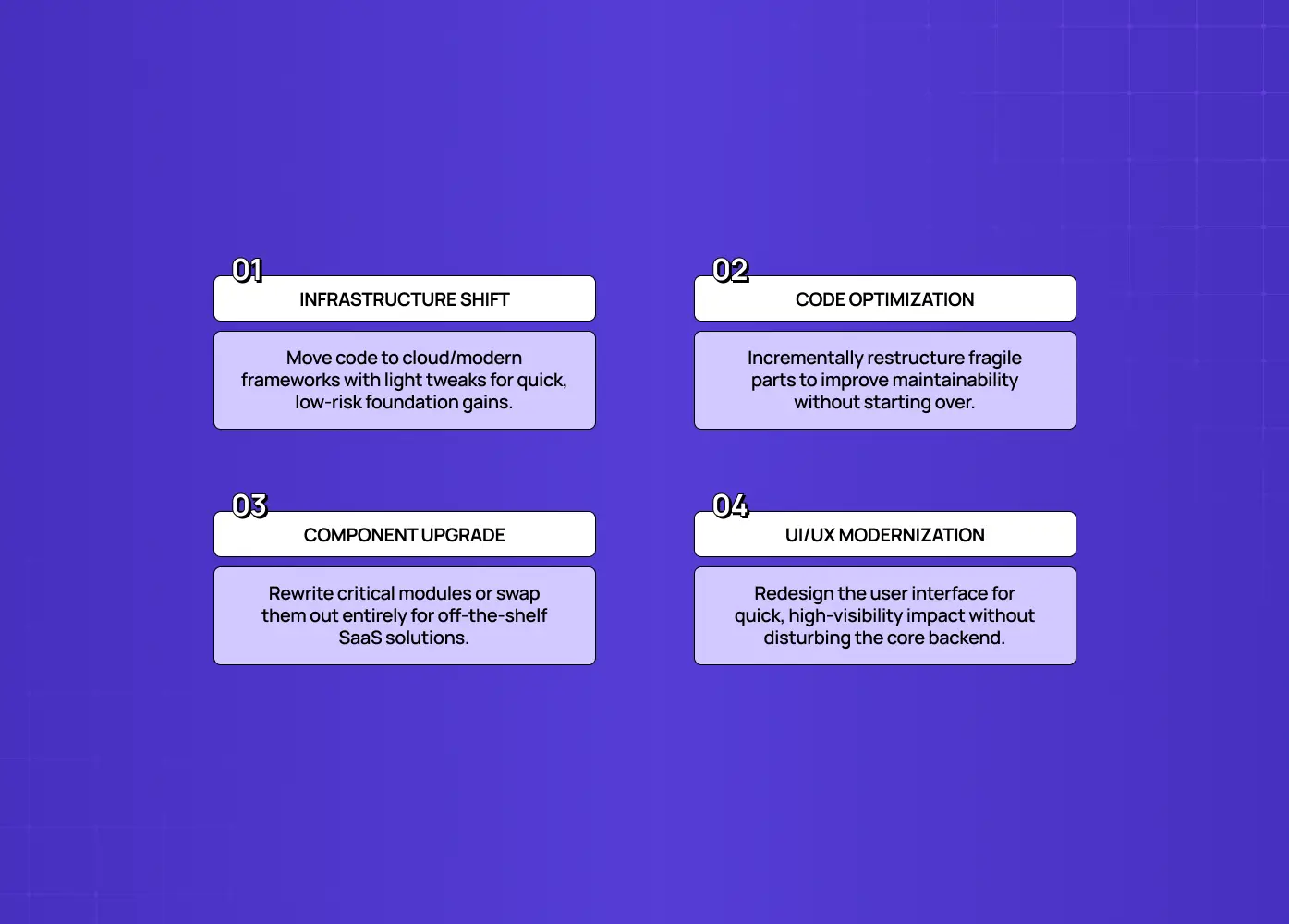
"Modernization" isn't one thing, it's a spectrum of approaches, and most real projects mix several. The common options:
Rehost ("lift and shift"): Move the existing system to modern infrastructure, such as the cloud, with minimal code change. Fast and low-risk, but doesn't fix the software itself.
Replatform: Move to a new platform or framework with light adaptation. More improvement than rehosting, still relatively contained.
Refactor / re-architect: Incrementally restructure the code (the strangler-fig territory), improving maintainability without a full rebuild. How far you take this is the same fork as choosing between off-the-shelf responsive templates and custom frontend builds, and the answer depends on how much your product's interface is doing.
Rebuild selectively: Rewrite specific components, not the whole thing, where it's genuinely warranted. Treat each one as a self-contained SaaS application development project with its own scope, timeline, and definition of done.
Replace: Swap a component for an off-the-shelf or SaaS solution.
Modernize the experience (UI/UX): Redesign the user-facing layer for a modern look and feel, often without touching the whole backend. The website redesign process transfers here almost phase for phase. This is frequently the highest-visible-value, lowest-risk starting point, covered in more detail below.
The right mix depends on your goals, whether that's cost, maintainability, user experience, or scalability, and where the pain actually is. You rarely need to do everything.
How to modernize without a two-year rewrite: the playbook
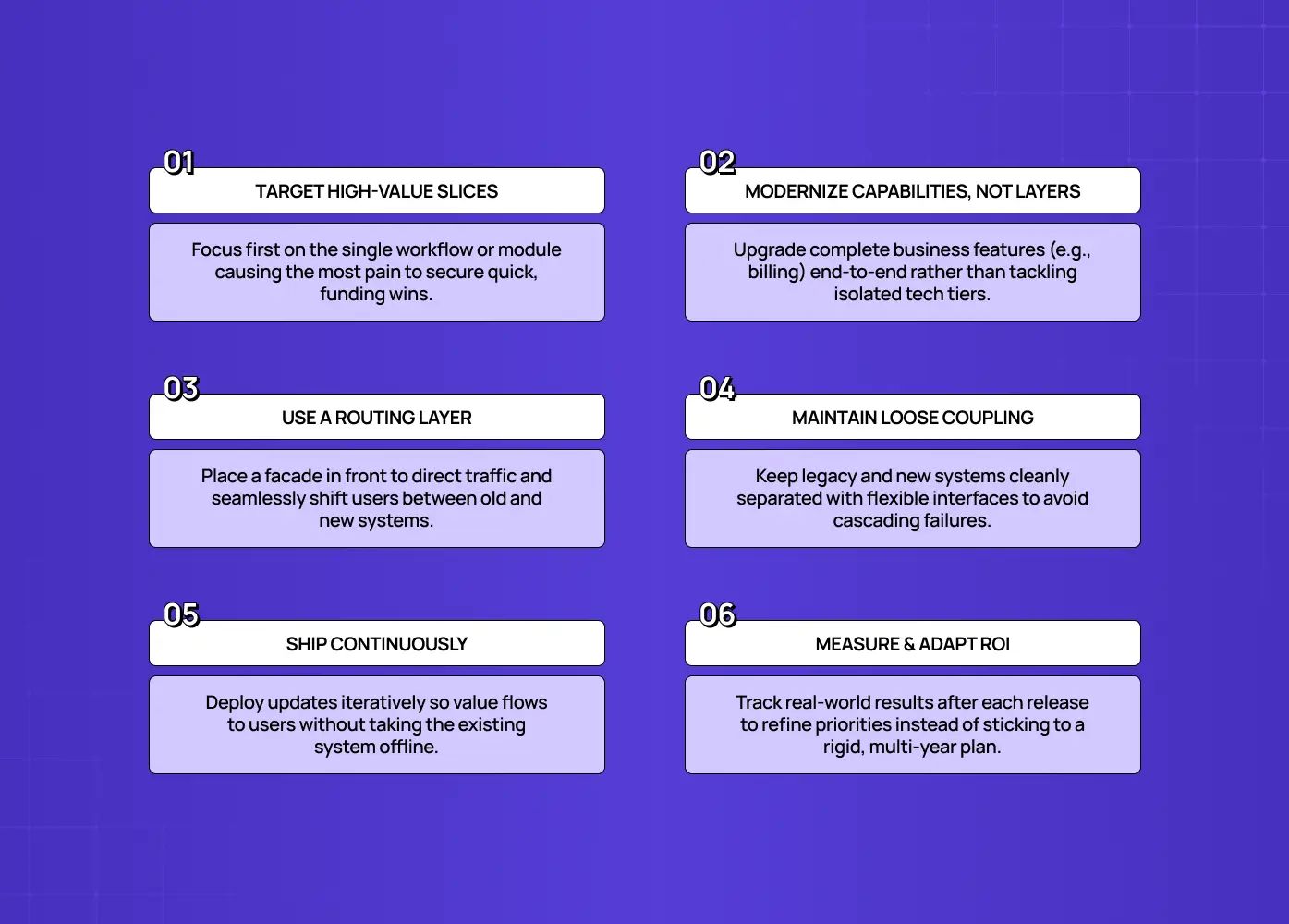
Here's the practical approach that keeps modernization safe and value-generating.
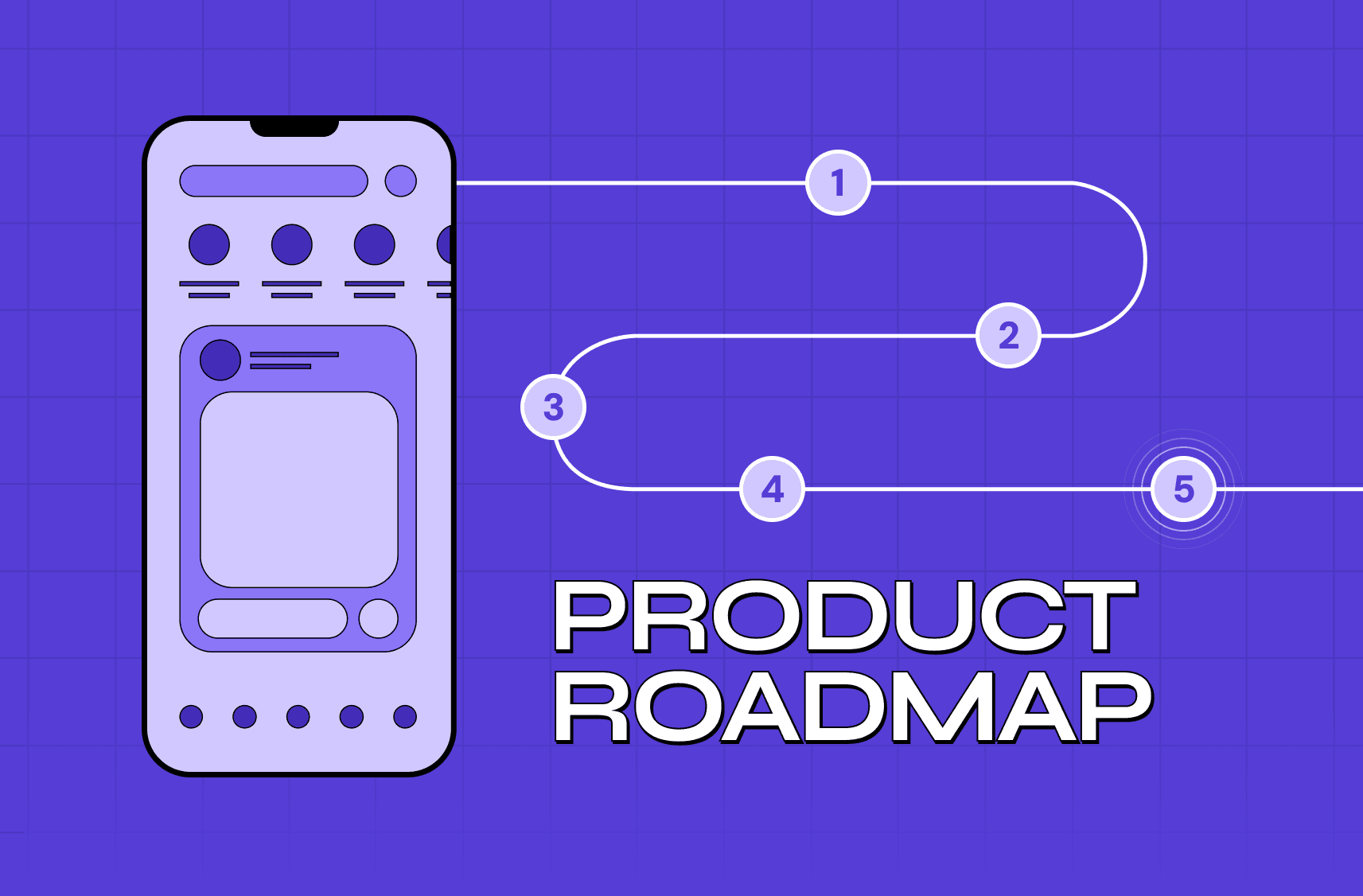
Start with the highest-value slice. Don't boil the ocean. Identify the one area where modernization delivers the most business value or relieves the most pain, whether that's a slow workflow, an unmaintainable module, or the outdated interface users complain about, and start there. Sequencing those slices is the same exercise as building a product design roadmap, just applied to an existing system instead of a new one. Early wins build momentum and fund the rest.
Modernize by business capability, not technical layer. A classic mistake is "strangling" by technical layer, doing all the database first, then all the logic. Instead, modernize one business capability at a time, for example billing, then onboarding, so each step delivers a complete, working improvement.
Put a routing/facade layer in front. This is what makes incremental work: a layer that directs each request to either the old or new system lets you migrate piece by piece and reroute instantly if needed.
Keep the old and new loosely coupled. Resist letting the legacy and new systems become tightly intertwined, which recreates the very rigidity you're trying to escape. Clean interfaces between them keep each step reversible.
Ship continuously and keep production running. Each modernized piece goes live and delivers value while the rest of the system keeps serving customers. Plan each slice on its own redesign timeline rather than one master date everything else waits on. You're never "down for the rewrite."
Measure ROI and learn as you go. Because value ships continuously, you can measure the impact of each step and adjust, doubling down on what works and reprioritizing based on real results rather than a two-year-old plan. Set your baseline UX metrics for SaaS before the first slice ships, or you'll have nothing to compare the results against.
Follow this and modernization stops being a terrifying all-or-nothing gamble and becomes a series of manageable, valuable improvements.
The overlooked shortcut: modernize the experience first
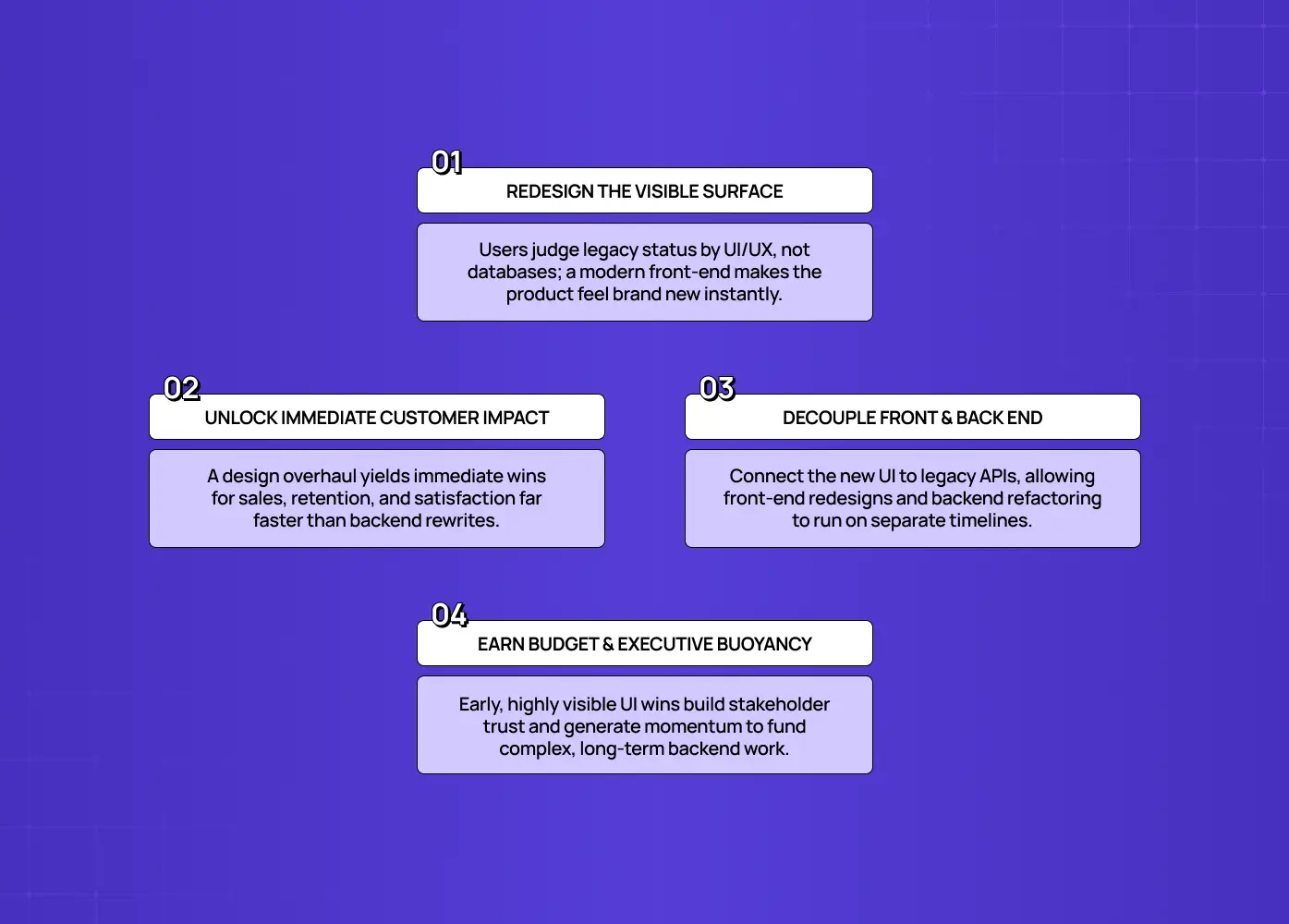
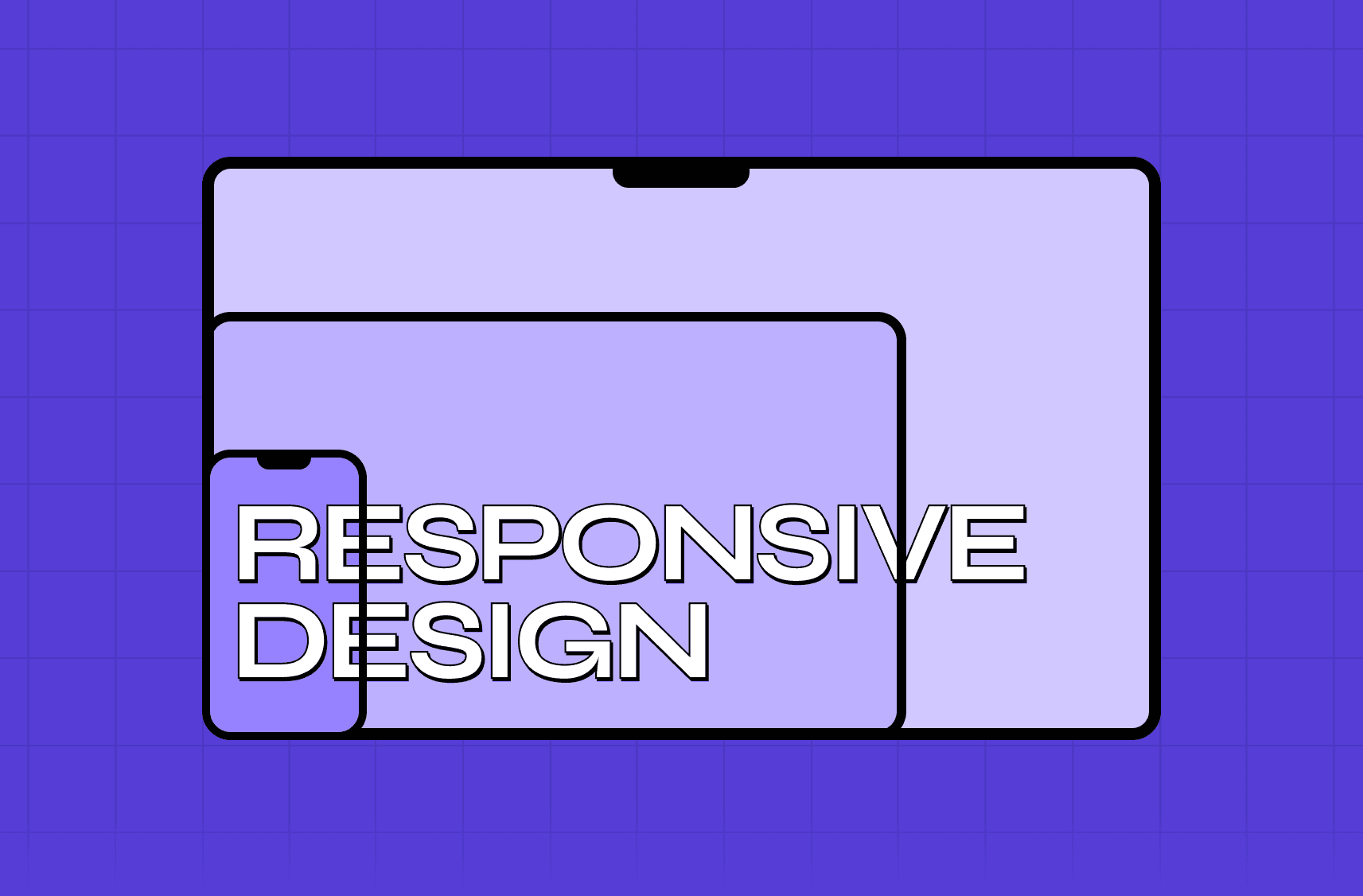
Here's the angle most engineering-led modernization advice misses: a huge share of what makes a product feel "legacy" is the interface, not the backend. Users don't see your database schema or your framework version, they see a dated, cluttered, clunky UI. For most enterprise tools that UI is a dashboard, which is why dashboard UX best practices deliver more visible change here than any backend work. Which means you can often deliver a dramatic modernization of how the product looks and feels, along with a real lift in usability, satisfaction, and even conversion, by redesigning the user-facing layer without rewriting the whole system underneath.
This is frequently the smartest first move, for a few reasons:
It's lower-risk than a backend overhaul.
It's visible to customers immediately, which is great for retention and sales.
It buys you time and goodwill to modernize the plumbing incrementally behind it.
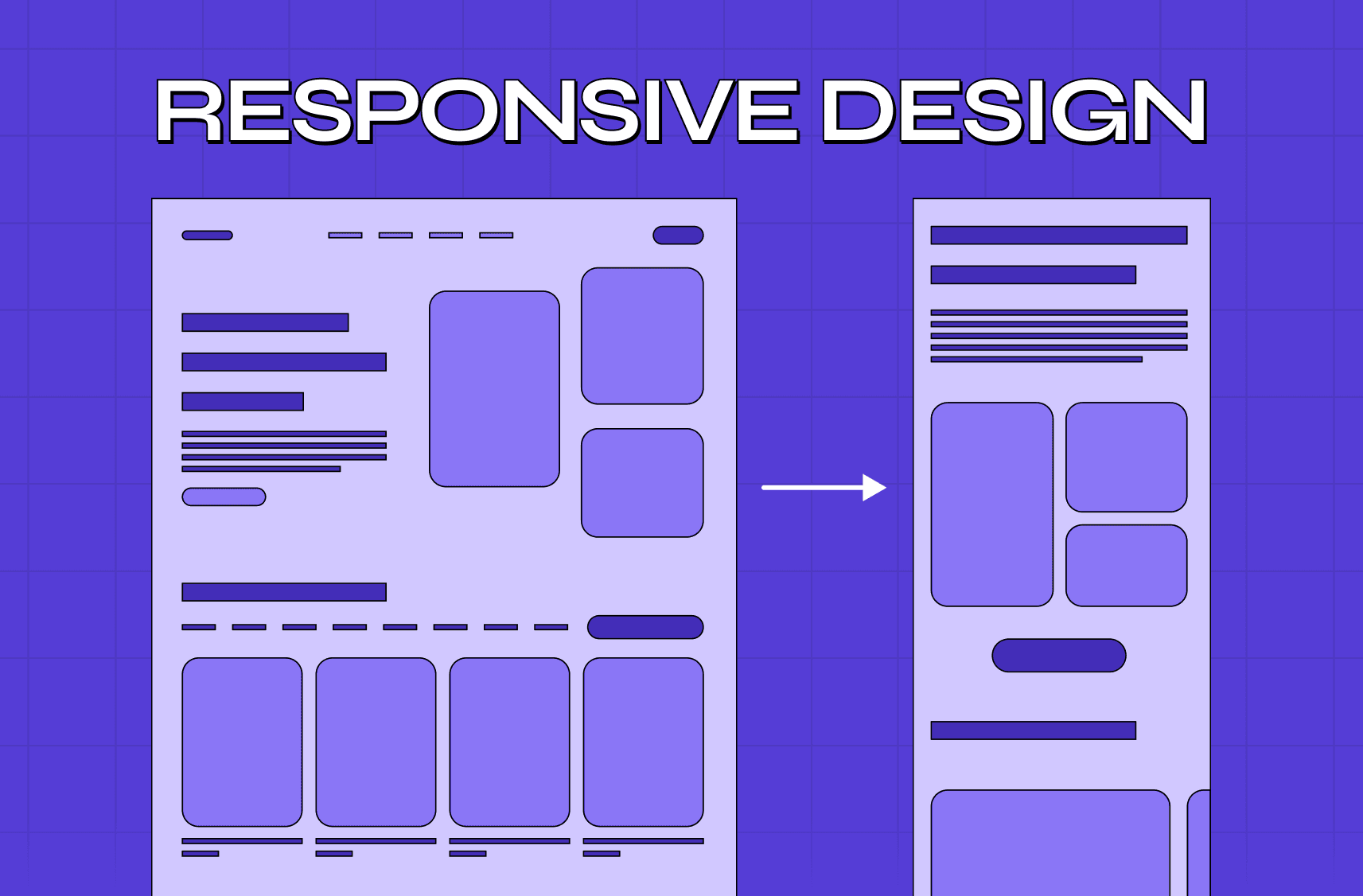
A modern, well-designed front end can wrap an older system and make the whole product feel new, while engineering strangles the legacy backend at a safe pace. Anchor that front end to an established SaaS UX design standard so "modern" means something specific rather than just newer than what was there before. For many products, "modernization" that customers actually notice is a design project as much as an engineering one. Don't assume you need a two-year rebuild to make your product feel current. Often you need a thoughtful redesign of the experience first.
This works because the front end and back end can be modernized on different timelines. A redesigned interface can talk to your existing backend through the same APIs the old UI used, so users get a modern experience now while the underlying system is strangled and replaced at a safe, deliberate pace behind the scenes. Shipping that interface as a design system for SaaS rather than a set of one-off screens is what stops the same drift returning in three years. It also sequences the risk sensibly: you deliver the visible, morale-and-revenue-boosting win first, then tackle the invisible, higher-effort backend work with the credibility, and often the funding, that early success earns. Pairing a design-led experience refresh with incremental backend modernization is, for many products, the most pragmatic path to feeling and being modern.
Common legacy modernization mistakes to avoid
Even incremental modernization goes wrong in predictable ways:
Quietly turning it into a big-bang anyway, migrating everything at once under a single "modernization" banner, which reintroduces all the rewrite risks.
Strangling by technical layer instead of business capability, so no step delivers a complete, usable improvement.
Letting the legacy and new systems tightly couple, recreating the rigidity they're escaping.
Ignoring operational complexity during the transition, since running two systems in parallel has real overhead that needs planning.
Modernizing the backend while leaving the dated experience untouched, so users see no benefit and question the investment.
Never defining what "done" or "success" looks like, letting modernization become an endless, unmeasured project.
Avoid these, and incremental modernization stays safe, visible, and worth it.
How to make the case for incremental modernization
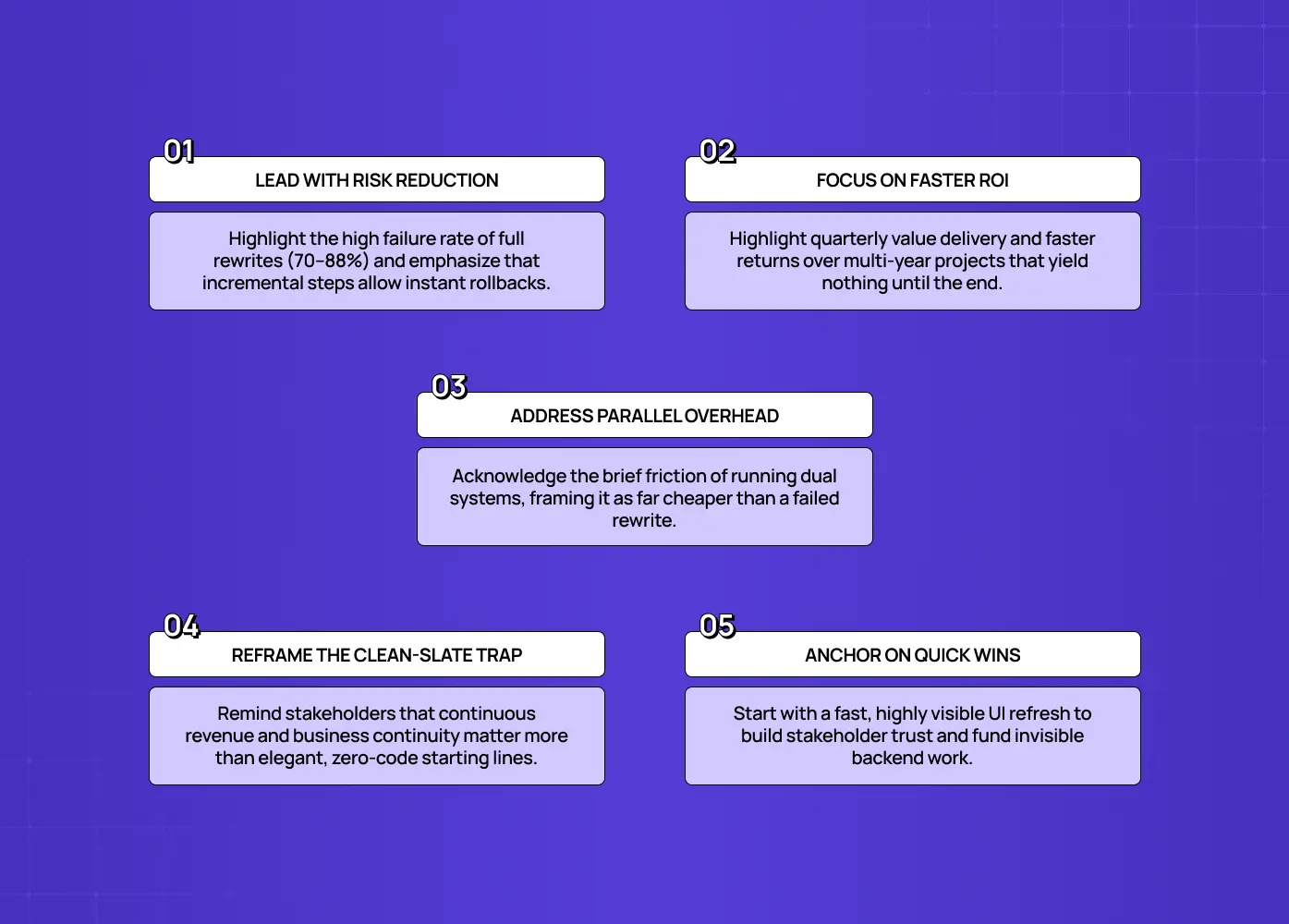
If you're sold on the incremental approach but need to convince others, whether that's a board, a CEO, or an engineering team itching for a clean slate, a few framings help:
Lead with risk. Cite the 70 to 88% rewrite failure rate and the fact that incremental modernization can roll back while a big-bang cannot. Nobody wants to sponsor a project with those odds.
Lead with ROI timing. Continuous value delivery and positive returns in roughly a year beat a multi-year build with nothing to show until the end. Bring a real number to that meeting, because a scoped SaaS UX redesign cost is far easier to approve than an open-ended rewrite budget. CFOs respond to that.
Address the "but it'll be slower/messier" objection honestly. Yes, running two systems in parallel has real overhead, but that managed complexity is far cheaper than a failed rewrite.
Reframe the emotional pull of the clean slate. The goal isn't the most elegant code, it's a modern product that keeps making money throughout the transition.
It also helps to make the first win visible and fast, often a redesign of the interface, which stakeholders and customers can see immediately. If internal capacity is the constraint, this is the slice most teams hand to enterprise UX design agencies, precisely because it's scoped, visible, and time-boxed. A quick, tangible improvement builds the credibility and momentum to fund the less-visible backend work behind it. Modernization sponsored on "trust us, in two years it'll be great" is fragile. Modernization that shows value every quarter sustains itself. Frame it that way and you turn a scary, contentious project into an easy yes.
Conclusion
You don't need a two-year rewrite to escape a legacy product, and given that most rewrites fail, you probably shouldn't attempt one.
Modernize incrementally instead: strangle the old system piece by piece, deliver value continuously, keep production running, and stay able to roll back.
Start with the highest-value slice, modernize by business capability, and don't overlook the fastest win of all, modernizing the experience your users actually see.
Done this way, modernization becomes a steady series of improvements with ROI in roughly a year, not a high-stakes gamble that pays off in three, if it pays off at all.
If your product works but feels dated, and you want to modernize the experience without betting the company on a rewrite, book a discovery call with Groto. We help teams give legacy products a modern, high-converting interface, incrementally, safely, and visibly, while your engineering modernizes underneath. Let's make your product feel new without blowing it up.