Web Design in Oakland: 8 East Bay Companies Compared by Price and Fit (2026)

Web Design in Oakland: 8 East Bay Companies Compared by Price and Fit (2026)

Eight East Bay web design companies compared by published price, team size and fit, plus what Oakland work actually costs and the California rules every local site has to meet.

Web Design in Oakland: 8 East Bay Companies Compared by Price and Fit (2026)

Web Design in Oakland: 8 East Bay Companies Compared by Price and Fit (2026)

Eight East Bay web design companies compared by published price, team size and fit, plus what Oakland work actually costs and the California rules every local site has to meet.

Most Oakland web design lists are not listing Oakland companies. On the directory that ranks first for this search, only one firm on the opening page is actually headquartered here. These eight all have a verifiable East Bay address, with every published number shown.

Eight East Bay firms, real addresses, published prices, California rules included.

TL;DR

  • Most Oakland web design lists are not listing Oakland companies. On the first page of the biggest directory's Oakland ranking, exactly one firm is actually headquartered here. The rest serve Oakland from elsewhere, or sit in San Francisco.

  • Published minimums across the East Bay run $5,000 to $25,000, and a local small business site typically lands between $8,000 and $25,000 according to the oldest firm in the market.

  • This is a small-studio market. Most East Bay firms have between two and nine people. If you need a thirty-person team, you are shopping in San Francisco whether you meant to be or not.

  • Public review evidence is thin across the whole market, and two of these firms have none at all, so portfolios and references tell you more here than ratings do.

Search for web design in Oakland and the first result is a directory ranking. Open it, and the firms at the top are marked "Serves Oakland, United States" rather than being based here, with a San Francisco agency sitting among them. One company on that opening page has an actual Oakland headquarters.

That is the problem with every list on this search. Oakland has a real web design market, with firms that have been here since the nineties, and it is mostly invisible underneath agencies from elsewhere running an Oakland landing page.

So this one has an address rule. Every company below has a verifiable East Bay headquarters, and every one is a studio rather than a solo practitioner. San Francisco firms with an Oakland page are out, however good they are, because you can find those on a San Francisco list and this is not one.

Groto is our own studio, and we are not an East Bay company. We are a remote team and we have said so in our entry rather than describing ourselves as serving Oakland, which is the phrase this page exists to complain about. The list is ordered by published project minimum, lowest first, so position one reflects the cheapest published starting price here and nothing else. No company paid for placement.

Quick Comparison: Oakland and East Bay Web Design Companies

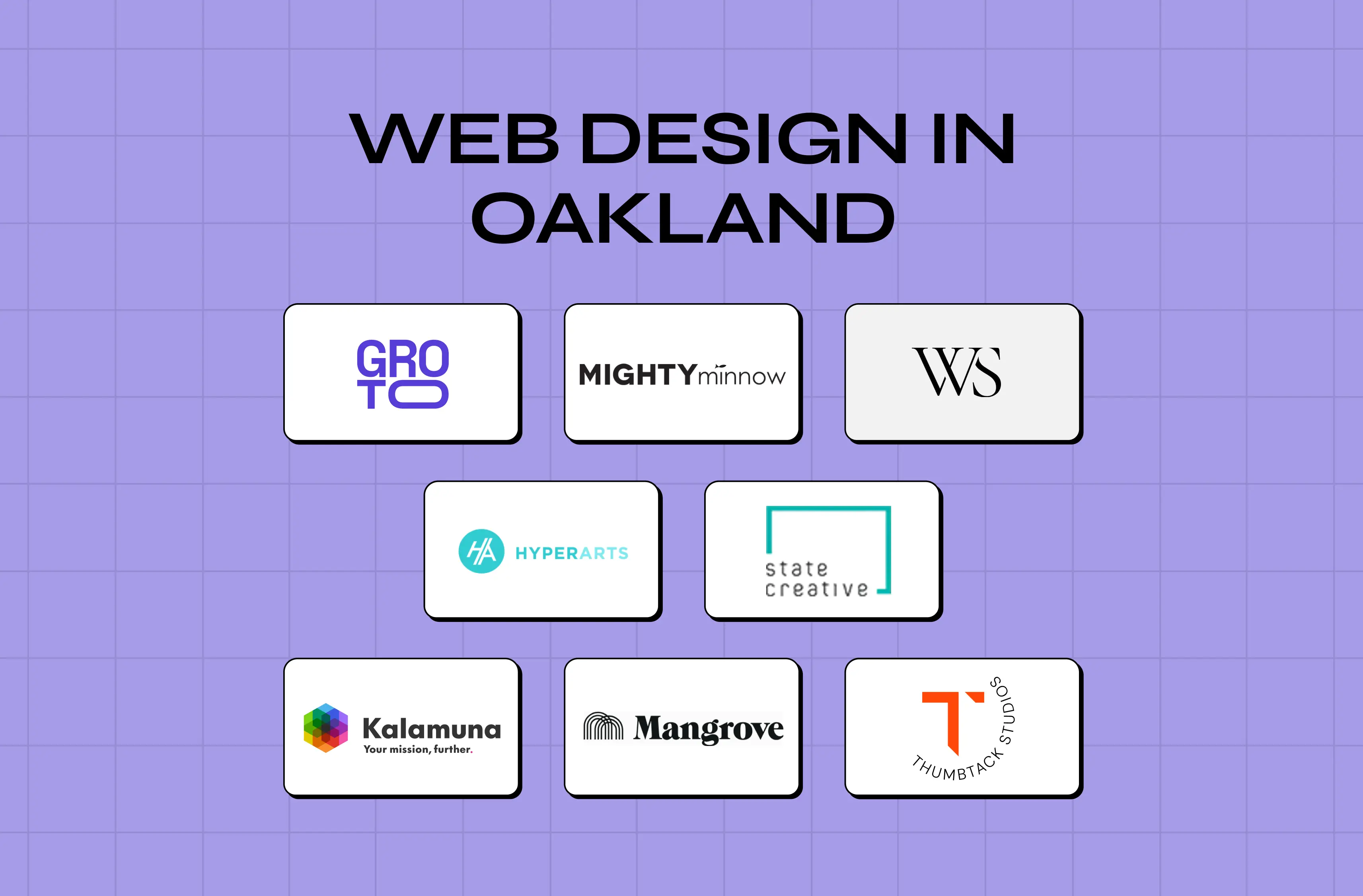
Eight Oakland and Berkeley web design company logos compared by published price, team size and fit

Company

City

Founded

Team

Hourly

Minimum

Rating

Groto

Remote

2021

10 to 49

$50 to $99

$5,000+

4.9

MIGHTYminnow

Oakland

2003

2 to 9

$100 to $149

$5,000+

Not rated yet

Wellington Studio

Oakland

2016

2 to 9

$200 to $300

$5,000+

4.8

HyperArts

Oakland

1998

2 to 9

Not published

$8,000 to $25,000 typical

5.0

State Creative

Oakland

2010

2 to 9

$100 to $149

$10,000+

4.8

Kalamuna

Oakland

2012

10 to 49

$150 to $199

$25,000+

4.8

Mangrove Web

Oakland

2009

10 to 49

$150 to $199

$25,000+

4.8

Thumbtack Studio

Berkeley

Not published

2 to 9

Not published

Not published

Not rated yet

One thing worth reading off this before the entries. The ratings sit in a narrow band and rest on shallow evidence, and two companies have no public rating at all, so the ratings column will not separate these firms for you. The minimum will. It is the only column here where the differences are large, checkable and consequential.

How We Picked These Oakland Web Design Companies

A real East Bay headquarters, not a city landing page. This is the rule that did most of the work. Several agencies ranking for this search are based in San Francisco, Mountain View or further afield, and run an Oakland page. One of the editorial lists on this search ranks its own agency first for Oakland while publishing a Mountain View address in its footer. Every company here has a verifiable address in Oakland or Berkeley.

A studio, not a solo freelancer. Several capable one-person practices operate in the East Bay, some of them since the nineties, and a few will do excellent work on a defined project. They are a different purchase with a different risk profile, so they are not on a list of companies.

Numbers that actually exist. Rates and minimums are in the table where firms publish them. Seven of these eight do. One publishes nothing at all, and that is in the table too, because it tells you something about how they sell.

Web design as the core service, not an attachment. Two Oakland firms with genuine local addresses were left out on this rule. One is a branding studio where web design is a tenth of the practice. The other leads with custom software and IoT development. Both are good at what they do. Neither is what you are looking for if you typed this search.

Ordered by published minimum, lowest first. The minimum is the number that decides whether a conversation happens at all, which makes it the first thing to filter on and the easiest thing to check. Where minimums tie, the order is alphabetical. Firms publishing no price sit at the end, which is itself information.

What Oakland Web Design Costs in 2026

Price by scope

What you are buying

Typical East Bay range

Template or starter site, five pages or so

$1,000 to $5,000

Small business custom site

$8,000 to $25,000

Ecommerce build

$15,000 to $50,000

Custom platform or web application

$25,000 to $100,000+

The small business band is the one with the strongest local evidence behind it. HyperArts, which has been building sites in Oakland since 1998, puts a small business project at $8,000 to $25,000, depending on page count, custom functionality and whether copywriting is included.

That is noticeably higher than the national picture. If you want the wider view of why agencies price the way they do, our web design agency pricing guide sets out what each band buys across the US market, and the gap between that and what the Bay Area charges is the local premium made visible.

What East Bay firms actually publish

Published minimums across this list run $5,000, $5,000, $5,000, $10,000, $25,000 and $25,000, with HyperArts quoting a typical range from $8,000 and one firm publishing nothing at all. There is no $1,000 tier in the East Bay studio market. The cheap offers you will find on this search belong to providers with no address, no company history and no named team, and we left them off for the same reason you should be wary of them.

Published hourly rates run $100 to $149 at the lower end and $200 to $300 at the top, which is Wellington Studio. Nothing local publishes below $100. That is the single clearest signal about this market: it is not a cheap place to buy a website, and anyone quoting you like it is has either misunderstood the scope or is not based here.

Why two quotes for the same site differ by 3x

Platform. A WordPress build on an existing theme and a custom application are different products sharing a word.

Content. If the agency writes and structures it, that is a project of its own. HyperArts names copywriting support explicitly as a variable in its range, which is unusually honest.

Who does the work. A two-person studio and a fifty-person firm bill differently for the same page, and neither is wrong.

Whether responsive behaviour is treated as scope or as standard. If a proposal presents mobile layouts as a line item you could remove, that tells you how the rest of it was built. Proper responsive web design services treat mobile as the primary layout rather than an adaptation bolted on at the end.

What Kind of Market Oakland Actually Is

Worth knowing before you make a shortlist, because it shapes everything else.

This is a small-studio market. Five of the eight firms here have between two and nine people. Three have ten or more. There is no equivalent of the fifty to two hundred and fifty person agencies you find across the Bay, and that is not an accident of our list, it is what the market looks like.

The practical consequences are real. A small studio gives you the principal on your project rather than a junior behind an account manager, which is usually what you want. It also means capacity is the constraint. If your build needs four workstreams running at once to hit a date, almost nobody here can staff it, and you are shopping in San Francisco whether you meant to be or not.

Public review evidence is thin. Two of the East Bay firms here have no public rating at all, and the rest sit in a narrow band between 4.8 and 5.0 built on shallow evidence. A comparable California market looks nothing like this: when we compared Orange County web design companies, a single Irvine firm had a deeper public record than this entire list combined.

So you cannot shortlist on ratings here, because they do not separate anyone. Portfolios, references and a conversation with a past client will tell you far more than a star average will.

A lot of the work is mission-driven. More on this below, because it is the most distinctive thing about the East Bay market and no other list mentions it.

East Bay or San Francisco? What Crossing the Bridge Costs

The obvious question, and nobody on this search answers it.

The short version: less than you would think, and not in the direction most people assume.

Published hourly rates in the East Bay run $100 to $300. Across the Bay, the design-led San Francisco studios that come up on this kind of search publish $150 to $199 and minimums of $50,000. So the top of the East Bay market overlaps with the bottom of the San Francisco market, and the saving is at the minimum rather than at the rate.

What you actually get for crossing the bridge is scale and specialism. San Francisco has firms built for funded technology companies doing brand and product together, and if that is your brief, our comparison of the best UX design agencies in the San Francisco Bay covers that market properly.

What you get for staying in the East Bay is a principal who answers the phone, a studio that has probably worked with an organisation like yours, and a minimum you can actually clear. For most Oakland businesses that is the better trade.

Nonprofit and Mission-Driven Websites

This is the defining characteristic of the Oakland web design market, and it is the thing every other list on this search has missed.

Look at who these firms actually work for. MIGHTYminnow states plainly that it works with nonprofits, educational institutions and socially conscious organisations, and its client list reads like a directory of Oakland civic life: the Oakland Public Education Fund, Techbridge Girls, Mills College Children's School, Island Cat Resources and Adoption, Rocket Dog Rescue, UC Berkeley. Kalamuna was founded in Oakland in 2012 and works largely with mission-led organisations. Thumbtack Studio in Berkeley names MoveOn.org and the University of California. State Creative's published client work includes the Integrated Healthcare Association.

If you are a nonprofit, a school or a civic organisation buying a website here, you are in the best-served part of this market and you should use that.

Three things that are different about a grant-funded build.

The budget has a shape and a deadline that are not yours. Grant cycles decide when money is available and when it has to be spent, and a studio that has run these projects before will scope to that rather than to a generic timeline. Ask directly whether they have worked to a grant deadline.

Donations are a conversion flow, not a page. The donate button is the most important interface in the whole build, and it has recurring giving, tribute gifts, employer matching and a receipt to handle. Treat it as the thing the site is for, not as a feature on the list.

Accessibility is frequently contractual rather than optional. Public funding, education contracts and institutional partners often come with accessibility obligations attached. That is covered in the next section, and it is a harder requirement for a nonprofit than for a restaurant.

California Rules: ADA, Unruh and CCPA

One competing page on this search mentions the Unruh Act in passing. None covers what to actually put in a contract, which is the part that matters.

Accessibility and the Unruh Act

California Civil Code section 51(f) makes any violation of the Americans with Disabilities Act automatically a violation of the Unruh Civil Rights Act. Section 52 then sets statutory damages at no less than $4,000 per violation, a plaintiff does not have to prove they lost money, and prevailing plaintiffs can recover attorney's fees. That last point is what makes these claims economic to bring in volume.

No California statute names a technical standard for private business websites. In practice courts and plaintiffs treat the Web Content Accessibility Guidelines as the measure, so what you require in your contract is WCAG 2.1 Level AA at minimum and WCAG 2.2 Level AA ideally.

The cheaper response is to build accessibly from the start. Contrast ratios, focus states, form labels and keyboard paths cost very little at design stage and a great deal as a retrofit, which is the whole argument for accessibility-first UX rather than a compliance pass before launch.

What to put in writing before you sign: which WCAG version and level the build will meet, who performs the testing, whether assistive technology is used or only an automated scanner, and who pays to fix issues found after launch. An agency that has never been asked will tell you quickly.

CCPA and CPRA

The California Consumer Privacy Act, as amended by the CPRA, applies to for-profit businesses doing business in California that meet at least one of three thresholds: gross annual revenue above roughly $26.6 million, buying, selling or sharing the personal information of 100,000 or more California residents or households in a year, or earning half or more of annual revenue from selling or sharing personal information.

Most Oakland small businesses and nonprofits clear none of those and are not covered. That is worth knowing, because compliance work gets sold to plenty of organisations that do not need it.

If you are covered, the website obligations are specific: a notice at collection given at or before the point of collection, a privacy policy reviewed at least annually, a link reading exactly "Do Not Sell or Share My Personal Information" where you sell or share, honouring Global Privacy Control signals from the browser, and a path for people to limit the use of sensitive personal information.

The 8 Companies

1. Groto
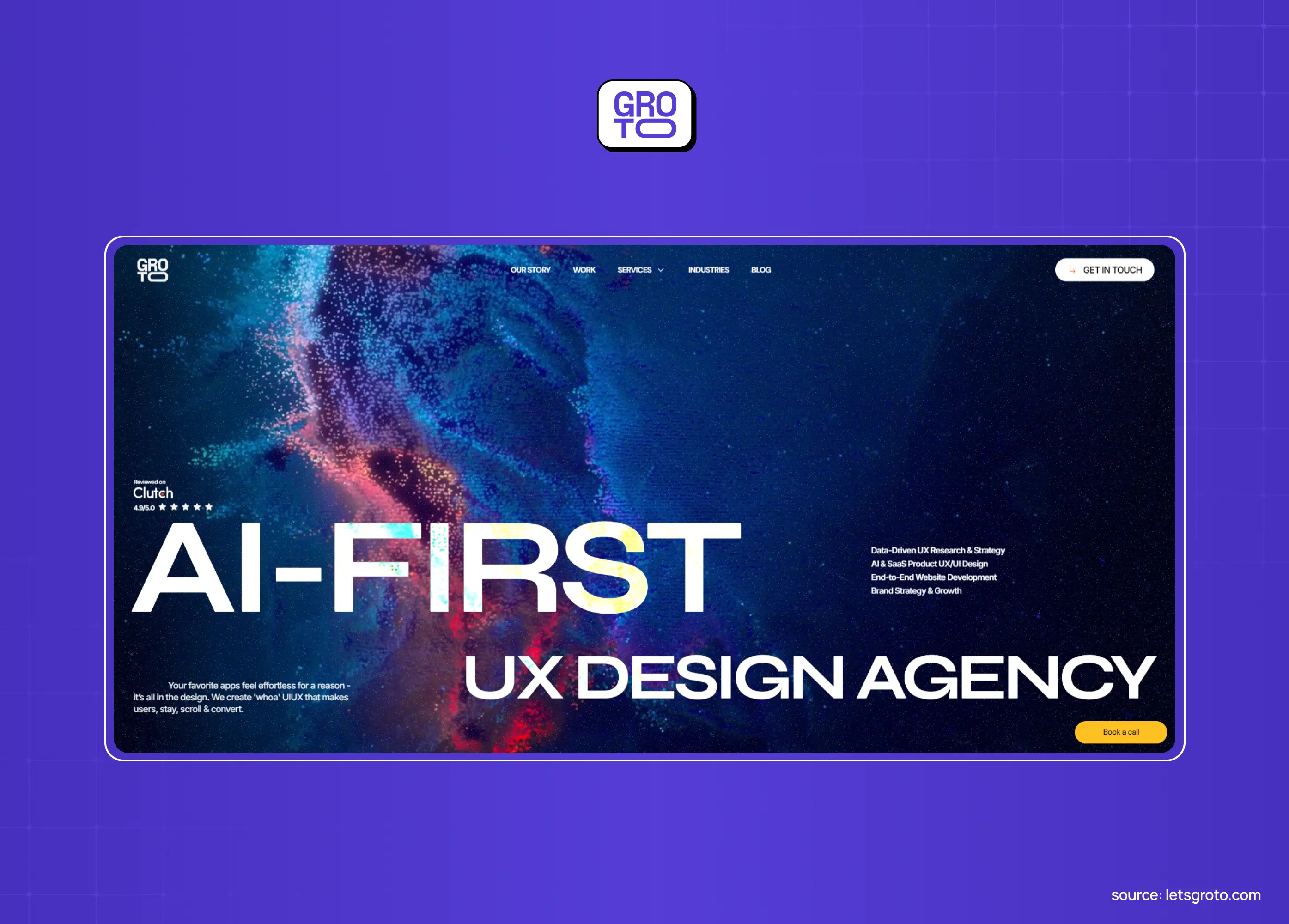
Groto homepage showing its AI-first UX design agency positioning and 4.9 Clutch rating

Based: remote, working across US time zones. Founded: 2021. Team: 10 to 49. Rate: $50 to $99/hr. Minimum: $5,000+. Rating: 4.9.

We are not an East Bay company. We are on this page as the remote option, and we sit first because the list is ordered by published minimum and ours is the lowest here, not because we are the best fit for an Oakland business.

The narrow case where remote beats local: you are a SaaS or AI company whose website has to explain a technical product to a buyer before a sales call happens, and you would rather not have the product design and the marketing site sitting with two different vendors. That is what we build, and it is a different brief from a local services site.

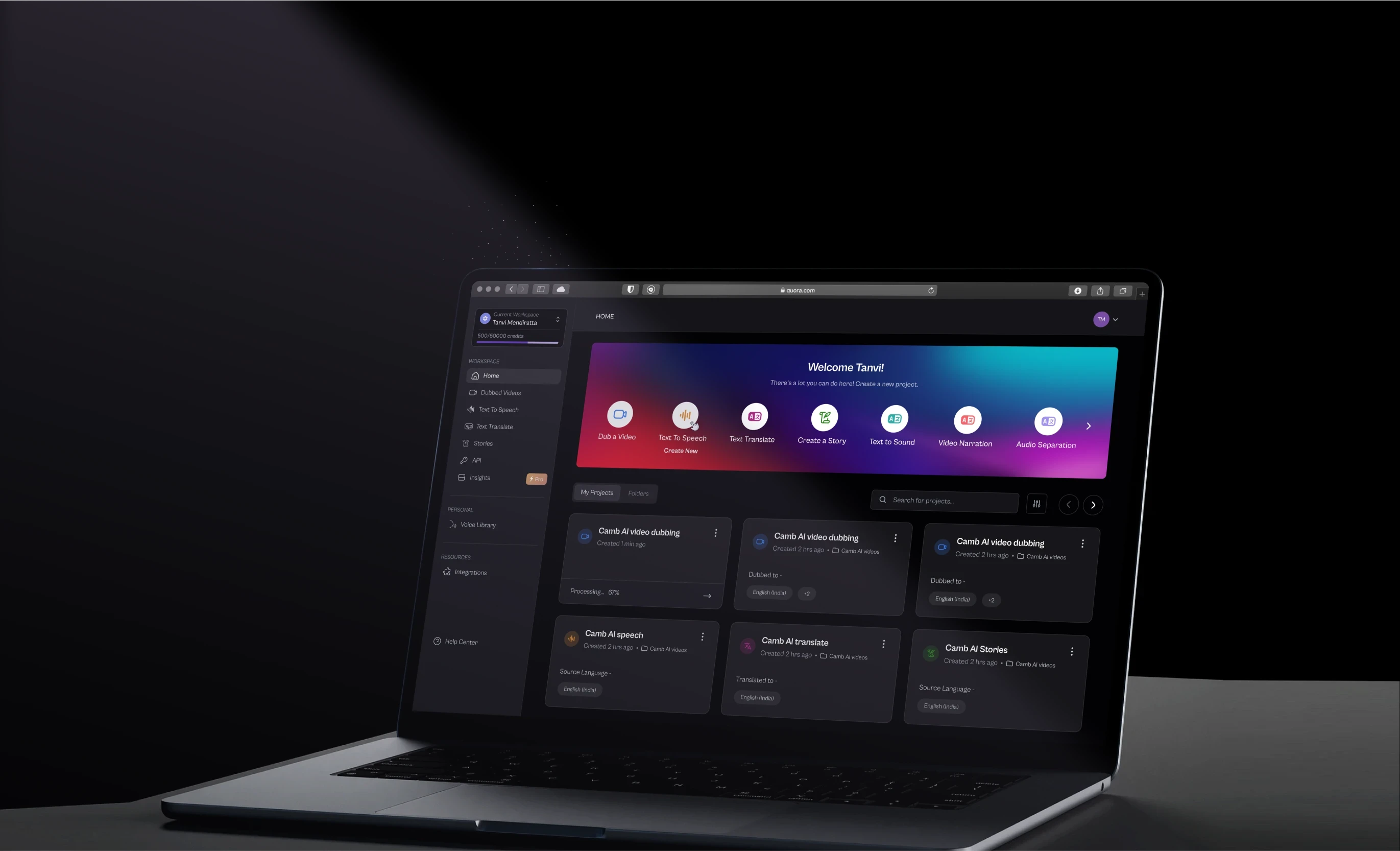
Our rate is the lowest on this page at $50 to $99 an hour, against $100 to $300 for every East Bay firm that publishes one. That is a real difference and it is also the only column where we win. Recent work includes the Camb.ai AI dubbing platform, which is the clearest example of the kind of product we are built for.

Best for: SaaS and AI product companies where the site is part of the product story. 

Not right for: an Oakland nonprofit on a grant cycle, a restaurant, or anyone who wants to meet their designer in person. For the first of those, hire MIGHTYminnow or Kalamuna. They have built dozens of sites for organisations like yours and they understand how grant funding actually moves, which we do not. Saying that costs us nothing, because it was never work we would have been right for, and you would have found out three weeks into a discovery call anyway.

If the narrow case is the shape of what you need, let's talk.

Want to know where your users are dropping off?

We’ll break down the exact moments users lose interest, and why.

Want to know where your users are dropping off?

We’ll break down the exact moments users lose interest, and why.

2. MIGHTYminnow

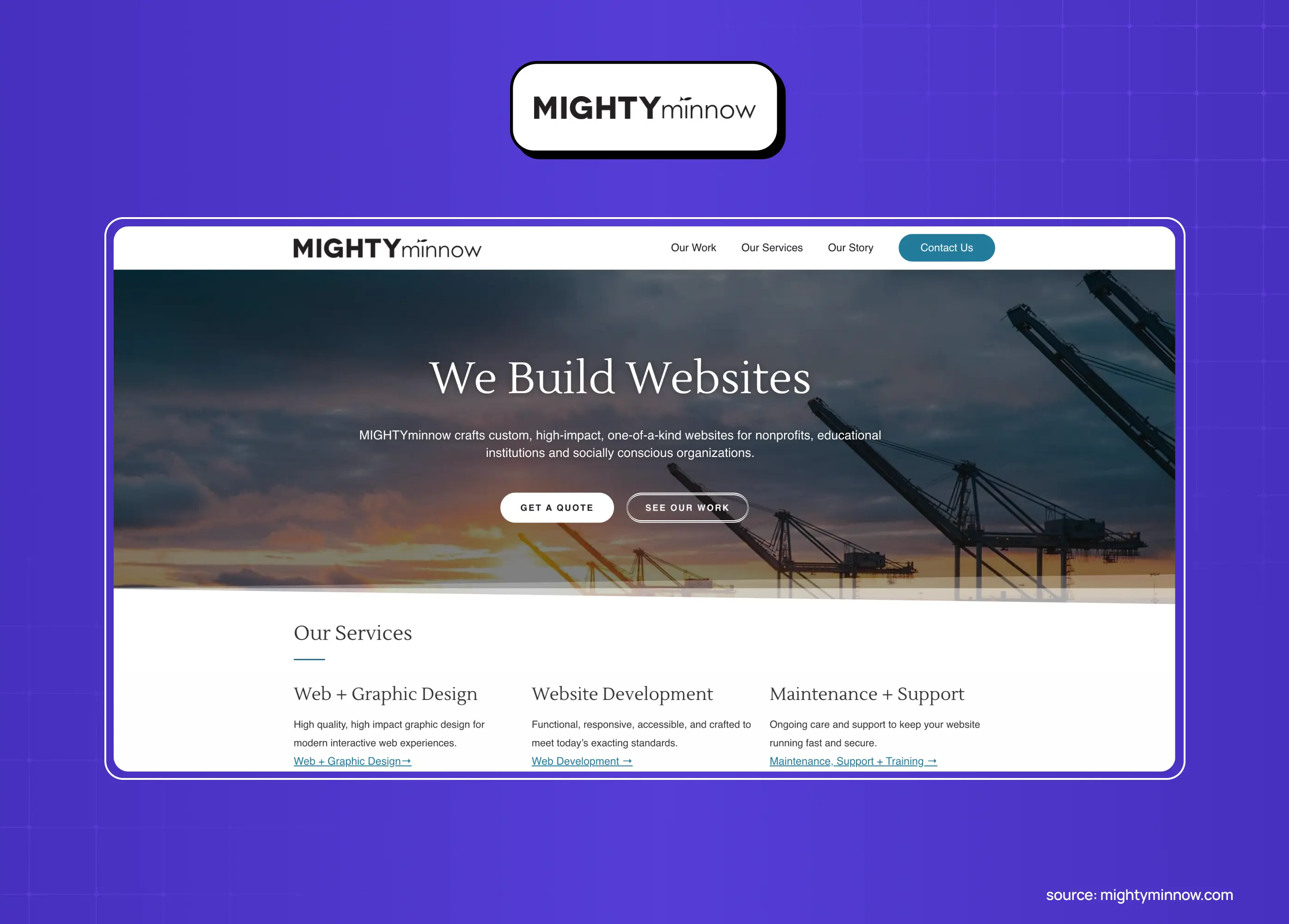
MIGHTYminnow homepage showing its web design services for Oakland nonprofits and educational institutions

City: Oakland. Founded: 2003. Team: 2 to 9. Rate: $100 to $149/hr. Minimum: $5,000+. Practice: development led, with web design and branding alongside.

The most clearly positioned studio on this page. MIGHTYminnow builds WordPress sites for nonprofits, educational institutions and socially conscious organisations, and it has been doing it from Oakland for over twenty years.

The client list is the proof: Oakland Public Education Fund, Techbridge Girls, Mills College Children's School, Island Cat Resources and Adoption, Rocket Dog Rescue, UC Berkeley. If you are a civic or mission-led organisation in the East Bay, this is the firm that has already built something like your site. Accessibility and translation appear in its service descriptions, which matters for the grant-funded work it does.

No public reviews yet on its agency profile, so weigh the portfolio and ask for references.

Best for: Oakland nonprofits, schools and civic organisations on WordPress. 

Not right for: custom application work, or a company wanting a brand-led build.

3. Wellington Studio
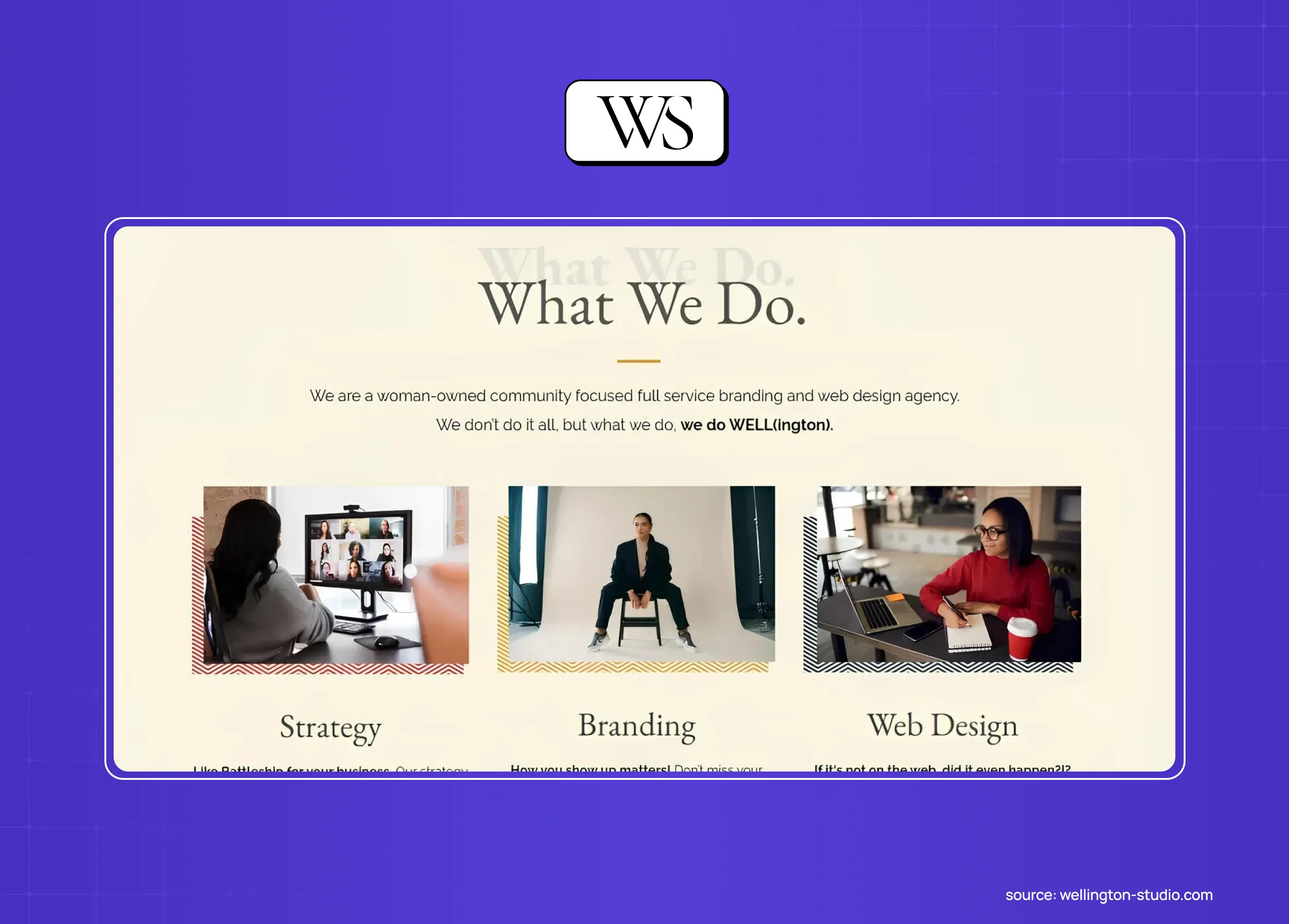
Wellington Studio's What We Do page listing its strategy, branding and web design services in Oakland

City: Oakland. Founded: 2016. Team: 2 to 9. Rate: $200 to $300/hr. Minimum: $5,000+. Rating: 4.8. Practice: development and branding in near-equal measure, with web design alongside.

The highest published hourly rate on this page by a clear margin, paired with the joint-lowest minimum. That combination is unusual and it tells you what this is: a small senior studio that will take a scoped piece of work at a high rate rather than a long engagement at a blended one.

Brand and web in roughly equal measure makes it a reasonable fit when the identity is changing at the same time as the site. The public record behind the rating is thin, so the portfolio does the work here.

Best for: a short, senior, brand-led engagement where you want the principals on it. 

Not right for: a long build where the hourly rate compounds, or a client who wants a lot of hours for the money.

4. HyperArts

HyperArts homepage offering custom WordPress web design and development for the San Francisco Bay Area

City: Oakland, Jackson Street. Founded: 1998. Team: 2 to 9. Published price: $8,000 to $25,000 typical for a small business site. Rating: 5.0. Practice: web design and development in equal measure, with UX alongside.

The oldest web design firm in the East Bay, and the most web-design-weighted practice on this page, split evenly between design and development. It is also the firm that shows up most consistently in Oakland local search, and it appears on none of the other lists for this keyword, which is a reasonable summary of how well those lists were researched.

It publishes a price range when almost nobody here does, and names the variables that move it: page count, custom functionality and whether copywriting support is needed. Twenty-eight years in one market is its own kind of evidence.

The 5.0 rests on a small public record, so treat it as supporting rather than deciding. Twenty-eight years of client work is the stronger signal here anyway.

Best for: Bay Area small businesses wanting a custom WordPress build from a firm that has been doing it longer than anyone here. 

Not right for: anyone needing a large team or a published hourly rate.

5. State Creative

State Creative homepage promoting 15 years of award-winning web design for ecommerce and nonprofits

City: Oakland, Clay Street. Founded: 2010. Team: 2 to 9. Rate: $100 to $149/hr. Minimum: $10,000+. Rating: 4.8. Practice: web design led, with development and ecommerce alongside.

The deepest public review record on this page, which in a market this thin counts for a lot. WordPress and Drupal work for professional services, nonprofits and ecommerce, with a published client list that includes the Integrated Healthcare Association.

The $10,000 minimum at a $100 to $149 rate is the most conventional pricing on this page, and the service mix is genuinely weighted to web design rather than to something else with web attached.

Best for: mid-sized organisations wanting a substantial build from a firm with a track record you can check. 

Not right for: budgets under $10,000.

6. Kalamuna

Kalamuna homepage showing its people-first approach to websites for mission-driven organisations

City: Oakland, Broadway. Founded: 2012. Team: 10 to 49. Rate: $150 to $199/hr. Minimum: $25,000+. Rating: 4.8. Practice: development led by a wide margin, with UX ahead of web design.

One of only three firms here with more than nine people, and the most development-weighted practice here. Founded in Oakland and working largely with mission-led organisations, with a distributed team.

The service mix is the thing to weigh. Development dominates and web design is the smallest of its three main lines, so you are hiring an engineering-led shop that designs, which is right when the site has to do something complicated and expensive when it does not.

Best for: mission-led organisations with a complex build and a real budget. 

Not right for: a straightforward marketing site, where the development weight is overhead.

7. Mangrove Web

Mangrove Web homepage describing inclusive websites for organisations driving transformational change

City: Oakland, Broadway. Founded: 2009. Team: 10 to 49. Rate: $150 to $199/hr. Minimum: $25,000+. Rating: 4.8. Practice: development led, then web design, with branding, content, SEO and UX spread evenly behind.

The broadest service mix on this page, spread across six lines. Woman-owned, Oakland-based since 2009, and one of the three firms here with scale.

A spread like that suits an organisation that wants design, content and search handled together rather than coordinating three vendors. It is less suited to a client who only needs the build, because you are paying for breadth you will not use.

Best for: organisations buying design, content and search from one place. 

Not right for: a pure build with content and SEO already handled.

8. Thumbtack Studio

Thumbtack Studios homepage showing its web and graphic design practice based in Berkeley

City: Berkeley, 10th Street. Team: 2 to 9. Published price: none. Practice: graphic design led, with web design the second line.

The only Berkeley firm we could verify with a real address and a web design practice. Graphic design led, with web design as the second line, and named clients including MoveOn.org and the University of California.

It publishes no pricing, no founding year and has no public reviews yet, which is why it sits near the end of a list ordered by published minimum. The client names are substantial enough to be worth a conversation if a design-led build is what you want.

Best for: design-led work for mission or institutional clients in the Berkeley area. 

Not right for: anyone who needs to see a number before the first call.

Where East Bay Firms Cluster

Oakland holds almost all of it. Six of the seven East Bay firms are here, concentrated downtown around Broadway, Clay Street and Jackson Street, and out toward Jack London Square. The practices are a mix of WordPress shops serving nonprofits and civic organisations, and design-led studios taking on brand and site together.

Berkeley is thinner than its reputation suggests. One firm with a verifiable address and a genuine web design practice. There is more design talent in Berkeley than that implies, but much of it works solo rather than as a studio, and it does not surface in directories.

Alameda has practices but not studios. Several web operations have run there since the nineties, which makes them among the longest-established in the East Bay. The ones we could verify are one-person practices rather than companies, so none appears on this list. If a solo operator suits your project, Alameda is where to look.

Emeryville has nothing we could verify. Despite sitting between Oakland and Berkeley and housing plenty of technology companies, we found no web design studio headquartered there with a checkable address.

If your shortlist has to be walkable from your office, that geography matters. If it does not, the useful conclusion is that "East Bay web design" effectively means Oakland.

Local or Remote?

A local studio wins when you want people in a room, when the work is tied to East Bay customers and local search, or when your organisation makes decisions in meetings. For most Oakland businesses and nonprofits that is the right call, and the premium over remote is smaller than it looks once you account for the coordination a remote engagement needs.

Remote wins on specialism. If you need someone who has built the specific thing you are building, seven studios within a ten-mile radius is not a deep enough pool to find them in. That is the trade: proximity against depth in your category. We have written the longer version of that argument in choosing between a local and a remote design agency, including the two things that make remote engagements fail and how to avoid both.

Red Flags Before You Sign

An "Oakland" agency that will not give you a street address. Given what this page found in the directories, this is the first thing to check and the easiest. Ask where they sit. A firm that answers with a service area rather than an address is telling you something.

A quote before anyone has asked about your content. Content is usually the longest pole in the project. HyperArts names it explicitly as a variable in its published range, which is the right instinct. A quote that ignores it is a quote that will change.

No answer on accessibility. Given the Unruh exposure above, an agency that cannot say which WCAG level it builds to is handing you a liability it will not be paying for. For a nonprofit with institutional funders, this one is disqualifying rather than concerning.

Monthly fees on a site you do not own. Ask directly who owns the domain, the hosting account, the code and the content, and what happens to each if you leave. Get it in writing before the deposit.

A portfolio with no East Bay organisations in it on a page selling Oakland web design. That usually means a city landing page rather than a local practice, which is the whole problem this list exists to solve.

How to Choose: Four Steps

Check the minimum before you book anything. Three of these eight start at $5,000, one quotes from $8,000, one starts at $10,000, two at $25,000, and one publishes nothing. That single column removes most of the wasted calls.

Match what the firm actually does to your actual problem. Read the entries rather than the table for this. If your site is mostly content and presentation, a design-led studio fits better than a development-led one, and the reverse is true the moment the site has to do something complicated behind the interface.

Ask three questions on the first call. Which WCAG level do you build to and who tests it. Who owns the code, content and hosting at the end. Who specifically is on my project and for how many hours a week.

Ask to see one site in your sector live for over a year. New launches always look good. What tells you something is how the thing holds up after a client has been editing it for twelve months. In a market with this little review evidence, a reference call is worth more than a rating.

One more thing worth settling early: whether you are buying a project or ongoing capacity. If the site will keep changing every month, a retainer usually costs less than a sequence of small projects, and our web design and development services page sets out what the difference looks like in scope.

Conclusion

Oakland has a genuine local web design market, with firms that have been here since 1998 and clients that are recognisably of this place. The problem is that you cannot find it easily, because the directories and the lists built on top of them are full of agencies from somewhere else running an Oakland page.

So start with the address. Then the minimum, because that decides whether a conversation happens at all. Then the practice mix, because it tells you what you are actually buying. Insist on a WCAG answer in writing whichever firm you pick, and settle ownership before the deposit.

And if you are a nonprofit or a school, you are in the best-served corner of this market. Use it. The studios here have built hundreds of sites like yours and they understand grant cycles, which is not something you can say about most places.

If your website is really a product surface, something that has to explain a technical product or carry the same design language as the app behind it, that is a different brief from everything on this page, and it is one where a small business website design framing will not serve you well either.

Most Oakland web design lists are not listing Oakland companies. On the directory that ranks first for this search, only one firm on the opening page is actually headquartered here. These eight all have a verifiable East Bay address, with every published number shown.

Eight East Bay firms, real addresses, published prices, California rules included.

TL;DR

  • Most Oakland web design lists are not listing Oakland companies. On the first page of the biggest directory's Oakland ranking, exactly one firm is actually headquartered here. The rest serve Oakland from elsewhere, or sit in San Francisco.

  • Published minimums across the East Bay run $5,000 to $25,000, and a local small business site typically lands between $8,000 and $25,000 according to the oldest firm in the market.

  • This is a small-studio market. Most East Bay firms have between two and nine people. If you need a thirty-person team, you are shopping in San Francisco whether you meant to be or not.

  • Public review evidence is thin across the whole market, and two of these firms have none at all, so portfolios and references tell you more here than ratings do.

Search for web design in Oakland and the first result is a directory ranking. Open it, and the firms at the top are marked "Serves Oakland, United States" rather than being based here, with a San Francisco agency sitting among them. One company on that opening page has an actual Oakland headquarters.

That is the problem with every list on this search. Oakland has a real web design market, with firms that have been here since the nineties, and it is mostly invisible underneath agencies from elsewhere running an Oakland landing page.

So this one has an address rule. Every company below has a verifiable East Bay headquarters, and every one is a studio rather than a solo practitioner. San Francisco firms with an Oakland page are out, however good they are, because you can find those on a San Francisco list and this is not one.

Groto is our own studio, and we are not an East Bay company. We are a remote team and we have said so in our entry rather than describing ourselves as serving Oakland, which is the phrase this page exists to complain about. The list is ordered by published project minimum, lowest first, so position one reflects the cheapest published starting price here and nothing else. No company paid for placement.

Quick Comparison: Oakland and East Bay Web Design Companies

Eight Oakland and Berkeley web design company logos compared by published price, team size and fit

Company

City

Founded

Team

Hourly

Minimum

Rating

Groto

Remote

2021

10 to 49

$50 to $99

$5,000+

4.9

MIGHTYminnow

Oakland

2003

2 to 9

$100 to $149

$5,000+

Not rated yet

Wellington Studio

Oakland

2016

2 to 9

$200 to $300

$5,000+

4.8

HyperArts

Oakland

1998

2 to 9

Not published

$8,000 to $25,000 typical

5.0

State Creative

Oakland

2010

2 to 9

$100 to $149

$10,000+

4.8

Kalamuna

Oakland

2012

10 to 49

$150 to $199

$25,000+

4.8

Mangrove Web

Oakland

2009

10 to 49

$150 to $199

$25,000+

4.8

Thumbtack Studio

Berkeley

Not published

2 to 9

Not published

Not published

Not rated yet

One thing worth reading off this before the entries. The ratings sit in a narrow band and rest on shallow evidence, and two companies have no public rating at all, so the ratings column will not separate these firms for you. The minimum will. It is the only column here where the differences are large, checkable and consequential.

How We Picked These Oakland Web Design Companies

A real East Bay headquarters, not a city landing page. This is the rule that did most of the work. Several agencies ranking for this search are based in San Francisco, Mountain View or further afield, and run an Oakland page. One of the editorial lists on this search ranks its own agency first for Oakland while publishing a Mountain View address in its footer. Every company here has a verifiable address in Oakland or Berkeley.

A studio, not a solo freelancer. Several capable one-person practices operate in the East Bay, some of them since the nineties, and a few will do excellent work on a defined project. They are a different purchase with a different risk profile, so they are not on a list of companies.

Numbers that actually exist. Rates and minimums are in the table where firms publish them. Seven of these eight do. One publishes nothing at all, and that is in the table too, because it tells you something about how they sell.

Web design as the core service, not an attachment. Two Oakland firms with genuine local addresses were left out on this rule. One is a branding studio where web design is a tenth of the practice. The other leads with custom software and IoT development. Both are good at what they do. Neither is what you are looking for if you typed this search.

Ordered by published minimum, lowest first. The minimum is the number that decides whether a conversation happens at all, which makes it the first thing to filter on and the easiest thing to check. Where minimums tie, the order is alphabetical. Firms publishing no price sit at the end, which is itself information.

What Oakland Web Design Costs in 2026

Price by scope

What you are buying

Typical East Bay range

Template or starter site, five pages or so

$1,000 to $5,000

Small business custom site

$8,000 to $25,000

Ecommerce build

$15,000 to $50,000

Custom platform or web application

$25,000 to $100,000+

The small business band is the one with the strongest local evidence behind it. HyperArts, which has been building sites in Oakland since 1998, puts a small business project at $8,000 to $25,000, depending on page count, custom functionality and whether copywriting is included.

That is noticeably higher than the national picture. If you want the wider view of why agencies price the way they do, our web design agency pricing guide sets out what each band buys across the US market, and the gap between that and what the Bay Area charges is the local premium made visible.

What East Bay firms actually publish

Published minimums across this list run $5,000, $5,000, $5,000, $10,000, $25,000 and $25,000, with HyperArts quoting a typical range from $8,000 and one firm publishing nothing at all. There is no $1,000 tier in the East Bay studio market. The cheap offers you will find on this search belong to providers with no address, no company history and no named team, and we left them off for the same reason you should be wary of them.

Published hourly rates run $100 to $149 at the lower end and $200 to $300 at the top, which is Wellington Studio. Nothing local publishes below $100. That is the single clearest signal about this market: it is not a cheap place to buy a website, and anyone quoting you like it is has either misunderstood the scope or is not based here.

Why two quotes for the same site differ by 3x

Platform. A WordPress build on an existing theme and a custom application are different products sharing a word.

Content. If the agency writes and structures it, that is a project of its own. HyperArts names copywriting support explicitly as a variable in its range, which is unusually honest.

Who does the work. A two-person studio and a fifty-person firm bill differently for the same page, and neither is wrong.

Whether responsive behaviour is treated as scope or as standard. If a proposal presents mobile layouts as a line item you could remove, that tells you how the rest of it was built. Proper responsive web design services treat mobile as the primary layout rather than an adaptation bolted on at the end.

What Kind of Market Oakland Actually Is

Worth knowing before you make a shortlist, because it shapes everything else.

This is a small-studio market. Five of the eight firms here have between two and nine people. Three have ten or more. There is no equivalent of the fifty to two hundred and fifty person agencies you find across the Bay, and that is not an accident of our list, it is what the market looks like.

The practical consequences are real. A small studio gives you the principal on your project rather than a junior behind an account manager, which is usually what you want. It also means capacity is the constraint. If your build needs four workstreams running at once to hit a date, almost nobody here can staff it, and you are shopping in San Francisco whether you meant to be or not.

Public review evidence is thin. Two of the East Bay firms here have no public rating at all, and the rest sit in a narrow band between 4.8 and 5.0 built on shallow evidence. A comparable California market looks nothing like this: when we compared Orange County web design companies, a single Irvine firm had a deeper public record than this entire list combined.

So you cannot shortlist on ratings here, because they do not separate anyone. Portfolios, references and a conversation with a past client will tell you far more than a star average will.

A lot of the work is mission-driven. More on this below, because it is the most distinctive thing about the East Bay market and no other list mentions it.

East Bay or San Francisco? What Crossing the Bridge Costs

The obvious question, and nobody on this search answers it.

The short version: less than you would think, and not in the direction most people assume.

Published hourly rates in the East Bay run $100 to $300. Across the Bay, the design-led San Francisco studios that come up on this kind of search publish $150 to $199 and minimums of $50,000. So the top of the East Bay market overlaps with the bottom of the San Francisco market, and the saving is at the minimum rather than at the rate.

What you actually get for crossing the bridge is scale and specialism. San Francisco has firms built for funded technology companies doing brand and product together, and if that is your brief, our comparison of the best UX design agencies in the San Francisco Bay covers that market properly.

What you get for staying in the East Bay is a principal who answers the phone, a studio that has probably worked with an organisation like yours, and a minimum you can actually clear. For most Oakland businesses that is the better trade.

Nonprofit and Mission-Driven Websites

This is the defining characteristic of the Oakland web design market, and it is the thing every other list on this search has missed.

Look at who these firms actually work for. MIGHTYminnow states plainly that it works with nonprofits, educational institutions and socially conscious organisations, and its client list reads like a directory of Oakland civic life: the Oakland Public Education Fund, Techbridge Girls, Mills College Children's School, Island Cat Resources and Adoption, Rocket Dog Rescue, UC Berkeley. Kalamuna was founded in Oakland in 2012 and works largely with mission-led organisations. Thumbtack Studio in Berkeley names MoveOn.org and the University of California. State Creative's published client work includes the Integrated Healthcare Association.

If you are a nonprofit, a school or a civic organisation buying a website here, you are in the best-served part of this market and you should use that.

Three things that are different about a grant-funded build.

The budget has a shape and a deadline that are not yours. Grant cycles decide when money is available and when it has to be spent, and a studio that has run these projects before will scope to that rather than to a generic timeline. Ask directly whether they have worked to a grant deadline.

Donations are a conversion flow, not a page. The donate button is the most important interface in the whole build, and it has recurring giving, tribute gifts, employer matching and a receipt to handle. Treat it as the thing the site is for, not as a feature on the list.

Accessibility is frequently contractual rather than optional. Public funding, education contracts and institutional partners often come with accessibility obligations attached. That is covered in the next section, and it is a harder requirement for a nonprofit than for a restaurant.

California Rules: ADA, Unruh and CCPA

One competing page on this search mentions the Unruh Act in passing. None covers what to actually put in a contract, which is the part that matters.

Accessibility and the Unruh Act

California Civil Code section 51(f) makes any violation of the Americans with Disabilities Act automatically a violation of the Unruh Civil Rights Act. Section 52 then sets statutory damages at no less than $4,000 per violation, a plaintiff does not have to prove they lost money, and prevailing plaintiffs can recover attorney's fees. That last point is what makes these claims economic to bring in volume.

No California statute names a technical standard for private business websites. In practice courts and plaintiffs treat the Web Content Accessibility Guidelines as the measure, so what you require in your contract is WCAG 2.1 Level AA at minimum and WCAG 2.2 Level AA ideally.

The cheaper response is to build accessibly from the start. Contrast ratios, focus states, form labels and keyboard paths cost very little at design stage and a great deal as a retrofit, which is the whole argument for accessibility-first UX rather than a compliance pass before launch.

What to put in writing before you sign: which WCAG version and level the build will meet, who performs the testing, whether assistive technology is used or only an automated scanner, and who pays to fix issues found after launch. An agency that has never been asked will tell you quickly.

CCPA and CPRA

The California Consumer Privacy Act, as amended by the CPRA, applies to for-profit businesses doing business in California that meet at least one of three thresholds: gross annual revenue above roughly $26.6 million, buying, selling or sharing the personal information of 100,000 or more California residents or households in a year, or earning half or more of annual revenue from selling or sharing personal information.

Most Oakland small businesses and nonprofits clear none of those and are not covered. That is worth knowing, because compliance work gets sold to plenty of organisations that do not need it.

If you are covered, the website obligations are specific: a notice at collection given at or before the point of collection, a privacy policy reviewed at least annually, a link reading exactly "Do Not Sell or Share My Personal Information" where you sell or share, honouring Global Privacy Control signals from the browser, and a path for people to limit the use of sensitive personal information.

The 8 Companies

1. Groto

Groto homepage showing its AI-first UX design agency positioning and 4.9 Clutch rating

Based: remote, working across US time zones. Founded: 2021. Team: 10 to 49. Rate: $50 to $99/hr. Minimum: $5,000+. Rating: 4.9.

We are not an East Bay company. We are on this page as the remote option, and we sit first because the list is ordered by published minimum and ours is the lowest here, not because we are the best fit for an Oakland business.

The narrow case where remote beats local: you are a SaaS or AI company whose website has to explain a technical product to a buyer before a sales call happens, and you would rather not have the product design and the marketing site sitting with two different vendors. That is what we build, and it is a different brief from a local services site.

Our rate is the lowest on this page at $50 to $99 an hour, against $100 to $300 for every East Bay firm that publishes one. That is a real difference and it is also the only column where we win. Recent work includes the Camb.ai AI dubbing platform, which is the clearest example of the kind of product we are built for.

Best for: SaaS and AI product companies where the site is part of the product story. 

Not right for: an Oakland nonprofit on a grant cycle, a restaurant, or anyone who wants to meet their designer in person. For the first of those, hire MIGHTYminnow or Kalamuna. They have built dozens of sites for organisations like yours and they understand how grant funding actually moves, which we do not. Saying that costs us nothing, because it was never work we would have been right for, and you would have found out three weeks into a discovery call anyway.

If the narrow case is the shape of what you need, let's talk.

Want to know where your users are dropping off?

We’ll break down the exact moments users lose interest, and why.

2. MIGHTYminnow

MIGHTYminnow homepage showing its web design services for Oakland nonprofits and educational institutions

City: Oakland. Founded: 2003. Team: 2 to 9. Rate: $100 to $149/hr. Minimum: $5,000+. Practice: development led, with web design and branding alongside.

The most clearly positioned studio on this page. MIGHTYminnow builds WordPress sites for nonprofits, educational institutions and socially conscious organisations, and it has been doing it from Oakland for over twenty years.

The client list is the proof: Oakland Public Education Fund, Techbridge Girls, Mills College Children's School, Island Cat Resources and Adoption, Rocket Dog Rescue, UC Berkeley. If you are a civic or mission-led organisation in the East Bay, this is the firm that has already built something like your site. Accessibility and translation appear in its service descriptions, which matters for the grant-funded work it does.

No public reviews yet on its agency profile, so weigh the portfolio and ask for references.

Best for: Oakland nonprofits, schools and civic organisations on WordPress. 

Not right for: custom application work, or a company wanting a brand-led build.

3. Wellington Studio

Wellington Studio's What We Do page listing its strategy, branding and web design services in Oakland

City: Oakland. Founded: 2016. Team: 2 to 9. Rate: $200 to $300/hr. Minimum: $5,000+. Rating: 4.8. Practice: development and branding in near-equal measure, with web design alongside.

The highest published hourly rate on this page by a clear margin, paired with the joint-lowest minimum. That combination is unusual and it tells you what this is: a small senior studio that will take a scoped piece of work at a high rate rather than a long engagement at a blended one.

Brand and web in roughly equal measure makes it a reasonable fit when the identity is changing at the same time as the site. The public record behind the rating is thin, so the portfolio does the work here.

Best for: a short, senior, brand-led engagement where you want the principals on it. 

Not right for: a long build where the hourly rate compounds, or a client who wants a lot of hours for the money.

4. HyperArts

HyperArts homepage offering custom WordPress web design and development for the San Francisco Bay Area

City: Oakland, Jackson Street. Founded: 1998. Team: 2 to 9. Published price: $8,000 to $25,000 typical for a small business site. Rating: 5.0. Practice: web design and development in equal measure, with UX alongside.

The oldest web design firm in the East Bay, and the most web-design-weighted practice on this page, split evenly between design and development. It is also the firm that shows up most consistently in Oakland local search, and it appears on none of the other lists for this keyword, which is a reasonable summary of how well those lists were researched.

It publishes a price range when almost nobody here does, and names the variables that move it: page count, custom functionality and whether copywriting support is needed. Twenty-eight years in one market is its own kind of evidence.

The 5.0 rests on a small public record, so treat it as supporting rather than deciding. Twenty-eight years of client work is the stronger signal here anyway.

Best for: Bay Area small businesses wanting a custom WordPress build from a firm that has been doing it longer than anyone here. 

Not right for: anyone needing a large team or a published hourly rate.

5. State Creative

State Creative homepage promoting 15 years of award-winning web design for ecommerce and nonprofits

City: Oakland, Clay Street. Founded: 2010. Team: 2 to 9. Rate: $100 to $149/hr. Minimum: $10,000+. Rating: 4.8. Practice: web design led, with development and ecommerce alongside.

The deepest public review record on this page, which in a market this thin counts for a lot. WordPress and Drupal work for professional services, nonprofits and ecommerce, with a published client list that includes the Integrated Healthcare Association.

The $10,000 minimum at a $100 to $149 rate is the most conventional pricing on this page, and the service mix is genuinely weighted to web design rather than to something else with web attached.

Best for: mid-sized organisations wanting a substantial build from a firm with a track record you can check. 

Not right for: budgets under $10,000.

6. Kalamuna

Kalamuna homepage showing its people-first approach to websites for mission-driven organisations

City: Oakland, Broadway. Founded: 2012. Team: 10 to 49. Rate: $150 to $199/hr. Minimum: $25,000+. Rating: 4.8. Practice: development led by a wide margin, with UX ahead of web design.

One of only three firms here with more than nine people, and the most development-weighted practice here. Founded in Oakland and working largely with mission-led organisations, with a distributed team.

The service mix is the thing to weigh. Development dominates and web design is the smallest of its three main lines, so you are hiring an engineering-led shop that designs, which is right when the site has to do something complicated and expensive when it does not.

Best for: mission-led organisations with a complex build and a real budget. 

Not right for: a straightforward marketing site, where the development weight is overhead.

7. Mangrove Web

Mangrove Web homepage describing inclusive websites for organisations driving transformational change

City: Oakland, Broadway. Founded: 2009. Team: 10 to 49. Rate: $150 to $199/hr. Minimum: $25,000+. Rating: 4.8. Practice: development led, then web design, with branding, content, SEO and UX spread evenly behind.

The broadest service mix on this page, spread across six lines. Woman-owned, Oakland-based since 2009, and one of the three firms here with scale.

A spread like that suits an organisation that wants design, content and search handled together rather than coordinating three vendors. It is less suited to a client who only needs the build, because you are paying for breadth you will not use.

Best for: organisations buying design, content and search from one place. 

Not right for: a pure build with content and SEO already handled.

8. Thumbtack Studio

Thumbtack Studios homepage showing its web and graphic design practice based in Berkeley

City: Berkeley, 10th Street. Team: 2 to 9. Published price: none. Practice: graphic design led, with web design the second line.

The only Berkeley firm we could verify with a real address and a web design practice. Graphic design led, with web design as the second line, and named clients including MoveOn.org and the University of California.

It publishes no pricing, no founding year and has no public reviews yet, which is why it sits near the end of a list ordered by published minimum. The client names are substantial enough to be worth a conversation if a design-led build is what you want.

Best for: design-led work for mission or institutional clients in the Berkeley area. 

Not right for: anyone who needs to see a number before the first call.

Where East Bay Firms Cluster

Oakland holds almost all of it. Six of the seven East Bay firms are here, concentrated downtown around Broadway, Clay Street and Jackson Street, and out toward Jack London Square. The practices are a mix of WordPress shops serving nonprofits and civic organisations, and design-led studios taking on brand and site together.

Berkeley is thinner than its reputation suggests. One firm with a verifiable address and a genuine web design practice. There is more design talent in Berkeley than that implies, but much of it works solo rather than as a studio, and it does not surface in directories.

Alameda has practices but not studios. Several web operations have run there since the nineties, which makes them among the longest-established in the East Bay. The ones we could verify are one-person practices rather than companies, so none appears on this list. If a solo operator suits your project, Alameda is where to look.

Emeryville has nothing we could verify. Despite sitting between Oakland and Berkeley and housing plenty of technology companies, we found no web design studio headquartered there with a checkable address.

If your shortlist has to be walkable from your office, that geography matters. If it does not, the useful conclusion is that "East Bay web design" effectively means Oakland.

Local or Remote?

A local studio wins when you want people in a room, when the work is tied to East Bay customers and local search, or when your organisation makes decisions in meetings. For most Oakland businesses and nonprofits that is the right call, and the premium over remote is smaller than it looks once you account for the coordination a remote engagement needs.

Remote wins on specialism. If you need someone who has built the specific thing you are building, seven studios within a ten-mile radius is not a deep enough pool to find them in. That is the trade: proximity against depth in your category. We have written the longer version of that argument in choosing between a local and a remote design agency, including the two things that make remote engagements fail and how to avoid both.

Red Flags Before You Sign

An "Oakland" agency that will not give you a street address. Given what this page found in the directories, this is the first thing to check and the easiest. Ask where they sit. A firm that answers with a service area rather than an address is telling you something.

A quote before anyone has asked about your content. Content is usually the longest pole in the project. HyperArts names it explicitly as a variable in its published range, which is the right instinct. A quote that ignores it is a quote that will change.

No answer on accessibility. Given the Unruh exposure above, an agency that cannot say which WCAG level it builds to is handing you a liability it will not be paying for. For a nonprofit with institutional funders, this one is disqualifying rather than concerning.

Monthly fees on a site you do not own. Ask directly who owns the domain, the hosting account, the code and the content, and what happens to each if you leave. Get it in writing before the deposit.

A portfolio with no East Bay organisations in it on a page selling Oakland web design. That usually means a city landing page rather than a local practice, which is the whole problem this list exists to solve.

How to Choose: Four Steps

Check the minimum before you book anything. Three of these eight start at $5,000, one quotes from $8,000, one starts at $10,000, two at $25,000, and one publishes nothing. That single column removes most of the wasted calls.

Match what the firm actually does to your actual problem. Read the entries rather than the table for this. If your site is mostly content and presentation, a design-led studio fits better than a development-led one, and the reverse is true the moment the site has to do something complicated behind the interface.

Ask three questions on the first call. Which WCAG level do you build to and who tests it. Who owns the code, content and hosting at the end. Who specifically is on my project and for how many hours a week.

Ask to see one site in your sector live for over a year. New launches always look good. What tells you something is how the thing holds up after a client has been editing it for twelve months. In a market with this little review evidence, a reference call is worth more than a rating.

One more thing worth settling early: whether you are buying a project or ongoing capacity. If the site will keep changing every month, a retainer usually costs less than a sequence of small projects, and our web design and development services page sets out what the difference looks like in scope.

Conclusion

Oakland has a genuine local web design market, with firms that have been here since 1998 and clients that are recognisably of this place. The problem is that you cannot find it easily, because the directories and the lists built on top of them are full of agencies from somewhere else running an Oakland page.

So start with the address. Then the minimum, because that decides whether a conversation happens at all. Then the practice mix, because it tells you what you are actually buying. Insist on a WCAG answer in writing whichever firm you pick, and settle ownership before the deposit.

And if you are a nonprofit or a school, you are in the best-served corner of this market. Use it. The studios here have built hundreds of sites like yours and they understand grant cycles, which is not something you can say about most places.

If your website is really a product surface, something that has to explain a technical product or carry the same design language as the app behind it, that is a different brief from everything on this page, and it is one where a small business website design framing will not serve you well either.

Have a project in mind?

Let’s talk through your idea and see what makes sense.

Harpreet Singh

Founder at Groto

Have a project in mind?

Let’s talk through your idea and see what makes sense.

Harpreet Singh

Founder at Groto

FAQ

Everything you were going to ask (and a few things you didn’t know to)

How much does web design cost in Oakland?

A small business website in Oakland typically runs $8,000 to $25,000, which is the range published by HyperArts, the longest-established web design firm in the East Bay. Below that, $1,000 to $5,000 buys a template or starter site. Ecommerce builds generally run $15,000 to $50,000, and custom platforms start around $25,000. Published hourly rates across East Bay firms run $100 to $300, and nothing with a verifiable local address publishes a rate below $100.

Which is the best web design company in Oakland?

There is no single answer, and the useful question is best for what. On published numbers, the oldest firm has been building sites in Oakland since 1998, the deepest public review record belongs to a downtown studio on Clay Street, the highest hourly rate belongs to a small senior studio at $200 to $300, and the clearest nonprofit specialist has been serving Oakland schools and civic organisations for over twenty years. Decide your budget and your category first, then compare two or three names inside it.

Why are so many Oakland web design lists full of agencies from other cities?

Because most of them are built from directory rankings, and those rankings include firms that serve a city as well as firms headquartered there. On the first page of the largest directory's Oakland ranking, only one company is actually based in Oakland. The rest are marked as serving the area from elsewhere, or are in San Francisco. When you read any list for this search, check each firm's actual address before you shortlist it.

Is it cheaper to hire a web design agency in Oakland than in San Francisco?

Somewhat, and the saving is in the minimum rather than the hourly rate. East Bay rates run $100 to $300 an hour and San Francisco design studios commonly publish $150 to $199, so the bands overlap. The real difference is the entry point: East Bay minimums start at $5,000 while design-led San Francisco firms commonly start at $50,000. What you give up is scale and specialism, which is worth paying for only if your brief actually needs it.

Does my Oakland business website need to be ADA compliant?

In practical terms yes, if you serve the public. California Civil Code section 51(f) makes an ADA violation automatically a violation of the Unruh Civil Rights Act, and section 52 sets statutory damages at no less than $4,000 per violation, with attorney's fees recoverable and no requirement to prove financial loss. No California statute specifies a technical standard for private websites, so WCAG 2.1 Level AA is the working minimum and WCAG 2.2 Level AA is the safer target. For nonprofits with institutional or public funding, accessibility is often a contractual requirement on top of the legal exposure.

Who owns the website and the code after launch?

Whatever your contract says, which is why you read it first. Ask specifically about four things: the domain registration, the hosting account, the source code and design files, and the content. The common trap is a low build price attached to a monthly fee where the agency holds the hosting and the domain, so leaving means rebuilding from nothing. Reputable firms at every price point will put ownership in writing if you ask.

More Articles

Extreme close-up black and white photograph of a human eye

Let’s bring your vision to life

Tell us what's on your mind? We'll hit you back in 24 hours. No fluff, no delays - just a solid vision to bring your idea to life.

Profile portrait of a man in a white shirt against a light background

Harpreet Singh

Founder and Creative Director

Get in Touch