Interaction design shapes how a product responds to every tap, swipe, and scroll. This guide breaks down what an interaction designer does day to day, the 5 dimensions of IxD, how the role compares to UX and UI, and what it pays.
What an interaction designer actually does, and how the role differs from UX and UI.
TL;DR
An interaction designer (IxD) shapes how a digital product responds to taps, swipes, drags, hovers, and scrolls, not what it looks like or the broader journey through it.
The discipline is organized around the classic 5 dimensions of interaction design: words, visual representations, physical objects or space, time, and behavior.
Interaction design sits between UX design (the whole experience) and UI design (the visual layer), focused specifically on how interactive elements behave.
US interaction designers earn an average of around $85,500 per year, while the broader UX designer role commands a median closer to $108,000 to $114,000.
The role is growing more relevant, not less, as AI makes interfaces more dynamic and someone still needs to decide how they should behave.
Interaction designer is one of those job titles everyone in tech hears constantly but few can define precisely. At its core, an interaction designer is the person who decides how a digital product behaves the moment someone touches it: what a button does when tapped, how a menu opens, what happens when an action fails. It is a specific, well-defined discipline within product design, one of several distinct UX disciplines rather than a vague synonym for "UX design," and understanding what it actually covers matters whether you are mapping out a career or deciding what kind of design expertise your team needs.
Every time you swipe to delete an email, watch a toggle switch slide from off to on, or feel a screen respond the instant you tap it, you're experiencing someone's work: the interaction designer. It's one of the most consequential roles in product design and one of the most misunderstood, routinely confused with the wider field of UI and UX design or lumped vaguely under "designer." Yet the difference matters, whether you're planning a design career or trying to hire the right person for your team.
This guide explains exactly what an interaction designer is and does: the responsibilities, the classic five dimensions of interaction design, how the role differs from UX and UI, the skills and salary involved, and how to become one. Whether you're an aspiring designer or a founder wondering if your product needs this expertise, here's a clear, complete picture of the role that shapes how products behave.
What is an interaction designer?
An interaction designer (IxD) shapes the interactions between people and digital products, designing how interactive elements behave and respond so that using a product feels intuitive. Where some roles focus on what a product looks like or the overall journey through it, interaction design focuses on the moment-to-moment behavior: what happens when you tap, swipe, drag, hover, or scroll, and how the product responds.
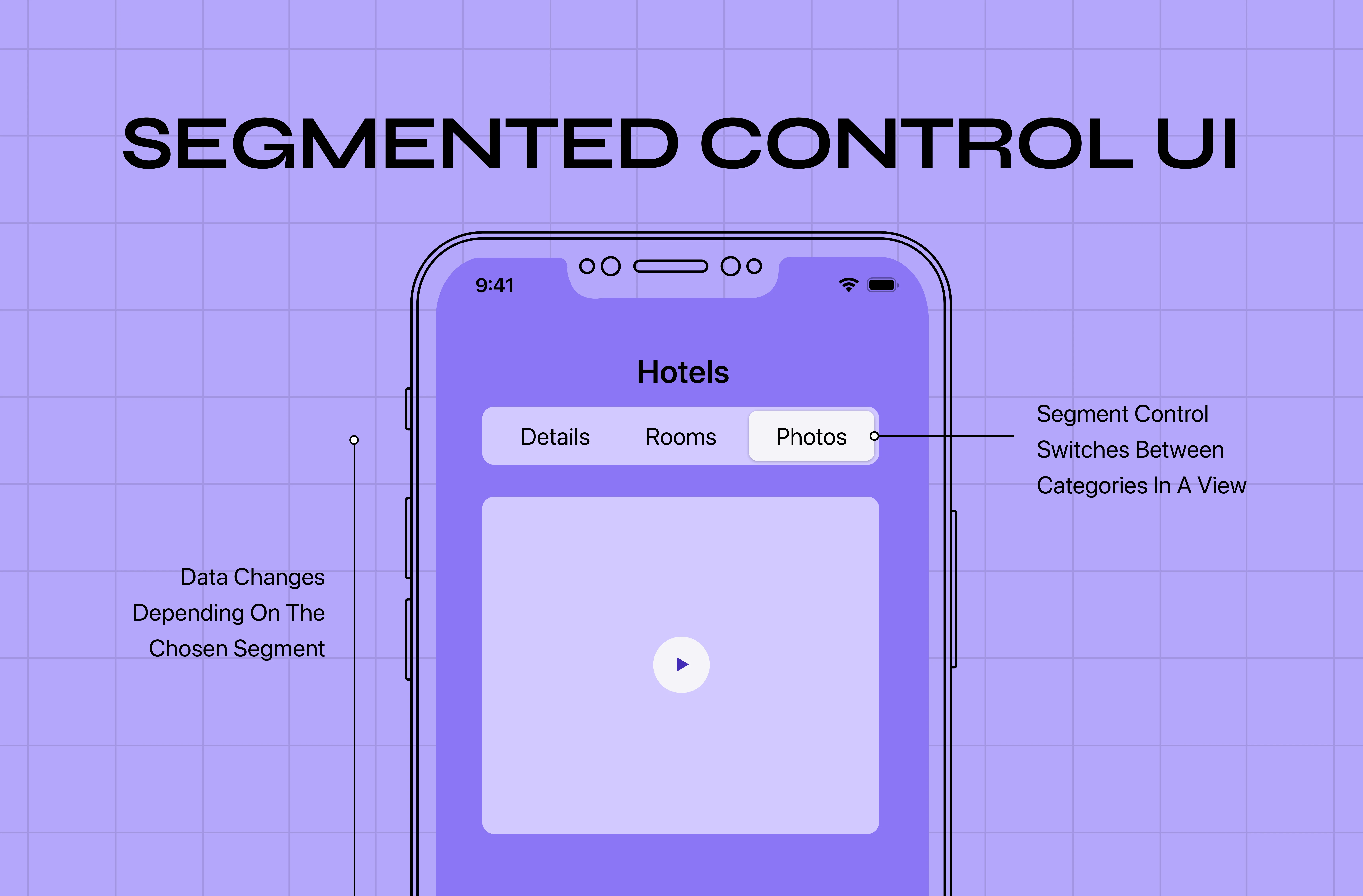
The classic example is "swipe to delete" on a mobile app, a simple gesture that makes an action clear and effortless. That's interaction design in miniature: taking a task and designing the interactive behavior that makes it obvious and satisfying. Multiply that across every button, segmented control, transition, gesture, and state in a product, and you have the interaction designer's domain.
What does an interaction designer do?
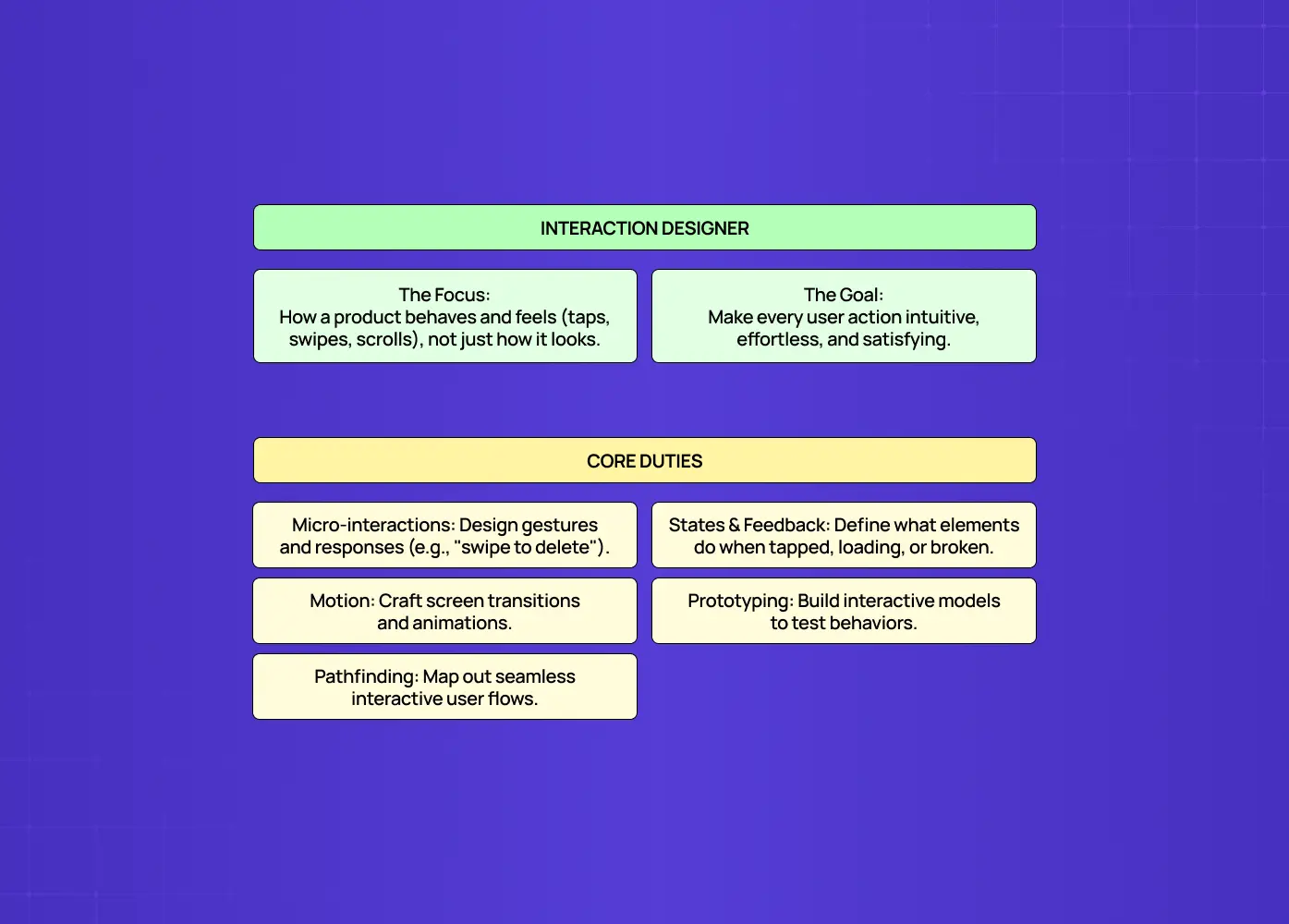
Day to day, an interaction designer is responsible for the behavior layer of a product. Their core responsibilities include:
Designing interactions and micro-interaction patterns, defining how elements respond to user input
Defining feedback and states, what a button does when tapped, loading, disabled, or errored
Crafting transitions and motion, how the interface animates between states to guide attention
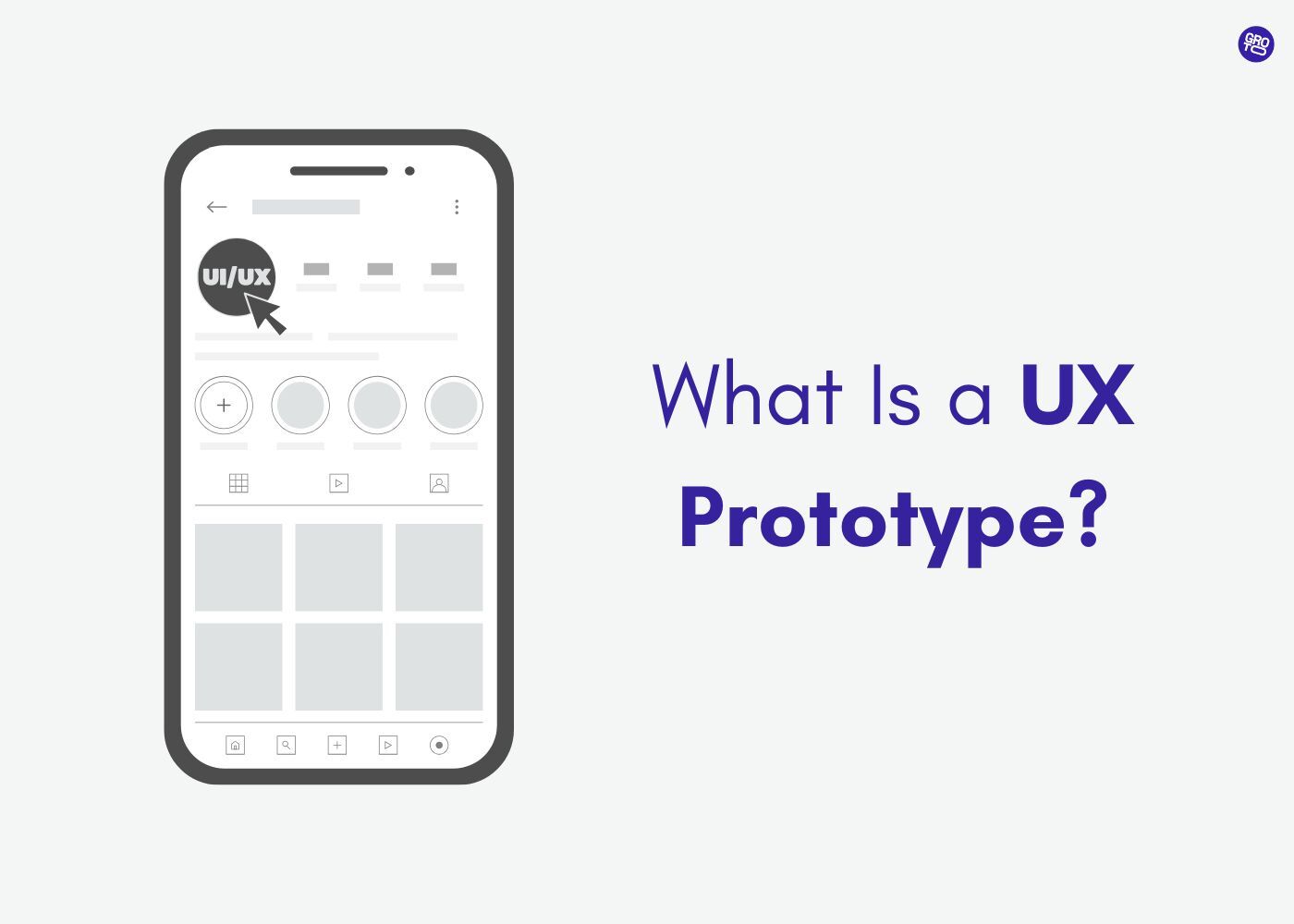
Building a UX prototype of each behavior, so it can be tested and refined before development
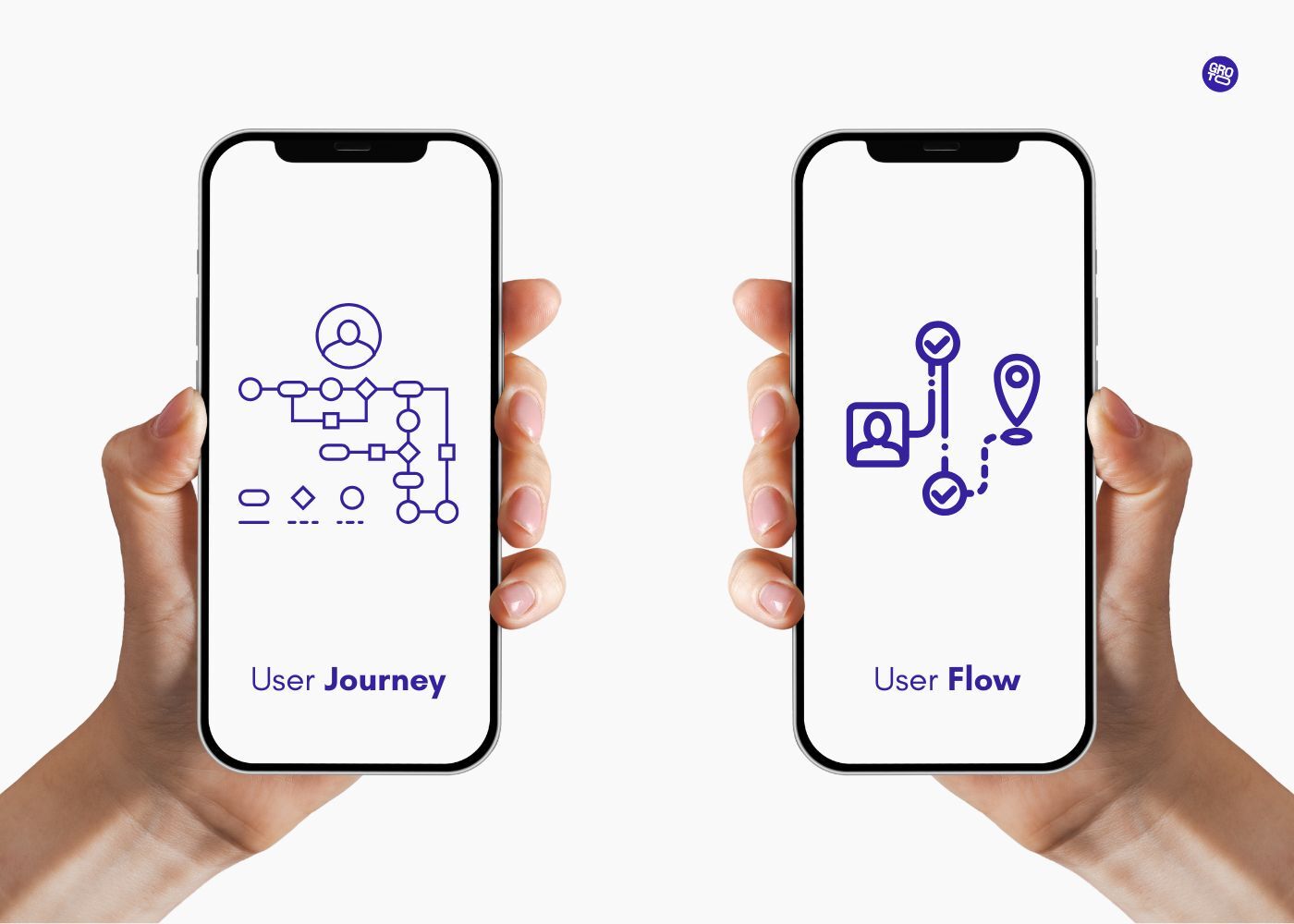
Mapping user flows and interactive paths, ensuring every action has a clear and appropriate response
Collaborating closely with UX researchers (who define what to build) and UI designers (who define how it looks)
In short, the interaction designer makes sure the product doesn't just look right and solve the right problem, it feels right to use.
Where interaction designers work
Interaction designers are needed anywhere a product responds to people, which is almost everywhere now. Common places you'll find the role include:
SaaS and tech companies, shaping complex product interfaces
Agencies and design studios, working across many client products
Fintech, healthtech, and e-commerce, where interaction quality directly affects trust
Gaming and automotive, where interaction quality affects safety and delight
Emerging mediums like AR/VR, voice interfaces, and in-car systems
The role also flexes with company size:
At a large organization, an interaction designer may focus narrowly on a specific product area or interaction system, collaborating within a big design team.
At a startup, the same title often means owning interaction design as part of a broader product design role, touching research and UI too.
That range is part of the appeal: interaction design skills transfer across industries and product types, because the fundamental question, "how should this respond to the person using it?", is universal. Whether the surface is a phone screen, a dashboard, a kiosk, or a conversational AI, someone has to design the behavior, and that someone is an interaction designer.
The 5 dimensions of interaction design
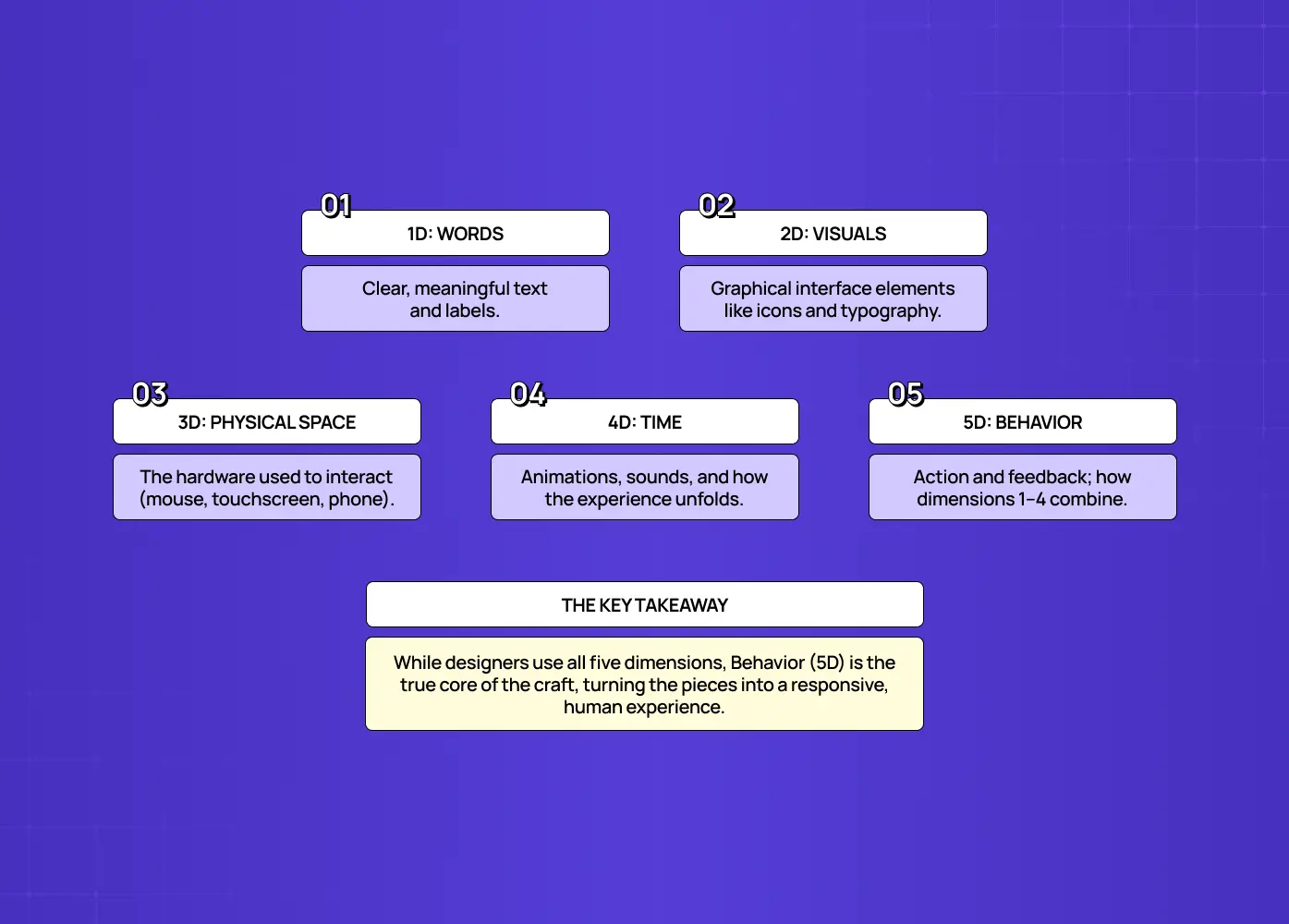
A useful way to understand the discipline is through the classic five dimensions of interaction design, a framework that describes the "materials" an interaction designer works with:
Words (1D): the text and labels users interact with; they should be clear, meaningful, and easy to understand.
Visual representations (2D): the graphical user interface elements like icons, images, and typography that users interact with beyond text.
Physical objects or space (3D): the physical medium through which users interact (a mouse, a touchscreen, a phone held in one hand).
Time (4D): media that change with time, such as animation, motion, transitions, and sound, and how the experience unfolds over time.
Behavior (5D): how the previous four dimensions work together to define how users act and react: the mechanism, the feedback, and the overall response.
Great interaction designers think across all five, but the fifth, behavior, is where the craft truly lives. It's the dimension that ties everything together into an experience that feels responsive and human.
Interaction designer vs. UX designer vs. UI designer
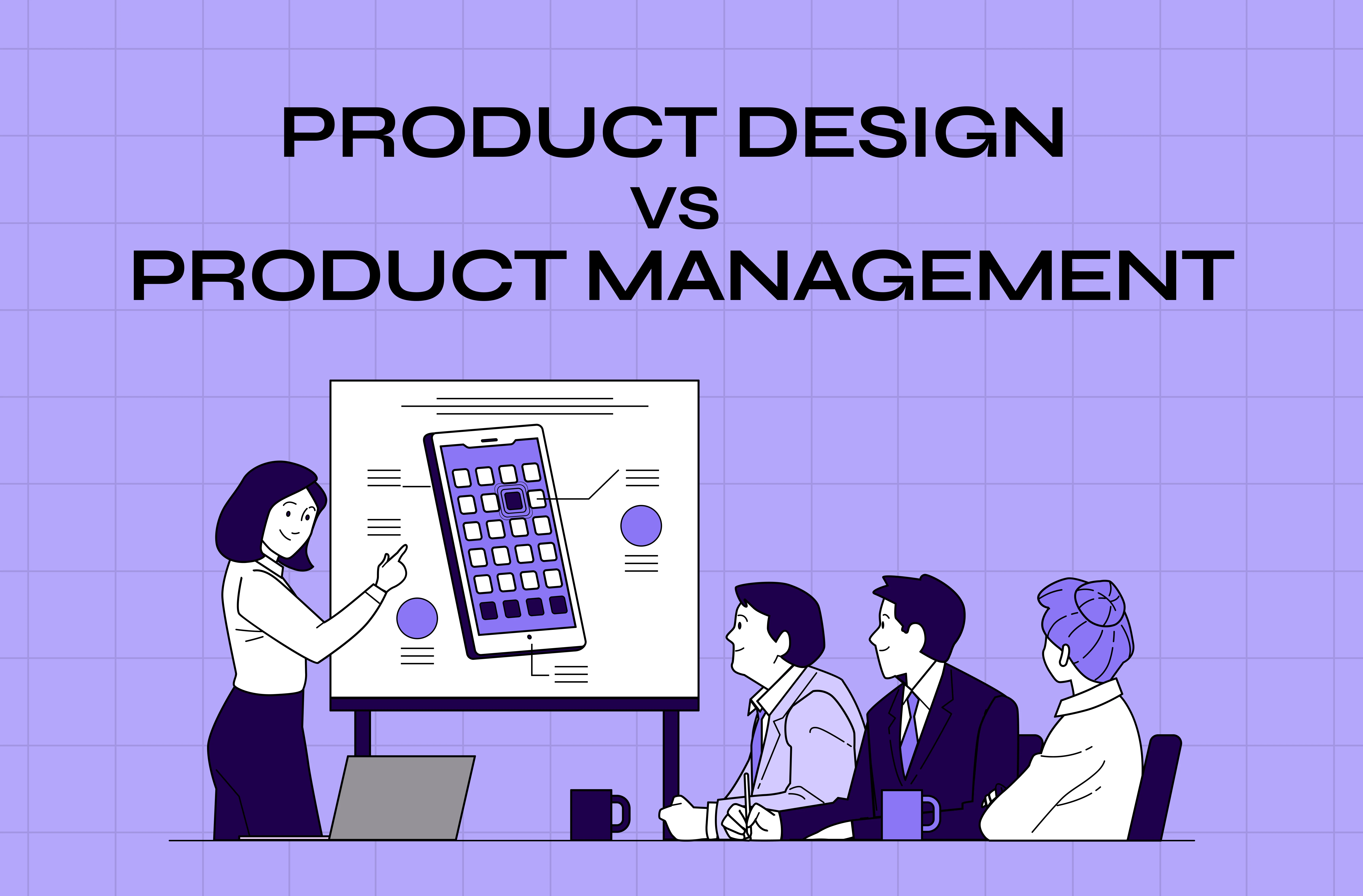
This is the confusion that trips up nearly everyone, so here's the clean distinction. (For the full UI vs UX design breakdown, that comparison goes deeper on the first two roles.) These roles overlap and often collaborate closely, and on smaller teams one person may wear all three hats, but they have distinct focuses.
Role | Focus | Owns |
Interaction designer | How the product behaves | Interactions, feedback, motion, states |
UX designer | The whole experience | Research, flows, usability, accessibility, satisfaction |
UI designer | How the product looks | Visual layout, typography, color, components |
Put simply:
UX design is the broadest. It encompasses all aspects of a user's interaction with a product, including research and usability.
UI design is the visual execution. It decides how everything looks.
Interaction design sits between them, concerned specifically with the interactive elements and how they respond.
A UX designer might decide a checkout needs fewer steps; an interaction designer decides how the form validates and animates as you fill it; a UI designer decides how it all looks. Together, they make a product that's useful, usable, beautiful, and satisfying. When deciding which of these your team actually needs to hire first, the UX design vs product design comparison maps the team trade-offs.
Skills an interaction designer needs
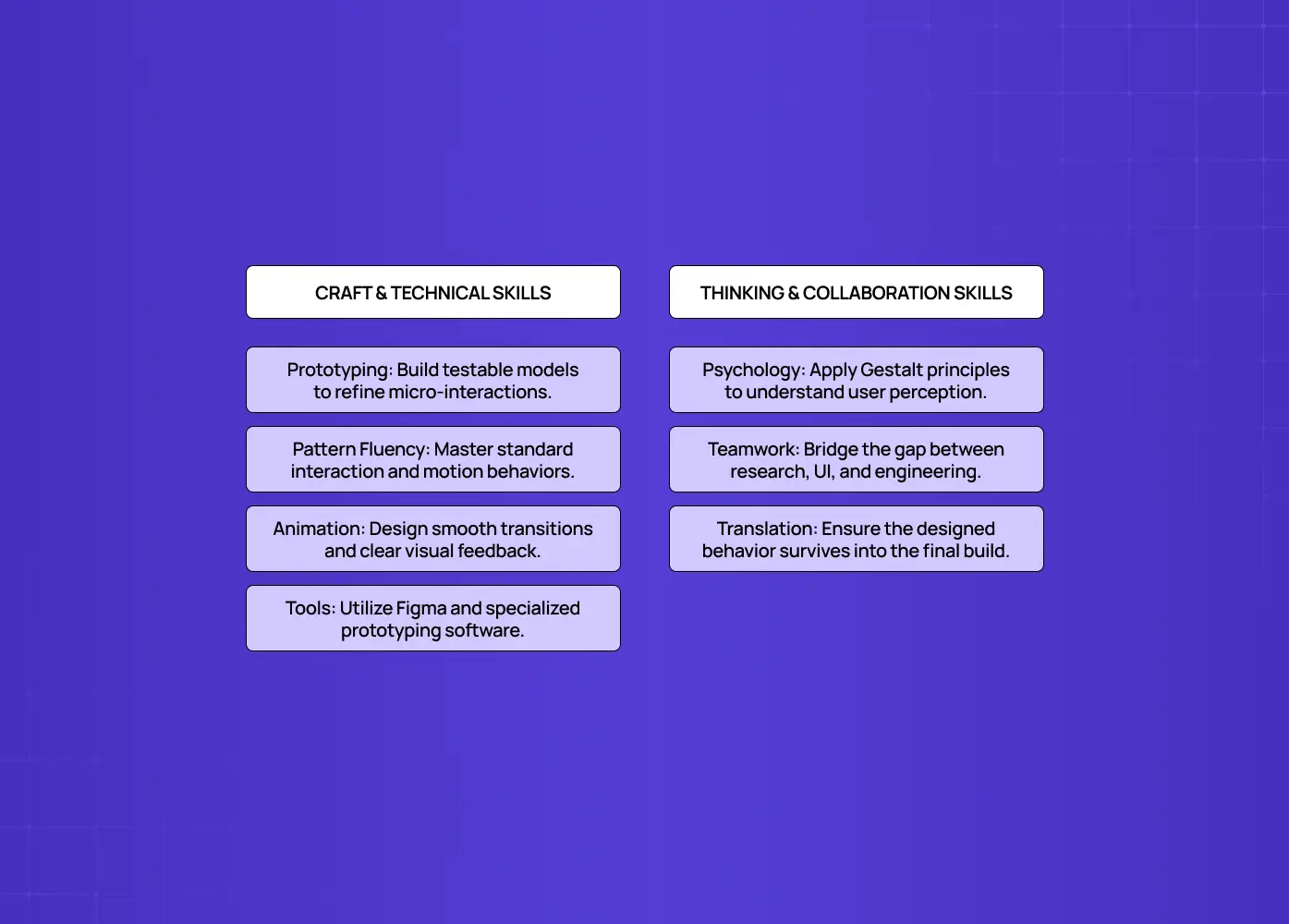
Strong interaction designers combine craft, psychology, and collaboration.
Craft skills:
Prototyping, bringing interactions to life for testing
Fluency with interaction and motion patterns
Animation ability, to design transitions and feedback
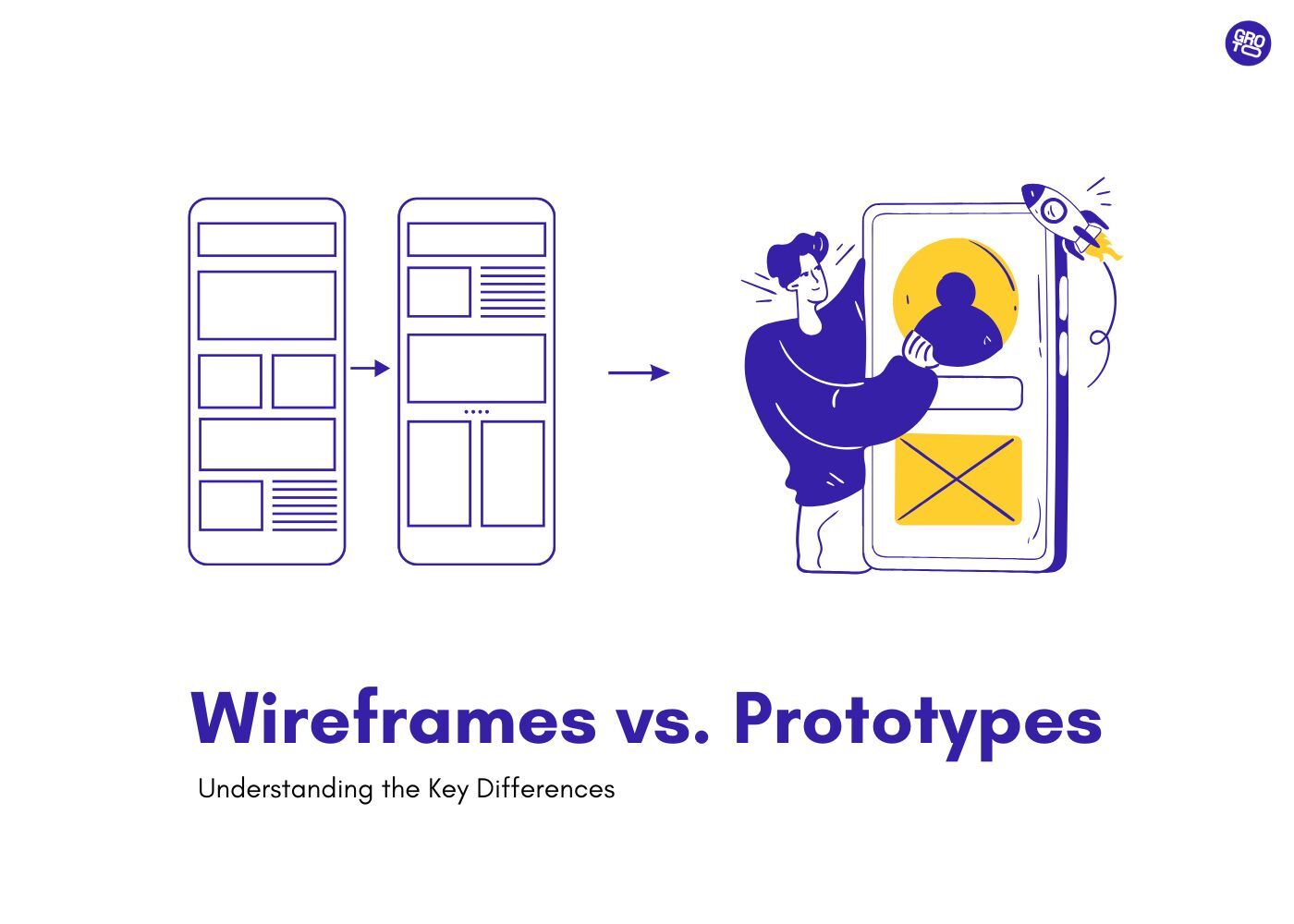
Wireframing and prototyping, knowing when wireframes and prototypes each earn their place, since interaction quality lives in the small moments
Thinking and collaboration skills:
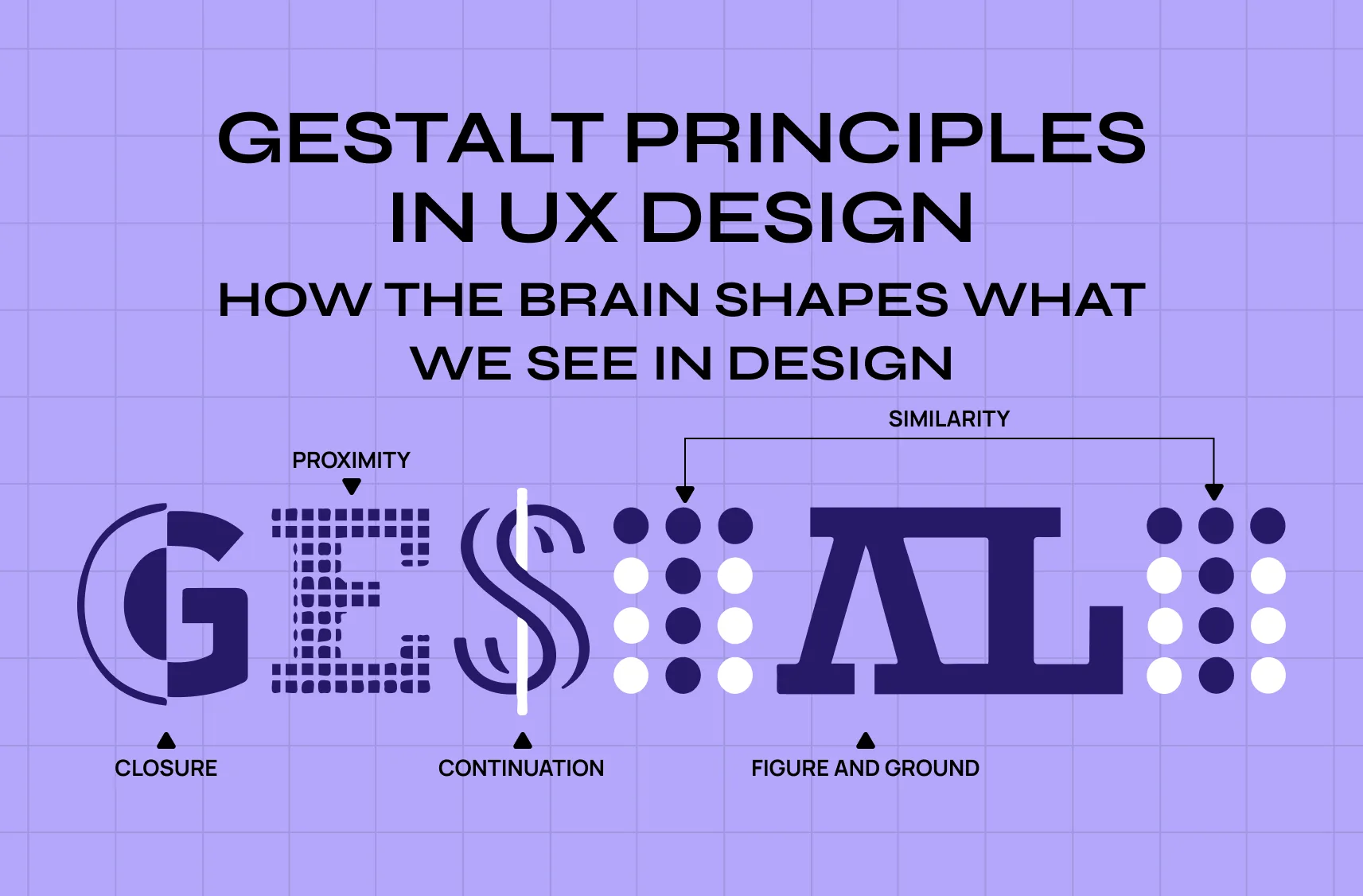
A solid grasp of human behavior, including Gestalt principles, understanding how people perceive and respond to interface cues
Collaboration and communication, since the role sits between research, UI, and engineering
The ability to translate intent across disciplines and ensure the designed behavior survives into the built product
Familiarity with tools like Figma and dedicated prototyping and motion software rounds out the toolkit.
The tools interaction designers use
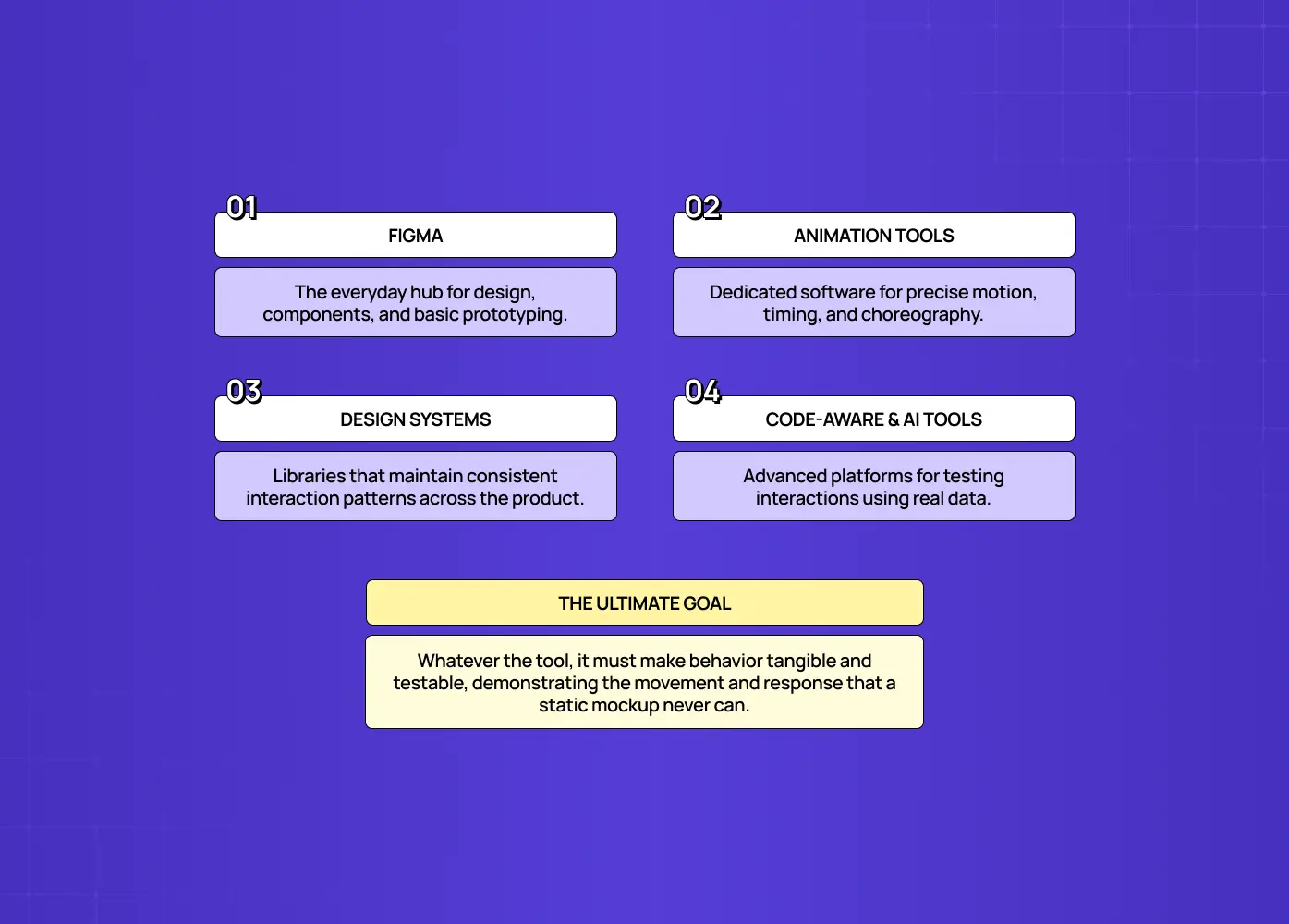
Interaction designers work in a toolkit built for behavior, not just static layout, overlapping heavily with the wider set of UX design tools most product teams already run:
Figma, the everyday hub for most designers, used for design, components, and increasingly capable prototyping of interactions and states
Dedicated prototyping and animation tools, for richer motion and transitions, the kind that let you specify timing, easing, and choreography precisely
Design systems, since consistent interaction patterns (how every toggle, menu, or modal behaves) live there
Code-aware and AI-assisted tools, which let interaction designers prototype closer to real behavior, testing interactions that respond to real data rather than faked screens
The specific tools matter less than the goal they all serve: making an intended behavior tangible enough to test, refine, and hand off accurately. A great interaction designer is fluent in whatever lets them show how it moves and responds, because that's the part a static mockup can never fully convey.
Interaction designer salary and career outlook
Interaction design is a well-compensated, in-demand field.
Interaction designer average: around $85,500 per year in the US (roughly $45 to $65 per hour), with pay varying by experience, location, and industry
UX designer median: closer to $108,000 to $114,000, with a range from about $77,000 to $175,000 depending on seniority and location, reflecting UX's wider strategic and research scope
Interaction designers often grow into senior IxD, lead product design, or broader UX roles over time, and the skill set remains highly relevant as products become more dynamic and, increasingly, AI-driven. (Figures are directional for 2025 to 2026 and vary by source and market.)
How to become an interaction designer
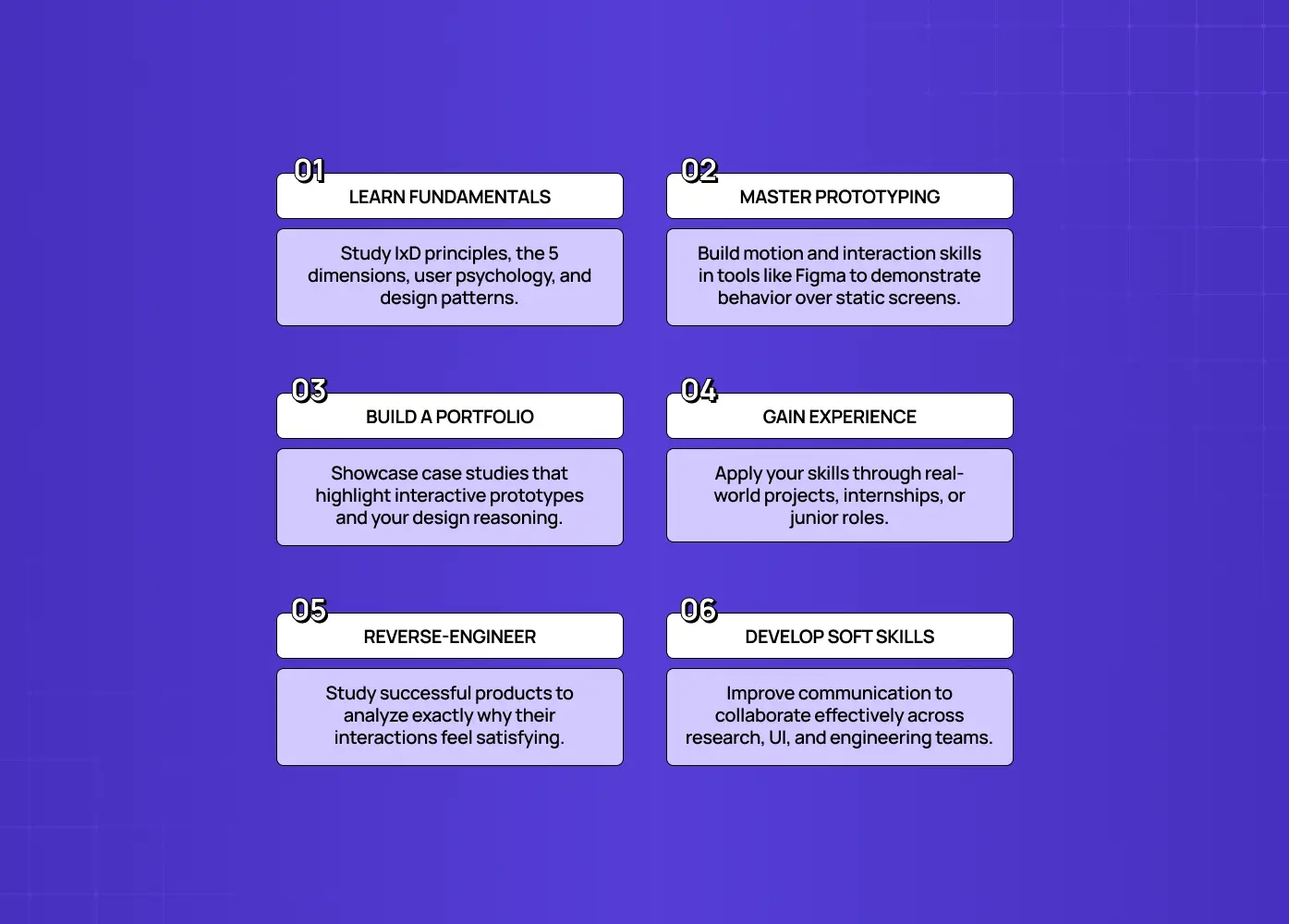
There's no single path, but the reliable route combines foundations, a portfolio, and practice:
Learn the fundamentals, interaction design principles, the five dimensions, user psychology, and design patterns, along with the wider UX design process these decisions sit inside, through courses, a design program, or self-study.
Build prototyping and motion skills in tools like Figma (and motion tools for transitions) by practicing the full wireframe to prototype workflow, since demonstrating interactive behavior matters more than static screens.
Build a UX portfolio with case studies that show not just what you designed but how it behaves, including prototypes and the reasoning behind each interaction.
Gain real experience through projects, internships, or junior roles.
Study great products closely. Reverse-engineering why an interaction feels good is one of the best ways to learn.
Because the role is collaborative, developing communication skills and the ability to work across research, UI, and engineering will accelerate your growth.
Do you need an interaction designer? (for teams)
If you're building a product, here's the practical question. You likely need dedicated interaction design attention when:
Your product is interaction-heavy, with complex user flows and journeys, gestures, real-time feedback, and data-rich interfaces
The feel of the product is a competitive differentiator
Users are confused by how your product responds, interactions feel janky or unclear, or "it works but doesn't feel right" keeps coming up—a vague complaint a heuristic evaluation turns into a specific list
On smaller teams, a versatile product or UX designer often covers interaction design alongside other work, which is perfectly fine early on. As a product matures and its interactions grow more sophisticated, the value of focused interaction-design expertise rises. Whether you go agency or in-house, investing in interaction design is what turns a functional product into one that feels effortless.
The future of interaction design in an AI era
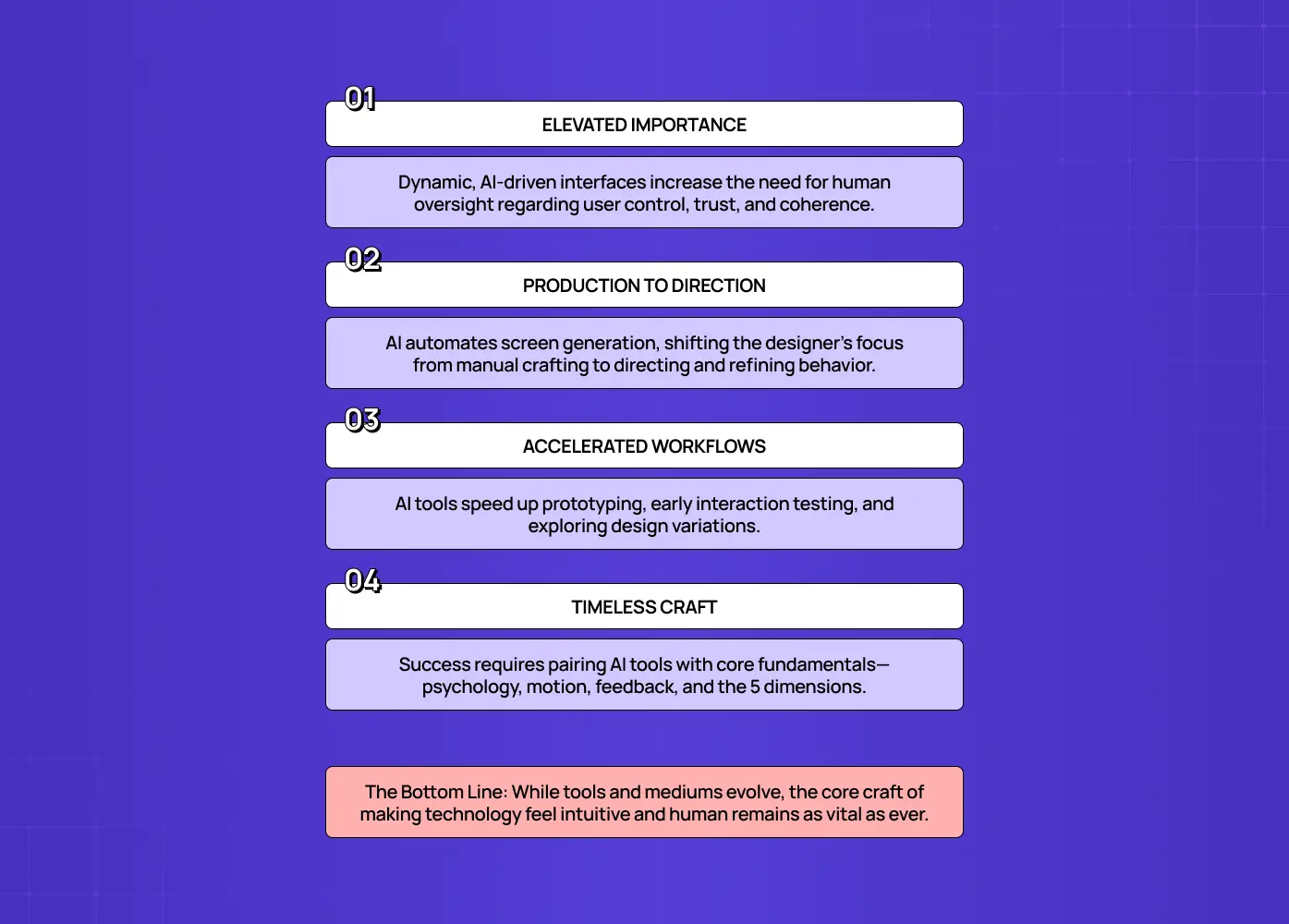
Interaction design might be more important in the next few years, not less, even as AI reshapes how products are built. As interfaces become more dynamic, conversational, and even generated on the fly, someone still has to decide how those experiences should behave: how an AI assistant should respond, how much control a user keeps, how a generated interface stays coherent and trustworthy. Those are interaction-design questions at their core. The rise of AI shifts some production work (generating screens, drafting flows) to machines, but it raises the value of the human judgment about behavior, what should happen, when, and how it should feel.
At the same time, the tools are changing the day-to-day. AI helps interaction designers prototype faster, explore more variations, and test interactions sooner, which means the role increasingly rewards those who can direct and refine rather than hand-build every state. The interaction designers who thrive will pair timeless fundamentals, user psychology, the five dimensions, a feel for feedback and motion, with fluency in the new AI-accelerated toolchain. The medium is evolving; the underlying craft of making products behave in ways that feel intuitive and human is as durable as ever.
Conclusion
An interaction designer makes a product feel alive and intuitive by designing the behaviors, feedback, and motion that turn taps and swipes into effortless experiences.
It's a distinct discipline that sits between UX's research-driven breadth and UI's visual craft.
The role works across all five dimensions of interaction to shape how products respond to us.
For anyone building a career in design, it's a rewarding, in-demand path.
For anyone building a product, it's the expertise that separates "usable" from "delightful."
If your product needs interactions that feel effortless, and a partner who sweats the behavior layer, not just the visuals, book a discovery call with Groto.
Our product designers obsess over how every element behaves, so your users never have to think about it. Let's make your product feel as good as it looks.