Most features fail quietly: nobody complains, they just don't use them. This guide explains how to buy usability testing, what it costs in 2026, how many users you need, and how to turn findings into engineering work.
How to buy usability testing that changes what your team ships.

TL;DR
Usability testing services come in three models: a research platform, a research agency, or a design partner that tests and fixes.
UserTesting's median annual contract is $41,200, based on 359 purchases tracked by Vendr.
A moderated round with 5–8 B2B users typically costs $8K–$20K all in.
Five users per user group finds most issues; three small rounds beat one large study.
Usability testing services are cheap compared to what they prevent. Pendo's feature adoption research found that 80% of features in the average software product are rarely or never used, and estimated that public cloud companies spent up to $29.5 billion building them.
Most of those features worked as specified. They just didn't fit how people actually work.
That's the gap usability testing closes: watching real users try to complete real tasks before your engineers spend another sprint on the wrong thing.
This guide is for CTOs, VPs of Product and founders at SaaS and AI companies deciding whether to buy usability testing, and from whom. It covers what the services include, the three ways to buy them, 2026 costs, sample sizes, what your engineering team has to provide, and when an expert review is enough.
What Usability Testing Services Actually Deliver
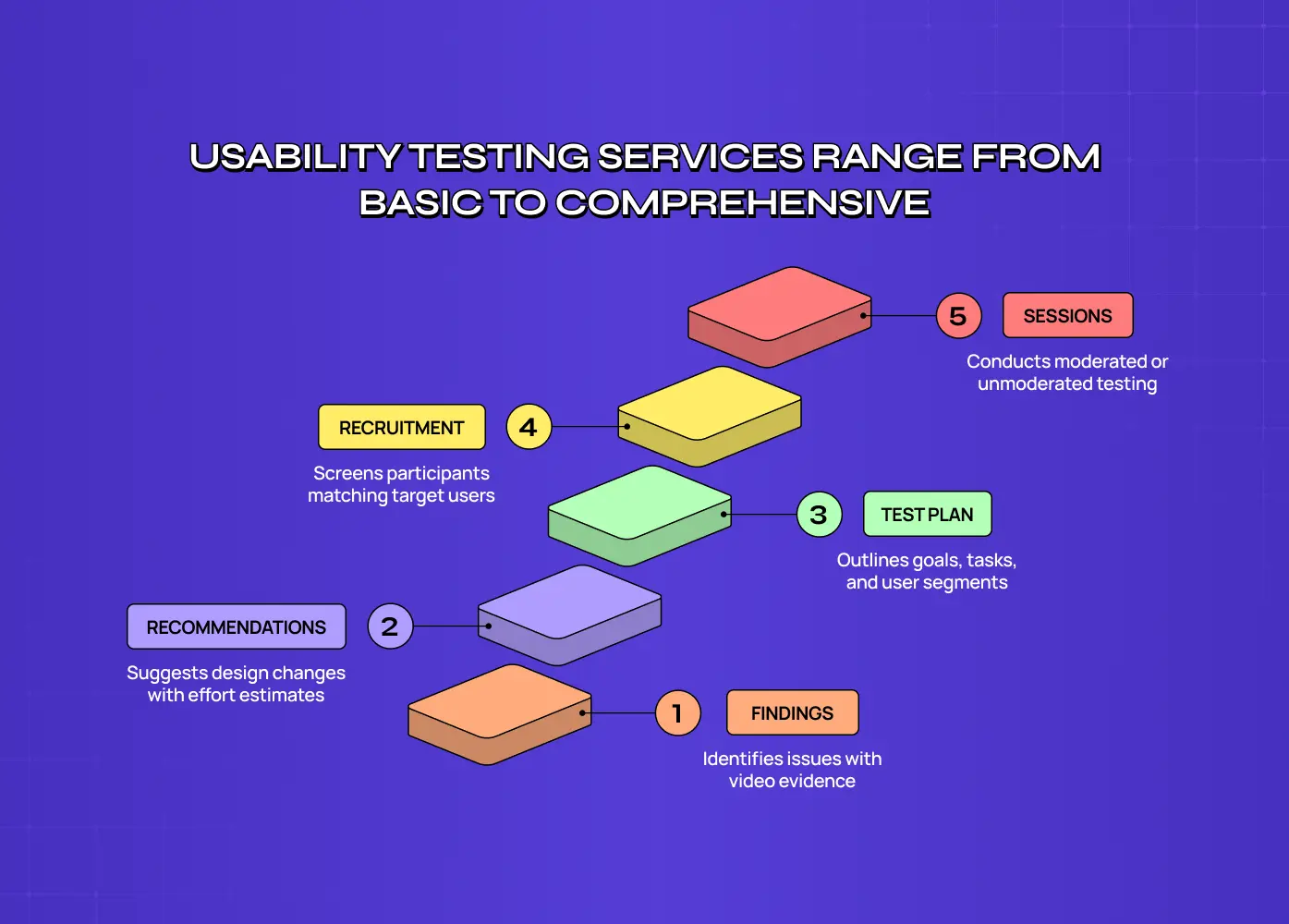
Usability testing services recruit people who match your users, ask them to complete key tasks in your product or prototype, and record where they hesitate, fail or give up. A good engagement ends with findings ranked by severity and a fix list your team can put into sprints. It is not QA or user acceptance testing.
The distinction matters for your budget. QA checks that the software works as built. User acceptance testing checks that it meets the agreed requirements. Usability testing checks whether people can actually use it to get their job done, which is where adoption and retention are won or lost.
A complete engagement should include five deliverables:
Test plan: goals, tasks, success criteria and the user segments to recruit.
Recruitment: screened participants who match your buyers or users, not whoever is available.
Sessions: moderated (a researcher guides each participant live) or unmoderated (participants follow written tasks alone and are recorded).
Findings: issues ranked by severity and frequency, with video clips as evidence.
Recommendations: specific design changes, ideally with the effort each one needs.
If a proposal stops at step 4, your team still has to work out the fixes.
Three Ways to Buy: Platform, Research Agency or Design Partner
The testing itself is rarely the constraint. Acting on the findings is.
You can buy usability testing as software, as a research service, or as part of a design engagement. Each suits a different team, and the right choice depends mostly on who will act on the findings.
Model | What you get | Typical cost | Best for |
|---|---|---|---|
Research platform (UserTesting, Maze, Lyssna) | Tools and a participant panel; your team runs the studies | Annual contract; UserTesting median $41,200 | Teams with an in-house researcher |
Research agency | Plan, recruitment, facilitation and a findings report | $8K–$50K+ per study | Enterprise teams with design capacity to act on findings |
Design partner that tests | Testing plus the redesign of what fails | Priced within the design engagement | Teams without spare design capacity |
Platform pricing is rarely published. Vendr's analysis of 359 UserTesting purchases puts the median annual contract at $41,200, with a range from about $12,000 to $116,000. That only makes sense if someone on your team runs studies every month.
Research agencies go deeper on method and are the right call for benchmark studies or regulated products. Our comparison of UX research agencies for SaaS covers that market in more detail.
Action check: before you choose a model, name the person who will turn findings into tickets. If nobody has that time, a report alone won't change the product.
What Usability Testing Services Cost in 2026
Usability testing services typically cost $3K–$8K for a quick unmoderated study, $8K–$20K for a moderated round with 5–8 B2B users, and $20K–$50K+ for multi-segment or benchmark studies. The main cost drivers are participant incentives, researcher time and how hard your users are to recruit.
Incentives are the most predictable line. The User Interviews incentives report, based on nearly 20,000 studies, shows average rates of about $85 an hour for remote one-to-one sessions with professionals and $80 for consumers. Niche roles such as CFOs or security engineers cost considerably more and take longer to recruit.
Study type | Participants | Typical cost | Turnaround |
|---|---|---|---|
Unmoderated task test | 5–10 | $3K–$8K | 1–2 weeks |
Moderated round, B2B users | 5–8 | $8K–$20K | 2–4 weeks |
Multi-segment or benchmark study | 15–30 | $20K–$50K+ | 4–8 weeks |
These ranges are directional for US-market providers in 2026. Recruiting from your own customer base lowers the cost but needs your customer success team's time.
Watch for four red flags when you compare proposals:
No screening criteria. If the provider can't describe who they'll recruit and how they'll screen out the wrong people, the findings won't reflect your buyers.
Tasks written by the vendor alone. The tasks should come from your activation and revenue goals, agreed with your product lead.
A report with no severity ranking. A list of 60 observations with equal weight leaves your team to do the prioritization.
No raw evidence. You should receive session recordings, not just a summary, so your engineers can watch the failures themselves.
How Many Users You Actually Need
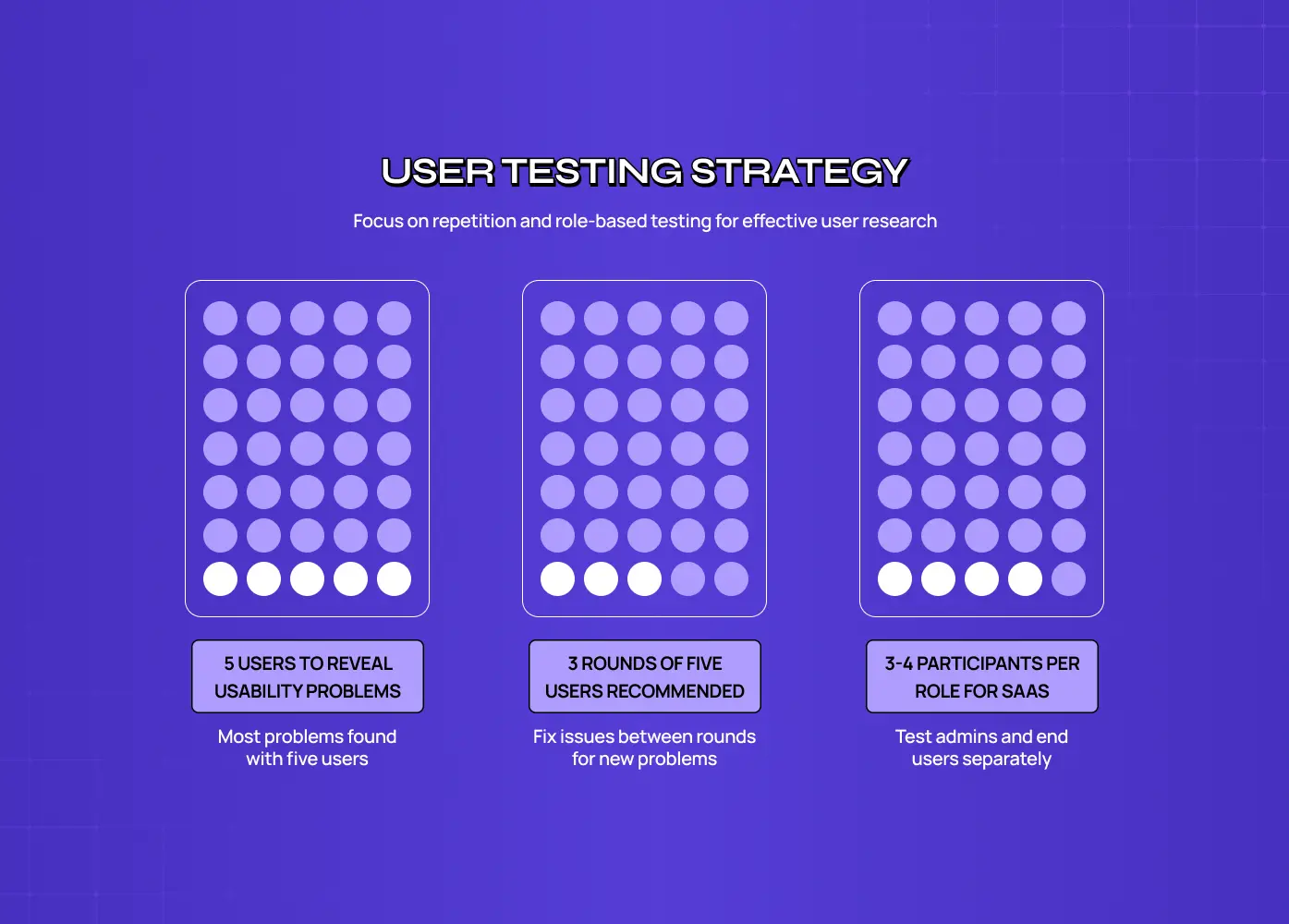
Most teams overspend on sample size and underspend on repetition.
The long-standing guidance from Nielsen Norman Group on testing with five users is that about five people from one user group reveal most usability problems, with fast diminishing returns after that. The same guidance recommends three rounds of five users over one round of fifteen, fixing issues between rounds so each round finds new problems.
Two adjustments apply to most SaaS products:
Test each role separately. If admins and end users do different jobs, they are different user groups. Plan three or four participants per role.
Budget for rounds, not a single study. A second round after the fixes confirms the problem is solved, which is the evidence your leadership team will ask for.
Questions for your next product review:
Which two or three tasks decide whether a new account activates?
Which user roles perform those tasks?
When did someone outside the company last try them while we watched?
What Your Engineering Team Needs to Provide
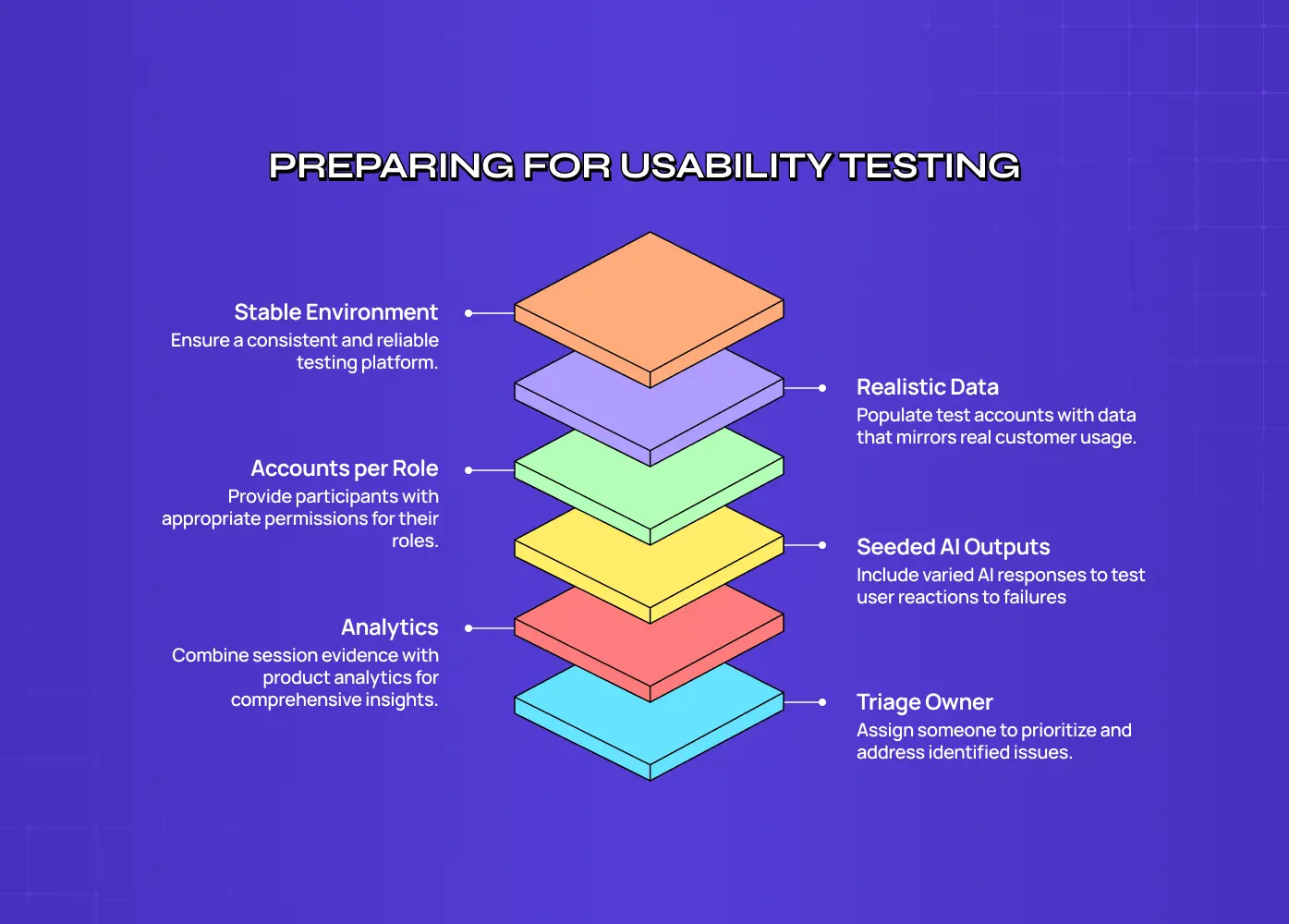
Usability testing looks like a design activity, but most delays come from engineering prerequisites. Sessions stall when there's no stable environment, no realistic data or no test accounts for each role. Sort these out in week one.
A stable test environment. A staging build or clickable prototype that won't change mid-study, with feature flags set for the flows being tested.
Realistic data. Empty dashboards hide the problems users hit in month three. Seed accounts with data that looks like a real customer's.
Accounts per role. Each participant needs the right permissions to complete the tasks.
For AI features, seeded outputs. Include wrong, partial and slow responses, not just the ideal answer, so you see how people react when the model fails.
Analytics alongside findings. Pair session evidence with product analytics so each finding comes with its likely reach across your user base.
A triage owner. Someone who maps findings to severity and puts them into the backlog within a week of the readout.
When to Test, and When an Expert Audit Is Enough
Test with users when the question is whether people understand, trust or can complete something new. Use an expert audit when you already suspect the problems, need answers within two weeks, or can't recruit users quickly. Many teams start with an audit, fix the obvious issues, then test what remains.
Situation | Better fit |
|---|---|
New product, onboarding or AI feature before launch | Usability testing |
Activation or conversion dropped and you don't know why | Audit first, then test |
Known issues, limited budget, deadline in two weeks | Expert audit |
Board or investors want evidence the redesign worked | Before-and-after testing |
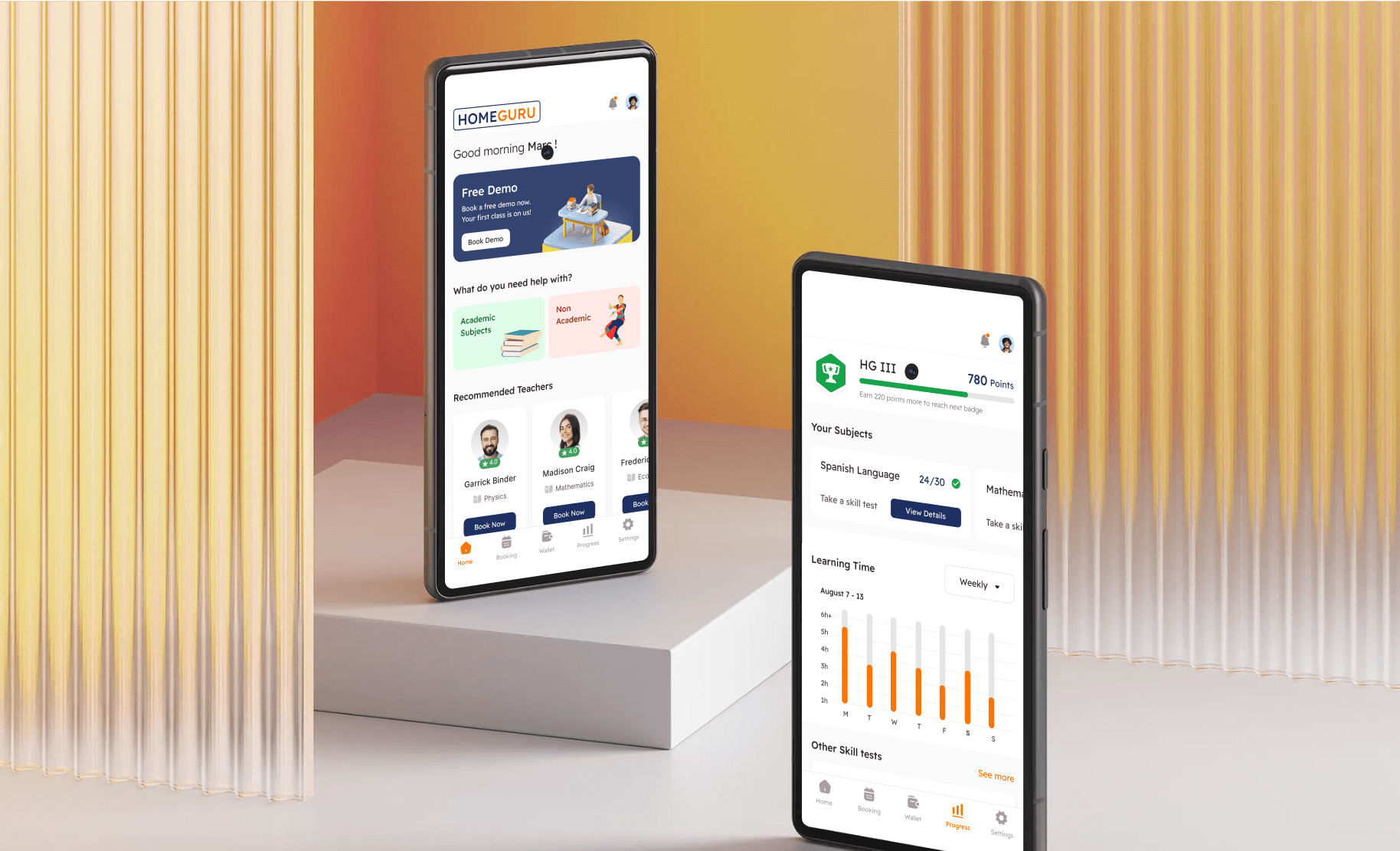
At Groto, we test inside the design work so fixes follow findings directly. For HomeGuru, a tutoring marketplace, prototype testing produced a SUS score of 82 for the redesigned app. MeasuringU's SUS benchmarks put the average at 68 and the top 10% at 80.3.
On IndieFolio's creative-talent platform, the client's own testing found the invoice flow felt buried, so we moved invoice actions into the project workspace and tied them to milestones.
Conclusion: Buying Usability Testing That Changes the Product
Decide who acts on findings before you decide who runs the tests. If you have an in-house researcher, a platform is cost-effective.
If you have designers but no researcher, hire a research agency per study. If you have neither, buy testing and the fixes together. Budget $8K–$20K for a first moderated round and plan for a second.
If an upcoming launch or a drop in activation has you weighing a study, book a 30-minute call and we'll help you pick the tasks and users worth testing first. If you'd rather start with an expert review, our UX audit services deliver a prioritized fix list in about two weeks.