How to Outsource UX Design: Local vs Remote vs Hybrid Agency (2027)

How to Outsource UX Design: Local vs Remote vs Hybrid Agency (2027)

What it costs to outsource UX design, how local, remote and hybrid agencies actually differ, and how to run the engagement so quality holds.

How to Outsource UX Design: Local vs Remote vs Hybrid Agency (2027)

How to Outsource UX Design: Local vs Remote vs Hybrid Agency (2027)

What it costs to outsource UX design, how local, remote and hybrid agencies actually differ, and how to run the engagement so quality holds.

The rate gap between a local and a remote design team is real and easy to check. Whether it turns into a saving is a different question, and a slower one.

Local, remote or hybrid: what each really costs and how to run the work.

Teams outsource UX design for one of two reasons: there is nobody in-house who can do it, or there is nobody in-house with the time. Both are good reasons, and neither tells you which kind of partner to hire. That question comes next, and it usually gets decided on hourly rate alone, which is the one input most likely to mislead you.

This guide covers what each model costs with figures you can check, how local, remote and hybrid teams actually differ once work starts, and the six things that decide whether an outsourced engagement produces something shippable or a folder of screens nobody uses.

TL;DR

  • Three ways to outsource: a local agency, a remote agency, or a hybrid arrangement that mixes live sessions with async delivery.

  • Published rates differ sharply by region, from $100 to $149 an hour in the US down to $25 to $49 in India and Eastern Europe.

  • That rate gap is not the same as a saving. The research on offshoring found the real hourly cost took around three years to match an in-house team.

  • The model matters less than the setup: overlap hours, a named owner, written feedback inside a day and a planned handoff.

  • A twelve-week hybrid calendar is included, with what each live session has to produce.

When outsourcing UX design makes sense

Four situations account for most of it, and recognising which one you are in changes what you should buy.

There is no senior designer in-house, and the work needs judgment rather than hands. A junior designer plus a strong brief does not substitute for someone who has shipped the thing before.

The deadline is inside twelve weeks. Hiring takes longer than that from job posting to first useful output, so an agency is not a compromise, it is the only option that meets the date.

The need is specialist and temporary. A design system, a fintech onboarding flow, an AI interface. You need that skill for a quarter, not forever, and the market for it is thin.

There is a hiring freeze but not a project freeze. Budget exists under a different line, and the work still has to happen.

If none of those describe you and the work is continuous, an in-house hire is usually the better call. We went through that trade-off in agency versus in-house designer.

Local vs remote vs hybrid: the three ways to outsource


Local agency

Remote agency

Hybrid

Typical rate

$100 to $149 / hr

$25 to $99 / hr

Blended

Time zone

Same

Overlap set by agreement

Overlap set by agreement

Live sessions

In person or video

Video, scheduled when they earn their place

A few per project, at the decision points

Best for

Workshops, stakeholder-heavy work, on-site constraints

Most product design: features, systems, ongoing delivery

Messy discovery with a steady build behind it

Main risk

Paying a premium for proximity you may not use

A setup nobody owns in week one

Nobody owning the calendar

Local, remote and hybrid compared: local suits stakeholder workshops in person or video, remote suits features and design systems with agreed overlap hours, hybrid suits discovery and steady delivery with live decisions and async work.

Local wins where the work is genuinely social. Discovery with six stakeholders who disagree, a strategy workshop, anything where the hard part is getting people in a room to commit. If your organisation cannot make a decision without a meeting, a team in your time zone is worth the premium.

Remote covers most of what product teams actually need designed. Features, flows, design systems, ongoing delivery against a roadmap: none of that requires a shared postcode, and a remote team ships more per dollar because you are not funding an office near your office. The rate difference is real and it is not a quality difference. The same seniority costs less in Krakow or Delhi than in San Francisco for reasons that have nothing to do with the work.

What remote asks of you is a setup rather than a sacrifice. Overlap hours, a named owner, answers inside a day. Teams that put those in place in week one stop noticing the distance by week three. Teams that skip them blame the model for a problem they created.

Hybrid is what most teams actually want and few arrange deliberately. A handful of live sessions at the points where alignment matters, async delivery in between. It only works if someone schedules it, which is the section further down.

What it costs to outsource UX design in 2027

Five models, with the figures each publishes.

Model

Typical cost

Works best for

The hidden cost

Freelancer

$20 to $125 / hr

One well-scoped screen set

No cover when they are unavailable

Local agency

$100 to $149 / hr

Stakeholder-heavy, in-person work

You pay for proximity whether or not you use it

Remote agency

$25 to $99 / hr

Defined scope and clear briefs

Your own time spent briefing and reviewing

Dedicated designer or subscription

$700 to $15,000 / mo

Continuous delivery without hiring

Throughput caps you discover in month two

Hybrid

Blended

Messy discovery, steady build

Someone has to own the schedule

Clutch's own pricing data, compiled from verified client reviews, puts the regional picture plainly. Agencies in the United States, Canada and Australia average $100 to $149 an hour, the United Kingdom, Poland and Spain $50 to $99, and India, the Philippines and Ukraine $25 to $49. Clutch also reports an average UX project cost of around $85,000 and a typical timeline of ten months, which is a reminder that the hourly rate is the smallest decision in that sentence.

Want to know where your users are dropping off?

We’ll break down the exact moments users lose interest, and why.

Want to know where your users are dropping off?

We’ll break down the exact moments users lose interest, and why.

Set out by region, the spread looks like this.

Region

Published hourly band

What you are buying

United States, Canada, Australia

$100 to $149

Same time zone, in-person option, local market knowledge

United Kingdom, Spain, Poland

$50 to $99

Partial US overlap, strong product design depth

Eastern Europe

$25 to $99

Wide spread by country, deep engineering adjacency

India and South Asia

$25 to $49

Largest rate gap, deep product design bench, US overlap by arrangement

Those bands are wide for a reason. Within any one region, a senior designer who has shipped your category costs two to three times a generalist, and the band hides that difference entirely. Treat the region as the floor and the person as the price.

Subscription pricing spreads wider than most comparisons admit. The published floors run from a few hundred dollars a month at the volume end up to a $15,000 monthly minimum at the enterprise end, with product-focused subscriptions sitting between roughly $4,500 and $12,000. If you are weighing that model specifically, our design subscription comparison covers how the scope differs between them.

Freelancer or agency?

A freelancer is the right call for a single, well-scoped piece of work under about $10,000, where you already know what needs designing and can direct it yourself. Upwork puts median UI designer rates on its own platform at $20 to $40 an hour, which is genuinely cheaper than any agency.

What you give up is cover. One person with flu, a family emergency or a better-paying client becomes your delay, with no second designer to absorb it. You also give up the research and QA layer: a freelancer designs, but somebody still has to test the work and check it against the build. If that somebody is your head of product, the saving is smaller than it looks. For continuous work, or anything where a second opinion improves the output, the agency overhead is buying something real. Our breakdown of what a design agency actually does covers the roles that sit behind a single designer's name.

A worked example

Two versions of the same ten-week redesign, with the cost of your own team's time included.


Remote at $50 / hr

Local at $120 / hr

Design, 30 hrs a week for 10 weeks

$15,000

$36,000

Your steering time

8 hrs a week

2 hrs a week

That time at a loaded $90 / hr

$7,200

$1,800

All in

$22,200

$37,800

Remote wins, and it wins even after loading the comparison against itself with four times the steering time. $15,600 of difference on a ten-week project is a second workstream, or most of a quarter of a junior hire.

The reason to count it this way is not doubt about remote. It is that the invoice is not the cost, and the part that is not on the invoice is your own calendar. A remote engagement that is briefed well needs nowhere near eight hours a week of steering, and the next section is about what gets it there.

Why continuity is worth more than the rate card

The quoted agency rate plus your own team's time for briefing, reviewing and rework, with the caption "Compare project cost, not just the hourly rate."

This is the part most outsourcing guides skip, including the ones quoting a tidy percentage.

A great deal of content in this category claims teams save thirty to fifty per cent by outsourcing offshore. We went looking for the research behind that number and could not find any. What exists points the other way. A 2015 review in IEEE Software examining the evidence for cost savings in global software engineering concluded that the investigation "has not found enough evidence to reach this conclusion", with the individual studies it reviewed ranging from ten per cent to over fifty, and the better outcomes arriving only after a learning curve of two to three years.

A companion study was blunter. Looking at salaries alone, it noted, you could naively hope for reductions of up to ninety per cent. In practice the offshore team's true hourly cost took around three years to become comparable with the in-house team's, and getting close to break-even took five.

The useful reading of that is not that remote costs more. It is that the cost of briefing, correcting and re-explaining is highest at the start and falls steadily as a team learns your product, and that this is true of any new partner, local or remote. What the research actually indicts is churn.

So the saving compounds with continuity. A remote partner you keep for four quarters is a different proposition from four remote partners across four quarters, and the second one is what most of the disappointing offshoring stories describe. This is the strongest argument for a monthly engagement over project-by-project tendering: you stop paying the start-up cost every time, and by the third quarter the team is proposing things rather than waiting for the brief.

It is worth knowing that cost has stopped being the main reason companies outsource at all. Deloitte's global outsourcing survey found the share of organisations citing cost savings as their primary driver fell from 70% to 34% over four years. Access to capability overtook it.

How to outsource UX design without losing quality

Six things decide this, and none of them is the agency's portfolio.

Six numbered checks for outsourcing UX design: define the problem, vet the process, agree on done, set a review rhythm, plan the handoff, and pick one outcome.

1. Define the problem, not the deliverable

A brief that asks for twelve screens gets twelve screens. A brief that says activation drops at the second step and nobody knows why gets a designer asking questions you had not thought to answer. Write the problem, the metric and the constraint, then let the agency propose the deliverable.

2. Vet on process, not portfolio

Every agency has a beautiful portfolio, because every agency shows its best three projects. Ask instead how they run a project: who writes the research plan, when developers first see designs, what happens when a stakeholder changes direction in week six. Our guide to evaluating an agency's portfolio covers what to look for behind the pictures.

3. Agree what good looks like, in writing

Before work starts, agree the states every screen must cover, the accessibility standard, the breakpoints, and what counts as done. Most rework on outsourced projects comes from an assumption nobody wrote down.

4. Set a review cadence and hold it

Written feedback inside twenty-four hours, one live review a week, and one named person on your side who owns the relationship. The twenty-four hour rule matters more than the model: a remote team that gets answers the same day outruns a local team that waits three days for a committee.

5. Plan the handoff from week one

Developers should see designs in week one, not at the end. The handoff is not a file transfer, it is a conversation that should have been running the whole time. Our walkthrough of how agencies run the design process sets out where that fits.

6. Agree one outcome metric at kickoff

Activation rate, task success, time to first value. One number, agreed before work starts, that tells you in eight weeks whether this worked. Without it the only available verdict is whether people liked the designs.

Setting the team up

Five things to put in place in the first week, whichever model you chose.

A shared Slack or Teams channel rather than email threads, so questions get answered in minutes instead of accumulating into a weekly call. A Figma file structure agreed at kickoff, with a clear convention for what is live and what is exploration, because the most common delay on any distributed project is somebody building from last week's version. Sprint rituals the agency actually joins, rather than a separate agency process running alongside yours.

A decision log is the highest-leverage document on any outsourced project. One line per decision, who made it and when, somewhere both sides can read. It costs a few minutes a week and removes the month-three argument about what was agreed, which is the single most expensive conversation on a distributed team.

And a design QA step before every release, owned by a named person. Not a review of whether the designs are good, which already happened, but a check that what shipped matches what was designed. That gap is where most of the value of an outsourced engagement quietly leaks away.

The hybrid playbook

A twelve-week hybrid schedule: live kickoff in week one, async design sprints weeks two to five, live midpoint in week six, async delivery weeks seven to eleven, live handoff in week twelve

Hybrid gets recommended constantly and scheduled almost never, which is why it underdelivers. Here is what it looks like with dates attached.

Week

Format

What it has to produce

1

Live kickoff and discovery workshop

Agreed problem, metric and constraints

2 to 5

Async design sprints

Weekly shipped work, written feedback within a day

6

Live mid-point review

Go or no-go on direction, decisions logged

7 to 11

Async delivery

Developer involvement from week one onward

12

Live handoff session

Walkthrough, documentation, open questions closed

Two rules make it work. There must be at least three to four hours of daily overlap, which is arrangeable from almost anywhere if the agency commits to it. And every live session has to produce a decision, not a status update. If a session ends with everyone agreeing to think about it, you have spent the expensive part of hybrid on the cheap part of the work.

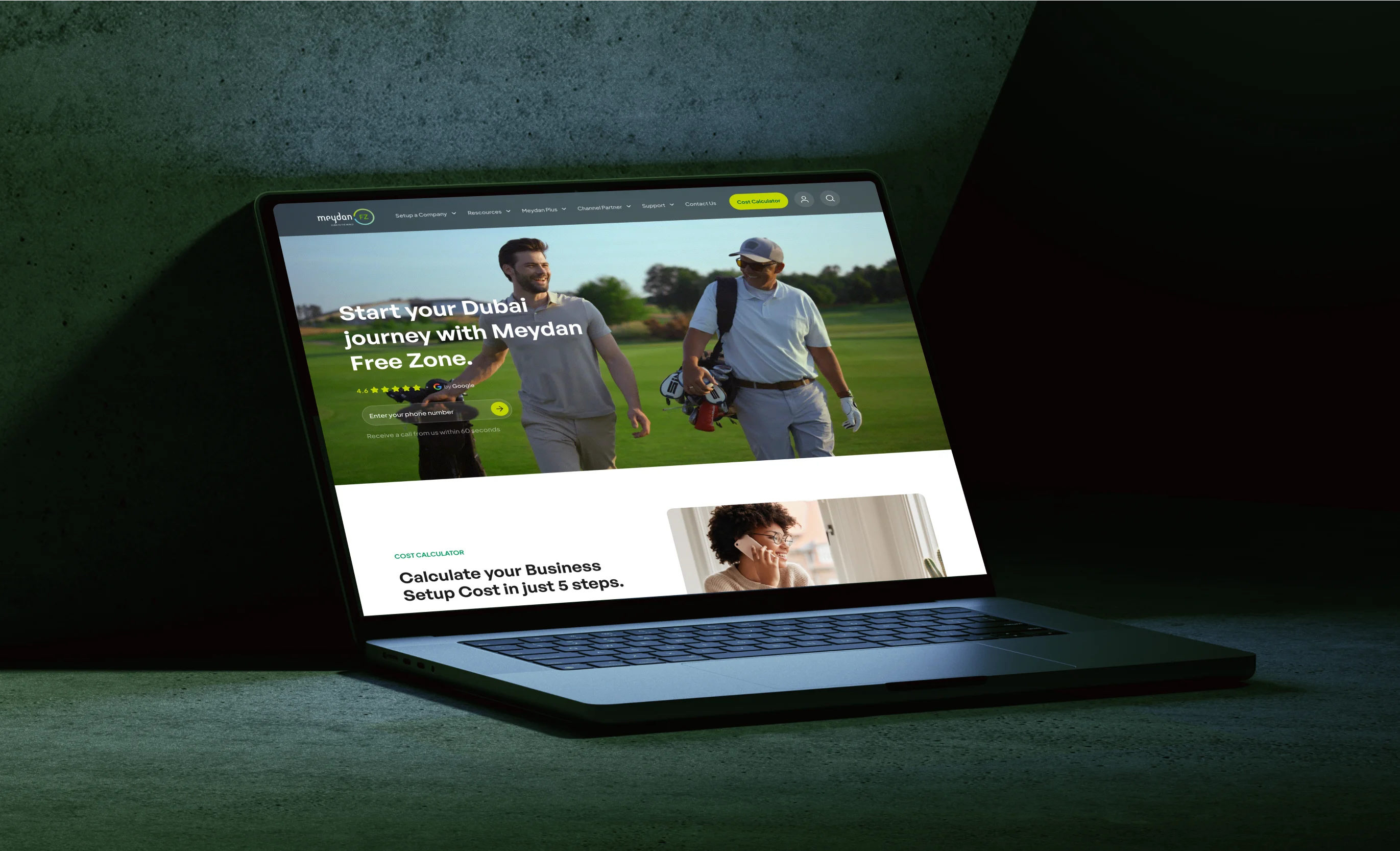
Groto runs this way, from India on US working hours. On the STBL.io investment app, that meant live sessions at the points where direction was being set and async delivery between them, with the dashboard and the flows around funding and tracking shipped across the engagement. The model is the same one described above, which is the only reason it is worth naming here.

Contracts, IP and data access

Four things to settle before the first invoice, and they take one conversation.

IP assignment should transfer on payment, in writing, covering source files and not just exports. An NDA goes in place before the discovery call, not after, because discovery is when you describe the thing worth protecting. Production data access should be least-privilege, and in most design engagements the honest answer is that the agency does not need production data at all, only a realistic sample. And ownership of the Figma files and the design system at the end should be explicit: whose account, whose licence, and what happens to it when the engagement closes.

Working across borders changes the paperwork but not the principles. The one addition worth making is to name the governing law and the dispute forum, because the default is rarely convenient for either party.

Questions to ask before you hire

Ask this

A good answer sounds like

A red flag

Who will actually work on this day to day?

Names, seniority, and what else they are on

"Our team" with no names

How do you handle a change of direction in week six?

A re-scoping conversation, not a change order

Silence, or a contract reference

When do developers first see designs?

Week one, and they join reviews

At handoff

What are your overlap hours with our team?

A specific window they commit to

"We are flexible"

How do you record decisions?

A written log the client can read

It lives in Slack

Who owns project management?

A named person, costed in the quote

Nobody, or it is unpriced

Three patterns predict trouble regardless of the answers. The senior person who ran the pitch disappearing after kickoff is the most common, and asking who stays is a fair question to put directly. No written decision log means every disagreement in month three becomes a memory contest. And a quote that does not say who owns project management means you own it, which is twenty per cent of someone's week you had not planned for.

Where to start

Decide which of the four triggers describes you, because that sets the model more reliably than any comparison table. Then shortlist three agencies, ask all three the same six questions above, and compare the answers rather than the decks.

If you want to see how the US market compares before deciding, we keep a list of US design agencies covering firms at every size and rate band, which is the fastest way to calibrate what a local quote should look like before you receive one.

The other end of the spread is worth checking for the same reason, because a band on a chart tells you very little about what sits inside it. Looking at named firms in the lowest published band, what they have shipped and who they have shipped it for, is the only way to know whether the rate reflects a different cost base or a different level of work. Our roundup of design agencies in India covers that end of the market in detail.

Whichever way you go, the thing worth protecting is the first month. That is where an outsourced engagement either builds the shared understanding that makes everything after it fast, or skips it and pays for the omission every week until handoff. If you want a second view on how to scope that first month, tell us what you are building and bring the problem rather than the screen list.

The rate gap between a local and a remote design team is real and easy to check. Whether it turns into a saving is a different question, and a slower one.

Local, remote or hybrid: what each really costs and how to run the work.

Teams outsource UX design for one of two reasons: there is nobody in-house who can do it, or there is nobody in-house with the time. Both are good reasons, and neither tells you which kind of partner to hire. That question comes next, and it usually gets decided on hourly rate alone, which is the one input most likely to mislead you.

This guide covers what each model costs with figures you can check, how local, remote and hybrid teams actually differ once work starts, and the six things that decide whether an outsourced engagement produces something shippable or a folder of screens nobody uses.

TL;DR

  • Three ways to outsource: a local agency, a remote agency, or a hybrid arrangement that mixes live sessions with async delivery.

  • Published rates differ sharply by region, from $100 to $149 an hour in the US down to $25 to $49 in India and Eastern Europe.

  • That rate gap is not the same as a saving. The research on offshoring found the real hourly cost took around three years to match an in-house team.

  • The model matters less than the setup: overlap hours, a named owner, written feedback inside a day and a planned handoff.

  • A twelve-week hybrid calendar is included, with what each live session has to produce.

When outsourcing UX design makes sense

Four situations account for most of it, and recognising which one you are in changes what you should buy.

There is no senior designer in-house, and the work needs judgment rather than hands. A junior designer plus a strong brief does not substitute for someone who has shipped the thing before.

The deadline is inside twelve weeks. Hiring takes longer than that from job posting to first useful output, so an agency is not a compromise, it is the only option that meets the date.

The need is specialist and temporary. A design system, a fintech onboarding flow, an AI interface. You need that skill for a quarter, not forever, and the market for it is thin.

There is a hiring freeze but not a project freeze. Budget exists under a different line, and the work still has to happen.

If none of those describe you and the work is continuous, an in-house hire is usually the better call. We went through that trade-off in agency versus in-house designer.

Local vs remote vs hybrid: the three ways to outsource


Local agency

Remote agency

Hybrid

Typical rate

$100 to $149 / hr

$25 to $99 / hr

Blended

Time zone

Same

Overlap set by agreement

Overlap set by agreement

Live sessions

In person or video

Video, scheduled when they earn their place

A few per project, at the decision points

Best for

Workshops, stakeholder-heavy work, on-site constraints

Most product design: features, systems, ongoing delivery

Messy discovery with a steady build behind it

Main risk

Paying a premium for proximity you may not use

A setup nobody owns in week one

Nobody owning the calendar

Local, remote and hybrid compared: local suits stakeholder workshops in person or video, remote suits features and design systems with agreed overlap hours, hybrid suits discovery and steady delivery with live decisions and async work.

Local wins where the work is genuinely social. Discovery with six stakeholders who disagree, a strategy workshop, anything where the hard part is getting people in a room to commit. If your organisation cannot make a decision without a meeting, a team in your time zone is worth the premium.

Remote covers most of what product teams actually need designed. Features, flows, design systems, ongoing delivery against a roadmap: none of that requires a shared postcode, and a remote team ships more per dollar because you are not funding an office near your office. The rate difference is real and it is not a quality difference. The same seniority costs less in Krakow or Delhi than in San Francisco for reasons that have nothing to do with the work.

What remote asks of you is a setup rather than a sacrifice. Overlap hours, a named owner, answers inside a day. Teams that put those in place in week one stop noticing the distance by week three. Teams that skip them blame the model for a problem they created.

Hybrid is what most teams actually want and few arrange deliberately. A handful of live sessions at the points where alignment matters, async delivery in between. It only works if someone schedules it, which is the section further down.

What it costs to outsource UX design in 2027

Five models, with the figures each publishes.

Model

Typical cost

Works best for

The hidden cost

Freelancer

$20 to $125 / hr

One well-scoped screen set

No cover when they are unavailable

Local agency

$100 to $149 / hr

Stakeholder-heavy, in-person work

You pay for proximity whether or not you use it

Remote agency

$25 to $99 / hr

Defined scope and clear briefs

Your own time spent briefing and reviewing

Dedicated designer or subscription

$700 to $15,000 / mo

Continuous delivery without hiring

Throughput caps you discover in month two

Hybrid

Blended

Messy discovery, steady build

Someone has to own the schedule

Clutch's own pricing data, compiled from verified client reviews, puts the regional picture plainly. Agencies in the United States, Canada and Australia average $100 to $149 an hour, the United Kingdom, Poland and Spain $50 to $99, and India, the Philippines and Ukraine $25 to $49. Clutch also reports an average UX project cost of around $85,000 and a typical timeline of ten months, which is a reminder that the hourly rate is the smallest decision in that sentence.

Want to know where your users are dropping off?

We’ll break down the exact moments users lose interest, and why.

Set out by region, the spread looks like this.

Region

Published hourly band

What you are buying

United States, Canada, Australia

$100 to $149

Same time zone, in-person option, local market knowledge

United Kingdom, Spain, Poland

$50 to $99

Partial US overlap, strong product design depth

Eastern Europe

$25 to $99

Wide spread by country, deep engineering adjacency

India and South Asia

$25 to $49

Largest rate gap, deep product design bench, US overlap by arrangement

Those bands are wide for a reason. Within any one region, a senior designer who has shipped your category costs two to three times a generalist, and the band hides that difference entirely. Treat the region as the floor and the person as the price.

Subscription pricing spreads wider than most comparisons admit. The published floors run from a few hundred dollars a month at the volume end up to a $15,000 monthly minimum at the enterprise end, with product-focused subscriptions sitting between roughly $4,500 and $12,000. If you are weighing that model specifically, our design subscription comparison covers how the scope differs between them.

Freelancer or agency?

A freelancer is the right call for a single, well-scoped piece of work under about $10,000, where you already know what needs designing and can direct it yourself. Upwork puts median UI designer rates on its own platform at $20 to $40 an hour, which is genuinely cheaper than any agency.

What you give up is cover. One person with flu, a family emergency or a better-paying client becomes your delay, with no second designer to absorb it. You also give up the research and QA layer: a freelancer designs, but somebody still has to test the work and check it against the build. If that somebody is your head of product, the saving is smaller than it looks. For continuous work, or anything where a second opinion improves the output, the agency overhead is buying something real. Our breakdown of what a design agency actually does covers the roles that sit behind a single designer's name.

A worked example

Two versions of the same ten-week redesign, with the cost of your own team's time included.


Remote at $50 / hr

Local at $120 / hr

Design, 30 hrs a week for 10 weeks

$15,000

$36,000

Your steering time

8 hrs a week

2 hrs a week

That time at a loaded $90 / hr

$7,200

$1,800

All in

$22,200

$37,800

Remote wins, and it wins even after loading the comparison against itself with four times the steering time. $15,600 of difference on a ten-week project is a second workstream, or most of a quarter of a junior hire.

The reason to count it this way is not doubt about remote. It is that the invoice is not the cost, and the part that is not on the invoice is your own calendar. A remote engagement that is briefed well needs nowhere near eight hours a week of steering, and the next section is about what gets it there.

Why continuity is worth more than the rate card

The quoted agency rate plus your own team's time for briefing, reviewing and rework, with the caption "Compare project cost, not just the hourly rate."

This is the part most outsourcing guides skip, including the ones quoting a tidy percentage.

A great deal of content in this category claims teams save thirty to fifty per cent by outsourcing offshore. We went looking for the research behind that number and could not find any. What exists points the other way. A 2015 review in IEEE Software examining the evidence for cost savings in global software engineering concluded that the investigation "has not found enough evidence to reach this conclusion", with the individual studies it reviewed ranging from ten per cent to over fifty, and the better outcomes arriving only after a learning curve of two to three years.

A companion study was blunter. Looking at salaries alone, it noted, you could naively hope for reductions of up to ninety per cent. In practice the offshore team's true hourly cost took around three years to become comparable with the in-house team's, and getting close to break-even took five.

The useful reading of that is not that remote costs more. It is that the cost of briefing, correcting and re-explaining is highest at the start and falls steadily as a team learns your product, and that this is true of any new partner, local or remote. What the research actually indicts is churn.

So the saving compounds with continuity. A remote partner you keep for four quarters is a different proposition from four remote partners across four quarters, and the second one is what most of the disappointing offshoring stories describe. This is the strongest argument for a monthly engagement over project-by-project tendering: you stop paying the start-up cost every time, and by the third quarter the team is proposing things rather than waiting for the brief.

It is worth knowing that cost has stopped being the main reason companies outsource at all. Deloitte's global outsourcing survey found the share of organisations citing cost savings as their primary driver fell from 70% to 34% over four years. Access to capability overtook it.

How to outsource UX design without losing quality

Six things decide this, and none of them is the agency's portfolio.

Six numbered checks for outsourcing UX design: define the problem, vet the process, agree on done, set a review rhythm, plan the handoff, and pick one outcome.

1. Define the problem, not the deliverable

A brief that asks for twelve screens gets twelve screens. A brief that says activation drops at the second step and nobody knows why gets a designer asking questions you had not thought to answer. Write the problem, the metric and the constraint, then let the agency propose the deliverable.

2. Vet on process, not portfolio

Every agency has a beautiful portfolio, because every agency shows its best three projects. Ask instead how they run a project: who writes the research plan, when developers first see designs, what happens when a stakeholder changes direction in week six. Our guide to evaluating an agency's portfolio covers what to look for behind the pictures.

3. Agree what good looks like, in writing

Before work starts, agree the states every screen must cover, the accessibility standard, the breakpoints, and what counts as done. Most rework on outsourced projects comes from an assumption nobody wrote down.

4. Set a review cadence and hold it

Written feedback inside twenty-four hours, one live review a week, and one named person on your side who owns the relationship. The twenty-four hour rule matters more than the model: a remote team that gets answers the same day outruns a local team that waits three days for a committee.

5. Plan the handoff from week one

Developers should see designs in week one, not at the end. The handoff is not a file transfer, it is a conversation that should have been running the whole time. Our walkthrough of how agencies run the design process sets out where that fits.

6. Agree one outcome metric at kickoff

Activation rate, task success, time to first value. One number, agreed before work starts, that tells you in eight weeks whether this worked. Without it the only available verdict is whether people liked the designs.

Setting the team up

Five things to put in place in the first week, whichever model you chose.

A shared Slack or Teams channel rather than email threads, so questions get answered in minutes instead of accumulating into a weekly call. A Figma file structure agreed at kickoff, with a clear convention for what is live and what is exploration, because the most common delay on any distributed project is somebody building from last week's version. Sprint rituals the agency actually joins, rather than a separate agency process running alongside yours.

A decision log is the highest-leverage document on any outsourced project. One line per decision, who made it and when, somewhere both sides can read. It costs a few minutes a week and removes the month-three argument about what was agreed, which is the single most expensive conversation on a distributed team.

And a design QA step before every release, owned by a named person. Not a review of whether the designs are good, which already happened, but a check that what shipped matches what was designed. That gap is where most of the value of an outsourced engagement quietly leaks away.

The hybrid playbook

A twelve-week hybrid schedule: live kickoff in week one, async design sprints weeks two to five, live midpoint in week six, async delivery weeks seven to eleven, live handoff in week twelve

Hybrid gets recommended constantly and scheduled almost never, which is why it underdelivers. Here is what it looks like with dates attached.

Week

Format

What it has to produce

1

Live kickoff and discovery workshop

Agreed problem, metric and constraints

2 to 5

Async design sprints

Weekly shipped work, written feedback within a day

6

Live mid-point review

Go or no-go on direction, decisions logged

7 to 11

Async delivery

Developer involvement from week one onward

12

Live handoff session

Walkthrough, documentation, open questions closed

Two rules make it work. There must be at least three to four hours of daily overlap, which is arrangeable from almost anywhere if the agency commits to it. And every live session has to produce a decision, not a status update. If a session ends with everyone agreeing to think about it, you have spent the expensive part of hybrid on the cheap part of the work.

Groto runs this way, from India on US working hours. On the STBL.io investment app, that meant live sessions at the points where direction was being set and async delivery between them, with the dashboard and the flows around funding and tracking shipped across the engagement. The model is the same one described above, which is the only reason it is worth naming here.

Contracts, IP and data access

Four things to settle before the first invoice, and they take one conversation.

IP assignment should transfer on payment, in writing, covering source files and not just exports. An NDA goes in place before the discovery call, not after, because discovery is when you describe the thing worth protecting. Production data access should be least-privilege, and in most design engagements the honest answer is that the agency does not need production data at all, only a realistic sample. And ownership of the Figma files and the design system at the end should be explicit: whose account, whose licence, and what happens to it when the engagement closes.

Working across borders changes the paperwork but not the principles. The one addition worth making is to name the governing law and the dispute forum, because the default is rarely convenient for either party.

Questions to ask before you hire

Ask this

A good answer sounds like

A red flag

Who will actually work on this day to day?

Names, seniority, and what else they are on

"Our team" with no names

How do you handle a change of direction in week six?

A re-scoping conversation, not a change order

Silence, or a contract reference

When do developers first see designs?

Week one, and they join reviews

At handoff

What are your overlap hours with our team?

A specific window they commit to

"We are flexible"

How do you record decisions?

A written log the client can read

It lives in Slack

Who owns project management?

A named person, costed in the quote

Nobody, or it is unpriced

Three patterns predict trouble regardless of the answers. The senior person who ran the pitch disappearing after kickoff is the most common, and asking who stays is a fair question to put directly. No written decision log means every disagreement in month three becomes a memory contest. And a quote that does not say who owns project management means you own it, which is twenty per cent of someone's week you had not planned for.

Where to start

Decide which of the four triggers describes you, because that sets the model more reliably than any comparison table. Then shortlist three agencies, ask all three the same six questions above, and compare the answers rather than the decks.

If you want to see how the US market compares before deciding, we keep a list of US design agencies covering firms at every size and rate band, which is the fastest way to calibrate what a local quote should look like before you receive one.

The other end of the spread is worth checking for the same reason, because a band on a chart tells you very little about what sits inside it. Looking at named firms in the lowest published band, what they have shipped and who they have shipped it for, is the only way to know whether the rate reflects a different cost base or a different level of work. Our roundup of design agencies in India covers that end of the market in detail.

Whichever way you go, the thing worth protecting is the first month. That is where an outsourced engagement either builds the shared understanding that makes everything after it fast, or skips it and pays for the omission every week until handoff. If you want a second view on how to scope that first month, tell us what you are building and bring the problem rather than the screen list.

Have a project in mind?

Let’s talk through your idea and see what makes sense.

Harpreet Singh

Founder at Groto

FAQ

Everything you were going to ask (and a few things you didn’t know to)

How much does it cost to outsource UX design?

It depends on the model more than the country. Freelancers run $20 to $125 an hour, remote agencies $25 to $99, and US agencies $100 to $149 according to Clutch's published data. Dedicated designers and subscriptions run from a few hundred dollars a month at the volume end to $15,000 at the enterprise end. A full UX project averages around $85,000 across all models, which puts the hourly debate in perspective.

Is a remote agency actually cheaper?

Yes, and by a margin that survives counting your own team's time against it. On a ten-week project the gap between a $50 and a $120 hourly rate is still around $15,000 after loading four times the steering hours onto the remote side. What the research does show is that the saving grows as a partner learns your product, so a relationship you keep returns more than a series of one-off projects at the same rate.
Should I hire a freelancer or an agency?

A freelancer for one well-scoped piece of work under about $10,000 that you can direct yourself. An agency when the work is continuous, when research or QA matters, or when you cannot absorb the delay if one person becomes unavailable. The honest test is what happens to your timeline if your designer is offline for a week.

How do I keep quality up with a remote team?

Three to four hours of daily overlap, written feedback inside twenty-four hours, and one named owner on your side. Those three do more for quality than the agency's location. Add a decision log and a design QA step before each release, and most of the failure modes people blame on distance stop happening.

Does local vs remote change who owns the design files?

No, the contract does. Settle IP assignment on payment, covering source files rather than exports, and agree whose account holds the Figma files and the design system when the engagement closes. This is worth ten minutes before the first invoice and is expensive to fix afterwards.

What is a hybrid design engagement?

A mix of live sessions at the points where alignment matters and async delivery in between, usually a kickoff workshop, a mid-point review and a handoff session across twelve weeks. It suits products where discovery is genuinely messy but the build is steady. It only works if someone owns the calendar, because the live sessions are the part that quietly gets cancelled.

How much does it cost to outsource UX design?

It depends on the model more than the country. Freelancers run $20 to $125 an hour, remote agencies $25 to $99, and US agencies $100 to $149 according to Clutch's published data. Dedicated designers and subscriptions run from a few hundred dollars a month at the volume end to $15,000 at the enterprise end. A full UX project averages around $85,000 across all models, which puts the hourly debate in perspective.

Is a remote agency actually cheaper?

Yes, and by a margin that survives counting your own team's time against it. On a ten-week project the gap between a $50 and a $120 hourly rate is still around $15,000 after loading four times the steering hours onto the remote side. What the research does show is that the saving grows as a partner learns your product, so a relationship you keep returns more than a series of one-off projects at the same rate.

Should I hire a freelancer or an agency?

A freelancer for one well-scoped piece of work under about $10,000 that you can direct yourself. An agency when the work is continuous, when research or QA matters, or when you cannot absorb the delay if one person becomes unavailable. The honest test is what happens to your timeline if your designer is offline for a week.

How do I keep quality up with a remote team?

Three to four hours of daily overlap, written feedback inside twenty-four hours, and one named owner on your side. Those three do more for quality than the agency's location. Add a decision log and a design QA step before each release, and most of the failure modes people blame on distance stop happening.

Does local vs remote change who owns the design files?

No, the contract does. Settle IP assignment on payment, covering source files rather than exports, and agree whose account holds the Figma files and the design system when the engagement closes. This is worth ten minutes before the first invoice and is expensive to fix afterwards.

What is a hybrid design engagement?

A mix of live sessions at the points where alignment matters and async delivery in between, usually a kickoff workshop, a mid-point review and a handoff session across twelve weeks. It suits products where discovery is genuinely messy but the build is steady. It only works if someone owns the calendar, because the live sessions are the part that quietly gets cancelled.

More Articles

Extreme close-up black and white photograph of a human eye

Let’s bring your vision to life

Tell us what's on your mind? We'll hit you back in 24 hours. No fluff, no delays - just a solid vision to bring your idea to life.

Profile portrait of a man in a white shirt against a light background

Harpreet Singh

Founder and Creative Director

Get in Touch