UX Strategy: What It Is, Key Components & How to Build One Step by Step

Understanding UX Strategy

Learn what UX strategy is and how to build one — covering the four tenets, key components, tools, and a step-by-step process to align your team around better products.

UX Strategy: What It Is, Key Components & How to Build One Step by Step

Understanding UX Strategy

Learn what UX strategy is and how to build one — covering the four tenets, key components, tools, and a step-by-step process to align your team around better products.

UX strategy is the connective tissue between your product vision and your user's actual experience. It is a structured, research-grounded plan that aligns user needs, design decisions, and business goals — so every product decision moves in the same direction. Without it, teams optimize for surface-level usability rather than meaningful engagement.

UX isn’t just design—it’s strategic decision-making

Understanding UX Strategy

TL;DR — UX Strategy at a Glance

  • What it is: A plan that bridges user behavior, business objectives, and design execution into a single, coherent direction

  • Why it matters: Teams without a UX strategy ship features users don't adopt, waste cycles on rework, and struggle to prove the value of design investment

  • What it produces: A prioritized roadmap, defined success metrics, a shared decision-making framework, and a feedback loop that keeps product and user needs aligned over time

What Is UX Strategy?

UX strategy is a high-level plan that defines how a product's user experience will deliver business value while solving real user problems. It operates above the level of individual screen design — it is the "why" and "where" that gives design execution its direction.

If understanding what UI/UX design means at its core is the foundation, UX strategy is the layer that sits above it — determining which problems to solve, in which order, and for whom.

A UX strategy answers three questions:

  1. What experience does this product need to deliver to be competitive?

  2. Which user problems are we prioritizing — and why?

  3. How will we know when the strategy is working?

UX Strategy vs Product Strategy — What Is the Difference?

These two are frequently conflated, but they operate at different levels:

Dimension

Product Strategy

UX Strategy

Focus

What to build

How users will experience and benefit from it

Driven by

Business goals, market opportunity

User needs, behavioral data, experience quality

Output

Feature roadmap, OKRs

Experience principles, journey maps, UX metrics

Owner

Product Manager

UX Lead / Design Strategist

Product strategy defines the destination. UX strategy defines the road.

UX Strategy vs UX Design — Where Strategy Ends and Execution Begins

UX strategy and UX design are not the same phase. Strategy happens before design begins — it defines the problem space, the user priorities, and the success criteria. Design then executes against that framework.

Understanding the UX disciplines involved at each stage clarifies where strategy hands off to execution — and which specialist roles are responsible for each layer of the process.

The Evolution of the Term UX Strategy

The term was popularized by Jaime Levy in her 2015 book UX Strategy: How to Devise Innovative Digital Products That People Want. Levy defined it as a practice that sits at the intersection of UX design and business strategy — not purely design, not purely product management, but the overlap between them.

Before Levy formalized the term, most teams treated strategy as an implicit output of product planning. Her framework made the case that UX strategy is a distinct discipline requiring its own process, tools, and expertise — and that argument has since become mainstream across design and product organizations.

Why UX Strategy Matters

What Happens When Teams Operate Without One

Teams without a UX strategy tend to share a recognizable pattern:

  • Designers are handed requirements and asked to "make it look good"

  • Research happens after design, not before — or not at all

  • Features are built based on stakeholder opinions, not user data

  • Every sprint introduces friction because there is no shared framework for prioritization

  • Success is measured by delivery speed, not user outcomes

The result is a product that ships on time but doesn't get used.

Risks of a Weak or Missing UX Strategy

Risk

Business Impact

No user research foundation

Designing for assumed problems, not real ones

No defined success metrics

Cannot prove UX investment is working

No competitive differentiation frame

Feature parity with competitors, no reason to switch

No cross-team alignment

Design, PM, and engineering pulling in different directions

No iteration loop

Post-launch issues go unaddressed until they become crises

The Business Case — How Strategy Reduces Rework and Increases Product-Market Fit

A UX strategy front-loads the expensive decisions. When user needs, competitive positioning, and success metrics are defined before a single wireframe is drawn, teams avoid the most common and costly failure mode in product development: building the wrong thing well.

Learn more about calculating the ROI of UX design methods and metrics to understand how to quantify UX strategy's financial impact in terms leadership acts on.

The Four Tenets of UX Strategy

Jaime Levy's UX Strategy framework — the most widely cited in the industry — defines four tenets that every effective UX strategy must address. This framework is a significant credibility anchor in the field, and any UX strategy that doesn't map to these four areas has a structural gap.

1. Business Strategy — Aligning UX to Company Goals

UX strategy must be grounded in the company's actual business objectives — not a parallel track that design runs independently. This means understanding growth targets, revenue models, competitive pressure, and the constraints that make certain solutions impossible regardless of their user value.

Without business strategy alignment, even the most user-centered design decisions can fail to get organizational support — because they don't connect to what the company is being measured on.

2. Value Innovation — Finding Competitive Differentiation Through Experience

Value innovation is the idea — drawn from Blue Ocean Strategy — that the best UX strategies don't just improve on what competitors are doing; they find entirely different ways to deliver value that competitors haven't explored.

This is the most underused tenet. Most UX work is comparative: "How does our onboarding compare to Competitor X?" Value innovation asks a different question: "What experience could we create that makes that comparison irrelevant?"

3. Validated User Research — Decisions Grounded in Real Data

Every strategic assumption must be tested against real user behavior. Validated user research means not just conducting interviews, but systematically testing whether your strategic hypotheses hold up when real users interact with real (or prototype) versions of the product.

Understanding the types of UX design methodologies available gives you the research toolkit — interviews, usability tests, heatmaps, behavioral analytics — and helps you choose which method fits which strategic question.

4. Frictionless UX — Removing Barriers Between Intent and Outcome

Frictionless UX is the execution standard that UX strategy sets. It means every identified user need must be met with an experience path that requires the minimum possible effort, decision-making, and cognitive load.

This tenet connects strategy back to design: once you know what users need and what the business requires, frictionless UX is the quality bar that design execution must meet.

Key Components of a UX Strategy

A well-formed UX strategy document contains five core components. If any of these is missing, the strategy cannot be fully executed or evaluated.

Vision — Where the Product Experience Is Going

The UX vision is a clear, aspirational statement of what the ideal user experience looks like — not in wireframes, but in user outcomes. It answers: "If we execute this strategy perfectly, what will users be able to do that they cannot do today?"

Principles — The Rules That Govern Design Decisions

Design principles are the guardrails that keep individual design decisions consistent with the strategy. They are not values ("we care about users") but actionable constraints ("when in doubt, reduce steps, not options"). A useful principle is one that can be used to resolve a design disagreement.

Goals — Measurable Outcomes Tied to Business Objectives

UX goals must be specific, measurable, and connected to metrics the business already tracks. Vague goals ("improve the user experience") cannot be evaluated. Specific goals ("reduce checkout abandonment from 34% to under 20% within two quarters") can.

Roadmap — The Prioritized Sequence of UX Initiatives

The UX strategy roadmap sequences which experience improvements happen when — based on user impact, business priority, and technical feasibility. For a deeper guide on structuring this, building a digital product roadmap covers how to sequence initiatives, manage dependencies, and build milestones that survive contact with real product timelines.

Metrics — How Success Is Tracked and Communicated

Every strategic initiative needs a success metric defined before work begins — not after. Metrics should include both leading indicators (task completion rate, time-to-value) and lagging indicators (retention, NPS, revenue per user).

The Four Pillars of UX Strategy

While the four tenets define what a UX strategy must address, the four pillars describe the capabilities a team must have to execute one effectively.

1. User Research and Empathy

The ability to gather, synthesize, and act on qualitative and quantitative user data. Without this capability, strategy is built on assumption. The quick-reference UX research guide gives you frameworks, question templates, and analysis shortcuts that make this capability operationally fast.

2. Business Alignment and Stakeholder Buy-in

The ability to translate UX outcomes into business language — and to secure leadership support before execution begins. UX strategies that live only in the design team rarely get the resources or prioritization they need to succeed.

3. Competitive Differentiation

The ability to evaluate the competitive landscape not just for feature gaps, but for experience gaps — places where the category standard is low and a significantly better experience would drive switching behavior.

4. Continuous Experimentation and Iteration

The ability to treat every design decision as a hypothesis, test it with real users, and update the strategy based on what is learned. Creating a UX strategy for your product shows how to make this a systematic operating mode rather than a one-time sprint.

How to Build a UX Strategy — Step by Step

Step 1: Clarify Business Goals and Constraints

Start by understanding what the company is actually trying to achieve. This might sound obvious, but many product teams skip this and jump straight into wireframes.

Define early:

  • What does success look like in 6 months? In 12?

  • Are you optimizing for new user acquisition, feature adoption, retention, revenue — or all of the above?

  • What are the constraints: budget, time, team capacity, tech stack?

This conversation grounds your strategy in reality. Design doesn't happen in a vacuum, and neither should planning.

Step 2: Conduct Competitive Research and Analysis

Map the competitive landscape — not just feature-by-feature, but experience-by-experience. Where are competitors weak? Where is the category standard low enough that a meaningfully better experience would create a switching reason?

Competitive analysis at this stage is not about copying what works. It is about finding the gaps that value innovation can fill.

Step 3: Connect with Users and Validate Assumptions

Real user insights are the heartbeat of any effective UX strategy. The methods you use here matter as much as the questions you ask — a full breakdown of UX research and design methodologies helps you choose between interviews, usability tests, heatmaps, and behavioral analytics based on what your product stage actually needs.

Your goal here is not to validate your solution — it is to uncover what people actually need, expect, and struggle with.

Step 4: Identify Key User Segments and Journeys

Turn research insights into defined user journeys:

  • Group users based on goals, behaviors, or frustrations — not just demographics

  • For each key segment, map their current journey end-to-end

  • Mark where confusion, delay, or friction is highest

  • Highlight critical moments: first-time use, empty states, value delivery, retention loops

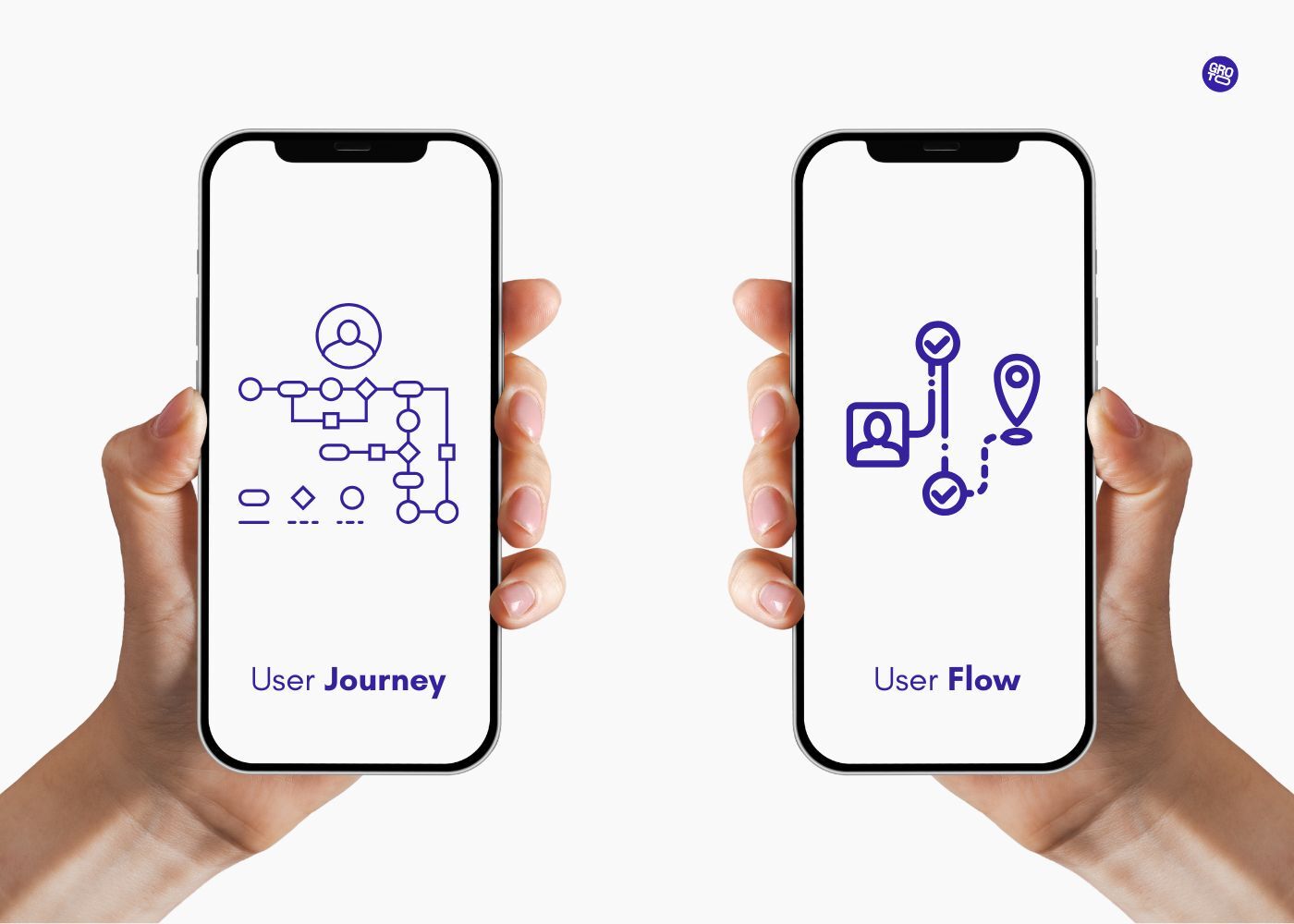
Learn more about user journey vs user flow to understand how to map user interactions effectively and choose the right visualization for each strategic question.

Step 5: Define Problem Statements and User Needs

Translate research into focused problem statements — each tied to a user insight and a business objective.

Avoid vague framing like: "Users find our product confusing."

Aim for specificity: "First-time users are unsure how to generate their first AI report, leading to a 65% drop-off within two sessions."

Once you define clear user needs and their underlying business implications, prioritization becomes significantly easier.

Step 6: Prioritize Features and Experience Areas

You probably have a list of 50+ things users want. Strategy means choosing where to focus. Prioritize using:

  • Impact — Does solving this improve a key metric?

  • Confidence — Do you have enough evidence it matters?

  • Effort — Can this be built and shipped in a reasonable window?

  • Strategic fit — Does it align with the product's direction?

Popular frameworks here include RICE (Reach, Impact, Confidence, Effort) and Kano, which distinguishes between must-haves and nice-to-haves.

Step 7: Draft Your UX Strategy Roadmap

With clear priorities, build a phased plan:

  • Milestones — When will users see real changes?

  • Dependencies — What needs to happen first (backend support, data, infrastructure)?

  • Testing plans — How will success or failure be measured at each milestone?

  • Feedback loops — When will you check in with users or revalidate assumptions?

Avoid long, linear timelines. Good UX strategy is agile, modular, and responsive to what you learn.

Step 8: Build Fast and Test Early

With strategy in place, don't wait for perfection. Start prototyping key interactions as soon as possible.

Test for:

  • Do users understand what the product is and what to do first?

  • Are they finding core features without friction?

  • Are they getting value — quickly?

  • Where are they hesitating, dropping off, or getting stuck?

Use tools like Figma, Maze, or moderated sessions with Lookback. Turning wireframes into testable prototypes gives you the transition steps so nothing falls through the gap between static screens and testable models.

The purpose of testing isn't to prove you're right — it's to learn where you're wrong before you build at scale.

Step 9: Track Metrics Tied to Your Strategy

Once your UX is live, track the impact rigorously. Quantifying UX design business value gives you the exact methods and metrics to translate UX signals into revenue-level reporting that leadership will act on.

Key metrics to track:

  • Time-to-value for new users

  • Drop-off rate in onboarding

  • Task completion rate for key actions

  • Net Promoter Score (NPS) after experience updates

  • Feature adoption (actual usage, not just clicks)

Step 10: Refine Continuously

A UX strategy is never finished. Schedule time every quarter — or every sprint — to check in:

  • Are users still struggling at the same points?

  • Has the business shifted focus or goals?

  • Are there new insights you haven't acted on yet?

Update the roadmap. Kill initiatives that didn't move the needle. Double down on what's working.

Executing Your UX Strategy — Supporting Factors

Getting Cross-Functional Alignment Before Execution

The most common reason UX strategies fail is not poor research or bad design — it is the absence of cross-functional alignment before work begins. Design, engineering, and product management need to share the same understanding of user priorities and success metrics before any execution starts.

Before moving from strategy to execution: run a UX design workflow alignment session with your full cross-functional team. Surface assumptions, resolve conflicts, and document the shared framework.

Creating Reusable Templates and Documentation

Standardize your strategy process with reusable templates for:

  • User interview guides

  • Competitive analysis frameworks

  • Journey mapping workshops

  • Prioritization scoring matrices

  • Design critique frameworks

Templates reduce setup time for each new strategic cycle and create organizational memory that survives team turnover.

Communicating UX Strategy to Non-Design Stakeholders

Strategy documents written in design language do not get read by engineering leads or CFOs. Translate your UX strategy into business outcomes: conversion rates, support ticket reduction, onboarding completion rates, retention curves.

Make the business case visible. Make the user evidence tangible. Make the metrics leadership-facing.

Building a Feedback Loop Between Strategy and Delivery

Create a standing cadence — monthly or quarterly — where delivery outcomes are reviewed against strategic goals. Use UX audit steps and tools to run a structured diagnostic when post-launch data suggests the strategy needs revisiting.

Common Challenges in UX Strategy and How to Navigate Them

Stakeholders Who Do Not See UX as Strategic

The challenge: Design is treated as a service function — asked to execute decisions already made, rather than inform them.

The navigation: Start with one high-visibility project where UX strategy demonstrably improved a business metric. Use that result as evidence for expanding the practice. The business case for UX design investment gives you the data framing to have this conversation.

Misalignment Between Business Goals and User Needs

The challenge: The business wants to drive a metric (e.g., feature adoption) that users don't actually value — creating a tension between UX integrity and business pressure.

The navigation: Surface the tension explicitly. Use research to show what users actually need, then propose a path that serves both — often there is one. When there isn't, document the trade-off and make the decision visible to leadership rather than absorbing it silently in design.

Strategy That Exists on Paper but Not in Practice

The challenge: A UX strategy document is written, presented once, and then never referenced again.

The navigation: Embed strategy into working processes. Reference it explicitly in design critiques, sprint planning, and stakeholder reviews. Make it the source of truth for prioritization decisions — not a deliverable that sits in a shared drive.

Measuring UX Impact Without Clear Metrics

The challenge: The team knows the redesign improved the experience but cannot prove it in numbers.

The navigation: Define metrics before design begins — not after. Pair qualitative signals (user interviews, session recordings) with quantitative ones (completion rates, time-on-task, NPS) so that impact can be demonstrated in both the language of experience and the language of business.

Tools That Support UX Strategy

Research and Discovery Tools

  • User interviews: Dovetail, Lookback

  • Surveys: Typeform, Google Forms

  • Session recording and heatmaps: Hotjar, FullStory, Microsoft Clarity

Roadmapping and Planning Tools

  • Product roadmaps: Productboard, Linear, Notion

  • Prioritization: Airtable, Coda, spreadsheet-based RICE matrices

Collaboration and Alignment Tools

  • Workshop facilitation: FigJam, Miro

  • Documentation: Notion, Confluence

  • Design collaboration: Figma

Explore the best UX design tools and free UI/UX design tools for beginners for a full breakdown of what each tool does and when to use it.

Measurement and Analytics Tools

  • Behavioral analytics: Mixpanel, Amplitude, Google Analytics 4

  • NPS and satisfaction: Delighted, Sprig, Typeform

How AI Is Changing UX Strategy

Using AI to Accelerate User Research

AI tools now reduce the time between data collection and strategic insight. Large volumes of interview transcripts, support tickets, and session recordings can be analyzed in minutes rather than weeks — surfacing themes, contradictions, and unmet needs faster than manual review.

This does not replace the judgment required to interpret research. It accelerates the point at which a team has enough signal to make a strategic decision.

AI-Assisted Competitive Analysis

AI tools can scan competitor products, review public feedback data (app store reviews, G2, Capterra), and surface experience gaps at a scale that manual competitive analysis cannot match. This gives UX strategists a faster, more comprehensive view of the competitive landscape at the start of the strategy process.

Predictive UX — Designing for Behavior Before It Happens

Advanced analytics platforms can now predict user behavior based on session patterns — identifying users likely to churn before they do, flagging onboarding paths that lead to disengagement, and surfacing moments where intervention would have the highest retention impact.

This shifts UX strategy from reactive (fixing things users already complained about) to predictive (addressing friction before users consciously register it).

Where to Start If You Have No UX Strategy Today

The Minimum Viable UX Strategy for Small Teams

If your team is small and cannot support a full strategy process, start with three things:

  1. One clear problem statement — a specific user need tied to a business metric you care about

  2. Three design principles — actionable guardrails that resolve design disagreements without escalation

  3. Two success metrics — one qualitative (user feedback theme) and one quantitative (a rate or conversion point)

This is not a complete UX strategy — but it is a foundation that prevents the most common failure modes: designing without direction and shipping without a way to evaluate impact.

How to Get Leadership Buy-in in the First 30 Days

  • Week 1: Run two to three user interviews. Document one surprising finding that contradicts a current product assumption.

  • Week 2: Connect that finding to a business metric leadership already tracks.

  • Week 3: Propose one specific design change that addresses it, with a measurable success criterion.

  • Week 4: Ship a small test. Report the result in business terms.

This sequence builds credibility before asking for resources. It demonstrates that UX strategy produces evidence — not just opinions.

What Does a UX Strategist Do?

A UX strategist sits at the intersection of user research, product strategy, and design systems. They are responsible for ensuring that design execution is grounded in user evidence and aligned with business direction.

How the UX Strategist Role Differs from UX Designer


Dimension

UX Designer

UX Strategist

Primary focus

How individual screens and flows work

Why the product is designed the way it is

Time horizon

Sprint-level decisions

Quarter and annual planning

Output

Wireframes, prototypes, UI specs

Strategy documents, frameworks, roadmaps

Stakeholder engagement

Design reviews, developer handoff

Leadership alignment, cross-functional planning

Success metric

Usability and design quality

Business outcomes tied to experience improvements

Skills and Tools a UX Strategist Needs

Core skills:

  • Qualitative and quantitative user research

  • Competitive analysis and market positioning

  • Stakeholder facilitation and communication

  • Roadmap development and prioritization

  • Metrics definition and impact measurement

Tools: Figma for prototyping, Miro or FigJam for workshops, Dovetail or Notion for research synthesis, Mixpanel or Amplitude for behavioral analytics, Productboard or Linear for roadmap management.

See our comparison of Figma vs Sketch vs Adobe XD for a full breakdown of the primary design tools a UX strategist needs fluency in.

Key Takeaways

  • UX strategy is a structured plan that aligns user needs, design decisions, and business goals — it sits above individual screen design and gives execution its direction

  • The four tenets (Jaime Levy): Business Strategy, Value Innovation, Validated User Research, and Frictionless UX — every effective UX strategy must address all four

  • The four pillars: User Research, Business Alignment, Competitive Differentiation, and Continuous Experimentation — the capabilities a team needs to execute strategy well

  • UX strategy and product strategy are complementary but distinct: product strategy defines what to build, UX strategy defines how users will experience and benefit from it

  • A UX strategy without metrics is a document, not a strategy — define success criteria before execution begins

  • AI is accelerating research synthesis and competitive analysis but does not replace the human judgment at the core of strategy work

  • A minimum viable UX strategy — one problem statement, three principles, two metrics — is better than no strategy for teams who cannot yet support a full process

  • UX strategy is never finished — build a standing cadence to revisit, update, and evolve it as user needs and business goals shift

UX strategy is the connective tissue between your product vision and your user's actual experience. It is a structured, research-grounded plan that aligns user needs, design decisions, and business goals — so every product decision moves in the same direction. Without it, teams optimize for surface-level usability rather than meaningful engagement.

UX isn’t just design—it’s strategic decision-making

Understanding UX Strategy

TL;DR — UX Strategy at a Glance

  • What it is: A plan that bridges user behavior, business objectives, and design execution into a single, coherent direction

  • Why it matters: Teams without a UX strategy ship features users don't adopt, waste cycles on rework, and struggle to prove the value of design investment

  • What it produces: A prioritized roadmap, defined success metrics, a shared decision-making framework, and a feedback loop that keeps product and user needs aligned over time

What Is UX Strategy?

UX strategy is a high-level plan that defines how a product's user experience will deliver business value while solving real user problems. It operates above the level of individual screen design — it is the "why" and "where" that gives design execution its direction.

If understanding what UI/UX design means at its core is the foundation, UX strategy is the layer that sits above it — determining which problems to solve, in which order, and for whom.

A UX strategy answers three questions:

  1. What experience does this product need to deliver to be competitive?

  2. Which user problems are we prioritizing — and why?

  3. How will we know when the strategy is working?

UX Strategy vs Product Strategy — What Is the Difference?

These two are frequently conflated, but they operate at different levels:

Dimension

Product Strategy

UX Strategy

Focus

What to build

How users will experience and benefit from it

Driven by

Business goals, market opportunity

User needs, behavioral data, experience quality

Output

Feature roadmap, OKRs

Experience principles, journey maps, UX metrics

Owner

Product Manager

UX Lead / Design Strategist

Product strategy defines the destination. UX strategy defines the road.

UX Strategy vs UX Design — Where Strategy Ends and Execution Begins

UX strategy and UX design are not the same phase. Strategy happens before design begins — it defines the problem space, the user priorities, and the success criteria. Design then executes against that framework.

Understanding the UX disciplines involved at each stage clarifies where strategy hands off to execution — and which specialist roles are responsible for each layer of the process.

The Evolution of the Term UX Strategy

The term was popularized by Jaime Levy in her 2015 book UX Strategy: How to Devise Innovative Digital Products That People Want. Levy defined it as a practice that sits at the intersection of UX design and business strategy — not purely design, not purely product management, but the overlap between them.

Before Levy formalized the term, most teams treated strategy as an implicit output of product planning. Her framework made the case that UX strategy is a distinct discipline requiring its own process, tools, and expertise — and that argument has since become mainstream across design and product organizations.

Why UX Strategy Matters

What Happens When Teams Operate Without One

Teams without a UX strategy tend to share a recognizable pattern:

  • Designers are handed requirements and asked to "make it look good"

  • Research happens after design, not before — or not at all

  • Features are built based on stakeholder opinions, not user data

  • Every sprint introduces friction because there is no shared framework for prioritization

  • Success is measured by delivery speed, not user outcomes

The result is a product that ships on time but doesn't get used.

Risks of a Weak or Missing UX Strategy

Risk

Business Impact

No user research foundation

Designing for assumed problems, not real ones

No defined success metrics

Cannot prove UX investment is working

No competitive differentiation frame

Feature parity with competitors, no reason to switch

No cross-team alignment

Design, PM, and engineering pulling in different directions

No iteration loop

Post-launch issues go unaddressed until they become crises

The Business Case — How Strategy Reduces Rework and Increases Product-Market Fit

A UX strategy front-loads the expensive decisions. When user needs, competitive positioning, and success metrics are defined before a single wireframe is drawn, teams avoid the most common and costly failure mode in product development: building the wrong thing well.

Learn more about calculating the ROI of UX design methods and metrics to understand how to quantify UX strategy's financial impact in terms leadership acts on.

The Four Tenets of UX Strategy

Jaime Levy's UX Strategy framework — the most widely cited in the industry — defines four tenets that every effective UX strategy must address. This framework is a significant credibility anchor in the field, and any UX strategy that doesn't map to these four areas has a structural gap.

1. Business Strategy — Aligning UX to Company Goals

UX strategy must be grounded in the company's actual business objectives — not a parallel track that design runs independently. This means understanding growth targets, revenue models, competitive pressure, and the constraints that make certain solutions impossible regardless of their user value.

Without business strategy alignment, even the most user-centered design decisions can fail to get organizational support — because they don't connect to what the company is being measured on.

2. Value Innovation — Finding Competitive Differentiation Through Experience

Value innovation is the idea — drawn from Blue Ocean Strategy — that the best UX strategies don't just improve on what competitors are doing; they find entirely different ways to deliver value that competitors haven't explored.

This is the most underused tenet. Most UX work is comparative: "How does our onboarding compare to Competitor X?" Value innovation asks a different question: "What experience could we create that makes that comparison irrelevant?"

3. Validated User Research — Decisions Grounded in Real Data

Every strategic assumption must be tested against real user behavior. Validated user research means not just conducting interviews, but systematically testing whether your strategic hypotheses hold up when real users interact with real (or prototype) versions of the product.

Understanding the types of UX design methodologies available gives you the research toolkit — interviews, usability tests, heatmaps, behavioral analytics — and helps you choose which method fits which strategic question.

4. Frictionless UX — Removing Barriers Between Intent and Outcome

Frictionless UX is the execution standard that UX strategy sets. It means every identified user need must be met with an experience path that requires the minimum possible effort, decision-making, and cognitive load.

This tenet connects strategy back to design: once you know what users need and what the business requires, frictionless UX is the quality bar that design execution must meet.

Key Components of a UX Strategy

A well-formed UX strategy document contains five core components. If any of these is missing, the strategy cannot be fully executed or evaluated.

Vision — Where the Product Experience Is Going

The UX vision is a clear, aspirational statement of what the ideal user experience looks like — not in wireframes, but in user outcomes. It answers: "If we execute this strategy perfectly, what will users be able to do that they cannot do today?"

Principles — The Rules That Govern Design Decisions

Design principles are the guardrails that keep individual design decisions consistent with the strategy. They are not values ("we care about users") but actionable constraints ("when in doubt, reduce steps, not options"). A useful principle is one that can be used to resolve a design disagreement.

Goals — Measurable Outcomes Tied to Business Objectives

UX goals must be specific, measurable, and connected to metrics the business already tracks. Vague goals ("improve the user experience") cannot be evaluated. Specific goals ("reduce checkout abandonment from 34% to under 20% within two quarters") can.

Roadmap — The Prioritized Sequence of UX Initiatives

The UX strategy roadmap sequences which experience improvements happen when — based on user impact, business priority, and technical feasibility. For a deeper guide on structuring this, building a digital product roadmap covers how to sequence initiatives, manage dependencies, and build milestones that survive contact with real product timelines.

Metrics — How Success Is Tracked and Communicated

Every strategic initiative needs a success metric defined before work begins — not after. Metrics should include both leading indicators (task completion rate, time-to-value) and lagging indicators (retention, NPS, revenue per user).

The Four Pillars of UX Strategy

While the four tenets define what a UX strategy must address, the four pillars describe the capabilities a team must have to execute one effectively.

1. User Research and Empathy

The ability to gather, synthesize, and act on qualitative and quantitative user data. Without this capability, strategy is built on assumption. The quick-reference UX research guide gives you frameworks, question templates, and analysis shortcuts that make this capability operationally fast.

2. Business Alignment and Stakeholder Buy-in

The ability to translate UX outcomes into business language — and to secure leadership support before execution begins. UX strategies that live only in the design team rarely get the resources or prioritization they need to succeed.

3. Competitive Differentiation

The ability to evaluate the competitive landscape not just for feature gaps, but for experience gaps — places where the category standard is low and a significantly better experience would drive switching behavior.

4. Continuous Experimentation and Iteration

The ability to treat every design decision as a hypothesis, test it with real users, and update the strategy based on what is learned. Creating a UX strategy for your product shows how to make this a systematic operating mode rather than a one-time sprint.

How to Build a UX Strategy — Step by Step

Step 1: Clarify Business Goals and Constraints

Start by understanding what the company is actually trying to achieve. This might sound obvious, but many product teams skip this and jump straight into wireframes.

Define early:

  • What does success look like in 6 months? In 12?

  • Are you optimizing for new user acquisition, feature adoption, retention, revenue — or all of the above?

  • What are the constraints: budget, time, team capacity, tech stack?

This conversation grounds your strategy in reality. Design doesn't happen in a vacuum, and neither should planning.

Step 2: Conduct Competitive Research and Analysis

Map the competitive landscape — not just feature-by-feature, but experience-by-experience. Where are competitors weak? Where is the category standard low enough that a meaningfully better experience would create a switching reason?

Competitive analysis at this stage is not about copying what works. It is about finding the gaps that value innovation can fill.

Step 3: Connect with Users and Validate Assumptions

Real user insights are the heartbeat of any effective UX strategy. The methods you use here matter as much as the questions you ask — a full breakdown of UX research and design methodologies helps you choose between interviews, usability tests, heatmaps, and behavioral analytics based on what your product stage actually needs.

Your goal here is not to validate your solution — it is to uncover what people actually need, expect, and struggle with.

Step 4: Identify Key User Segments and Journeys

Turn research insights into defined user journeys:

  • Group users based on goals, behaviors, or frustrations — not just demographics

  • For each key segment, map their current journey end-to-end

  • Mark where confusion, delay, or friction is highest

  • Highlight critical moments: first-time use, empty states, value delivery, retention loops

Learn more about user journey vs user flow to understand how to map user interactions effectively and choose the right visualization for each strategic question.

Step 5: Define Problem Statements and User Needs

Translate research into focused problem statements — each tied to a user insight and a business objective.

Avoid vague framing like: "Users find our product confusing."

Aim for specificity: "First-time users are unsure how to generate their first AI report, leading to a 65% drop-off within two sessions."

Once you define clear user needs and their underlying business implications, prioritization becomes significantly easier.

Step 6: Prioritize Features and Experience Areas

You probably have a list of 50+ things users want. Strategy means choosing where to focus. Prioritize using:

  • Impact — Does solving this improve a key metric?

  • Confidence — Do you have enough evidence it matters?

  • Effort — Can this be built and shipped in a reasonable window?

  • Strategic fit — Does it align with the product's direction?

Popular frameworks here include RICE (Reach, Impact, Confidence, Effort) and Kano, which distinguishes between must-haves and nice-to-haves.

Step 7: Draft Your UX Strategy Roadmap

With clear priorities, build a phased plan:

  • Milestones — When will users see real changes?

  • Dependencies — What needs to happen first (backend support, data, infrastructure)?

  • Testing plans — How will success or failure be measured at each milestone?

  • Feedback loops — When will you check in with users or revalidate assumptions?

Avoid long, linear timelines. Good UX strategy is agile, modular, and responsive to what you learn.

Step 8: Build Fast and Test Early

With strategy in place, don't wait for perfection. Start prototyping key interactions as soon as possible.

Test for:

  • Do users understand what the product is and what to do first?

  • Are they finding core features without friction?

  • Are they getting value — quickly?

  • Where are they hesitating, dropping off, or getting stuck?

Use tools like Figma, Maze, or moderated sessions with Lookback. Turning wireframes into testable prototypes gives you the transition steps so nothing falls through the gap between static screens and testable models.

The purpose of testing isn't to prove you're right — it's to learn where you're wrong before you build at scale.

Step 9: Track Metrics Tied to Your Strategy

Once your UX is live, track the impact rigorously. Quantifying UX design business value gives you the exact methods and metrics to translate UX signals into revenue-level reporting that leadership will act on.

Key metrics to track:

  • Time-to-value for new users

  • Drop-off rate in onboarding

  • Task completion rate for key actions

  • Net Promoter Score (NPS) after experience updates

  • Feature adoption (actual usage, not just clicks)

Step 10: Refine Continuously

A UX strategy is never finished. Schedule time every quarter — or every sprint — to check in:

  • Are users still struggling at the same points?

  • Has the business shifted focus or goals?

  • Are there new insights you haven't acted on yet?

Update the roadmap. Kill initiatives that didn't move the needle. Double down on what's working.

Executing Your UX Strategy — Supporting Factors

Getting Cross-Functional Alignment Before Execution

The most common reason UX strategies fail is not poor research or bad design — it is the absence of cross-functional alignment before work begins. Design, engineering, and product management need to share the same understanding of user priorities and success metrics before any execution starts.

Before moving from strategy to execution: run a UX design workflow alignment session with your full cross-functional team. Surface assumptions, resolve conflicts, and document the shared framework.

Creating Reusable Templates and Documentation

Standardize your strategy process with reusable templates for:

  • User interview guides

  • Competitive analysis frameworks

  • Journey mapping workshops

  • Prioritization scoring matrices

  • Design critique frameworks

Templates reduce setup time for each new strategic cycle and create organizational memory that survives team turnover.

Communicating UX Strategy to Non-Design Stakeholders

Strategy documents written in design language do not get read by engineering leads or CFOs. Translate your UX strategy into business outcomes: conversion rates, support ticket reduction, onboarding completion rates, retention curves.

Make the business case visible. Make the user evidence tangible. Make the metrics leadership-facing.

Building a Feedback Loop Between Strategy and Delivery

Create a standing cadence — monthly or quarterly — where delivery outcomes are reviewed against strategic goals. Use UX audit steps and tools to run a structured diagnostic when post-launch data suggests the strategy needs revisiting.

Common Challenges in UX Strategy and How to Navigate Them

Stakeholders Who Do Not See UX as Strategic

The challenge: Design is treated as a service function — asked to execute decisions already made, rather than inform them.

The navigation: Start with one high-visibility project where UX strategy demonstrably improved a business metric. Use that result as evidence for expanding the practice. The business case for UX design investment gives you the data framing to have this conversation.

Misalignment Between Business Goals and User Needs

The challenge: The business wants to drive a metric (e.g., feature adoption) that users don't actually value — creating a tension between UX integrity and business pressure.

The navigation: Surface the tension explicitly. Use research to show what users actually need, then propose a path that serves both — often there is one. When there isn't, document the trade-off and make the decision visible to leadership rather than absorbing it silently in design.

Strategy That Exists on Paper but Not in Practice

The challenge: A UX strategy document is written, presented once, and then never referenced again.

The navigation: Embed strategy into working processes. Reference it explicitly in design critiques, sprint planning, and stakeholder reviews. Make it the source of truth for prioritization decisions — not a deliverable that sits in a shared drive.

Measuring UX Impact Without Clear Metrics

The challenge: The team knows the redesign improved the experience but cannot prove it in numbers.

The navigation: Define metrics before design begins — not after. Pair qualitative signals (user interviews, session recordings) with quantitative ones (completion rates, time-on-task, NPS) so that impact can be demonstrated in both the language of experience and the language of business.

Tools That Support UX Strategy

Research and Discovery Tools

  • User interviews: Dovetail, Lookback

  • Surveys: Typeform, Google Forms

  • Session recording and heatmaps: Hotjar, FullStory, Microsoft Clarity

Roadmapping and Planning Tools

  • Product roadmaps: Productboard, Linear, Notion

  • Prioritization: Airtable, Coda, spreadsheet-based RICE matrices

Collaboration and Alignment Tools

  • Workshop facilitation: FigJam, Miro

  • Documentation: Notion, Confluence

  • Design collaboration: Figma

Explore the best UX design tools and free UI/UX design tools for beginners for a full breakdown of what each tool does and when to use it.

Measurement and Analytics Tools

  • Behavioral analytics: Mixpanel, Amplitude, Google Analytics 4

  • NPS and satisfaction: Delighted, Sprig, Typeform

How AI Is Changing UX Strategy

Using AI to Accelerate User Research

AI tools now reduce the time between data collection and strategic insight. Large volumes of interview transcripts, support tickets, and session recordings can be analyzed in minutes rather than weeks — surfacing themes, contradictions, and unmet needs faster than manual review.

This does not replace the judgment required to interpret research. It accelerates the point at which a team has enough signal to make a strategic decision.

AI-Assisted Competitive Analysis

AI tools can scan competitor products, review public feedback data (app store reviews, G2, Capterra), and surface experience gaps at a scale that manual competitive analysis cannot match. This gives UX strategists a faster, more comprehensive view of the competitive landscape at the start of the strategy process.

Predictive UX — Designing for Behavior Before It Happens

Advanced analytics platforms can now predict user behavior based on session patterns — identifying users likely to churn before they do, flagging onboarding paths that lead to disengagement, and surfacing moments where intervention would have the highest retention impact.

This shifts UX strategy from reactive (fixing things users already complained about) to predictive (addressing friction before users consciously register it).

Where to Start If You Have No UX Strategy Today

The Minimum Viable UX Strategy for Small Teams

If your team is small and cannot support a full strategy process, start with three things:

  1. One clear problem statement — a specific user need tied to a business metric you care about

  2. Three design principles — actionable guardrails that resolve design disagreements without escalation

  3. Two success metrics — one qualitative (user feedback theme) and one quantitative (a rate or conversion point)

This is not a complete UX strategy — but it is a foundation that prevents the most common failure modes: designing without direction and shipping without a way to evaluate impact.

How to Get Leadership Buy-in in the First 30 Days

  • Week 1: Run two to three user interviews. Document one surprising finding that contradicts a current product assumption.

  • Week 2: Connect that finding to a business metric leadership already tracks.

  • Week 3: Propose one specific design change that addresses it, with a measurable success criterion.

  • Week 4: Ship a small test. Report the result in business terms.

This sequence builds credibility before asking for resources. It demonstrates that UX strategy produces evidence — not just opinions.

What Does a UX Strategist Do?

A UX strategist sits at the intersection of user research, product strategy, and design systems. They are responsible for ensuring that design execution is grounded in user evidence and aligned with business direction.

How the UX Strategist Role Differs from UX Designer


Dimension

UX Designer

UX Strategist

Primary focus

How individual screens and flows work

Why the product is designed the way it is

Time horizon

Sprint-level decisions

Quarter and annual planning

Output

Wireframes, prototypes, UI specs

Strategy documents, frameworks, roadmaps

Stakeholder engagement

Design reviews, developer handoff

Leadership alignment, cross-functional planning

Success metric

Usability and design quality

Business outcomes tied to experience improvements

Skills and Tools a UX Strategist Needs

Core skills:

  • Qualitative and quantitative user research

  • Competitive analysis and market positioning

  • Stakeholder facilitation and communication

  • Roadmap development and prioritization

  • Metrics definition and impact measurement

Tools: Figma for prototyping, Miro or FigJam for workshops, Dovetail or Notion for research synthesis, Mixpanel or Amplitude for behavioral analytics, Productboard or Linear for roadmap management.

See our comparison of Figma vs Sketch vs Adobe XD for a full breakdown of the primary design tools a UX strategist needs fluency in.

Key Takeaways

  • UX strategy is a structured plan that aligns user needs, design decisions, and business goals — it sits above individual screen design and gives execution its direction

  • The four tenets (Jaime Levy): Business Strategy, Value Innovation, Validated User Research, and Frictionless UX — every effective UX strategy must address all four

  • The four pillars: User Research, Business Alignment, Competitive Differentiation, and Continuous Experimentation — the capabilities a team needs to execute strategy well

  • UX strategy and product strategy are complementary but distinct: product strategy defines what to build, UX strategy defines how users will experience and benefit from it

  • A UX strategy without metrics is a document, not a strategy — define success criteria before execution begins

  • AI is accelerating research synthesis and competitive analysis but does not replace the human judgment at the core of strategy work

  • A minimum viable UX strategy — one problem statement, three principles, two metrics — is better than no strategy for teams who cannot yet support a full process

  • UX strategy is never finished — build a standing cadence to revisit, update, and evolve it as user needs and business goals shift
More Articles

FAQ

Everything you were going to ask (and a few things you didn’t know to)
What does an UX strategist do?
A UX Strategist bridges the gap between user needs and business goals, defining the vision, roadmap, and ROI for digital products. They conduct research, analyze data, and align stakeholders on a user-centered strategy to improve engagement, retention, and customer satisfaction.

What does an UX strategist do?

A UX Strategist bridges the gap between user needs and business goals, defining the vision, roadmap, and ROI for digital products. They conduct research, analyze data, and align stakeholders on a user-centered strategy to improve engagement, retention, and customer satisfaction.

What are the four tenets of UX strategy?

The four tenets — defined by Jaime Levy — are: Business Strategy (aligning UX to company goals), Value Innovation (finding competitive differentiation through experience), Validated User Research (grounding decisions in real user data), and Frictionless UX (removing barriers between user intent and outcome). These four tenets form the most widely cited framework for UX strategy in the industry.

What are the four tenets of UX strategy?

The four tenets — defined by Jaime Levy — are: Business Strategy (aligning UX to company goals), Value Innovation (finding competitive differentiation through experience), Validated User Research (grounding decisions in real user data), and Frictionless UX (removing barriers between user intent and outcome). These four tenets form the most widely cited framework for UX strategy in the industry.

What are the key components of a UX strategy?

A complete UX strategy contains five components: a Vision (where the experience is going), Principles (the rules that govern design decisions), Goals (measurable outcomes tied to business objectives), a Roadmap (the prioritized sequence of UX initiatives), and Metrics (how success is tracked and communicated to stakeholders).

What are the key components of a UX strategy?

A complete UX strategy contains five components: a Vision (where the experience is going), Principles (the rules that govern design decisions), Goals (measurable outcomes tied to business objectives), a Roadmap (the prioritized sequence of UX initiatives), and Metrics (how success is tracked and communicated to stakeholders).

What are the four pillars of UX strategy?

The four pillars are: User Research and Empathy, Business Alignment and Stakeholder Buy-in, Competitive Differentiation, and Continuous Experimentation and Iteration. The pillars describe the organizational capabilities a team needs to execute a UX strategy effectively — not just define one.

What are the four pillars of UX strategy?

The four pillars are: User Research and Empathy, Business Alignment and Stakeholder Buy-in, Competitive Differentiation, and Continuous Experimentation and Iteration. The pillars describe the organizational capabilities a team needs to execute a UX strategy effectively — not just define one.

What is the difference between UX strategy and product strategy?

Product strategy defines what to build — the features, market focus, and business model. UX strategy defines how users will experience and benefit from what is built — the interaction quality, the user journey, and the experience metrics that determine whether the product succeeds at the human level. Both are necessary, and they should be developed in parallel, not sequentially.

What is the difference between UX strategy and product strategy?

Product strategy defines what to build — the features, market focus, and business model. UX strategy defines how users will experience and benefit from what is built — the interaction quality, the user journey, and the experience metrics that determine whether the product succeeds at the human level. Both are necessary, and they should be developed in parallel, not sequentially.

How do you measure the success of a UX strategy?

Define success metrics before execution begins — not after. Pair leading indicators (task completion rate, time-to-value, onboarding drop-off rate) with lagging indicators (NPS, retention, revenue per user). Report results in business terms, not design terms, to maintain leadership alignment and ongoing investment in the strategy process.

How do you measure the success of a UX strategy?

Define success metrics before execution begins — not after. Pair leading indicators (task completion rate, time-to-value, onboarding drop-off rate) with lagging indicators (NPS, retention, revenue per user). Report results in business terms, not design terms, to maintain leadership alignment and ongoing investment in the strategy process.

Extreme close-up black and white photograph of a human eye

Let’s bring your vision to life

Tell us what's on your mind? We'll hit you back in 24 hours. No fluff, no delays - just a solid vision to bring your idea to life.

Profile portrait of a man in a white shirt against a light background

Harpreet Singh

Founder and Creative Director

Get in Touch

Extreme close-up black and white photograph of a human eye

Let’s bring your vision to life

Tell us what's on your mind? We'll hit you back in 24 hours. No fluff, no delays - just a solid vision to bring your idea to life.

Profile portrait of a man in a white shirt against a light background

Harpreet Singh

Founder and Creative Director

Get in Touch

Extreme close-up black and white photograph of a human eye

Let’s bring your vision to life

Tell us what's on your mind? We'll hit you back in 24 hours. No fluff, no delays - just a solid vision to bring your idea to life.

Profile portrait of a man in a white shirt against a light background

Harpreet Singh

Founder and Creative Director

Get in Touch