Edtech

Artificial Intelligence

Mobile App Design

Designing AI-Powered Learning That Scales

Designing AI-Powered Learning That Scales

Designing AI-Powered Learning That Scales

Who says advanced AI & student-friendly UX can’t coexist? Groto redesigned LearnSphere’s edtech platform into a seamless, role-based experience for admins, teachers, and students alike.

Location

Location

Stockholm, Sweden

Duration

Duration

1 Year

Date

Date

Tools Used

Tools Used

Figma, Miro

Designing AI-Powered Learning That Scales

The Client

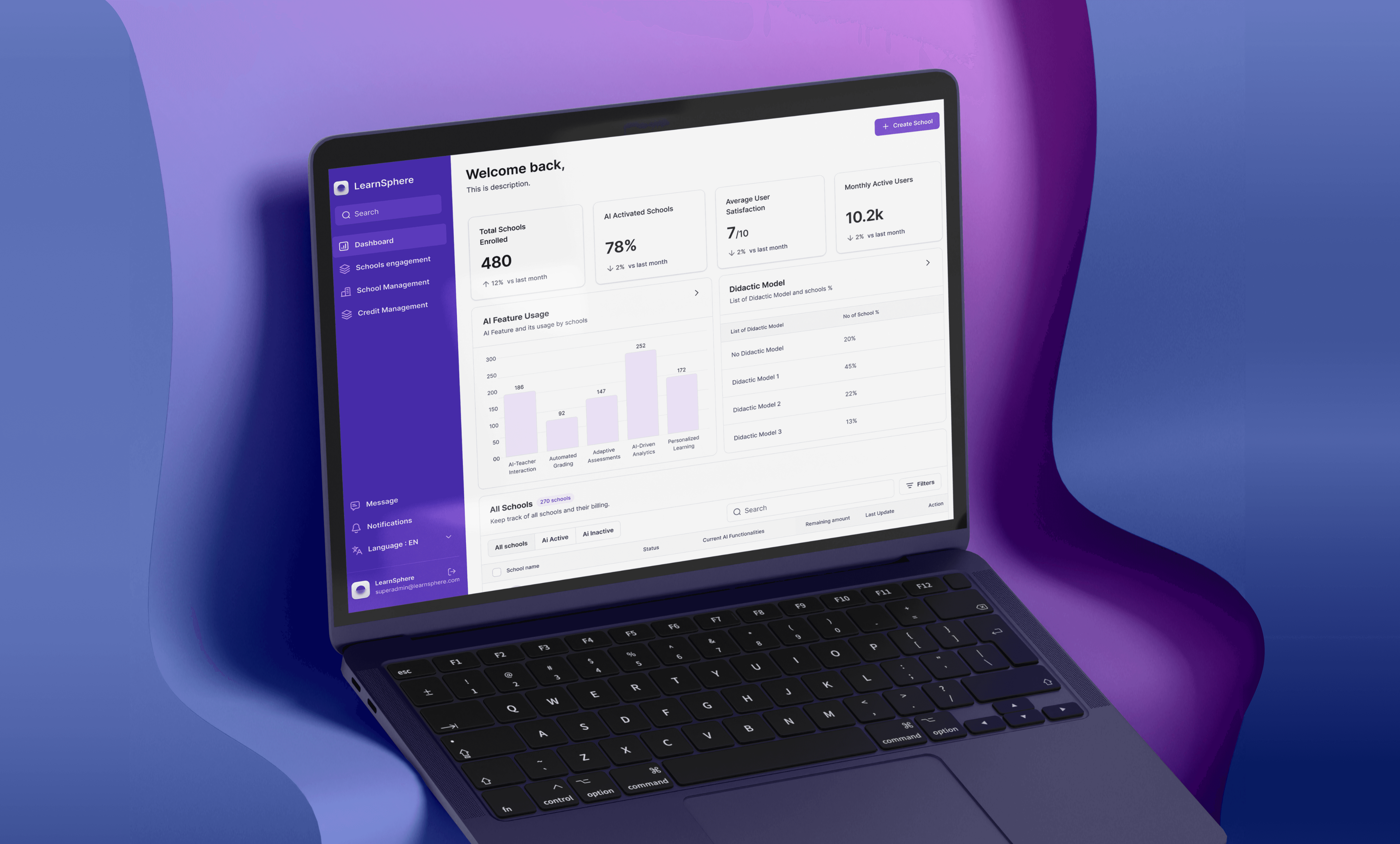
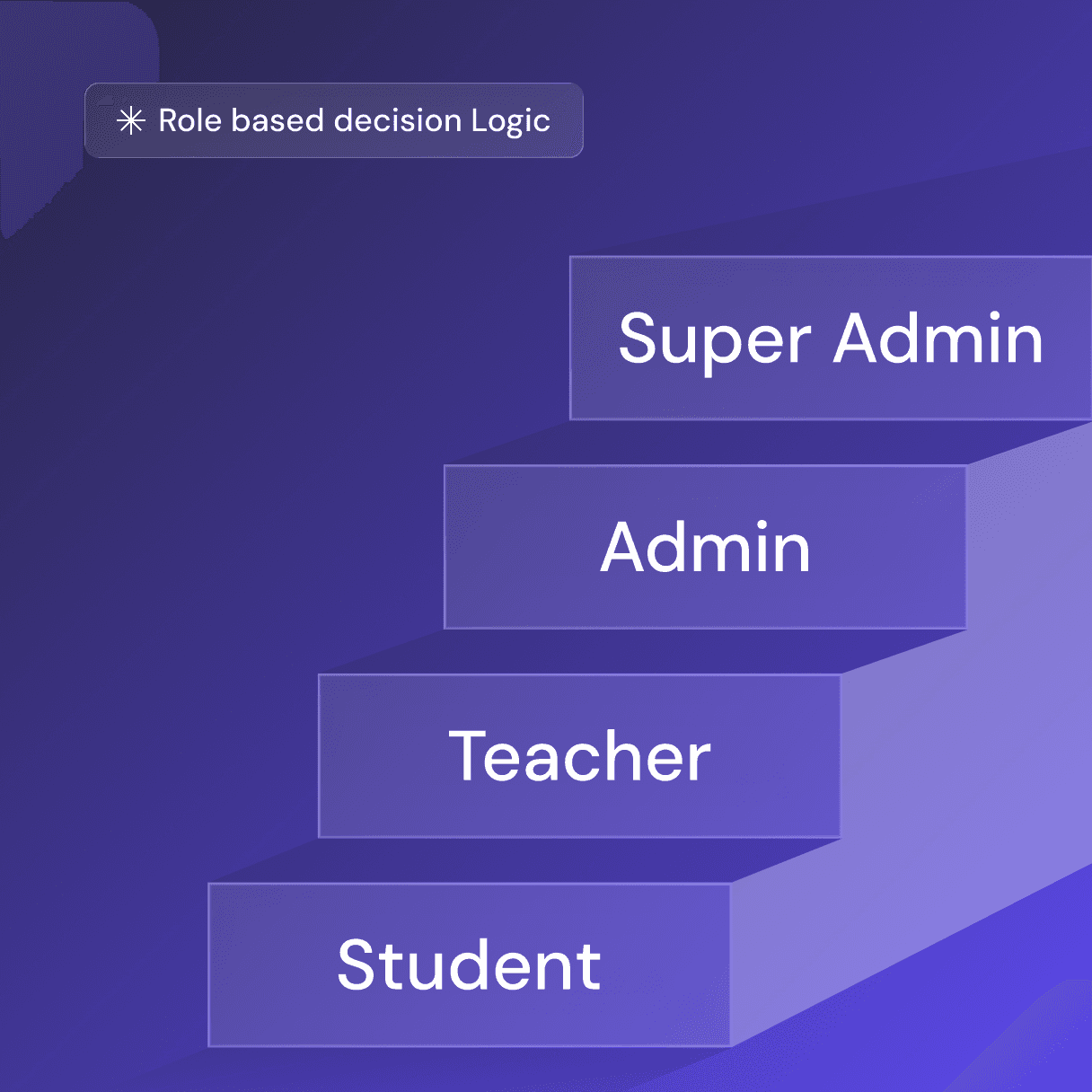
LearnSphere is an AI-powered educational platform that personalizes learning at scale. The system offers individualized learning paths, automatic grading, real-time AI assistants, and in-depth tracking for students and teachers. With multiple user types — Super Admin, Admin, Teacher, Student — LearnSphere needed a thoughtful, scalable interface that balanced usability with innovation.

Creative Challenge

LearnSphere already had a functioning product, but it lacked the polish and clarity needed for an experience-driven platform. They didn’t provide direct login access — instead, our team relied on walkthrough videos shared by the client to understand workflows, pain points, and feature logic. The challenge was to improve the platform’s usability, maintain consistency across roles, and integrate complex AI functionality without friction.

Our Approach

Our collaboration was fully remote. Weekly virtual meetings helped clarify requirements, while Figma became the central hub for feedback and iteration. The client would leave detailed comments directly on screens, which we incorporated seamlessly. With a streamlined feedback loop and no bottlenecks in review cycles, the design phase moved smoothly and efficiently across months.

AI-Course Material Upload

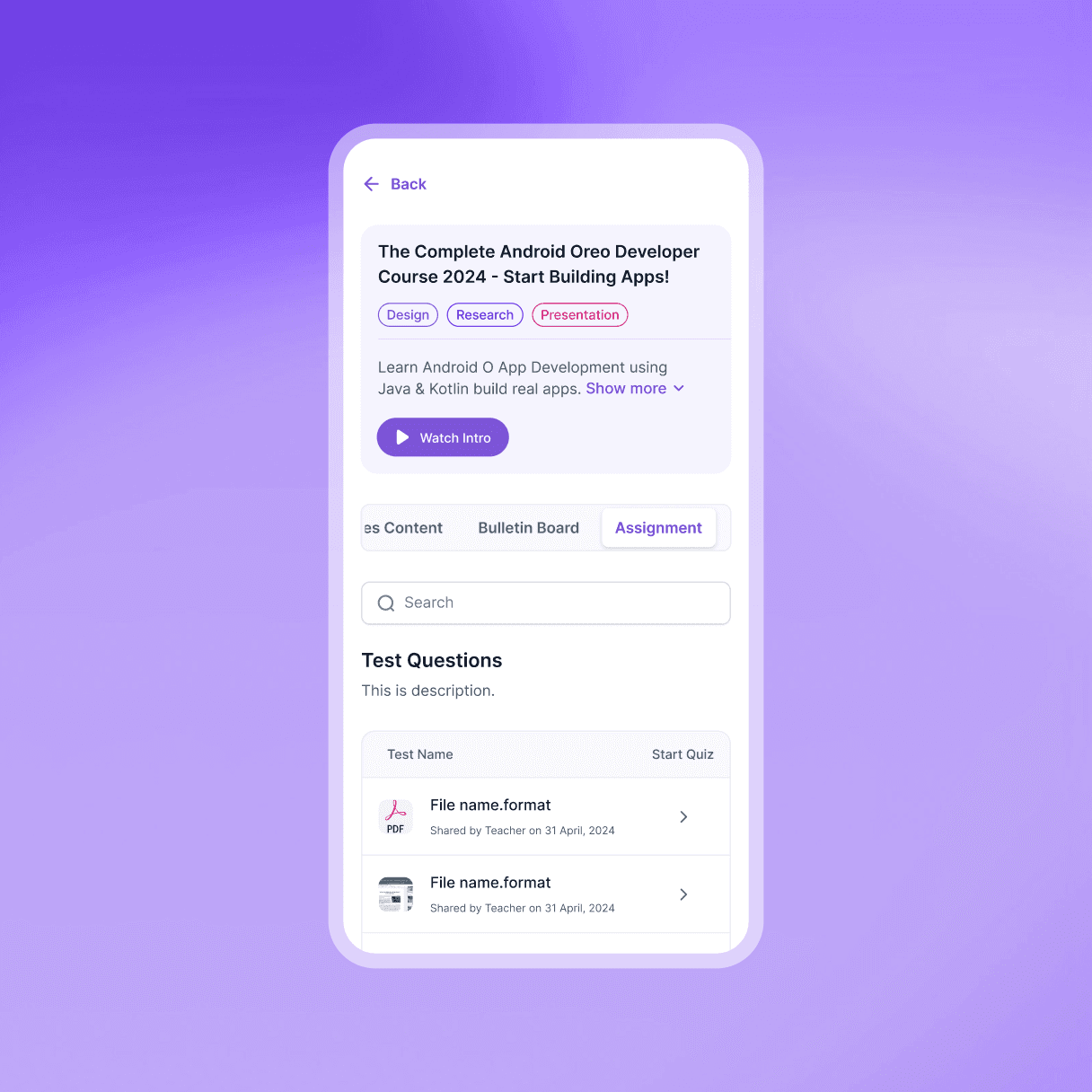
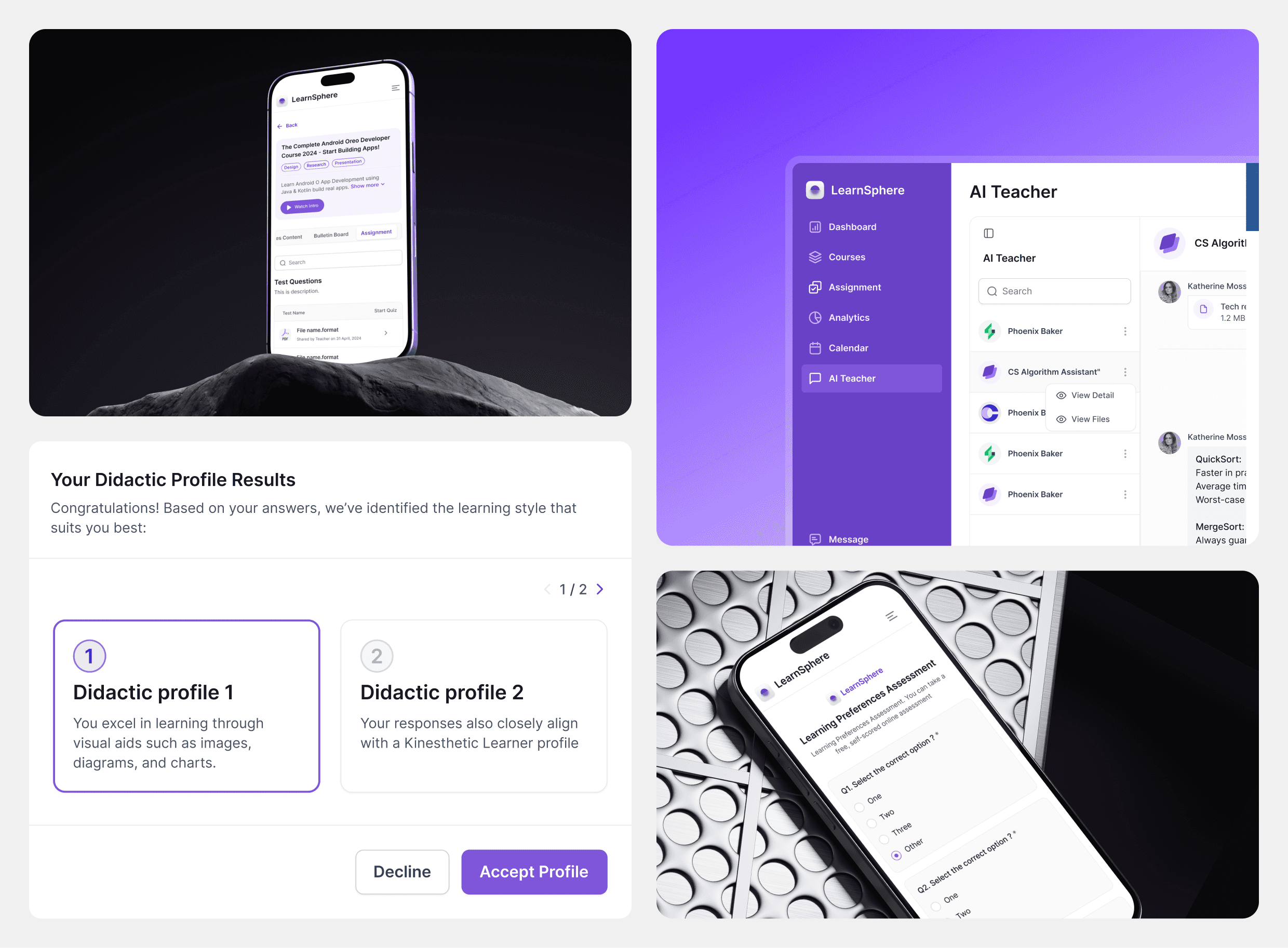
When teachers upload lecture notes or assignments, the system automatically tags, indexes, and aligns content with relevant learning objectives — enhancing discoverability and adaptive delivery.

What We Did

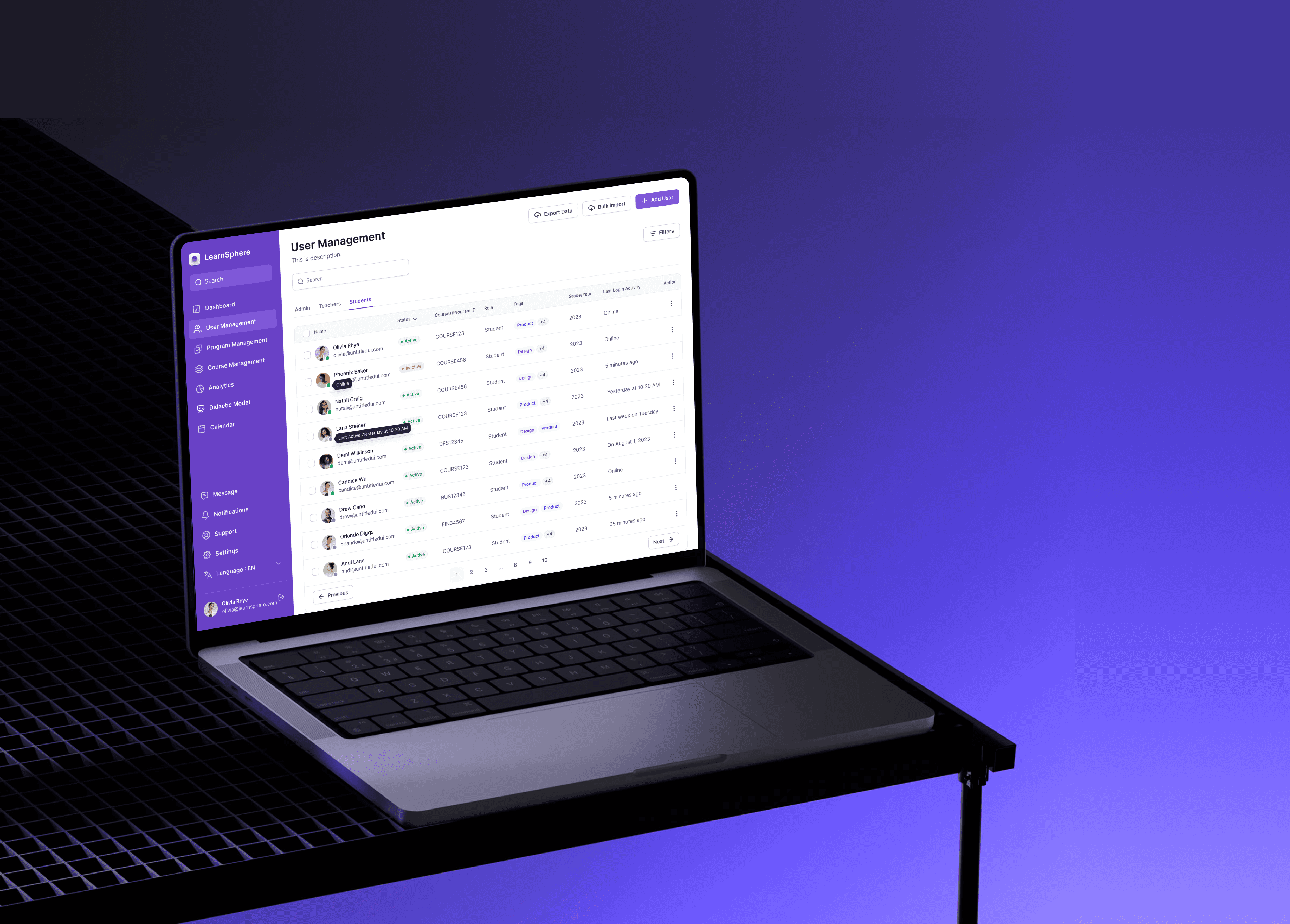
We introduced clarity, structure, and hierarchy into every role-specific experience.

Our redesign included:

  • Seamless AI integration across features like grading, chat, content analysis, and personalization

  • Role-based design logic, ensuring each user — student, teacher, admin — had the tools they needed without being overwhelmed

  • Smarter interaction patterns to reduce cognitive load, especially for younger students

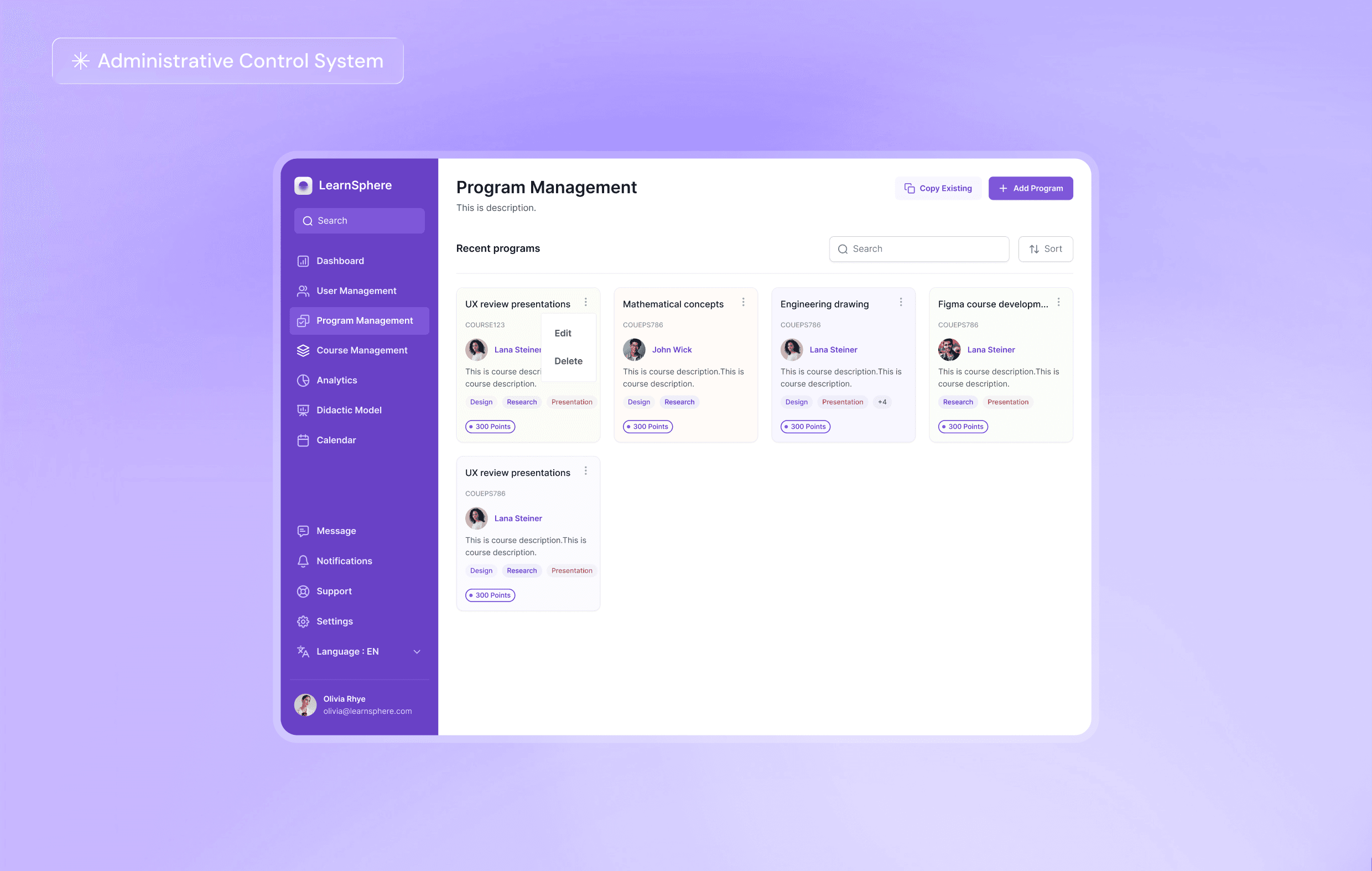
  • Administrative control systems that empowered schools to tune AI functionality as needed
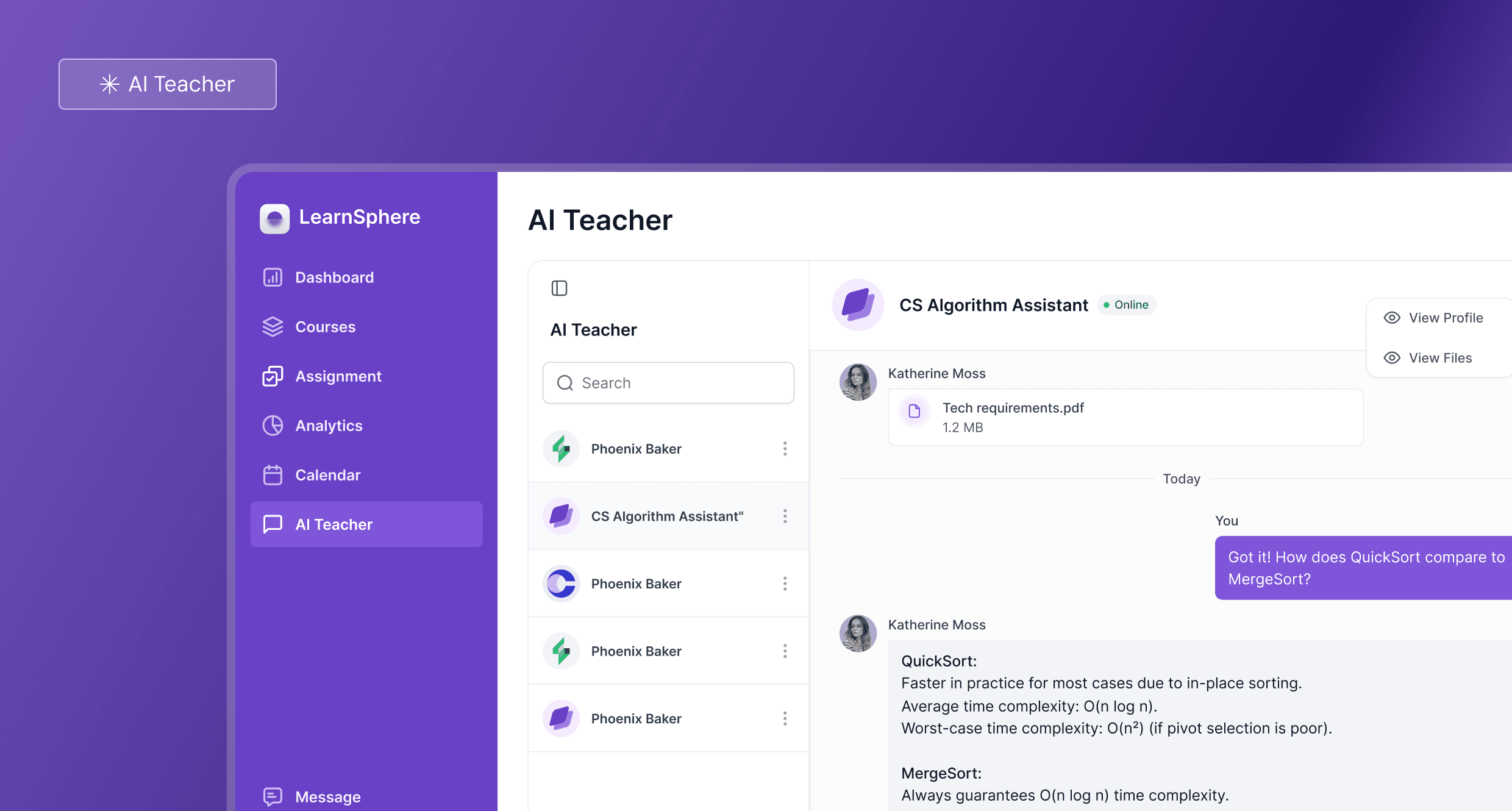
AI Teacher Chat

Students get round-the-clock access to an intelligent, chat-based assistant that acts like a virtual teacher — explaining concepts, answering study-related questions, and supporting self-paced learning.
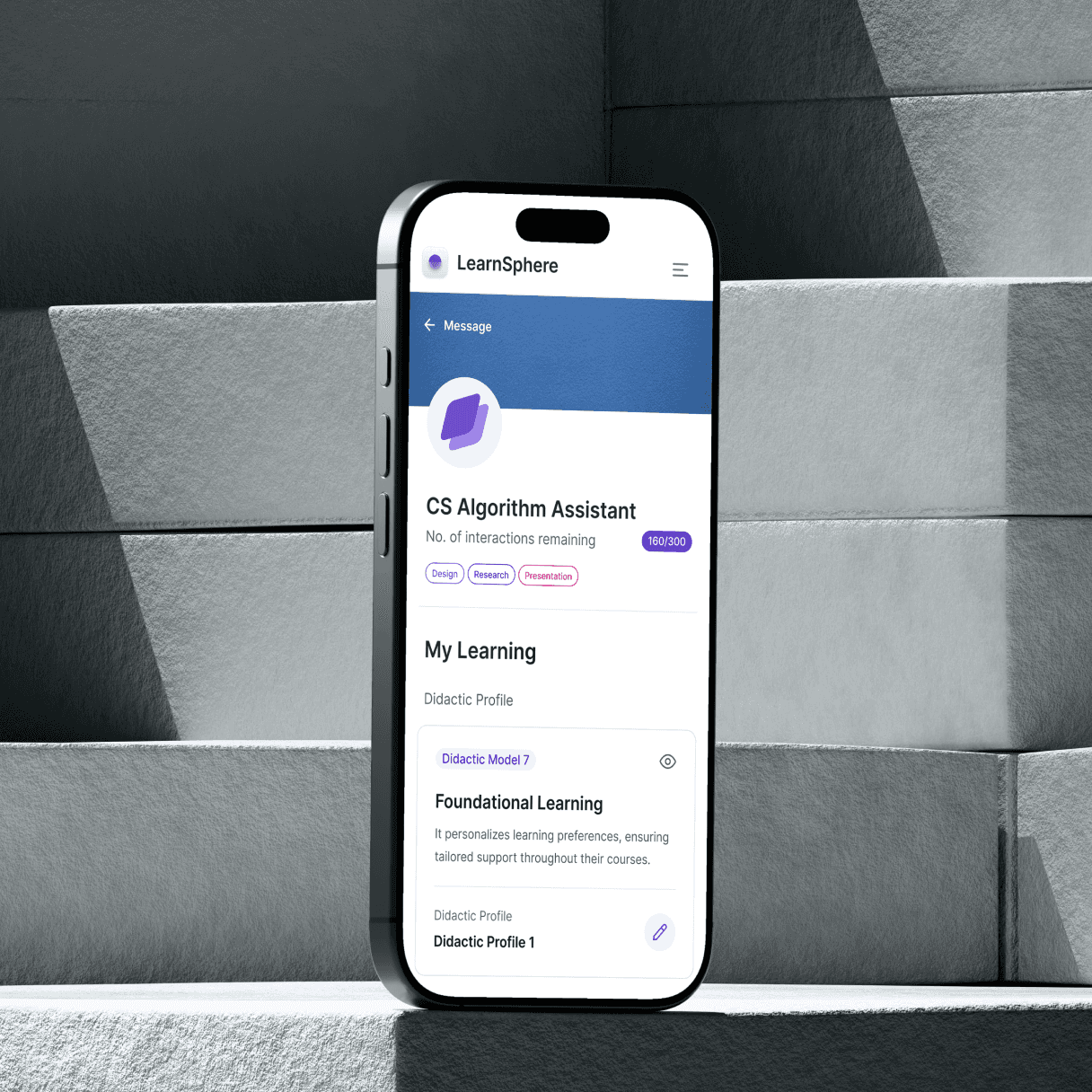
Student questionnaire & AI interaction

These short, AI-generated questionnaires adapt the student’s learning experience, surface relevant content, and provide emotional insights — helping tailor both pace and tone of instruction.
Manage AI Functionalities for Schools

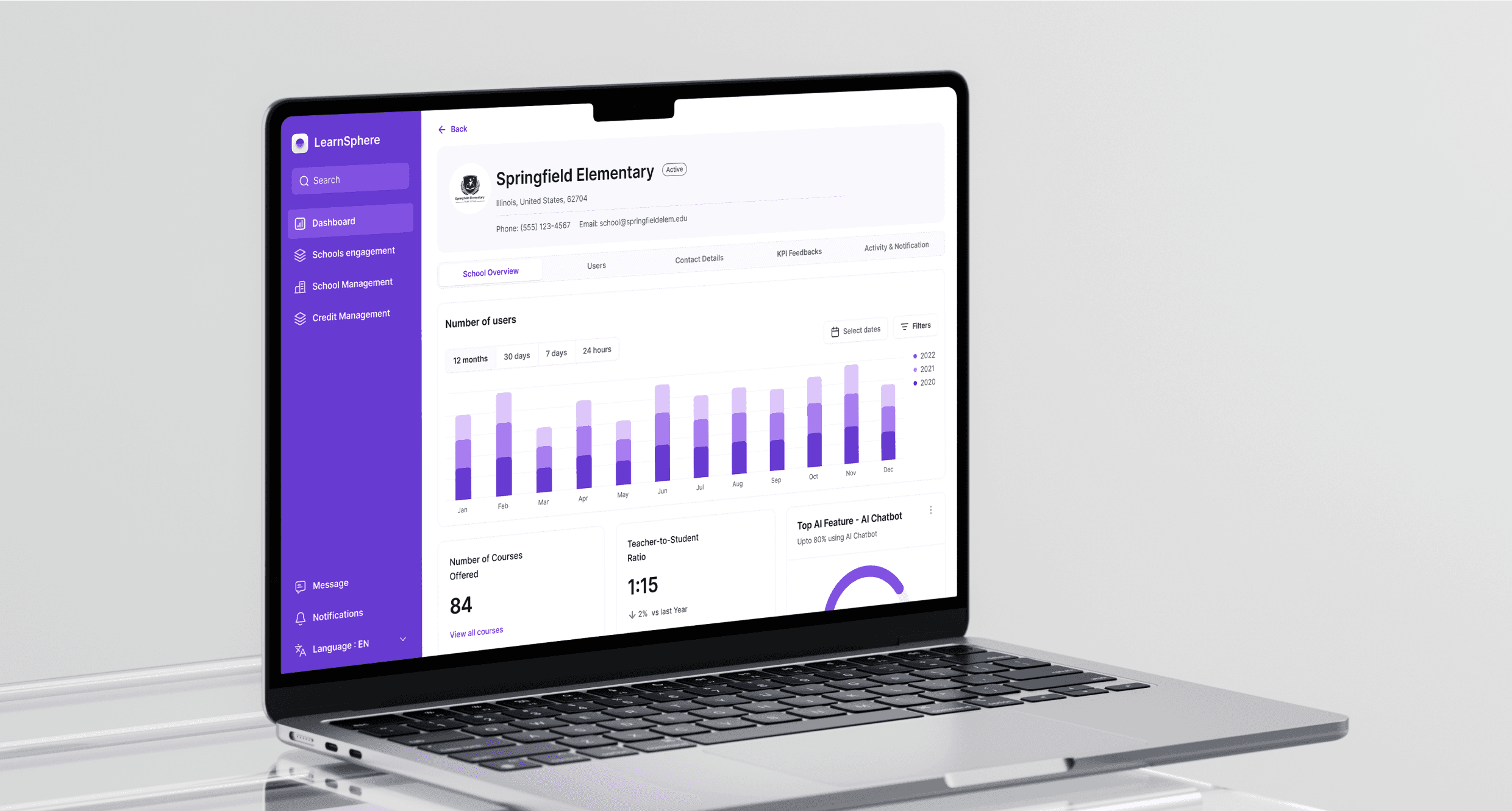
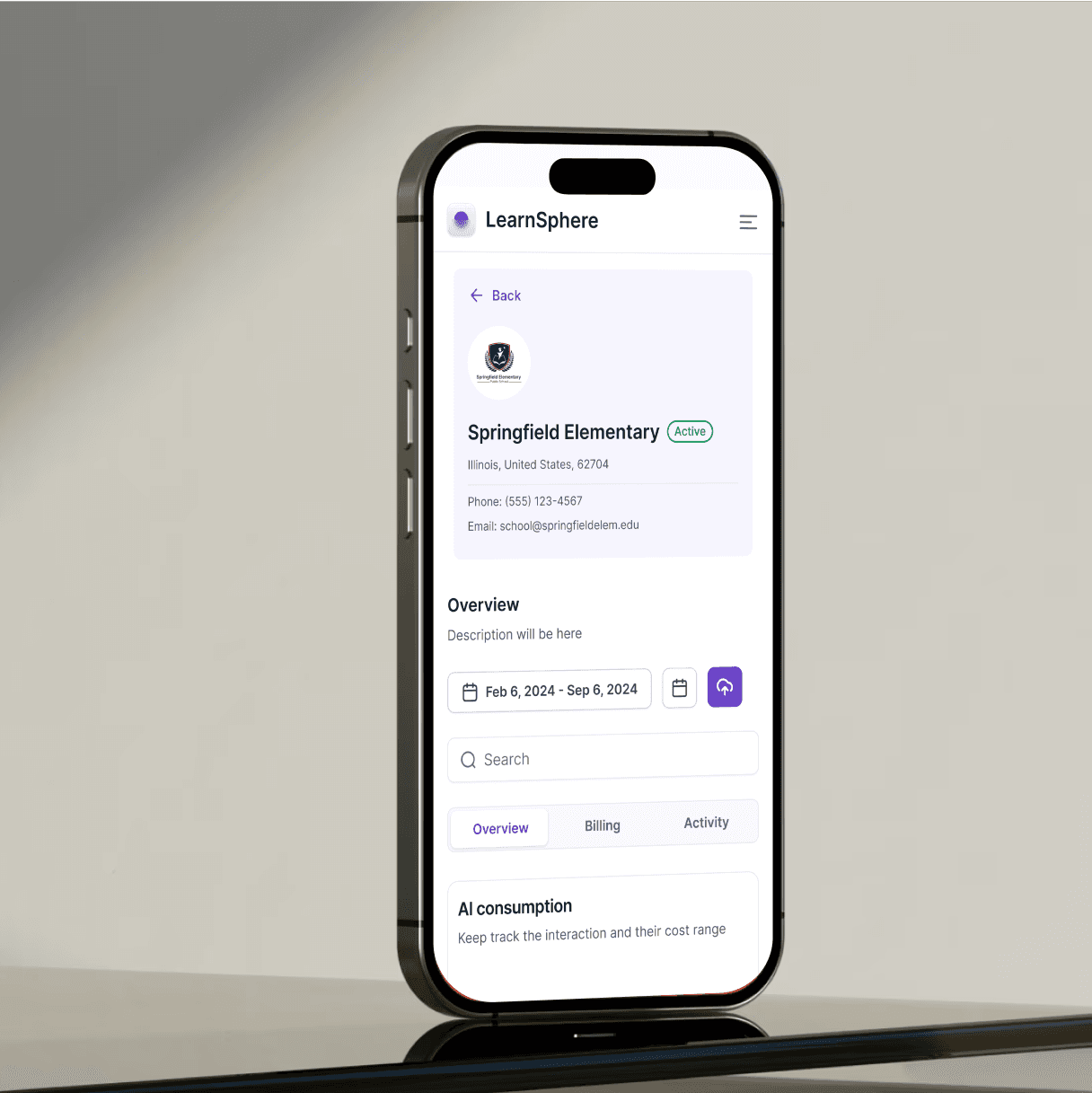
Superadmins can enable or disable AI features for each institution — including grading, chat support, course recommendations, and feedback systems — ensuring the AI fits each school's pedagogy and preferences.
The Results

By the end of the project, LearnSphere had a cleaner, smarter, and far more intuitive experience — without compromising the complexity of its AI-driven logic.

The team recognized the critical need for cross-role coordination and made sure the interface supported communication, motivation, and visibility for all users. A unified notification system and dynamic KPIs further amplified the platform’s educational impact.

FAQ

We’ve heard it all. Here’s everything you need to know before working with us.
How much does a UX design project with Groto cost?

Fixed projects start at US$5,000. Hourly engagements are US$50/hour. Share your brief so we can recommend the right scope.

How quickly can you start, and when will I see the first designs?

You can meet your designer within 24 hours and work starts immediately after. The 7-day free trial delivers a real design task from your actual backlog, not a mockup, so you see output in the first week. For Part-Time and Full-Time plans, a full UX strategy report lands within two weeks.

What happens if I do not like the designer or the work?

Start with the 7-day free trial before paying anything. If the fit is wrong, you walk away at no cost. After that, plans are month-to-month, you can request a different designer at any time, and you can pause for up to three weeks per quarter with credits rolling over. Cancel anytime.

Do I get one designer or a whole team?

You get a dedicated designer as your primary contact, backed by Groto’s 20-person studio. That means one consistent person who knows your product, with specialist support pulled in for research, brand, or development work without a new contract.

How do you measure whether the design actually worked?

Groto ties design work to product metrics agreed before the project starts, typically conversion rate, activation, task completion, and retention. On the IVHQ engagement, that produced a 2.3X conversion rate increase and 1.25X improvement in customer retention. Every engagement begins with a baseline measurement so the change is attributable.

Do you design UX for AI chatbots and conversational tools?

Yes. Groto designs conversational UX for chatbots, assistants, and support tools, covering the parts that break most often: turn-taking and interruption handling, streaming response states, fallback and handoff to a human agent, and tone calibration so the bot does not overpromise. The hard part is not the chat window, it is what happens when the model is confidently wrong.

Can your team handle UX for AI agents and copilot-style products?

Yes. Agentic and copilot products need patterns traditional UX does not cover: showing what the agent is about to do before it acts, permission gates on irreversible actions, human-in-the-loop checkpoints across multi-step tasks, and undo that genuinely reverses state. Groto has shipped copilot and agent interfaces for Camb.ai (AI dubbing) and Pathways (AI hiring). Trust calibration matters more than speed.

Do you help enterprises with UX for AI dashboards and reporting tools?

Yes. Groto designs data-dense enterprise dashboards and reporting tools, including AI-generated insights where the real design problem is explainability: showing why the model surfaced a number, letting analysts drill from summary to source rows, and flagging low-confidence output instead of presenting every figure with equal certainty. Enterprise buyers need an audit trail, not just a chart.

Is Groto a good fit for a B2B SaaS or enterprise product?

Yes. Groto specialises in complex B2B SaaS, enterprise internal tools and AI products, including dashboards, admin panels and data-heavy interfaces where information density matters more than visual polish. Current work spans AI platforms, fintech, healthcare and edtech, with clients across the USA, Europe, the Middle East and Asia.

What should I look for when choosing a UX design agency, and what are the red flags?

Ask for three things: a case study in your product category with named metrics, a trial or paid pilot before any long commitment, and direct access to the designer who will do the work. Red flags are portfolios with no measurable outcomes, contracts longer than three months with no exit, and account managers standing between you and the designer.

What does AI-first UX design actually mean in practice?

AI-first UX design means designing for products where the interface is non-deterministic: the output changes every time. That requires patterns traditional UX does not cover, including confidence and uncertainty states, correction and undo flows, streaming responses, prompt affordances, and graceful failure when the model is wrong. Groto has shipped this for AI dubbing, PR automation and AI hiring platforms.

How do I know your AI and ROI claims are real?

Every metric on this site traces to a named client engagement, not an internal estimate. The 4.9 rating comes from verified Clutch reviews you can read directly. For AI work specifically, ask to see the interaction patterns we shipped, not the visuals, since AI UX quality lives in error and uncertainty states rather than screens.

How does the 7-day free trial work?

Pick a real task from your backlog and Groto delivers it within seven days at no cost and with no card required. You keep the work regardless of whether you continue. The point is to judge us on output from your actual product rather than a curated portfolio.

Can you handle brand identity and marketing design as well as product UX?

Yes, and this is unusual for a product design studio. Groto's 12-person brand team covers brand identity, marketing design, landing pages and design systems alongside product UX. That means your product interface and your marketing site come from one team with one design system, instead of two vendors producing work that does not match.

Do you work across time zones, and how does that work day to day?

Groto's team overlaps at least half a business day with your time zone, so there is a real window for live calls and same-day feedback rather than a 24-hour round trip. We work with clients across the USA, Europe, the Middle East and Asia. Outside that window, progress moves through async updates, Loom walkthroughs and shared boards, so you always know where a design stands.